
Why Are the Acting Oscar Nominees All White AGAIN?

Posted on January 19, 2016 at 3:12 pm

Spike Lee, who accepted a special Oscar award just two months ago, has said he will boycott the award show this year in protest of yet another all-white list of nominees. He is right to be outraged. How could Sylvester Stallone be nominated for “Creed” while his co-star Michael B. Jordan and writer/director Ryan Coogler are overlooked? What about the extraordinary performances in “Straight Outta Compton” (which only got a writing nomination and the Spike Lee’s completely overlooked “Chi-Raq?” What about a nomination for Idris Elba for “Beasts of No Nation” Fans and critics are outraged, with #oscarssoswhite hashtags dominating Twitter.

The Washington Post’s Lonnae O’Neal quotes my friend and fellow critic Tim Gordon in an excellent article about the “processing disorder” in the Academy when it comes to nominations for non-white performers.

From 1927 to 1999, a total of 14 black people won Oscars in all categories, he says. In acting categories, only 24 people of color have won since 1927, according to a Post report. More than 90 percent of Oscar voters are white and nearly 80 percent are male, according to the Los Angeles Times, and those numbers directly affect the range of stories and portrayals.

AMPAS head Cheryl Boone Isaacs, an African-American woman, is unhappy with the nominations as well, describing herself as “heartbroken and frustrated.” But until the Academy starts admitting more young, diverse members, it is not going to change. Boone agrees. She says. “The Academy is taking dramatic steps to alter the makeup of our membership. In the coming days and weeks we will conduct a review of our membership recruitment in order to bring about much-needed diversity in our 2016 class and beyond. As many of you know, we have implemented changes to diversify our membership in the last four years. But the change is not coming as fast as we would like. We need to do more, and better and more quickly.”
Related Tags:


Awards Commentary Race and Diversity

Live to Tell: History Channel Series Has Special Forces Tell Their Stories

Posted on January 16, 2016 at 12:32 pm

https://www.youtube.com/watch?v=QEtEe6dBxes

Army Rangers, Seal Team members, and other special forces tell the stories of some of their most dangerous and exciting missions in “Live to Tell,” from producer Peter Berg (“Friday Night Lights,” “Lone Survivor”), on the History Channel. Tomorrow night’s episode is ‘Afghanistan 2005″: A quick reaction force of Army Rangers sets out on a mission to rescue the lone survivor of a SEAL team that came under attack in the mountains of Afghanistan.

Related Tags:


Television War

Morgan Freeman’s New Series About God

Posted on January 15, 2016 at 3:39 pm

Morgan Freeman’s new series for the National Geographic Channel is The Story of God, premiering April 3, 2016. Freeman, who has played God in films, has put together footage and interviews that cover all religions, cultures, and eras, even the future.

Each episode of The Story of God with Morgan Freeman is centered on a different big question about the divine:

Creation – Are there similarities among the religious creation stories from around the world? How do they compare with the scientific theory of the creation of the cosmos and the dawn of civilization?
Who Is God? – How has the perception of God evolved over human history? Is God just an idea, and if so, can we find evidence of a divine presence in our brains?
Evil – What is the root of evil and how has our idea of it evolved over the millennia? Is the devil real? The birth of religion may be inextricably tied to the need to control evil.
Miracles – Are miracles real? For many believers, miracles are the foundation of their faith. Others regard miracles as merely unlikely events on which our brains impose divine meaning. Belief in miracles, however we define them, could be what gives us hope and drives us to turn possibility into reality.
End of Days – Violent upheaval and fiery judgment fill popular imagination, but was the lore of apocalypse born out of the strife that plagued the Middle East two millennia ago? The true religious meaning of the apocalypse may not be a global war, but an inner revelation.
Resurrection – How have beliefs in the afterlife developed, and how has our reaction to the afterlife changed the way we live this life? Now that science is making such rapid advances, we may soon be confronted with digital resurrection. What will that do to our beliefs?

To explore each of these topics, host and narrator Freeman went on the ground to some of humanity’s greatest religious sites, including Jerusalem’s Wailing Wall, India’s Bodhi Tree, Mayan temples in Guatemala and the pyramids of Egypt. He traveled with archaeologists to uncover the long-lost religions of our ancestors, such as those at the 7500 B.C. Neolithic settlement Çatalhöyük in Turkey. He immersed himself in religious experiences and rituals all around the world, and became a test subject in scientific labs to examine how the frontiers of neuroscience are intersecting the traditional domain of religion.

The Story of God with Morgan Freeman  Season 1 on DVD January 10, 2017 and Season 2 premiers on National Geographic, January 16th.

Related Tags:


Spiritual films Television
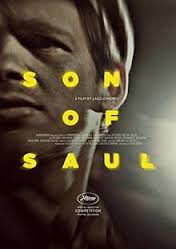
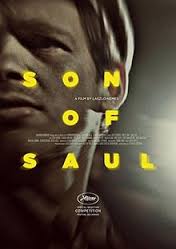
Son of Saul

Son of Saul

Posted on January 14, 2016 at 5:56 pm

A-
Lowest Recommended Age: Mature High Schooler
MPAA Rating: Rated R for disturbing violent content, and some graphic nudity
Profanity: Racist language
Alcohol/ Drugs: None
Violence/ Scariness: Intense and deeply disturbing Holocaust atrocities including shooting, gas chambers, graphic images
Diversity Issues: A theme of the movie
Date Released to Theaters: January 15, 2016
Date Released to DVD: April 25, 2016
Amazon.com ASIN: B01BZBOA30
son of saul
Copyright 2015 Sony Pictures Classics

As we move past the time when there are living witnesses to the Holocaust who can tell us their stories, we need more than ever voices like first-time writer/director László Nemes to tell the stories. I know there are those who will shrug sheepishly and say that they just can’t handle another one.  But each story is about a singular individual who had a singular experience.  And this Oscar-winning drama is distinctively different in subject matter and in the form of storytelling. It deserves careful attention.

The Nazis took more than lives in the concentration camps. They took identities and they took souls. Saul (Géza Röhrig), the title character, is a Hungarian Jew in an unnamed extermination camp near the end of the war. Because Hungarian dictator Miklos Horthy cooperated with the Nazis but did not allow them to take the 800,000 Hungarian Jews until he could no longer prevent it in 1944 (see Walking with the Enemy), Saul has only been there a short time. Throughout the movie, the camera is close to his face or at his shoulder as he numbly tries to hold on to his life and to some sense of himself amidst the horrific slaughter and nightmarish chaos all around him. We get only glimpses.

In the very first moments, we see him standing silently as a reassuring German voice tells the new arrivals that there will be jobs and food for them, as soon as they clean off in a shower. They leave everything they brought with them, clothes, jewels, money, photos, in the outer room and then, naked, walk into the gas chamber, where they are killed.

What happens to Saul is worse than death. He is a Sonder-kommando, a prisoner forced to assist in this process, from making the new arrivals feel a little less hopeless to ransacking their belongings and removing the remains, which the Nazis will not dignify with the term “bodies.” They are called “pieces.” And he is forced to be a part of it.

Somehow, a boy, perhaps 10 or 11 years old, survives the gas chamber. He is still breathing. So he is sent to the doctor (another prisoner) to be killed and autopsied, to help make the killing process more efficient.

And that is Saul’s breaking point. He becomes convinced that the boy is his son, though it appears likely he never had a child. This may be manifestation of trauma-induced delusion, or it may be an adaptive mechanism to restore his shattered sense of the world. He knows he cannot save this both in life. But perhaps in death he can do one kindness and provide the boy with a religious burial, away from the discarded “pieces.” Increasingly desperate, contrary to his previous flat affect, Saul seeks a rabbi who can say the mourner’s prayer over the boy. Throughout the film, we see quick glimpses of the ways other prisoners hold on to some tiny element of control. For some, it may be keeping a record. For Saul, who seems to see very little of what is going on around him, it is giving a boy a better death.

This insistence on a sacred burial at any cost is a direct link to Sophocles’ 442 BC play Antigone, the final chapter in the Oedipus trilogy. Three thousand years of human history later, and someone is still finding meaning by refusing to make one final compromise.

Parents should know that this is a Holocaust movie with scenes of Nazi brutality and disturbing themes and images including gas chambers, shooting, suffocation, and dead bodies, some nude.

Family discussion: How does the style of this film help to convey the experience of the concentration camp? Why was this boy so important to Saul? What were the special issues faced by the Sonder-kommandos and the doctor?

If you like this, try: “Conspiracy,” “Schindler’s List,” and “Labyrinth of Lies”

Related Tags:


Drama DVD/Blu-Ray Pick of the Week Tragedy War
THE MOVIE MOM® is a registered trademark of Nell Minow. Use of the mark without express consent from Nell Minow constitutes trademark infringement and unfair competition in violation of federal and state laws. All material © Nell Minow 1995-2026, all rights reserved, and no use or republication is permitted without explicit permission. This site hosts Nell Minow’s Movie Mom® archive, with material that originally appeared on Yahoo! Movies, Beliefnet, and other sources. Much of her new material can be found at Rogerebert.com, Huffington Post, and WheretoWatch. Her books include The Movie Mom’s Guide to Family Movies and 101 Must-See Movie Moments, and she can be heard each week on radio stations across the country.

Website Designed by Max LaZebnik