I loved every film I saw at AFI Docs this year, with a wide variety in subject matter and tone. There were intimate, personal stories, and movies about major global figures and forces. And I also saw an eye-popping demonstration of new technology, VIZIO’s Ultra HD supporting Dolby Vision. With samples from computer animation to live action, the Reference Series TV, which will be available later this year, showed stunningly dynamic, clear, and accurate images. They will also be using their systems in movie theaters, including five AMC theaters this year.
The films I saw were:
“The Best of Enemies” The legendary William F. Buckley/Gore Vidal debates following the Republican and Democratic conventions of 1968 are, according to this film, the origin of today’s partisan, combative television news programming.
“The Wolfpack” Like a Wes Anderson movie come to life, this is the story of seven children, six of them boys, growing up in New York, home schooled and not allowed to leave the apartment, completely isolated from the world except for movies, which they watch and re-create.
“From This Day Forward” As a filmmaker prepares for her own wedding, she explores the very unusual but deeply committed relationship of her parents, who remain married despite her father’s transition to being a woman.
“Hot Type: 150 Years of the Nation” The country’s oldest continuously operating publication faces unprecedented challenges in an era of new media and impatient readers.
“How to Dance in Ohio” A group of teenagers and adults with autism prepare for a prom to work on their social skills.
“Very Semi-Serious” New Yorker cartoon editor Bob Mankoff and the quirky and engaging people who create cartoons tell us how they find what is strange about the familiar and familiar about the strange.
“Steve Jobs: The Man in the Machine” Alex Gibney, whose award-winning documentaries have covered Enron, Scientology, torture, Eliot Spitzer, and more, turns his camera on one of the most influential figures of the 20th century.
The first-ever animated feature from StoryCorps celebrates the transformative power of listening. Listening Is an Act of Love: A StoryCorps Special presents six stories from 10 years of the innovative oral history project, where everyday people sit down together to ask life’s important questions. Framing these intimate conversations from across the country is an interview between StoryCorps founder Dave Isay and his nine-year-old nephew, Benji, animated in the inimitable style of The Rauch Brothers. “If you pay just a little attention, you’ll find wisdom and poetry in their words.”
StoryCorps has a wonderful archive, a podcast, an app for you to create your own interviews, and a great list of questions. Whether you want to record the answers or not, these questions will let you start some unforgettable conversations with your family.
This animated film is inspired by the life of Bilal Ibn Rabah, one of Muhammad’s most trusted companions and known for his beautiful voice with which he called people to their prayers.
Rated PG for mild thematic elements and some action
Profanity:
Some schoolyard language
Alcohol/ Drugs:
None
Violence/ Scariness:
Some peril and anxiety, sad death
Diversity Issues:
None
Date Released to Theaters:
June 19, 2015
Date Released to DVD:
November 3, 2015
Amazon.com ASIN:
B00YCY46VO
Copyright 2015 Pixar
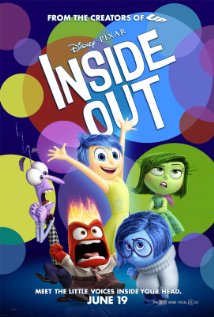
Roger Ebert liked to refer to movies as an “empathy machine.” He said that the great gift of movies, more than any other art form, is the way they can put us inside the world, experiences, culture, and perspective of someone completely outside our own experience. But the best movies do that in a way that helps us understand ourselves as well. “Inside Out” is a rare film that takes us inside the mind of one very particular 11-year-old girl in a way that illuminates the vast breadth of human experience, with deep insights about our own particular quirks, struggles, and emotions. It is exciting, hilarious (two of the funniest jokes you will see on screen this year), and deeply profound, making the most complex concepts accessible in so that children and adults will learn more about who they are and how they got that way.
Riley (Kaitlyn Dias) is in the midst of internal and external turmoil. She was very happy in Minnesota, playing on a hockey team, with lots of friends, and feeling, well, at home. But her parents have just moved to San Francisco, so that her father can take a new job with a start-up. Everything is new and different and scary. Everything she liked about her life, everything she took for granted, is up for grabs. And all of this is happening just as that developmental leap that comes around age 11 is causing her to change from the bright-spirited, optimistic, happy little girl who was confident in herself and in her family. She is getting old enough to see and feel more of what is going on inside and out. Her parents try to be reassuring, but she knows that her father’s new job is risky. She does not know anyone at school and they do not know her. The old friends from the place she still thinks of as home do not have as much time for someone who is far away.
Of course we have seen this before. There are a lot of movies about people of all ages who are forced to adjust to changed circumstances, or to find a way to make a strange new place feel like home. What is different about “Inside Out” is that Riley is not the character we follow through this story. She has her own adventure, but the story takes place in her mind and it is her emotions who take center stage. They operate the helm of the — yes — Headquarters.
The characters are Joy (Amy Poehler), a pixie-ish blue-haired sprite who is resolutely energetic and upbeat, Anger (Lewis Black), a stocky red fellow who is fiery-tempered and easily outraged, Disgust (Mindy Kaling), green, with a round head, long eyelashes, and a sensitive spirit quick to resist anything new or icky, Fear (Bill Hader), a lean blue creature who usually assumes the worst, and Sadness (Phyllis Smith), who feels everything very, very, very, very deeply. Each of these characters is introduced with what they help Riley do. Anger helps her see unfairness. Disgust helps her to avoid poisonous foods. Fear helps keep her safe. Joy helps her see the world as a place filled with imagination, adventure, and opportunity. And Sadness — we will learn more about what Sadness does later, but for now we will say that it helps her feel empathy. Joy is the leader of the group. She is the most focused and direct and the best able to negotiate with the others. But her goal is to keep all of Riley’s memories happy, and that might not be possible.
As Riley tries to use her mind, her memories, and her emotions to navigate her new community, Joy and Sadness are accidentally transported to where Riley’s memories are stored, and they must make it through an Oz or Wonderland-style land where we learn about everything from abstract thinking to why you CAN’T GET THAT DARN JINGLE FROM THAT STUPID COMMERCIAL OUT OF YOUR HEAD. A surprising — in every sense of the term — new character shows up to provide support and insight, and to embody the sweet sorrow of growing up. Co-writer/director Pete Docter told Terry Gross that it was when Mindy Kaling came to talk to him about the film that he understood what it was really about: you have to grow up, and it’s okay to be sad about it. That applies whether you are the one growing up or just watching it as a parent or friend. This movie speaks to all of us, whether we have children, are children, were children, or still keep the child we were near our hearts. A lot of good movies are smart. But this one is wise.
Parents should know that this movie includes some mild peril, family tension, running away, and a sad death.
Family discussion: Can you think of a time that Joy was steering your mind? How about the other emotions? When can you feel them working together? Did you have a Bing Bong? Why did he make that choice?
If you like this, try: “Everybody Rides the Carousel,” “Up,” and “Monsters Inc.”
AFI Docs 2015: The World’s Best Documentary Film Festival Begins Tonight in Washington DC
Posted on June 17, 2015 at 11:26 am
AFI Docs (formerly SilverDocs) begins tonight in Washington, D.C. with another spectacular slate of documentary films. The opening night festivities feature “The Best of Enemies,” a terrific film about the battle of the upper-class, socially connected, classically educated, hyperverbal writers and sometime candidates for election William F. Buckley and Gore Vidal. They had those qualities in common, but not much else. Politically, culturally, philosophically, and personally, they really could not stand each other. So when lowest-rated ABC, which could not afford the gavel-to-gavel coverage and gold-plated newsmen (they were all men in those days) of CBS and NBC, in desperation they decided to feature “commentary” from the right-wing Buckley and the left-wing Vidal. The filmmakers argue persuasively that this was the beginning of the highly partisan shriekfest that passes for television news today.
Some of the other films at the festival include Oscar-winner Alex Gibney’s “Steve Jobs,” “How to Dance in Ohio” (teens with autism prepare for a prom), “The Wolfpack” (kids kept inside their New York apartment by a controlling father spend their time re-enacting their favorite films), and three documentaries about significant magazines: “Very Semi-Serious” (New Yorker cartoons), “Drunk, Stoned, Brilliant, Dead: The Story of the National Lampoon,” and “Hot Type: 150 Years of the Nation.”
There are films about tennis star Althea Gibson, singer Nina Simone, and art collector Peggy Guggenheim, political protests, about the fallout (literal) from Chernobyl, and the psychological and political fallout from the “3 1/2 Minutes, 10 Bullets” that killed a Georgia teenager.