Movie maven Glenn Kenny has put together a list of the 25 top animated films for Moviefone. Lots of Disney classics, of course, like “Lady and the Tramp,” “Dumbo,” “Fantasia,” “Cinderella,” “Snow White,” “Little Mermaid,” and “Beauty and the Beast.” I was glad to see “Triplets of Belleville,” “Wallace and Gromit,” and “The Nightmare Before Christmas” on the list. I could quibble about the high positioning of “The Lion King” and “Ratatouille” and complain for the omission of “Yellow Submarine” and “A Bug’s Life.” But I can’t argue with #1 (hint: it’s about a cowboy and an astronaut), and I am so fond of every one of the films I won’t waste time complaining. I’ll just dig out some of my favorites from the list and watch them again.
Thanks so much to loyal reader jestrfyl for suggesting this list!
“Semi-Pro” is not even semi-funny. It takes what looks like an unmissable slam dunk of a premise and turns it into a big, noisy airball of a movie without a single truly funny moment.
Will Ferrell in the 1970’s — automatically funny, right? (“Anchorman”) Will Ferrell doing sports — automatically funny, right? (“Talladega Nights,” “Blades of Glory”) Then what an inspired idea it must have seemed, to put Ferrell in the story of the outrageous outlaw league the American Basketball Association, which enlivened sports from 1967-76 with its mix of basketball and showmanship until it merged with the NBA. Box office magic, right?
Not with this script.
Women & Spirituality is a three-part series about the power of the sacred feminine in mythological, historical and cultural contexts. Part 1, Goddess Remembered, examines goddess-based pre-historic societies, linking the loss of goddess-centered societies to environmental degradation. The second, The Burning Times, looks at the witch-hunts of the Middle Ages and the third, Full Circle, concludes with manifestations of contemporary women’s spirituality in the Western world. “Drawing on the customs, rites and knowledge of the past, Full Circle envisions a sustainable future where domination is replaced with respect.
This is an inspiring examination of the spiritual lives of women in ancient and modern times.
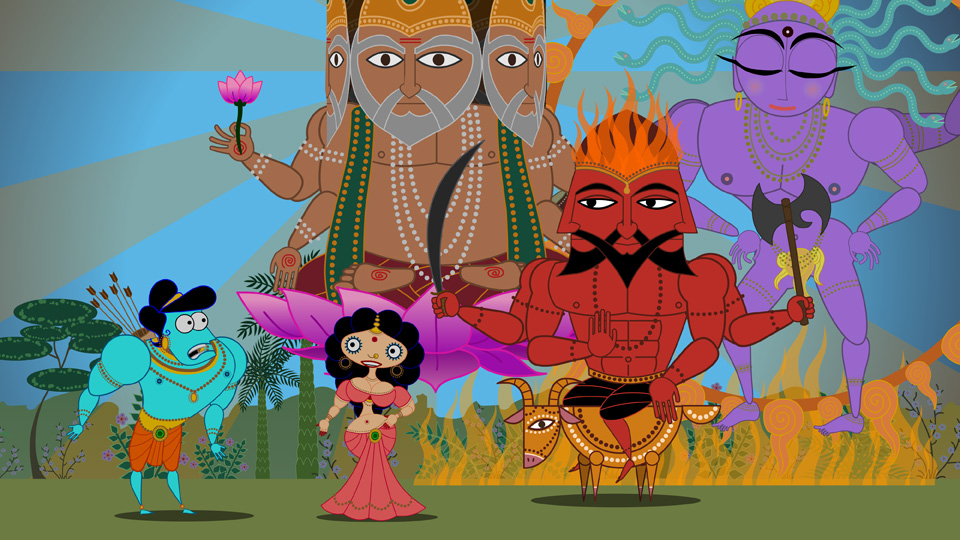
Nina Paley, who bills herself as “America’s best-loved unknown cartoonist” is the artist/writer/director behind a smart, funny, visually stunning new animated film called “Sita Sings the Blues.” Paley’s cartoons include “Fluff” (Universal Press Syndicate), “The Hots” (King Features), and her own alternative weekly “Nina’s Adventures.” She animated and produced “Sita Sings the Blues” single-handedly on a home computer. Nina teaches at Parsons School of Design in Manhattan and is a 2006 Guggenheim Fellow.
“Sita Sings the Blues” is a multi-level presentation of the traditional Indian Ramayana saga that includes three different artistic styles, a modern-day parallel based on Paley’s own life, and the songs of 1920’s-30’s nightclub singer Annette Hanshaw. I met Paley two years ago at a reception for women film-makers. We talked briefly about her work on this film and she gave me a business card with a small drawing of Sita. I was delighted to see the film at Tribeca this year and glad to have a chance to interview Paley via email.
What first interested you in the Ramayana saga?
I was living in Triuavndrum, India, where I read it for the first time. There are at least four different graphic styles in the way the characters in your film are
presented. How would you describe them and what does each one add to the story?
the smooth cartoony style for the Hanshaw numbers, the shadow puppets with collage characters in the background, during the unscripted dialog, the fake miniature Mughal paintings, during the scripted dialog, the expressionistic rotoscoped scene just after the
“intermission.” Each style refers to a different art tradition associated with the Ramayana, and lends itself to the shifting narrative styles as well The narration of the Ramayana story feels very improvised — how did that come about?
It was improvised. Who are the narrators?
Friends from India, see here. Is their contradiction of each other and refinement of each other’s versions intended to match the mix of artistic styles in the visuals?
It’s very natural. They’re all from different regions of India and speak different mother tongues, and grew up on different versions of the story. So naturally they remember “the” Ramayana differently from one another. There is no one Ramayana. Their discussion makes this clear. Why combine the Ramayana story with the modern-day parallel? In some ways, the stories are very different.
Yes, my story doesn’t involve demons, magic arrows, palace intrigue, or purity. But both stories are about heartbreak, and a peculiar relationship dynamic between a man and a woman, and that’s the aspect of both I emphasized. It’s also what they have in common with the Blues. How did you select 1920’s chanteuse Annette Hanshaw as the singing voice of Sita?
See here. Do you think that women directors bring a distinctive perspective and if so, how would you describe it? How would this story be different if told by a man? Or would a man not tell this story?
This story was told by me as an individual. An individual brings their individual characteristics and experience to a story. I happen to be a woman, but I’m a specific woman, not womankind in general. I can’t tell you how other women would direct a particular film, or other men. We’re all unique.
I will say that there are distinctive womens’ tellings of the Ramayana that differ greatly from mainstream (men’s) versions. In the novel “Heartburn,” Nora Ephron said that she wrote it even though it had some material that embarrassed her because it allowed her to control the story. Would you say that is true for you with this movie? Did you find it validating or vindicating?
I found it therapeutic. What are you working on next? More animation or will you do live-action as well?
The Muse hasn’t given me my next orders yet, which is good, because I have to be a fulltime producer for “Sita” right now. What are the distribution plans for the film? Where can people see it? Watch “Sita Sings the Blues” for free online. Who are some of your influences in animation and in comics?
Everything I’ve ever seen!
At the Death House Door is an extraordinary documentary from the makers of “Hoop Dreams.” It is the story of Pastor Carroll Pickett, who served 15 years as the death house chaplain to the infamous “Walls” prison unit in Huntsville. He spent the last 24 hours with 95 different men who were about to be executed. After each was killed, Pickett recorded an audiotape account of his trip to the death chamber. Through his experiences, including the witnessing of the execution of a man later proven to be innocent, he became convinced that the death penalty was wrong. The film premieres on May 29 at 9:00 PM Eastern on the Independent Film Channel.
I spoke to Pastor Pickett about his experiences:
How did you first come to work at the prison?
I was minister of a Presbyterian church in Huntsville Texas. During the time I was at that church they had a prison siege and the director called me and said, “I want you to minister to the families of those who were hostages. For 11 days and nights they were held hostage and then they had a big shoot out across the street. The only ones killed were two of my church members. I was planning to do one’s wedding the next Saturday. Then in 1980 the same guy who called me asked me to come work at the prison for one year. I went for one year. I didn’t sign any papers but I stayed there 16 years. God had prepared me back in 1974 to go to the prison. I went there believing this was God’s will. I felt like God wanted me to be there. As it says in the Bible, “I was in prison and you came to me.”
What surprised you about the prison experience?
The biggest thing that surprised me that there were so many nice people who were willing to participate in the program, so many who were Christians who had, for lack of a better term, left the fold. There were so many victimless crimes, so many who were innocent, so many who had made financial mistakes.
What did you try to teach them?
We helped them understand that it is happier and better to live the way God wants you to — whatever religion you are. We had Catholics, 26 Jewish people — we had the first seder in the prison. In prison you can still practice your faith, and I was so happy many of them were really willing to give a lot. There were a lot of people who were good but had made mistake. I don’t believe in rehabilitation, but these people had changed. one night had changed me. So many of them got out. Close to 100 who used to be in prison are now ministers.
What did you use to reach these people?
I believe that the music is so important. So many people are musicians and express themselves musically. We started a choir. We had a different one for the Catholics because they sing different songs, one for the Hispanics, a gospel for the black prisoners. One of the requirements was that in order to be a part of the choir they had to maintain all the rules, they had to work, they had to participate in all the activities. One former back up singer for Don Ho was one of my singers, a state Supreme Court justice was one of my singers. I was permitted to give points for parole for those who participated.
Did the prisoners help each other?
Yes! The prisoners ministered to each other. We had 28 ministers in prison. Ministers go to prison too. We had a father and son who were missionaries in South America. The mother died and the father got real angry at God, so they became bank robbers. And a lot of ministers get framed.
Tell me about your work with the men on death row.
I was chaplain for the people in the death house. I only got to see them on the last day, the way it was set up. I stayed with them usually from 6 am to 12 midnight. We used to execute them at 12. After helping 95 walk the gurney and get killed by the state, I concluded that there are innocent people being put to death and there are mentally retarded. Because of the “law of parties,” there are those who are guilty by law but not by crime. The one who actually did the crime got off and the other one was executed.
Carlos De Luna was innocent, we proved he was innocent. He had no father, his father left him and his stepfather was a drunk. On that last day, I took care of him all day long and we got along real well. I told him I believed he was innocent and he said, “I wish everybody else did.” That afternoon he asked, “Can I call you Daddy? That is different than being called “Father.” I have a son the same age. That changed the whole attitude in the death house, that night, letting him call me that. Carlos said, “Thank you Daddy. Thanks for being with me, Daddy. I wish I had you when I was a boy — I would never have been a problem at all.” He asked, “Daddy, would you pray?” He was in the cell, on his knees. I put my hands through the bars. That is illegal but I did not pay attention to those rules. While they strapped him to the gurney he said, “Daddy, I appreciate you being here today.” I never will forget those big brown eyes looking at me. He kept looking up. I don’t know what he was trying to say. I was hoping he would say, “Thank you, Daddy.” That’s the way I would like to believe. He was a good kid. I would have taken him home forever.

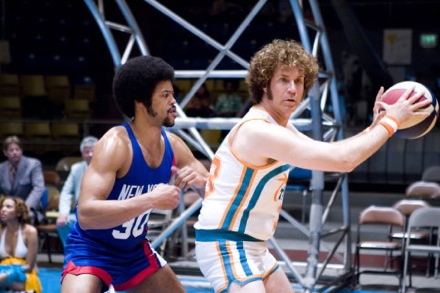 “Semi-Pro” is not even semi-funny. It takes what looks like an unmissable slam dunk of a premise and turns it into a big, noisy airball of a movie without a single truly funny moment.
 is a three-part series about the power of the sacred feminine in mythological, historical and cultural contexts. Part 1, Goddess Remembered, examines goddess-based pre-historic societies, linking the loss of goddess-centered societies to environmental degradation. The second, The Burning Times, looks at the witch-hunts of the Middle Ages and the third, Full Circle, concludes with manifestations of contemporary women’s spirituality in the Western world. “Drawing on the customs, rites and knowledge of the past, Full Circle envisions a sustainable future where domination is replaced with respect.