It may be a three-star movie about a four-star chef, but it is still a sweet summer treat and a great date night hors d’oeuvre.
Kate (Catherine Zeta Jones) just does not understand what everyone’s problem is. All she wants is to have every single detail in her kitchen meet her uncompromising standards. And for every single detail in her life to be as easy for her as coming up with an exquisite new recipe to enchant her foodie groupies. Is that too much to ask?
Apparently, it is, because the owner of the restaurant where Kate presides (one could never say “is employed”) has insisted that she get therapy if she would like to continue to preside. It is not good for business if Kate insults customers who fail to appreciate the subtle flavors and delicate complexities and just want undercooked steak. So, Kate goes to therapy, where she recounts the details of her food preparation in terms so swoonably delectable that for a moment both patient and therapist get a glimpse of a perfectible world. But that would mean a world in which we could be in control. And Kate is reminded of just how little control she has when her adored sister is killed in an automobile accident, leaving Kate as guardian for her young niece, Zoe (Little Miss Sunshine’s Abigail Breslin).
This is a curious hybrid combining contemporary language and violence with a retro set-up right out of a 1930’s James Cagney/Pat O’Brien movie and pulsating undercover law enforcement action of 1970’s films like Serpico and The French Connection.
The story is simple: two brothers find themselves on opposite sides of the war on drugs. Bobby (Joaquin Phoenix), is a nightclub manager with a gorgeous girlfriend (Eva Mendes as Amada). He loves the nightlife, he loves to feel important and respected, and he loves to feel that he is something of a rule-breaker. He loves to feel far away from his law enforcement relatives and has changed his last name to Green so no one will know he has cops in his family. His brother Joseph Grusinsky (Mark Wahlberg) hates anyone who breaks the law, especially drug dealers. his father Burt (Robert Duvall) wants to be proud of both of his sons.
Bobby and Amada show up at Joseph’s promotion ceremony, high and giggling. Joseph, Burt, and some of the other officers take Bobby upstairs to the church sanctuary to ask him to help them capture a drug dealer named Vadim (electrifying newcomer Alex Veadov), nephew of the club’s owner. The owner and his wife have treated Bobby like a member of the family. Bobby refuses — until catastrophe occurs and he has to think about who really is family and whose side he will be on.
Despite a powerful chase scene and some affecting performances, the movie’s retro slant makes it simplistic and superficial. Instead of commenting on the conventions of the past, it awkwardly tries to pretend that they are still in effect.
Parents should know that this movie has intense and graphic peril and violence, including a lot of gunfire. Many characters are wounded and killed. The plot concerns drug dealers and narcotics officers, and characters use and sell drugs, drink, and smoke. They also use strong language. A strength of the movie is its diverse characters, but there are some racial epithets.
Families who see this movie should talk about what made Bobby and Joseph alike and what made them different.
Drinking, including drinking to deal with stress and getting tipsy
Violence/ Scariness:
Comic peril and violence, fighting
Diversity Issues:
None
Date Released to Theaters:
February 8, 2008
This pea-brained vanity production does not have the energy to remember from one scene to the next what it is about or why it is on screen. It is attention-deficit film-making. Famous-for-being-famous Paris Hilton is not only the star, but also the producer of the film, and it seems to have been entirely generated by whatever she thought would be fun to do in front of a camera, with no thought whatsoever to the misery it would inflict on those who might watch it.
Hilton cast herself as Cristabel, the “hottie,” a perfect beauty and object of universal desire with a heart of gold. She even gives her stalker a dazzling smile and a perky wave as she reminds him that he is required by a restraining order to keep his distance.
Rated PG-13 for crude and sexual content, language and some drug references.
Profanity:
Strong and crude language for a PG13
Alcohol/ Drugs:
Drinking, drug references
Violence/ Scariness:
Comic peril and violence
Diversity Issues:
Diverse characters, a strength of the movie is the positive portrayal of an inter-racial relationship
Date Released to Theaters:
February 8, 2008
“Family is a 24-7 reality check,” explains one of the parade of nightmare relatives. “This is one hell of a family,” says another. These two statements pretty much summarize the movie. And that’s the good news.
Family reunions on screen create immediate identification. We all know what it feels like to come home to our families of origin and discover how quickly those carefully-assembled grown-up personas disappear and those just-below-the-surface rivalries take over. That is why it is fun to see it happen to someone else. This set-up and a talented cast provide the engine that keeps this movie going even when the screenplay lags behind.
Martin Lawrence plays a therapist/author with a successful talk show. He is engaged to Bianca (Joy Bryant) the gorgeous and intensely competitive champion of the reality show “Survivor.” He brings her to meet his family on his first visit home in nine years, for his parents’ 50th anniversary celebration. Although his son Jamaal wanted to be with the family, R.J. had not planned to go – he sent a giant flat-panel TV instead. But Bianca points out that it would be great publicity to film it for his television show, showing the hometown boy made good, surrounding by adoring relatives.
Director Julie Taymor is best known for Broadway version of “The Lion King,” which is itself best known for its visual splendor. And least known for its plot. There is visual splendor in this story of characters coping with the 60’s, to the tune of Beatles songs, but not much by way of plot. And the song covers by most of its stars are strictly with Beatles Night on “American Idol.” In one of those early episodes before much elimination.
For people who remember the 60’s, the movie’s look and sound will be poor competition for the kaleidoscopic visual and aural brilliance of the original Beatles creations and the story and characters will be superficial and simplistic compared to the kaleidoscopic upheavals of the era.
Those who know the Beatles’ work will find the movie’s references uninspired recreations rather than re-imaginings or responses. The character names say it all: Jude, Lucy, Max, Sadie, Rita, Prudence, JoJo, Dr. Robert, Mr. Kite, get it? Too on the nose. Max has a hammer. The singer and her band play on the roof until the police come to shut them down. People not familiar with the 60’s will wonder what the fuss was about.
There are some very clever touches in the staging of the musical numbers, as when at an induction physical, the Uncle Sam posters sing “I Want You” or in a couple of scenes where one song is played in sharply contrasting contexts. There are also some brilliant images, especially when the characters experiment with hallucinogens. But the story and characters are thin and so are the singing voices of most of the performers, with Eddie Izzard’s Mr. Kite, Bono’s Dr. Robert, and newcomer Dana Fuchs as a Janis Joplin-eque Sadie as welcome exceptions.
But they are supporting roles with too-brief appearances as the center stage goes to the featherweight story about a romance between blue collar Liverpudlian Jude (Jim Sturgess) and an American suburban princess named Lucy (Evan Rachel Wood) whose boyfriend was killed in Viet Nam. Lucy’s brother Max (Joe Anderson) and Jude move into one of those adorably Bohemian, summer of love, starving artist garrets in Greenwich Village, run by Sadie (Fuchs). They are soon joined by Jimi Hendrix-ish JoJo (Martin Luther) and unhappy-in-love Prudence (T.V. Carpio), who came in through the bathroom window, get it? Jude wants to be an artist; Lucy wants to protest the war. And everybody goes on a magical mystery tour and meets Dr. Robert and Mr. Kite.
It is overlong and under-written, visually vibrant but thematically transparent. The characters are more alive in the original Beatles songs than they are on the screen. And that leaves us nowhere, man.
Parents should know that the characters in this movie drink, smoke, and use drugs, including marijuana and hallucinogenics. They briefly use strong language and there are some emotional confrontations. The movie includes battle violence in Viet Nam, police brutality, and an offscreen explosion of a bomb built by protesters against the war. Characters are injured and there are sad offscreen deaths. Images include nudity, some stylized, and non-explicit sexual situations. A strength of the movie is the loyal and supportive relationships between characters of racial, gender, and sexual orientation diversity.
Families who see this movie should discuss some of their parents’ and grandparents’ experiences during the 1960’s. And they should listen to the original versions of the Beatles songs. Why are these songs so enduring and what groups today are producing songs that people will still want to hear in 40 years?

 and
and  .
. and classic crime dramas of the 1930’s like
  .
.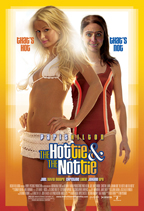 This pea-brained vanity production does not have the energy to remember from one scene to the next what it is about or why it is on screen. It is attention-deficit film-making. Famous-for-being-famous Paris Hilton is not only the star, but also the producer of the film, and it seems to have been entirely generated by whatever she thought would be fun to do in front of a camera, with no thought whatsoever to the misery it would inflict on those who might watch it.
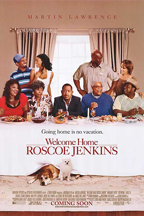 “Family is a 24-7 reality check,” explains one of the parade of nightmare relatives. “This is one hell of a family,” says another. These two statements pretty much summarize the movie. And that’s the good news.
 ,
,  ,
,  , and
, and  but slightly above
  , maybe somewhere around
  .
. 
 and
and  .
.