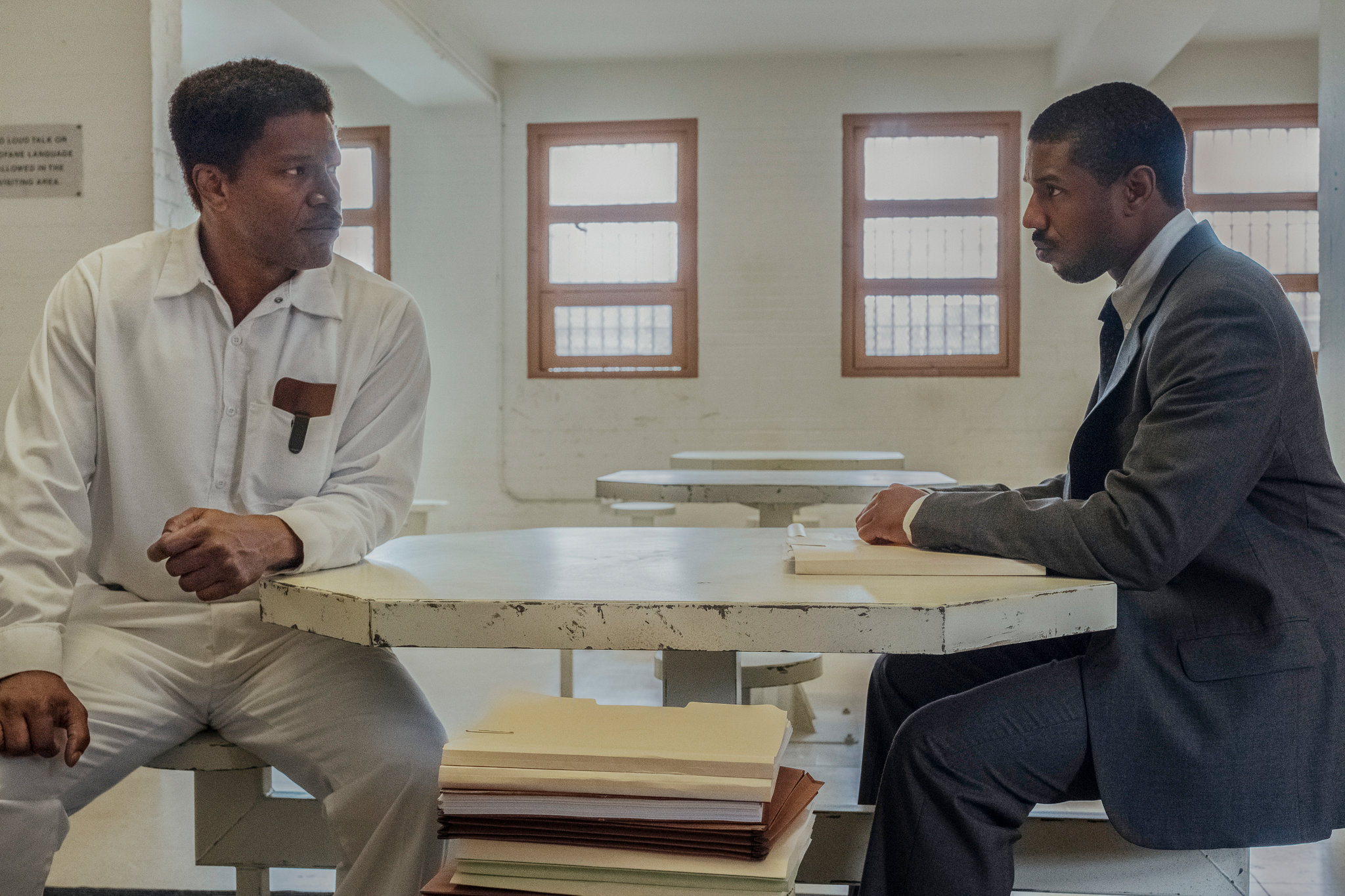
Jumanji: The Next Level

Jumanji: The Next Level

Posted on December 14, 2019 at 9:24 pm

B +
Lowest Recommended Age: Middle School
MPAA Rating: Rated PG-13 for adventure action, suggestive content and some language
Profanity: Some schoolyard language, brief strong language
Alcohol/ Drugs: None
Violence/ Scariness: Extended video game action style peril and violence, issue of terminal illness
Diversity Issues: Diverse characters and issues of diversity
Date Released to Theaters: December 13, 2019
Date Released to DVD: March 16, 2020

Copyright 2019 Columbia
My review of Jumanji; The Next Level is on rogerebert.com — an excerpt:

Like its predecessor, this latest “Jumanji” movie combines fantasy action and adventure with some comedy, a touch of romance, and real-life lessons about courage, friendship, and empathy—all with the help of some low-key race and gender fluidity….Johnson was terrific as Spencer in the first film, a humorously exaggerated version of an adolescent discovering the power of adulthood. But as the outer version of Spencer’s cranky grandfather, he’s clearly having more fun. He barely notices the surreal concept of being trapped inside a video game (he does not appear to be entirely sure what a video game is), and is much too busy swiveling hips that for the first time in years have a full range of motion. Johnson/Bravestone as Spencer was something to aspire to, in a future that still seemed filled with infinite potential, but Johnson/Bravestone as Eddie is filled with the bucket list delight of someone who sees nothing but loss ahead. Hart is especially good at toning down his usual peppery energy as the avatar for the slow-talking Milo, whose avatar’s strength is languages but who retains his discursive style. Black and Awkwafina both have a chance to represent more than one of the human characters, making each one distinct and clever.

The fantasy of the avatars, with their assigned strengths and weaknesses, make it possible for the characters to become more honest with themselves and each other. As with the first film, the humor and excitement are nimbly balanced so it never gets too scary or silly, and the focus is more on friendship than romance. This time, there is a light touch of poignance as well that makes the message about friendship more meaningful. And like all good video games, there’s a hint of yet another level at the end for those, like me, who are not yet ready to say Game Over.

Parents should know that this film icludes video game-style peril, action, and adventure, some strong language, brief crude humor (references to eunuch character), and issues of aging and terminal illness.

Family discussion: If you were a game avatar, what would your strengths and weaknesses be? What did the characters learn from being different races and genders?

If you like this, try: “Jumanji: Welcome to the Jungle” and “Journey to the Center of the Earth”

Related Tags:


Based on a book DVD/Blu-Ray Fantasy movie review Movies -- format Series/Sequel
Richard Jewell

Richard Jewell

Posted on December 12, 2019 at 5:42 pm

B-
Lowest Recommended Age: High School
MPAA Rating: Rated R for language including some sexual references, and brief bloody images
Profanity: Very strong language
Alcohol/ Drugs: Alcohol
Violence/ Scariness: Bombing, explosions, characters injured and killed, brief disturbing images
Diversity Issues: Portrayal of female professional using sex to manipulate men
Date Released to Theaters: December 14, 2019
Date Released to DVD: March 16, 2020
Copyright Warner Brothers 2019

Erik Erikson said that at each stage of life we have a choice between growth, learning, and compassion and fear, immaturity, and self-absorption. The final choice he posed was for old age, when people have to choose between ego integrity (satisfaction and completeness at the end of life, a sense of having made a difference) or despair (being lost, lacking a sense of purpose). (I highly recommend “Everybody Rides the Carousel,” an animated film from John and Faith Hubley, illustrating Erikson’s theories.) Two big end-of-the-year releases by two men, one in his 70’s, the other almost 90, seem to come down on different sides.

Martin Scorsese’s “The Irishman” is a movie by old men about what it is to be old, to be looking back on the choices you’ve made and the consequences they have had. The characters in the film, based on real people and their sometimes questionable stories, committed brutal crimes. The movie never excuses their behavior, but it portrays them in a complex, humane, elegiac manner.

89-year-old Clint Eastwood has made “Richard Jewell,” also based on a true story, this one about a man who was accused of a crime he did not commit. Richard Jewell (Paul Walter Hauser) was pudgy and his social skills were uneven. He was fascinated with order and authority and wanted very much to be a police officer. He lived with his mother and he had a lot of guns (“This is Georgia,” he shrugs.) He fit the profile and was an easy target in a city desperate to keep the international athletes, IOC officials, and media confident that everything was under control.

One of three films this month about real-life heroic lawyers who fought near-insurmountable odds to bring justice (the other two are “Dark Waters” and “Just Mercy”), this could have been a heartwarming story, but Eastwood’s cranky “get off my lawn” perspective cannot resist overdoing it as though he was talking to an empty chair. Instead of a movie about a guy who was the victim of the FBI under pressure to find a culprit and the media frantic to find a story. Eastwood is so sure we will not be able to figure out who the bad guys are that he all but has them wear signs.

It isn’t just this FBI agent who is wrong; it’s the government. And it isn’t this reporter or this newspaper that is wrong; it’s the media. It is not enough that the reporter’s first reaction on hearing that there has been a bombing is to hope that the bomber is story-worthy. Eastwood has to make her trade sex for information. (She is dead now, but her newspaper has demanded that the movie make clear it is not an accurate representation.) Our hero, meaning the lawyer, played by the always-great Sam Rockwell, has a bumper sticker in his office that says, “I fear government more than I fear terrorism.” JUST IN CASE WE DON’T GET THE POINT.

It’s a shame because the story has an even more important lesson in this era of social media, citizen “journalists” and milkshake ducks. But the shrill tone of the film gets in the way, especially in its portrayal of the reporter as not just irresponsible about the facts but willing to trade sex for a story. Pro tip: if you are going to make a movie about how terrible it is that the media exaggerates and lies, try not to do that in the movie itself.

Parents should know that this movie includes very strong language and a bombing with some brief disturbing images. Characters drink alcohol and a woman use sex to get information.

Family discussion: Why was Richard Jewell a suspect? Why did Watson believe him?

If you like this, try: “Sully” and “American Sniper” from the same director

Related Tags:


Based on a true story Drama DVD/Blu-Ray movie review Movies -- format
The Aeronauts

The Aeronauts

Posted on December 5, 2019 at 5:30 pm

B +
Lowest Recommended Age: Middle School
MPAA Rating: Rated PG-13 for some peril and thematic elements
Profanity: Some mild language
Alcohol/ Drugs: None
Violence/ Scariness: Extended peril, character sacrifices himself to save another
Diversity Issues: A theme of the movie (though the real-life character played by Felicity Jones was male)
Date Released to Theaters: December 6, 2019
Copyright 2019 Amazon Studios

Science fiction giant Arthur C. Clarke said, “Any sufficiently advanced technology is indistinguishable from magic.” “The Aeronauts,” based on the true story of early adventurers in meteorology and flight, exists at exactly that point in the middle. The “Theory of Everything” stars Felicity Jones and Eddie Redmayne play balloon pilot Amelia Wren and scientist James Glaisher, and for most of the movie they are up in the sky, marveling at sights and atmospheric conditions no humans have ever experienced before — or trying to survive them.

When they are in the air, it is gorgeous, exciting, and great fun. The visuals are spectacular, and sound designer Andy Kennedy and his team get a special shout-out for the superb audio effects, the exquisite silence, the creaking of the balloon basket, the clinks of the instrumentation. The never-ending series of life-or-death challenges are staged with such urgent vitality we almost feel that we are in the basket with them.

For most of the scenes on the ground, including a number of flashbacks, well, the screenplay never quite slips the surly bonds of earth. It is much better when they are up in the sky, battling the elements.

Wren and her husband piloted balloons until he was killed on one of their flights. Glaisher was a scientist who insisted that weather could be predicted with the help of meteorological data, despite the scorn of the scientific community and lack of support from his father, who is struggling with dementia. Glaisher is finally able to get the money for the balloon and persuades Wren to be the pilot.

Wren is highly theatrical, and Jones is utterly captivating in an early scene as she plays to the crowd, as savvy about showmanship as she is about flying. It is a lot of fun to see the actress who has often been given more subdued or internal characters do everything  — even cartwheels — to charm the crowd. She may appear to be light-hearted and flamboyant, but it is all precisely orchestrated and calculated. She knows what it takes to get the balloon in the air is not just the equipment and fuel but the other fuel, money.

Redmayne’s character is more like the shy, bookish type we’ve seen him play before. But it is fun to see his growing appreciation for both Wren and the adventure.

Those of us who pull down the shade on our airplane windows so we can watch movies on our laptops should take a moment to look outside and imagine what it was like to be the first human beings who saw — and heard — the inside of a cloud. “The Aeronauts” is best at conveying the thrill of that discovery, or, rather, series of discoveries, and the courage and ingenuity that went into getting up there and getting back down as close to safely as possible. It should inspire the audience not just to look out at the clouds but to dream of their own adventures.

NOTE: Rolling Stone did a fact-check to compare the movie to the real story.

Parents should know that this movie includes extended peril with a lot of suspense and some disturbing images. A character sacrifices his life to save someone else.

Family discussion: Why did Amelia change her mind about taking James up in the balloon? Who is most like James and Amelia today?

If you like this, try: “The Theory of Everything” also starring Felicity Jones and Eddie Redmayne, “Those Magnificent Men in Their Flying Machines” and read the book that inspired the film, Falling Upwards: How We Took to the Air

Related Tags:


Action/Adventure Based on a true story Drama Epic/Historical movie review Movies -- format Movies -- Reviews
Dark Waters

Dark Waters

Posted on December 5, 2019 at 5:00 pm

B
Lowest Recommended Age: Middle School
MPAA Rating: Rated PG-13 for thematic content, some disturbing images and strong language
Profanity: Strong language
Alcohol/ Drugs: Alcohol
Violence/ Scariness: Theme of toxic poisoning of a community with some grisly and graphic images
Diversity Issues: None
Date Released to Theaters: December 6, 2019
Date Released to DVD: March 2, 2020

Mark Ruffalo stars as “Robert Bilott” in director Todd Haynes’ DARK WATERS, a Focus Features release. Credit : Mary Cybulski / Focus Features Copyright 2019
Imagine “Erin Brockovich” without the sizzle of the outspoken, miniskirted single mom with the biker boyfriend, and you’ve got “Dark Waters,” with Mark Ruffalo (who also produced) as real-life lawyer Rob Bilott, a lawyer who represented corporate polluters until a West Virginia farmer showed him what the chemicals were doing to his community. The movie is based on a New York Times article called The Lawyer Who Became Dupont’s Worst Nightmare by Nathanial Rich.

Bilott is pretty much the opposite of Erin Brockovich, a quiet, dedicated family man, so stable he is almost inert, who is comfortable representing corporations and thinks — not entirely wrongly — that he is one of the good guys because he is representing them in negotiations with EPA to use taxpayer-funded Superfund money to clean up toxic chemicals that are leeching into the ground and water.

After eight years of working on those cases, he gets a surprise visit from his grandmother’s neighbor, a farmer named Wilbur Tennant (Bill Camp), who speaks with a near-indecipherable West Virginia accent but who is very upset because his animals have weirdly mutated organs and keep dying early. Oh, and his brother died, too, Bilott turns him down, but then, because of his grandmother, he agrees to look into it. He thinks it will be one and done. He’ll write a letter, work his contacts, and get some money to compensate Tennant, then go back to his nice partners and his nice office and his nice life, including Anne Hathaway as his wife who has the usual thankless task for a wife in these films of telling him he is working too hard and neglecting his family and his health.

I love movies about courageous lawyers fighting The Man; movies like that are part of the reason I became a lawyer in the first place. But it is no secret that while fiery courtroom battles are wonderfully dramatic, especially if there are many opportunities to yell “I object!” and even more especially if the cross-examination is so devastating that the bad guy actually confesses. But law — even in court — is not actually like that, and in translating this story to the screen, they made a few mistakes.

First, the legal issues themselves are complicated and arcane. Unless you are a lawyer you don’t want to and don’t need to know why Bilott ends up representing different clients about halfway through, but for the purposes of dramatic storytelling it is confusing and distracting. The same goes for why the chemical in question, used in the creation of the wildly popular no-stick Teflon cookware, was not covered by EPA regulations concerning its production and disposal.

Most significantly, though, Ruffalo and director Todd Haynes have stripped away a significant proportion of what makes their work distinctive in what looks like a mistaken opinion that style is not serious. Haynes, whose early film “Safe” was a provocative, stylish, and very serious drama about chemical exposure, should know that what he can bring to a film like this will only make it more compelling. The same goes for Ruffalo, who has turned the pilot light down low on his considerable charm as a performer. That may work in court; it is not effective on screen.

This is an important story and worth seeing. Its most powerful moment comes near the end, not in the courtroom but in a gas station (check the credits for that actor’s name.) More of that and the movie could have and should have been better.

Parents should know that this film has some very disturbing images showing the consequences of exposure to toxic chemicals, including mutations of humans and animals and some strong language.

Family discussion: What made Bilott change his mind about helping Tennant? Whose job is it to prevent this kind of damage and why wasn’t it done?

If you like this, try: “Erin Brockovich,” “A Civil Action,” and “Promised Land”

Related Tags:


Based on a true story Courtroom DVD/Blu-Ray Environment/Green movie review Movies -- format
The Two Popes

The Two Popes

Posted on November 26, 2019 at 5:01 pm

B +
Lowest Recommended Age: Middle School
MPAA Rating: Rated PG-13 for thematic content and some disturbing violent images
Profanity: None
Alcohol/ Drugs: None
Violence/ Scariness: Images of violence, references to sexual abuse, illness
Diversity Issues: None
Date Released to Theaters: November 27, 2019
Copyright Netflix 2019

Sometimes history is made by groups of people in labs or courtrooms or legislative bodies or battlefields. Sometimes history is made by two people talking to each other quietly. We hear those stories less often. It may be that what makes those changes possible is keeping them secret.

We will never know what really happened when Pope Benedict (Anthony Hopkins) became the first supreme pontiff to resign since 1294, selecting the man who became Pope Francis (Jonathan Pryce) as his successor. Everything about it was surprising. Popes have almost always served until death, and the selection process, gorgeously visualized here, is ancient and mysterious. We see with the rows of scarlet-clad cardinals clicking their bright blue pens to cast their votes and the two smoke options, black to show no decision yet, white to show that the new pope has been chosen. The idea of a pope resigning (creating the new position of emeritus pope) and guiding the selection of his successor was unprecedented (well, we don’t know much about what happened in the 13th century, but it was so long ago that “unprecedented” seems appropriate) and so there was no template to follow.

And yet, as it cannot help but be, it is political. The cardinals are only human. During the 2005 selection process, While many votes went for Cardinal Jorge Mario Bergoglio, he was a long shot. There had never been a Jesuit pope, one from the Americas, one from the Southern Hemisphere. Almost all of the popes have been Italian and all have been from Europe since the Syrian Gregory III, who reigned in the 8th century. And so the one selected was a German cardinal named Joseph Aloisius Ratzinger.

More than geography and religious order separated the two men. Pope Benedict was conservative and traditional. Bergoglio is more liberal, more about Catholicism as a call to compassion and engagement with the community. He lived simply and wanted to return being a parish priest. After a few years, he wanted to retire. He wrote to Pope Benedict to ask for permission but before his letter was received, Pope Benedict wrote to ask him to visit. Bergoglio thinks it is to discuss his retirement. Pope Benedict has another career path in mind.

There are some flashbacks, particularly concerning their deepest regrets and most painful failings. But most of the movie is two of the greatest actors of our time playing two of the most formidable and consequential figures of our time, talking to each other about the most foundational issues of faith and philosophy. Sometimes they are indirect. Sometimes they clash in style and substance. But they always exemplify their commitment to their beliefs with grace and kindness. Pope Benedict plays the piano. Bergoglio orders pizza and Fanta. They develop an understanding and a kind of friendship. It is a pleasure and a privilege to be able to eavesdrop on this conversation, and inspiring, too.

Parents should know that this movie includes references to and brief depictions of historical atrocities and references to sexual abuse by priests.

Family discussion: What were the biggest differences in viewpoint between the two popes? What was more important to Pope Benedict than their differences in interpretation and commitment to tradition?

If you like this, try: the documentaries “Pope Francis: A Man of His Word” and “Hesburgh”

Related Tags:


Based on a true story Drama movie review Movies -- format Movies -- Reviews
THE MOVIE MOM® is a registered trademark of Nell Minow. Use of the mark without express consent from Nell Minow constitutes trademark infringement and unfair competition in violation of federal and state laws. All material © Nell Minow 1995-2026, all rights reserved, and no use or republication is permitted without explicit permission. This site hosts Nell Minow’s Movie Mom® archive, with material that originally appeared on Yahoo! Movies, Beliefnet, and other sources. Much of her new material can be found at Rogerebert.com, Huffington Post, and WheretoWatch. Her books include The Movie Mom’s Guide to Family Movies and 101 Must-See Movie Moments, and she can be heard each week on radio stations across the country.

Website Designed by Max LaZebnik