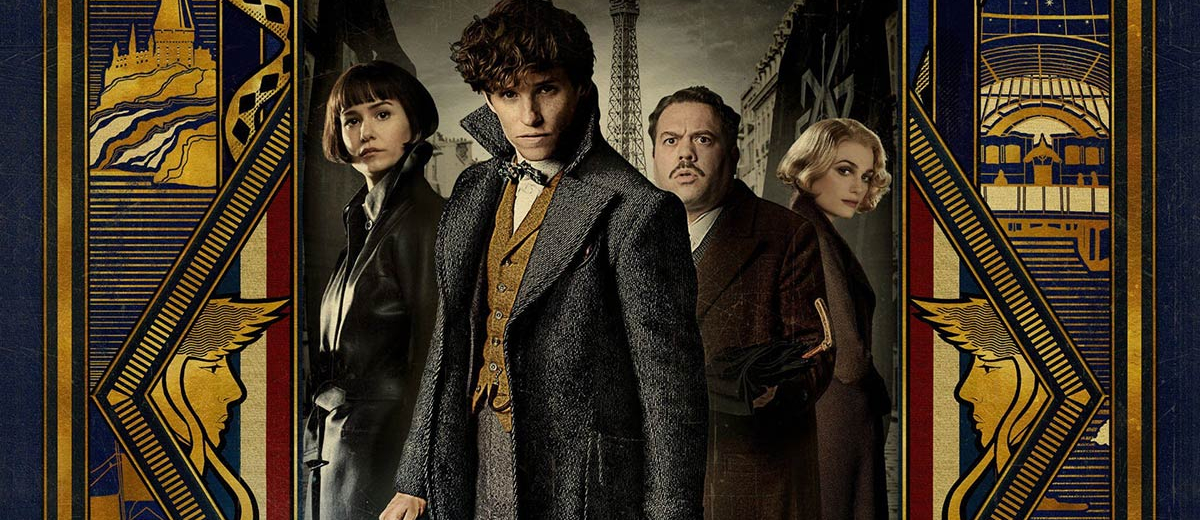
Fantastic Beasts: The Crimes of Grindelwald

Fantastic Beasts: The Crimes of Grindelwald

Posted on November 15, 2018 at 5:08 pm

B
Lowest Recommended Age: Middle School
MPAA Rating: Rated PG-13 for some sequences of fantasy action
Profanity: None
Alcohol/ Drugs: None
Violence/ Scariness: Extended fantasy peril and violence, some disturbing images
Diversity Issues: A theme of the movie
Date Released to Theaters: November 16, 2018
Date Released to DVD: March 11, 2019

Copyright 2018 Warner Brothers
Fantastic Beasts: The Crimes of Grindelwald” is a little less fantastic than the first film in this new series set in the Harry Potter universe. It serves as something of a bridge between the first Potterverse film set in the past and outside of England and whatever chapter comes next. The first film introduced us to a new set of characters and settings, taking place mostly in New York in the 1920’s.

J.K. Rowling is still more of a novelist than a screenwriter, and the screenplay is unwieldy and cumbersome, with too little investment in the characters, too much focus on the secondary details, and too little attention to the stakes of the story.

As we glimpsed at the end of the last movie, our evil villain is Grindelwald, played by Johnny Depp with bleached out hair and one light blue contact lens. And he’s something of a wizarding world white nationalist. While magics and non-magics (muggles in the UK, no-majs in the US) have existed peacefully side by side for centuries, Grindelwald wants the “pure-blood” magic people to reign over the mixed-race magics and the humans.

Our hero is still Newt Scamander (Eddie Redmayne), who is much more comfortable with magical creatures, even the destructive and dangerous ones, than he is with people, magic or not. With people he looks away and mumbles. With creatures, he instinctively knows how to make them feel safe, maybe because he feels safe with them.

Really, that’s plenty for a movie. But Rowling piles on lots of characters and lots of storylines and lots of world capitals — so many we might forget we’re not in a Bond movie, except that they all have the same chilly, sepulchral, beige color scheme. The movie is cluttered with layers of references to the Potterverse, including a visit to Hogwarts (young Dumbledore!), boggarts, polyjuice potion, and an encounter with Nicolas Flamel. And it is cluttered with mini-plots that don’t go anywhere (as Chekov should have said, if you’re going to introduce a character who turns into a snake in the first act, that snake better save the day in the third) or mini-plots you wish didn’t go anywhere (a search for a lost brother, a romantic misunderstanding that would have seemed tired in a “Brady Bunch” episode). Plus, don’t put the wildly talented Ezra Miller in a movie and give him nothing to do but look glum.

Instead of a missing puzzle piece in a complex, thoroughly imagined world, it is more like fan service. There is much to look at and much to enjoy but I can’t say that it’s Fantastic.

Parents should know that this film includes extensive fantasy peril and violence, characters injured and killed, and some disturbing images.

Family discussion: What would your boggart be and how would you make it ridiculous? Why do Grindelwald’s followers believe he is right?

If you like this, try: the “Harry Potter” series and the first “Fantastic Beasts” film

Related Tags:


Based on a book DVD/Blu-Ray Fantasy movie review Movies -- format Series/Sequel
Instant Family

Instant Family

Posted on November 15, 2018 at 5:04 pm

B +
Lowest Recommended Age: Middle School
MPAA Rating: Rated PG-13 for thematic elements, sexual material, language and some drug references
Profanity: Some strong language
Alcohol/ Drugs: References to drug abuse
Violence/ Scariness: Tension and some peril and accidents, brief disturbing images of injuries, family confrontations, issues of foster care
Diversity Issues: A theme of the movie
Date Released to Theaters: November 16, 2018
Date Released to DVD: March 4, 2019

Copyright 2018 Paramount Pictures
An adoptive mom explained to me once that most couples who adopt have “a drag-er and a drag-ee.” That can be the essence of a good partnership; parenting in any form is one of life’s greatest leaps into the unknown and it makes sense to talk it out thoroughly while understanding that no one can ever understand the terror, the exhaustion, the way children “push buttons you didn’t know you had,” and of course the unparalleled joy of being a parent until you get there, by which time you are probably too terrified, exhausted, and, yes, filled with joy to understand it even then. That is why we gravitate to movies like “Instant Family.” They give us a chance to think about how much our families mean to us.

Instant Family,” based in part on the real-life story of writer-director Sean Anders, tells us everything we need to know about Pete (Mark Wahlberg) and Ellie (Rose Byrne) in the first scene, as they race through a decrepit mess of a house thrilled at the possibilities only they can see. Their optimistic vision and instinctive teamwork will be needed when a half joking remark about adopting an older child to catch yup with their contemporaries leads Ellie to start looking at websites about foster parenting and then to being the drag-er to Pete’s drag-ee. “This is what we do! We see potential in things and fix them up!” But of course, as someone said, adults do not make children; children make adults. The parents get some fixing up, too.

After some foster parent training, they go to a “foster fair,” to meet some of the children who are available. They were not planning to foster a teen, but they are drawn to a remarkably self-possessed girl named Lizzy (Isabela Moner) (and a bit intimidated by her, too). The social workers (Tig Notaro and Octavia Spencer) tell them she has two younger siblings. They are daunted by the idea of going from zero kids to three all at once, but understand the importance of keeping them together and cannot resist their adorable photos. The next thing they know, they are calling out, “Kids! Dinner is ready!” and wondering whether it will be reassuring or intrusive to kiss them goodnight.

You can tell Anders (“Daddy’s Home”) has been through it and has spent time with other foster families. The film has well-chosen details of the two steps forward-one step back relationship with the children, especially Lizzie, who is used to taking care of her brother and sister herself and still hopes that their mother will come for them. It is frank about the issues of fostering children of different ethnicities, the ambivalent feelings about the possibility of the biological mother returning, and the moments when Pete and Ellie wonder if they’ve done the right thing, and if not loving the children immediately makes them horrible people. Ellie says at one point that she feels like she is babysitting someone else’s kids. And she’s right. They don’t become hers because a social worker says so or because a judge says so. They become hers because she does not give up. And because she fights for Lizzie. And because she brushes Lizzy’s hair so gently and lovingly.

Wahlberg and Byrne are perfectly cast and the tone and pacing are exactly right for depicting family life, where tears are mixed with laughter and laughter is mixed with tears. They are hilariously funny and also touching and moving. There’s great support from Notaro and Spencer and from Margo Martindale as a feisty grandmother, and Moner is excellent as Lizzy whether she’s being defiant, manipulative, protective, or vulnerable. This story could have been cloying or it could have been soap opera. But Anders and his cast make it into a genuinely heartwarming experience that makes us wish we could be part of their family, too.

Parents should know that this is a warm-hearted comedy that is frank about some of the issues presented in foster parenting and adoption including trauma and neglect, drug abuse, predatory behavior and sexting, with some strong language.

Family discussion: What were the biggest challenges Pete and Ellie faced and how well did they deal with them? What is the best way to help kids in the foster program?

If you like this movie, try: “Room for One More” with Cary Grant and his then-wife Betsy Drake

Related Tags:


Based on a true story Comedy Drama DVD/Blu-Ray Family Issues movie review Movies -- format
Bohemian Rhapsody

Bohemian Rhapsody

Posted on November 1, 2018 at 5:30 pm

B
Lowest Recommended Age: Mature High Schooler
MPAA Rating: Rated PG-13 for thematic elements, suggestive material, drug content and language
Profanity: Some strong language
Alcohol/ Drugs: Alcohol and drugs
Violence/ Scariness: Medical issues, sad death
Diversity Issues: A theme of the movie
Date Released to Theaters: November 1, 2018
Date Released to DVD: February 11, 2019
Copyright 20th Century Fox 2018

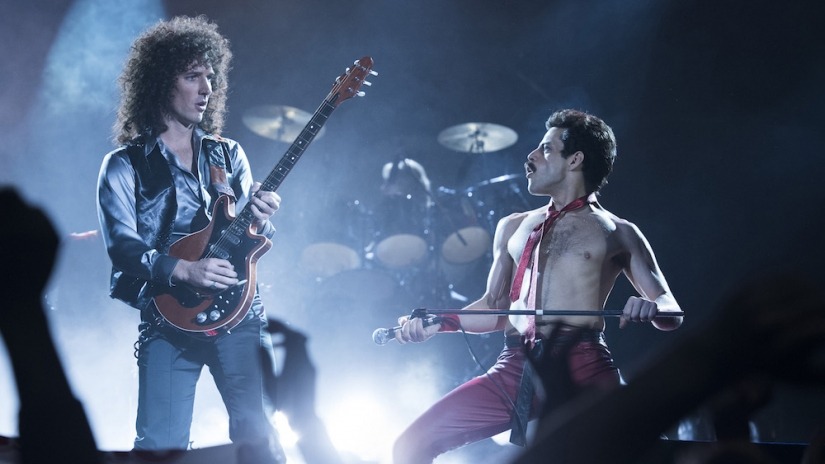
Bohemian Rhapsody” is a just-good movie with a great performance based on the life of a once-to-a-planet musician of endless talent and magnetism and a four-octave range of unmatched clarity and suppleness. In other words, it is entertaining, if not illuminating. Indeed, it is strange that a movie about fictional rock and pop stars, the 2018 version of “A Star is Born” is more insightful about what it is like to perform at that level than this movie based on the life of Freddie Mercury, the brilliantly genre-bending front man of power rock band Queen.

Musician biopics have a huge advantage over movies telling the life stories of writers, visual artists, and other public figures. It is, of course, the music. Whether the movie is highly fictionalized with Cary Grant as Cole Porter or Mickey Rooney as Lorenz Hart, in films that pretended they were not gay, or more honest, like Oscar winners Sissy Spacek as Loretta Lynn and Jamie Foxx as Ray Charles, the highlight of the films will always be the music that made the real-life characters stars. “Bohemian Rhapsody” has Queen’s rousing masterpieces and Rami Malek channels Mercury superbly, especially in those performance scenes, with a breathtaking re-creation of Queen’s legendary Live Aid performance in the film’s climactic scene.

The biggest risk in a biographical movie about a musician, though, is avoiding “VH1 Behind the Music”-itis. Unfortunately, real life for future Rock and Roll Hall of Famers does tend to follow the same pattern, and that is why we see the same scenes over and over. The family wants them to get a respectable job and not waste time on music. The early struggles. The recording session where someone in the control room says, “Wait a second, these guys have something special! Let me call my friend in the music business to sign them up.” The Vorkapich montage of tour dates to increasingly enthusiastic crowds. Yay, success! Yay, EXCESS! The squabbles. The industry executive who does not want them to be innovative (in this case, a sly meta-joke as he is portrayed by an unrecognizable Mike Meyers, whose iconic head-banging to the film’s title song in “Wayne’s World” created another generation of fans). The breakups. The reconciliation. It’s very hard to tell that story again and make it specific enough to stand out.

And then there is the other risk. Either the surviving members of the band are not involved, so you risk authenticity, or they do participate, as Brian May and Roger Taylor did here, so we see their version, which may be spun, even sanitized.

Freddie Mercury was born Farrokh Bulsara, to a Parsi family from the Zoroastrian community of the Indian subcontinent. We first see him in the film working as an airport baggage handler, being called by the (inaccurate) racist epithet “Paki.” Farroukh, already calling himself Freddie, is a fan of a popular local rock group called Smile. When their lead singer quits, he does an impromptu demonstration of his stunningly melodic voice, explaining that his overbite is caused by an extra set of incisors, which he credits for his range. The film then trudges through the steps outlined above.

The dramatic scenes are soapy and predictable — betrayed by a manager, estrangement from the band, too many cats, too many parties, learning that you can’t escape yourself, some reconciliation. Lucy Boynton (continuing her connection to 80’s music from “Sing Street”) is lovely as the ever-loyal Mary, who was Freddie’s closest friend, even after their romantic relationship ended because he was gay. The other band members barely register as individuals; more time is given to Myers’ stunt casting as the record industry guy who tells them that the six-minute “Bohemian Rhapsody” will never be played by teenagers in a car (get it? that’s what happens in “Wayne’s World!”). The “this is how we wrote that song” sections are especially weak. The songs themselves, though, are as captivating as ever and Malek, who struggles a bit with the overbite prosthetic, recreates them with all they buoyancy and flamboyance Freddie would want.

Parents should know that this film has the expected sex, drugs, and rock and roll in a story of a real-life rock star, with strong language, sexual references and non-explicit situations, and wild partying, along with medical issues and a sad death.

Family discussion: Who understood Freddie best? Why was Live Aid so important to him?

If you like this, try: the documentary “The Story of Queen: Mercury Rising” and YouTube clips of the Live Aid performance

Related Tags:


Based on a true story Biography DVD/Blu-Ray movie review Movies -- format Music Musical
Boy Erased

Boy Erased

Posted on November 1, 2018 at 5:20 pm

B +
Lowest Recommended Age: Mature High Schooler
MPAA Rating: Rated R for sexual content including an assault, some language and brief drug use
Profanity: Some strong language
Alcohol/ Drugs: Brief drug use
Violence/ Scariness: Graphic, disturbing rape scene
Diversity Issues: A theme of the movie
Date Released to Theaters: November 2, 2018
Date Released to DVD: January 28, 2019
Copyright 2018 Focus Features

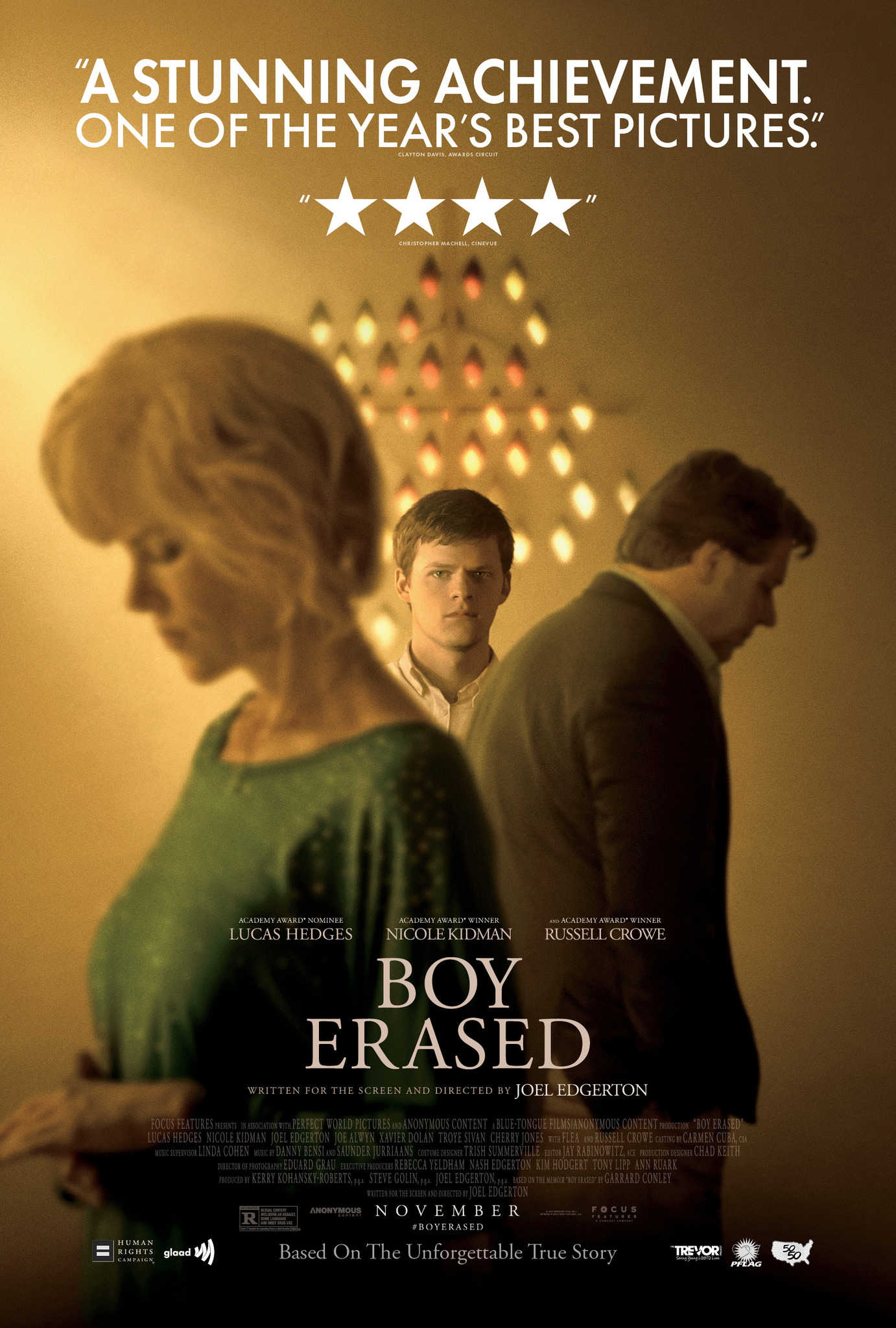
Boy Erased” is the second major feature film released in 2018 about Christian “gay conversion” facilities (the documentary “Far from the Tree” touched on gay conversion therapy). It is based on the experience of and expose by Garrard Conley, “Boy Erased” might better be called “Boy Ineradicable” because it is the story of a college student who is at first genuinely grateful to be sent to the conversion facility to be “cured,” but there realizes, contrary to and because of that experience, that those who do not understand that he is healthy and love him as he is and for who he is — those are the people in need of conversion.

Home movies show us Jared (as he is called in the film, played by Lucas Hedges) as an only child growing up with devoted and loving parents. His father, Marshall (Russell Crowe) is a preacher and a prosperous owner of a car dealership. He is a sincere and honest man of faith, preaching redemption, not fire and brimstone. Jared’s mother is Nancy (Nicole Kidman), with blonde bouffant hair, perfect manicure, and sparkly sense of style. As Milton wrote in Paradise Lost, “For contemplation he and valour formed,
For softness she and sweet attractive grace; He for God only, she for God in him.”

Jared is a high school basketball player with a pretty cheerleader girlfriend and a brand new car as a birthday gift. But he pushes her away when she tries to get physical, telling her he wants to wait. In college, a handsome student invites him to join him in running and come to his church — and then he rapes Jared. Afterward, he cries, confesses he has done it before, and begs Jared not to tell. And then he pretends to be a counselor, and calls Jared’s parents to tell them that their son has been engaging in homosexual activity.

Jared at first denies it, and does not tell them the truth about the rape. But then he confesses that he does think about men. Marshall consults with senior clergy, and packs Jared off to what begins as a twelve-day live-out program run by a group gruesomely called Love in Action,” run by Victor Sykes (writer/director Joel Edgerton). Sykes tells the young people sent to his facility to make a moral inventory and to list all family members who have sinned, helpfully giving a list of categories to assign, from gang activity to gambling, alcoholism and drug abuse, and homosexuality. “None” is not an acceptable answer.

At first, Jared tries to change. But as he witnesses the abusive tactics, from humiliation to “recommendations” that the participants be switched from live-out, short-term care to live-in care for an indeterminate period, he begins to understand that he is not the one with the problem. Later, we see how his mother and father diverge in their ability to accept him for who he is.

Edgerton’s writing, directing, and performance are all first-rate here. He has said that the issue of imprisonment has scared and fascinated him all his life, and he powerfully creates the sense of claustrophobia and abandonment of the Love in Action facility, and the inept but extremely damaging techniques that exemplify the experiences of almost 700,000 people. His fellow Aussies Crowe and Kidman create real, human portraits, not caricatures. Kidman has two outstanding scenes showing us how Nancy resolves the conflicts between what she has been taught and the love of her son. In his big scene, Crowe shows us a man who is struggling with that conflict. “I sought the counsel of wiser men,” he says, and really, that is what it is all about. How do we decide who is wiser? The information about the main characters at the end provides a powerful coda. Flea is fine in a small role as one of the instructors at the facility, who confesses his own sins and tries to teach the participants how to stand in a manly way.

Hedges continues to impress with his exceptionally thoughtful performances, following his work in “Manchester by the Sea,” “Lady Bird,” and the upcoming “Ben is Back.” He shows us Jared’s vulnerability but also his resilience, and the essential decency that leads him to be true to himself because of his empathy for what the others are going through. This movie should do that for us as well.

Parents should know that this film concerns “gay conversion” with abusive and homophobic activities, a brutal rape scene, sexual references, some strong language, and brief drug use.

Family discussion: Why did Jared’s parents have different ideas about what was best for him? Who are the “wiser” people you consult for advice and why?

If you like this, try: “The Miseducation of Cameron Post” and “But I’m a Cheerleader”

Related Tags:


Based on a book Based on a true story Drama DVD/Blu-Ray Family Issues GLBTQ and Diversity movie review Movies -- format
The Nutcracker and the Four Realms

The Nutcracker and the Four Realms

Posted on October 31, 2018 at 8:04 pm

B-
Lowest Recommended Age: Kindergarten - 3rd Grade
MPAA Rating: Rated PG for some mild peril
Profanity: Some mild languages
Alcohol/ Drugs: None
Violence/ Scariness: Some peril and violence, swords, falls, no one hurt, characters grieving sad death of parent
Diversity Issues: None
Date Released to Theaters: November 2, 2018
Date Released to DVD: January 28, 2019
Copyright 2018 Disney

The Nutcracker and the Four Realms” is a beautiful empty mess of a movie. The production design by Guy Hendrix Dyas and costumes by Jenny Beavan are genuinely enchanting. Disney is a modern-day Medici, giving work to the world’s top artisans and the look of the film is gorgeously imagined. But boy, it’s like a fabulously wrapped gift that once you remove the ribbons and paper turns out to be nothing but an empty box. Ultimately, the visuals are so sumptuous and look-at-me that they overwhelm the story.

It is inspired, of course, by the classic ballet, which, let’s all admit, is not much of a story, based on a 200 year old tale by E. T. A. Hoffmann about a young girl named Clara who defeats an evil mouse king with the help of a nutcracker who comes to life. It’s just there to provide an excuse to play the one of the most beloved orchestral pieces of all time, the celestial Pyotr Ilyich Tchaikovsky Nutcracker Suite and to perform the now-classic dances. Half of the Nutcracker is just a performance put on for Clara by dolls and toys of different nationalities.

Almost as well-loved as the ballet, a perennial holiday favorite, is the sequence in Disney’s “Fantasia” (which premiered in 1940, four years before the first US performance of the Nutcracker ballet). Fish swim sinuously to the Arabian Dance music, and fairies bring winter to the forest to Dance of the Sugarplum Fairy. But what everyone remembers best is the mushrooms dancing to the Chinese section, one tiny mushroom racing to keep up.

In this version, Clara (Mackenzie Foy, struggling with her English accent and struggling even more with a story that veers from dull to wha??) is the middle child in family in mourning following the death of the mother. It is their first Christmas without her, and they are all feeling lost. Clara’s father (Matthew Macfadyen) tells the children that their mother left them each a gift to be opened on Christmas Eve, a favorite ball gown for her older sister, toy soldiers for her younger brother, and for Clara an intricate egg-shaped box without the key to unlock it. The note says that everything Clara needs is inside.

Clara, like her mother, is a gifted mechanical engineer (she amuses her brother with a clever Rube Goldbergian contraption that deserves more of a payoff later, but the filmmakers do not appear to be paying much attention or expecting us to be, either). So, at the very fancy Christmas Eve party where her father’s primary concern is that Clara dance with him “because everyone expects it,” Clara does just what he told her not to do — she sneaks off to find the host, her godfather (Morgan Freeman, in an eyepatch), who is ignoring the guests and tinkering in his workroom. She thinks he might have a key. And of course in a way, he does.

The next thing we know, Clara has been led to a mysterious Oz/Narnia-like enchanted land, where a mouse steals the key and she chases after him. With the help of a nutcracker come to life (Jayden Fowora-Knight) she learns some secrets about her mother and has to save the day from the evil character who wants to dominate the four realms. Believe me, you don’t need to understand this part. You probably don’t want to, either.

There are some references to “Fantasia,” including an image of a conductor and orchestra directly taken from the film. But why put the red mushrooms in the forest if they aren’t going to dance? Why bring in James Newton Howard to create a new score when it is definitively impossible to improve on Tchaikovsky? And why why why relegate Misty Copeland (mostly) to a credit sequence after the movie is over? The ballet scenes are frustratingly short, while chase scenes and PG-level action take far too much time.

Director Lasse Hallström, known for warm-hearted, deeply sympathetic films like “My Life as a Dog,” “What’s Eating Gilbert Grape,” and “Cider House Rules” had to leave the film for another project, and it was finished by Joe Johnston, known for skill with special effects stories like “Honey I Shrunk the Kids,” “The Rocketeer,” and “Jumanji.” This may explain a disjointed tone, particularly with one character whose transformation is fine as a matter of plot but jarringly wrong in tone that takes us completely out of the movie. It is lovely to have a fantasy film with a girl who has courage and agency, but the way it handles its themes of loss are disjointed as well, with a truly jarring disparity in the treatment of Clara and the rest of her family and slightly creepy suggestions about the way the girls make up to their father for the loss of their mother and about how evil and (mild) sexuality (double entendres) are linked.

This movie would be a lot better if it had fewer realms and better writers.

Parents should know that this is too intense for little ones, with scary soldiers, peril and some violence, swords, falls (no one hurt) and characters mourning a sad death of a parent.

Family discussion: What did the note from Clara’s mother mean? What made Clara different from her brother and sister? What made her change her mind about Mother Ginger? How do Clara and Sugar Plum respond differently to the loss of someone they loved?

If you like this, try: “The Wizard of Oz” and “Labyrinth”

Related Tags:


Based on a book DVD/Blu-Ray Family Issues Fantasy Features & Top 10s Movies -- format Scene After the Credits
THE MOVIE MOM® is a registered trademark of Nell Minow. Use of the mark without express consent from Nell Minow constitutes trademark infringement and unfair competition in violation of federal and state laws. All material © Nell Minow 1995-2026, all rights reserved, and no use or republication is permitted without explicit permission. This site hosts Nell Minow’s Movie Mom® archive, with material that originally appeared on Yahoo! Movies, Beliefnet, and other sources. Much of her new material can be found at Rogerebert.com, Huffington Post, and WheretoWatch. Her books include The Movie Mom’s Guide to Family Movies and 101 Must-See Movie Moments, and she can be heard each week on radio stations across the country.

Website Designed by Max LaZebnik