Cyrano

Cyrano

Posted on January 31, 2022 at 6:48 pm

A-
Lowest Recommended Age: Middle School
MPAA Rating: Rated PG for some strong violence, thematic and suggestive material, and brief language
Profanity: Brief strong language
Alcohol/ Drugs: Alcohol
Violence/ Scariness: Sword fights and battles, characters injured and killed
Diversity Issues: A theme of the movie, but transphobic humor
Date Released to Theaters: February 4, 2022
Date Released to DVD: April 18, 2022

Cyrano
Copyright 2021 MGM
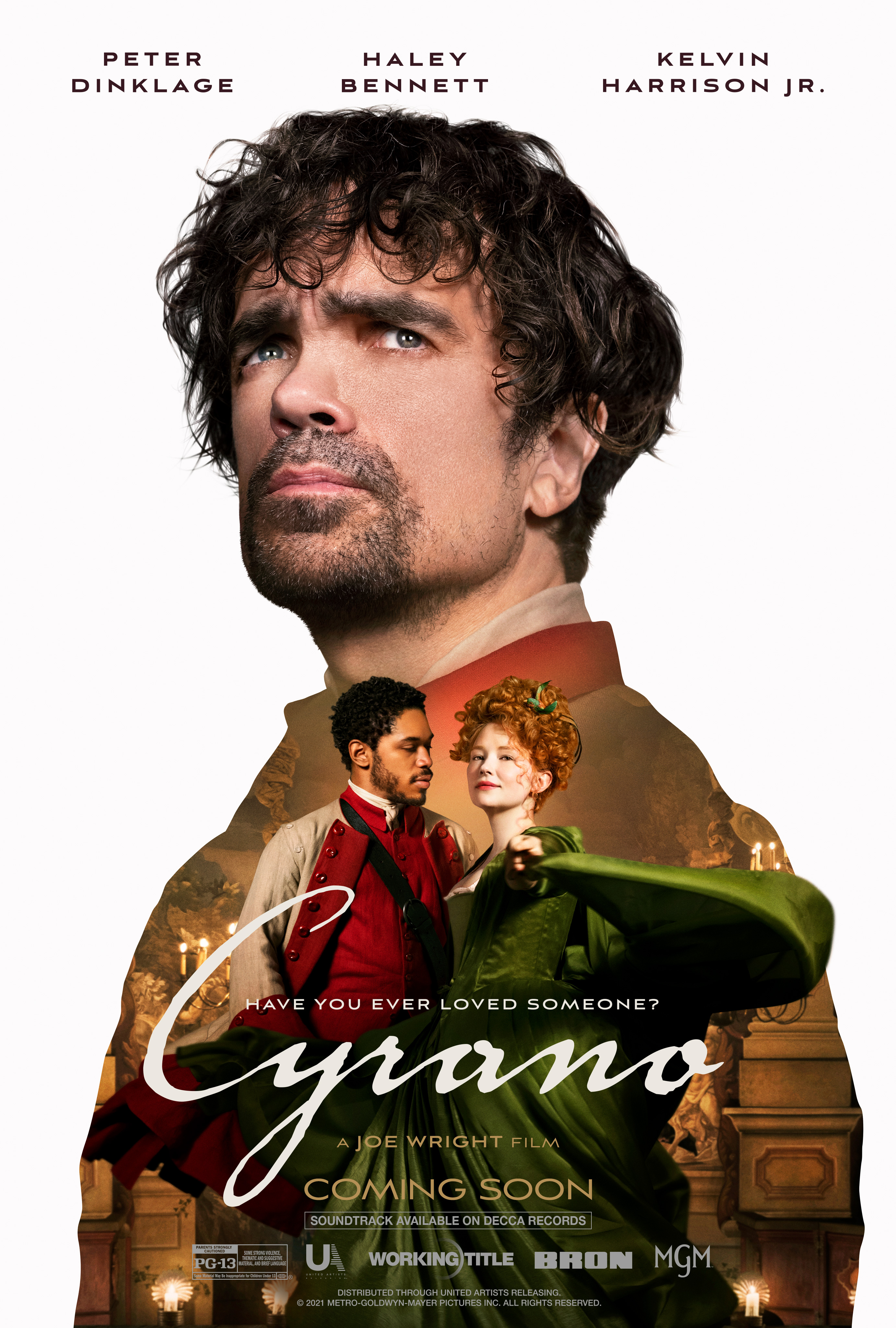
Cyrano” is a gorgeous film, a true labor of love. The basis, of course, is one of the great classic plays of all time, Edmond Rostand’s 1897 Cyrano de Bergerac, inspired by a real soldier/writer. Jose Ferrar won an Oscar for his performance as the title character in a 1950 film. The story of the man who cannot tell the woman he loves how he feels because of the way he looks has been adapted and rebooted many times, with probably the best known Steve Martin’s Roxanne and most recently set in a high school in “The Half of It.” Everyone can identify with a character who is afraid to approach the object of their affection and everyone would like to identify with a character whose wit is as ready and sharp as his sword. In the original and the Steve Martin version, the main character’s rapier-like comebacks to a thoughtless bully are a highlight.

In the original and “Roxanne,” the impediment is a nose so big that the Cyrano character believes no one can see him as a romantic partner. In this swooningly romantic new version, set, like the original, in the 17th century, the physical obstacle is size. Writer Erica Schmidt adapted the play as a musical to be performed on stage by her husband, actor Peter Dinklage (“Game of Thrones”) as Cyrano, and ravishingly lovely Haley Bennett as Roxanne. They play those parts in this film, directed by Bennett’s significant other, Joe Wright (“Atonement,” “Pride and Prejudice”)

Roxanne is loved by three men: Cyrano, the handsome but better-with-a-sword-than-with-poetic-love-letters Christian (Kelvin Harrison, Jr. of “Waves”), and the selfish, predatory De Guiche (Ben Mendelsohn). Cyrano has been her closest friend and confidant since childhood. De Guiche is pressuring her to marry him. Her maid reminds her that she has no money and no other options for supporting herself. But one night at the theater, she glimpses Christian, a newcomer to the military unit where Cyrano serves, and she loses her heart to him. Cyrano agrees to ghost-write love letters from Christian to Roxanne. He pretends it is to help the new recruit but in reality it is to have his one chance to tell the woman he loves how he feels, even if the letters are signed by someone else.

In a way, Schmidt is giving her words to the man he she loves so that we can see him the way she does, gallant, mordantly witty, a brilliant actor, and a person of deep and generous humanity. A scene where he is almost about to dare to hope that Roxanne will say she loves him, the emotions that flicker across his face as he is almost successful maintaining his composure is one of the most touching moments on screen this year.

With Schmidt and Wright creating the words and images for the people they love, in spectacularly beautiful costumes (Massimo Cantini Parrini and Jacqueline Durran) and settings (Sicily filling in as 17th century France) with music and even some dance numbers, the unabashed romanticism almost bursts out of the screen. Bennett makes a lovely Roxanne, clever and spirited but allowing her own romanticism to blind her to the love that is already hers. Mendelsohnn seems to specialize in bad guys these days, and this is another strong performance, De Guiche’s brutality glimpsed under a very thin veneer of suavity. Harrison makes a gallant Christian. But it is Dinklage who is in every way the heart of the story. Just as we get to see Cyrano finally use his own words under cover of darkness to play the part of the man whose outside matches his inside, in this film we get to see Dinklage take center stage, with a performance of heart-stopping vulnerability. Rostand would be proud, and so would the man who inspired the play that continues to capture us more than a hundred years later.

Parents should know that this film includes brief strong language, sexual references, sword fights, and battle scenes, with characters injured and killed.

Family discussion: Should Cyrano have told Roxanne how he felt? If so, when? Is there a time when you misjudged someone based on looks or when you were misjudged?

If you like this, try: “Roxanne” and the Ferrar and PBS versions of “Cyrano de Bergerac”

Related Tags:


Based on a play Classic Date movie Drama DVD/Blu-Ray Epic/Historical movie review Movies -- format Remake Romance
Sing 2

Sing 2

Posted on December 22, 2021 at 11:00 am

B +
Lowest Recommended Age: Kindergarten - 3rd Grade
MPAA Rating: Rated PG for some rude material, mild peril/violence
Profanity: Some schoolyard language
Alcohol/ Drugs: None
Violence/ Scariness: Some peril and threats of violence
Diversity Issues: Some humor about a disabled character
Date Released to Theaters: December 22, 2021
Date Released to DVD: March 28, 2022

Copyright 2021 Illumination
This sequel wisely jettisons the less interesting plot lines from the original, the backstories of the animals with dreams of singing before cheering audiences, in favor of what worked best the first time, the performances themselves. “Sing 2” is all about putting on a show, and it begins with a smashing version of Prince’s “Let’s go Crazy.” There’s a lot happening, but take a moment to notice the costumes worn by the performers. They were created by high fashion house Rodarte.

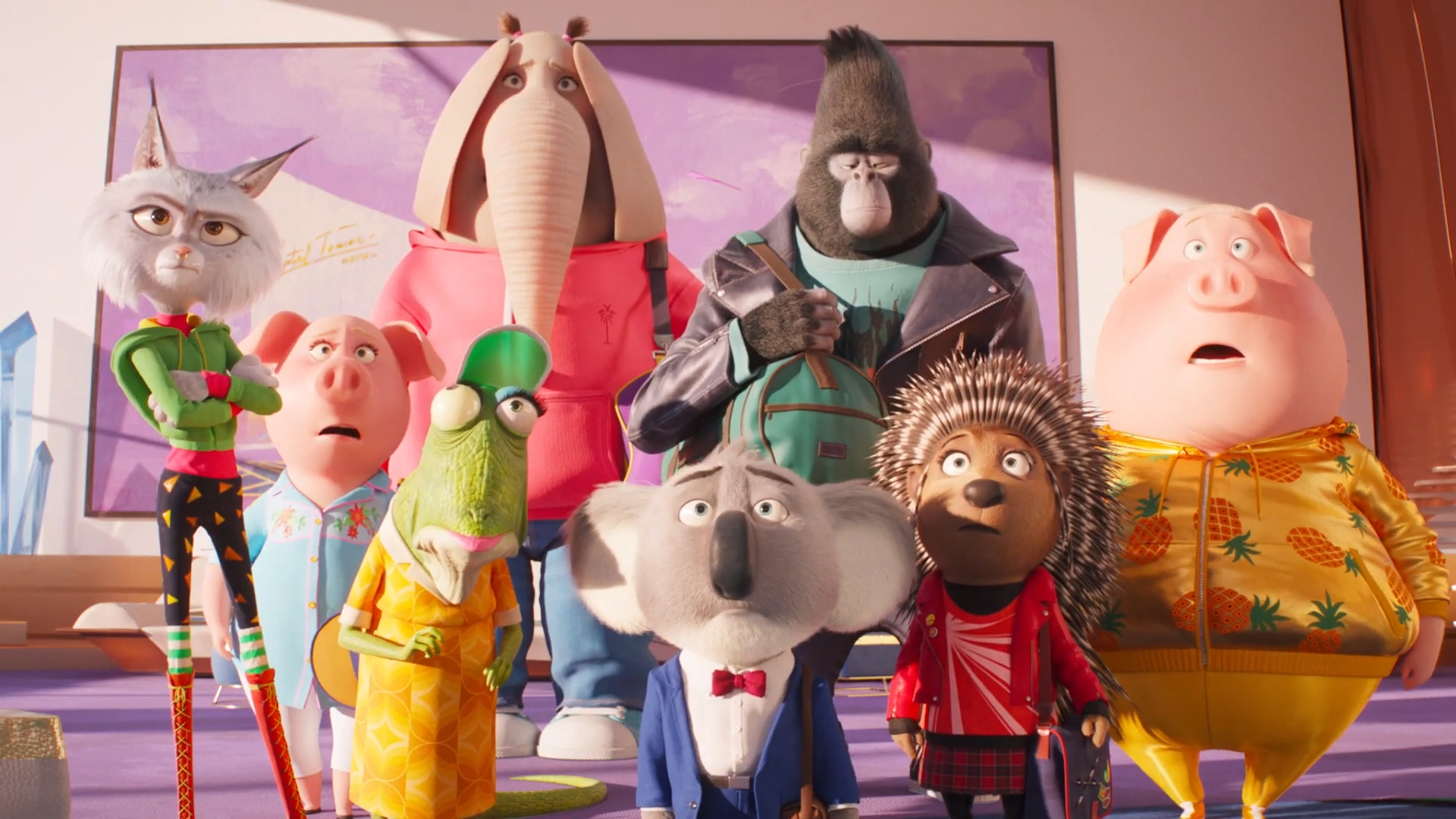
Koala impressario Buster Moon (Matthew McConaughey) has a bigger dream than ever. He wants to take his performers to the entertainment capital of the world, Redshore City, with its enormous and ultra-glamorous theater, the Crystal Tower. It is run by Mr. Crystal (Bobby Cannavale), a tough-talking wolf who only agrees to let them put on their show if they can promise to deliver the lion rock star-turned recluse Clay Calloway (Bono). Moon promises that he will, though he has no idea where Calloway is or how to persuade him to return to performing. There’s a bigger problem. He has the performers, including porcupine Ash (Scarlett Johansson), pig and mother of innumerable piglets Rosita (Reese Witherspoon), gorilla Johnny (Taron Egerton), and shy elephant Meena (Tori Kelly). But despite what they promised Mr. Crystal, they do not have a show, only a concept from Gunter (Nick Kroll) of a space opera titled “Out of this World.” They don’t have enough information to tell the crew what kind of sets to build except that it is set on four different planets and there is a spaceship.

All of which sets up various shenanigans as the little group tries to keep Mr. Crystal from finding out what is going on as they track down Clay Calloway and get the show ready. There are some additional complicating factors. Crystal’s spoiled daughter Porsha wants to be in the show even though her acting is terrible (she can sing, though; she is voiced by pop star Halsey), and her daddy thinks she should have whatever she wants. Johnny cannot learn the complicated moves from the choreographer. Meena’s new co-star is an arrogant Yak (Eric André), who intimidates her. The ice cream guy, though, has her bashful heart fluttering.

All of this is done with heart and humor that will delight young audiences while the parents will get a kick out of the eclectic mix of songs, from Grammy-winning favorites to esoteric Indies and even a little Prokofiev. The audition scene is like a lightning round of Name That Tune. Bono’s rumble makes a great vocal contribution as Clay, and the poignance of his grief gives the story greater heft. There’s even a new U2 song on the soundtrack to underscore in both senses of the word) the way that music can heal and connect. It adds to the ebullience of the film, and like all great music, inspires calls for an encore.

Parents should know that there is some cartoon-style peril and threats of violence and some mild humor about a character’s disability, in addition to some schoolyard language.

Family discussion: Which character is your favorite? What musical show would you like to create? What is Porsha good at?

If you like this, try: the first “Sing” and the Trolls movies.

Related Tags:


Animation Comedy DVD/Blu-Ray Fantasy For the Whole Family movie review Movies -- format Musical Series/Sequel Talking animals
Spider-Man: No Way Home

Spider-Man: No Way Home

Posted on December 14, 2021 at 12:12 pm

B +
Lowest Recommended Age: Middle School
MPAA Rating: Rated PG-13 for sequences of action/violence, some language and brief suggestive comments
Profanity: Some strong language
Alcohol/ Drugs: None
Violence/ Scariness: Extended comic-book/fantasy peril and violence, characters injured and killed, very sad death, some graphic and disturbing images
Diversity Issues: None
Date Released to Theaters: December 17, 2021
Date Released to DVD: April 11, 2022

Spider-Man: No Way Home
Copyright Sony 2021
Spider-Man: No Way Home” is everything a comic book movie should be, filled with excitement, heart, humor, and details to delight the fans. There were audible gasps of joy and more than a few tears in the audience when I saw it, and some of them were mine.

It is tough to say much more without spoilers, but I am going to try. I recommend that you see the movie before reading the rest of the review, though, if you want the delight of all of the surprises. Then come back here and see what I have to say to find out if you agree.

It takes off where “Spider-Man: Far From Home” left us, with the public revelation that Spider-Man is high school student Peter Parker. Now, helicopters are hovering outside of the apartment Peter (Tom Holland) shares with Aunt May (Marisa Tomei). Blowhard J. Jonah Jameson (J.K Simmons) is a Limbaugh/O’Reilly-style media personality who calls Spider-Man a terrorist and vigilante, leading to public protests. Aunt May, Spidey’s best friend and “chair guy,” Ned (Jacob Batalon) and girlfriend MJ (Zendaya) are all being harassed. Almost as painful, his high school teacher has set up something of a shrine and the principal tries to reassure him by telling him he is welcome to swing through the halls or crawl on the ceiling.

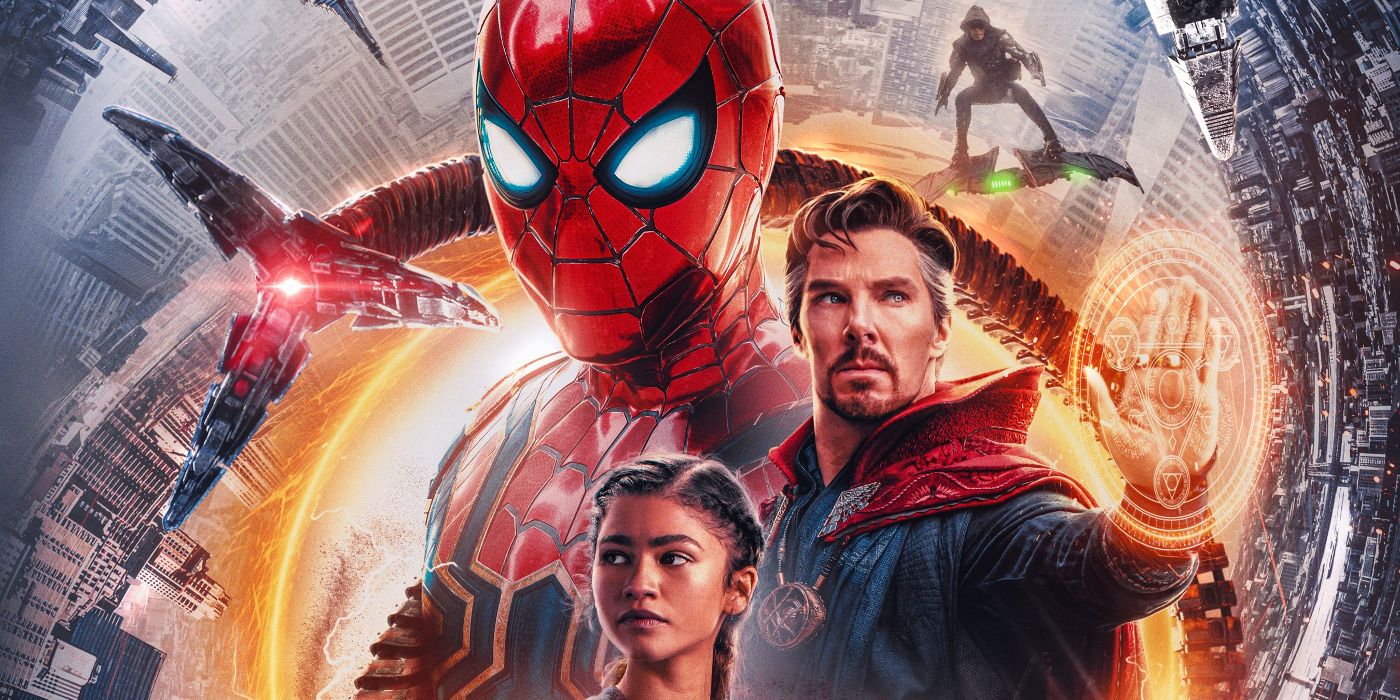
Peter cannot live his life or help anyone else in this situation, so he goes to one of the other Avengers for help: Dr. Strange (Benedict Cumberbatch). What he needs is a way to make everyone forget they know his secret identity. Strange agrees to help, but Peter interrupts the spell and something goes wrong.

Spoiler alert, last warning: this opens up a portal to the multi-verse, and that lets in some of the classic Spidey villains, including my all-time favorite, Doc Oct (Alfred Molina). There is also an appearance by my least favorite Spider-Man villain, but this film gives him a vastly better role. This leads to some show-stopping confrontations, staged with exceptional dynamism, pacing, and even wit. There are some very funny moments when the super-villains refer to each other as “a brilliant scientist” and when they compare notes. “You fell into something? I fell into something!”

There are more delicious meta-moments, but it is all anchored by real emotion. Peter is a teenager, so the anguish of college applications and the drama of first love are as wrenching as the battles with supervillains to save the planet. Just as the previous entry upended the usual structure of the superhero/supervillain conflict, this one remixes it again, raising the fundamental question about what it is we want or should want from those battles, but cleverly letting us have it both ways. Peter’s mentor, Tony Stark, is gone, and so the person he seeks help from is Dr. Strange. Like Stark, he is arrogant and impatient but not unmoved by Peter and he provides some critical (in both senses of the word) direction, ordering Peter, Ned, and MJ to “Scooby-Doo this s**t.” If it glosses quickly over the actual problem-solving (requiring chemical stuff and mechanical stuff and computer stuff) it’s fine because we would not want to watch that for too long when there are action scenes ahead and they are bangers.

Peter gets some guidance and support from an unexpected source that adds to the humor and to the emotional heft of the story, touching on love, loss, chance, and regret and, as they say in “The Good Place,” what we owe each other. What Marvel/Sony/Columbia owes the audience is a terrific comic book movie, and they have delivered.

NOTE: Stay all the way through the credits for TWO extra scenes.

Parents should know that this film features extended superhero/fantasy peril and violence. Characters are injured and killed and there is a very sad death and discussion of loss and regret. There is some strong language and a kiss.

Family discussion: Was Aunt May right about second chances? What was the most important thing Peter learned from his counterparts?

If you like this, try: the entire Spidey-verse of movies, including the three each for Tobey Maguire and Andrew Garfield and the Oscar-winning “Spider-Man: Into the Spider-Verse”

Related Tags:


Comic book/Comic Strip/Graphic Novel DVD/Blu-Ray Fantasy High School movie review Movies -- format Scene After the Credits Series/Sequel Stories about Teens Superhero
West Side Story (2021)

West Side Story (2021)

Posted on December 9, 2021 at 5:33 pm

A-
Lowest Recommended Age: Middle School
MPAA Rating: Rated PG-13 for some strong violence, strong language, thematic content, suggestive material and brief smoking
Profanity: Strong and racist language
Alcohol/ Drugs: Drinking, smoking, references to drugs
Violence/ Scariness: Gang violence, knives, gun, characters injured and killed
Diversity Issues: A theme of the movie
Date Released to Theaters: December 10, 2021
Date Released to DVD: March 21, 2022

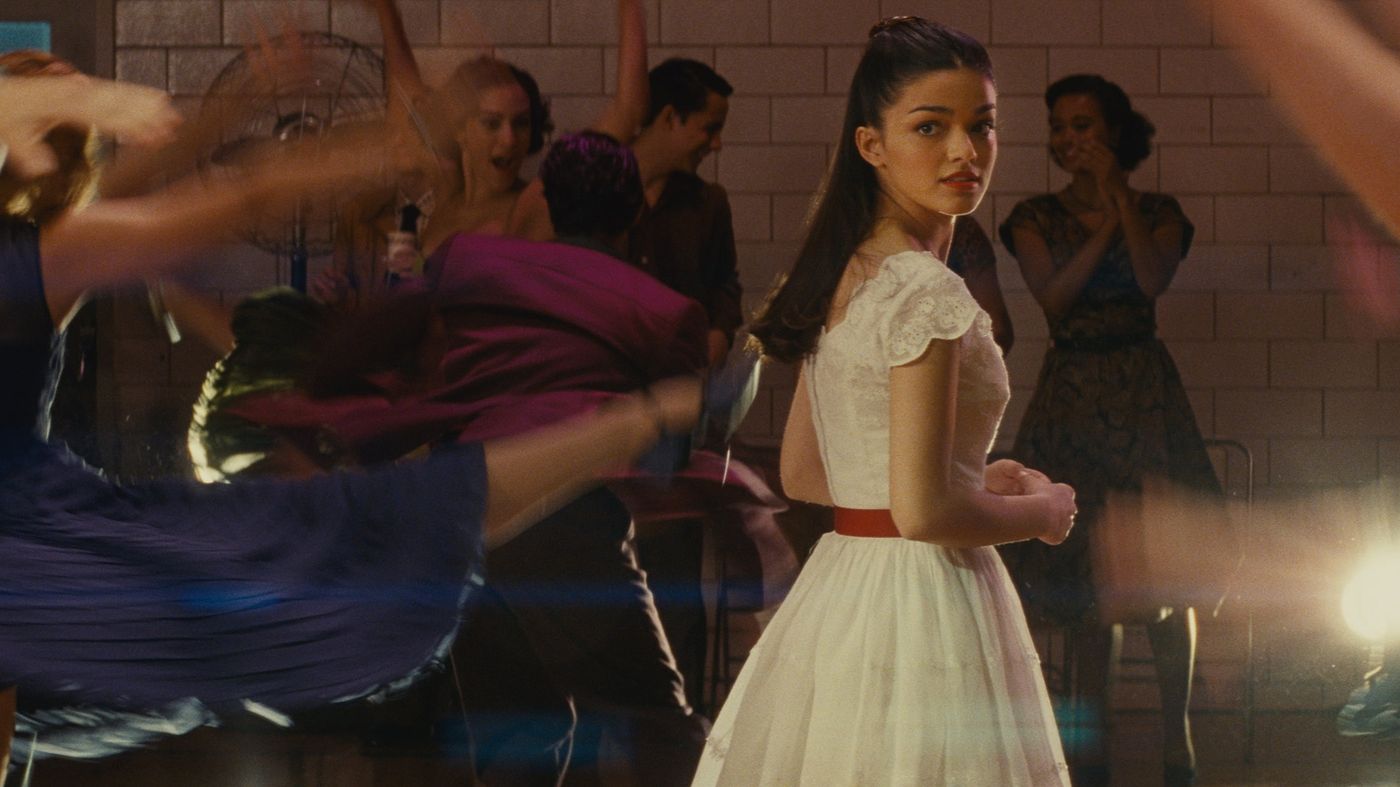
Why remake a 60-year-old movie that won ten Oscars and is still beloved, even while admitting its shortcomings and its being quaintly out of date on some of the issues it raises? Because Steven Spielberg and screenwriter Tony Kushner have taken the best from the original and made the essence of the story even more powerful and meaningful. “West Side Story,” the original itself a remake of Shakespeare’s “Romeo and Juliet,” itself a reworking of an Italian story that had at least three different versions before Romeo compared Juliet to the sun and Juliet asked what there was in a name. The themes of love, loss, fear, and anger will always inspire our stories, and the incomparable music by Leonard Bernstein, with lyrics by then then-25-year-old Stephen Sondheim, are as thrilling as ever in this new version.

Maybe there will be another remake 60 years from now, but it is hard to imagine it being better than this one. Spielberg’s gift for visual story-telling, with brilliant cinematography from Janusz Kaminski, production design from Adam Stockhausen, and editing by Sarah Broshar and Michael Kahn match and enhance the muscular electricity of the Bernstein score. There are star-making performances from the entire cast, especially Ariana DeBose as Anita, Mike Faist as Riff, and Rachel Zegler as Maria. Rita Moreno, who won an Oscar for her performance as Anita 60 years ago, all but steals the movie as Valentina, a new role, replacing Doc, the owner of the convenience store. In this version, she is his widow, their own marriage a symbol of what Tony and Maria aspire to.

West Side Story (2021)
Copyright 20th Century 2021

Kushner’s changes are subtle and judicious, making the story deeper and more urgent. The opening shots show us that the turf battle has already been lost. The wrecking ball is knocking everything down. The only home the Jets have ever known is being torn down “for slum clearance” to make way for a gentrification project that will include a high-end high-rise and the high-culture Lincoln Center for performing arts. When Anita sings in “America” about some day living in an apartment with a terrace, she is standing near a sign showing the glamorous building that will replace the town-down tenements.

The setting looks like a bombed-out war zone. This makes the the emotion more vivid and the stakes more concrete (in both senses of the word). When “West Side Story” was first written, juvenile delinquents were listed by a majority of Americans as one of their most important concerns, next to atomic weapons. In order to make the concerns of the gangs as visceral today, Kushner shows us why Riff and the Jets feel that everything is being taken from them. The detective tells them that all the white people in the community who were smart enough to get out are gone. They are, he says, “the last of the can’t make it out Caucasians.”

Everything that gave them a sense of power, belonging, and control (“little boy, you’re a man, little man, you’re a king”) is being reduced to rubble and replaced with spaces that would be alien to them even if they could afford them. There is dust everywhere, and everything is washed out, knocked down, and covered with grit. The Jets cannot fight City Hall. All they have left is their fury and what they use to assuage it — the feeling of brotherhood. They sing of the Jets as a family (“you’ve got brothers around; you’re a family man”) while Tony says he envies the Puerto Ricans’ strong, committed biological families. There is no one to take it out on but the newcomers who are even lower on the social hierarchy than they are, the Puerto Ricans. Riff says, “I wake up to everything I knew being sold or wrecked or being taken away by someone I don’t like.”

Their gang, the Sharks, is fueled by resentment at being treated like second-class Americans in their own country. And they, too, are worried about losing their sense of family. They want the opportunities available to white, native English-speaking Americans but they want to remain intact, insular, restricting their associations to those they can trust. Their internal conflict is shown in “America,” where the girls sing of what they can do and buy and the boys jeer at them for ignoring the bigotry they will face — while not being willing to go back to Puerto Rico.

Some changes reflect our more sensitive understanding of the very issues the original depicted. In this version, the Latinx characters are played by Latinx performers of different skin tones and no one wears brownface make-up. All of the performers do their own singing. In addition, the Spanish dialogue is not subtitled. Some gender/sexuality insults remain in the script but the character once derisively called “Anybody’s,” who we might now call non-binary, is portrayed with more depth. The dance numbers are less balletic, more a reflection of the energy of emotions the characters are feeling.

Kushner’s changes to the script are sometimes subtle but every one adds to the emotion and revelation of character. In this version, Tony has even more reason to be reconsidering his commitment to the Jets, and he has an example in Valentina, his employer and friend, of what is possible. The “Cool” song has much more of an impact here, sung by Tony to Riff when he discovers that Riff has bought a gun. “I Feel Pretty,” instead of a bridal shop, is sung in a department store, where Maria is an after-hours cleaner. The dance through the aspirational scenes of mannequins “enjoying” middle class life parallels the reference to the apartment with a terrace. And Tony takes Maria to see The Cloisters, a beautiful cathedral-like setting for “One Hand, One Heart” that evokes the timelessness of Romeo and Juliet.

This story is very much of its time but its themes, too, are timeless, and with this new version we can experience it with the deeper understanding of its themes, a new generation of performers making it as new to us as it is to them, and one nod to the past with Moreno reminding us that like the late Bernstein and Sondheim, brilliance is always forever renewing itself.

Parents should know that this movie includes strong language with some racist terms, sexual references and a non-explicit situation, drinking, smoking, references to drugs, and gang violence, with knives and a gun. Characters are injured and killed.

Family discussion: If the story took place today, who would be in the gangs and how would it be different? What do we learn from the “Office Krupke” song? Why do Riff and Tony see things differently? What advice would you give to Tony and Maria?

If you like this, try: the original 1961 film, “In the Heights,” the wonderful documentary about Rita Moreno, and “Romeo and Juliet”

Related Tags:


Classic DVD/Blu-Ray movie review Movies -- format Musical Remake Romance Tragedy
C’mon C’mon

C’mon C’mon

Posted on November 24, 2021 at 2:18 pm

A-
Lowest Recommended Age: Middle School
MPAA Rating: Rated R for language, graphic nudity, and some sexual references
Profanity: Strong language
Alcohol/ Drugs: None
Violence/ Scariness: Family stress, sad offscreen death, mental illness of a parent
Diversity Issues: None
Date Released to Theaters: November 19, 2021
Date Released to DVD: April 11, 2022

C’mon C’mon
Copyright A24 2021
I can’t remember a movie that captured as well as Mike Mills’ “C’mon C’mon” the intense, constant feelings of terror, inadequacy, panic, exhaustion, that is parenthood, plus the tsunami of love and gratitude and hope and hilarity. He even captures the heartbreaking sorrow in understanding that childhood is fleeting and no matter what you do you cannot protect them from the injustices of the world. This is one of the best films of the year.

Writer/director Mills based his previous films on his parents. Christopher Plummer won an Oscar for his role in “Beginners,” based on Mills’ father, who came out as gay late in life. Annette Bening’s role in “20th Century Women” was based on Mills’ mother. In both films, there were son characters based on Mills himself. “C’mon C’mon,” filmed in gorgeous black and white and even more gorgeous, capacious humanity, was inspired by Mills’ experience of being a father.

Joaquin Phoenix plays Johnny, a “This American Life”-ish radio producer who is traveling around the country interviewing kids and teenagers about their thoughts on their lives, what superpower they’d like to have, and what the future holds (the interviews in the film are unscripted, real responses from students). His sister Viv (Gaby Hoffman), from whom he has been a bit estranged since the death of their mother, needs him to care for her nine-year-old son, Jesse (Woody Norman), as she deals with a family emergency. Her ex-husband Paul (Scoot McNairy) is bi-polar and is having a breakdown. And so Johnny, something of a loner who is most comfortable talking to others in the formalized — and one-sided — setting of an interview,” unexpectedly becomes the sole guardian of a nine-year-old for a period that keeps getting extended.

Johny and Viv are constantly on the phone as he needs advice or she needs reassurance that Jesse is okay. Johnny tells her, with mock mansplaining, “You know, as a mother, you’re not gonna understand this, but working all day and taking care of a kid is just a lot.”

There are so many movies that could be made about this set-up, and I think we’ve seen most of them, from cheesy slapstick to cheesy sentimental. Mills has something far more subtle, meaningful, and insightful in mind. Phoenix, known for showboaty roles like his Oscar-winning Joker, gives a career-best performance here as Johnny, and Norman is a wonder as Jesse, making it impossible to believe he can be acting because his performance is unaffected, pure, and in the moment. It is astonishing to learn that not only is he not Jesse from California; he is not even American. He is British and lives in London. His chemistry with Phoenix is so natural we do not just feel they’ve known each other forever; we feel we’ve known them both forever. They are our family; they are us.

Jesse, too, separates himself from the world by processing it through Johnny’s microphone. And, as children do, he processes the unthinkably sad and scary abandonments of his mentally ill father and devoted but conflicted mother through play and sometimes through acting out. Jesse pretends he is an orphan. Johnny looks away for a second and Jesse disappears. They laugh. They get angry. They make mistakes and they apologize. And Johnny begins to understand that you cannot be right all the time with a child and the best you can do is to be completely present, completely open. In its way, that is what the best movies do, and this is one of them.

Parents should know that this film includes very strong language, a sad offscreen death, and mental illness of a parent.

Family discussion: What mistakes did Johnny and Jesse make? What did they learn from them?

If you like this, try: “Beginners,” “Where the Wild Things Are,” and “20th Century Women”

Related Tags:


Comedy Drama DVD/Blu-Ray Family Issues movie review Movies -- format
THE MOVIE MOM® is a registered trademark of Nell Minow. Use of the mark without express consent from Nell Minow constitutes trademark infringement and unfair competition in violation of federal and state laws. All material © Nell Minow 1995-2026, all rights reserved, and no use or republication is permitted without explicit permission. This site hosts Nell Minow’s Movie Mom® archive, with material that originally appeared on Yahoo! Movies, Beliefnet, and other sources. Much of her new material can be found at Rogerebert.com, Huffington Post, and WheretoWatch. Her books include The Movie Mom’s Guide to Family Movies and 101 Must-See Movie Moments, and she can be heard each week on radio stations across the country.

Website Designed by Max LaZebnik