I grew up in Chicago, a city that really knows how to celebrate St. Patrick’s Day. There’s the parade, of course, and every year they dye the Chicago River green. And every year WGN shows The Quiet Man, the unabashed love letter to Ireland made by director John Ford with John Wayne and Irish and Irish-American actors like Maureen O’Hara and Barry Fitzgerald. Some people think the movie is sexist, but they ignore the movie’s key themes about how important it is for both men and women to believe that they bring something important to the relationship. In the words of Michaleen Oge Flynn (Barry Fitzgerald), it is about a love story that is impetuous and Homeric. It has passion, humor, glorious Technicolor, and one of the greatest fight scenes ever put on film. It’s a great way to celebrate St. Patrick’s Day.
“One Hundred and One Dalmatians” is one of the best-loved Disney classics (and the first of its animated films to take place in a contemporary setting). There is nothing more irresistible than 99 frisky spotted puppies and there has never been a more deliciously scary villain than the fur-mad Cruella De Vil. It is a great family movie because it is exciting and funny and because it is all about the importance of family and community and the love parents have for their children. And just because it is a lot of fun.
Like “Lady and the Tramp,” 101 Dalmatians is told from the perspective of dogs, this time two dalmatians, Pongo and Perdita, the cherished pets of Roger and Anita. Anita’s old friend is the aptly named Cruella De Vil (Betty Lou Gerson). Her henchmen kidnap Perdita’s puppies and eighty-four others so she can make them into a dalmatian fur coat. Pongo (Rod Taylor) and Perdita (Cate Bauer), with the help of their animal friends, undertake a daring rescue. The puppies are adorable, and the movie is delightful (with a sly poke at television and the kids who watch it).
Movieline magazine once asked actresses to name the most memorable female villain in the history of the movies — Cruella was at the top of the list. She just might be the most ruthless villain of all time and any gender. Hannibal Lecter may be “Hannibal the Cannibal” but he never tried to make darling little puppies into a fur coat.
This gorgeous new Diamond edition is a treasure. This was a transitional film between the hand-painted classical style of the fairy-tale Disney films and a looser, more modern look. It was the then-new invention of the photocopier that made this movie possible. Without that technology, the Disney artists would still be painting all those spots.
Families who enjoy this movie might also like to see the 1997 live-action version, with Glenn Close as Cruella. Close is wonderful, but the movie relies too much on slapstick and the real dogs do not have the personality and range of expression of their animated predecessors. The 2000 sequel, “102 Dalmatians,” also featuring Close, is disappointing, too much silliness and not enough sweetness. The animated original is still the best. And the book by Dodie Smith is very different, but also wonderful.
A 1940 film starring Joan Crawford and Clark Gable and set in a penal colony is an improbable candidate for Biblical allegory, but Strange Cargo is a moving film that draws its power from an inspiring, Christ-like figure and its echoes of Biblical themes, spiritual without being preachy. Gable was Crawford’s all-time favorite co-star, and this was their eighth and last film together. Their strong chemistry and the way their characters interact with the mysterious prisoner who gives them a glimpse of their best selves is part of what makes this movie work on many levels. It is beautifully directed by Frank Borzage, who was a master of mood and symbolism. For the first time, the movie is available on DVD, as a part of a new boxed set, The Joan Crawford Collection, Vol. 2, and it is well worth adding to your Netflix queue.
Rated PG-13 for some language, sexual humor, and partying
Profanity:
Some crude language
Alcohol/ Drugs:
Drinking
Violence/ Scariness:
Tense confrontations, comic peril
Diversity Issues:
Diverse characters, some stereotyping
Date Released to Theaters:
September 21, 2007
This updated fairy tale has some clever riffs on “Snow White” but never makes use of the considerable talents of its star, Amanda Bynes.
Copyright Morgan Creek 2007 Sydney (Bynes) is a college freshman who wants to join Kappa, the most exclusive sorority on campus, though she is more comfortable on a construction site than at a cotillion. “You know how people joke about being raised by wolves? I was raised by construction workers,” she explains and we cut to her devoted father (“The Dukes of Hazzard’s” John Schneider) illustrating the facts of life for her with plumbing supplies. When she knew she was dying, Sydney’s mother wrote her a letter, telling her how much she loved being in the sorority. Now Sydney wants to fulfill her mother’s dream.
But Sydney does not meet the standards of the Kappa president, Rachel Witchburn (Sara Paxton). She is not blonde, she is not a size 2, and, worst of all, Sydney fails to recognize Rachel’s supreme domination over just about everything on campus — especially the handsome Prince Matt Long as Tyler Prince, the campus McDreamy.
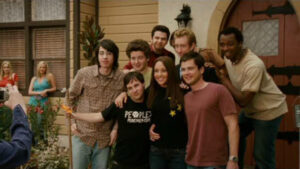
Rachel boots Sydney out of the sorority in a humiliating public ceremony. There is only one place left on campus that will take her in, the ramshackle house occupied by the campus outcasts. There are seven of them. One has allergies and sneezes a lot. One is an exchange student with jet lag who sleeps all the time. One is bashful. One is grumpy. All are nerdy. And Rachel has a plot to tear their house down so her family can build a shiny new rec center for sorority and fraternity members only.
Echoes of the Snow White story provide the movie’s brightest moments. Rachel checks constantly to make she is still considered the fairest in the land, not in a magic mirror but in the campus “hot or not” website. The poisoned apple? An Apple laptop with an important homework assignment gets infected with a virus. And of course in the big moment Sydney is awakened by a kiss from the Prince.
It is less cute when a nasty trick has the seven dorks naked at a campus party and when they march past Rachel with a mean-spirited “Hi, Ho!” It makes it harder for us to stay on the side of the good guys when they descend to the terminology of the bad guys. And it goes overboard on the geek factor; drawing less from fairy tales than from “Revenge of the Nerd”-style caricatures. For a movie that is supposed to be all about inclusion and respecting the dork within each of us, it has a lot of fun at their expense.
Bynes is captivating despite a role that does not give her much to do but display tomboyish good spirit behind some really unfortunate hair and make-up. She looks trapped in a 1970 Yardley ad, all fake tan, shag haircut, and pale eye shadow. She can make a retort sound spirited, not snappish, as when she tells Rachel that she doesn’t “speak priss.” Her best moments are with Long, who has a great smile and a rare ability to listen to what other performers are saying without thinking he has to be doing something every second he is on screen. Newcomer Jack Carpenter as Sneezy/Lenny brings warmth and humanity to a thinly written role as the most sociable of the dorks.
But director Joe Nussbaum does not trust his performers, the material, or the audience. He keeps the tempo so synthetically sitcom-y you expect to hear a rim shot and a laugh track. Everything is exaggerated. Every joke is an elbow in the ribs. Like Rachel, he is checking his “hotness” every couple of minutes. And like Rachel, his score could use some improvement.
Parents should know that this movie has some vulgar humor and strong language (references to “hos,” b-word), implied nudity, and a drinking game at a party. A strength of the movie is its emphasis on inclusion and the importance of treating diverse people respectfully, and Sydney reaches out to all groups on campus, from the Hassids to the band geeks, cross-dressers, and Goths.
Families who see this movie should talk about when they most felt like outsiders or dorks and what they can do to make sure that people around them feel included and appreciated for who they are.
Families who enjoy this movie will also enjoy other takes on classic fairy tales like Ella Enchanted and Shrek. Barbara Stanwyk and Gary Cooper co-starred in an earlier update of Snow White, Ball of Fire.
Rated PG for some action/peril, mild language and brief smoking.
Profanity:
None
Alcohol/ Drugs:
Social drinking
Violence/ Scariness:
Wartime violence, references to offscreen wounds and sad death, guns, some peril
Diversity Issues:
Class issues
Date Released to Theaters:
December 25, 2007
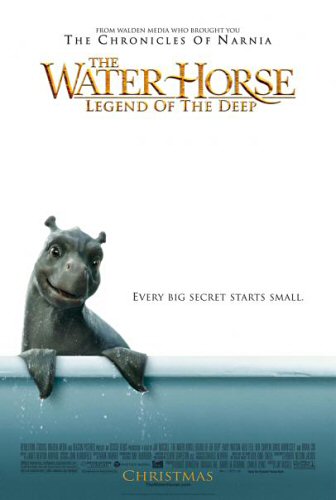
In the grand tradition of “he followed me home — can I keep him?” movies, we have seen movies about children who are brought to adventure and understanding through dogs, horses, cats, a whale, a dolphin, dragons, geese, and an extra-terrestrial. But this imaginative family fantasy-adventure is the first movie in my memory about a boy and his very own Loch Ness monster.
Angus (Alex Etel) is a young boy in World War II Scotland, the son of the housekeeper of a large estate. He finds what he thinks is a rock but it turns out to be an egg. He calls the creature who hatches “Crusoe.”

 is told from the perspective of dogs, this time two dalmatians, Pongo and Perdita, the cherished pets of Roger and Anita. Anita’s old friend is the aptly named Cruella De Vil (Betty Lou Gerson). Her henchmen kidnap Perdita’s puppies and eighty-four others so she can make them into a dalmatian fur coat. Pongo (Rod Taylor) and Perdita (Cate Bauer), with the help of their animal friends, undertake a daring rescue. The puppies are adorable, and the movie is delightful (with a sly poke at television and the kids who watch it).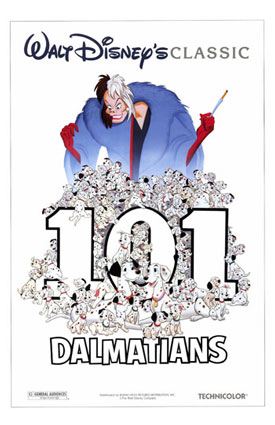
 is a treasure. This was a transitional film between the hand-painted classical style of the fairy-tale Disney films and a looser, more modern look. It was the then-new invention of the photocopier that made this movie possible. Without that technology, the Disney artists would still be painting all those spots.
 A 1940 film starring Joan Crawford and Clark Gable and set in a penal colony is an improbable candidate for Biblical allegory, but
  is a moving film that draws its power from an inspiring, Christ-like figure and its echoes of Biblical themes, spiritual without being preachy. Gable was Crawford’s all-time favorite co-star, and this was their eighth and last film together. Their strong chemistry and the way their characters interact with the mysterious prisoner who gives them a glimpse of their best selves is part of what makes this movie work on many levels. It is beautifully directed by Frank Borzage, who was a master of mood and symbolism. For the first time, the movie is available on DVD, as a part of a new boxed set,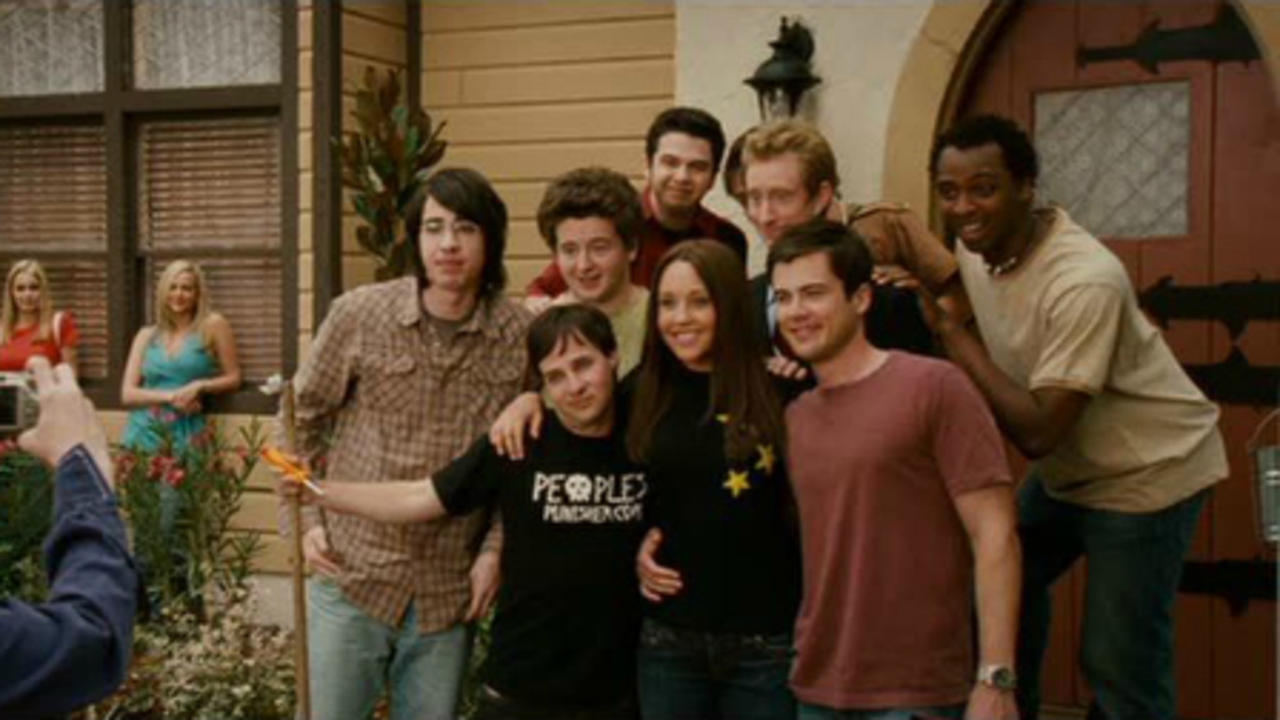
 and
and  . Barbara Stanwyk and Gary Cooper co-starred in an earlier update of Snow White,
  .
.