In 1935, the debate team from a tiny all-black college took on the top white team in the country and they won. This is that story, Oprah-fied to be sure (Winfrey’s company produced the film), but powerfully told by director Denzel Washington, who also stars as the team’s coach, distinguished poet Melvin B. Tolson.
Gregory (John Sinclair) is a gangling but amiable Scottish teenager who is mildly befuddled by just about everything, especially Dorothy (Dee Hepburn), who takes his place on the soccer team. In contrast, the girls he knows, including his ten-year-old sister, seem to understand everything (except why boys are so fascinated by numbers) in this sweet, endearing comedy with a great deal of insight and affection for its characters.
Hillary Swank does not have the chin for romance or the rhythm for comedy. Her two Oscars were for earnest, androgynous roles (“Boys Don’t Cry” and “Million Dollar Baby”) that made the most of her strong jaw and lanky figure. Romantic comedies, even bittersweet ones about perky young widows learning to go on with their lives, need twinkle. Her character wears twinkly dresses and does twinkly things, but Swank delivers her lines as though she is still slamming into that heavy bag.
Two recent films showed the influence of this classic French film about a little boy befriended by a red balloon and now the original is available on DVD for the first time. “CJ7” from China and “The Flight of the Red Balloon” from France (with a Taiwanese director) both make direct visual references to the 1956 short film, the only Oscar-winner for best screenplay without a single line of dialogue.
The Red Balloon is the story of a lonely boy (Pascal Lamorisse, son of writer/director Albert Lamorisse) who finds a large red balloon on the way to school. It has a mind of its own, following him to school like Mary’s little lamb, waiting patiently for him outside his bedroom window when his mother will not allow it in the house. The balloon is an imaginative and playful friend. When it is attacked by bullies, it seems that Pascal’s friend is lost. But an unforgettably joyous ending reminds Pascal of the power of friendship.
It is not easy to take a wealthy socialite, a powerful Congressman, and a CIA agent, have them played by three Oscar-winners, two who are genuine box office gold, and make them look like the underdogs, but in this “extraordinary story of how the wildest man in Congress and a rogue CIA agent changed the history of our times” (as put in the unusually accurate book subtitle), that is what they are.

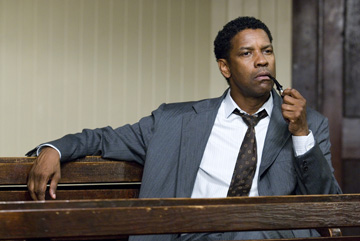 In 1935, the debate team from a tiny all-black college took on the top white team in the country and they won. This is that story, Oprah-fied to be sure (Winfrey’s company produced the film), but powerfully told by director Denzel Washington, who also stars as the team’s coach, distinguished poet Melvin B. Tolson.
 Hillary Swank does not have the chin for romance or the rhythm for comedy. Her two Oscars were for earnest, androgynous roles (“Boys Don’t Cry” and “Million Dollar Baby”) that made the most of her strong jaw and lanky figure. Romantic comedies, even bittersweet ones about perky young widows learning to go on with their lives, need twinkle. Her character wears twinkly dresses and does twinkly things, but Swank delivers her lines as though she is still slamming into that heavy bag.
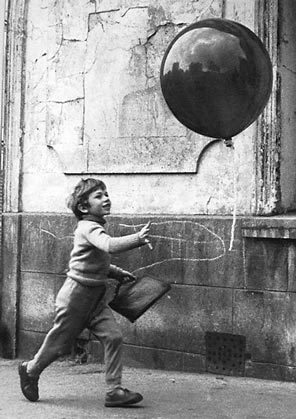 Two recent films showed the influence of this classic French film about a little boy befriended by a red balloon and now the original is available on DVD for the first time. “CJ7” from China and “The Flight of the Red Balloon” from France (with a Taiwanese director) both make direct visual references to the 1956 short film, the only Oscar-winner for best screenplay without a single line of dialogue.
 is the story of a lonely boy (Pascal Lamorisse, son of writer/director Albert Lamorisse) who finds a large red balloon on the way to school. It has a mind of its own, following him to school like Mary’s little lamb, waiting patiently for him outside his bedroom window when his mother will not allow it in the house. The balloon is an imaginative and playful friend. When it is attacked by bullies, it seems that Pascal’s friend is lost. But an unforgettably joyous ending reminds Pascal of the power of friendship.
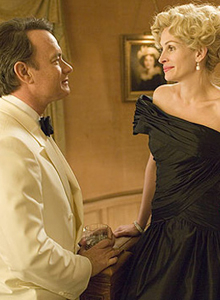 It is not easy to take a wealthy socialite, a powerful Congressman, and a CIA agent, have them played by three Oscar-winners, two who are genuine box office gold, and make them look like the underdogs, but in this “extraordinary story of how the wildest man in Congress and a rogue CIA agent changed the history of our times” (as put in the unusually accurate book subtitle), that is what they are.