Mufasa: The Lion King

Mufasa: The Lion King

Posted on December 19, 2024 at 1:35 pm

B
Lowest Recommended Age: 4th - 6th Grade
MPAA Rating: Rated PG for action/violence, peril and some thematic elements
Profanity: None
Alcohol/ Drugs: None
Violence/ Scariness: Characters in peril, flood, animal fights, references to predators, some injured and killed, attacks by predators, some disturbing images
Diversity Issues: A metaphorical theme of the movie
Date Released to Theaters: December 20, 2024
Copyright 2024 Disney

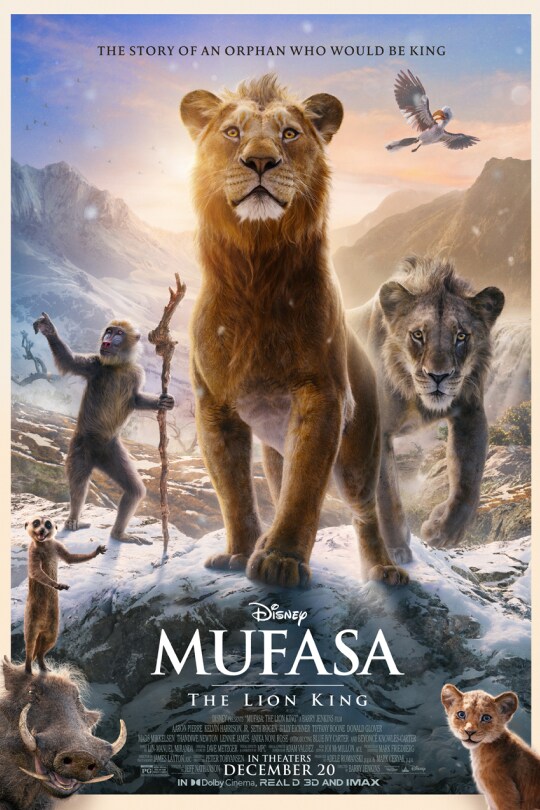
On the 30th anniversary of “The Lion King,” Disney tells the story of Simba’s father and uncle, how they met and grew up together, considering themselves brothers, and the betrayals that tore them apart. This version is “live action,” meaning not traditional animation but realistic CGI so that we can see every detail of fur and landscape. The action and drama is punctuated with songs (Lin-Manuel Miranda taking over from Elton John) and some silly humor to sweeten the tension.

The frame story is set as an adult Simba (Donald Glover) and Nala (Beyoncé Knowles-Carter) have a daughter Kiara (Ivy Blue Carter). As a storm comes up, Kiara is scared. Her mother is away and her father leaves her with old friends the warthog Pumbaa and the meerkat Timon (Seth Rogen and Billy Eichner repeating their roles from the 2019 “live action” “Lion King”). Rafiki (John Kani, also returning from the 2019 version) tries to comfort Kiara by telling her the story of the grandfather she never got to meet, Mufasa. (The movie is dedicated to the original voice of Mufasa, the late James Earl Jones.)

Like Kiara, Mufasa was once a young cub afraid of storms. And like Kiara, he had loving parents, Masego (Keith David) and Afia (Anika Noni Rose, already Disney royalty as the voice of Tiana in “The Princess and the Frog). The area they live in has not had rain in many months and the land is parched. They decide to go in search of Milele, a land they believe is filled with lush growth and peaceful animals. On the way there, a storm creates a flood and the young cub is separated from his parents.

He is spotted by Taka, a cub his age with an English accent (remember, in the original film, Scar was played by Jeremy Irons, “brother” to American-accented Mufasa). Taka fishes Mufasa out of the water and brings him home. Taka’s father, Obasi (Lennie James) wants to eat Mufasa. He has a firm rule against outsiders. But Taka’s mother, Eshe (Thandiwe Newton) is a warm, loving, generous soul and Taka wants a “brother.” Obasi gives Mufasa a chance. If he can beat Taka in a race, he can stay. Taka allows him to win, knowing that Obasi will judge him harshly for losing. Obasi grudgingly allows Mufasa to stay, but treats him as “other” and less than by ordering him to stay away from the male lions. This allows Eshe to teach him to hunt the way the lionesses do. They become very close. Mufasa (as an near-adult lion voiced by Aaron Pierre ) has an exceptional sense of smell that allows him to identify animals and their environments even if they are far away.

Obasi’s lions are attacked by a group of pale, ghost-like lions led by Kiros (Mads Mikkelsen). Knowing they cannot survive, Obasi and Eshe send Taka (now voiced by Kelvin Harrison, Jr.) and Mufasa away, making Mufasa promise that he will protect his friend.

The two young lions have many adventures along the way. They are joined by Sarabi (Tiffany Boone), an independent female lion with a lookout bird named Zazu (Preston Nyman) and Rafiki, a wise mandrill (frequently mistaken by the other characters for a baboon). The group learns to trust and rely on each other. But Taka begins to develop feelings of resentment and jealousy.

The movie looks beautiful and the CGI allows more expressiveness than the 2019 “Lion King” remake. The songs by Lin-Manuel Miranda are not his best. They are placed at points that evoke comparisons to Elton John’s music at similar moments in the original film and the remake. The framing story, with an elderly Rafiki telling Kiara about her grandfather, is sometimes jarringly different in tone, with Timon and Pumbaa making meta jokes. I mean, a joke about getting a call from legal for using too much from a song in the earlier film? Who is that for? And since Disney owns both properties, who is going to argue about intellectual property rights being violated? At least this time they acknowledge that predators are better off than prey. That jump from the cliff moment is awfully similar to “Butch Cassidy and the Sundance Kid.” There are touching moments, but a lot of loss (even with much of it delicately off-screen) for young children.

I’m losing count of how many prequel/sequel/origin stories I’ve seen this year: “Furiosa,” “Wicked,” “Lord of the Rings: War of the Rohirrim,” “Gladiator 2,” “Transformers One.” It is hard to think of these films as anything more than fan service and brand extension. “Mufasa” is fine and most families will be satisfied. But the jubilant imagination that went into the original, make this one look as pale as Kiros.

Parents should know that this film has a lot of peril and many animals are injured and killed, mostly off-screen. Characters are caught in a flood, and a young cub is separated from his parents, who are assumed to have died. A lion speaks of eating outsiders and is bigoted of those who are not of his blood. A male cub is punished by being forced to stay with the females.

Family discussion: How were Taka and Mufasa different? Why did Taka want to change his name?

If you like this, try: the earlier “Lion King” movies and the very cute “Lion King 1 1/2”
Related Tags:


Fantasy movie review Movies -- format Movies -- Reviews Musical Series/Sequel Talking animals
Wish

Wish

Posted on November 21, 2023 at 5:40 pm

A-
Lowest Recommended Age: Kindergarten - 3rd Grade
MPAA Rating: Rated PG for thematic elements and mild action
Profanity: NOne
Alcohol/ Drugs: None
Violence/ Scariness: Fantasy-style peril and some violence
Diversity Issues: Diverse characters
Date Released to Theaters: November 22, 2023

Copyright Disney 2023
The animators at Disney, now celebrating their 100th anniversary, have had a lot of time to think about wishing. From Disney’s first feature film, “Snow White,” which had a heroine warbling about the day her prince would come to their second feature film, with the greatest wishing song of all time, the one we still hear every time a Disney movie begins with a view of Cinderella’s castle and “When You Wish Upon a Star,” to all of the princesses singing their wishes — “A Dream is a Wish Your Heart Makes,” “A Part of His World,” “Once Upon a Dream,” Belle singing she wants more than “this provincial life,” Moana singing about “How Far I’ll Go,” no one’s movies do better at giving us characters with wishes we want to see come true. So there’s no better way to pay tribute to Disney history than “Wish,” a movie about wishes, with loving references to many of their most beloved classics.

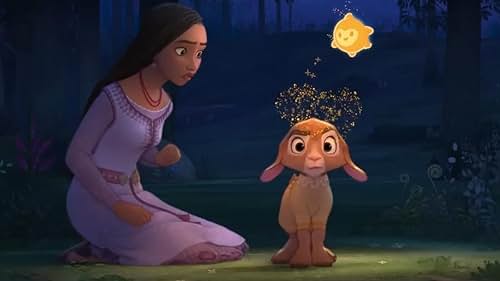
Oscar-winner Ariana Dubose provides the voice of Asha, a 17-year-old girl who lives on an island in the Mediterranean Sea with her mother, Sakina (Natasha Rothwell), and grandfather, Sabino (Victor Garber). Like Disney animation, Sabino is reaching his centenary. Like most Disney heroines, she has cute sidekick, a goat named Valentino (Alan Tudyk).

Their island is governed by King Magnifico (Chris Pine). The people of the kingdom believe that he will grant the wishes they share with him when they turn 18. But as Asha finds when she becomes his assistant, he hoards the wishes, which appear in floating translucent spheres. When people turn their wishes over to him, they lose their memory of what it was they aspired to, and they become docile and easily governed.

Asha makes her own wish the old-fashioned way, on a star, just like Geppetto in “Pinocchio.” To her surprise, the star responds by flying down from the sky to help her out, starting with giving Valentino the ability to speak. Asha originally only wanted to make the wishes of her mother and grandfather come true. But she realizes that she has to give all of the wishes back to the people who wished them. In addition to the star and the goat, she gets some help from her seven friends, who adorably match up with the seven dwarfs from Disney’s first feature. One Is sleepy, one is grumpy, one is bashful…you get the rest. The “Doc” character is Asha’s best friend Dahlia, the King’s chef, voiced by Jennifer Kumiyama. To honor the actress, who uses a wheelchair, Dahlia uses a cane, welcome representation for audience members who use adaptive equipment and their families, and welcome normalization for those who may not yet have those people in their lives.

The character design here is understated by contemporary animation standards, perhaps another nod to the classical era. The backgrounds and settings are pure Disney magic, though, delicately colored, stunningly beautiful, and bursting with imagination. Asha’s home and Magnifico’s castle are fairy tale delights. The musical numbers are lovely and the one with dancing chickens is a highlight.

And the story is well designed, exciting and heartwarming. It has a gentle but skillful exploration of the meaning of wishes, how they help us imagine what is most significant to us and think about how to get there, and about the importance of finding our own way to make our dreams come true and support the dreams of those around us. Asha is an endearing heroine, unsure about herself but always sure about what is right. When key characters switch loyalties at meaningful moments, as the king becomes more ruthless, it underscores the importance of values as well as aspirations — just as we would hope as Disney starts on its next century as the gold standard in family movies.

NOTE: Stay ALL the way to the end of the credits for a sweet extra snippet.

Parents should know that this film has a mean, selfish villain who attacks people with sometimes-scary green lightning. There is a reference, as in most Disney films, to a parent who died.

Family discussion: What is your wish? What did the king mean by “safe” and was he right? How many references to other Disney movies did you catch?

If you like this, try: the other animated Disney classics like “Snow White,” “Pinocchio,” “The Little Mermaid,” “Beauty and the Beast,” “Frozen,” “Mulan,” and “Encanto” and the live-action fairy tale, “Stardust”

Related Tags:


Fantasy movie review Movies -- format Movies -- Reviews Musical Talking animals
The Little Mermaid

The Little Mermaid

Posted on May 23, 2023 at 2:38 pm

B +
Lowest Recommended Age: 4th - 6th Grade
Profanity: None
Alcohol/ Drugs: None
Violence/ Scariness: Scary monster, characters in peril, tense situations
Diversity Issues: A metaphorical theme of the movie
Date Released to Theaters: May 26, 2023

Copyright Disney 2023

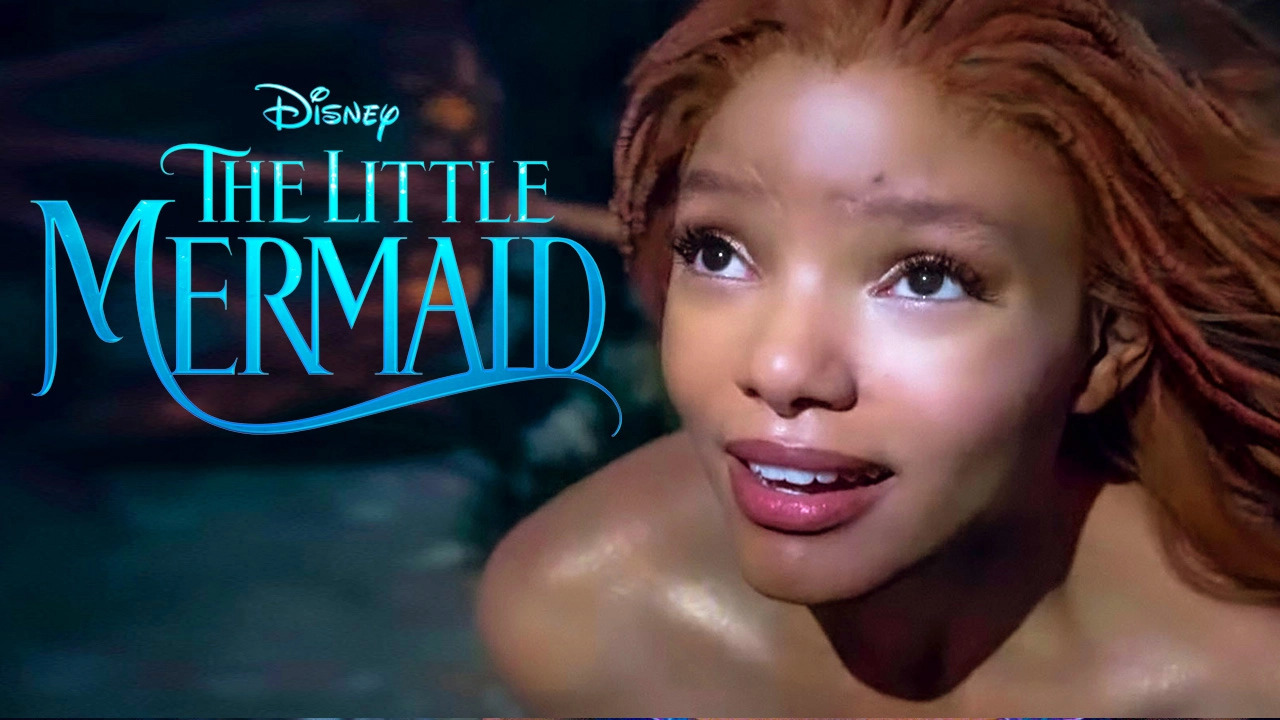
Disney’s live-action remake of the classic animated film that was a turning point marking the revitalization of Disney’s legendary animation division invites us to once again, be part of the world of mermaid Ariel (pop duet singer Halle Bailey) and Prince Eric (Jonah Hauer-King). As in the original film, the couple at the center are both a bit bland, and therefore perhaps the better question is whether we want to be part of the world of sea witch Ursula (Melissa McCarthy) and Ariel’s sidekicks, Scuttle (Awkwafina), Flounder (Jacob Trembley), and Sebastian (Daveed Diggs), the classic songs with some additions from “Hamilton’s” Lin-Manuel Miranda, and the visuals from cinematographer Dion Beebe, working with his “Chicago” collaborator, director Rob Marshall. The easy answer to that question is yes.

Again, it is a romanticized, happily-ever-after version of the fairy tale by Hans Christian Andersen, the one so central to the Danish identity that it inspired the iconic statue in Copenhagen. In both of the Disney versions, Ariel is a rebellious teenager, the daughter of King Triton (Javier Bardem), who tells her than humans are evil and orders her to stay under water.

Eric, the adopted son of the widowed queen (a wonderfully regal Noma Dumezweni) is also ordered to stay away from the “other” world. Even before they meet, we see that he and Ariel have an adventurous spirit and core values of optimism, inclusion, and progressive views about the need to adapt to change in common.

Eric is my favorite Disney prince because, especially in the animated version, he is a little more off-beat than the usual stalwart, swashbuckling heroes. In his first scene, at sea, he shows us that he is not a snob and that he not only brings his dog on board, he risks his life to run through fire to save him. And then Ariel, who has been watching, saves both dog and prince from drowning. After a glimpse at the rescue, Ariel and Eric long to be together again, and that is when Ariel makes her fateful bargain with the sea witch.

Parts of this movie are truly enchanting, especially the underwater scenes. The opening moments on Prince Eric’s ship are thrillingly filmed and the “Under the Sea” number is a glorious Busby Berkeley underwater fantasia. A new number for Awkwafina from Lin-Manuel Miranda is a total banger. Some of the gentle updates to give Ariel more agency and the cast more diverse work well, and Colleen Atwood’s costumes are gorgeous. Other parts do not work as well. The ending is clumsy and drags on too long. The movie would be better with a 15 or 20 minutes shorter run time. But its best moments make us want to be part of Ariel’s world.

Parents should know that this film has some peril and scary moments including a fire on a sinking ship and a monstrous character.

Family discussion: Why do the Queen and King Triton fear going outside of their own communities? What will Eric and Ariel find? Which song is your favorite?

If you like this, try: the animated version, and the music of Chloe x Halle (note: some has mature language)

Related Tags:


Based on a book Date movie Fantasy movie review Movies -- format Movies -- Reviews Musical Remake Romance Talking animals

Trailer: The American Dream and Other Fairy Tales

Posted on August 23, 2022 at 9:19 am

If full-time workers are below the poverty line, then the welfare recipient is the corporation. I’m looking forward to this film from Abigail Disney about the way the company that creates magic for its audience treats its employees like the stepmother treated Cinderella.

Related Tags:


Trailers, Previews, and Clips
Encanto

Encanto

Posted on November 23, 2021 at 5:27 pm

A-
Lowest Recommended Age: Kindergarten - 3rd Grade
MPAA Rating: Rated PG for some thematic elements and mild peril
Profanity: None
Alcohol/ Drugs: None
Violence/ Scariness: Some peril and family conflict
Diversity Issues: None
Date Released to Theaters: November 24, 2021
Date Released to DVD: February 7, 2022

Copyright Disney 2021
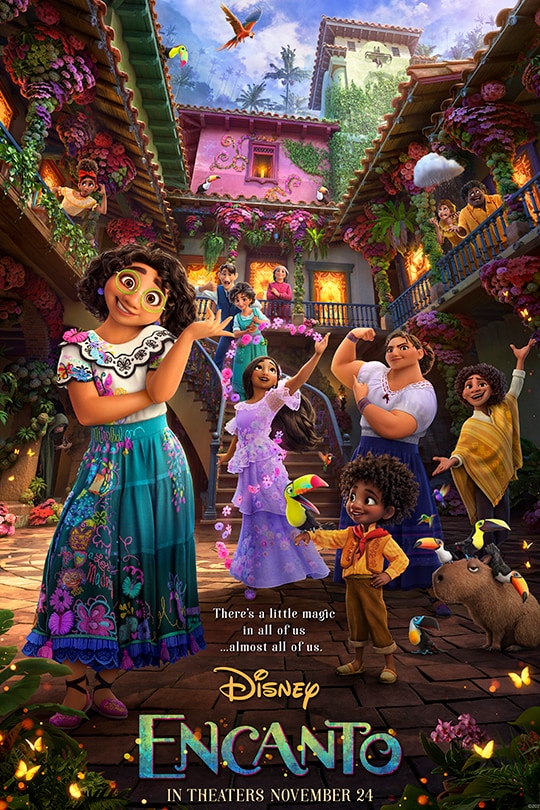
We all feel that way at times. It seems like everyone has something special except for us. “Encanto,” the new animated film from Disney captures that imposter phenomenon with a story set in Columbia about a girl who is the only one in her family with no magical powers. It is colorful and exciting and funny and warm-hearted and, something harder to find, it is also wise.

As we learn in one of Lin-Manuel Miranda’s bright, energetic songs early in the film, Mirabel (sweetly voiced by Stephanie Beatriz) loves her family and is very proud that her mother has healing powers and her aunt has superstrength. Other family members can understand animals, predict the future, or shape-shift. Mirabel’s sister’s superpower just seems to be perfection.

The Madrigal family has a rich, storied history. When her grandparents were young, they fled their home. Her grandfather was killed by the people they were trying to escape. But her grandmother, clutching her baby, was blessed with the powers to help her community survive. A generation later, the family is the center of that now-settled community, living in a home with its own magical powers and personality. That house, communicating with flipping floor tiles and steps that slip into slides and creating dazzling new rooms to recognize each family member’s powers, is one of the movie’s highlights.

The family has a ceremony when each member receives his or her magical powers. But for some reason, Mirabel’s never arrived. She even wears glasses (the first Disney lead character to do so) to show just how ordinary and relatable she is.

Unexpectedly, the magic the family has counted on and taken pride in — and taken for granted — seems to begin to be dissolving. And that is when the girl who does not think she is special begins to understand that she, and only she, has the qualities the family needs to keep them together.

That means adventure. It also means learning some lessons about how even the most loving, high-performing, and functional families have to deal with secrets and sometimes painful and scary truths. This insight is gently but thoughtfully explored, understanding that sometimes it is especially difficult to be honest with happy families for fear of letting the others down. But when family policy is “We don’t talk about Bruno,” it is time for someone to ask why. And when we do not leave room for family members to be less than perfect, it is time to tell them it is okay if they make mistakes and in fact if they don’t, it’s a good idea to tell them to make some. Families will enjoy “Encanto” but what may be more meaningful are the conversations we have afterward.

NOTE: Before the film there is an animated short called “Far from the Tree,” a gorgeously animated story about animal mothers and the curious babies they try to keep safe.

Parents should know that this movie includes some fantasy peril and some difficult family struggles.

Family discussion: Which magical power would you like to have? Why did one family member hide? How do you honor a miracle?

If you like this, try: “Brave,” “Raya and the Last Dragon,” and “Moana”

Related Tags:


Animation DVD/Blu-Ray Family Issues Fantasy For the Whole Family Movies -- format Movies -- Reviews Musical
THE MOVIE MOM® is a registered trademark of Nell Minow. Use of the mark without express consent from Nell Minow constitutes trademark infringement and unfair competition in violation of federal and state laws. All material © Nell Minow 1995-2026, all rights reserved, and no use or republication is permitted without explicit permission. This site hosts Nell Minow’s Movie Mom® archive, with material that originally appeared on Yahoo! Movies, Beliefnet, and other sources. Much of her new material can be found at Rogerebert.com, Huffington Post, and WheretoWatch. Her books include The Movie Mom’s Guide to Family Movies and 101 Must-See Movie Moments, and she can be heard each week on radio stations across the country.

Website Designed by Max LaZebnik