Interview: Mark Goffman of ‘Dumbstruck’

Interview: Mark Goffman of ‘Dumbstruck’

Posted on April 20, 2011 at 8:00 am

I love Mark and Lindsay Goffman’s new documentary, “Dumbstruck,” which follows five ventriloquists over the course of a year between the two annual conventions that give them their one chance to be with others who share their passion.  It is funny, smart, inspiring, and heartwarming, and I had a lot of fun talking to Mark about how it got made and what he learned.
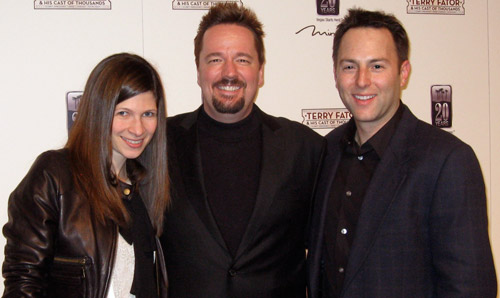
You must have been shocked when one of your subjects became an international superstar in the course of making the film.  Terry Fator won “America’s Got Talent” and now has a hundred million dollar contract with the Mirage in Las Vegas.

We set out to look at working ventriloquists in small-town America.  That’s where we thought we would find ventriloquism.  It harkens back to a simpler time and we liked the smaller venues’ feel.  We knew Terry was phenomenally talented from the moment we saw him.  We expected to see him in his home city of Corsicana and state fairs and things like that and then he got on “America’s Got Talent” and it just exploded from there.

The other ventriloquists are very happy for him but it also makes them dream bigger for themselves.

It gave a lot of people hope.  They’re a really tight-knit community and think of themselves as a family and that was something I really wanted to capture in the film.  There are very few ventriloquists in most towns so they feel a bit isolated.  They feel like they’re on their own and as you can see in the film their families don’t always support this vocation they have chosen so they have this very strong sense of community.  Really, when we stared we thought cruise ships was the pinnacle — that was a great living.  Dan Horn was seen as achieving about as much success as you can get with this art form.  And Terry comes out of nowhere and explodes onto the screen and it was really quite astonishing.

http://www.youtube.com/watch?v=wVtNcrhLClU

How did this project get started?

At our wedding my mother-in-law got up to give a toast.  Her lips didn’t move and she held up her hand with a white glove on it like a sock puppet and words started coming out and her hand started delivering a toast.  It was incredibly endearing and charming and really funny and certainly unexpected to the 150 guests.  It turned out she does ventriloquism primarily in schools — she’s a second grade teacher and she does it in her classroom.  But she has learned that she can express herself very differently and it makes her feel a lot more comfortable in front of a crowd.  She told us about the ventriloquist conference in Kentucky and Lindsay and I knew that this was a community we wanted to see.  We found 500 people with their dummies talking back and forth and really bonding.  We fell in love with these five people that we wanted to follow.

Some of the family members you spoke to were embarrassed or even hostile about their relatives’ interest in ventriloquism.

We wanted to know what their lives were like outside of the convention where they feel welcome and very supported.  And we found that most of the time their families didn’t understand.  We hope that’s something people can relate to, whether it’s any hobby or career path, some people have families that are very supportive and others have to find the courage and determination to pursue their dreams and their loves despite what others around them think.

That’s why they are so happy to be together — they feel understood and accepted.

The people who run the convention say it’s like a family reunion.  They keep that kind of atmosphere and it’s a very welcoming environment.  You see that when Wilma needs help, the people are there for her.

Is it true that you had to remind the sound guys not to mic the puppets?

It was true of the boom mics — when the dummy starts talking, we had to remind them to keep them over the person, not the puppet.

Have you tried ventriloquism?

I have tried it; it’s incredibly hard.  I have enormous respect for anyone who can do it.  It’s an instrument.  You have eyes, ears, mouth, you have to synch with the voice.  That’s one of the reasons we showed Tim Selberg; he is like the Stradavarius of figure-makers; they can cost up to $20,000.  These things are finely-tuned instruments.  Not only do you have to manipulate this and make it behave like a human being but you have to create a character, a persona.  And then, on top of that, you have to come up with a routine that’s essentially a stand-up routine, and that’s a talent in itself.  It’s a combination of a lot of different skills.  It’s very hard.

Yes, one of the most interesting scenes is where one of your ventriloquists gets some advice from a consultant about how to improve her act because you see how much has to go into it.

She was looking for some guidance and the man who came in and helped her is very well known and respected and he advised her to give her puppet a huge makeover.  He was mining the comedy out of who she was and trying to give her puppet a counterpart to play off that.  The successful ones create a character who can say the things they wouldn’t normally say or aren’t comfortable saying.

The puppets are a contrast to the ventriloquists, especially then-12-year-old Dylan, a white boy with an African-American dummy.

Dylan told us there are very few minorities in his school and he’s a showman and he thought he could get a lot of shock value and mileage out of it.  At the same time, he told me on many occasions that Reggie is his best friend and he hopes they are together for the rest of his life.  It’s an amazing attachment that they have.

Related Tags:


Directors Interview
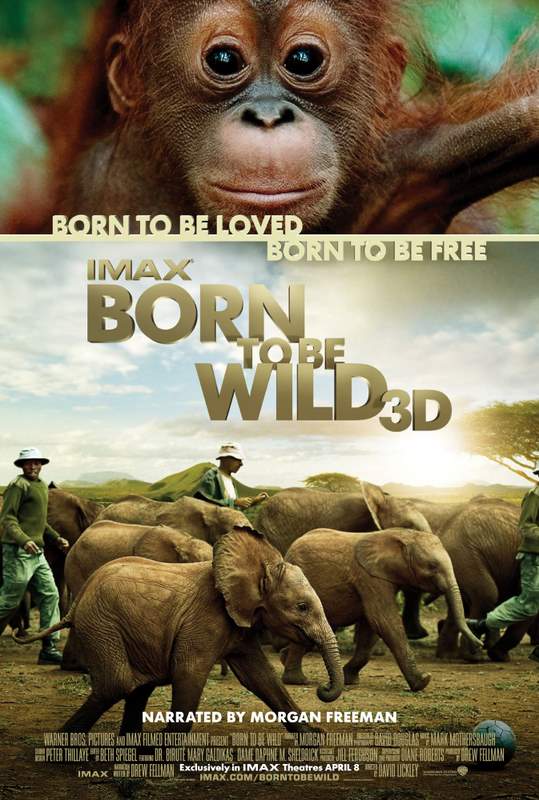
Behind the Scenes: Born to Be Wild 3D

Behind the Scenes: Born to Be Wild 3D

Posted on April 11, 2011 at 3:53 pm

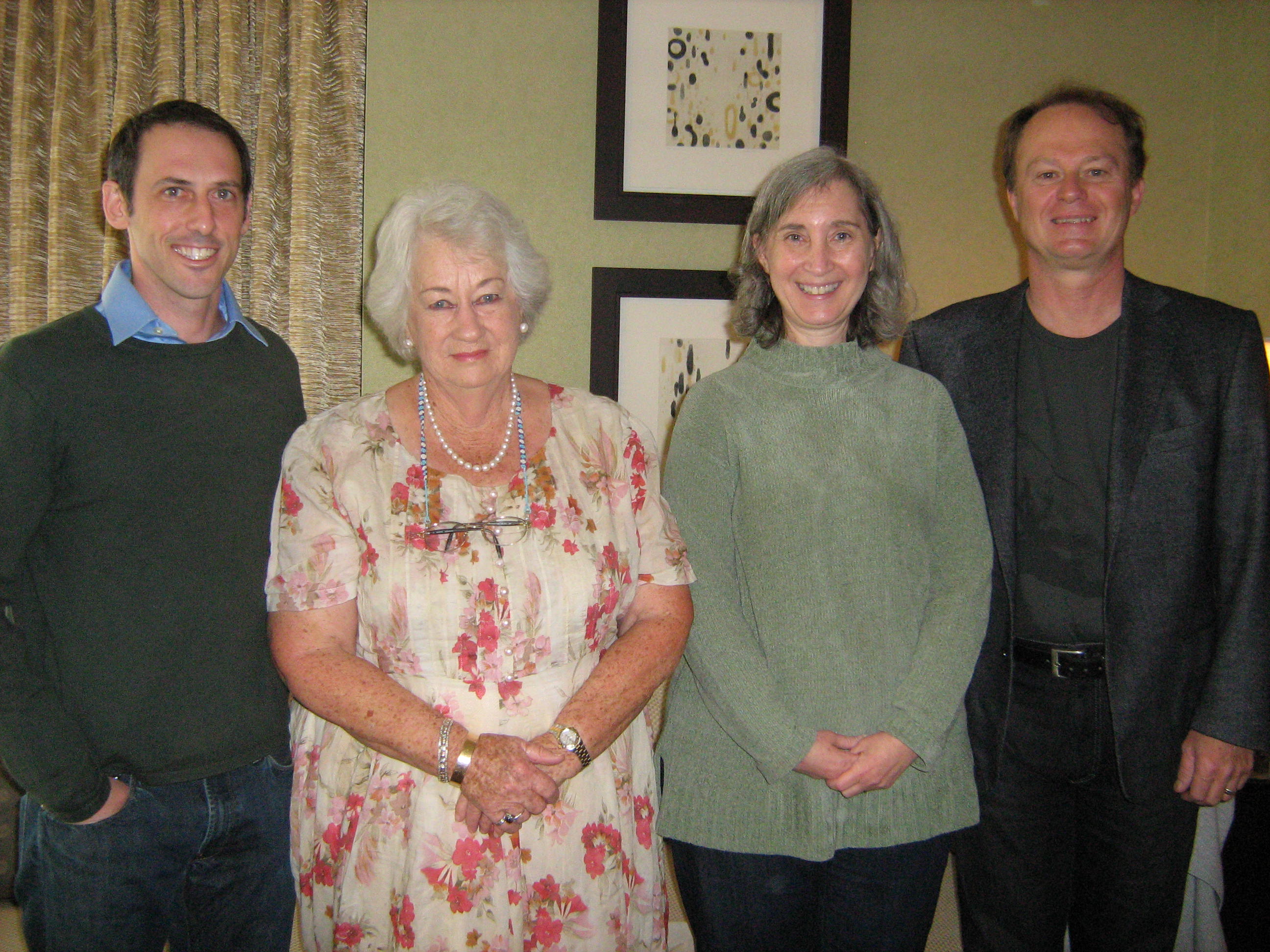
It was so much fun to talk with some of the people behind “Born to Be Wild 3D” following its Washington DC premiere at the Smithsonian’s Museum of Natural History.  Writer/producer Drew Fellman, cinematographer David Douglas, and Dame Daphne Sheldrick of the baby elephant rescue in Kenya spoke with me about making the movie.

3D and Imax requires some pretty extensive equipment — and yet you were able to get some amazing shots of the animals and the scenery.  What was your biggest challenge?

Douglas: We had two camera systems.  One of them weighs 300 pounds.  It’s basically a massive fridge, and it sounds like a sewing machine and it has three minutes of film.  So, that camera is used for certain scenes.  But to get up in the canopy, to get an orangutan’s view of the world, we basically had to invent a new camera system for IMAX.  And so we worked with IMAX to create their first camera that weighs less than 100 pounds, to get up on a 60-foot crane arm, and we build scaffolding in the middle of the jungle. Piece by piece, we trekked it up the river in small boats.

It sounds like “Fitzcarraldo!”

Fellman: I was actually reading Herzog’s book, Conquest of the Useless, his diary of the making of “Fitzcarraldo,” and it was really interesting because you’d read that book and think, “Okay, we’ve got it pretty good.”

Douglas: The shoot was really not just two animal but two challenges.  The elephants were almost like a dream in a sense, we could be at ground level, we could get around them and we could use the big camera.  But the orangutans, a big camera like that in the jungle is just too unwieldy.  That small camera ended up being massively useful.

Fellman: One of the biggest surprises for us was how the animals ended up accepting our presence and the cameras.  That was our biggest concern going in.  One thing we had in our favor is that if it was between the camera and a bottle of milk, the milk was much more interesting than the camera.

Dame Daphne: They were a little bit suspicious at first, curious about these strange people around them all day who weren’t a part of their human family.  But within a couple of days, it just became the norm and they were  happy to ignore them and concentrate on what they were doing.

In the movie it says that it took you 24 years to develop infant formula for elephants that made it possible for the first time to raise them without a mother.  What did you have to do to get it right?

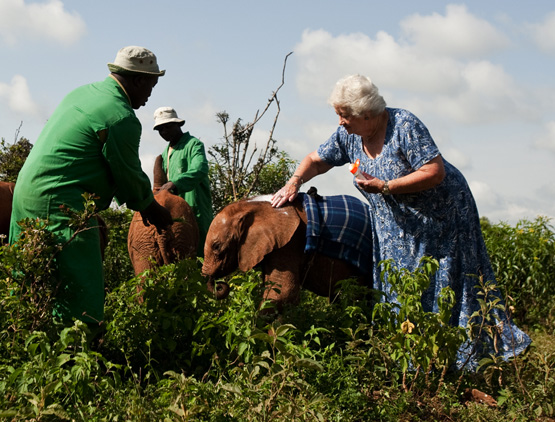
Dame Daphne: Newborn elephants didn’t come in every day.  But whenever they came in very small we tried different formulas.  We knew elephant milk was very rich so we tried adding butter, cream, and then no fat at all.  We didn’t have access to sophisticated baby formula in those days.  We only had access to cow’s milk.  I tried skim milk and the calves lasted a lot longer but they just wasted away.  So I knew it was a fat problem.  I went scouring the shops in Nairobi and all the zoos and asked, “What can we feed an elephant that has no cow’s milk fat?”  Eventually, we settled on a base of SMA Goldcap.  It’s not ideal.  We still get stomach problems.  But elephants need milk for the first three years of life.  They cannot live without it.  When they first come in we have a lot of problems with dehydration, lots of them are wounded or psychologically disturbed and in a mess.  Stabilizing the stomach is the main challenge when they come in, getting them onto the new formula and calming them down.

Do you have to teach them about their natural predators so they can protect themselves when they return to the wild?

Dame Daphne: Fortunately for us, unlike the primates, elephants are born with a genetic memory, but in order to hone that, you have to expose them to a wild situation.  We’ve learned that the younger we can get them there, the easier the transition is.   We can keep them for as long as ten years.  Generally, the ones that came to us older, that have the memory of being wild elephants, leave us sooner.

Fellman: There are lions all over that place.  It’s part of Nairobi National Park, and the lions were walking around eating the warthogs.  These elephants see lions and react to them.

Dame Daphne: The elephants are very fearful animals.  They know the lions are there before the keepers do and they will run back to the keepers for protection.  They are getting bolder, too.

Fellman: We were on a scouting trip in Tsavo and we were walking with the elephants with their keepers in the bush, and suddenly they stopped.  This was a young group, maybe three or four years old.  There were maybe three buffalo  We didn’t know what to do.  We had been told that the buffalo can be quite dangerous.  We look at the elephants; the elephants look at us.  We look at the buffalo; the buffalo look at us.  And the elephants ran to go behind us!  We got tossed aside like nothing.

Douglas: We were told to get behind the elephants, that they would protect us.  But they had their own idea.

Dame Daphne: In the nursery, the keepers are very much a mother figure for the elephants.  But once they get to rehab there’s a gradual change.

Do they ever come back after they go to the wild?

Dame Daphne: Some of the bulls come back, even after eight years  One came back with a snare on his leg.  He stood very still while we removed it.

Fellman: One scene we could not squeeze into the movie had two that came back.  A whole group, maybe twelve, big elephants, brought them back.  One had an arrow in his nose and another had an arrow in her rump.  The mobile unit came by and treated them and then they went back.

Dame Daphne: One came back with a broken leg, escorted by another “ex-orphan.”  The “ex-orphans” come and visit him, just like he’s in hospital.  He’s made big friends with the small ones as well; they all have a hero worship on the big guy.  They want to be close to him.

I admire the way you made it clear in the film that these are not pets or domesticated animals but respected fellow creatures.

Douglas: They weren’t patients, they weren’t study animals; they were friends.

Fellman: The thing that struck me when we started looking at his project is this idea that there’s an enterprise happening between people and animals as equals for a common goal.

Dame Daphne: The elephants are teaching the keepers.  There’ve been occasions when one or two of the orphans have been left behind with the wild herds.  The keepers are worried.  They open up the gates and Yetta, the herd matriarch, sends two young bulls off and off they go to bring back the truants.  The scientific community have had this huge block about not attributing human emotion to animals — that is anthropomorphizing.  But I just came in as a lay person who loves animals.  I could see very early on that all animals indeed have the same sort of emotions.  We’re part of the animal kingdom and we’re not nearly as sophisticated as the elephants.

I have one adorable little stuffed orangutan to give to the first person who sends me an email at moviemom@moviemom.com with “Born to Be Wild” in the subject line.  Tell me your favorite animal and don’t forget your address!

Related Tags:


Behind the Scenes

Born to Be Wild 3D

Posted on April 7, 2011 at 6:06 pm

B+
Lowest Recommended Age: Kindergarten - 3rd Grade
MPAA Rating: G
Profanity: None
Alcohol/ Drugs: None
Violence/ Scariness: Orphaned animals, references to predators (including humans)
Diversity Issues: Diverse characters
Date Released to Theaters: April 8, 2011
Date Released to DVD: April 16, 2012
Amazon.com ASIN: B0071L6T24

One way or another you’ll find yourself saying, “Awwwwww.”  The adorable baby animals and the grace and kindness of the people who care for them are guaranteed to warm every heart in the theater.

In Borneo, Dr. Biruté Mary Galdikas rescues orangutans orphaned by developers who cut down the jungle to produce palm oil.  In Kenya, Dame Daphne M. Sheldrick provides a home for the baby elephants orphaned by poachers.  More than five thousand miles apart, the two women care for different animals but share the same goal: to raise the babies without taming them, so they can return to a natural life in the wild.  Morgan Freeman narrates the story, taking us back and forth as we see the newest babies arrive and the adolescents “graduate.” The goal is to nurture them only as long as they need help and then find them a safe home in a nature preserve. They are “under human care but not human control; they need to retain their wildness.”

https://www.youtube.com/watch?v=kO9fRd7eumA

Some of the animals arrive traumatized.  A baby elephant who saw humans kill his mother has to learn these humans are different; they just want to feed and protect him.  Amazingly, the other orphaned elephants gather around to reassure him that he is finally safe.  They show him that a giant-sized bottle can be a good way to get milk.  The milk, by the way, is a special formula developed by Dame Daphne over 24 years, making it possible for the first time to raise an infant elephant without a mother.   Unlike mother elephants, humans are not big enough to cast protective shadows to prevent sunburn, so Dame Daphne and her colleagues rub sunblock on the tender ears of the baby elephants instead.  And elephants do not sleep well alone, so the keepers curl up near them at night. These are the cutest pachyderms on screen since the baby elephants marched to the Mancini soundtrack in “Hatari.”

The elephants are social creatures who create a community of their own.  In one very touching scene, when the now “ex-orphans” are brought to a sort of halfway house to get used to living away from the humans the current residents somehow sense that newcomers are arriving and come to the drop-off point to welcome them.  The orangutans interact more directly with their human care-givers, draping themselves along their backs and hugging their chests.  Dr. Galdikas and her crew have built a contraption for swinging and climbing to teach them the skills they need to find food and a safe place to sleep — a literal jungle gym.  She teaches them more than skills for survival; she makes each one of them feel special and cared for.  “As long as they feel loved,” she says, “they’ll have the confidence they need.”

The movie is empathetic but respectful to the animals.  It enlarges our circle of compassion by reacquainting us with our fellow residents of the planet.  Yet, it avoids getting cutesy or overly anthropomorphic.  These are not pets and they are not being tamed.  They are temporary guests, learning what they need to know so they can go home.  In the early scenes, we see the orangutans covered with shampoo and sharing a plate of pasta with Dr. Galdikas to the tune of bouncy American pop tunes such as Hank Williams’ “Jumbalya.”  Then as they return to the wild, the soundtrack turns African, more serious and stirring, and we share the mixed feelings of these dedicated people who have cared for the animals for so long.  We are happy that they are going home but know they will be missed.  We are hopeful for their future but worried that the wilderness left for them is shrinking every day.

This is everything a family movie should be: touching, funny, and inspiring.  And with a brisk 40-minute running time no one has to sit still for too long.  The IMAX 3D format may be overwhelming for children under five, but anyone older than that will find the baby animals hard to resist, the scenery breathtaking, and the devotion of Dr. Galdikas and Dame Daphne deeply moving.

(more…)

Related Tags:


3D Documentary DVD/Blu-Ray Pick of the Week Environment/Green For the Whole Family

Big Sale on National Geograpic DVDs

Posted on February 15, 2011 at 10:28 am

National Geographic is having an amazing sale on their outstanding series of DVDs, with prices as low as $3.95 for “March of the Penguins” and $5.95 for “The Dog Whisperer.” It’s for a limited time only. Be sure to check it out!

Related Tags:


Documentary Elementary School Movie Mom’s Top Picks for Families Teenagers
Movies to Celebrate the Life and Work of the Reverend Dr. Martin Luther King, Jr.

Movies to Celebrate the Life and Work of the Reverend Dr. Martin Luther King, Jr.

Posted on January 13, 2011 at 3:56 pm

This weekend we celebrate the birthday of Martin Luther King and every family should take time to talk about this great American leader and hero of the Civil Rights Movement. There are outstanding films for all ages.

Every family should watch the magnificent movie Boycott, starring Jeffrey Wright as Dr. King, and should study the history of the Montgomery bus boycott that changed the world. This website has video interviews with the people who were there. This newspaper article describes Dr. King’s meeting with the bus line officials. It is important to note that he was not asking for complete desegregation; that seemed too unrealistic a goal. And this website has assembled teaching materials, including the modest reminder to the boycotters once segregation had been ruled unconstitutional that they should “demonstrate calm dignity,” “pray for guidance,” and refrain from boasting or bragging. Families should also read They Walked To Freedom 1955-1956: The Story of the Montgomery Bus Boycott. Paul Winfield has the lead in King, a brilliant and meticulously researched NBC miniseries co-starring Cecily Tyson that covers King’s entire career.

The Long Walk Home, starring Whoopi Goldberg and Sissy Spacek, makes clear that the boycott was a reminder to black and white women of their rights and opportunities — and risk of change.

Citizen King is a PBS documentary with archival footage of Dr. King and his colleagues. Martin Luther King Jr. – I Have a Dream has his famous speech in full, still one of the most powerful moments in the history of oratory and one of the most meaningful moments in the history of freedom.

For children, Our Friend, Martin and Martin’s Big Words are a good introduction to Dr. King and the Civil Rights movement.

Related Tags:


Biography Documentary Epic/Historical For the Whole Family Lists
THE MOVIE MOM® is a registered trademark of Nell Minow. Use of the mark without express consent from Nell Minow constitutes trademark infringement and unfair competition in violation of federal and state laws. All material © Nell Minow 1995-2026, all rights reserved, and no use or republication is permitted without explicit permission. This site hosts Nell Minow’s Movie Mom® archive, with material that originally appeared on Yahoo! Movies, Beliefnet, and other sources. Much of her new material can be found at Rogerebert.com, Huffington Post, and WheretoWatch. Her books include The Movie Mom’s Guide to Family Movies and 101 Must-See Movie Moments, and she can be heard each week on radio stations across the country.

Website Designed by Max LaZebnik