Hellboy 2: the Golden Army

Posted on November 9, 2008 at 6:00 pm

hellboy2.jpg“Hellboy” is the “US Weekly” of comic book sagas. Superheroes are just like us! They squabble with their loved ones! They smoke cigars! They take pregnancy tests! When their hearts are broken they get drunk and sing along to Barry Manilow!
And then there are the other things they do, like confronting a kitten-eating a bag lady who is really a troll and battling a building-sized elemental plant guy who is trying to eat everything. And bursting into flames. And shooting people with very, very big guns and punching people very, very hard with a really, really big hand.
Hellboy (“Red” to his friends) is the big devil-looking red guy with one very large brick-like hand, two sawed-off horns, and a tail. Bad guys do not fluster him. He chews on a cigar, pulls out a gun with bullets bigger than a breadbox, lets out a sigh or a wisecrack, and goes after whatever it is, from a thousand bone-munching spidery-looking little creature to a large, slobbering, boar-shaped monster, and that plant guy. When Hellboy showers, clutching a beer can, we hear the Eels’ “Beautiful Freak,” and the warm acceptance of that song, similar to the “just like us” moments, is a nicely understated theme of the movie.
The creatures and CGI effects are a wonderfully inventive, with the exception of the flames that engulf Hellboy’s true love, Liz (Selma Blair), as lackluster as the “when will she tell him the real reason she is so upset” plotline they’ve given her. She needs to get some flame on pointers from Johnny Storm. But this is not a movie that takes females or their powers very seriously. The other leading lady is Princess Nuala (Anna Walton), a typically Stevie Nicks-type of ethereal beauty with intuitive palm-sensing ability who pretty much stands around when all the fighting is going on.
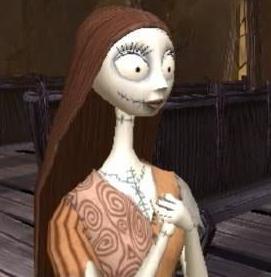
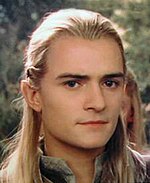
And what fighting it is. The visuals are sensationally imaginative. Director Guillermo del Toro is every bit as excited about the creatures in this comic-book saga as he was in his grown-up fairy tale “Pan’s Labyrinth.” Wonderfully imagined and intricately constructed, they often reflect the sensibility of a steampunk cracked version of “Lord of the Rings.” Hellboy’s new boss, reported to have an “open face,” turns out to be a clanking robot with a glass dome who speaks through an apparatus that looks like the workings of a Victorian typewriter. The clash and contrast of styles adds a lot of visual flair. A bad guy Prince has long blonde hair and seamed cheeks that make him look like the spawn of Legolas from “Lord of the Rings” and Sally from “A Nightmare Before Christmas.”
The fight scenes are inventively set up and staged. As Hellboy battles the plant guy he has to have one arm around a swaddled infant he is in the process of rescuing. He takes on Victorian typewriter-guy at one point and finds himself battling a barrage of swinging locker doors. When he fights the Prince, he has to be careful to defeat him without hurting him because of the psychic connection that imposes any injuries to him on his twin sister as well. The plot may not be much and the Golden Army of the title is the least interesting of his foes, but even the silly stuff is so imaginatively realized that Hellboy has a bit of a touch of comic book movie heaven.
(more…)

Related Tags:


Comic book/Comic Strip/Graphic Novel Fantasy Series/Sequel

The Perfect Holiday

Posted on November 9, 2008 at 8:00 am

perfect%20holiday.jpg
This sugarplum of a movie is held together with good intentions and paperclips, but its appealing cast and seasonal sweetness make it — if not the perfect holiday treat, a pleasantly enjoyable one, especially welcome because there are so few Christmas stories about African-American families.

(more…)

Related Tags:


Comedy Family Issues Genre , Themes, and Features Reviews Romance

Life or Something Like It

Posted on December 13, 2002 at 5:17 am

It’s been months since we have had a good old-fashioned date movie and that makes this one particularly welcome.

Angelina Jolie plays Lanie, a television news reporter in Seattle who thinks her life is just about perfect. For her, that means a great apartment, great friends, a great fiance, and a shot at her dream job on the network. And perfection is what she strives for, from the tip of her cotton candy hair helmet to the calves that show the effect of thousands of hours on a stairclimber. She never questions what she wants or what she has to do to get there.

But she is sent to do a story on a homeless man who predicts the future, and he tells her what the score will be in the football game to be played later that day. He tells her that it will hail the next morning. And he tells her that she will not get the job she wants, and has only a week to live. When the first two predictions come true, she begins to think that she might just have a week to live, and that her life is not so perfect after all.

Where did Lanie get her ideas about what constiituted perfection? There is some nonsense about sibling rivalry with a sister who has a rich husband and a fancy house. What makes more sense is that Lanie gets her idea of perfection from the very place she seeks it, television. With an indestructible platinum helmet hairdo, flawless muscle tone, and a baseball player fiance, she is a cross between Marilyn Monroe and Barbara Walters. Her idol is Deborah Connors (Stockard Channing), the queen of interviewers, who always gets her subjects to cry.

The prospect of having no more time makes Lainie think about what she was postponing. The first surprise is who she asks for advice. She turns for help to a man she thought she hated, Pete (Edward Burns), her cameraman. He tells her to talk to the people she cares about most.

The script has no surprises, but Jolie and Burns have a nice rythym as they constantly ask each other to define their words. It is easy to believe that they would both be attracted to someone who doesn’t let them get away with easy charm. The biggest surprise is Jolie in a role clearly designed for someone like Meg Ryan or Sandra Bullock. She doesn’t let Lanie get too cute and shows us Lanie’s vulnerability, inescurity, and her capacity for giddy joy.

Parents should know that the movie has some strong language. An unmarried couple lives together and there are references to a drunken sexual encounter and an out of wedlock pregnancy. Getting drunk is portrayed as freeing. There is non-graphic violence. Some viewers may be upset by the seer’s prediction. And some younger viewers may be disturbed by the reference to divorced parents, even though it is amicable.

Families who see this movie should talk about how we decide what “perfection” means to each of us and whose approval matters most to us. How do we live in a way that balances planning for the future with recognizing what is important in the present. How do our family dynamics transfer over into our work relationships? Why didn’t Lanie understand how important she was to her father?

Families who enjoy this movie will also enjoy the black and white classic “Theodora Goes Wild.” They will also enjoy Martha Beck’s book “Following Your North Star.”

Related Tags:


Date movie Drama

Spider-Man

Posted on December 13, 2002 at 5:17 am

Remember when “Superman” was released with the tagline, “You will believe a man can fly?” Well, “Spider-Man” will not only make you believe that a teenager can swing from the skyscrapers; it will almost make you believe that you are up there swinging with him.

Comics were hugely popular back in the days when they could show us stories that no one else could. But now, movies can show us anything that can be imagined, and a movie like this does it so well it makes you think that this is what imagination is for.

Toby Maguire plays Peter Parker, a brilliant and sensitive high school senior, so deeply in love with his red-headed next door neighbor Mary Jane (Kirsten Dunst) that he can barely bring himself to say hello to her. On a school field trip, he is bitten by a genetically engineered spider and the next morning he wakes up with some distinctly arachnid-like qualities. He can see without his glasses and he has become muscular. He can climb walls, eject webbing with the swinging power of rope and the strength of steel, and anticipate danger.

So, like any teenager, the first thing he does is impress a girl and humiliate a bully. He enters a wrestling match to get money so he can buy a car to impress the girl even more. His decision not to interfere with an armed robber has tragic consequences, and so he learns that his uncle was right in telling him that with great power comes great responsibility. Great risk comes as well — everyone he cares about is put at risk because of who he is.

Meanwhile, Peter’s best friend’s father, industrialist Norman Osborn (Willem Dafoe) has decided to try out his company’s new product on himself. He, too, develops extraordinary power and a mad fury. He is dubbed the Green Goblin for his bizarre armor-like covering.

Maguire is just right as Peter, thoughtful, sensitive, thrilled with his new powers. You can believe that he is the kind of kid who would spend his time a little bit apart from the others, taking photographs that are clear and perceptive. The supporting cast is great, especially stage star Rosemary Harris as Aunt May and J.K. Simmons as Peter’s bombastic editor. The script is excellent, and strikes just the right note of respect and affection for the source material. It has a contemporary feel without being showily post-modern or ironic.

The special effects are thrilling. New York City is brilliantly stylized. Peter’s relationship with MJ is sweetly romantic. And when a bunch of New Yorkers throw things at the Green Goblin, yelling, “This is New York and we fight back!” it is genuinely touching.

The movie’s weakest point is that it fails in the single most important requirement for a comic book-based movie — the villain is not unforgettably crazy or evil or larger-than-life. The best Batman movies featured Jack Nicholson as The Joker and Jim Carrey as The Riddler. Willem Dafoe is a brilliant actor (just take a look at his Oscar-nominated performance in “Shadow of the Vampire”), but the part of Osborn/Green Goblin is just not interesting enough to be truly scary. The flying surfboard he rides around on is very cool, but his exoskeleton costume and mask are just dumb-looking.

Parents should know that the PG-13 rating comes from a couple of mild words, a clingy wet t-shirt, and a great deal of violence. The violence gets very intense, and includes not just fires and explosions but people getting vaporized, shot (off-camera), and impaled. Characters lose people close to them to violent deaths. A group of schoolchildren are in peril. Parents emotionally abuse their children.

For parents who are struggling with whether this movie is appropriate for kids under 13, the best guide I can provide is to say that it is about at the level of X-Men. I recommend caution, especially for children under 10. Keep in mind that just because a child can repeat after you “it’s only pretend” does not mean that he fully understands what that means until he is 10 or even older, and that the terrorist attacks may make some of the material scarier than it would have been before (scenes featuring the World Trade Center have been removed from the movie). Some kids may see the movie and appear to have no problems with it, but may act out in other ways. Be watchful for kids who respond by desensitizing themselves to violence or re-enacting it. And if you are going to let childrn see the movie, make sure that they know that this is an exception and that you will not be permitting them to see any PG-13 just because you allowed this one.

Families who see this movie should talk about the idea that the people we love make us feel good about who we are at the same time they make us see a way to be better. Do you agree that “people love to see a hero fail?” Characters in the movie keep a lot of secrets. What makes them decide not to tell, and who is and is not right in making that choice?

Families who enjoy this movie will also enjoy Superman and Batman. Mature audiences will enjoy Toby Maguire’s outstanding performances in “Wonder Boys,” “The Cider House Rules,” and “The Ice Storm.”

Related Tags:


Action/Adventure Comic book/Comic Strip/Graphic Novel Romance Superhero

Awakenings

Posted on December 13, 2002 at 5:17 am

Malcolm Sayer, a shy neurologist (Robin Williams), is assigned to work with patients for the first time after his research funding is cut off. His patients, all but catatonic, are in a ward called “the garden,” because their only treatment consists of “watering and feeding.” Ever since an epidemic of encephalitis (“sleeping sickness”) decades before, they have not spoken or appeared to understand anything that was going on around them. Everyone else has given up hope, but Sayer, approaching them as a researcher, notices that they are capable of reflex reactions, and believes that new medication used for patients with Parkinson’s disease may help these patients, too. Over the objections of the doctors in charge, he gets permission to try it on one patient, Leonard Lowe (Robert De Niro).

At first, there is no reaction, but soon Leonard “awakens.” His transformation is so thrilling that Malcolm is easily able to get permission and funding to treat the other patients. They, too, awaken, some more fully than others. A one-time musician does not speak, but plays the piano. Some of them are horrified at the time they have lost. But most are giddy with the pleasures of being alive. Malcolm takes Leonard outside, and Leonard’s embrace of everything around him contrasts sharply with the inhibitions of Malcolm, who hesitates to try anything but his work, and cannot even bring himself to have a cup of coffee with a friendly nurse (Julie Kavner).

Leonard becomes impatient to experience more. He develops a warm friendship with the daughter of another patient in the hospital (Penelope Ann Miller). He asks for permission to leave the hospital on his own. But he becomes hyperactive, angry, and ridden with tics. The medication’s side effects begin to overwhelm him. Malcolm sees that he is losing Leonard, and the other patients know that it must soon happen to them, too.

Soon, all of them are returned to their previous state of catatonia, the only evidence of their brief awakening the greater respect and affection they receive from the staff, and their impact on Malcolm, who heeds Leonard’s call to life by reaching out to the nurse.

Discussion: This movie is based on the book of the same name by neurologist Oliver Sacks, who was the basis for the character Malcolm Sayer. It is a powerful and moving story, brilliantly acted and directed. Like Malcolm, we can all use a reminder to appreciate the pleasures of being alive, including the pleasures that require us to take risks.

Families who see this movie should talk about what the neurologist means when he says, “because the implications of that would be unthinkable?” Why would he prefer to believe that the patients are not aware of what is going on? Were you surprised by the way any of the patients reacted to being “awakened?” Which reaction was most like the way you think you might feel? Why is it hard for Malcolm to interact with other people? How does Leonard change the way Malcolm behaves? Why does the staff treat the patients differently after the awakening, even when they go back the way they were?

Compare this movie to Thornton Wilder’s play “Our Town,” especially Emily’s speech after her death, about what she misses and what she wants the living to be aware of.

Scriptwriter Steven Zaillian also wrote the screenplay for Schindler’s List and wrote and directed Searching for Bobby Fischer. Teens will enjoy reading the Sacks book, and some of his others, especially The Man Who Mistook His Wife For a Hat and An Anthropologist on Mars, with astonishing and compassionate descriptions of some of his neurology patients.

Related Tags:


Not specified
THE MOVIE MOM® is a registered trademark of Nell Minow. Use of the mark without express consent from Nell Minow constitutes trademark infringement and unfair competition in violation of federal and state laws. All material © Nell Minow 1995-2026, all rights reserved, and no use or republication is permitted without explicit permission. This site hosts Nell Minow’s Movie Mom® archive, with material that originally appeared on Yahoo! Movies, Beliefnet, and other sources. Much of her new material can be found at Rogerebert.com, Huffington Post, and WheretoWatch. Her books include The Movie Mom’s Guide to Family Movies and 101 Must-See Movie Moments, and she can be heard each week on radio stations across the country.

Website Designed by Max LaZebnik