Spy

Spy

Posted on June 4, 2015 at 5:44 pm

B+
Lowest Recommended Age: Mature High Schooler
MPAA Rating: Rated R for language throughout, violence, and some sexual content including brief graphic nudity
Profanity: Very strong and crude language
Alcohol/ Drugs: Drinking
Violence/ Scariness: Extensive action-style violence, some disturbing images, characters injured and killed
Diversity Issues: A theme of the movie
Date Released to Theaters: June 5, 2015
Date Released to DVD: September 8, 2015
Amazon.com ASIN: B00YWE6LXK
Copyright 2015 Twentieth Century Fox

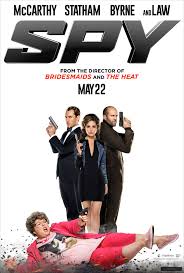
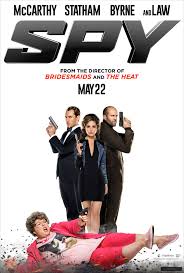
It is time to celebrate. Melissa McCarthy finally has the movie role she deserves. Writer/director Paul Feig, who directed her in “Bridesmaids” and “The Heat” has wisely given her center stage and allowed her to be quirky and awkward, which we knew she could do, and improvise crazy lines and scenarios, which we also knew she could do, but also let her play someone who is extremely capable and loyal, smart, brave, and completely captivating, which we always knew she could do, but rarely got to see more than a hint of it.

Feig does not just thoroughly understand the genre he is shredding. He clearly loves it. All of the classic spy movie necessities are there, a sultry song over the opening credits, impeccable tailoring, a beautiful car, fine wine, pretty girls, chases and shootouts, cool gadgets, glamorous world capitals, a formal high society party with tons of security that must be breached, a club scene with EDM, betrayal by a trusted insider, an evil megalomaniacal villain, and — of course — the fate of the entire world depending on our secret agent with a license to kill saving the day. Dippold avoids the usual spoof go-to “jokes” of incompetence, slapstick, and instantly-old cultural references, allowing the characters to take the stakes and the relationships seriously enough so that the comedy is honestly earned and all the funnier for it. It is genuinely refreshing to see women as not just hero and villain but also as hero’s boss and her best friend. The male stars are excellent, especially Jude Law and Jason Statham, who get to riff on their own leading man images as well as larger-scale action hero conventions. But the ladies are in charge here, and they are killing it. Imaging Miss Moneypenny and Pussy Galore plus Dame Judi Dench as M running the show, with Bond as eye candy.

McCarthy plays Susan Cooper, a teacher turned desk agent for the CIA. As super-cool Bradley Fine (Law) tosses off a glass of champagne, pausing to admire the crystal flute glass before smashing it and sneaking out to find the super-powerful, super-compact bomb, Susan is talking through his earpiece, letting him know which way to turn through the labyrinthian tunnels every self-respecting bad guy has to have under the elegant party going on up above, and which direction the henchmen are coming from. He is fond but patronizing. She is capable but a bit fluttery and insecure.

Unfortunately, there is a lot of pollen in the air and Bradley sneezes at the wrong time, accidentally making his gun go off and killing the bad guy. Also unfortunately, the bad guy’s successor, his daughter Rayna (Byrne, with what looks like several dead animals hiding in her hideous hairdo), has access to the names of all of the current field agents. With no alternative, the humorless CIA deputy director (Janney) sends Susan out into the field, just to track and report, not to engage. Susan is nervous but excited, though disappointed when she receives her cover. No sophisticated bespoke attire and fancy hotel rooms. She will be a dowdy, nondescript woman with a very bad perm.

She doesn’t get the cool hoverboard from the Q-equivalent. She gets weaponized versions of the things a woman like her cover identity would have in her purse. And her cover involves hilariously tacky wardrobe and a disastrous perm-looking wig.  Of course she soon abandons the “no engagement” part. A rogue agent (Statham) trying to find the bomb on his own mostly gets in the way. But she relies on her excellent observational powers, quick thinking, and some mad skillz in hand-to-hand combat, even if killing a guy grosses her out. And she gets some help from her best friend Nancy (the wildly funny Miranda Hart).

It is exciting, funny, and even heartwarming. And best of all, there’s a hint at the end of a possible sequel. More Susan Cooper, please, and lots and lots more McCarthy.

Parents should know that this film includes very strong and crude language, sexual references, sexual humor, and non-explicit sexual situations, graphic nudity, extensive violence with some graphic and disturbing images, and characters injured and killed.

Family discussion: What do you think it takes to be a great spy? If you were going undercover, what would your name be?

If you like this, try: “Get Smart,” “Bridesmaids,” and “The Heat”

Related Tags:


Action/Adventure Comedy DVD/Blu-Ray Pick of the Week Spies
Entourage

Entourage

Posted on June 2, 2015 at 5:32 pm

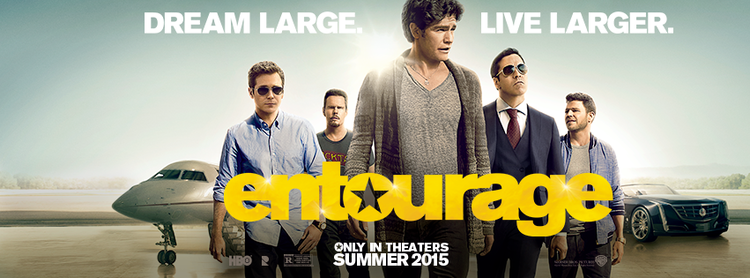
I sometimes muse that it might be nice to have a rule that I spend no more time writing a review of a film than the screenwriter spent writing the script.  If I had, this review could end right here, with these words: not unpleasant but entirely forgettable.

Alas, no such rule exists, so here I go.  Recently, I learned the term “fan service,” and if you do not know what that means, the “Entourage” movie will do to explain it.  There are movies that pander to the fans, and then there are movies that pander proudly, and “Entourage” panders proudly and is seemingly unaware that there is any other kind of movie to make.  This is a little sad because to the minimal extent it is supposed to be about anything, it is supposed to be about artistic integrity in the midst of soulless Hollywood.  And by “supposed to be about,” I mean that the characters appear to come down on the side of artistic integrity.  The filmmakers, not so much.

Copyright 2015 HBO
Copyright 2015 HBO

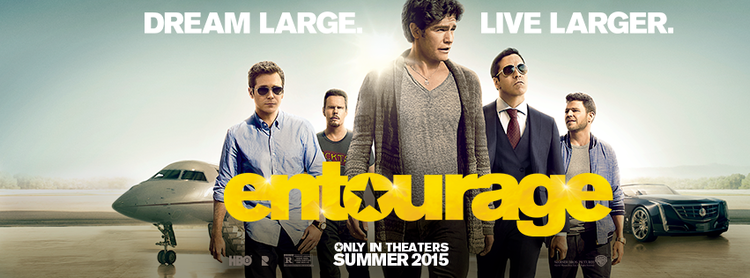
The dwindling fans of HBO series will enjoy the pretty girls in pretty settings, the passes at those pretty girls that are warmly received (vicarious thrills) and those that are not (vicarious schadenfreude), the Hollywood triumphs (v. thrills), and the Hollywood failures (v. schadendreude) .   They will get a kick out of the guys’ loyalty (v. t.) and the industry betrayals (v.s.).

They will enjoy the insider-y feeling of the in-jokes, call-outs, and guest stars.  All of that is entertaining, especially Liam Neeson giving Ari (Jeremy Piven) the finger and Jessica Alba in costume yelling at him about her passion project.  I quite liked Warren Buffett calling out advice from a studio lot golf cart.  And there were probably some sports people in it that I couldn’t recognize.

Like the series, the film was produced by Mark Whalberg, inspired by his life before he became a devoted husband and father, when he was taking advantage of being young, handsome, and successful in Hollywood and and his pals from back home were taking advantage of him.  It ended with the young star Vince (Adrian Grenier), having starred in the biggest box office movie of all time, marrying a beautiful girl, and his volcanically profane agent, Ari (Jeremy Piven) retiring.  Both the marriage and the retirement are dispatched in the first few minutes, with Ari coming back to head up a studio and offering Vince a job in a big film called “Hyde,” an updated version of Dr. Jekyll and Mr. Hyde.

But Vince wants to direct.  Not because he has any special artistic statement he wants to make or because he has spent his time on movie sets learning how it’s done — Vince continues to be a cypher.   No, it’s just to give Ari something to melt down about.
Vince’s buddies have two modes.  Most often, they are razzing each other.  Second to that is talking about banging chicks, much of which also involves their razzing each other.  Every so often, some light-weight plot spurs them to bro out and demonstrate some loyalty.  Rinse and repeat.

There is some good, silly fun, and seeing Piven go nuts is so delightful it is disappointing this film has him working on his anger management.  But there’s nothing here that shows any particular insights into people or show business.  Like Vince, it’s blank.  And like his parties, you won’t feel so good about yourself afterward.

Parents should know that this film includes a lot of debauched behavior, with parties, drinking, drugs, and crude and explicit sexual references and situations and a brief fight scene.

Family discussion:  Which of the guys is the best friend to Vince?  If you made it big, which friends would you bring with you?  Which one of your friends would you follow to Hollywood?

If you like this, try: the HBO series and “The Player”

Related Tags:


Based on a television show Comedy Drama Romance Scene After the Credits
San Andreas

San Andreas

Posted on May 28, 2015 at 5:55 pm

Copyright 2015 Warner Brothers

Another summer blockbuster-by-the-numbers, another dad who needs redemption and re-connection with his family, and the only way he can get it is via massive, catastrophic disasters lovingly created via CGI that feels more real than the emotions, characters, or dialog. And that brings us to “San Andreas,” the latest in schlock disaster porn.

This time, it’s an earthquake. Before the tectonic plates start to shift, we get quick intros to our two heroes, the brain (Paul Giamatti as Lawrence, a Caltech seismologist) and brawn (Dwayne “The Rock” Johnson as Ray, a military rescue specialist turned LA Fire Department rescue specialist). This job is easier, because “no one is shooting at us.”

These scenes give the professor a chance to lecture his class and establish the scale of damage a quake inflicts and the impossibility of predicting when one will occur (until….). And it gives Ray a chance to rescue a pretty girl whose car has been knocked off a cliff, accompanied by a TV news reporter (“The Good Wife’s” Archie Panjabi) and cameraman. This is also the only clever twist in the film as the pretty girl is speeding along a narrow mountain road, reaching behind her for her water bottle and checking a text, either of which we assume are going to cause an accident. But this is not a Driver’s Ed cautionary video. Her car is knocked off the mountain by boulders, crushing it and wedging it precariously between rocks on the side of the cliff.

Fortunately, Ray and his wisecracking crew arrive to save the day, explaining what they are doing to the reporter so we can power through some more exposition and see the reporter’s notes on one of the team: “Cute but not smart.” Yep. That prepares us for what is coming all right. Except it’s not that cute. Example: two characters crash land in a baseball field and she says to him: “It’s been a while since I got you to second base!” How hilarious and quippily romantic in the midst of the entire state falling into the ocean!

We quickly establish Ray as a devoted father and estranged husband. Final divorce papers arrive in the mail and his ex, Emma (Carla Gugino — please get a better agent) is moving in with Richie Rich, I mean Daniel (Ioan Gruffudd), who has a mansion and a private plane and says that the skyscrapers he builds are his children. To sharpen Ray’s sense of being displaced, Daniel offers to fly Ray’s daughter Blake to her volleyball tournament in San Francisco, instead of driving with her dad.

As if to manifest Ray’s internal upheavals, the earth begins to shake, first in Nevada, where the Hoover Dam collapses, and then on the West Coast, when the fault line of the title, overdue for a major quake after more than a century, seizes, shifts, and heaves.

The special effects are so extensive that it amplifies their unreality. The movie is more concerned with the individual windows exploding out of the buildings than it is about the underlying mechanics of what is actually happening. It is preposterous enough that the professor not only predicts the second quake but hacks into the television networks. Wi-fi, electricity and broadcast channels are still operating, apparently, which is a long shot, but also people are actually watching the television news to find out what is happening, which is even more unlikely. And then, odds fast plummeting below zero, San Francisco is evacuated in a pretty orderly fashion (some folks stopping to loot flat-screens — why it it always flat-screens?), presumably so we can relish all the destruction without worrying too much about the people, the opposite of the neutron bomb. This is PG-13 “action violence,” designed to be exciting, not terrifying.

Goodbye, Golden Gate Bridge, cables swinging vertiginously. Goodbye Coit Tower. All those pretty pixels and algorithms, so cleverly arranged. California is shredded with the same glee the boys who played at our house used to have in wiping out the Sims with every possible kind of catastrophe.

What is terrifying is the Randian twist that has Ray abandoning any duties he has in LA to rescue just two people, both of whom are in his family. And in the middle of Armageddon, he somehow finds time for a heart-to-heart with his ex, after the scales drop from her eyes to understand what a selfish monster Daniel is. For all the literal flag-waving and reference to rebuilding at the end, this is a curiously sour portrayal of disaster as family therapy.

Parents should know that this film concerns a major earthquake affecting Nevada and California, with many collapsing buildings, roads, and bridges, fires, floods, looting, fighting, gun, characters injured and killed, references to death of a child, some disturbing images, and some strong language.

Family discussion: What does this movie teach us about skills and plans we should have for emergencies? What did Emma and Ray learn about one another and why did it take an earthquake for them to reach that understanding?

If you like this, try: “The Towering Inferno” and “The War of the Worlds”

Related Tags:


3D Action/Adventure
Aloha

Aloha

Posted on May 28, 2015 at 5:37 pm

Copyright 2015 Columbia Pictures
Writer/director Cameron Crowe presents us with an attractive and talented but messy and compromised hero in “Aloha,” and asks us to root for him. The problem is that the film itself is attractive, talent-filled, messy, and compromised, and harder to root for than the hero of the story.

That hero is Brian Gilcrest (Bradley Cooper), once an 11-year-old who loved the sky so much he wanted to identify everything in it. In a quick narrated recap that opens the film we learn that after he grew up things went well for him (in the military) and then not so well, and then badly. While working for a private contractor in Kabul, he was badly injured, and apparently not in the way that gets you a Purple Heart.

Brian arrives in Hawaii and needs to prove himself. His former employer, Carson Welch (Bill Murray) is one of the wealthiest men in the world, presiding over a telecommunications empire. He and the Air Force are working together on a big project that involves the development of land on the island that was a burial ground for the indigenous people. The Air Force assigns a “fast burner” named Sergeant Ng (Emma Stone) to work with get the cooperation of the King of the native population to build on that property, and to show that by performing a blessing ceremony. The King is played by real-life King Dennis “Bumpy” Kanahele, and he is one of the few from Brian’s past who seems to like him much. Welch does not. The Air Force General (Alec Baldwin, volcanically angry) does not. Then there is Brian’s ex-girlfriend, Tracy (Rachel McAdams), now married to an Air Force pilot and the mother of two children.

It totally goes off the rails several times, with a plot that would daunt a Bond villain thwarted by a completely ridiculous hacking scene, plus a last-minute redemptive reconciliation that is so far off the mark of any known human response the characters would be just as likely to sprout feathers and levitate off the ground. While the Hawaiian natives and their struggle against what they see as American imperialism and colonialism are sympathetically portrayed, it is still a story that is about white people and their problems. And the casting of Emma Stone as bi-racial is insensitive at best.

But like its hero and its writer/director, it won me back with the crackle of its dialog and charm of its poetry, even in the hacking scene, and especially in a statement of romantic intent that is one of the best I’ve seen in many months. It is also very funny, with a wonderfully expressive performance from Krasinski as the taciturn Woody, and thoughtful work from Cooper, who keeps getting better at finding moments of surprising insight and nuance with every performance.

Parents should know that this film includes strong language, sexual references and non-explicit situation, paternity issue, references to war-related violence and injuries and to weapons of mass destruction, references to imperialism and colonialism, and alcohol.

Family discussion: Why did Ng talk so much about being one-quarter Hawaiian? Why was the King the only person from Brian’s past who seemed to like him? What happens when billionaires make decisions that used to be made by government?

If you like this, try: “The Descendants,” and “Almost Famous”

Related Tags:


Comedy Drama Romance
Tomorrowland

Tomorrowland

Posted on May 22, 2015 at 7:10 am

Copyright 2015 Disney

It begins with an argument. Frank (George Clooney) is trying to tell us the story. But he is repeatedly interrupted by someone we will learn is Casey (Britt Robertson). “Try to be a little more upbeat,” she urges him. The only way he can do that is to go back to when he last felt upbeat, as a child in 1964, when he brought his not-quite-working-yet invention to the New York World’s Fair to submit it in competition. The judge (Hugh Laurie) rejected it, but a young girl who was watching them follows Frank, hands him a pin, and tells him to follow her without being noticed. She is Athena, played with saucer-eyed charm by Raffey Cassidy. That leads him to the “It’s a Small World” ride, which had its premiere at the 1964 World’s Fair, but in this version of the ride, there is a portal to a fabulous Oz-like city of the future.

We then meet Casey in the present day, where she is engaging in a little breaking and entering at a NASA facility in Cape Canaveral, trying to stop the machines that are tearing it down. Her father (a warm and wonderfully natural Tim McGraw) is a NASA engineer who has been laid off as his entire program is shutting down. Casey is caught and arrested, and when she is being released, among her things is the same pin. And when she touches it, she is transported to a wheat field with that same city in the distance. The shot is an homage to the iconic image of the Emerald City from the poppy field. She wants to get back there. She feels that she needs to get back there. And so she tries to track down the pin, which takes her to a store filled with sci-fi artifacts run by Kathryn Hahn and Keegan-Michael Key, who manage to be both very funny and surprisingly menacing. The store is called Blast from the Past, a name that turns out to be quite literal when some guys dressed in black with scary grins and big guns show up.

Athena arrives, looking not a day older than in 1964, and takes Casey to see Frank, now a grumpy recluse with a grizzly gray beard stubble and a holographic dog. When the guys in black show up, they are held back by Frank’s elaborate system of booby traps long enough for Frank, Casey, and Athena to escape. Eventually they make it back to Tomorrowland, which looks quite different from the pristine and joyful version Casey first saw.

There are some magical moments, but also some choices so poor they suggest last-minute panic re-cutting.  That last scene with Clooney and Cassidy is weird and creepy, even more so because it is intended to be touching.  But in much of the film, co-writer/director Brad Bird, working with “Lost’s” Damon Lindelof, combines some of the themes from his earlier films, “The Iron Giant,” “The Incredibles,” “Ratatouille,” and even “Mission Impossible: Ghost Protocol,” so that the story’s superbly staged action sequences and gorgeously imagined settings underlie ideas about creativity, optimism, and the power of ideas and imagination. It is all in the tradition and the spirit of the man behind the theme park area that inspired the film.

Early on, Casey tells her dispirited father, who describes himself as “a NASA engineer without a launch,” the Cherokee story he used to tell her. Two wolves are fighting. One represents darkness and despair. One represents light and hope. Which one will win? The one that you feed. It is clear that Bird wants us to feed the wolf of light and hope, and this film gives that wolf some real nourishment.

Parents should know that this film includes sci-fi/action/fantasy peril and violence including weapons, characters injured and killed, themes of dystopia and destruction, and some mild language (hell, damn).

Family discussion: What made Casey special? What invention would you like to create to make a better future? Would you like to have a friend like Athena?

If you like this, try: Disney classics from the original Tomorrowland era like “Escape from Witch Mountain” and “Swiss Family Robinson”

Related Tags:


Action/Adventure Fantasy Science-Fiction
THE MOVIE MOM® is a registered trademark of Nell Minow. Use of the mark without express consent from Nell Minow constitutes trademark infringement and unfair competition in violation of federal and state laws. All material © Nell Minow 1995-2026, all rights reserved, and no use or republication is permitted without explicit permission. This site hosts Nell Minow’s Movie Mom® archive, with material that originally appeared on Yahoo! Movies, Beliefnet, and other sources. Much of her new material can be found at Rogerebert.com, Huffington Post, and WheretoWatch. Her books include The Movie Mom’s Guide to Family Movies and 101 Must-See Movie Moments, and she can be heard each week on radio stations across the country.

Website Designed by Max LaZebnik