Dawn of the Planet of the Apes

Posted on July 10, 2014 at 6:00 pm

dawnoftheplanetoftheapesceasarAll hail Caesar!

The intelligence-enhanced ape from Rise of the Planet of the Apes takes center stage in this sequel, which begins ten years after the last film. The virus we saw infecting the human population has now wiped out almost all human life. The assorted apes, led by Caesar, have asserted their primacy over other animals. In the opening scene, we see them hunting with spears they have crafted, killing a bear, and riding on horses. They live in homes they have constructed from logs, communicate — mostly via sign language — teach their children the alphabet in school, and have an organized society, with Caesar as their leader. They demonstrate loyalty and tenderness.  They adorn themselves; Caesar’s mate wears a small crown.

Ceasar is played by the brilliant motion-capture actor/artist Andy Serkis and the CGI work of the geniuses at Weta Digital.  The seamless integration of the CGI characters and the human characters and the subtlety of the apes’ eyes and facial expressions brings us straight into the story, underscored by the immersive 3D.  It is dramatic, not stuntish, with the possible exception of some spear-throwing toward the screen.

The film recalls old-school cowboys-and-Indians westerns, with the apes riding into battle on horses and the humans and their armory holed up in the ruins of San Francisco like it is Fort Apache.  Then the apes get the guns, and everything escalates fast.  The film wisely gives both groups of primates a range of characters, some wise and trustworthy, some bigoted and angry.  Both species have to learn that respect has to be based on character and actions, not on genetics.  The division is not between man and ape but between those who can envision a future with cooperation and trust and those who cannot.

There are some thoughtful details.  The destroyed city tells the story of a decade of unthinkable loss and also of great courage.  A dropped sketchbook conveys information that in a world without mass communications is revelatory.  A long-unheard CD plays The Band and we see the humans react, thinking of where they were the last time they heard it and what access to electricity could mean for them now.  The humans have the advantage of knowing how to create and use power; they also have the disadvantage of needing it.

In the midst of the battle, there is a quiet moment when a small mixed group hides out together in a location with a lot of resonance from the previous film.  It lends a solemnity to the story, even a majesty, that gives it weight.  Even those who seem from our perspective to be making decisions that are disastrously wrong do so for reasons we can understand.  The action is compelling but it is the ideas behind them that hold us.

Parents should know that this film includes constant peril and violence, post-apocalyptic themes and images, many characters injured and killed, guns, fire, drinking, smoking, and some strong language.

Family discussion: Why were there so many different opinions within both the ape and the human communities? How did they choose their governing structure? Why didn’t Carver want to listen to Ellie’s explanation of the source of the virus?

If you like this, try: the original “Apes” movies to compare not just the stories but the technology used by the filmmakers
Related Tags:


3D Action/Adventure Based on a book Drama Fantasy Romance Science-Fiction Series/Sequel Talking animals

Life Itself

Posted on July 3, 2014 at 6:00 pm

A
Lowest Recommended Age: High School
MPAA Rating: Rated R for brief sexual images/nudity and language
Profanity: Some strong language
Alcohol/ Drugs: References to drinking and alcohol abuse
Violence/ Scariness: Scenes of illness, sad death
Diversity Issues: Diverse characters
Date Released to Theaters: July 4, 2014

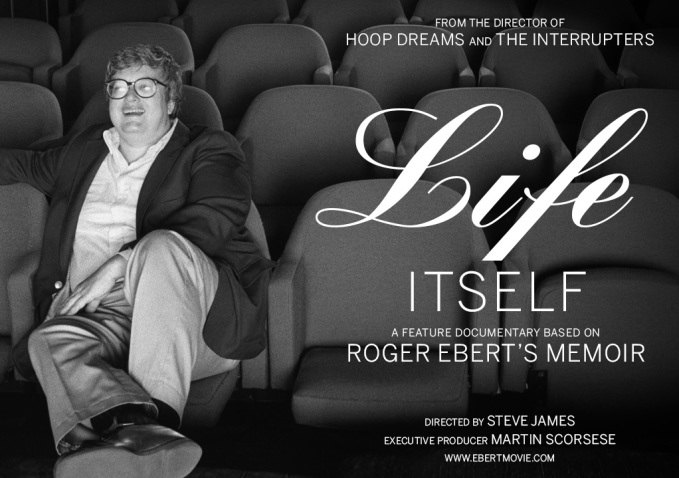
LifeItselfRoger Ebert, the most influential film critic of all time, gets the film he deserves directed by one of the many filmmakers he championed, Steve James (“Hoop Dreams,” “The Interrupters”).  It is co-produced by Martin Scorsese, whose emotional appearance in the film to talk about the impact of the support—and criticism—he received from Ebert is one of the highlights.

But this is not the story of a movie critic.  It is the story of a life, a big, grand, messy, vital, generous life.  It was a life with every bit as much drama, comedy, tension, romance, insight, compassion, and, as Ebert would say, civilizing influence and empathy creation as any of the films included in Roger’s pantheon of Great Movies.

The film shows us Ebert as a child in the university town of Urbana, Illinois, as a college student there, as a young newsman who, still in his 20’s, became the movie critic for the Chicago Sun-Times, and later a pioneering presence on television and online. He drank too much until he admitted that he was an alcoholic.  He and Chicago Tribune critic Gene Siskel created a television show that began on the local PBS channel, WTTW, and then went into national syndication and moved to commercial television.  While some print critics complained that it was stunt-ish, the show elevated serious engagement with movies to a nationwide conversation.  A highlight of the film is the testy outtakes from the show, making it clear that the competitiveness and tinge of animosity that made their on-screen interactions so fascinating were toned down from the real strains between them.  And it turns out Siskel hung out with Hugh Hefner at the Playboy Mansion during the wild era of the 60’s.  “Roger may have written ‘Beyond the Valley of the Dolls,’ but Gene lived it,” Siskel’s widow says with a smile.

The intensity of the competition between the two critics is very funny. So are the outrageously awful clothes and haircuts (there are some things even the ’70s does not excuse) and the amateurishness of the early episodes. But the very real respect and, ultimately, admiration, between them makes it clear that this was one of the most significant relationships of Roger’s life. It was his devastation over Siskel’s decision not to tell anyone about his own illness that made Roger resolve to be very open and honest about his own.

Ebert had great hungers, which led to excesses, not just in alcohol and food but in work, producing more reviews and books than any other critic and dabbling as a screenwriter in the legendarily awful “Beyond the Valley of the Dolls.”  Once he stopped drinking, he developed the courage to pursue his greatest hunger, the hunger for love and intimacy.  The man who called movies “an empathy machine” was ready, at age 50, to begin to feel those feelings outside of the screening room.  It is deeply moving to witness Ebert’s transformation through his finding a deep romantic love and a large extended family at age 50 with Chaz.  And then he got cancer, and we see the impact his illness had on his writing. He lost a great deal, but, James shows us, he found more.

Roger loved movies deeply, personally, viscerally. With this documentary, the movies return that love.

Parents should know that this movie includes scenes of illness and a sad death, some strong languages, discussions of alcohol abuse and alcoholism, smoking, and some sexual references and images from movies with adult material.

Family discussion:  What were the most important turning points in Ebert’s life?  Do you agree that film is an “empathy machine?”

If you like this, try: Roger Ebert’s books and his mesmerizing shot-by-shot commentary on Citizen Kane

Related Tags:


Critics Documentary Movies -- format

Snowpiercer

Posted on July 1, 2014 at 6:00 pm

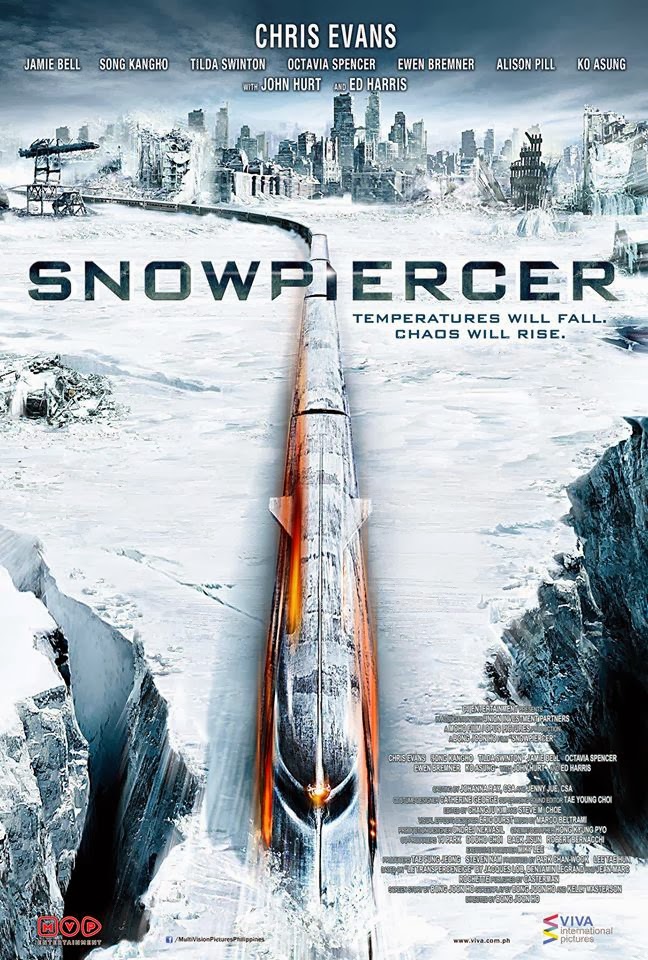
Snowpiercer-posterA French graphic novel by Jacques Lob about a post-apocalyptic train containing all that is left of humanity is now the first English-language film from Korean director Joon-ho Bong (“Mother,” “The Host”), with an international cast that includes Chris Evans, Jamie Bell, Ed Harris, and Tilda Swinton.  It is a visually stunning and intellectually ambitious allegory with all of its action and sci-fi imagination in service of provocative commentary.

In an effort to mitigate the damage from climate change, people all over the world shot a chemical into the air that precipitated an overcorrection so extreme that the entire world is covered with snow and ice and is not longer habitable for humans.  Seventeen years earlier, the few remaining people were allowed to board a train designed by Mr. Wilford, who still lives in the train’s first car and keeps its engine running.  He is considered something like a king or even a god by the train’s passengers, some of whom are 17 or younger and have never known any life off the train.

The train circles the globe once a year, and measures the passage of time by the landmarks it passes. After a brief prologue with snippets of news reports informing us of the environmental catastrophe, we meet the poor, filthy, brutally abused inhabitants of the train’s last car, including Curtis (Chris Evans, almost unrecognizable in a black knit cap and with a haunted expression) and his best friend Edgar (Jamie Bell).  They are kept barely alive through doling out of icky looking “protein bars.”  And they are kept in control by masked, brutal guards armed with assault weapons.  There have been brief attempts at rebellion or escape but all have failed.

Occasionally they are visited by someone from one of the forward cars.  Mason (Tilda Swinton, brilliant as a demented apparatchik) has the most terrifying smile of chipper malice since Imelda Staunton as Dolores Umbridge. And there is another woman who appears from time to time to measure the children in the last car and take some of them away with no explanation. They are never seen again. Curtis reveres Gilliam (John Hurt), a disabled old man who encourages Curtis and Edgar to start a real revolution. But one lesson they have learned from the failed attempts is that it cannot work unless they get all the way to the front car and gain control of the engine. That means they will need to break out of the train’s prison the only man who can unlock the doors between the train cars.

The rebels move forward, at devastating cost, surging through a series of train cars, each with stunning revelations about what has become of human society. But nothing can prepare them for the shocks of the final confrontation in the engine car.

If Jonathan Swift was a filmmaker, this would be the movie he’d make — sharp, compelling, challenging.  As Curtis crosses doorway after doorway, each opens into another remarkable tableau, a beauty salon, a fish farm, a classroom, a disco.  This is a story that is richly imagined and powerfully presented.

Parents should know that this film has apocalyptic themes and images, constant peril and violence with a variety of weapons, disturbing images, many characters injured and killed, constant very strong language, smoking, and drugs and drug addiction.

Family discussion:  What elements of the society on the train are similar to cultures in the world today?  Does Wilford make good points about what it takes to sustain a community?  How does this story explore the way that myths and traditions are developed?  What do you think will happen next?

If you like this, try: “Brazil” and “In Time”

Related Tags:


Action/Adventure Based on a book Comic book/Comic Strip/Graphic Novel Environment/Green Science-Fiction

Begin Again

Posted on July 1, 2014 at 5:59 pm

B+
Lowest Recommended Age: High School
Profanity: Some strong language
Alcohol/ Drugs: Drinking, smoking
Violence/ Scariness: Some tense confrontations, slap
Diversity Issues: Diverse characters
Date Released to Theaters: July 2, 2014
Date Released to DVD: October 27, 2014
Amazon.com ASIN: B00M7D81FO

“It’s delicate,” a songwriter tells a performer who has (literally) amped up her gentle ballad into a power anthem. begin again posterThe songwriter is Greta (Keira Knightly) and the performer (Maroon 5’s Adam Levine) is her ex. They were together for five years when he was struggling, but he has become successful and it went to his head.

The more important question for us is whether success has gone to the head of writer/director John Carney. Has he overly tricked out the sweet story he told so well in the bittersweet “Once,” now that he has a bigger budget and top-tier actors? Not quite. Has he repeated too much of the original? Almost. But it is still a lovely little dream of a film, an endearing date-night treat.

No one rumples better than Mark Ruffalo, and here he plays the very rumpled Dan, a once-successful record producer and co-founder of a label with the very pressed and present Saul (Yasiin Bey, aka Mos Def). We know he has had some setbacks because he wakes up in a dingy apartment (and then goes right back to bed), but he drives an elegant Jaguar.  He’s unreliable.  He’s a slob.  He has let down everyone in his life, including his ex-wife, Miriam (Catherine Keener), his daughter Violet (Hailee Steinfeld), and his company.  Worst of all, he just does not care about any of it any more, partly because he likes to feel that he is a victim and partly because he just does not want to feel anything at all.

Saul fires him (obligatory “Jerry Maguire” joke).  Dan has hit bottom.  And that is when he sees Greta, who has been reluctantly dragged on stage at an open mic night, and is quietly singing before an indifferent audience.  In a moment of piercing beauty, Dan looks over at her and does not just hear but actually sees an arrangement come together around her, as ghostly instruments begin to, yes, delicately, fill in to support her song.  She reminds him of what made him excited about music, and he tells her he wants to record her.

Like “Once,” there are scenes of people sharing music, of extemporaneous singing and composing, that light up the characters with so much shimmer it gives us goosebumps.  There’s a fairy tale quality to the story.  Of course they decide to forego a recording studio and made the album with hit and run session outdoors all over New York City where they run into adorable urchins who provide back-up vocals (and apparently don’t require contracts or royalties or any other pesky little legal details) and finish the tracks before they have to grab the gear and run from the cops.

I wish they had kept the original title for the film, “Can a Song Save Your Life?” It is more apt, more vivid, less safe.  Carney is wonderful at evoking the joy of music, its healing powers, and the way it connects us to each other and the universe.  This is a love story, not between Dan and Greta or between them and their exes but between humans and music.

Parents should know that this film has constant very strong language, drinking, smoking, and sexual references.

Family discussion: Share your “guilty pleasure” songs with your family. Why did Greta decide to release her music herself?

If you like this, try: “Once,” from the same writer/director

Related Tags:


Date movie DVD/Blu-Ray Pick of the Week Musical Romance
Earth to Echo

Earth to Echo

Posted on July 1, 2014 at 5:55 pm

B +
Lowest Recommended Age: 4th - 6th Grade
MPAA Rating: Rated PG for some action and peril, and mild language
Profanity: Some schoolyard language
Alcohol/ Drugs: None
Violence/ Scariness: Sci-fi-style action and peril
Diversity Issues: Diverse characters
Date Released to Theaters: July 3, 2014
Date Released to DVD: October 20, 2014
Amazon.com ASIN: B00MHIKRVA


Copyright 2014 Disney


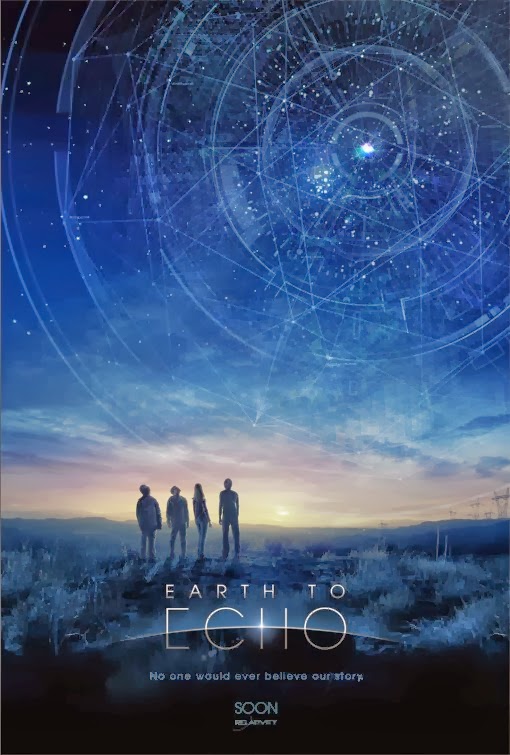
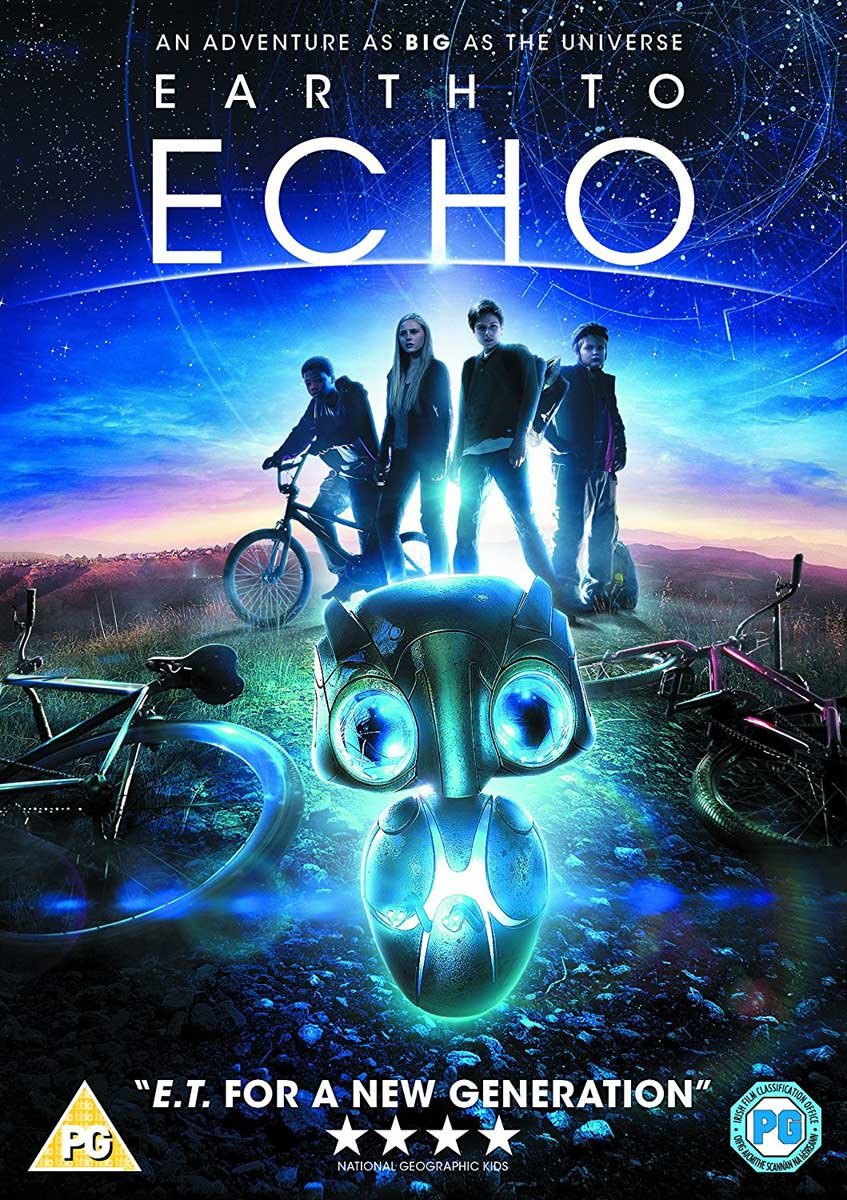
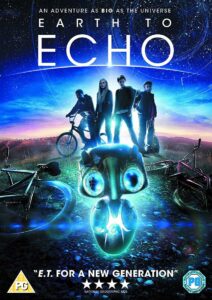
Three kids go on a wild adventure and make an extra-terrestrial friend in this updated take on films like “E.T.” and “The Goonies.” It being 2014, that means that the found footage genre, pioneered in “The Blair Witch Project” and featured in adult thrillers like “Paranormal Activity” and “Cloverfield,” has permeated family film as well. What makes this intriguing is that its intended audience of digital natives, kids who played with iPads before they could talk, may just be better able to process the fragmented, jerky cinematography designed to appear as though it was shot by the kids in the story themselves, than any adult in the audience can imagine.

As it begins, an entire community is being shut down for a highway construction project and all of the families who live there have to leave. Three close friends, confident, talkative Tuck (rapper Brian “Astro” Bradley), shy techie Munch (Reese Hartwig), and sensitive Alex (Teo Halm)have received mysterious messages on their phones and they want to find out where it is coming from and what it means.  Some guys from the construction project have some to the door offering to exchange new phone vouchers in exchange for the phones they say they have damaged with their drilling. But the boys realize that their phones are not broken. They are being contacted by someone or something who wants them to find him/her/it.

The trio is able to get away for one last night because their parents are too distracted by the move to notice what they are doing.  They get on their bikes and bring along a movie camera and some “spy glasses” that surreptitiously take movies as well. The signal leads them to a tiny, owl-like robotic alien they call Echo, who needs their help to repair his ship so he can return home. But the “construction guys” are looking for Echo, too. Tuck, Munch, and Alex have to race against time and the men who want to capture Echo in a treasure hunt for the parts Echo needs.

There are no surprises in the storyline, but the likeable kids, cute alien, and novelty of the found footage approach makes this heartwarming story of four friends on a thrilling adventure a good choice for a family outing. Echo does not speak; he/she/it just beeps, which means the kids have to do the talking, and that keeps the focus on what they are learning as they try to understand and take on the responsibility of helping someone in a meaningful way for the first time.

Those not accustomed to the mosaic style of “found footage” films may find it disorienting, but the sense of adventure and the strength of the friendships is palpable throughout, and kids and their families will enjoy being along for the ride.

Parents should know that this film has sci-fi action and peril, some schoolyard language, 0underage drinking and drunkenness and references to tween kissing.

Family discussion: Why did the kids feel “invisible?” What questions would you ask Echo? What did Tuck learn about Alex? Why did Tuck lie about Emma?

If you like this, try: “E.T,” “The Goonies,” “Super 8,” and “The Last Mimzy”

Related Tags:


DVD/Blu-Ray Fantasy movie review Science-Fiction Stories About Kids
THE MOVIE MOM® is a registered trademark of Nell Minow. Use of the mark without express consent from Nell Minow constitutes trademark infringement and unfair competition in violation of federal and state laws. All material © Nell Minow 1995-2026, all rights reserved, and no use or republication is permitted without explicit permission. This site hosts Nell Minow’s Movie Mom® archive, with material that originally appeared on Yahoo! Movies, Beliefnet, and other sources. Much of her new material can be found at Rogerebert.com, Huffington Post, and WheretoWatch. Her books include The Movie Mom’s Guide to Family Movies and 101 Must-See Movie Moments, and she can be heard each week on radio stations across the country.

Website Designed by Max LaZebnik