Rated PG-13 for thematic content and brief strong language
Profanity:
Some strong language
Alcohol/ Drugs:
None
Violence/ Scariness:
Extended references to murder/suicide, school shooting, parental grief
Diversity Issues:
None
Date Released to Theaters:
October 15, 2021
Date Released to DVD:
January 10, 2022
Copyright Bleekeer Stelt 2021“Mass” takes its time letting us know what is happening and who we are watching. With his first film as writer and director, Franz Kranz begins by giving us a sense of place. We are in a church and a woman named Judy (Breeda Wool) is bustling around, a little anxious, a little apologetic, the kind of community-spirited, good-hearted soul that houses of worship rely on. A young man (Kagen Albright) is washing dishes, and we can see she is helping him by letting him help. Judy is preparing a room for some kind of event, fussing about what kind of refreshments should be provided and how the chairs should be arranged. Then Kendra (Michelle N. Carter) arrives. She is in some kind of official capacity, but it is still not clear what her role is.
And then two couples arrive. They are the ones the room has been prepared for. They greet each other cordially, but awkwardly. Linda (Ann Dowd) has brought a gift from her garden. She and Richard (Reed Birney) are somehow both together and not together. They exchange uncomfortable small talk about their children, indicating that there is some history between the four and yet they are not exactly friends and not exactly enemies.
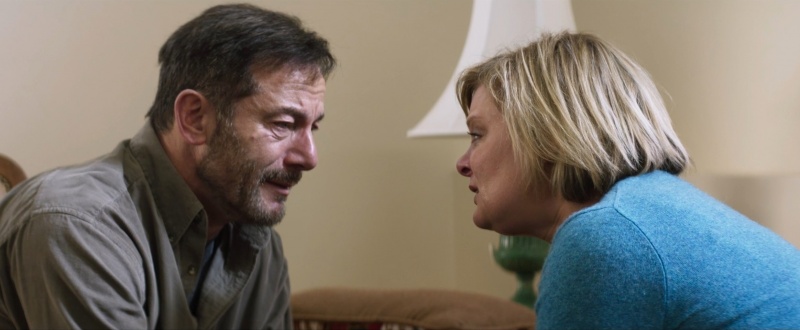
The other couple is Gail (Martha Plimpton) and Jay (Jason Isaacs). We slowly realize that what has brought them together is an incident of unspeakably tragic (and yet perpetual) violence.
Kranz has created distinctive, believable, complicated characters and the cast is one of the best ensembles of the year. Everyone grieves differently, and those differences can drive a wedge between couples or family members who do not understand each other’s way of mourning. We see all of that here, delicately but heart-wrenchingly delineated as the various social, performative layers fall off and there is nothing left but truth and the rawest of emotion. One moment shines through like a beacon as Gail admits her fear that if she lets go of anger and resentment she will lose the connection with the son who died. The conversation ranges from the mundane to the clinical to the most viseral pain, echoing the great Auden poem Musee de Beaux Arts, and it never feels less than real and vital.
Parents should know that this is a movie about devastating pain and loss with references to the murder of children and a suicide in a school shooting and to mental illness and its impact on a family. There is brief strong language.
Family discussion: How many different ways of grief do we see in this film? How many different kinds of forgiveness?
If you like this, try: “Elephant” and “Amish Grace”
This new version of the play about the man who can only woo the woman he loves through letters signed by someone else looks gorgeous, and swooningly romantic. For earlier versions, see Jose Ferrar in “Cyrano de Bergerac” and Steve Martin’s modern update, “Roxanne.”) Peter Dinklage has all of the dash and world-weariness we want to see in the character and up-and-coming stars Hayley Bennett and Kelvin Harrison, Jr. look like they will cross over into well-deserved mega-stardom from this film. Can’t wait.
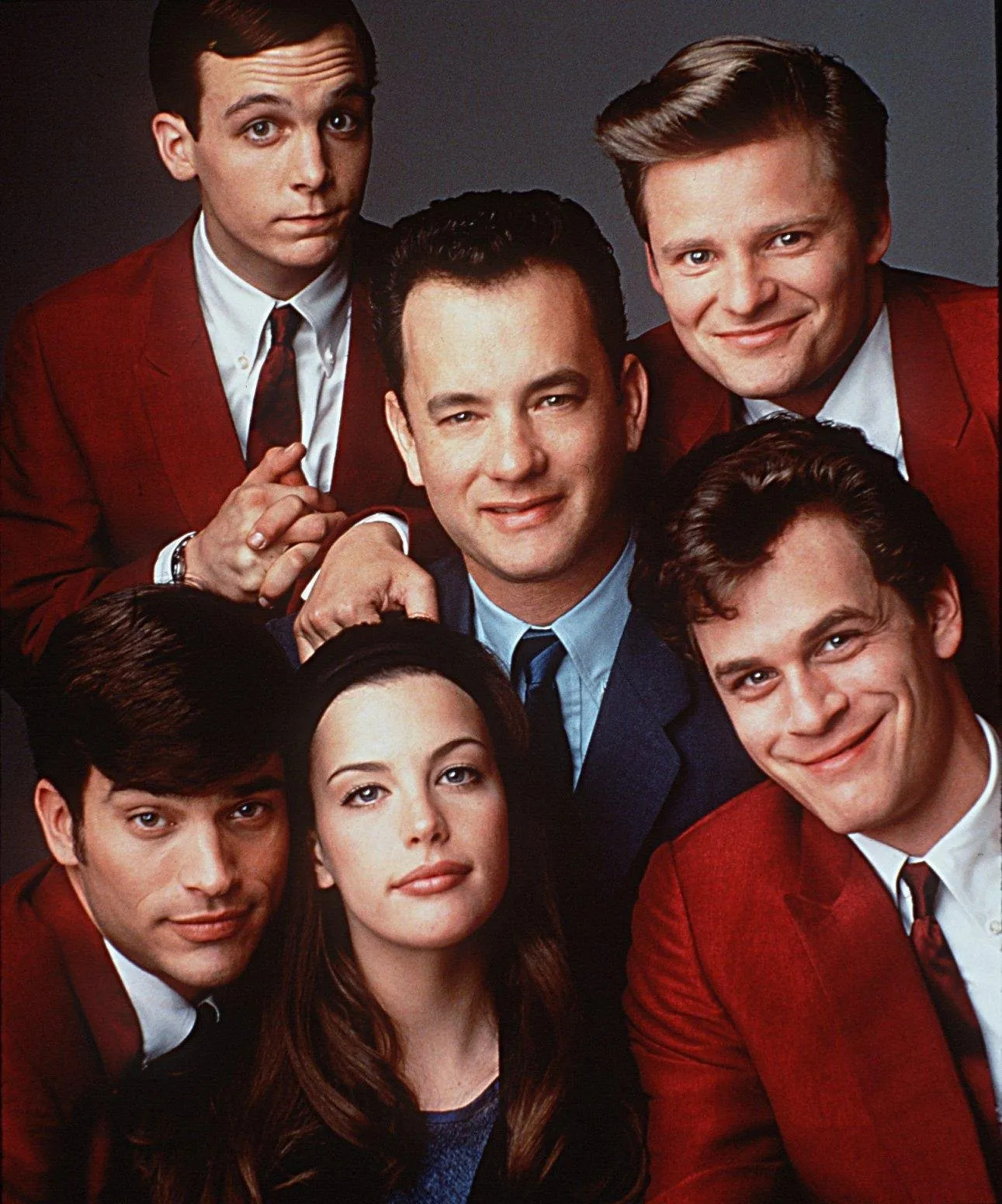
Copyright 1996 Play-ToneI can’t count how many times I’ve seen “That Thing You Do,” one of the most purely delightful films of all time. The key may be in one of the comments of writer/director Tom Hanks (who also appears in the film) in this oral history on Ringer: “No bad guys in my movie.” The behind-the scenes stories are wonderful and what really comes through is the appreciation of everyone involved in the movie for Hanks’ talent and his kindness.
Extended and graphic violence including crime violence, murders, and riots
Diversity Issues:
A theme of the movie
Date Released to Theaters:
October 1, 2021
Copyright 2021 Warner Brothers
On January 10, 1999, HBO audiences first met a New Jersey mob boss named Tony Soprano, played by James Gandolfini. He was a brilliantly written, even more brilliantly acted character, in 86 episodes over six seasons, winning every possible award and accolade. The conflicts he faced, and, even more compellingly, the conflicts he embodied as a ruthless killer who loved his family made him one of the most vivid, complex, fascinating characters in the history of television or even the history of fiction. In the show’s first episode, Tony meets with Dr. Melfi, a therapist. The struggle between the honesty, empathy, and accountability central to therapeutic resolution and the secrecy and ruthlessness necessary for survival in criminal operations provided the basis for the series.
But the show was not named “Tony Soprano.” It was named for the entire family, the biological family (Tony’s mother, uncle, cousin-in-law, and sister played central roles, along with his wife, son, and daughter) and the crime family, as mobsters are termed internally and by law enforcement. Six years gave us a deep dive into the life and internal conflicts of Tony Soprano, and now the people behind the series show us something about how he got there with “The Many Saints of Newark,” with Michael Gandolfini, sone of the late James Gandolfini, as the teenage Tony.
Any film based on a much-beloved work has to be evaluated on two levels. Let’s start with the audience who has little or no connection to the series. The film represents the same complex, layered story-telling as the series and stands alone as a powerful exploration of themes of nature and nurture, destiny and choice, that have been the source of powerful story-telling as long as there have been stories. Fans of the series, especially those who payed very attention to detail, will appreciate both the references that might be characterized as fan service (teenage Tony comments that baby Christopher always cries when he sees him, we get to see how Uncle Junior hurt his back) and those that deepen and enrich the story we already hold dear.
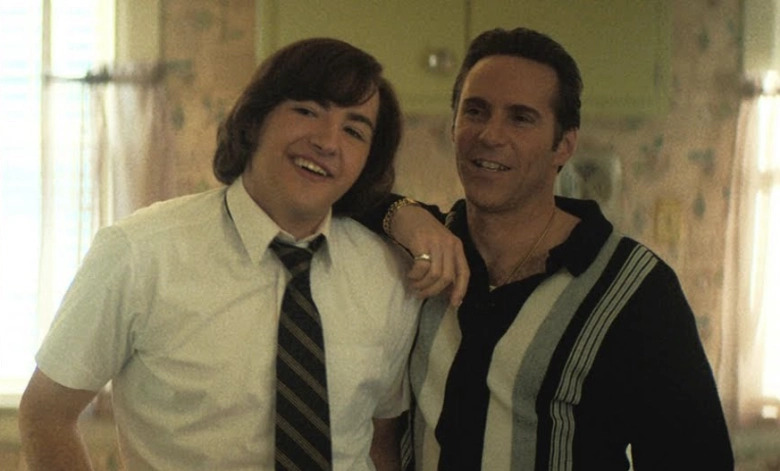
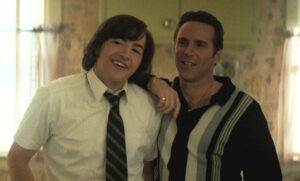
In the series there were a number of references to Richard “Dickie” Moltisanti, father of Christopher and cousin of Tony’s wife Carmela, though he died in the 1970s, before the series began. “The Many Saints of Newark” makes him a central character, played by Alessandro Nivola. He is so good at disappearing into characters that he has not yet been recognized as one of the most talented actors in Hollywood. Here’s hoping this movie is the one that finally makes that clear to everyone.
Like Tony will be 20 years later, Dickie is conflicted. And some of his conflict centers on the young Tony (still a child in the early part of the movie, played by William Ludwig. Tony’s father, Johnny Boy Soprano, (Jon Bernthal) has little interest in his children and is out of the picture for much of young Tony’s life because he is in prison. Dickie is the closest to a father figure that Tony has, and there is genuine affection between them.
Dickie has his own issues. As Tony will later, he is conflicted about the choices he made and he compartmentalizes, holding on to the idea of himself as a good man, or at least a not entirely bad one. And yet he destroys the lives of people he cares about. Like the adult Tony, he brings his conflicts to a counselor of a kind, in his case an uncle who is serving a prison term for murder, played by Ray Liotta.
Dickie’s associate is Harold McBrayer, played by the magnetic Leslie Odom, Jr., the heart of the film. The racial politics of the era simmer and then explode into the real-life riots of 1967, the events of the time reflecting and affecting what is going on in the country and in the world of Dickie and his crime family. There are people who do not play by rules at great harm to others and there are people who break the rules to change the rules to make them better for others.
The movie opens in a cemetery, to the murmurs of the dead. A voice rises above the others, and he tells us that “the little fat kid,” Tony Soprano, killed him. And so, while Tony may think he has choices, we see him being pulled ineluctably to that moment when he will sit down with Dr. Melfi. At one point, Dickie tells Tony, “I understand you want to be a civilian and I respect that.” But in making a painful choice to try to help him go in a different direction, Dickie just makes it more difficult for Tony to do so. The drama is engrossing, the consequences are terrible, and these themes, of destiny and choice, provide emotional heft and a connection to the oldest and most enduring stories we know.
Parents should know that this is a movie about mob criminals and so it includes brutal violence, with many characters injured and killed. It also includes scenes of riots and looting, sexual references and situations and nudity, and constant very strong language.
Family discussion: Could Tony have become a “civilian?” Why didn’t he? What do we learn from the meeting with the school counselor?
If you like this, try: “The Sopranos” and “Goodfellas”
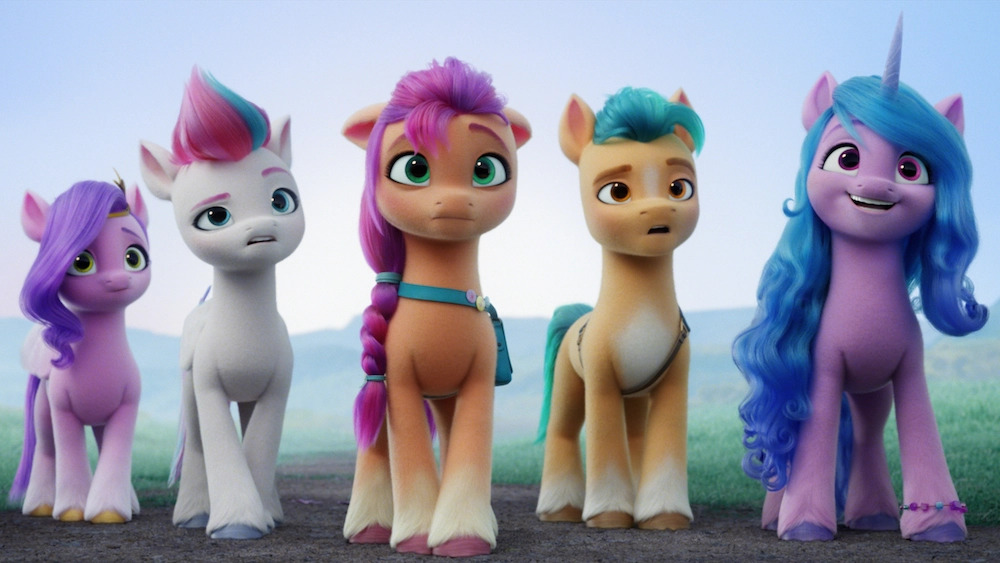
Copyright 2021 Hasbro“My Little Pony: A New Generation” follows in the tradition of previous media from the world of MLP: candy colors, poppy music, gentle humor, warm-hearted lessons about friendship, and basically a way to sell merchandise. We know where we are when it begins by reminding us that it is produced by Hasbro, a toy company.
The MLP toys could have been designed by algorithm to appeal to children. Like Pokemon, Paw Patrol, and boy bands, they are all about reassuring messages of friendship and teamwork. They have an assortment of cheery colors, and personalities — well, attributes — allowing a child to pick a favorite and collect them all. They have lots of hair to play with and style plus magical powers and problem-solving skill to spark fantasy play. I remember the bride MLP that lived with a child in our house for a while, white, with glittery hair, a hair brush, a veil, a big diamond ring that fit on her hoof, and no sign of (or need of) a groom, either stable groom or bridegroom. The MLP handlers know what kids like. Improbably, the “My Little Pony: Friendship is Magic” series was popular with college students for a while and somehow there were groups of adult male fans who called themselves “Bronies” and attend BronyCons. There is a documentary about them called “A Brony Tale.”
I prefer the flat, 2D-style animation to this movie’s 3D CGI modeling and some young fans may feel the same, but other than that it fits the algorithm nicely, with top talent providing the voices, catchy songs, and a sweet message of, no surprise, friendship.
In this iteration, the MLP have lost their magic and their friendship. The world has divided and the three groups — ponies, unicorns, and Pegasi have been taught to fear and consider themselves superior to each other, except for Sunny (Vanessa Hudgens) a brave little pony whose father taught her that all the different little horse creatures should be friends. When a unicorn named Izzy (Kimiko Glenn) comes to the area where the ponies live, everypony runs away. “Are we playing hide and seek?” she asks joyfully. But they are just scared, except for Sunny. Soon the pony and the unicorn team up to bring friendship and magic back to their world. It is cheerful and colorful and sweet as candy, with just a little bit of excitement and just enough problems to be solved with courage and teamwork.
Okay? We good? Anything else you’d like to know? Let me unpack some of the semiotics of this story for you. It is as much a sign of the unprecedented high sensitivities of our times as it is the content of the film, but the characters and messages of the film are likely to raise some parental eyebrows and perhaps some hackles as well. The pony children are all told lies in school about the unicorns and the Pegasi. The unicorns are told that the earth ponies are lazy, smell bad, and not very bight. Ponies are taught in school that the unicorns can read minds and fry ponies with laser beams from their horns. One of the parents is a war profiteer whose motto is “To be scared is to be prepared.” She dismisses calls for friendship and cooperation as “hugs and cupcakes.” Terrifying the ponies is good for her business. Another parent is a tyrannical ruler who lies to her people, telling them that she and her daughters have retained the magical powers the rest have lost. When she is found out she is derided as “phony pony full of baloney.” A law enforcement officer abuses his power. The only kind and loving adult is dead (subtly and off-screen, but absent and missed). Also, because this is 2021, one of the characters is a social media influencer, another is a hipster, and there is some hip-hop.
So, there’s a lot going on here for an animated movie about magical horse creatures. I am not sure whether this film is a reflection of the divisiveness of our times or a response to it. I do know that either way, despite the touchy times, no adults should feel criticized or diminished. Instead, they should recognize that the only message here is the real magic of trust, understanding, cooperation, and generosity.
Parents should know that this film includes some mild peril and references to bigotry, and subtle references to the loss of a parent. The adult characters are ineffectual, tyrannical or scaremongering.
Family discussion: When have you been a good friend? When have you learned that what you thought or feared turned out not to be true? How should the characters respond to the queen’s lie? How sneaky are you?
If you like this, try: the other “My Little Pony” movies and the television series — and the episode of “Wait Wait Don’t Tell Me” where special guest Bill Clinton aces an MLP quiz.