This year’s 4th of July weekend is even more joyous than usual as we inch back to our new normal and reunite with friends and families. Be sure to catch the always-great Capital 4th on PBS.
Some movies to share:
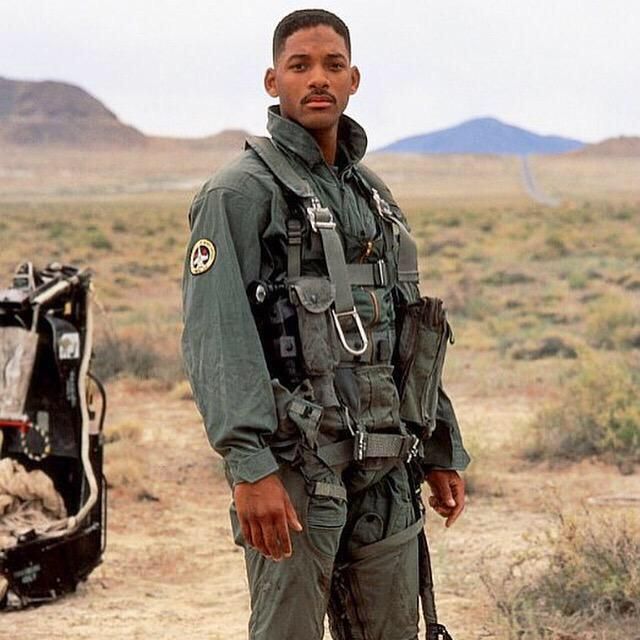
Independence Day Will Smith, Bill Pullman, and Jeff Goldblum star in one ofthe all-time great popcorn pleasures. Aliens attack the earth and it takes a quirky engineer, a plucky President, and a heroic military pilot to save the day. What does that have to do with the 4th of July? Listen to the President’s stirring pep talk.
Johnny Tremain The Disney version of this classic YA book by Esther Forbes is set in the Revolutionary War era, told from the perspective of an apprentice to Paul Revere.
1776 I love this film, based on the Broadway musical about the signing of the Declaration of Independence, with almost all of the stars from the acclaimed stage production, including William Daniels as the “obnoxious and disliked” John Adams, Ken Howard as a dashing Thomas Jefferson, and Howard Da Silva as Benjamin Franklin.
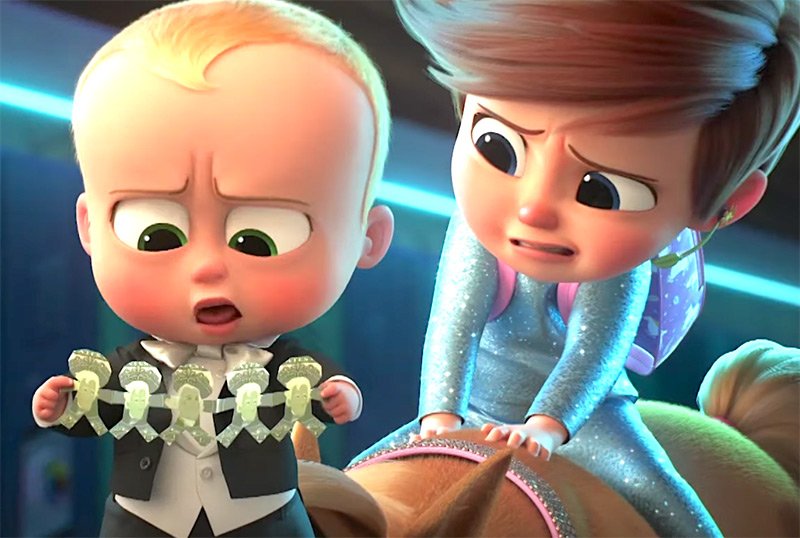
Copyright 2021 Universal2017’s “Boss Baby” was a happy surprise. It took the classic theme of sibling rivalry to a hilarious extreme, revealing that the family’s new baby, Theodore (“Ted”), is literally a boss. He arrives complete with suit, tie, Rolex, briefcase, a job at Baby Corp, and the ultra-adult voice of Alec Baldwin. The older brother, Tim, is initially jealous and hostile, but ultimately joins forces with him to complete his mission.
In this sequel (following the interactive Netflix film, “Boss Baby: Back in Business”), Ted (Baldwin again) and Tim (James Marsden) are grown up. Tim is very happy as a devoted and imaginative stay-at-home Dad to Tabitha (Ariana Greenblatt), the brightest student at a fancy private school) and her baby sister Tina (Amy Sederis), but he misses Ted, who is now a very successful executive who works all the time and instead of spending time with the family just sends “inappropriately lavish gifts,” including a horse named Precious. Tabitha seems to be following in her uncle’s footsteps, telling her dad she is too old for bedtime stories and goodnight kisses.
It turns out that it is Tina who is really following in her uncle’s first tentative toddler footsteps. She is a boss baby in a pantsuit, and on behalf of BabyCorp, she is there to bring her father and uncle back together and, while they are sorting things out, to save the world.
In the first film, Baby Corp had to save the world from a villain who was trying to make puppies cuter than babies. This time it is Dr. Armstrong (Jeff Goldblum), the founder and principal of Tabitha’s school who is plotting a baby takeover by zombie-fying the adults, starting with the parents of his students when they are all together at the school recital. Ted and Tim drink a potion that will return them to babyhood (Ted) and childhood (Tim) so they can infiltrate the school and stop Armstrong’s evil plot.
Like the first film, this one has a delightful mix of understated humor (wait until you see the holiday pageant song about climate change), wild fantasy, cheeky needle-drop songs and pop culture references (from “Rocky Horror’s” “Time Warp” to Flock of Seagulls, “Norma Rae,” and a “comfort plant”). Plus some of the best-constructed action scenes in animated films, exciting, fun, and funny, and then exciting again. And there are some great moments with my favorite character, Wizzie the Wizard toy, magnificently voiced by James McGrath in tones usually heard only in Shakespeare’s plays or “Lord of the Rings” or supervillains. It’s fast, fun, and funny, but it is the heartfelt sense of joy in family, however different we may be, that keeps me hoping for another sequel.
Parents should know that this film has extended cartoon-style peril and action including chases, ninjas with swords and throwing stars, and vertiginous climbs. Characters use some schoolyard language and there is potty humor. A theme of the movie is sibling rivalry and family estrangement.
Family discussion: Is Tina a different kind of boss than Ted? Why are Ted and Tim so different? Why didn’t Armstrong like grown-ups? What name would you choose for your secret identity? What do you think is more important than money?
If you like this, try: the other “Boss Baby” movies and “The Mitchells vs. the Machines”
Rated PG-13 for Some Suggestive References|Action|Language|Intense Sci-Fi Violence
Profanity:
Some strong language
Alcohol/ Drugs:
Some social drinking
Violence/ Scariness:
Extended sci-fi/action peril and violence, many characters killed, fatal sacrifice
Diversity Issues:
None
Date Released to Theaters:
July 2, 2021
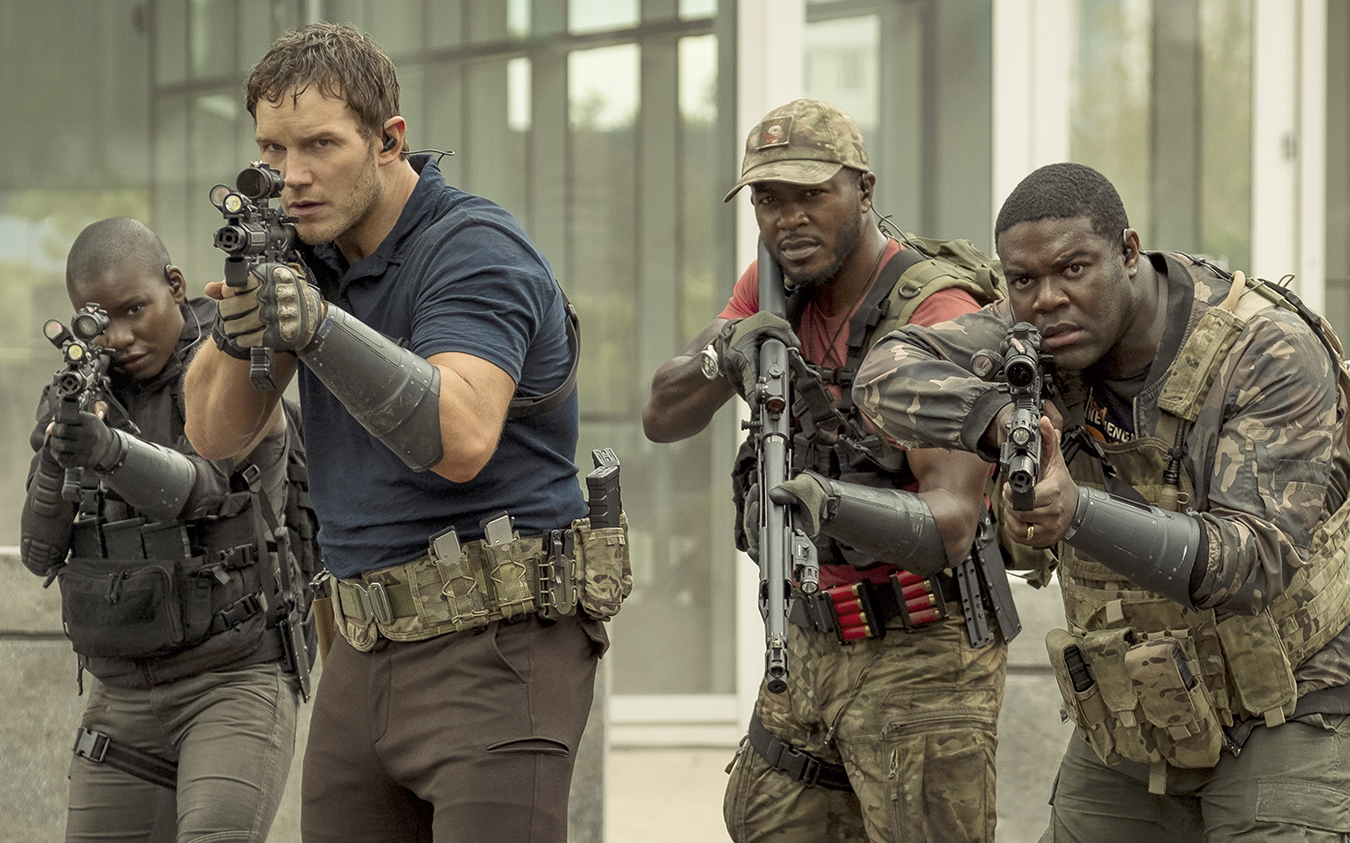
Copyright Amazon 2021This is what summer movies are all about — “The Tomorrow War” is about endearing but flawed humans fighting aliens as they save all of humanity and resolve their family estrangements. Plus time travel. I’ll have a couple of concerns later on, but let’s do what the movie does and get right to the action.
Plunged right into the action is more like it, as the movie opens with humans firing at terrifying, insect-lizard-like aliens we will later learn are called White Spikes as they fall from the sky into the ocean.
That’s just a peek. As the hero we’ve just seen (Chris Pratt as Dan) plunges into the water, we are plunged back in time, as far away from the action as we can imagine. It is 28 years earlier in a quiet suburb. Dan is coming home, where his wife (Betty Gilpin as Emmy) and daughter Muri (Ryan Kiera Armstrong) are hosting a Christmas party. Dan is distracted because he has applied for a new job, one he would find more satisfying than the high school teaching position he took after leading missions with the military in Iraq. He settles down to watch a football game with Muri, but there is static on the screen and then an unbelievable sight. People disembark from what look like spaceships. They say they are from 30 years in the future, where humans are fighting a war with alien invaders and losing badly. Their only hope is to bring people from the past to help them fight.
A year later, systems have been set up to conscript people to join the fight. Only half of people are “qualified” for time travel, and they are sent for one-week tours of duty. Only 25 percent of those who are sent through time survive, and those that do are severely injured and traumatized. People are losing support for the war and for the world governments that are running things. “Why should we be fighting a way that as far as we’re concerned hasn’t happened yet?” But there is no choice. If you try to avoid service, your spouse or child is sent in your place.
Nevertheless, Emmy urges Dan to run. His only hope is to get help from the father he swore he would never speak to again (J.K. Simmmons as James). He meets with James but decides he would rather fight the aliens.
The actions scenes are exciting and the script by Zach Dean keeps things moving, even with the nearly 2 1/2 hour running time, nicely balancing character, combat, and some humor. As we’ve seen in “Guardians of the Galaxy” and the “Jurassic World” movies, Pratt is a classic American hero, part cowboy, part smart aleck, loving father and husband despite some struggles to be the man he wants to be to them. There are some clever twists — also some not so clever twists, but time travel stories seldom avoid paradoxes. The disappointment here is a brief but jarring jab at the government, which makes no sense given the essential role the government plays in a crucial development, especially unwelcome in a 4th of July release. When compared to the ultimate in this category, “Independence Day,” where the President literally gets in a plane (after a stirring St. Crispin’s Day-style speech) to fight the aliens, it is impossible not think about what prompted it. Even in a summer action movie.
Parents should know that this is a PG-13 sci-fi action film, which means a lot of “action-style” violence. There’s lots of alien blood and body parts but though we hear a lot about human fatalities we do not see much beyond a lot of dead bodies and some skeletons. Characters use some strong language and drink some alcohol and there are mild sexual references.
If you like this, try: “Independence Day,” “Source Code,” “Pacific Rim,” and “Battle: Los Angeles”
Short Films from Harvard Law Students Illuminate Issues of Justice — and Injustice
Posted on June 28, 2021 at 6:02 am
The law can be viewed as a menacing force to intimidate and coerce. But what happens when the law is challenged to right a wrong or create constructive change? Led by Harvard Law School Professor Martha Minow and producer Joseph Tovares, twelve Harvard Law students set out to explore that intersection in LEGAL LENS, premiering Monday, June 28 on WORLD Channel’s LOCAL, USA with additional, exclusive shorts on YouTube. Through five short films featuring captivating profiles and passionate characters, the series examines how laws and regulations can either disrupt lives or lead to positive shifts, depending on how they are interpreted or contested.
“I’ve often thought it may seem strange, but that the closest activity to law, and law practice, is documentary filmmaking, because in a similar, maybe surprising way, we have to deal with the actual reality. This is not fiction. And at the same time, no one would deny there’s a shaping, there’s a choice-making, there’s a set of selection decisions,” Minow says.
The similarities between studying law and creating documentary films may not be obvious, like Minow suggests, but consider the larger themes of both: Lawyers craft stories to win their cases; documentarians lead viewers through a focused narrative to bring attention to an issue.
But more than the industries’ parallels, it’s about the reach film has when compared to law, says Kenyan LL.M. student Zamzam Mohammed, who worked to shine a light on pregnancy discrimination in the workplace. She believes the medium can raise a new kind of awareness: “You can have a case in court, and only very few people would actually be able to understand what’s going on. But then when you have a film, anybody can watch a film on the subway, you can watch it when you’re cooking dinner. And so I think it’s something that helps people understand in a way that is clear for them,” she said.
David Benger, one of a team of students who focused on prison reform, found that documentary fit in seamlessly with his mission as a lawyer: to create broader awareness that, in turn, facilitates change. “I think we, as lawyers, try to convince people, not only that we’re right, but that people should care about what we have to say. And I think filmmaking is an extremely useful tool for helping people invest emotionally in real problems that other people have,” he said.
Starting the conversation, even if it seems like no substantial progress is being made, is half the battle, says LL.M. student Adam Posluns.
“Litigation doesn’t always have to be about big victories in court…Sometimes that change can happen just by initiating lawsuits, just by starting the litigation,” he said. “Because even if you don’t win, and sometimes you won’t win for various reasons…it can get other people to see that they can also litigate these issues. They don’t have to wait for their governments to come along.”
Law, these students agree, may seem straightforward on paper, but when film becomes an element, seeing the human stories behind those laws creates an expanded consciousness and adds a new angle to the purpose of law, offering insight that may otherwise be lost.
“Narrative storytelling, especially documentary storytelling, can help lawyers do their job better and remember that this is about people. I think the thing I hate the most is when people say, ‘Oh, let’s not focus on the facts. Let’s just focus on the law,’” said Elisabeth Mabus, J.D student from Jackson, Mississippi. “The facts are the people. And the facts are the people that the law impacts. And we cannot lose sight of that.”
The umbrella of human rights is what led Minow’s class to their underlying theme: home, and how the law can have such an effect on a person’s sense of it.
“Sometimes we forget the stories behind these legal cases, or don’t pay as much attention to stories behind these legal cases we read. We go straight to the legal issue. We go to the legal arguments, principles, but it’s a gentle reminder that behind every case there’s a human story…win or lose, there’s always that human story,” Daren Zhang, California J.D student, said.
Within these five films, the stories ultimately lead back to what makes a home, and how the idea of home, that basic and fundamental right, is challenged when human rights are threatened. According to Posluns, that was the driving force behind these stories. “I think people felt that human rights were being put on the back burner, that they’re being disregarded rather than championed…That human rights had become more bargaining chips in transactions rather than something to be fought for and to be championed around the world,” he said.
By looking at issues like climate change, immigration and gentrification through a legal lens, these future lawyers began to see their profession differently. By embarking on a mission to represent their characters (Lisa Newman, a working mother; Doris Landaverde, an 18-year Temporary Protected Status holder; Damali Vidot, an unassuming but confident community leader) justly and effectively, opinions on what practicing law means began to evolve.
Kevin Patumwat, a J.D student from Bangkok, Thailand, shared how the project underscored the role of ineffective lawyering: “I think this project really drove home the importance of how lawyers need to be able to use the knowledge, use the resources they have, and really more effectively advocate for the people who they’re advocating for.”
“Ultimately when you care about an issue and you want to tell a story about an issue, there’s a great deal of value in having many different tools in your toolbox for how to tell that story and how to make people care and that this may not be a part of their direct lived experience, but it’s something they should care about,” Benger echoed.
By shifting the gaze of litigation onto honest, human stories, LEGAL LENS offers a glimpse into how there is still room for change in the way law is interpreted and enacted.
“In a lot of our national conversations, I think we focus so much on the things that divide us. We forget often how much we have in common. And we forget to see all the things that unite us,” Boston, Massachusetts J.D student Tianhao He said. “Even though the films in this series all touch on different issue areas with different characters in different parts of life, I think we do see these universal themes. These universal themes of yearning for belonging, of the struggle and also the joys of building home in America.”
Summer of Soul (…Or When the Revolution Could Not Be Televised)
Posted on June 24, 2021 at 8:00 am
A-
Lowest Recommended Age:
4th - 6th Grade
MPAA Rating:
Rated PG-13 for brief drug material, some disturbing images, and smoking
Profanity:
Some strong language
Alcohol/ Drugs:
Brief drug material
Violence/ Scariness:
Archival images of violence
Diversity Issues:
A theme of the movie
Date Released to Theaters:
June 25, 2021
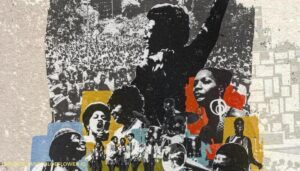
Copyright 2021 HuluIt felt like the United States had never been more angry and divided. Protests over the treatment of Black Americans erupted into riots. Not last year; this was just over half a century ago, in 1969. The same summer that an outdoor music festival near Woodstock New York became a cultural icon in part because everything went wrong and in part because it was the subject of an Oscar-winning documentary, there was a festival in Harlem of equal star power and impact on the community. But it was all but forgotten because unlike Woodstock, pretty much everything went right, because it was spread out over the whole summer, because the concert footage was hidden away in a basement for five decades, and because the performers and the audience were Black.
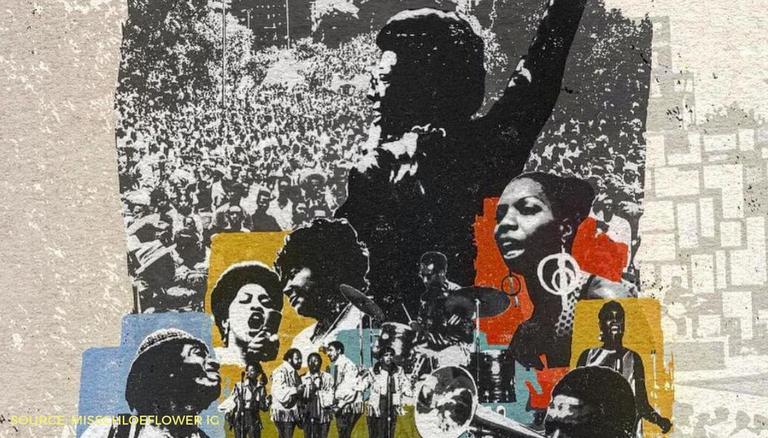
And now Questlove, whose expansive knowledge of music is is reflected in his work with The Roots on the Tonight Show and his book Music is History has combined the archival footage with contemporary interviews in directing (as Ahmir-Khalib Thompson) “Summer of Soul,” which deserves to be every bit the cultural touchstone of the other big concert of the year.
There’s even some overlap. Sly and the Family Stone, whose “I Want to Take You Higher” is a highlight of “Woodstock,” is every bit as incendiary in this film as well, though one participant jokes that Sly was so unreliable that you could not be sure he was coming on stage even after his name was announced. The sheer variety is pure joy and every performance is thrilling, from the Edwin Hawkins Singers to Mahalia Jackson to Hugh Masekela and Nina Simone, blues legend B.B. King to supper club legend Abbey Lincoln. David Ruffin of The Temptations shows up as a solo singer. A 19-year-old Stevie Wonder! Gladys Knight and the Pips! The just-breaking-through Fifth Dimension performs in bright yellow shirts with orange fringed vests. They talk about how their pop sound made audiences think they were white and when some discovered that they were not, accused them of being “not Black enough.” Sweetly, they say it meant the world to them to be welcomed by the audience in Harlem.
Questlove/Thompson skillfully blends the archival footage to include the recollections of those who were there with historical context and contemporary perspective. I would happily watch an entire documentary about the host and promoter, night club singer Tony Lawrence, and learn more about how it all came together. Most moving are the comments about how much it meant to the community, especially the people who were there as performers and audience members. The pure joy that radiates from the venue, those on stage and those who were listening, some grilling chicken, some hanging from the trees to get a better view, is like a jolt of optimism and a powerful reminder of the power of music to bring people together.
Parents should know there is some historical footage with violent images and a drug reference, along with some strong language and smoking.
Family discussion: Which was your favorite performance and why? Could an event like this free concert series happen today?
If you like this, try: “Woodstock,” “What Happened, Miss Simone?” the “1971” series about the music of that transitional moment, and another recently restored concert film from archival footage, “Amazing Grace,” with Aretha Franklin