Interview: Phil Hall on Lost Films

Interview: Phil Hall on Lost Films

Posted on August 3, 2016 at 3:45 pm
Copyright BearManor Media 2016
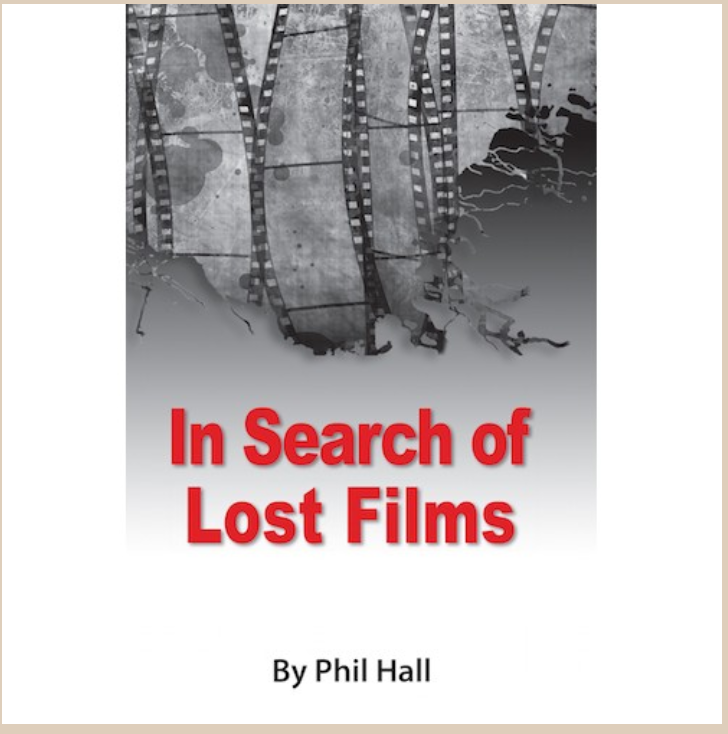
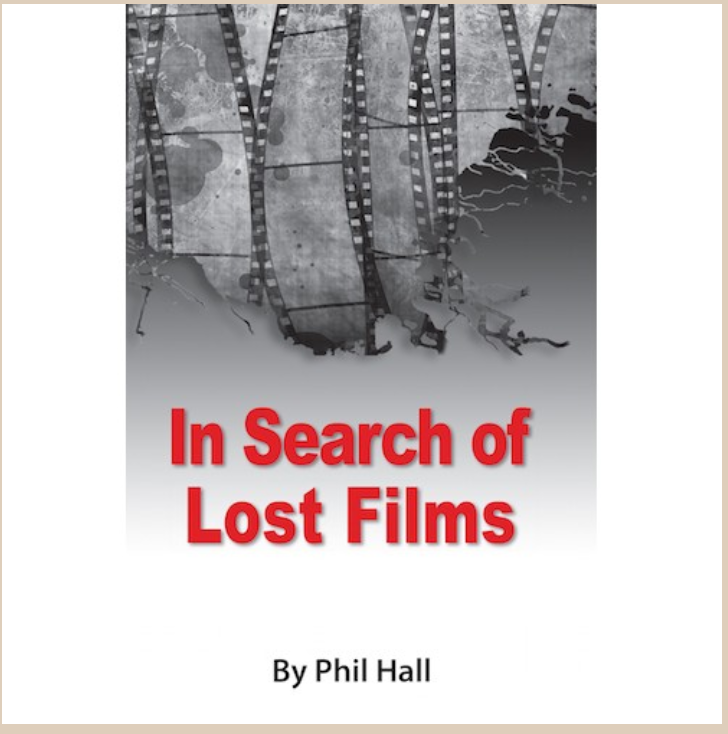
Critic and film historian Phil Hall has written a fascinating book, In Search of Lost Films with details about the thousands of movies made from the earliest days of the silent era through the 1940’s that have disappeared through damage or neglect. In an interview, he explained his interest in the lost films and the best hope for finding some of them.

What are lost films and how did you get interested in them?

Lost films are motion pictures that, as far as we can determine, are no longer in existence. In some cases, there are no known surviving prints. In other cases, the films exist only in fragments.

I have been writing about film history for three decades, and one of the major problems with the subject involves the voids created when a film is considered missing. After all, how can one truly consider a creative artist’s genius and historic significance if we are unable to re-evaluate their full canon?

How did the film stock of the early 20th century contribute to this problem?

Prior to 1951, motion pictures were presented on nitrate film, which contributed to the popularity of the medium – when projected on a big screen, the images on nitrate film were beautiful to behold. Unfortunately, poor storage of nitrate film contributed to the decay of the prints and negatives. Nitrate film was also highly flammable, and in too many situations there have been fires that resulted in the loss of countless rare films.

What resources are available to learn about the films that have never been archived?

That question is almost impossible to answer. For starters, many films that are considered lost were archived, but failed to survive due to poor storage.

One of the most fascinating aspects of researching this book was learning about the discovery of films that were previously unknown to film historians. One of the most remarkable stories involves film historian Paul Gierucki, who purchased a mysterious can marked “Keystone” at an antique fair and discovered that he acquired “A Thief Catcher,” a 1914 Charlie Chaplin film – prior to this, no Chaplin biographer knew that he appeared in this film.

I can say that one of the most disturbing things I discovered in researching this book was that many archives did a sloppy job in keeping a proper inventory on the films in their collections. More than a few titles that were considered lost for decades existed all along – they were simply mislabeled or incorrectly stored by archivists.

Why are missing American films sometimes discovered overseas?

American films were very popular overseas – especially in the silent cinema era, when it was easy to change the intertitles to accommodate non-English-speaking audiences. And Hollywood’s output was so overwhelming in quantity and quality that few global film industries were able to compete in terms of content creation or audience appreciation. When films were sold for overseas sales, many of them remained uncollected by their sales agents after their theatrical releases were completed. Thankfully, a lot of these works wound up being donated to museums or archives in those nations – an act of altruism that saved many, many American films that disappeared in their nation of origin.

What actors and directors are underestimated or forgotten because their most important work has disappeared?

Silent film stars Theda Bara, Lloyd Hamilton and Raymond Griffith are known primarily by reputation because the bulk of their output is considered lost. Much of Lon Chaney’s film performances are also gone. Pioneering Argentine animator Quirino Cristiani’s landmark films vanished in fires, while the majority of the films created by two groundbreaking non-white American filmmakers, Oscar Micheaux and Esther Eng, are also considered irretrievably lost.

Are there particular genres or categories that are most difficult to find?

Many early sound films that were presented in the sound-on-film process – where the soundtrack was on a separate disc that played on an oversized phonograph – survive with either the soundtrack disc surviving without the accompanying film or the film remaining while the soundtrack disc is lost.

There are also national film industries whose cinematic heritage is wildly incomplete because of poor preservation and the lack of international distribution that could have guaranteed the survival of prints overseas. Too many films made in Pacific Rim and Latin American nations are considered lost forever because of this.

Tell me about the Marx Brothers first film, which is now lost.

In 1921, the Marx Brothers self-financed a short comedy called “Humor Risk.” Details on the film’s contents and production history are sketchy, as there are various stories on what took place. We know that the Marxes appeared as characters that were far removed from their well-known personas: Groucho was a criminal on the run, Chico was his assistant, Harpo was a detective chasing these miscreants and Zeppo had some sort of connection to a nightclub where the bad guys were overwhelmed by their foe.

Some sources claim the film was never screened, others say there was single screening that was poorly received, and other sources suggest the film may have been released (perhaps under another title). The Marx Brothers never had a positive opinion of the work, but the story that they recklessly allowed the film to disappear seems strange when you consider their financial investment in the production.

How did you learn about a pre-“Snow White” animated feature film made in Argentina and what were you able to find out about it?

I learned about that when I was around 11 years old – there was a book on film history (I cannot recall the name of it) and it mentioned that the first animated feature film was something called “El Apóstol” made by the aforementioned Quirino Cristiani in 1917. The film was a satire on Argentina’s President Hipólito Yrigoyen, but the humor had no broad global appeal and it was never shown outside of Argentina. Unfortunately, all materials related to the film were destroyed in a fire.

Cristiani also made the first feature-length sound animated film, the 1931 “Peludópolis.” That was also a satire of Argentine politics, and the surviving materials of that work also perished in a fire.

Where do you do your research on films no one has seen for nearly a century?

As I said earlier, I have been writing about film history for three decades, so I have quite a library of books on the subject. I also sought out help from many prominent film historians, and I was grateful for input from the Library of Congress and even such distant resources as the South African National Film and Video and Sound Archives (because there is very little available information in the U.S. about South Africa’s film history).

If you could wave a magic wand and have just one of the lost films appear for viewing, what would it be?

I would be curious to see the 1926 film version of “The Great Gatsby” – considering the various film versions of this Fitzgerald classic utterly failed to capture the spirit of the source material, I would be intrigued to see if the film made during the Jazz Age got it right.

Of course, if I was waving my magic wand to make film disappear, I have 100 to choose from in my last book, “The Greatest Bad Movies of All Time” (published in 2013 by BearManor Media). But that’s another story!

For more information:

Related Tags:


Books Film History Movie History

Interview: Phil Hall on “The Greatest Bad Movies of All Time”

Posted on August 7, 2013 at 3:59 pm

I always enjoy interviewing film expert Phil Hall, and it was a special treat to hear his thoughts about his new book, The Greatest Bad Movies of All Time.

The bad movies in your book fall into several different categories, including the big-budget train wreck and the well-intentioned but incompetent low-budget failure, the movies with aspirations of artistic greatness like “The Blue Bird” and the ones with none like “The Hottie and the Nottie.”  Do you have favorite examples of each?

In creating the book, I wanted to offer the full depth and scope of the anti-classic experience. Thus, I brought together silent films that achieved profound awfulness without the benefit of spoken dialogue, documentaries that get their facts hopelessly screwed up, musicals that are weirdly off-key, biopics that turn the lives of their famous subjects into ludicrous travesties, comedies where the only laughs are unintentional, experimental films that self-destruct under their artistic pretensions, science-fiction that fails to capture the imagination, and one porno film that offers absolutely nothing that is even vaguely erotic.

I hesitate to offer personal favorite choices, because all 100 films represent my vision of how not to make movies. If anything, I wanted to affirm that cinematic incompetence comes in many shapes and sizes, from many countries and from many decades.

What makes the difference between a “so bad it’s good” hit like “Plan 9” or “The Room” that people enjoy watching or a movie that is too dull or painfully bad to sit through?

Most bad movies are just mediocre – they traffic in formulaic writing and adequate acting, and we forget about them shortly after the closing credits have rolled. But the anti-classics offer a genuine challenge to your intellect – you sit and watch them, wondering how anyone could have possibly brought forth something so wildly misguided without realizing the chaos they were creating.

In viewing these films, their awfulness becomes intoxicating – each reel brings a new assault on the senses. And by the time these films have run their course, the viewer is left in a state of shock and awe, and many people are immediately eager to share their experience with all of their friends and family members – usually by announcing, “You won’t believe what I saw!”

Which is more fatal to the quality of a film — a bad script, bad acting, or bad direction?

The screenplay is the foundation of a motion picture. If the foundation has significant cracks, then no amount of clever direction or energetic acting will help to overcome this significant handicap.

Of course, you can have a marvelous script, but it gets destroyed once the cameras start rolling. For example, the musical “Mame” has a delightful and charming screenplay, but putting the lethally miscast Lucille Ball in the title role threw the entire endeavor off-kilter.

Why are we so fascinated with failure?

I believe that people are fascinated with cinematic failure because it reminds us that the good folks in the movie business are no different from the rest of us. Movies are supposed to represent how life should be – but they create an idealized fantasy world where everyone is too clever and too good looking. Cary Grant – who, in real life, was absolutely nothing like his screen persona –  famously commented on this by saying, “Everybody wants to be Cary Grant. Even I want to be Cary Grant!”

When films backfire on a grand scale, it provides a wake-up call that the big screen fantasy has nothing to do with reality. The gorgeous movie stars and the brilliant directors and writers are, ultimately, human – and they can make the same clumsy errors of judgment that anyone else can make.

What was the first bad movie you ever loved?

Forty years ago, I was an eight year old sitting in the audience of the UA Valentine in the Bronx, N.Y., during a presentation of the musical version of “Lost Horizon.” And I couldn’t help but enjoy a weird fascination with what was on the screen – it was a crazy and lumpy film, and it was certainly not the type of film that eight year olds appreciate, yet somehow it resonated with me. I can still remember the bafflement I experienced in the musical number when Bobby Van tap danced off a bridge and into a stream – and all of these years later, I still cannot believe that number was filmed.

You include some legendary flops and failures and some esoteric disasters that are just about unknown.  What selections will be most surprising to readers?

I have already received some levels of surprise that Kevin Spacey’s “Beyond the Sea” and Clint Eastwood’s “Mystic River” were included, and a few people wondered why I put in a 2005 high school film version of “A Streetcar Named Desire” (which includes a dance number to “Pennsylvania Polka” – you can find it on YouTube). I’ve also received inquiries why certain turkeys were not included in the book.

I should note that the book is a reflection of my opinion, and it is not intended to be the last word on the subject. I try to explain why I feel these films can be considered anti-classics – and if I don’t change any minds, then at least I hope that I can earn some respect for stating my opinion.

Which of the movie failures has the most talented people behind it and what went wrong?beat the devil

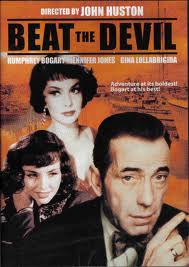
The problem with films that are created with all-star casts often make the mistake of believing that the performers’ charisma can compensate for problems in the screenplay and the direction. John Huston’s “Beat the Devil” and Orson Welles’ “Mr. Arkadin” have extraordinary casts, but both films had major problems with their screenplays – Huston’s work was written as the film was being shot and Welles was doing a lopsided riff on “Citizen Kane” – and the great directors were a bit more self-indulgent than usual with their respective works.

In many ways, I think that the saddest waste of talent of any of the 100 films was the 1954 offering “Dance Hall Racket.” That film had Lenny Bruce in his only film acting role – and he was cast as a gangster in a crime drama. Think about it: you take one of the most brilliantly funny artists of the 20th century and you cast him as a second-rate imitation of Lawrence Tierney. Why?

http://www.youtube.com/watch?v=PoMniM9BwFE

How do bad films help us understand what makes movies good?

The great bad movies remind us that filmmaking is, ultimately, a magic show. When a film works, we don’t realize how the magic worked. When a film misfires, we see where the tricks went wrong – and we realize that the cinematic magic is a lot harder than we may have previously considered.


Related Tags:


Books Understanding Media and Pop Culture
Interview: Phil Hall of ‘What if They Lived?’

Interview: Phil Hall of ‘What if They Lived?’

Posted on March 24, 2011 at 8:00 am

We miss the performers who left us too soon almost as though we knew them.

In a new book, Phil Hall and Rory Leighton Aronsky ask What If They Lived?, with essays about stars and almost-stars from the silent era to the present, with biographical details, career assessments, and fascinating glimpses of projects they might have completed if they had lived longer. Hall was kind enough to answer my questions.

Q: How did this book come about?

Phil Hall: I always wondered what would have become of the great stars that died too young. If you see James Dean in “Giant” or Marilyn Monroe in “The Misfits,” it is difficult not to rue that there would be no further performances from its iconic stars – but if fate was kinder, could they have topped what they already created? The idea for the book percolated for years, but my attempts to get a publisher interested in the project were in vain. For whatever reason, many publishers did not think this was a good idea. Fortunately, BearManor Media, the publisher of my last book – The History of Independent Cinema – was convinced that this had potential. Rory Leighton Aronsky joined me as the co-author on the project, and here we are!

Q: Do you have a favorite of the stars that you wrote about?

Phil Hall: The biggest surprise for me was Jayne Mansfield. Many people have dismissed her as a second-rate Marilyn Monroe imitator that audiences rejected. In fact, she was an extremely talented comic actress and her films were popular. Unfortunately, her studio, 20th Century Fox, found it more profitable to loan her out to cheapo production companies for crummy movies rather than build star vehicles around her. That wrecked her film career. But she could have worked steadily without being a movie star. In the mid-1960s, she sold out New York’s Copacabana at a time when nightclubs were considered passe. I also found a clip of Mansfield appearing as a “mystery guest” on the TV show “What’s My Line.” She received the most thunderous audience response imaginable when she came on stage – and this was two years before her death in a 1967 automobile accident.

Q: Some of the performers you wrote about died as big stars, but some died before they achieved all they were capable of. Which of the stars you wrote about do you think would have surprised audiences the most by showing more than anyone knew they were capable of?

Phil Hall: By the time of his death, Robert Walker was on the cusp of showing a depth of versatility that was not present in many of his films. Walker spent most of the 1940s playing a light leading man or a stolid military type. In his last two films, “Strangers on a Train” and “My Son John,” he showed that he was capable of handling dark, complex dramatic roles. This would have opened a new avenue of career possibilities, and he think that could have enjoyed a long and successful career.

Q: You write about stars like James Dean and Marilyn Monroe who continue to be modern-day icons and others like Judy Tyler and Evelyn Preer who are hardly remembered. Why do some stars remain so present in our culture and others do not?

Phil Hall: A lot of it depends on their output. Judy Tyler had a solid career in television and theater, but she only made two films – and only one, “Jailhouse Rock,” is remembered today. The bulk of Evelyn Preer’s cinematic output came in the all-black “race films” produced by Oscar Micheaux, but most of these films are considered lost. A great deal of public recognition also rests on the role of film critics and scholars in defining the popular cinema culture. For example, Larry Semon was a very popular star of comedy films in the 1920s, but very few contemporary critics or scholars are willing to champion in his cause. And, in some cases, we remember the stars because of off-screen tragedies rather than on-screen triumphs: Roscoe Arbuckle, Thelma Todd and Sharon Tate are the most prominent examples. But the beauty of cinema is the ability to preserve a performance forever, with the hope that future generations will come to re-evaluate a star’s personality and talent. I would say that there is a greater popular appreciation of Dorothy Dandridge and Jayne Mansfield today, due in large part to critics, scholars and fan revisiting their performances and recognizing their value to the film culture.

Q: Is there one uncompleted project you wrote about that you most wish could have been made?

Phil Hall: Laird Cregar was supposed to do a Broadway version of Shakespeare’s “Henry VIII,” but he died before the production could take shape. I cannot imagine a better actor to play the monarch, and he could have easily made it into a signature role that could have been taken to the film or television screen.

Q: Your profiles of each of the stars are insightful and evocative. How did you do your research?

Phil Hall: By reading too many books, magazines and websites, and by having conversations with experts who knew more about the subject than I could. For example, online film critic John J. Puccio is also an expert on classical music, and he provided invaluable opinions regarding Mario Lanza’s future potential, while rock music writer Ricky Flake helped me speculate on the future that Elvis Presley never had.

Q: Why do you think Judy Garland would have focused on concerts rather than movies if she had lived?

Phil Hall: I think there would be a combination of factors. First, there was a lack of quality roles for women of Garland’s age and personality. Second, Garland had a reputation for being (for lack of a better word) difficult, and many producers were not eager to take that risk. Third, there was the same problem that kept Montgomery Clift away from films: getting insurance for the star. Garland’s health problems were front-page news for years, and her presence in a film would have jacked up the budget in order to cover her insurance.

Q: Some of the people you wrote about had their careers limited by racism, sexism, or homophobia. Did that influence your ideas about what would have been possible for them if they had lived until more tolerant times?

Phil Hall: It did, because the contemporary concept of tolerance was a fairly recent development. We cannot create an alternative universe for the past where these talented people could have flourished without the restrictions that limited their careers. At the same time, we have to take into consideration another discriminatory concept: ageism. Hollywood is an industry that in constantly on the search for young new faces – good parts for people in their forties or older are difficult to come by, especially for women. What roles would exist for a 50-year-old Marilyn Monroe? It would be like that lyric from Stephen Sondheim’s “Follies”: “First you’re another sloe-eyed vamp. Then someone’s mother, then you’re camp.”


Related Tags:


Actors Books Interview Writers

Happy 350 to Film Threat’s ‘Bootleg Files’

Posted on November 16, 2010 at 1:14 pm

Congrats to Phil Hall on the 350th in his “Bootleg Files” series on the Film Threat website. His tributes to the off-beat and off-the-beaten track gems is a pleasure to read and a great source of ideas for not-on-Netflix treasures that are worth tracking down.
Created in the summer of 2003 and appearing every Friday on Film Threat, The Bootleg Files has spanned the full history of motion pictures, from an 1894 Thomas Edison-produced “souvenir strip” of legendary strongman Eugen Sandow to the recently released viral video “Right Wing Radio Duck.” The 350th entry in the series, to be published on November 19, will be a review of Joseph Losey’s rarely seen 1951 drama “M.”
“While it is against the law to bootleg films, it is not against the law to purchase these items on DVD or to watch them on YouTube,” explains Hall. “There is also the fuzzy world of public domain films, where copyrights have expired but movies are duped in second-, third- or even fourth-generation versions and sold to the unsuspecting public.
And the amazing thing is that so many of theses films represent the finest works in global cinema. To date, we’ve had works by Orson Welles, Akira Kurosawa, D.W. Griffith, John Huston, William Wellman, Satyajit Ray, Oscar Micheaux, Walt Disney, Vittorio De Sica, Andy Warhol, Stanley Kubrick, Leni Riefenstahl, Robert Altman and Chris Marker in The Bootleg Files.”
Thanks to Phil Hall, and here’s to the next seven years of the Bootleg Files.

Related Tags:


Neglected gem Understanding Media and Pop Culture

50 Most Important Religion Movies: Film Snobbery

Posted on January 6, 2010 at 3:53 pm

Take a look at Phil Hall’s great list of the most important religious films of all time from website Film Snobbery. My favorite film about the life of Jesus, “The Gospel According to St. Matthew” is number 2 on the list. I was pleased to see some provocative and even irreverent titles including “The Life of Brian” and “Dogma.” The list includes well-known crowd-pleasers like “Fiddler on the Roof,” “Chariots of Fire,” and “Ben-Hur” along with some almost-unknowns like “Plan 10 from Outer Space” (“Trent Harris’ low-budget underground comedy reimagines Mormon history with a singing Karen Black as the extra-terrestrial wife of Brigham Young”) and “Man in the Fifth Dimension” (“Billy Graham’s film essay on the spiritual dimensions of the human condition had its premiere at the 1964 New York World’s Fair. It is also noteworthy as the only non-theatrical film shot in the widescreen Todd-AO process”). It has a number of films that are truly inspiring. It includes some movies that frankly explore the mistakes, arrogance, and corruption that have been committed in the name of religion. It has documentaries, fact-based feature films and fiction, movies from the early silent era to a 2007 documentary. It includes films about Christianity, Judaism, Catholicism, Islam, and Buddhism, films about saints, sinners, and a pair of friends who happen to be a tomato and a cucumber. And it has one of the funniest movies I know, “The Mad Adventures of ‘Rabbi’ Jacob.”

Related Tags:


For Your Netflix Queue Lists Movie Mom’s Top Picks for Families Neglected gem
THE MOVIE MOM® is a registered trademark of Nell Minow. Use of the mark without express consent from Nell Minow constitutes trademark infringement and unfair competition in violation of federal and state laws. All material © Nell Minow 1995-2026, all rights reserved, and no use or republication is permitted without explicit permission. This site hosts Nell Minow’s Movie Mom® archive, with material that originally appeared on Yahoo! Movies, Beliefnet, and other sources. Much of her new material can be found at Rogerebert.com, Huffington Post, and WheretoWatch. Her books include The Movie Mom’s Guide to Family Movies and 101 Must-See Movie Moments, and she can be heard each week on radio stations across the country.

Website Designed by Max LaZebnik