The Odyssey

The Odyssey

Posted on July 15, 2026 at 12:00 pm

B +
Lowest Recommended Age: High School
Profanity: Some strong language
Alcohol/ Drugs: Memory-erasing flowers, wine
Violence/ Scariness: Extenseive war-time peril and violence, monsters, many characters injured and killed, graphic and disturbing images
Diversity Issues: None
Date Released to Theaters: July 17, 2026
The Odyssey
Copyright 2026 Universal

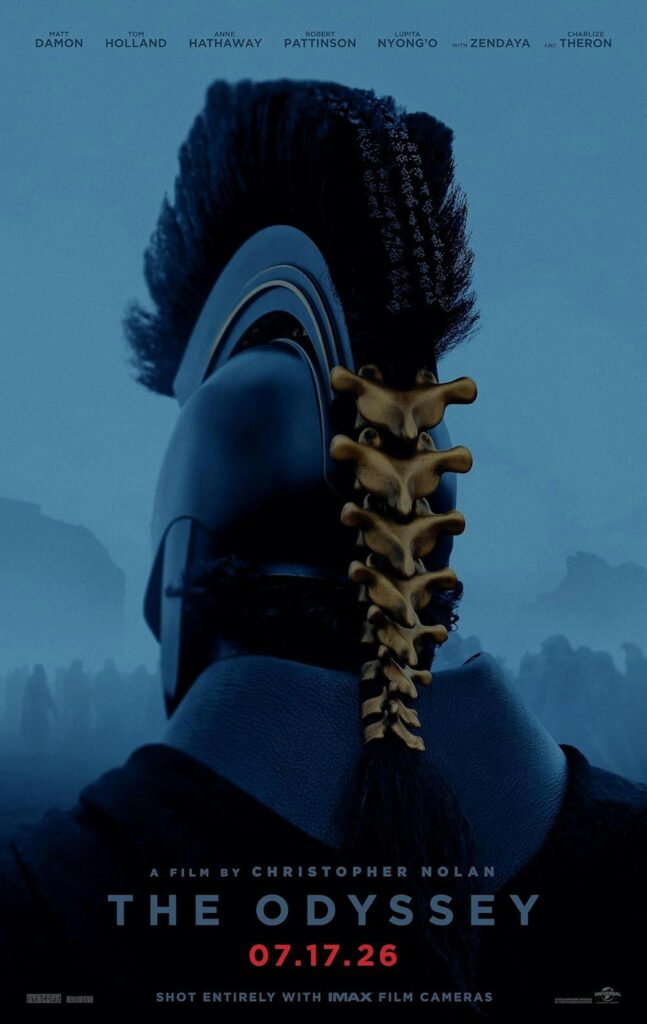
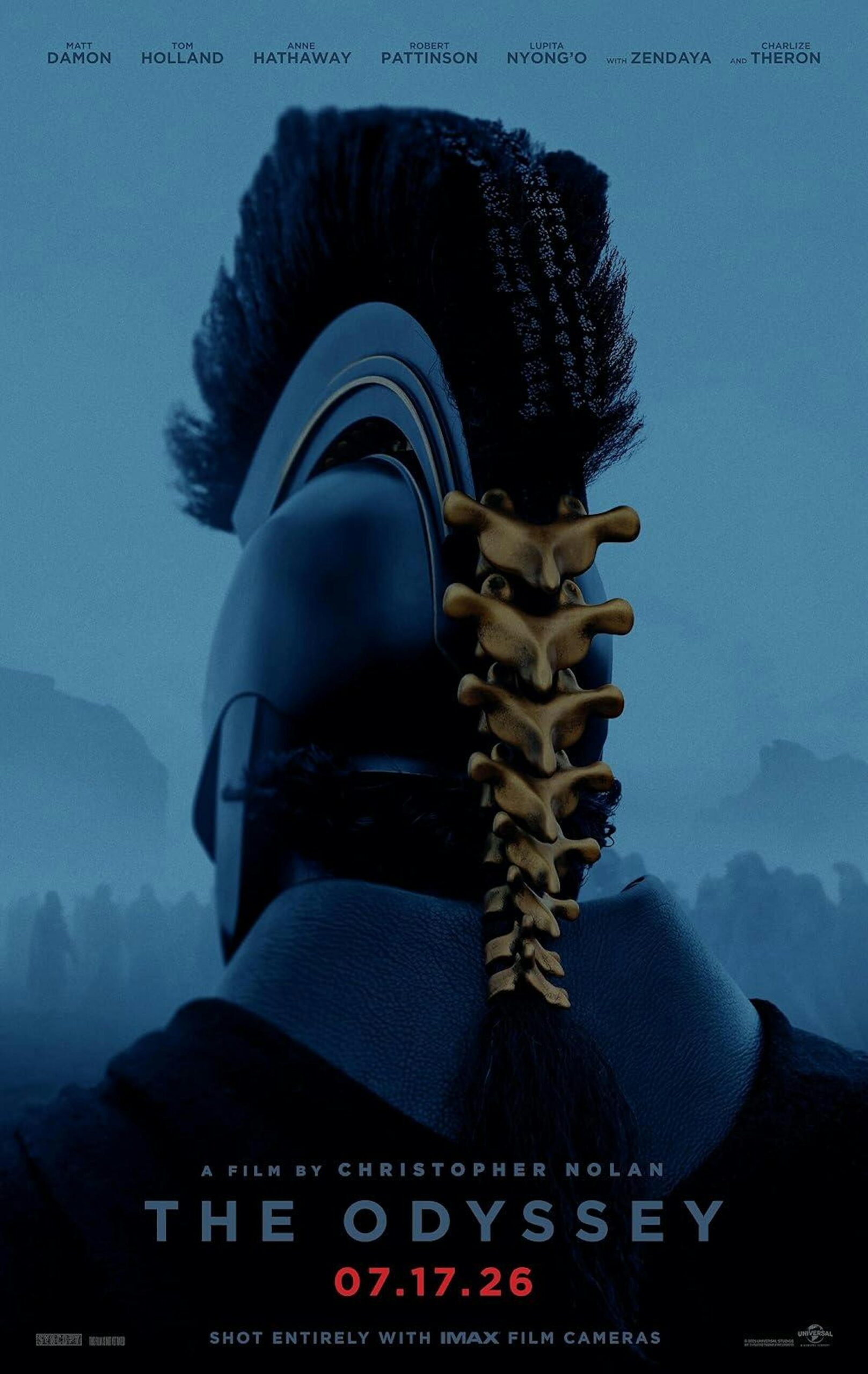
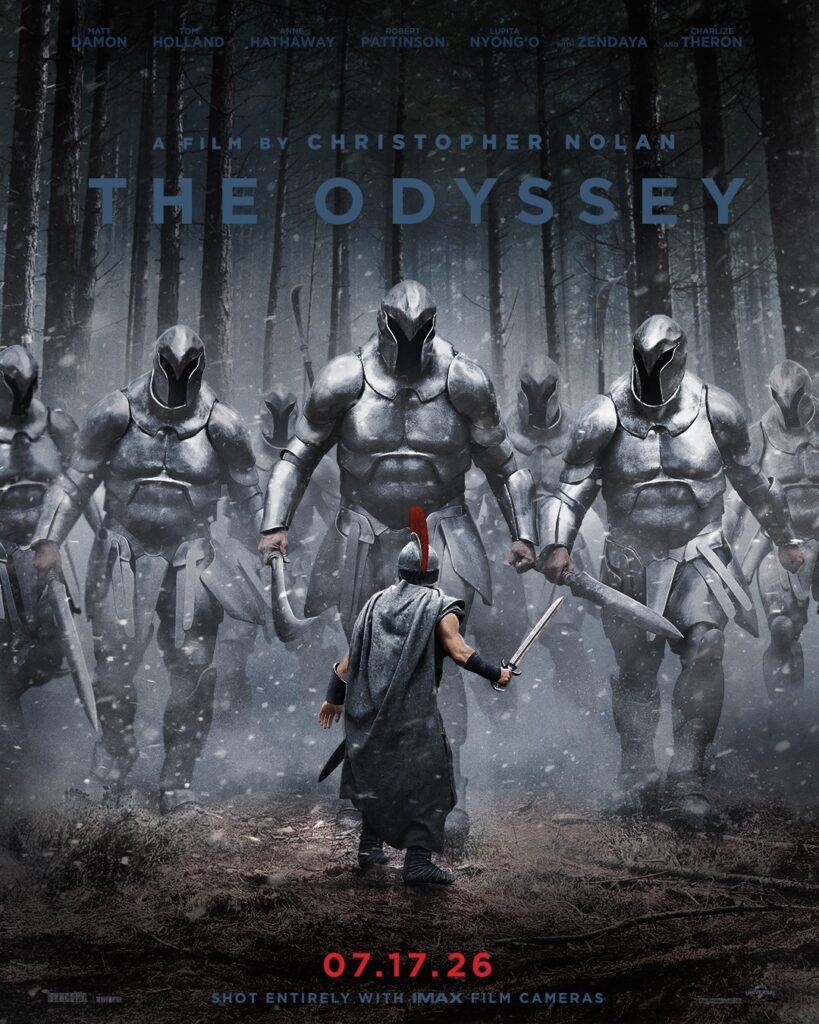
One of the foundational stories of the Western canon has a grand, sweeping, meticulously diligent new version in writer/director Christopher Nolan’s epic film, bristling with Oscar-winning talent and impressive seriousness of purpose. It is, with a few significant exceptions, true to Homer’s story dating back to 700-800 BC. But there are also vestigial reflections of Nolan’s previous film, “Oppenheimer,” both stories of men who must grapple with the consquences of their destructive, even ruthless, acts during wartime.

Matt Damon plays one of history’s most complex heroes, Odysseus, whose name and story still define journeys of adventure thousands of years later. The Odyssey follows Odysseus on his long voyage home after the victory of the Greeks, led by Agamemnon, with Achilles, Ajax, and Odysseus, in the Trojan War. Paris, a Trojan prince, had been asked to decide which of three goddesses was the most beautiful. Aphrodite, the goddess of love, bribed him by saying that if he picked her, she would give him the most beautiful human woman in the world. That woman was Helen (Lupita Nyong’o). She was the wife of the Greek king, Menelaus of Sparta (Jon Bernthal). But she is known throughout history as Helen of Troy, because she was kidnapped (or ran away with) Paris, leading to the war that made her known as “the face that launched a thousand ships.”

That war lasted ten years. It was Odysseus, known for his trickery, who came up with the idea of getting the soliders inside the Trojan’s impenetrable city by hiding in a gigantic statue of a horse, with a soldier named Sinon (Elliot Page) left behind to lie that the Greeks had retreated, leaving the horse as a tribute to the goddess Athena (Zendaya). When the Trojans drag it into the city, the Greek soldiers come out to win a decisive battle and end the war. This story is told in Virgil’s Anead, and in Nolan’s film we see parts of it more than once in flashbacks, part of elliptical, non-linear story-telling that may be confusing to those not familiar with Homer’s tale. (To refresh your memory or just get a quick recap, try this.)

But really, all you need to know is that Odysseus is on his way home, leading his men in (to start with) three boats, hoping to make it back before Agamemnon reaches his home just to be competitive. (Agamemnon will get home first but then be murdered by his wife, Helen’s sister (also Nyong’o).

It will take Odysseus a decade, with many stops along the way as the crew tries to replenish their provisions. The most well-known of their adventures are all brought to screen in unprecedented splendor by Nolan, and his “Oppenheimer” team, editor Jennifer Lame, production designer Ruth De Jong, and Oscar-winning cinematographer Hoyte van Hoytema, filming in Greece, Italy, Iceland, Morocco, and Scotland. This is the first-ever feature movie filmed entirely with IMAX cameras (in tribute, you can even get an IMAX camera popcorn bucket) and shown in 70 mm. The visuals are never less than spectacular. Odysseus and his men are traveling by boat and the sky and “the wine-dark sea” Homer described is filmed with a power and grandeur of a true epic. We get a visceral feeling of just how alone these men are, not just before GPS but before maps and navigation, entrusting to the gods to guide them home but knowing that the gods may be even more devious tricksters than Odysseus himself.

Odysseus tries to follow the “laws of Zeus,” particularly with regard to hospitable treatment of strangers, and killing even animals with honor, plucking his bow string to give them a chance to escape. When lives are at stake, though, he will do what is expedient. On their first stop, he leads his men onto an island where a cave is set up as a home, with a cozy fire. According to his beliefs about what the laws of Zeus require and assuming that the inhabitant of the cave will believe the same, he orders his men to stoke the fire to welcome their host. But the inhabitant is not a man. He is a gigantic cyclops, and in a genuinely terrifying moment, as soon as he enters the cave, he grabs one of the men and bites his head off. It is hard to understand why Nolan chose to omit one of the key elements of the story, Odysseus refusing to give the cyclops his name, instead saying he was called “Noman.” This is a very significant part of the story that is parallel to his not using his own name when he returns home, both relating to his sense of himself and his identity.

After a few more deaths, Odysseus is able to lead his men to an escape. But he violates his obligation to give the murdered men a decent burial. The conflict between his obligations under the law of Zeus and the choices to save as many lives as possible are a theme.
Copyright 2026 Universal

This conflict is presented in the immediate consequences of killing the cyclops. Odysseus learns that the monster was the son of the god Poseiden, who will now express his grief and anger by keeping them from reaching home. As in Homer’s original story, it explores the theme of human agency and the interference of the gods. We often see Odysseus near the goddess Athena.

Other adventures include two enchantresses. Calypso ( Charlize Theron) feeds Odysseus lotus flowers that make him forget the PTSD of his agonizing choices but also the fact that he has a family. Circe (Samatha Morton) turns his famished men into pigs (an extraordinary scene of transformation and body horror), and we see how clever Odysseus is in figuring out what she has done and forcing her to reverse the spell and help him get home. He travels to Hades where he meets the ghost of Sinon. He straps himself to the mast of his ship while his men have their ears blocked with wax to pass through the jagged rocks where the sirens sing men to their deaths.

Meanwhile, his wife, Penelope (Anne Hathaway) and son Telemachus (Tom Holland) are back in Ithaca, with dozens of suitors eating their food, drinking their wine, and trying to get Penelope to marry one of them so he can take over the kingdom. The most odious of the suitors is Antinous (Robert Pattinson), a maniuplative schemer who got Sinon to take his place in the war. Telemachus leaves Ithaca to see if he can find any news of his father from Menelaus.

It will take all of Odysseus’ craftiness and strength to defeat the suitors and reunite with his wife and son. Damon’s performance shows us all of the complexity that makes Odysseus an eternally enthralling hero. Pattinson continues to impress as he subverts his considerable looks and charisma to create a despicable, cowardly character. John Leguizamo is superb as the loyal Eumaeus. Even the three-hour run time cannot find enough time for Theron, Zendaya, and Morton, but each of those encounters could be an entire movie.

Nolan’s screenplay veers into colloquialisms that take us out of the movie now and then. But he has an unsurpassed gift for the language of cinema. The scenes of exploration, combat, and in Penelope’s castle in Ithaca are striking and narratively clear. Penelope fends off the suitors by telling them she cannot move forward until she finishes weaving a burial shroud for her late father-in-law. She weaves during the day and then unravels it at night. She appears modestly behind a screen as the suitors crowd the dining hall.

Nolan’s style is chilly and cerebral, with the female characters thinly sketched and too often just creating problems for or taking power away from men. That may be one reason that draws him to a story where a military hero has encounters with literal enchantresses who impede his progress. His exploration here of the conflicts even successful warriors feel about what they have done and what they have seen is moving. He made very significant changes to Homer’s concluding scenes (admittedly, contested by some scholars as added by others later). But the ending he chose has the same problems as the disputed version and it undermines the weight of what he has presented so compellingly throughout the story.

Parents should know that this film is extremely violence with many characters injured and killed, many with throats slit, monsters, ghosts, and graphic and disturbing images. Odysseus is drugged and characters drink wine. There is some strong language.

Family discussion: Why is this one of the most enduring stories in history? What does Odysseus regret the most? What decisions did he make that you think were wrong?

If you like this, try: the book (Fagles or Wilson translation) and a modern re-imagining from the Coen brothers, “O Brother Where Art Thou.”
Related Tags:


Based on a book Epic/Historical IMAX movie review Movies -- format Movies -- Reviews Remake Road Trip War
The Drama

The Drama

Posted on April 2, 2026 at 3:31 pm

B-
Lowest Recommended Age: Mature High Schooler
MPAA Rating: Rated R
Profanity: Constant very strong and crude language
Alcohol/ Drugs: Drinking and drunkenness, heroin
Violence/ Scariness: Extended discussion of school shootings, rifle, accident causes deafness
Diversity Issues: Diverse characters
Date Released to Theaters: April 3, 2026

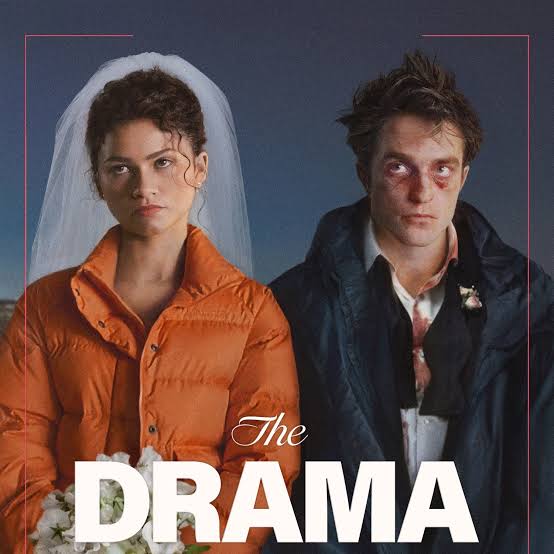
Love is the great human adventure but it is also the great human conundrum, which is why it drives us crazy. And also by there are so many stories, songs, paintings, novels, and theories about it. We all want it. And we are all terrified about being vulnerable enough to accept it, knowing we might come to depend on it and then lose it. And that presents itself in the core conflict. We want to be loved, which means being known. But if we allow ourselves to be known, we understand that we might scare off the very person we most want to love us. That is the precipice of intimacy that is very seldom . And that is the subject of “The Drama,” which has the courage to take on this conflict. It just doesn’t do a very good job. It’s non-stop cringe.

The Drama
Copyright A24 2026

It’s also the kind of movie actors like to be in because it presents them with some very intriguing acting challenges, and if you can handle the cringe, you will appreciate the performances. They are as excellent as we would expect from four of the best young actors working today.

The movie begins with a close-up of a very pretty ear. It belongs to Emma (Zendaya), who is reading a novel in a coffee shop. She has an earbud in the other ear. Charlie (Robert Pattinson) wants to find a way to talk to her, so he quickly looks up her book on GoodReads so he can pretend he read it. She does not respond. He thinks he’s blown it. But she did not hear him. She is deaf in that other ear. She encourages him to try again. And she forgives him on their first date when he has to confess that he never read the book.

That’s a flashback. In the movie’s present time, it is just a couple of days before their wedding and they are working on the speeches they will make after the ceremony, explaining what they love most about each other. Charlie is getting some help from his best man, Mike (Mamoudou Athie). Everything seems all set for happily ever after.

But then, at a tasting dinner with Mike and his wife, Rachel (Alaina Haim), who is Emma’s maid of honor, they all get a little tipsy (“This isn’t a bar,” the caterer mutters), and everyone makes the first of a series of excruciatingly painful mistakes. They decide they should each tell the story of the worst thing they ever did. And Emma’s is so shocking to the other three that it shatters their understanding of their relationship. Charlie starts to panic. He pesters Emma with questions, not trying so much to understand as he is to find a way to feel better about making a lifetime commitment. There’s a certain amount of projectile vomiting. And some more mistakes that just make things worse.

Some viewers may think Charlie should be concerned about another of Emma’s actions, one happening in the present, more concerning than the one from her mid-teens she picked as her worst. She makes a decision based on questionable evidence and without regard for the consequences. But the script makes this seem more like a distraction than a central counterpoint to the theme.

As noted, the performances are outstanding. In one scene, just after the big reveal, the couple are posing for the wedding photographer and it is an acting class to watch the hesitations and performative re-enactments of their pre-reveal comfort with each other. Their scenes together have an electricity beyond what the script intends. Athie understands the subtlety of Mike’s internal struggle to make everyone to get along, Hailey Benton Gates gives a vivid but layered performance as Charlie’s colleague, who tries to find a way to respond to Charlie’s inappropriate hypothetical as a subordinate who socializes with him (she and her plus one are wedding guests).

There are some sharp moments in the script but it is not up to the level of the settings, the score by Daniel Pemberton, or the performances. There’s not enough substance and way too much cringe.

Parents should know that this movie includes very disturbing content and references to school shootings. Characters use strong and crude language, drink, and use drugs, there are sexual references and explicit situations,

Family discussion: What would you have done if you were Emma? If you were Charlie? What will happen next?

If you like this, try: “Bad Sabbath” and “The Trouble with Jessica”

Related Tags:


Comedy Drama movie review Movies -- format Movies -- Reviews Romance
Mickey 17

Mickey 17

Posted on March 5, 2025 at 5:16 pm

B +
Lowest Recommended Age: Mature High Schooler
MPAA Rating: Rated R for violent content, language throughout, sexual content and drug material
Profanity: Very strong language
Alcohol/ Drugs: None
Violence/ Scariness: Extended peril and violence with graphic and disturbing images
Diversity Issues: A theme of the movie
Date Released to Theaters: March 7, 2025

You know how finicky printers are. Sometimes the printed paper comes out part way and then goes back a bit to do some more printing and comes out again. Sometimes you forget to put on the tray the paper lands on, and so it drops to the floor. It turns out that in the future, when someone develops a 3D printer that uses organic waste to print out people, actual human beings, those finicky printers do the same thing.

Copyright Warner Brothers 2025

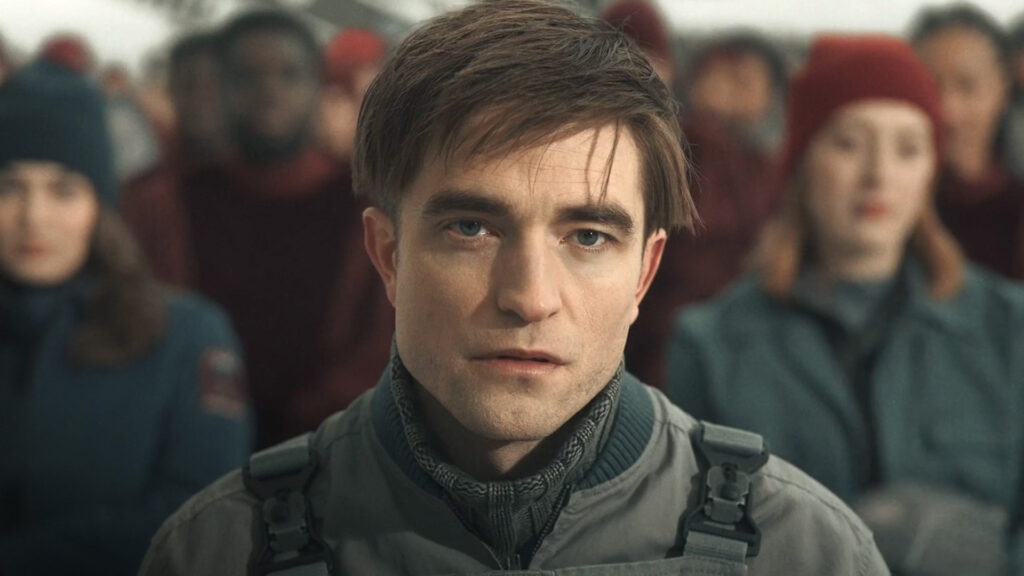
Mickey (an outstanding performance by Robert Pattinson) needed to leave the planet because a vicious loan shark who loves to watch the gruesome murders of those who haven’t paid on time was after him. The only way to jump to to head of a very long waiting list was to agree to be an “expendable.” He’s not very bright (see: in trouble with a vicious loan shark), so when he is repeatedly asked if he has read the contract he is signing, he says yes. That gets him a four-year-long trip to a new planet, where is job will be, basically, lab rat crossed with a crash test dummy. He is continually put in mortal danger until he dies, and then they print a new one of him out of that finicky printer. And sometimes they forget the paper tray, or I guess person tray, and he falls out onto the floor.

The new planet’s colony is run by an officious former politician named Kenneth Marshall (Mark Ruffalo with some large teeth) and his wife, Yifa (Toni Collette). Kenneth is obsessed with the “purity” of the civilization on his new planet, and Yifa is obsessed with superficial indicators of elegance and grace. She constantly drapes herself over her husband and coos into his ears, except when she is creating exotic sauces for their luxurious meals, while the rest of the people they brought with them to build their new community are fed with slop and live in bare, dorm-like cells.

Mickey 17
Copyright 2025 Warner Brothers

Even in this miserable situation, there are levels of status, and Mickey is at the bottom. With one exception, he is considered less than human because he keeps dying and getting re-printed. The exception is not his Earth friend Timo (Steven Yeun), the one who got him into all the trouble he had to leave the planet to escape. The exception is the beautiful and intelligent Nasha (Naomie Ackie), who is, somewhat improbably, devoted to him.

As the movie begins, before a flashback telling us how he got there, Mickey has died and been reprinted 17 times, thus the title. He is stuck in an icy crevasse and certain he is about to die again, from exposure or from being eaten by the planet’s indigenous inhabitants, who look. like giant combination tardigrades and caterpillars. But somehow he survives. Only everyone else assumed he had died again and the most severely punished crime has been committed: another Mickey has been printed while the last one is still alive. There are multiples.

Some of the resulting complications work better than others, but the movie comes together in a tight climax as the Marshalls go over the top and the Mickeys and Nasha have to save the day.

Director Bong Joon Ho continues the sly, dark humor and provocative commentary on class hierarchies, hypocrisy, and pervasive societal inequities he featured in “Parasite,” “Snowpiercer,” and “Okja.” More heightened than the Oscar-winning “Parasite,” this imagines the future consequences of arrogance, exceptionalism, and careless exploitation. The Marshalls are so caricatured they undermine the more nuanced elements of the story. The other characters’ understated, matter-of-fact acceptance of the outrageous abuse is far more powerful.

Parents should know that this film includes peril and graphic violence, with some disturbing images including a severed hand and bloody barfing, injuries and deaths. A character is repeatedly killed. There are sexual situations and explicit sexual references and drawings. Characters use very strong language.

Family discussion: What would make someone agree to be expendable? What did the Marshalls want their new world to be like? Why were they so affectionate to each other and so cruel to everyone else?

If you like this, try: “Snowpiercer,” “Okja,” “The Maze Runner,” and “The Hunger Games”

Related Tags:


Based on a book movie review Movies -- format Movies -- Reviews Science-Fiction
Tenet

Tenet

Posted on August 31, 2020 at 8:00 am

B
Lowest Recommended Age: High School
MPAA Rating: Rated PG-13 for violence and intense action
Profanity: Some strong language
Alcohol/ Drugs: None
Violence/ Scariness: Extended, intense peril and violence, characters injured and killed, guns, chases, explosions, weapons of mass and total destruction, torture
Diversity Issues: None
Date Released to Theaters: September 4, 2020

Tenet
Copyright Warner Brothers 2020

Christopher Nolan’s “Tenet” is like a three-dimensional chess game. The storyline is mind-bendingly intricate, with thought-provoking fantasy and juicy twists. But the characters are never more than one-dimensional, like the pawns, rooks, and bishops on the chess board, their sole defining characteristics are the way they look and move. The brilliantly-staged action sequences punctuate a muddled story-line with under-written characters and — its biggest failing, a boring bad guy.

The story’s leading man does not have a name. In the most eye-rolling cognomen since M. Night Shyamalan dubbed his muse-like character in “Lady in the Water” “Story,” our hero is known only as Protagonist. He even insists, “I am the protagonist!” a couple of times, so it seems to be more than a name. Fortunately for the movie and the audience, Protagonist is played by the infinitely engaging John David Washington (“BlackKklansman”) who brings so much grace and charm to the role we forget how under-written his character is. He conveys with a gleam in his eye and a shift of his shoulders more than any line of dialogue in the script.

The opening scene is a stunner. We are brought into the most civilized of environments, a concert hall, with an audience rustling in anticipation of a symphony orchestra performance. And then suddenly, it turns into the most uncivilized of situations, with terrorists breaking in to, well, we do not know exactly what, except that they are clearly combat-trained and equipped and ruthless. They carry an assortment of international law enforcement patches so they can select whichever one is right for the moment. Nolan expertly conveys the contrast between the control of the terrorists and the chaos they create.

Protagonist is one of the guys in combat gear, and he seems to be, maybe, a good guy? There to extract some dignitary? Anyway, he is soon put in a position where he must decide whether to allow himself to be tortured into giving up information or commit suicide with a cyanide capsule. He chooses the capsule, and wakes up in a hospital room. It was a test of whether he was all in. He passed.

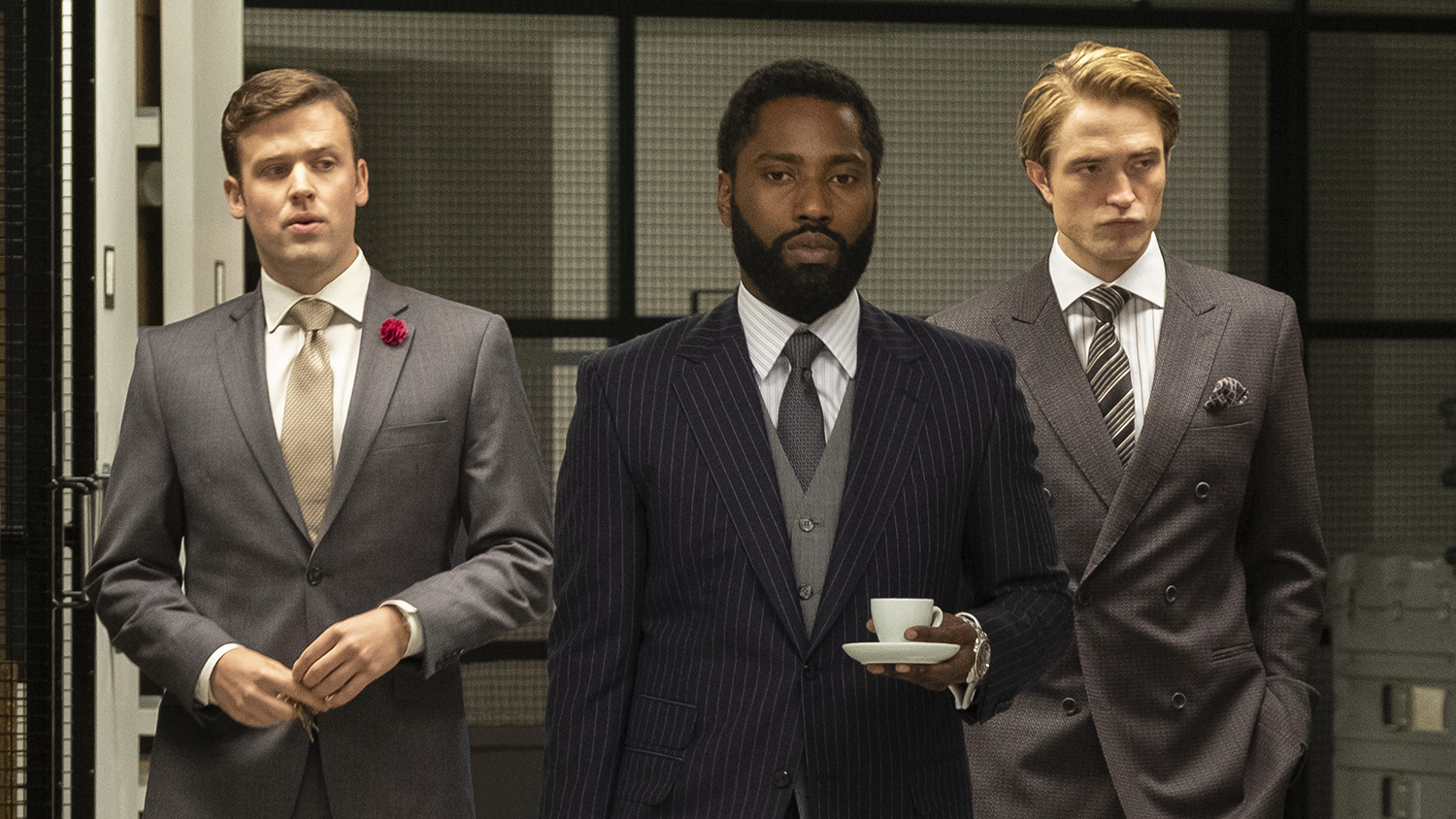
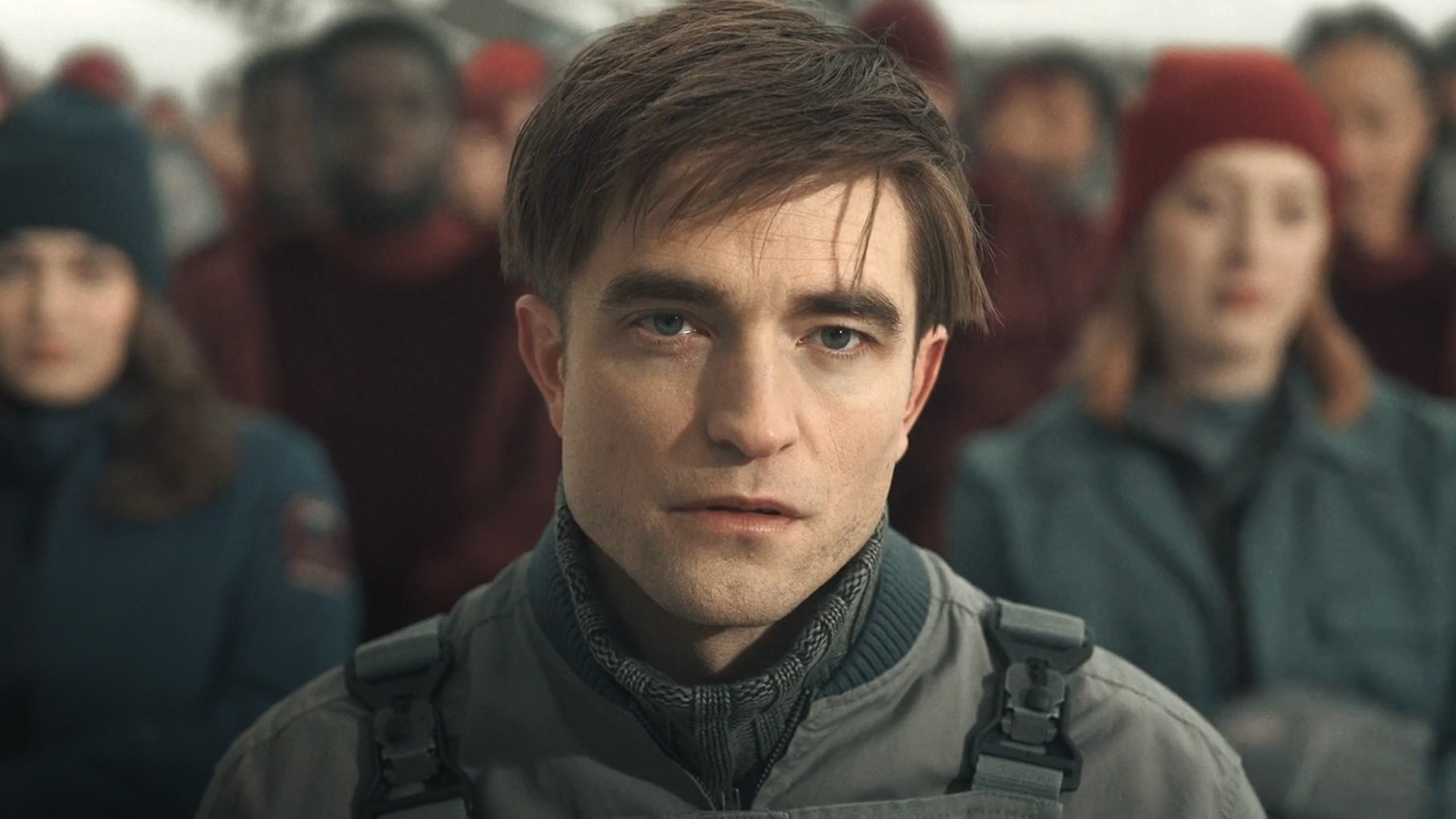
And now he has a new assignment, the darkest of dark ops, and the direst of end-of-times consequences if he does not succeed. Even if I wanted to spoil it, I really couldn’t, as it is pretty murky, but basically someone has figured out how to make time go backward and that is very, very bad, especially if — say it with me — it gets into the wrong hands. He gets some help from Michael Caine, with one brief scene keeping his record of appearing in Christopher Nolan films going. And he gets some more from a charmingly raffish guy named Neil (Robert Pattinson), who always seems to be smiling about some delicious secret. (SPOILER ALERT: He is.) Note: compliments to costume designer Jeffrey Kurland for gorgeous suits, in the words of Dorothy L. Sayers, “tailored to the swooning point.”

Enter the bad guy, who seems to be a character from another movie, like a shlocky Bond rip-off. Kenneth Branagh plays Andrei Sator, an expat Russian oligarch, international arms dealer, and all-around sadist. His estranged wife is the elegant art dealer Kat (Elizabeth Debicki). And if that isn’t an overused enough character sketch, there’s this: he enjoys blackmailing and manipulating her by threatening to keep her away from their young son. Protagonist is just the kind of cowboy to want to save the day for her while he’s saving the world.

There’s a highway chase with some vehicles going forward in time and some backward that is a wow and a half. But it is a combination of too much (nearly 2 1/2 hours long, with so many McGuffins to retrieve I thought I was back with Harry Potter and the horcruxes), too little (I’m not sure the backwards time thing all fits together — maybe there will be some charts online from fans who are willing to sit through it four or five times to figure it out), and the complete mess that is the Sator character, who not only is an under-imagined cliche but on top of everything else not only suffers from explaining bad guy syndrome but actually is so committed to going into detail about what he is doing that he actually gets on the phone to make sure he provides even more. Murky as it all is, it gets even murkier because of some muffled sound when people are speaking, especially when part of the whole backwards time thing for some reason have to have oxygen masks over their faces.

“Don’t try to understand it,” one character tells another. The best way to enjoy this movie is to follow that advice.

Parents should know that this film includes extended and occasionally graphic peril and violence with international arms dealers, guns, bombs, explosions, chases, torture, and terrorism. There is some strong language.

Family discussion: Why does the main character insist that he is the protagonist? Which twist surprised you most? Were there clues you missed?

If you like this, try: “Edge of Tomorrow”

Related Tags:


Drama Movies -- format

Trailer: Dane Dehaan as James Dean and Robert Pattinson as his Photographer Friend in “Life”

Posted on August 22, 2015 at 8:00 am

https://www.youtube.com/watch?v=xd4q7vF__8Q

Photographer Dennis Stock befriended James Dean and saw him as the symbol of a cultural upheaval that inspired him to a naturalism with his photos like what Dean was doing with his acting. Pattinson plays Stock and Dane Dehaan plays Dean in “Life,” co-starring Sir Ben Kingsley and Joel Edgerton.

Related Tags:


Biography Trailers, Previews, and Clips
THE MOVIE MOM® is a registered trademark of Nell Minow. Use of the mark without express consent from Nell Minow constitutes trademark infringement and unfair competition in violation of federal and state laws. All material © Nell Minow 1995-2026, all rights reserved, and no use or republication is permitted without explicit permission. This site hosts Nell Minow’s Movie Mom® archive, with material that originally appeared on Yahoo! Movies, Beliefnet, and other sources. Much of her new material can be found at Rogerebert.com, Huffington Post, and WheretoWatch. Her books include The Movie Mom’s Guide to Family Movies and 101 Must-See Movie Moments, and she can be heard each week on radio stations across the country.

Website Designed by Max LaZebnik