The BFG

The BFG

Posted on June 30, 2016 at 5:50 pm

B+
Lowest Recommended Age: Kindergarten - 3rd Grade
MPAA Rating: Rated PG for action/peril, some scary moments and brief rude humor
Profanity: None
Alcohol/ Drugs: Brief scene with drunken characters
Violence/ Scariness: Extended fantasy-style violence, reference to off-screen violence, including death of children, but no characters injured
Diversity Issues: None
Date Released to Theaters: July 1, 2016
Date Released to DVD: November 28, 2016
Amazon.com ASIN: B01G4N5Q0A
Copyright 2016 Disney

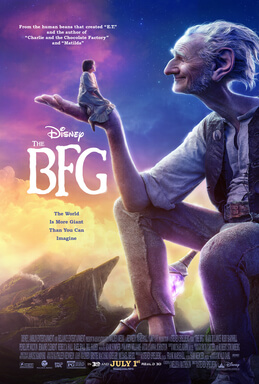
Steven Spielberg. the director who, with his partners, named their movie studio Dreamworks, understands that movies are like a guided dream. Roald Dahl’s story is about a Big Friendly Giant who collects, selects, edits, and delivers dreams to make people happy and conveys messages that are beyond the capacity of verbal human interaction. Clearly, this story connects with Spielberg profoundly, and it shows.

At 3 am one night in 1983, a girl named Sophie (Ruby Barnhill) is the only one awake in the horrible London orphanage where she lives. We can see right away that she is brave and smart, even fierce, as she threatens to call the cops on some drunken revelers making noise in the street. But then she witnesses a disturbance of another kind. Someone very, very large, as tall as her building, is walking quietly — no, stealthily — through the streets.

And then an enormous hand reaches silently and carefully into the window of the room filled with sleeping girls and the very awake Sophie, and grabs her, quilt and all. It is a giant.

He knows how to stay hidden. We see him employ some clever camouflage that keeps the Londoners from seeing him, and then takes off for Giant country, far, far away, but a matter of moments if you’ve got giant legs to leap with. Sophie is terrified. She is sure that the giant wants to eat her. But he does not eat children, he tells her, in his funny, corkscrew, word-twisting language. He has only taken her because she saw him, and he cannot risk her telling anyone about him. He has taken her to keep her from giving away his secret, which means she will have to stay with him forever.

Sophie is determined to run away. But that night, in the crow’s nest of a ship that is one of the many curios crowding his home, she dreams that she escapes, only to be captured and eaten by some even bigger giants. Through this dream, she begins to understand what her giant, soon to be known as the BFG, can’t explain any other way. She cannot be safe if she leaves his house. The other giants, who are as big to him as he is to Sophie, are uncivilized brutes and bullies. They eat “human beans,” including children (a bit less grisly than in the book, but still creepy).

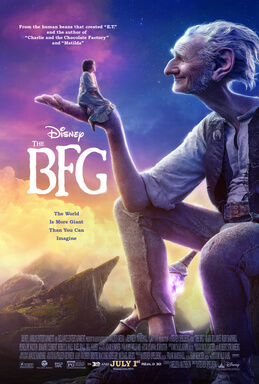
The BFG, whose huge ears listen to everything, even the quietest whisperings of the heart, collects dreams. Sophie goes with him to the place where dreams grow, and she helps him deliver the happiest possible dreams to a young boy and his family. The lonely little girl and the lonely giant get to know one another, and become friends. But the other giants can smell her, and they won’t leave the BFG and Sophie alone. They have to come up with a plan to get rid of the child-eating giants forever. It will involve dreams. And corgis.

This is a slighter story than Dahl’s richly imagined Charlie and the Chocolate Factory, Matilda, and James and the Giant Peach, with much of its humor coming from the BFG’s mangled words and his affection for his favorite beverage, Frobscottle, a fizzy green drink with bubbles that float down, rather than up. The noisy and powerfully butt-lifting physical consequence of this downward gas is what the BFG calls a whizpopple. And there is also an extended scene with the BFG trying to fit into the “bean”-sized world, sitting on a bench on top of a piano and using a rake as a fork.

That almost doesn’t matter, given Spielberg’s gorgeously imagined world and the performances of Mark Rylance as the BFG and Barnhill as Sophie. Rylance, whose last collaboration with Spielberg won him an Oscar for “Bridge of Spies,” is transformed via motion capture into the BFG, and does not lose an atom of his ability to express the BFG’s melancholy, isolation, gentleness, and integrity.

Spielberg has always been superb in casting, especially with children. Barnhill’s performance would be remarkable if she were interacting in a built, rather than virtual world. Given that in much of the movie she was probably looking at a tennis ball hanging in front of a green screen, it is truly astonishing. She so clearly believes in what we see around her and to her character’s friendship with the BFG that we believe in it, too. Next-level special effects help, too, with utterly seamless interaction between the digital and practical effects and gorgeous, wonderfully intricate production design that makes the BFG’s home both cozy and strange. The setting for retrieving the dreams is enchanting, though the visualization of the dreams themselves is not up to the level of the rest of the design. But the friendship between the BFG and Sophie is real magic.

Parents should know that this film includes extended fantasy peril and some violence (no characters hurt), references to children being eaten by giants, and some potty humor.

Family discussion: What dream would you most like to have? Why wasn’t the BFG like the other giants?

If you like this, try: Roald Dahl books and movies including “Willie Wonka and the Chocolate Factory,” “Fantastic Mr. Fox,” “Matilda,” and “James and the Giant Peach”
Related Tags:


3D Based on a book DVD/Blu-Ray Pick of the Week Fantasy
The Legend of Tarzan

The Legend of Tarzan

Posted on June 30, 2016 at 4:15 pm

B-
Lowest Recommended Age: Middle School
MPAA Rating: Rated PG-13 for sequences of action and violence, some sensuality and brief rude dialogue
Profanity: Some racist epithets and mild language
Alcohol/ Drugs: Some social drinking
Violence/ Scariness: Extended peril and violence, characters injured and killed, some disturbing and graphic images and scary animals
Diversity Issues: Historical abuse and enslavement
Date Released to Theaters: July 1, 2016

Copyright 2016 Warner Brothers
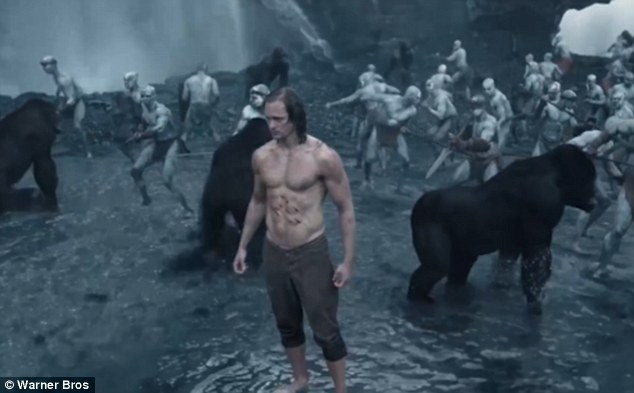
“The Legend of Tarzan” gets some things right. The swinging through the trees is exhilarating. Alexander Skarsgård (Tarzan/John) and Margot Robbie (Jane) are beautiful to look at, as is the African scenery. The CGI animals are pretty good. Thankfully, other than a few flashbacks, it avoids dwelling on the over-familiar origin story. And it is nice to see a shift from the colonialist perspective of some Tarzan stories to recognition of the real-life atrocities inflicted by Belgium’s King Leopold on the African natives, exploiting their resources and enslaving their people.

But there’s a lot the movie does not get right. It’s not terrible; it’s just oddly off, as though it was assembled by a committee that didn’t communicate with each other very well. The first problem is that Tarzan is depressed. I do not know why people seem to think that we somehow make classic literary characters more sophisticated or modern by making them depressed, but I’ve had enough of it. We’ve already had a depressed Batman and a depressed Superman this year. We don’t need a depressed Tarzan. Tarzan, now using his birth name of John Clayton, Lord Greystoke, is living in England when we first see him. Presented with an invitation to return to the Congo as the guest of King Leopold, he declines. Lifting a pinky as he sips from a porcelain teacup to demonstrate just how far he has come from running naked through the jungle, he explains simply, “It’s too hot.” He does not want to go back. But an American named George Washington Williams (played by Samuel L. Jackson and a toupee) persuades him to return, so he can investigate charges of abuse and enslavement. Jane is thrilled to return to Africa, and John reluctantly agrees to let her come along.

The invitation from the King was engineered by Leon Rom (Christoph Waltz, in his usual ultra-civil, ultra-evil mode). If he can deliver John to Chief Mbonga (a regal Djimon Hounsou) the chief will give him access to the diamond mines. When John escapes, Rom takes Jane and some of her tribal friends prisoner.

There’s an unfinished quality to the film. The tone shifts from a literally heavy-handed early image of a cruel hand wrapped in a rosary ripping a flower from its stem to some awkward and anachronistic attempts at humor (Samuel L. Jackson after a diplomatic speech: “And I thought the Civil War was long!”), and distracting random camera-swooping. But the real drag on the film’s momentum is Tarzan himself, who is so morose that the energy seeps out of the story. Reportedly, Skarsgård spent six months working out all day. He looks great, but to be honest he already looked great, and the fixation with male or female movie stars remaking their bodies for roles is barbaric. What needed the work was the script.

Parents should know that this film includes extended peril and violence, guns, spears, explosions, predator animals some disturbing images, characters injured and killed, some sexual references, and brief strong and racist language.

Family discussion: Why did John and Jane have different views about going back to Africa? How did John’s idea of honor change and why?

If you like this, try: the many other movie and television portrayals of Tarzan and the books by Edgar Rice Burroughs

Related Tags:


Action/Adventure Based on a book Movies -- format Remake
Independence Day: Resurgence

Independence Day: Resurgence

Posted on June 24, 2016 at 12:33 pm

Copyright 20th Century Fox 2016

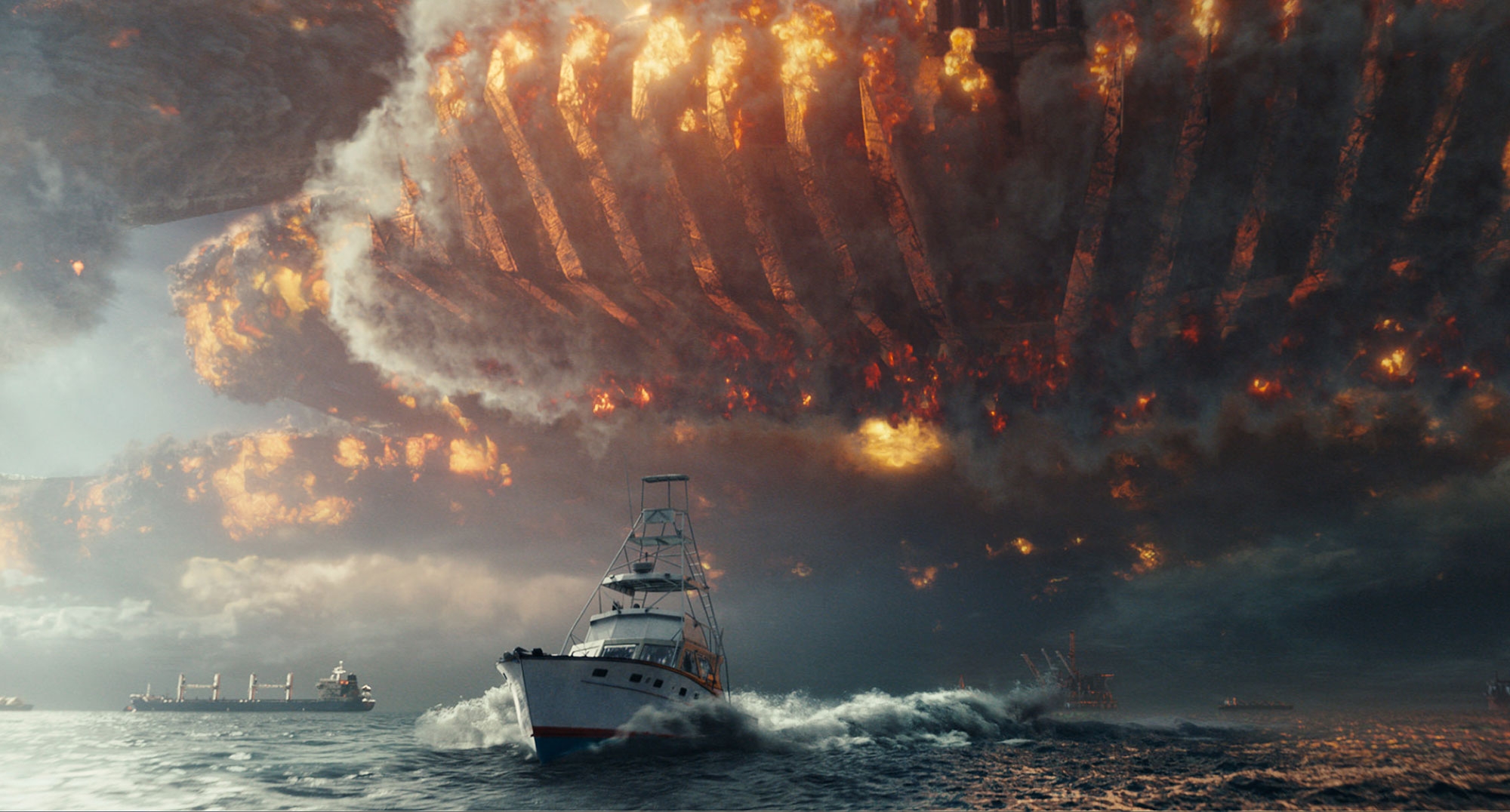
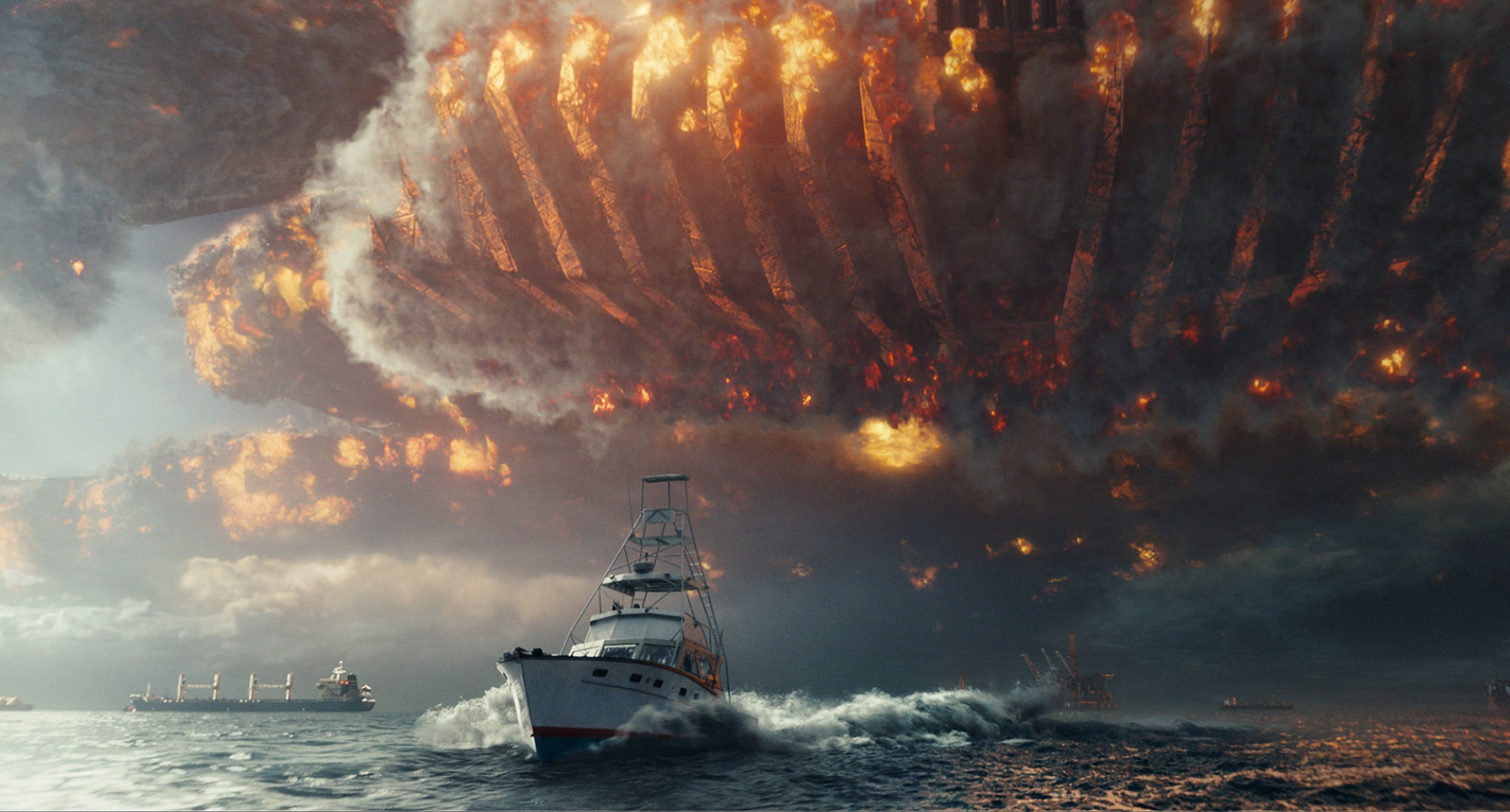
Twenty years ago, Jeff Goldblum and Will Smith flew into an alien mothership and uploaded a computer virus in a movie that is still one of the definitive summer blockbusters, Independence Day. Two decades later, moviemaking technology has made a lot of progress, and it has some striking visuals, but it is missing a lot of the brio of the first, especially Will Smith. This is one of those movies with a story that involves billions of people around the world but pretty much the same six people keep running into each other and their relationship issues are as important as the impending attack that in military terms is deemed “extinction level.”

The alien attack of 1996 did something humans were not able to accomplish on their own after thousands of years. It united the world, which came together to adapt the alien technology and develop a comprehensive monitoring and defense system, including space stations and an outpost on the moon. The US President (Sela Ward) coordinates with other world leaders in what seems to be an era of unprecedented peace and prosperity, if operating under the constant pressure of recovering from unprecedented losses and the fear of another invasion.

In the first film, a nerdy scientist named Dr. Okun (Brent Spiner) who had been hidden away in Area 51 was used as something like a ventriloquist’s dummy by an alien and has been in a coma ever since, tenderly care for by his partner. All of a sudden, his eyes fly open and he is awake. There are other indications around the world that dormant capacities for communication are being triggered by what could be another approaching invasion. That includes the former President (Bill Pullman, with beard, cane, and PTSD) who not only inspired the world with a great speech but personally flew a fighter plane to attack the alien ship.

David Levinson (Jeff Goldblum), who in the last film was a cable company computer technician who was the first to identify the anomalies that indicated an alien interference, visits Africa to speak to a warlord whose people engaged in hand-to-tentacle combat with aliens. The ex-wife played by Margaret Colin in the last film has vanished from the storyline, without even the half-sentence explanation that lets us know what happened to Will Smith’s character. Instead, we meet a scientist played by Charlotte Gainsbourg who says she has identified some symbols, especially a circle with a horizontal line through it, that people who have had some alien contact feel impelled to draw or paint. And the aliens who have been locked up in Area 51 for 20 years are suddenly awake and screaming…or celebrating. Yes, they are back and they are big. One thing the movie does well is show us the scale and scope of this new invasion.

But what it does not do well is connect us to the characters. There are utterly pointless and unconvincing subplots about a past between Goldblum and Gainsbourg, who have no chemistry whatsoever, but still find more sizzle than the subplot about the hopelessly bland trio of the three fighter pilots, the daughter of the former President, the son of the Will Smith character from the last movie, and Liam Hemsworth, trying to be all “Top Gun”-adorably dashing but more “Starship Troopers.” The actors do their best, but they are stuck with clunky sci-fi cliche dialog. The first film had some clever references to classics like “2001,” but this one just borrows shamelessly from other, better films. The aliens may be bigger and better in this return, but the script is not.

Parents should know that this film has extended sci-fi peril and violence with some disturbing images and characters who are injured and killed, including vast destruction and genocide. Characters use some strong language and there is brief potty humor.

Family discussion: What should the President have considered in deciding about the orb? What would you want to ask it?

If you like this, try: the original “Independence Day” and “Close Encounters of the Third Kind”

Related Tags:


3D Action/Adventure Science-Fiction Series/Sequel
Free State of Jones

Free State of Jones

Posted on June 23, 2016 at 5:40 pm

B+
Lowest Recommended Age: High School
MPAA Rating: Rated R for brutal battle scenes and disturbing graphic images
Profanity: Some strong and racist language
Alcohol/ Drugs: Alcohol
Violence/ Scariness: Intense and graphic violence including battle scenes, hanging of adults and children, brutal abuse, rape, and lynching
Diversity Issues: A theme of the movie
Date Released to Theaters: June 24, 2016

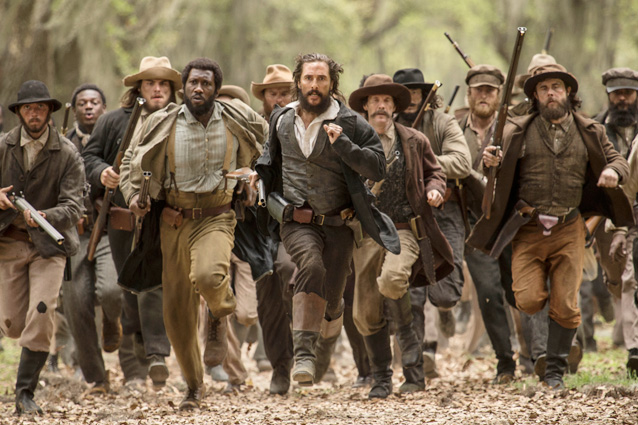
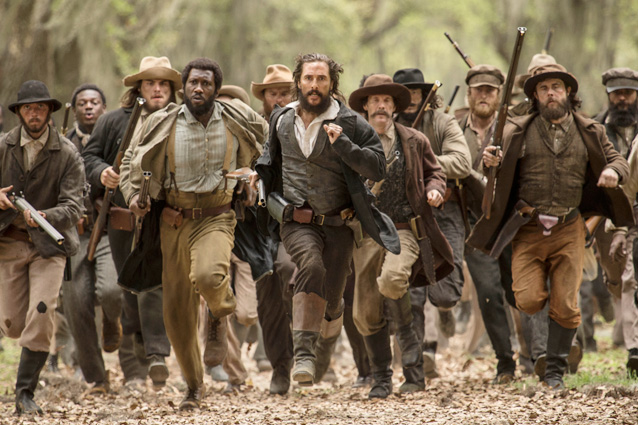
freestateofjonesThe timing is not great. “Free State of Jones” is a Civil War drama based on the true story of a community of Confederate deserters and runaway enslaved people who banded together to fight for their own vision of freedom. It was filmed once before as “Tap Roots,” with Van Heflin, Susan Hayward, and Boris Karloff (as an Indian!), but this version, from “The Hunger Games'” Gary Ross, deals forthrightly with the racial issues, or at least tries to. There is an inescapable and maybe unconquerable problem in telling a story set in Civil War era Mississippi with a glorified white man as the hero, in a time when one of the most anticipated films of the year is the Sundance Grand Jury and Audience award winner “Birth of a Nation,” a film that grabbed and repurposed its title from the blatantly racist D.W. Griffith film of the silent era.

Ross brings the same passion for tackling tyranny to this story that he did to “Hunger Games.” It’s just that we’re no longer dealing with speculation and metaphor, and that means a political overlay reflecting both historical and contemporary controversies.

Matthew McConaughey plays Newt Knight, a Mississippi farmer with a wife and young son who is serving as a nurse in the Confederate army. Early on, we see him removing the uniform from a wounded enlisted man so he can tell the doctors he is an officer and get him treated. Increasingly frustrated with the endless carnage on behalf of wealthy elites who exploit the poor, it is too much for him at last when his nephew is killed in battle and he leaves, taking the body home to be buried. There he finds the Confederate forces are taking all of the food from the local farmers, leaving them to starve. On the run from the military seeking defectors, he hides out in a swamp, where he meets up with runaway slaves. There he decides that his allegiance is not to the Confederacy, which is sending poor boys to fight to preserve what today we might call the 1 percent. “I ain’t fighting for cotton,” another solider tells him. “I’m fighting for honor.” “That’s good,” Knight responds. I’d hate to be fighting for cotton.”

Writer/director Ross, working with the locations where these events occurred and a touching score from Nicholas Britell, evocatively conveys the hardscrabble lives, the literal and spiritual grit, the desperation and conviction it inspires. Knight hands guns to three little girls and, when the Confederate officer does not take them serious, Knight tells him that guns will shoot anybody. “It don’t seem to matter where the bullet comes from.” The depth of research is evident throughout, but it is never pedantic. The storyline is grounded in historical events like the Confederacy’s requisitioning of food and supplies, and post-war exploitation and terrorism, led by former Confederate officials, that prevented former enslaved persons from basic rights and murdered those who tried to assert them. There are brief glimpses into a conflict 85 years later, as the descendent of Knight’s relationship with a former slave named Rachel (Gugu Mbatha-Raw) is criminally prosecuted for marrying a white woman in violation of the state’s laws prohibiting mixed marriages. It is there to remind us that we can never dismiss the events of the past as behind us.

Parents should know that this film has very intense and graphic violence including Civil War battles and skirmishes, hanging, rape, and lynching, adults and children injured and killed, very disturbing images, some strong language with racist epithets, some sexual references

Family discussion: What did Knight find most unjust about the Confederacy?  What did we learn from the 1948 courtroom scenes?

If you like this, try: “Glory” and “The Red Badge of Courage” and read about the story that inspired the film.

Related Tags:


Based on a book Based on a true story Drama Epic/Historical Movies -- format Race and Diversity War
The Phenom

The Phenom

Posted on June 23, 2016 at 5:38 pm

Copyright 2016 Bron Capital Partners

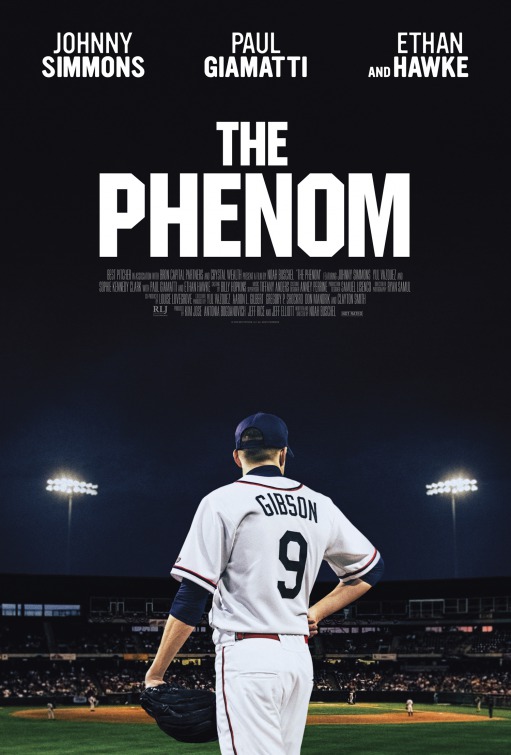
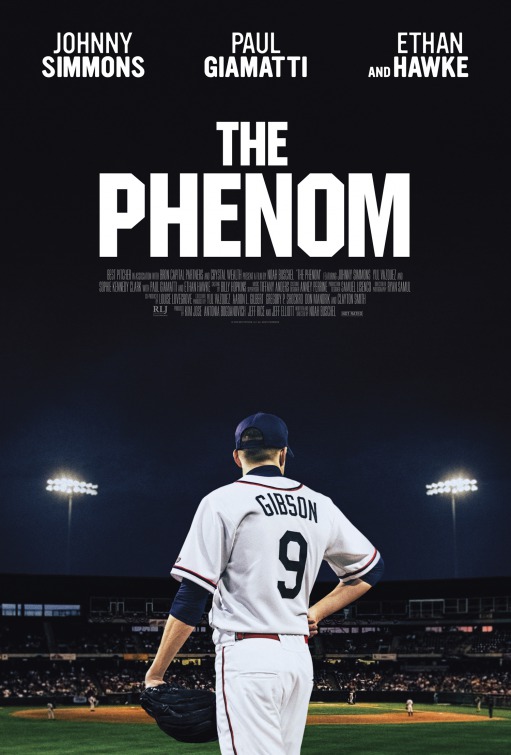
For writer/director Noah Buschel, “The Phenom” is clearly a labor of love. For the audience, it is a small gem filled with unexpected insight and performances of exceptional precision and intelligence. We may think we know what to expect from a film about a gifted athlete who explores the impact of his abusive father with the help of an understanding therapist. But each scene has surprises, with sharp dialogue, vivid characters, and a lot to say about the business of both sports and media. This is a sports movie that quotes F. Scott Fitzgerald. And there’s a brief but powerful scene as the athlete talks to the press that reminds us of how mch this film rewards careful attention.

Johnny Simmons plays Hopper, a “phenom” of a pitcher who has had trouble delivering in the major leagues. He’s sent to the team’s psychologist, a former phenom himself, who was featured on the cover of TIME Magazine at age 22 because of his pioneering work in helping athletes achieve focus and overcome fear. Dr. Mobley is played by Paul Giamatti, who has another connection to baseball — his father, Bart Giamatti served as the Commissioner of Major League Baseball.

Giamatti’s Dr. Mobley is understated, reassuring, and accessible. “A lot of young pitchers struggle with control,” he tells Hopper. It’s “a passing thing.” He does not even want to give it a name because that would “legitimize” it. He tells Hopper that it can be good to look back because damage from the past can be “vaseline on the lens” that interferes with our ability to understand the present and accomplish what we hope for.

Hopper’s whole life has been about getting to the major leagues. His father, Hopper senior (Ethan Hawke) is a volatile bully Hopper’s teacher describes as “an expert at cutting corners and when there weren’t any corners, he’d make circles around her.” He constantly berates his son, bragging that he taught him everything he knows, forcing him to run splits as punishment for smiling. “Never show emotion on the mound. And you’re always on the mound.” He tells Hopper to develop an “intimidation face.”

Hopper has dinner at his girlfriend’s house and is so disconnected from life off the field that he has no idea of how to respond in a home where people discuss ideas and events at the dinner table. Later, when he hurts the girl’s feelings and she speaks up, he tells her the only thing he knows: “You need to toughen up.”

Hopper clearly has to choose between two father figures — his biological father, whose approval he cannot help seeking, and Mobley, whose safe space could be something Hopper could learn to trust. Simmons finds a way to show us the feelings the repressed young pitcher still cannot acknowledge, and his scenes with both Giamatti and Hawke are all the stronger for being understated, never overly dramatic. Owing more to “Ordinary People” than to baseball classics like “Bang the Drum Slowly,” this is a touching drama made up of small moments told with truth and care.

Parents should know that this unrated film has some adult material including drugs and drug dealing, an abusive parent, and strong language.

Family discussion: Why didn’t Hopper know how to talk to Dorothy? Should Dr. Mobley have told him the truth? What was his best advice?

If you like this, try: “Ordinary People” and “Fear Strikes Out”

Related Tags:


Drama Family Issues Sports VOD and Streaming
THE MOVIE MOM® is a registered trademark of Nell Minow. Use of the mark without express consent from Nell Minow constitutes trademark infringement and unfair competition in violation of federal and state laws. All material © Nell Minow 1995-2026, all rights reserved, and no use or republication is permitted without explicit permission. This site hosts Nell Minow’s Movie Mom® archive, with material that originally appeared on Yahoo! Movies, Beliefnet, and other sources. Much of her new material can be found at Rogerebert.com, Huffington Post, and WheretoWatch. Her books include The Movie Mom’s Guide to Family Movies and 101 Must-See Movie Moments, and she can be heard each week on radio stations across the country.

Website Designed by Max LaZebnik