Solo: A Star Wars Story

Solo: A Star Wars Story

Posted on May 22, 2018 at 2:32 pm

B +
Lowest Recommended Age: Middle School
MPAA Rating: Rated PG-13 for sequences of sci-fi action/violence
Profanity: Mild language
Alcohol/ Drugs: Some alcohol
Violence/ Scariness: Extended sci-fi style peril, action, and violence, chases, shootouts, explosions, characters injured and killed
Diversity Issues: Diverse characters
Date Released to Theaters: May 24, 2018
Date Released to DVD: September 24, 2018
Copyright 2018 Disney

The moment I became a “Star Wars” fan forever was in the cantina scene in what I will always refer to as the first “Star Wars” movie, now of course known as Episode IV, “A New Hope.” It was when Ben Kenobi tells Han (Harrison Ford, of course) he hopes to avoid any Imperial entanglements, and Han leans back and says, “Well, that’s the real trick, isn’t it?” with so much rakish charm that we have to instantly forgive him for bragging about making the Kessel run in under 12 parsecs. (We will always be too polite to mention that parsecs measure distance not time. Who knows, maybe a long time ago in a galaxy far, far away, they told time in parsecs.)

So, would I like to see that Kessel run? And how Han met Chewy the wookiee? And how me met the dashing buccaneer, Lando Calrissian, played by Billy Dee Williams in Episodes V and VI and here by master-of-all-arts Donald Glover? And the bet that won Han the brand-spanking-new Millennium Falcon? Written by “Empire Strikes Back” and “Force Awakens” screenwriter Lawrence Kasdan, with his son Jonathan (“Dawson’s Creek”)? With the divine Phoebe Waller-Bridge (“Fleabag”) voicing a slightly loopy and more than slightly lippy droid? You bet I do!

Does it deliver? You bet your Han Solo hanging dice it does! Does Han shoot first? This time he does!

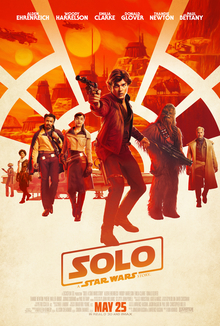
This prequel has the wonderfully charismatic Alden Ehrenreich (the “Would that t’were so simple” guy from “Hail, Ceasar!”) as Han, who lives with other orphans in a work camp led by Lady Proxima (voiced by Linda Hunt). Think Fagin, without the warmth. He has a plan to escape with the girl he loves, Qi’ra (“Game of Thrones” dragon-rider Emilia Clarke). Han is a bit of a rascal, but also an optimist back in these teenage years. “Wherever we go it can’t be worse than where we’ve been,” he says. But we know it can.

And as we know from films like “Casablanca” and “The Fifth Element,” whether it’s the letters of transit or the multipass, you have to have the right paperwork to get away. Han escapes (and in the film’s cheesiest moment, is assigned a last name based on his solitary status) but Qi’ra is captured. Han decided to enlist with the Imperial forces to get trained as a pilot so he can return to save her.

Three years later, Han has been thrown out of the academy and is now a grunt in the Imperial military. He meets a bandit named Beckett (Woody Harrelson), and his ragtag crew (is there any other kind?) of daredevils, and agrees to join forces with them on a heist so he can get a ship go back and rescue Qi’ra. This leads to a marvelously staged sci-fi version of a western train robbery.

It turns out that Beckett is not stealing on his own behalf, but working for someone else, someone who is not forgiving when things do not go well, harking back to the original cantina scene again, where we learn that Han had to jettison the cargo he was delivering to Jabba the Hutt. The big crime boss is Dryden Vos, played by Paul Bettany, with scars across his face as though a space tiger clawed his cheeks, scars that redden when he gets angry. Beckett and Han have to try again.

Along the way Han meets Chewbacca (Joonas Suotamo) and Lando. I am not going to spoil how; I’ll just say that both encounters are fitting and highly entertaining. Han does meet up with Qi’ra again, but is not ready to see how she has been affected by what she has had to do to survive. She joins the team and they take on another big heist. There’s a high-stakes card game, a trial by combat, and good advice that gets ignored. And the better you know the series, the more references and callbacks you will be delighted to discover. There are new insights about well-known characters and intriguing new ones, especially Waller-Bridge as a droid with a few crossed wires. In addition to the touches that center this in the “Star Wars” universe, there are references to classic movie genres, heist films and westerns and maybe “The Wages of Fear.” It may not be necessary, but it is most welcome, a thrilling and warm-hearted adventure in its own right that fits as satisfyingly into the “Star Wars” universe as that last piece in a jigsaw puzzle.

Parents should know that like all “Star Wars” movies, this one has non-stop peril and action with some disturbing images and many characters injured and killed. There is some mild language and some alcohol.

Family discussion: What do you think happened when Han was at the Academy? What is Han’s greatest skill?

If you like this, try: the other “Star Wars” films
Related Tags:


Action/Adventure DVD/Blu-Ray movie review Movies -- format Science-Fiction Series/Sequel
The Glass Castle

The Glass Castle

Posted on August 10, 2017 at 5:41 pm

B +
Lowest Recommended Age: High School
MPAA Rating: Rated PG-13 for mature thematic content involving family dysfunction, and for some language and smoking
Profanity: Some strong language
Alcohol/ Drugs: Smoking, alcohol and alcohol abuse
Violence/ Scariness: Domestic violence, child badly burned in a cooking accident, child neglect and endangerment
Diversity Issues: None
Date Released to Theaters: August 11, 2017
Date Released to DVD: November 6, 2017
Copyright 2017 Lionsgate

In her 1986 best-seller, Necessary Losses, author/poet Judith Viorst talks about the beliefs each of us has to give up in order to move forward. The first and in some ways the most difficult is the understanding that our parents are not all-powerful and all-knowing, and that they cannot kiss all of our hurts and troubles away forever. Some of those realizations are worse than others. Most of us, I hope, do not have to give up on the idea that our parents at least want to take care of us and that they do their best. But parents who neglect or abuse their children take away something worse than food and safety; they take a child’s senses of trust and pride.

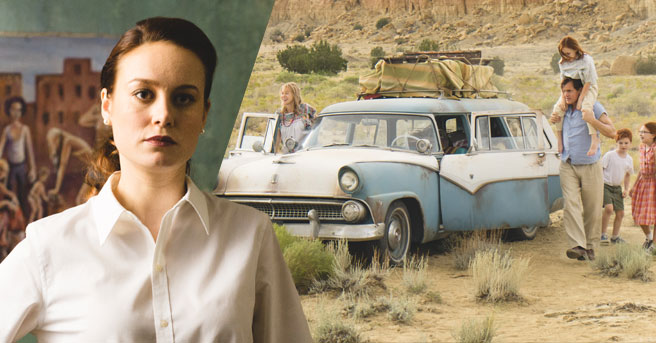
And so “The Glass Castle,” based on the best-selling memoir by Jeannette Walls, begins with Walls, a sophisticated, elegant, and successful New York journalist (Oscar-winner Brie Larson) on her way home in a cab after dinner in an expensive restaurant with her fiance and his prospective client, seeing her parents dumpster diving. They were homeless.

And so, we go back in time to see her as a very young child, telling her mother, Rose Mary (Naomi Watts) she is hungry. “Would you rather me make you some food that will be gone in an hour or finish this painting that will last forever?” It is a rhetorical question. Young Jeannette (Chandler Head) toddles over to the stove to make herself some hot dogs. But her dress catches on fire and she is badly burned.

When her father, Rex (Woody Harrelson) decides to take her out of the hospital, without doctor permission and without paying. At this point, Jeannette is still young enough to believe everything her parents tell her, like “our home goes wherever we go.” Rex, probably self-medicating for undiagnosed bipolar disorder, was immensely brilliant and charismatic. The glass castle of the title was the home he kept promising to build the family, and he spent years drawing plans for it. Rex and Rose Mary were less and less able to maintain any kind of stability at the same time that the children became more and more aware of what they were entitled to expect and unlikely to get. Instead of excitedly making plans for the castle, they began pleading with him to stop drinking. And then, when he could not, they decided to take responsibility for themselves and each other.

Writer/director Destin Daniel Cretton worked with Larson in the outstanding “Short Term 12,” which also had themes of abuse, damage, and resilience. He is especially good here in dealing with the challenge of three different performers, some quite young, portraying Jeannette and her siblings, maintaining consistency as they grow up, but using the cinematography to help convey the journey from their glowing memories of childhood, believing in their parents’ view of the world as beneath them, to the grittier life of deprivation and uncertainty. The spot where the glass castle was supposed to be built literally becomes a garbage dump.

What’s wisest and most significant is that the film becomes more than the story of survival. It is really only when Jeannette stops being afraid to tell the truth about herself that she is able to accept the best of what Rex and Rose Mary brought to her life. As Walls — and Viorst — might agree, necessary losses are worth the pain when they lead to the freedom that only comes from being true about and to yourself.

Parents should know that this film concerns the neglect and abuse of children, parents with substance abuse and mental illness problems. It includes smoking, drinking and drunkenness, domestic abuse, a child burned in a fire, strong language, and a sexual situation.

Family discussion: Why did Jeanette decide to tell her story? What was she grateful for receiving from her parents? If there was a movie about your family, who would you like to play you?

If you like this, try: “Running with Scissors,” “The Prize Winner of Defiance, Ohio” (another real-life story with Woody Harrelson as a father with a drinking problem), and “Infinitely Polar Bear,” and the book by Walls

Related Tags:


Based on a book Based on a true story Coming of age Drama DVD/Blu-Ray Family Issues movie review Movies -- Reviews
The Edge of Seventeen

The Edge of Seventeen

Posted on November 17, 2016 at 5:42 pm

Copyright 2016 STX
Copyright 2016 STX
A psychiatrist once told me that just as an infant can have fevers that would be lethal in an adult, a teenager can have symptoms that would be evidence of psychosis at any other stage of life. Mood swings, the feeling that everyone is looking at you, disordered thinking, bizarre appearance: you might be having some sort of breakdown, or you just might be an adolescent. Stories about that intensely traumatic age connect to those of us who have been through it and those who are in the midst of it with a visceral sense of recognition, and, if we’re lucky, a bittersweet humor.

“Edge of Seventeen,” written and directed by Kelly Fremon Craig, captures the intensity and chaos and drama drama drama of this age. Hailee Steinfeld plays Nadine, who, like many 17-year-olds, is certain that she is the only person on earth who truly understands what it is to suffer. She actually has experienced a terrible loss, the death of her father, which has left her remaining family fragile. Her older brother Darian (Blake Jenner of “Everybody Wants Some!!”) compensates by being perfect in every disgusting way possible, from Nadine’s perspective. He is handsome, talented, athletic, and popular. That leaves nothing left for her but to be awkward and miserable.

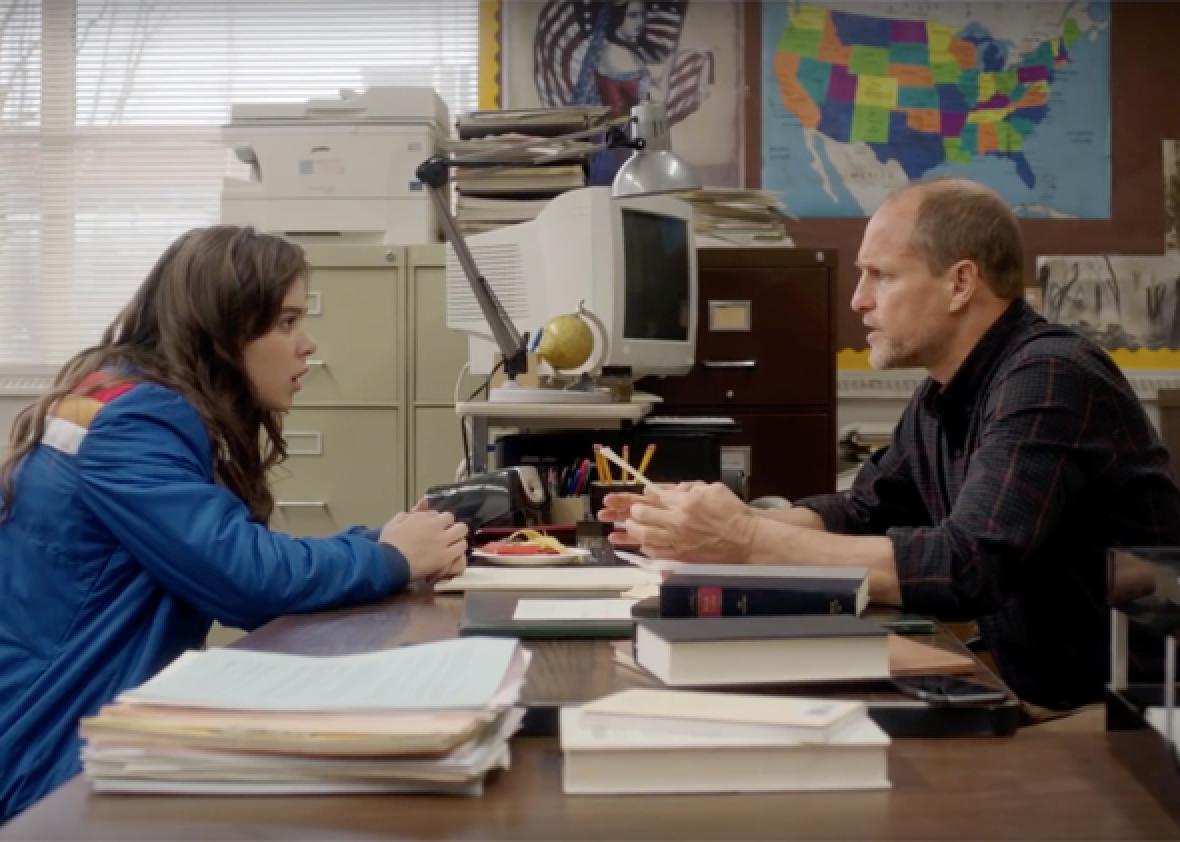
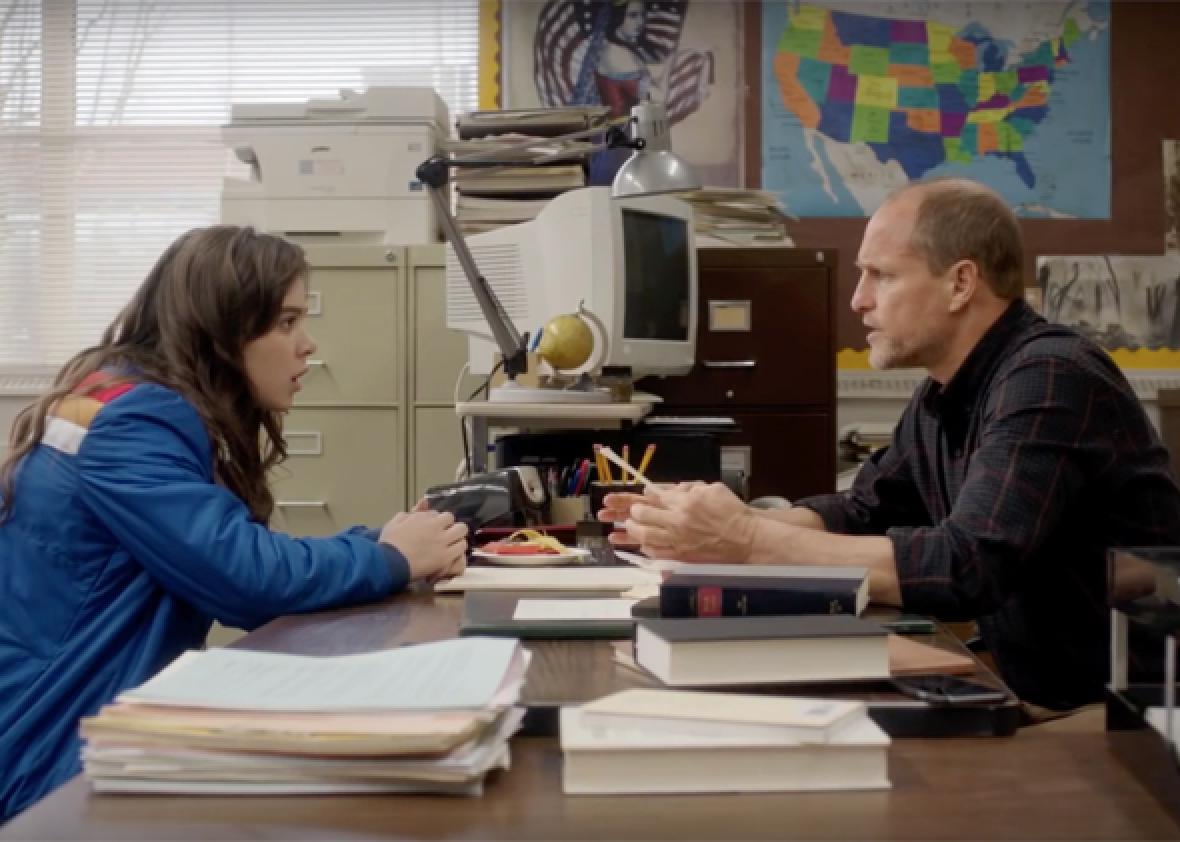
The only thing good in her life, she thinks, is her endlessly supportive and understanding BFF Krista (Haley Lu Richardson), who sympathizes with Nadine about the misery of having no father, a perfect brother, and a crush on an unattainable boy who works at Petland in the mall (Alexander Calvert as Nick). She also has a teacher named Mr. Bruner, played with perfectly dry, understated wit by Woody Harrelson, who knows teenagers well enough to understand that the best way to reassure Nadine is not to try to comfort her. When she trounces into the classroom where he is eating lunch alone to tell him she has to kill herself, he responds by noting mildly that in fact she has just interrupted his own creation of a suicide note. “As some of you know, I have 32 fleeting minutes of happiness per school day during lunch which has been eaten up again and again by the same especially badly dressed student and I finally thought, you know what, I would rather have the dark, empty nothingness.” She thinks she wants everyone to be as fraught as she is. He knows how to strike just the right balance of detachment and sympathy.

So when she tries to cancel a sexually explicit invitation to Nick but accidentally sends it instead, Mr. Bruner is there to take a look and point out that she should be more careful about run-on sentences. The reason she is talking to him about it instead of Krista is that Krista, the single good thing in her life, has committed the ultimate betrayal. She and Darien are in a relationship. Nadine is in such a severe state of collapse that she does not notice that there is a smart, handsome, very nice boy interested in her (Hayden Szeto in a star-making performance as Erwin).

The film itself has that same perceptive sympathy for the agonies of adulthood, allowing us to laugh at Nadine only because we know she’ll be fine — she’s going to grow up and make this movie.

Parents should know that this movie has very explicit and crude language, sexual references, and non-explicit sexual situations, a car accident with a sad (offscreen) death of a parent), and teen drinking.

Family discussion: How did Nadine, Darien, and their mother express their grief differently? Is it easier being the perfect one? What do you do to feel better?

If you like this, try: “Rocket Science,” “Thumbsucker,” and “The Duff”

Related Tags:


Comedy Coming of age Drama Romance School Stories about Teens
Now You See Me 2

Now You See Me 2

Posted on June 9, 2016 at 5:40 pm

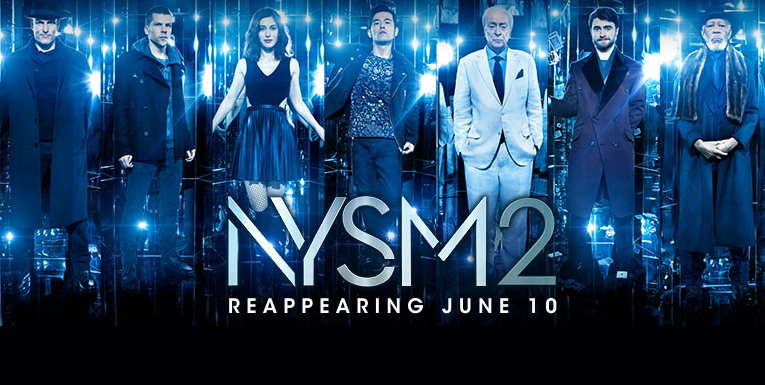
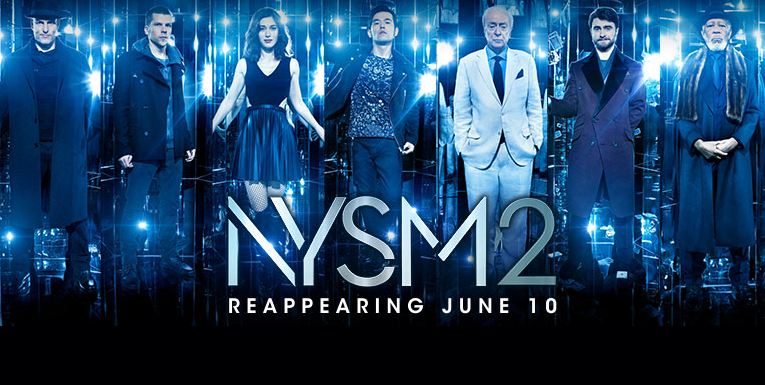
now-you-see-me-2The first “Now You See Me” was a deliciously entertaining heist film with “the Four Horsemen,” a team of magicians, engaged in a diabolically clever combination of misdirection and triple-cons for the purpose of revenge, Robin Hood reparations, and showmanship. We know what that means for part 2 — the Empire strikes back, and it is a popcorn pleasure. The Horsemen stole from billionaire Arthur Tressler (Michael Caine) and framed the magician turned debunker Thaddeus Bradley (Morgan Freeman) so he ended up in prison.

At the end of the last film, the surprise twist revealed FBI agent Dylan Rhodes (Mark Ruffalo) as the brains behind the operation. As this one opens, the FBI, with Deputy Director Natalie Austin (Sanaa Lathan) in charge, does not know and thinks Rhodes is still looking for three of the Horsemen. They believe Jack Wilder, played by Dave Franco, was killed. They’re wrong about both. Rhodes is working with the Horsemen, including Wilder. But there is a new member of the group: Lula (Lizzy Caplan, replacing Isla Fisher). And they immediately run into a snag involving someone who knows a bit about magic in the movies: Daniel Radcliffe as Walter Mabry, a mysterious, mega-wealthy guy who wants the Horsemen to steal something for him. It’s the usual MacGuffin — some sort of computer thing that would give him access to everything/control of everything blah blah, and it’s locked away in a place with the kind of crazy security reserved for heist movies. All the world’s biggest, richest baddies are after it, and so the Horsemen have to find a way to get in there before one of them gets it.

The first movie had sensational performance showpieces. This one is more “Mission: Impossible” (the television series, not the Tom Cruise movies) until the final scene. But it keeps the sly twists coming, using all the magicians’ favorite ruses, from misdirection to an almost-balletic slight of hand. Just like “The Avengers,” it is a lot of fun to see each of the Horsemen use their skills — mentalist Merritt McKinney (Woody Harrelson), lock wizard Wilder, card master Daniel Atlas (Jesse Eisenberg). We learned in the first film that McKinney’s brother stole all his money and disappeared; it turns out he was an identical twin brother, and he shows up, played by Harrelson with hair that looks like that awful perm Mike Brady had in the last season of “The Brady Bunch.”

It has all the twists and reveals and surprises we were hoping for, including one saucy switch that is not about magic, just social conventions that have not caught up to reality, some very old school means of communication, and a touch of movie magic in giving us a glimpse of one character’s past with some CGI that looks a little more realistic than the “work” that has ruined so many Hollywood faces. Director Jon M. Chu (the “Step Up” movies) has a superb sense of space and movement, giving the story exuberance and flair. It’s a fitting encore and I hope we will see them all again in part 3.

Parents should know that this film includes some strong language, and some action-style peril and violence.

Family discussion: Would you want to be selected by The Eye? Which magic trick would you like to be able to master?

If you like this, try: the original film and “The Sting”

Related Tags:


Crime Series/Sequel

The Hunger Games: Mockingjay

Posted on November 20, 2014 at 5:59 pm

B+
Lowest Recommended Age: Middle School
MPAA Rating: Rated PG-13 for intense sequences of violence and action, some disturbing images and thematic material
Profanity: Mild language
Alcohol/ Drugs: None
Violence/ Scariness: Intense peril and violence with hundreds of deaths, grisly scenes, torture
Diversity Issues: None
Date Released to Theaters: November 21, 2014
Date Released to DVD: March 6, 2015
Amazon.com ASIN: B00PYLT0OW
Copyright 2014 Lionsgate

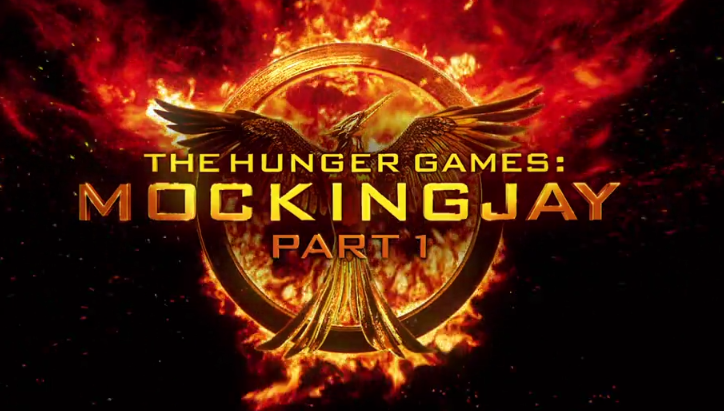
It seems no different at first. While the second in the “Hunger Games” series ended with the surprise last-minute rescue of heroine Katniss Everden (Jennifer Lawrence), and the even bigger surprise that insider Plutarch Heavensbee (Philip Seymour Hoffman) was secretly helping to organize a rebellion against the fascist dictator President Snow (Donald Sutherland), we begin this first half of the final installment with Katniss gripped by anxiety and terror, listening to the voice of someone we cannot see, calling her “Miss Everdeen,” which sounds respectful, even deferential, but still delivering orders. Is this more of the same? Just another version of the world of Panem where the thinnest gloss of rhetoric about ideals and values is used to disguise the vilest abuse, corruption and even genocide.

No, this is District 13, thought to have been exterminated, but in reality literally driven underground, as much as 40 stories down, as they work to find a way to overthrow President Snow’s totalitarian regime. They are led by Alma Coin (a somber Julianne Moore), President of the rebel forces. Coin can be abrupt, but it is a manifestation of urgency and decisiveness, not dictatorship. Snow dresses in spotless white, surrounded by lush white roses, and the capital city of Panem is a riot of garish, decadent colors. District 13 is all in gray, looking a bit like Janet Jackson’s “Revolution” video, evoking its uniformity in dedication to its goal and seriousness of purpose. Coin is not cynical, but she is realistic, constantly establishing priorities, understanding the consequences but willing to pay the price.

Coin and Heavensbee believe Katniss is what they have been waiting for, a symbol who will communicate to the other districts that the time has come for rebellion. She is the Mockingjay, named for the distinctive birds creation through genetic manipulation mating with natural species. Katniss is a figure whose sacrifice and resilience lend her enormous national credibility. She was made into a celebrity by Snow through the original Hunger Games.

Now Coin wants to use that as a weapon against Snow’s regime. They try to make a “propo” (propaganda) video with CGI effects, but realize that Katniss is too honest to be effective unless she is telling the truth. So, they take her to see what has happened to her home community in District 12. It has been reduced to rubble, with an enormous pile of skeletons of those who died there. And so Katniss is able to produce the outrage and resolve Coin’s forces are looking for in the video.

Katniss agrees to serve as symbol, on condition that the rebel forces rescue the Hunger Games competitors who were left behind, and pardon them for whatever they have done. She believes Peeta (Josh Hutcherson) is dead, but then he appears on a televised broadcast hosted by Caesar Flickerman (Stanley Tucci), the game show emcee with the sepulchral smile. Her joy turns to horror as she hears him plead for her to stop any opposition to Snow. Has he been tortured? Does he know something she does not?

That seems more likely as the initial attempts at rebellion result in enormous losses, including the firebombing of a hospital. With support from Haymitch (Woody Harrelson), now reluctantly sober, and Effie (Elizabeth Banks), whose adjustment to live without wigs, make-up, and fashions that would make Lady Gaga say “too much” provides much of the film’s comic relief, Katniss struggles with PTSD and with the painful moral dilemmas of asking others to risk their lives for a cause that may be doomed.

The series is a respectful adaptation of the books, but its real strength is not the writing of Suzanne Collins but the performance of Jennifer Lawrence, who is to the film all that Katniss is to the rebellion and more. Once again, Katniss is the heart of the story and Jennifer Lawrence is the heart of the film.  In a plot that has her devastated and horrified much of the time, she manages to give a performance that is moving but never an atom out of control. Her conviction and presence is what anchors the film and makes the wildest absurdities of the storyline work. While I am not in favor of splitting the book in two just to double the box office, this version skillfully finds a story arc that comes to a satisfying conclusion while making us eager to see what happens next.

Translation: Brutal dictatorship relying on military force, bombing (including bombing unarmed civilians), shooting, executions, hundreds injured and killed, disturbing images including wounded civilians and piles of skeletons, torture (off screen), some teen kisses

Family discussion: What made Katniss the best choice to symbolize the rebellion? Why was it necessary to have a symbol? Why did President Snow refuse to use the word “rebel?”

If you like this, try: the first two “Hunger Games” films and “The Maze Runner”

Related Tags:


Action/Adventure Based on a book DVD/Blu-Ray Pick of the Week Epic/Historical Series/Sequel Stories about Teens
THE MOVIE MOM® is a registered trademark of Nell Minow. Use of the mark without express consent from Nell Minow constitutes trademark infringement and unfair competition in violation of federal and state laws. All material © Nell Minow 1995-2026, all rights reserved, and no use or republication is permitted without explicit permission. This site hosts Nell Minow’s Movie Mom® archive, with material that originally appeared on Yahoo! Movies, Beliefnet, and other sources. Much of her new material can be found at Rogerebert.com, Huffington Post, and WheretoWatch. Her books include The Movie Mom’s Guide to Family Movies and 101 Must-See Movie Moments, and she can be heard each week on radio stations across the country.

Website Designed by Max LaZebnik