Wonder

Wonder

Posted on November 16, 2017 at 5:46 pm

A-
Lowest Recommended Age: 4th - 6th Grade
MPAA Rating: Rated PG for thematic elements including bullying, and some mild language
Profanity: Some schoolyard language
Alcohol/ Drugs: None
Violence/ Scariness: Some bullying and peril
Diversity Issues: A theme of the movie
Date Released to Theaters: November 17, 2017

Copyright 2017 Lionsgate
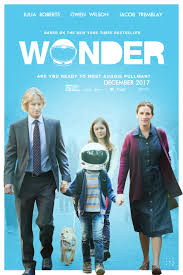
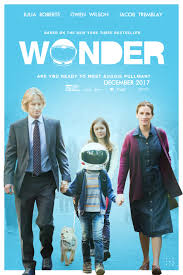
Wonder is more than a book — it is a movement. R.J. Palacio’s book, Wonder, and its follow-ups, including Auggie & Me, have become hugely popular with middle schoolers and their teachers. That is because it is not a story about disability, even though its hero is a 10-year-old with craniofacial deformity who is starting school for the first time after 27 surgeries. It is a story about friendship, family, and above all, kindness. As the 5th grade teacher writes on the blackboard, “When given the choice between being right and being kind, choose kind.”

Auggie (“Room’s” Jacob Tremblay) lives with his loving parents (Julia Roberts and Owen Wilson), his devoted older sister Via (for Olivia) (Izabela Vidovic), and their dog in a comfortable New York brownstone. With medical treatment to help him see and hear, Auggie’s face is misshapen and scarred. School principal Mr. Tushman (Mandy Patinkin) tries to put Auggie at ease by joking about his name (everyone has something people make fun of) and recruiting three students to give him a tour of the building before school starts. Scholarship student and all-around boy next door Jack (Noah Jupe), self-centered but not mean Charlotte (Elle McKinnon), and nice-to-grownups-but-a-bully-to-anyone-who-makes-him-uncomfortable Julian (Bryce Gheisar) show him around, alternating between rude questions and pretending he’s not there.

And then school begins. Palacio has taken the most fraught period of life, when friendships are most vital and the tiniest panic about not fitting in can be devastating and heightens it even more by creating an extreme case. Auggie has already triumphed over his disability, which he barely notices. It is triumphing over middle school that is the near-impossible challenge. Palacio and this film understand that it is this time above all, with so many volcanic physical, emotional, and cognitive changes, it seems so desperately important to fit in, to seem, in the narrowest terms, “normal.” And, unfortunately, because they are still so young, it can seem that the best way to do that is to call attention to the ways that other kids are less normal than they are.

So, anyone who’s ever been in middle school will understand why Auggie comes home after the first day and cuts off his padewan braid, not with a light saber because he’s been made a Jedi knight but with his sister’s scissors because kids made fun of him at school. And that doesn’t even have anything to do with his face.

That comes later. The kids spread a rumor, even though none of them really believe it, that touching Auggie will give you “the plague.” And then Auggie does two things that made Julian lash out even more. He is smart in school. And he becomes friends with Jack and then some of the other kids, too, including Summer, a popular girl who joins Auggie’s table in the cafeteria not because she feels sorry for him but because she correctly senses that he is nicer than the catty girls she had been sitting with.

There are setbacks, as when Auggie’s favorite holiday, Halloween, where he gets to look like everyone else, means that he has a chance to overhear what people say when they think he’s not around.

What elevates this film, though, is its recognition that kindness begins with empathy. By leaving Auggie’s point of view to let us know what is going on with some of the other characters, we understand more about why they behave the way they do. Via tells us what even her parents do not know, that it is difficult to be the sibling of a child with a problem, and that the most difficult part is feeling that there’s no space left for any problems from anyone else. When she is abandoned by her closest friend, we think we understand, until we get to see things from the friend’s perspective as well.

Director Stephen Chbosky (writer/director of another story about young friends, “The Perks of Being a Wallflower” and screenwriter for another movie about a character feared for his looks, “Beauty and the Beast”) has made a wise, warm-hearted film that is a balm for troubled times. It also just happens to have one of the most beautiful performances of the year by Julia Roberts, who wanted to be in the film after she read the book to her children. Look at her face as she sees that Auggie is bringing a friend home for the first time. It contains so much love, relief, surprise, and effort to contain all of that and more it serves as a one-minute master class in screen acting.

“I’m an ordinary kid,” Auggie tells us. “I just don’t look ordinary.” This is a movie that might look ordinary but is a quiet gem of insight and inspiration.

Translation: Story deals with challenges faced by a boy with craniofacial deformity attending school for the first time, bullying, some scuffles, mild schoolyard language

Family discussion: What can you do to choose kindness? How do you know when it is time to be right and when it is time to be kind? Why did Jack make fun of Auggie? Why did Summer sit with Auggie?

If you like this, try: Auggie & Me, the book by Wonder author R.J. Palacio that expands the story
Related Tags:


Based on a book Disabilities and Different Abilities movie review Movies -- format Movies -- Reviews School Stories About Kids
Interview: RJ Palacio and Stephen Chbosky on “Wonder”

Interview: RJ Palacio and Stephen Chbosky on “Wonder”

Posted on November 13, 2017 at 5:26 pm

Copyright 2017 Lionsgate

R.J. Palacio’s book Wonder is more than a best-seller — it is a movement. Middle-schoolers and their families love the story of Auggie, a 10-year-old with facial deformity who for the first time attends school in 5th grade. It is not a story about triumphing over disability; Auggie has more than triumphed when the movie begins. It is instead a heightened exploration of universal themes. In middle school, the moment when people are most acutely aware of differences and most excruciatingly anxious about fitting in, a boy who is very different arrives. The book and the movie it inspired are about family and friendship and, above all, the importance of choosing to be kind. The movie opens November 17, 2017.

In an interview, Palacio and the film’s director, Stephen Chbosky talked about what kindness means to them and why it is so important to include not just Auggie’s point of view but the other characters’ as well.

RJ, as you’ve spoken to kids in schools, what have they told you about the impact that this book has had on their lives and the choices that they make?

RJP: I’ve spoken to probably hundreds of schools at this point and thousands of kids. It’s very gratifying and very moving to hear ten year olds and eleven year olds come up to you and say, “I want to be a better person after reading this book.” You think, “Well, you’re ten years old and you’re probably an amazing person already,” but to hear them say that is so moving. I tend to be an optimist in life and I tend to believe that there is an inherent goodness in most people. Kids to me have this wonderful urgent and earnest willingness to be noble. I think our job as parents and as educators and as teachers is to tap into that inherent wanting to be noble. I don’t know if they would call it nobility but I see it that way.

Most kids just really want to get along. They want to make other people feel better. They’re mischievous sometimes and sometimes, yes, they border into cruelty sometimes just because they’re feeling like they want to be funny or they’re navigating these uncharted waters. They haven’t had a lot of practice at being a fully realized human being yet and then as they’re growing up, when they’re ten or eleven it’s really kind of the first time that they’re actually exploring the power that they have to reach out and be friends with people and what being an enemy means. So they’re discovering all of this and as parents we can guide them a little bit. At that age what’s happening sometimes is that parents tend to step back a little bit and think, “Well, she doesn’t listen to me anymore, she’s twelve years old,’ but my feeling is that they’re still listening at that age. Maybe when they’re sixteen or seventeen they stop listening but at twelve or thirteen they might pretend that they’re not but they’re still listening.

SC: Let me jump in for a second here and add something to that because I think it’s very profound. We all know Lord of the Flies, where kids left on their own become brutal. How many times have you heard an adult say “Kids can be cruel?” Well, kids can also be kind and there is ample proof of both and yet for whatever reason adults on some level like to emphasize how cruel kids can be. I’ll tell you a quick personal story. I have not thought of this in thirty years but I just thought of it right now. When I was in fifth grade we started to work on public speaking in school and so we would have to stand in front of the class. One kid per morning would have to lead the assembly. This girl every time it was her turn she cried uncontrollably because she was so frightened of standing in front of us all. You would think that if kids are cruel (and let’s go with that premise for a second) we would be so mean to this girl. Every month (I’m actually kind of getting choked up remembering this) we would root for her. It didn’t matter who you were. We were all: “Come on Betsy, you can do it this time” and on the last day her voice was quaking but she didn’t cry. I never forgot it…I’m having a moment right now, remembering it. That’s what kindness can do.

The story itself is extremely kind in exploring the perspectives of different characters, including Auggie’s older sister, Via, something you’ve continued, RJ, in a book called Auggie and Me. Why is that important?

RJ: In order to tell Auggie’s story from a 360° point of view, for us to understand the impact that he had on his community, on his friends, on the school, I had to leave his head and I had to go into different perspectives. His sister was the first one that I really wanted to explore. I just figured here is a girl who was fiercely protective of her brother, she’s a good girl but as just a matter of fact she has to be by necessity the one that’s overlooked a little bit in her family. She’s sort of like a self-cleaning oven. She’s self-sufficient. The parents don’t have to spend a lot of time worrying about her. They can spend most of their time worrying about her little brother who actually needs them to worry him. So I thought going to the different perspectives was a really good way of telling Auggie’s story but also having people understand that everybody’s got a story to tell. Everybody has something about ourselves that we can change or that we worry about. I wanted kids to realize that maybe Auggie’s difference is the most obvious but every single character and every single person you meet has something that they think makes them different and each has to carry their own little challenges and little burdens. We just might not be able to see them as clearly.

The story really is about friendship, set in a time when friendships become so vital and so fraught.

SC: We all know that when you’re young your friends become become your family more than in any other time in life. So it amplifies what an act of kindness can mean. When you are a kid you are much more vulnerable and so everything becomes more important and everything sounds a little louder and everything hurts a little deeper and I think that’s what’s so powerful about RJ’s story.

What does kindness mean to you?

RJ: I think of kindness as sort of a compilation of several different words — compassion, empathy, tolerance, love, forgiveness. It’s all of those things mashed up into one word which is kindness. It’s something that makes us human in a way that nothing else, though it is so hard to achieve kindness sometimes. It’s one of the most gratifying things in the world to receive and when you receive kindness from someone you’re that much more predisposed to give kindness to someone else. It’s one of the very few things that can actually spread. It’s infectious and it can grow. We’re living in times where kindness itself is almost becoming politicized and being seen as a sign of weakness when to me it’s a sign of strength. The ability to be kind to those who are not empowered or who are being ostracized or being ridiculed or being bullied takes courage.

The “precept” Auggie’s teacher gives the class quotes Wayne Dyer, who said, “When given the choice between being right or being kind, choose kind.” But sometimes being right is important, too, isn’t it?Absolutely, yes, and it is a fine line. That’s why I always say it takes a lot of courage to be kind because being right is important too but I think it takes a lot of heart be able to discern when it’s really important to just kind of stay true to your gut about what is needed in life.

Given the choice we should all aspire to have both and to win hearts and minds. Whatever it is you do professionally or personally with your family, with your friends or your colleagues we all have the power we all have the capacity to some degree to affect change around us so that the choice doesn’t need to be made.

Julia Roberts is so good in this film. The look on her face when Auggie first has a friend who wants to come over has so many emotions at once. What is it like to direct her?

It’s like being Michael Phelps’ swimming coach. She is so good at what she does and she can convey every emotion at the drop of a dime, she can change her approach on the drop of a dime, too. Any director will tell you there are two performances; one is the one that the audience gets to see because you’re cutting the best moments together and you’re finding the tone and you’re finding the pacing and the music and everything else, and there’s everything else that you that you left out. She never had a bad take, she was generous to her co-stars, she made everybody better (especially me) and I can’t say enough about her as an artist or a person. Every take was perfect no matter how many ways we tried it.

Shorter version originally published on HuffPost.

Related Tags:


Based on a book Directors Directors Interview Writers
Contest: Win a DVD of “Jonah: The Musical”

Contest: Win a DVD of “Jonah: The Musical”

Posted on November 11, 2017 at 6:00 am

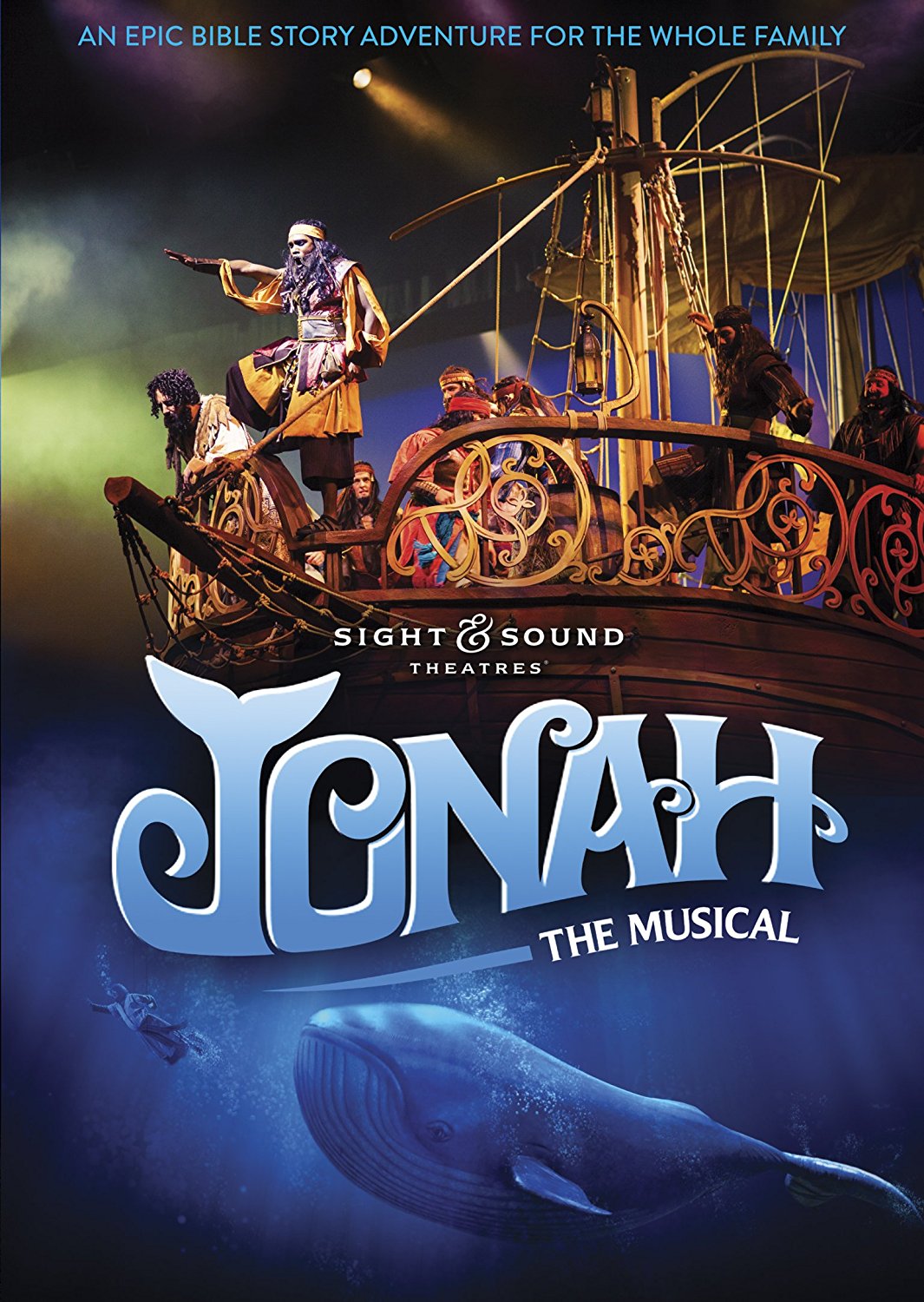
Win a copy of “Jonah: The Musical” on DVD!  This is the adventure of a man who ends up in the belly of a giant fish and has to find his way home, with some lessons about forgiveness, grace, and mercy.

Send me an email at moviemom@moviemom.com with Jonah in the subject line and tell me your favorite body of water. Don’t forget your address! (U.S. addresses only). I’ll pick a winner at random on November 18, 2017. Good luck!


Related Tags:


Based on a book Contests and Giveaways For the Whole Family
Martha Raddatz on National Geographic’s “The Long Road Home”

Martha Raddatz on National Geographic’s “The Long Road Home”

Posted on November 9, 2017 at 4:58 pm

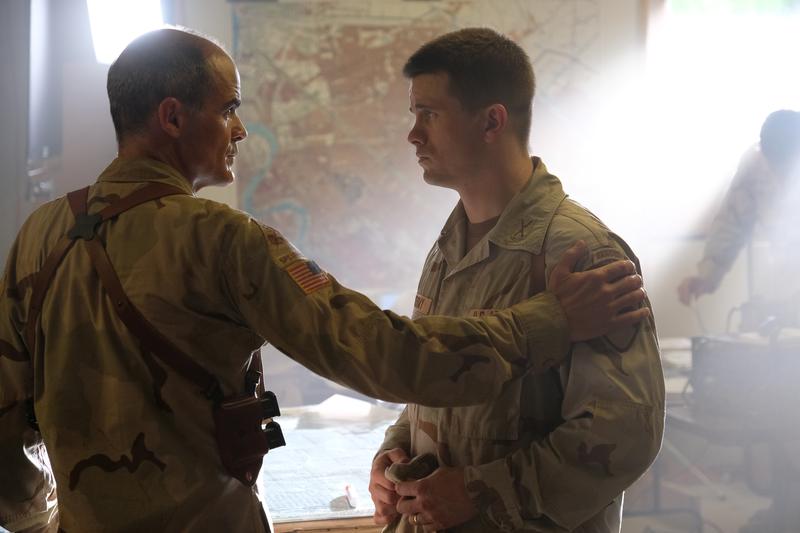
Michael Kelly(L) portrays Lt. Col. Gary Volesky and Jason Ritter(R), Capt. Troy Demony on set of The Long Road Home at U.S. Military post, Fort Hood, Killeen, Texas. (Photo: National Geographic/Van Redin) Ep1

National Geographic’s new series “The Long Road Home” is based on the best-selling book by journalist Martha Raddatz about soldiers sent to Iraq on a peacekeeping mission in 2004 who were ambushed on a day that came to be known as “Black Sunday.” The series is powerful, inspiring, and deeply moving as it lets us into the lives of those who were there and their families. In an interview, Raddatz talked about how she got the story, what she learned, and what she hopes the series, premiering as we prepare to observe Veterans’ Day, will teach us about the people who risk their lives — and give their lives — for our freedom and for each other.

The news footage from Vietnam on the news every night played a significant role in eroding the support for the war. We do not see that kind of coverage of what our troops are doing in Iraq and Afghanistan.

We did in the beginning. It was it was on all the time and take it from me because I was covering it. But it hasn’t been more recently and never in this way, in the way we tell this story about U.S. soldiers and their families and particularly families. It’s a really realistic, really raw, really warts and all, very nuanced look at war, if you can imagine nuanced war, this has got it.

What does nuance mean when you’re talking about war?

These aren’t a bunch of action figures. There is lots of breaking down doors and things like that. But they’re also very distinct people, regular people, real people. These are not Navy SEALs. These are not elite forces. These are soldiers who went over there thinking they were involved in a peacekeeping mission and found themselves ambushed and the other men in the battalion who reached out to rescue them in whatever vehicles they could find. Some of them are still serving on active duty, and I can’t remember a time when a series has portrayed soldiers still on active duty.

Was that an impediment to you in reporting on the story? Were there a lot of restrictions on what the soldiers were allowed to talk about?

They shared everything they possibly could with me. And one of the most remarkable things about this series is that the Army gave it its blessing and cooperated with us. They allowed us to shoot on base and build a 12 acre set with 85 buildings.

I think in so many ways right now Americans are ready to see this. And the Army is ready to see this. The Army is ready to say, “This is what we did and this is how we fought. This is where we went into places where we were totally unprepared for what was to come.” They saw everything before we shot it, including scenes with anti-war protesters. There’s an entire episode about a soldier who became a very outspoken war protester. So that is the kind of eye-opening experience you have with this series.

We see very clearly in the series that this is a war that’s being fought in the streets and in people’s homes.

It’s about as hand to hand combat as you can get. You look each other in the eye. There are some remarkably intimate scenes with soldiers facing down an enemy.

What have you learned about courage through reporting and telling this story?

Sometimes the people who are most courageous are the ones you never expect to be. You cannot predict it. But I also learned that courage is defined in different ways. It’s not always the ways you think. When we walk into a situation sometimes it takes a little while to find the courage to find that leadership or to find that bravery that keeps them going. Everyone finds it in a different way. And again some people don’t. And that’s the kind of broad spectrum you have.

Why was it important for you to talk to the families as well as the soldiers who were directly involved?

It’s the soldiers who told me to go talk to family because they said, “If you think it’s bad for us you should see the families and what they went through and what they have to experience and just not knowing.” The soldiers know what’s happening; they know what’s coming next. Those families just have to wait and their courage and their bravery every day, starting with that day of the ambush and years that follow this unit is I think really eye-opening for people. One of the wives would not drive into the garage behind the house without driving by the front of her house first just to make sure there was not a car up there that was going to notify her of her husband’s death.

Your work has been in television. What could you do in a book and now in a series re-creating the events that you cannot do in television news?

When I first began reporting on the story, we never had was any video. From the descriptions from the soldiers and the survivors of that battle we can see it come to life in the miniseries. It is the first time I’ve seen that come alive.

What is it that you want people to talk about with their families after they watch this show?

I want people to talk about the cost of war and to understand what it means to go to war. I want people to think about their responsibility to be informed and to have a voice to vote to do whatever it is that involves them in those life and death choices because fewer than one percent of our country serves in the military. Ninety nine percent do not. And the very least people who do not serve can do is understand the consequences.

Originally published on HuffPost.

Related Tags:


Based on a book Based on a true story War Writers
THE MOVIE MOM® is a registered trademark of Nell Minow. Use of the mark without express consent from Nell Minow constitutes trademark infringement and unfair competition in violation of federal and state laws. All material © Nell Minow 1995-2026, all rights reserved, and no use or republication is permitted without explicit permission. This site hosts Nell Minow’s Movie Mom® archive, with material that originally appeared on Yahoo! Movies, Beliefnet, and other sources. Much of her new material can be found at Rogerebert.com, Huffington Post, and WheretoWatch. Her books include The Movie Mom’s Guide to Family Movies and 101 Must-See Movie Moments, and she can be heard each week on radio stations across the country.

Website Designed by Max LaZebnik