Misbehaviour

Misbehaviour

Posted on September 24, 2020 at 5:52 pm

B +
Lowest Recommended Age: Middle School
MPAA Rating: Not Rated
Profanity: Some mild language
Alcohol/ Drugs: None
Violence/ Scariness: Scuffles
Diversity Issues: A theme of the movie
Date Released to Theaters: September 25, 2020

Copyright Pathe 2020
Let’s start with a little context. In 1970, when “Misbehaviour” takes place, my high school hosted two events, a father-son dinner with a presentation by our Congressman, later Secretary of Defense Donald Rumsfeld, and a mother-daughter dinner with a presentation by a representative from a cosmetic company with an update on the latest looks and products for sale. No one raised any objections. This was at the very beginning of what was being called the women’s liberation movement. Two years before, protesters staged an event near the Miss America pageant (the urban legend is that they burned bras, but in reality they threw bras, girdles, false eyelashes, and other symbols into a garbage can). “Misbehaviour” (note British spelling) is the story of a 1970 protest, endearingly mild by today’s standards, at the London-based Miss World competition.

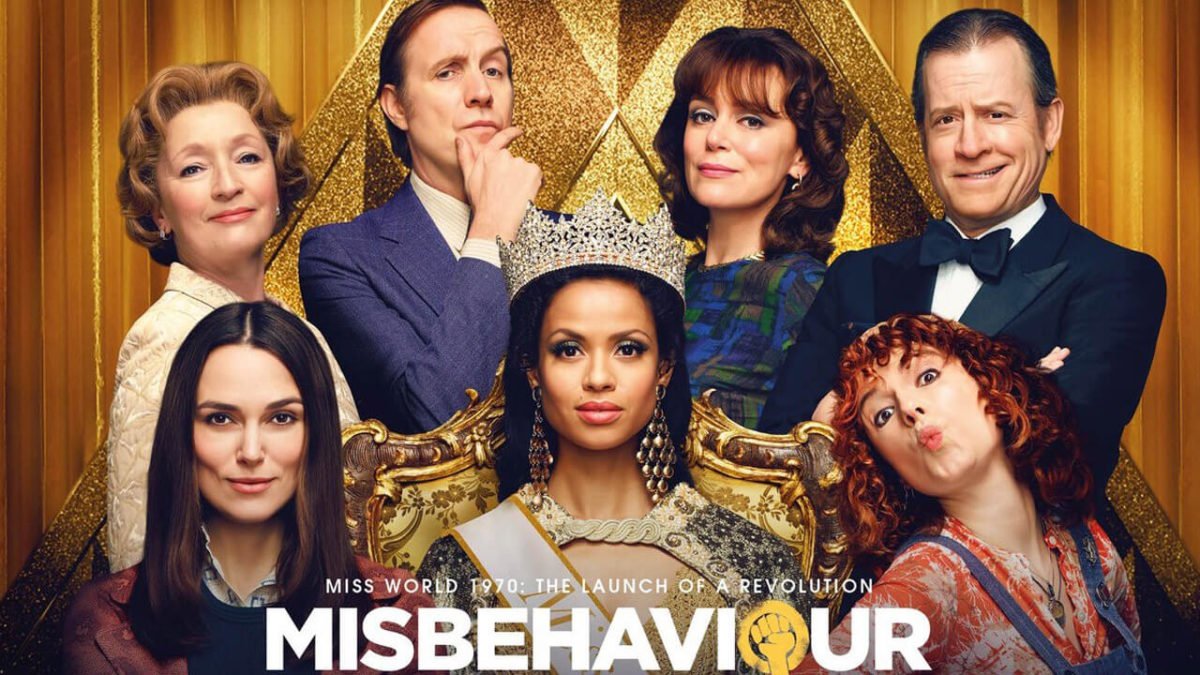
Miss World is the oldest televised international beauty pageant, founded by TV host Eric Morley (Rhys Ifans) and first broadcast in 1959. So it began just as the tumult of the 1960’s was about to happen, and an all-white beauty pageant with a master of ceremonies making jokes like “I care about women’s feelings; I like feeling women” was very shortly going to be something of a target for protests from the increasingly vocal protesters about racial and gender equality. That collision is already the subject of a documentary, “Miss World 1970: Beauty Queens and Bedlam,” and it is now a feature film, with Keira Knightley as a single mother working on a history degree, Jessie Buckley as an activist, and Gugu Mbatha-Raw as a contestant. Also: Greg Kinnear as Bob Hope, the man who made the joke about feeling women.

Production designer Cristina Casali evocatively creates the earth-toned era of the early 1970’s and writers Rebecca Frayn and Gaby Chiappe bring a nuanced and empathetic approach to the story and the real-life characters, heartwarmingly glimpsed with updates over the final credits. Knightley plays Sally Alexander, who explains to a clearly disapproving admissions committee in the film’s opening scenes that she is divorced and has a child but promises that if she is admitted she will be able to keep up with her classes. She believes in women’s rights but her view is to achieve equality by getting “a seat at the table.” Jo Robinson (Buckley) is a radical who spray-paints protest slogans and lives in a commune. She wants more than a seat at the table; she wants to knock it over and stomp it to smithereens.

Change is already underway at the pageant. The threat of protests over yet another white contestant from South Africa, still operating under apartheid, leads Morley to insist on two candidates. So Miss South Africa is the white contestant, and there is a black contestant with the title Miss Africa South. There is another Black contestant as well, Miss Ghana (Mbatha-Raw).

And there is Bob Hope, who accepts the emcee job as he flirts with his new teen-aged secretary, breaking a promise to his wife, Dolores (another exquisitely delicate performance by Lesley Manville). He does more than joke about feeling women, and the last time he hosted the show, he brought the winner back to LA with him.

Sally becomes less moderate as her advisor tells her that her proposal to study women is too “niche” and she sees her young daughter prance around in imitation of the beauty queens. And so she and Jo come up with a plan to disrupt the pageant.

Director Philippa Lowthorpe skillfully balances all of the different stories and themes. In one (apparently fictional) meeting between Sally and the winner of the competition, we see that the images that bothered Sally when her daughter was imitating them could be seen by some young girls in marginalized communities as opening up opportunities for them to think of themselves as beautiful and powerful. On the other hand, this was a competition where the measurements of each contestant were announced as she walked across the stage and they were all lined up in bathing suits and turned around so the audience at home and in the theater could closely examine their rear views. And their rears.

Americans are likely to wonder what might happen in the US if protesters used water pistols. But in England, where even police don’t carry guns, the response is as low-key as the protest. That leaves breathing space for us to consider all of the experiences that went into the protest and what it represented to the women involved, including, in a lovely moment, Dolores Hope.

Oh, and, ten years later, Miss World rebranded itself as “Beauty with a Purpose.”

Parents should know that the subjects of this movie include racism and sexism. There is some mild language and sexist humor, and there are some scuffles during the protest.

Family discussion: Do you watch beauty pageants? How have they changed over the years?

If you like this, try: “Pride,” the true story of gay activists who supported the miner’s strike in Thatcher-era Britain and “Made in Dagenham,” the true story of women striking for equal pay in 1968
Related Tags:


AWFJ Movie of the Week Based on a true story Drama Gender and Diversity Movies -- format Race and Diversity Race and Diversity
Fast Times at Ridgemont High Table Read: Aniston, Pitt, Roberts, Morgan Freeman, and of course Sean Penn

Fast Times at Ridgemont High Table Read: Aniston, Pitt, Roberts, Morgan Freeman, and of course Sean Penn

Posted on September 18, 2020 at 10:14 am

Copyright 2020 Jimmy KImmel
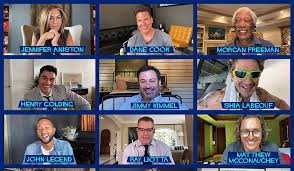
Imagine the 80’s classic “Fast Times at Ridgemont High” starring Oscar winners Morgan Freeman, Brad Pitt, Julia Roberts, John Legend, Matthew McConaughey and, of course, Sean Penn, plus Jennifer Aniston, Henry Golding, Jimmy Kimmel, and Shia LeBoeuf, and some comments from the original author, Cameron Crowe, who based the film on his own experiences as an undercover adult reporter pretending to be a high school kid, and director Amy Heckerling. As host Dane Cook and cast member (Mark “Rat” Ratner) reminds us, some changes have occurred since then so watch it with a sense of how far we’ve come rather than being surprised or offended. As much fun as it is to see these pros take on these roles, by far the best part is watching the actors enjoy each other’s performances, especially Sean Penn watching Shia LeBoeuf take on his iconic role of Spicoli.

And be sure to support Sean Penn’s charity, CORE, which supports COVID-19 testing and relief efforts.

Related Tags:


Cool Stuff
New Oscar Diversity Qualifications Announced

New Oscar Diversity Qualifications Announced

Posted on September 8, 2020 at 8:28 pm

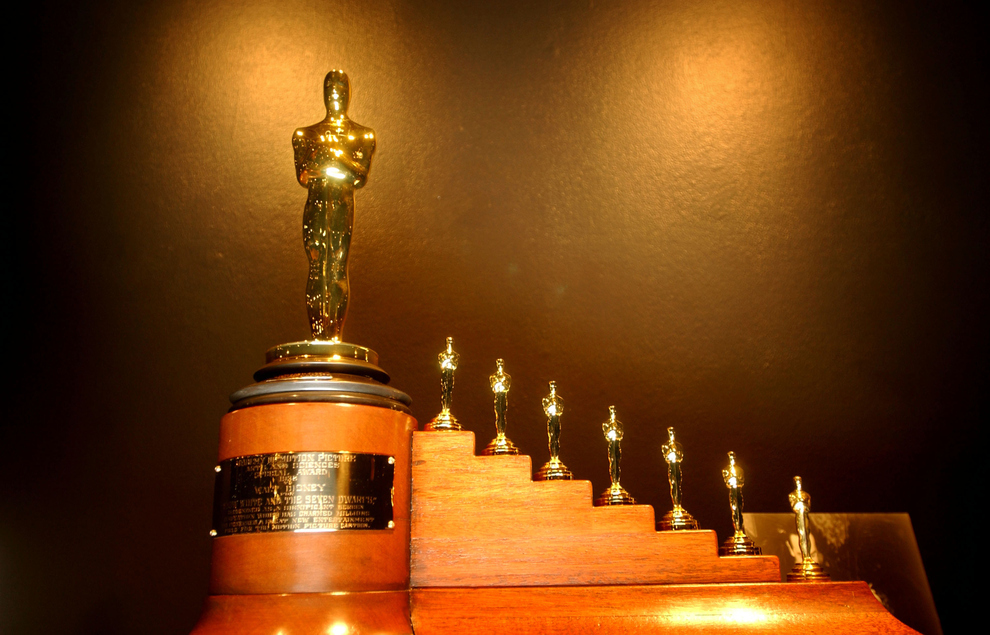
The Academy of Motion Picture Arts and Sciences has announced new diversity requirements for films that want to be eligible for Oscar awards.

Oscar hopefuls will have to meet a new set of inclusive hiring standards in order to qualify for Best Picture, an effort the Academy of Motion Picture Arts and Sciences hopes will lead to greater diversity and representation both onscreen and behind the scenes.

It’s part of the Academy Awards’ ongoing response to criticism over its lingering lack of diverse nominees. The outcry became particularly intense five years ago when the hashtag #OscarsSoWhite forced a reckoning within the organization. Since that time, leadership of the Academy has tried to improve diversity within its voting body and encourage positive discussions within the industry, but this new set of guidelines is aimed at making it mandatory for contenders to be more inclusive of those who have traditionally been marginalized in Hollywood.

The policies will only become mandatory for the 96th Academy Awards in 2024, which will give would-be contenders three years to make sure they meet at least two of the four categories below that are designated A, B, C, and D.

STANDARD A: ON-SCREEN REPRESENTATION, THEMES AND NARRATIVES
To achieve Standard A, the film must meet one of the following criteria:

A1. Lead or significant supporting actors — At least one of the lead actors or significant supporting actors is from an underrepresented racial or ethnic group.

• Asian
• Hispanic/Latinx
• Black/African American
• Indigenous/Native American/Alaskan Native
• Middle Eastern/North African
• Native Hawaiian or other Pacific Islander
• Other underrepresented race or ethnicity

A2. General ensemble cast — At least 30% of all actors in secondary and more minor roles are from at least two of the following underrepresented groups:

• Women
• Racial or ethnic group
• LGBTQ+
• People with cognitive or physical disabilities, or who are deaf or hard of hearing

A3. Main storyline/subject matter — The main storyline(s), theme or narrative of the film is centered on an underrepresented group(s).

• Women
• Racial or ethnic group
• LGBTQ+
• People with cognitive or physical disabilities, or who are deaf or hard of hearing

STANDARD B: CREATIVE LEADERSHIP AND PROJECT TEAM
To achieve Standard B, the film must meet one of the criteria below:

B1. Creative leadership and department heads — At least two of the following creative leadership positions and department heads—Casting Director, Cinematographer, Composer, Costume Designer, Director, Editor, Hairstylist, Makeup Artist, Producer, Production Designer, Set Decorator, Sound, VFX Supervisor, Writer—are from the following underrepresented groups:

• Women
• Racial or ethnic group
• LGBTQ+
• People with cognitive or physical disabilities, or who are deaf or hard of hearing

WATCH

Archaeologist Reviews Archaeology in Movies, from ‘Indiana Jones’ to ‘Lara Croft: Tomb Raider’
More Vanity Fair Videos
MOST POPULAR
Image may contain: Human, Person, Suit, Coat, Clothing, Overcoat, Apparel, Face, and Meghan Markle
Prince Harry and Meghan Markle Are “Relieved and Pleased” to Pay Off the Frogmore Cottage Renovations
BY KATIE NICHOLL
Image may contain: Water, Outdoors, Nature, Sport, Sports, Human, Swimming, Person, and Underwater
On Witness and Respair: A Personal Tragedy Followed by Pandemic
BY JESMYN WARD

The Trump Campaign Is Spending Money Like a Guy Who Bankrupted a Casino (And Five Other Businesses)
BY BESS LEVIN
At least one of those positions must belong to the following underrepresented racial or ethnic group:

• Asian
• Hispanic/Latinx
• Black/African American
• Indigenous/Native American/Alaskan Native
• Middle Eastern/North African
• Native Hawaiian or other Pacific Islander
• Other underrepresented race or ethnicity

B2. Other key roles — At least six other crew/team and technical positions (excluding Production Assistants) are from an underrepresented racial or ethnic group. These positions include but are not limited to First AD, Gaffer, Script Supervisor, etc.

B3. Overall crew composition — At least 30% of the film’s crew is from the following underrepresented groups:

• Women
• Racial or ethnic group
• LGBTQ+
• People with cognitive or physical disabilities, or who are deaf or hard of hearing

STANDARD C: INDUSTRY ACCESS AND OPPORTUNITIES
To achieve Standard C, the film must meet both criteria below:

C1. Paid apprenticeship and internship opportunities — The film’s distribution or financing company has paid apprenticeships or internships that are from the following underrepresented groups and satisfy the criteria below:

• Women
• Racial or ethnic group
• LGBTQ+
• People with cognitive or physical disabilities, or who are deaf or hard of hearing

The major studios/distributors are required to have substantive, ongoing paid apprenticeships/internships inclusive of underrepresented groups (must also include racial or ethnic groups) in most of the following departments: production/development, physical production, post-production, music, VFX, acquisitions, business affairs, distribution, marketing and publicity.

The mini-major or independent studios/distributors must have a minimum of two apprentices/interns from the above underrepresented groups (at least one from an underrepresented racial or ethnic group) in at least one of the following departments: production/development, physical production, post-production, music, VFX, acquisitions, business affairs, distribution, marketing and publicity.

C2. Training opportunities and skills development (crew) — The film’s production, distribution and/or financing company offers training and/or work opportunities for below-the-line skill development to people from the following underrepresented groups:

• Women
• Racial or ethnic group
• LGBTQ+
• People with cognitive or physical disabilities, or who are deaf or hard of hearing

STANDARD D: AUDIENCE DEVELOPMENT
To achieve Standard D, the film must meet the criterion below:

D1. Representation in marketing, publicity, and distribution

The studio and/or film company has multiple in-house senior executives from among the following underrepresented groups (must include individuals from underrepresented racial or ethnic groups) on their marketing, publicity, and/or distribution teams.

Related Tags:


Awards Disabilities and Different Abilities Gender and Diversity Race and Diversity

Mark Harris on What He Learned from Re-Watching Old Cop Shows

Posted on September 8, 2020 at 12:01 pm

One of my favorite cultural critics, Mark Harris, has an uncharacteristically personal take on the cop shows he watched, some as a way to connect to his father, when he was growing up, from “Adam-12” to “The Mod Squad” to “Kojak.” He talks about his own experience and perspective as well as what, looking at them now, he sees about the way law enforcement has been portrayed in the media and how it has shaped our ideas.  It’s one of the most illuminating pieces of cultural criticism of the year.

And then, at night, the TV would go on and I would be transfixed by the cops I saw there, the men who seized a piece of my consciousness when it was at its most impressionable, captured my imagination, and made me believe in their effectiveness….I needed a better connection to my father than I had, and the one I found was Adam-12, a series that was, in a way, designed with almost insidious perfection as My First Police Show — a smooth transition from kids’ TV into the grown-up world. For one thing, it was only 30 minutes; for another, that half-hour was usually divided among two or three bite-size, easy-to-follow, often amazingly uneventful stories of two white cops on the beat in Los Angeles (a city as exotic as Mars to a child who had never been west of New Jersey)….

In an era when all TV shows have age-suitability ratings and content guides, the vigor with which adult cop shows of the 1970s were marketed to children seems shocking. But in fact, immense energy was invested in embedding those series in the collective consciousness of children. Dell published 15-cent Mod Squad comic books, and Topps sold Mod Squad chewing gum. You could get a wheel of Hawaii Five-0 Viewmaster slides and click through color pictures of unsmiling, black-suited Steve McGarrett arresting Honolulu’s miscreants, or buy Milton Bradley board games based on Columbo, Starsky & Hutch, or Kojak (“Be a part of thrilling police action on the city streets”), which allowed young players to use informants to track down a suspect hiding in a building. I coveted the Adam-12 lunchbox, which had an illustration of Malloy and Reed helping a little boy on one side and on the other the two of them crouching with their pistols drawn, ready to fire on an unseen suspect. The images were two halves of the same coin.

The Mod Squad was largely goodhearted, but in a way that made clear that the parameters of what constitutes a good heart were defined entirely by its white writers and producers. If the show were on now, it would be in sympathy with the Black Lives Matter protests, but it would single out those who lit fires and threw bricks as people who don’t truly believe that Black lives matter, and it would definitely not endorse defunding the police, because without the police, who would be able to explain all of this to the young people? Cops knew everything, could solve everything, could protect everyone … if you would just let them do their work.

Not all cops” was the baseline ethic of shows like Kojak; they would occasionally critique a policeman, but not policing. These series were “knowing,” they were savvy, and their cynicism seemed to spread in all directions at once. The vibe was, We’re not gonna pretend that some criminals aren’t Black, and we’re not gonna pretend that some cops aren’t racist, and most of all, we’re not gonna pretend that this is a nice place to live or that anything about it can be fixed.

Highly recommended.

Related Tags:


Critics GLBTQ and Diversity Race and Diversity Television Understanding Media and Pop Culture

Labor Day 2020: Thanks to Those Who Work

Posted on September 7, 2020 at 8:00 am

Today we pay tribute to workers, especially those who worked for better conditions for everyone.

Sally Field won an Oscar for “Norma Rae,” a real-life story about a courageous woman who helped mill workers form a union. It was inspired by Crystal Lee Sutton, a courageous advocate for workers’ rights.

Doris Day plays a union worker who falls for a new guy in management but doesn’t lose sight of the seven and a half cent raise the workers are bargaining for in the rollicking musical, “The Pajama Game.”

John Sayles’ “Matewan” tells the story of mine workers fighting for safer conditions.

https://www.youtube.com/watch?v=qwEMIvDEFy4

“Harlan County USA” is a documentary about a strike by mine workers.

“Bread and Roses” is based on the real-life story of a strike by undocumented janitorial workers, with Adrian Brody as their lawyer.

https://www.youtube.com/watch?v=IrDpd4sCswY

“Salt of the Earth” was inspired by an actual miners’ strike against the Empire Zinc Co. and the cast includes real-life miners who were involved in the strike

Related Tags:


For Your Netflix Queue Holidays Lists
THE MOVIE MOM® is a registered trademark of Nell Minow. Use of the mark without express consent from Nell Minow constitutes trademark infringement and unfair competition in violation of federal and state laws. All material © Nell Minow 1995-2026, all rights reserved, and no use or republication is permitted without explicit permission. This site hosts Nell Minow’s Movie Mom® archive, with material that originally appeared on Yahoo! Movies, Beliefnet, and other sources. Much of her new material can be found at Rogerebert.com, Huffington Post, and WheretoWatch. Her books include The Movie Mom’s Guide to Family Movies and 101 Must-See Movie Moments, and she can be heard each week on radio stations across the country.

Website Designed by Max LaZebnik