More movies for families to enjoy at home together. This week, some great summer movies!
The Endless Summer and The Endless Summer II The classic 1966 documentary about surfing and the 2003 update are both laid-back pleasures, gorgeous beaches, rolling waves, and balance in every sense of the word. You’ll even meet the real-life Gidget. (Also try: Step Into Liquid and Riding Giants)
Gidget: Speaking of Gidget, here’s the movie that made her a sensation, with Sandra Dee as the “girl midget” who shows the boys on the beach that she can rock a surfboard. Followed by “Gidget Goes Hawaiian” and “Gidget Goes to Rome” and the Sally Field television series.
DogTown and Z Boys: This documentary (much better than the feature film it inspired), is a rare look at a history-changing moment. A bunch of kids left to themselves in a summer drought when pools were all drained turned the sleepy world of skateboarding upside down, creating not just crazy tricks but a whole new world of extreme sports.
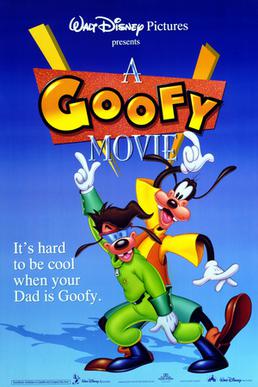
A Goofy Movie Let’s face it. All kids think their parents are goofy. But Max’s dad is the real Goofy. And when they take a cross-country car trip together (ah, remember those?) you can imagine, they get into some goofy situations and some heartwarming ones as well.
The Inkwell More mature audiences will appreciate this story about a sweet teenager visiting Martha’s Vinyard with his family. Larenz Tate and Jada Pinkett Smith are both outstanding.
The Flamingo Kid: This is one of my very favorites. Matt Dillon stars as a kid from a lower-class family who gets a job at a posh country club. Matt Dillon and Richard Crenna are terrific.
The Parent Trap: Two girls show up at summer camp and discover they are identical twins separated when their parents divorced. Both the original with Hayley Mills and the remake with Lindsay Lohan are a lot of fun.
Roll Bounce: Another one of my favorites, this is the story of a group of kids from the poor side of town who decide to compete in a roller skate competition. Great story, great skating, great soundtrack.
The Sandlot: You can almost feel the sunshine in this beloved family classic about a bunch of kids in the neighborhood who play baseball.
The Way Way Back: A teenager and his mom visit her mean boyfriend’s summer home, and the boy finds friends at the local amusement park. Sam Rockwell has one of his best roles as a slacker with a kind heart.
Mr. Morricone was a boldly adventurous composer who saw himself as a full partner in telling stories on-screen. He thrived with directors known for their visual excess, including Tarantino, Sergio Leone and Brian De Palma.
But Mr. Morricone, whose scores could be gritty, unsettling or exquisitely gentle, was impossible to categorize. His portfolio seemed to span every conceivable mainstream genre, including comedy, drama, romance, horror, political satire and historical epic.
Some examples:
And to understand better the embrace of film and score, see this very knowledgeable essay by Bilge Ebiri about the best pieces as they were used within the context of individual scenes in the films themselves. For example:
Though much of A Fistful of Dollars’ score is quite spare, for the final showdown, Morricone gives us something altogether more melodic and traditional. This ornate trumpet dirge popped up earlier in the film as well, but here, it fits perfectly — as the clouds of dynamite smoke and dust blow away to reveal Clint Eastwood’s character, seemingly back from the dead to exact retribution on Ramon Rojo and his gang. This has become established as one of Morricone’s signature pieces, which is somewhat ironic, as it’s also an homage to Dimitri Tiomkin’s score for Howard Hawks’s John Wayne Western Rio Bravo.
Morricone was a giant in the history of film. May his memory be a blessing.
A hypnotic thriller about a law firm’s “fixer” realizing that the agricultural company he’s defending is involved in a murderous conspiracy, Tony Gilroy’s “Michael Clayton” used George Clooney’s wounded eyes, Tom Wilkinson’s frenzied soliloquies, and Merritt Wever’s soft-spoken melancholy to wonder how much commercial corruption we could fall victim to, and how much blatant immorality we could tolerate. Lauded at the time for its unrelenting tension, its steady pacing, and its sharp script, “Michael Clayton” was a critical darling, topping numerous critics’ best-of lists and netting seven Academy Award nominations, including a win for Tilda Swinton for Best Supporting Actress.
In the years since, though, as various other lauded films from 2007 have been reassessed and reconsidered, “Michael Clayton” has faded from memory. It’s an undeserved dynamic, given that the film has so much to say about how skewed the relationship between American corporations and the people they’re supposed to serve really is—an imbalance that remains as drastic today as it was back in 2007.
The corporate world that “Michael Clayton” depicts is flimsily held together by favors and handshakes, rife with insults and threats. The workers trapped within it are beholden to a class structure that discredits and undermines them, overwhelms them with paranoia, and drowns them in debt. “What kind of people are you?” someone asks Clayton, aghast at the backstabbing and the deceit with which Clayton fills his days. How to fight against that, at the sacrifice of human lives for business interests? By playing dirty.
I had the privilege of writing a tribute to one of my all-time favorites, Carl Reiner for rogerebert.com. He was a legend in every possible form of entertainment, as a writer, actor, showrunner, director, and resident wit on social media. From his time in the legendary writers’ room of “Your Show of Shows” alongside Neil Simon, Larry Gelbart, Woody Allen, and his lifetime best friend Mel Brooks to his 2020 appearance in Pixar’s “Forky Asks a Question” series, his mentorship to newcomers Mary Tyler Moore, Steve Martin, Dick Van Dyke, and many others, his affectionate skewering of popular culture, he was a major force in the culture of more than half a century.
I love this affectionate remembrance from TCM.
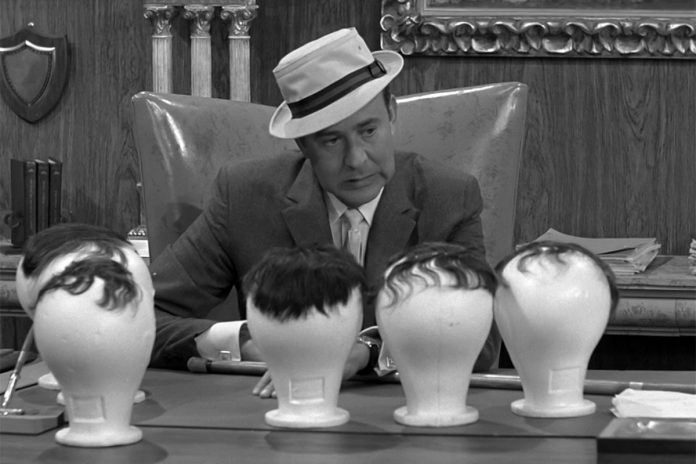
Here is one of my favorite moments from what Reiner said was his best creation, “The Dick Van Dyke Show.”