Seeing the Augmented Reality Past and Future at Madame Tussaud’s in Washington DC

Seeing the Augmented Reality Past and Future at Madame Tussaud’s in Washington DC

Posted on October 30, 2019 at 10:43 am

In the 18th century, there was no Google Images. If you wanted to know what a famous person like Voltaire or Napoleon looked like, you went to the exhibitions of Madame Marie Tussaud to see her beautifully modeled wax sculptures. That was the most advanced technology of the time for making audiences feel that they were in the presence of the great names of the day.

Madame Tussaud’s wax figures are now on display around the world. Even though we can instantly find pictures of historical figures and our favorite celebrities on our phones, there is nothing like the experience of standing next to a near-perfect 3D version of George Washington, Denzel Washington, or Taylor Swift and taking a selfie.
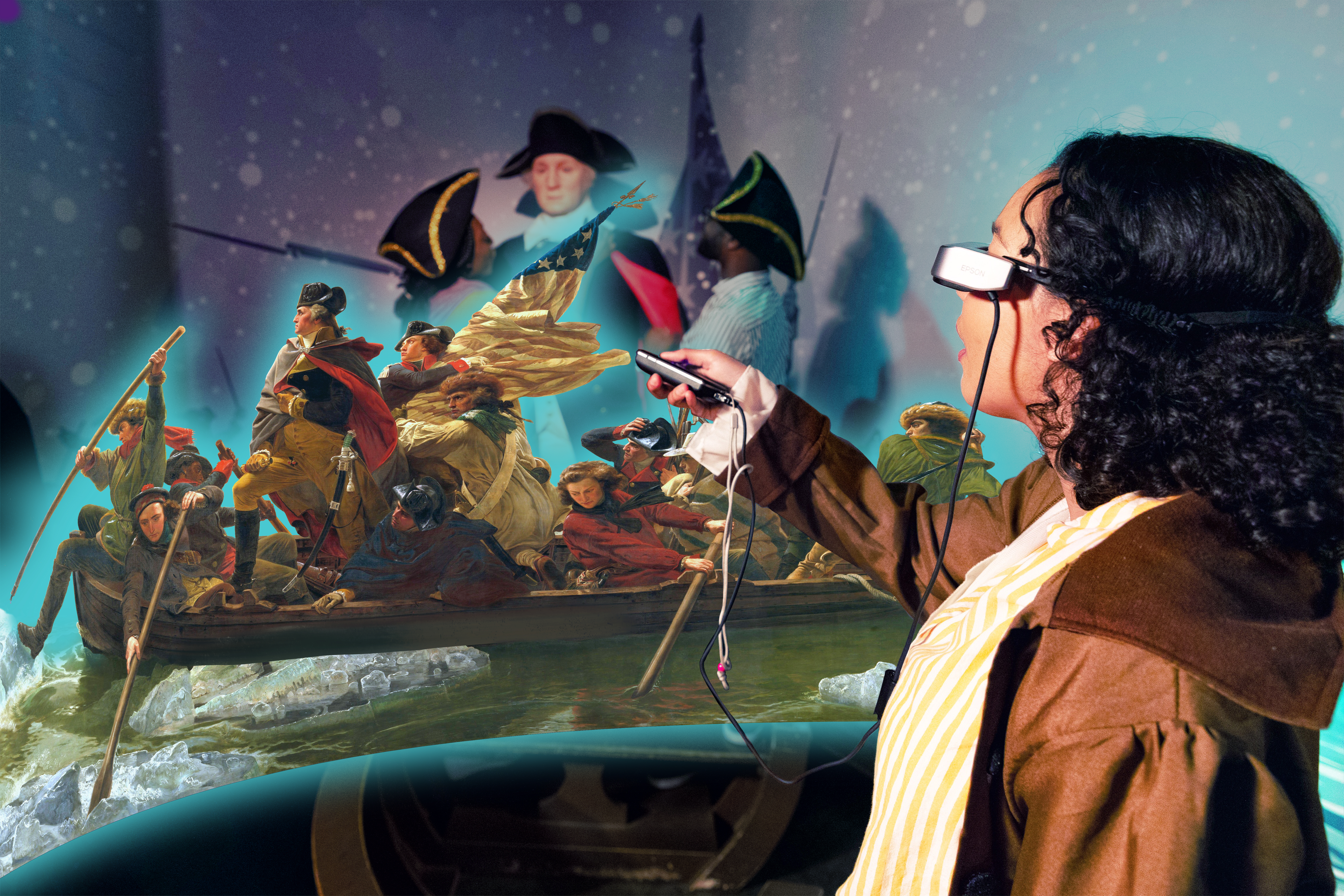
And now, in the tradition of Madame herself, the latest technology is available at the Madame Tussaud’s location in Washington DC to give visitors an even more immersive augmented reality experience through glasses and ear buds. The audio will be available in English, Spanish, and Mandarin and the glasses fit comfortably over visitors’ prescription glasses “unless you are Elton John in the 1970’s,” says Greg Werkheiser, CEO of Richmond, Virginia-based ARTGlass, which worked with Madame Tussaud’s on the content of the platform.

He also pointed out that unlike Virtual Reality, which is enclosed so that everything you see is within the program, with augmented reality “you don’t have to sacrifice real world experience.” You will see what is around you at the same time as the sounds and images of the augmented reality experience. With the glasses, “you don’t have to scan or push.” It is fully immersive, intuitive, and interactive, bringing the exhibits to life.

Triggered by facial recognition software, the glasses (included in the regular price of admission) bring up audio and visual enhancements to the character on display, led by Madame Tussaud (potrayed by an actress in costume) herself. So, standing before Thomas Jefferson might bring up a brief discussion of the second President’s Monticello home in Virginia, which appears on the nickel. In the Watergate section, visitors will be challenged to find the recording bug in the room. The hall of 1920’s and 30’s figures brings up a flapper and a man wearing a barrel who lost everything in the 1929 stock market crash. In the disco era display, you can select a dance lesson and try out a few fancy steps. There is a stirring glimpse of the Reverend Dr. Martin Luther King’s “I have a dream” speech. The most powerful augmented reality moment invites visitors to take a bus seat next to the figure of Rosa Parks. An angry man then appears via the glasses, telling you to give up the seat or he will call the police.

Visitors can adjust the experience by electing to see and hear more, so it is interactive as well as immersive. ARTGlass has created experiences in European museums and historic sites including the Leaning Tower of Pisa and George Washington’s home, Mount Vernon. Here they worked closely with Madame Tussaud’s staff to make the augmented reality consistent with the attraction’s unique mix of history, culture, and fun.

(NOTE: My thanks to Mira Singer for her assistance in preparing this report.)
Related Tags:


Cool Stuff

Netflix Thinks You can Speed-Read a Movie — Filmmakers Do Not Agree

Posted on October 29, 2019 at 10:59 am

Podcast listeners sometimes use the option to speed up the audio to get the information more quickly. Now Netflix is trying the same thing with video. Entertainment Weekly reports:

What if you could watch every episode of Breaking Bad and Stranger Things 50 percent faster?

That’s a feature that Netflix is quietly testing, and it’s quickly drawn a big backlash from Hollywood creatives.
First noted by Android Police, savvy mobile users of the streaming service spotted a new feature on the Netflix Android app that allowed subscribers to speed up (or slow down) playback without muting the volume (to playback speeds 0.5x, 0.75x, 1.0x, 1.25x or 1.5x, respectively). The feature is not unlike what most podcast and audiobook apps already have and is used by some listeners to consume content more quickly (or, in some cases, to slow it down if they have a difficult time understanding it).

The first-blush response from industry creatives, however, was not good. Turns out filmmakers don’t like the idea of viewers watching their painstakingly crafted work on Chimpmunks mode.

Related Tags:


Understanding Media and Pop Culture VOD and Streaming
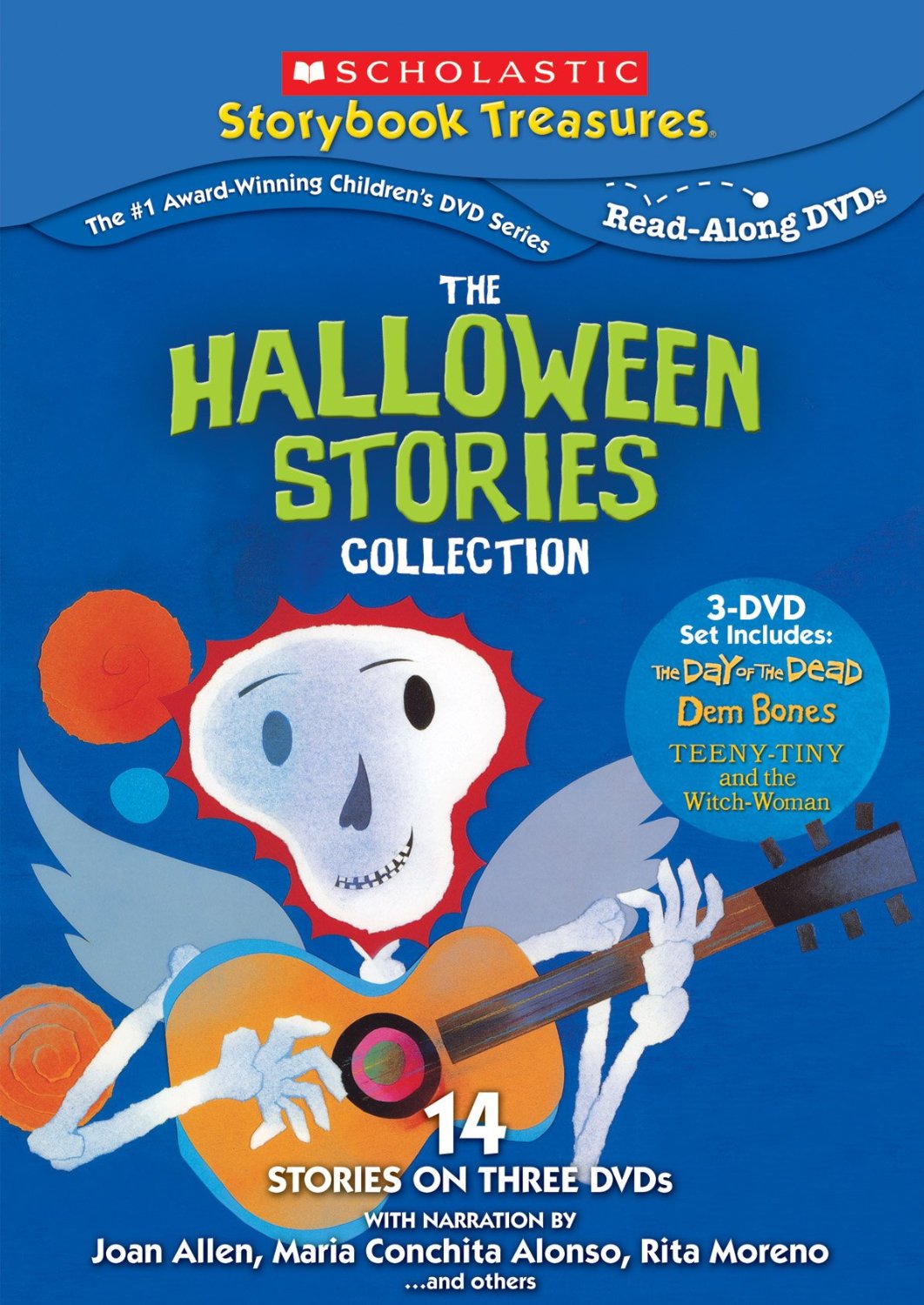
Movies for Families to Share on Halloween

Movies for Families to Share on Halloween

Posted on October 26, 2019 at 8:00 am

Halloween gives kids a thrilling opportunity to act out their dreams and pretend to be characters with great power. But it can also be scary and even overwhelming for the littlest trick-or-treaters. An introduction to the holiday with videos from trusted friends can help make them feel comfortable and excited about even the spookier aspects of the holiday.

Kids ages 3-5 will enjoy Barney’s Halloween Party, with a visit to the pumpkin farm, some ideas for Halloween party games and for making Halloween decorations at home, and some safety tips for trick-or-treating at night. They will also get a kick out of Richard Scarry’s The First Halloween Ever, which is Scarry, but not at all scary! Curious George: A Halloween Boo Fest has the beloved little monkey investigating the Legend of “No Noggin.” Disney characters celebrate Halloween in Mickey Mouse Clubhouse – Mickey’s Treat.

Witches in Stitches is about witches who find it very funny when they turn their sister into a jack o’lantern. And speaking of jack o’lanterns, Spookley the Square Pumpkin is sort of the Rudolph the Red-Nosed Reindeer of pumpkins. The round pumpkins make fun of him for being different until a big storm comes and his unusual shape turns out to have some benefits.

Kids from 7-11 will enjoy the classic It’s the Great Pumpkin, Charlie Brown and the silly fun of What’s New Scooby-Doo: Halloween Boos and Clues. Try The Worst Witch movie and series, about a young witch in training who keeps getting everything wrong. School-age kids will also enjoy The Halloween Tree, an animated version of a story by science fiction author Ray Bradbury about four kids who are trying to save the life of their friend. Leonard Nimoy (Mr. Spock on the original “Star Trek”) provides the voice of the mysterious resident of a haunted house, who explains the origins of Halloween and challenges them to think about how they can help their sick friend. The loyalty and courage of the kids is very touching. Debbie Reynolds plays a witch who takes her grandchildren on a Halloween adventure in the Disney Channel classic in Halloweentown.  Recent favorites include The House with a Clock in Its Walls and Goosebumps.

Older children will appreciate The Witches, based on the popular book by Roald Dahl and Hocus Pocus, with children battling three witches played by Bette Midler, Sarah Jessica Parker, and Kathy Najimy. And of course there is the deliciously ghoulish double feature Addams Family and Addams Family Values based on the cartoons by Charles Addams. Episodes of the classic old television show are online and are still better than the new animated film.   Beetlejuice is a classic — with a nice 20th anniversary re-release DVD, and soon to be a Broadway musical.

LAIKA’s ParaNorman and Monster House, should become a  Halloween tradition. Frankenweenie,  Igor, and the Hotel Transylvania series are also a lot of fun.

The Nightmare Before Christmas has gorgeous music from Danny Elfman and stunningly imaginative visuals from Tim Burton in a story about a Halloween character who wonders what it would be like to be part of a happy holiday like Christmas. And don’t forget old classics like The Cat and the Canary (a classic of horror/comedy) and the omnibus ghost story films Dead of Night and The House that Dripped Blood.

Happy Halloween!

Related Tags:


Holidays Lists

New on PBS: The Retro Report Illuminates Today’s Stories With Yesterday’s Headlines

Posted on October 23, 2019 at 11:01 am

Retro Report makes sense of the present by revealing the past. Join journalists Celeste Headlee and Masud Olufani as they connect the present to the past through four distinct and varied stories, and New Yorker humorist Andy Borowitz adds his signature wit.


Related Tags:


Television
Parents Television Council: Shocking Results of New Study on TV Content Ratings

Parents Television Council: Shocking Results of New Study on TV Content Ratings

Posted on October 15, 2019 at 4:07 pm

Copyright Stylus 2014
It isn’t shocking to learn that television has become less and less child-friendly over the years. Anyone who has ever turned on a set knows that. What is shocking is how little has been done to give parents the information they need to protect their children from what they don’t want them to see. As my dad, who has been fighting for better television, especially for children, since he was Chairman of the FCC 1961-63 says, we spend a lot of time making sure our children know not to talk to strange and possibly dangerous people and yet we invite strange and dangerous content into our living rooms, kitchens, and, increasingly, unsupervised bedrooms, when we let them watch television. His book, Abandoned in the Wasteland, documented this in detail.

Today, the Parents Television Council has released a new report called A Decade of Deceit with some very disturbing findings that every parent should think about carefully. For example:

We found that on shows rated TV-PG, there was a 28% increase in violence; and a 44% increase in profanity over a ten-year period. There was also a more than twice as much violence on shows rated TV-14 in the 2017-18 television season than in the 2007-08 season, both in per-episode averages and in absolute terms.

There were no G-rated programs on Fox, CW, or ABC (even though ABC is owned by Disney) in any of the “sweeps” periods, in either 2007-2008 or 2017-2018. The overall number of G-rated shows in 2017-2018 was almost identical to that a decade earlier: five or fewer. Some “sweeps” periods contained no G-rated programming at all.

Networks are packing substantially more profanity and violence into youth-rated shows than they did a decade ago; but that increase in adult-themed content has not affected the age-based ratings the networks apply. On shows rated TV-PG, there was a 28% increase in violence; and a 44% increase in profanity over a ten-year period.

Almost 90% said that they have never used the V-chip or parental controls to block programs, and an incredible 92% couldn’t explain what the industry’s D, L, S and V content descriptors stand for. This clearly demonstrates that parents WANT an effective and trustworthy content ratings system…but they don’t trust and don’t understand the one that exists now – and has existed for over 20 years. A 2014 poll in Costco Connection Magazine found an astonishing 97% of readers agreed that we should rethink the rating system for television and film. In fact, the only public opinion polls that show support for or satisfaction with the existing ratings system are those paid for by the industry.

Most astonishing is that there have been no changes to the rating system — in which the television network employees rate their own shows with no real oversight by those with expertise in child development — has not changed at all in 20 years, despite the fact that this period has had significant changes in media, technology, and culture.

The report concludes:

In a letter to the PTC dated June 3, 2019 – and which was sent just a few weeks after the FCC delivered its report to Congress – Michael Powell, President & CEO of the NCTA (The Internet and Television Association) and current chairman of the TVOMB stated, “The Monitoring Board shares your goal of ensuring that the TV ratings system remains a source of accurate and helpful information, and we are deeply committed to continuing to provide parents with the necessary resources to enable them to make informed choices about TV viewing in their homes.”

It sounds good; but this assertion is simply not true. Despite two decades of parental concerns about the TV content ratings system, the entertainment industry has consistently defied public calls for reform. There have been promises of improvement, but no improvement, as this report demonstrates.

We strongly support the PTC’s recommendations:

Ratings Accuracy
A symposium of pediatricians, children’s mental health experts, and child/family advocates should be convened to review the definitions of each age-based content rating (TV-Y7, TV-G, TV-14, et cetera) in order to ensure that each rating category definition accurately and effectively reflects contemporary knowledge. International best practices should be considered and incorporated into this review.

Because the entertainment industry stands to benefit financially when content is inaccurately rated for younger audiences, to avoid any potential conflict of interest, TVOMB industry members should be permitted to offer their opinion, but not to alter the outcome of this independent review of the rating definitions and their application.

Accessibility
Every exhibitor and distributor should commit to airing a minimum number of public service announcements about the content ratings system. Most parents have never heard of TVOMB, and most have no idea it is their obligation to complain to TVOMB about a rating that they may find to be inaccurate.

Public service announcements about the TV content ratings system should provide contact information and urge parents to communicate with TVOMB regarding any questions or concerns they might have. The mere existence of a TVOMB website and phone number provides absolutely zero value without public awareness.

Every effort should be made by TVOMB to bring more digital distribution platforms to the table. This would include the major independent players in the digital entertainment arena (e.g. Netflix, Amazon Prime, Hulu, YouTube, et cetera) as well as those that are owned or controlled by TVOMB members (CBS All Access, Disney+, Pluto TV, and others).

Transparency
TVOMB should expand its member composition to create a more balanced weighting of industry, health experts and parental groups.

Entertainment industry “front groups” which currently hold a number of the family advocate seats should be removed.
Formal terms, and term limits, should be applied to Board members, to ensure that fresh perspectives are represented.
Board member qualifications should be provided to the public.

Meetings should be regularly scheduled and announced to the public.

Meetings should be open to the public and to the press.

How to file a complaint about a program’s rating, and the TVOMB’s subsequent adjudication process, should be clearly explained.

It is time for the TV content ratings system to reflect the realities of today’s entertainment media technologies and cultural landscape. Bold, positive and comprehensive improvements to a 22-year old system are needed to bring it into the 21st century.

Related Tags:


Parenting Television
THE MOVIE MOM® is a registered trademark of Nell Minow. Use of the mark without express consent from Nell Minow constitutes trademark infringement and unfair competition in violation of federal and state laws. All material © Nell Minow 1995-2026, all rights reserved, and no use or republication is permitted without explicit permission. This site hosts Nell Minow’s Movie Mom® archive, with material that originally appeared on Yahoo! Movies, Beliefnet, and other sources. Much of her new material can be found at Rogerebert.com, Huffington Post, and WheretoWatch. Her books include The Movie Mom’s Guide to Family Movies and 101 Must-See Movie Moments, and she can be heard each week on radio stations across the country.

Website Designed by Max LaZebnik