Interview: Tom Shadyac of ‘I Am’

Interview: Tom Shadyac of ‘I Am’

Posted on March 30, 2011 at 8:00 am

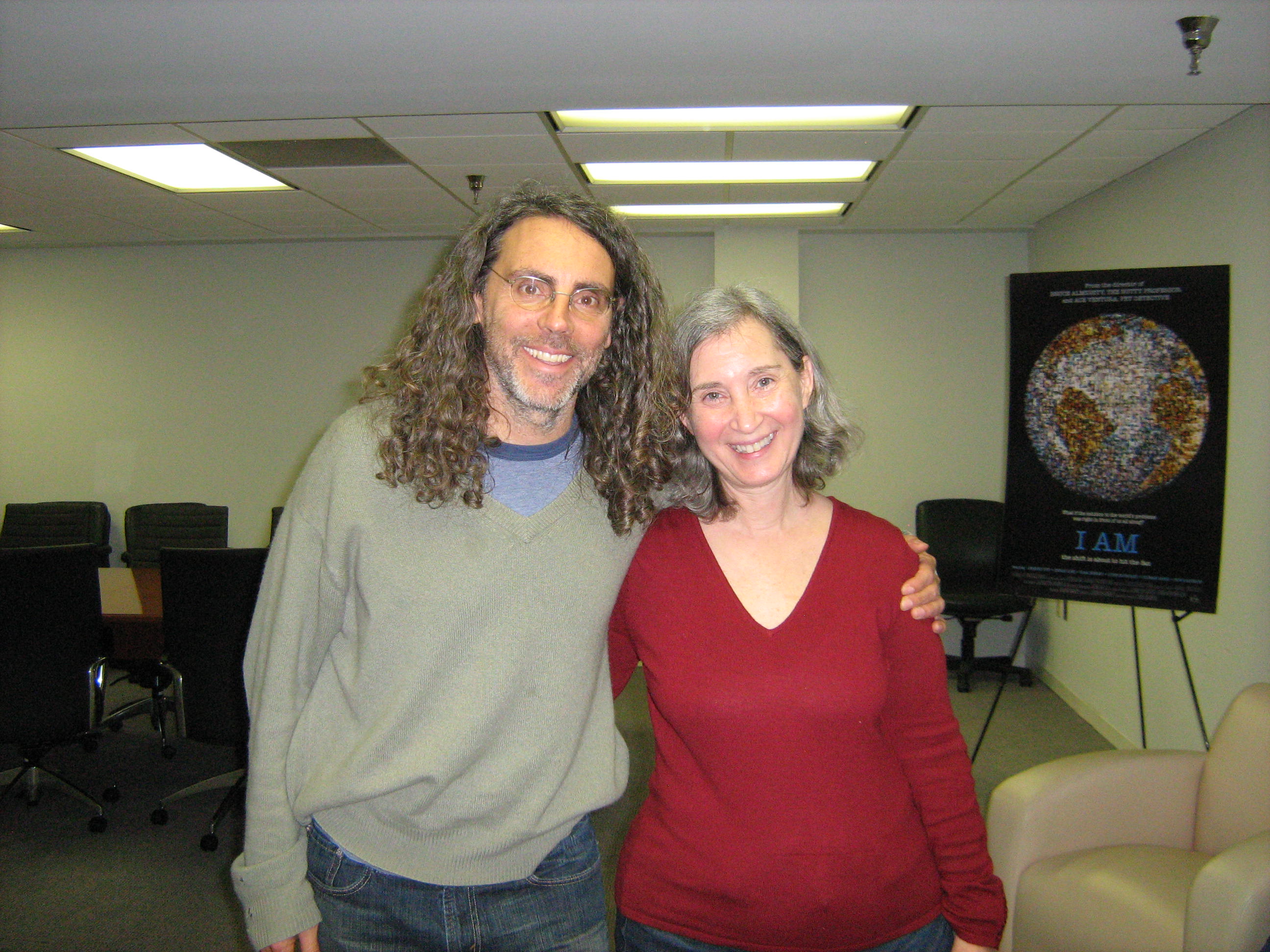
Tom Shadyac was one of the most successful directors in Hollywood. He had wealth and fame. He worked with superstars like Eddie Murphy and Jim Carrey. But a bicycle accident left him in terrible pain, physical and spiritual. He realized he was not happy or satisfied. And so he made a small documentary about two questions: what’s wrong with our world, and what can we do to make it better? The movie is filled with fascinating encounters with people who are questioning some of our most fundamental assumptions about the way we interact with each other and the universe, from cutting-edge scientists to people who study history, culture, and theology. It was a great pleasure to speak with him about his literal and spiritual journey.

How are you feeling now?

I feel so much better. I’m 95 percent and if this is as good as I get, I’m beaming. I didn’t think I’d come out of it, so even getting to 70 percent, I’m blessed. The mind-body-spirit is definitely connected for me. Not only did I call in the accident into my life because I didn’t have the courage to get out of my head and speak to my heart. So what better accident than one where I had to leave my head to feel my heart. I had been living this way in the closet and my head said you should not do a film about this or talk about it. and I didn’t have the courage to see outside the box. I believe that when I finally said I would start this conversation and share this story the tension was released in my healing and it improved by leaps and bounds.
The most profound moment for me in the film was when you said that after you had the dream house you realized it didn’t make you happy.

I had that message and I went on my merry way suppressing it, ignoring it. So I accumulated more — I bought a bigger house. I was being pulled along by the way we do things. Maybe the thought was there that this situation will be better, but it was a sleepwalk. That bell or this whistle will fill that emptiness.

Your late father appears in the film and he seems to have happiness figured out. He did meaningful work as the co-founder of St. Jude’s hospital in providing free medical care for sick children.

There was a sadness, though, in my father. I don’t think he saw what he did or how capable we are of creating societies based on compassion. At the end of the interview, he says he doesn’t think mankind can build businesses based on compassion because of who we are. People behave one way on Sunday and then forget about it the rest of the week. But I believe we behave that way, but that is not who we are. We’ve deluded ourselves that those ideas have to stay inside those churches and cannot walk in our daily lives. He didn’t see what he had done. He thought of the world outside St. Jude’s as competitive, angry, always at odds with each other.

The indigenous peoples you describe in the movie are very peaceful but there are others who are very violent, just like more developed societies.

That wasn’t the overriding indigenous way. They had conflicts and no one would suggest that a new society wouldn’t have conflict. But the conflicts were limited. If a person was hurt or a piece of land was taken payment had to be made for that, a warrior against a warrior. But not genocide. Not what’s happening today. There’s an ideology underlying that about our disconnection that’s run amok and it allows us to do all kinds of insane things.

You mention in the film how important it is to you to know your neighbors. That really requires a smaller community like indigenous tribes or small towns, doesn’t it?

It isn’t just the idea of small, the size of it, though that is important. But there are no barriers, no one was isolating themselves, taking all the land. A Native American had a tent; he didn’t get to own a peninsula. What we’ve built out of our society exacerbates the gap between us, between what are called the rich and the poor, though I don’t subscribe to those terms because the rich can be very poor and the poor can be very rich.

There were spiritual elements in some of your big-budget films, like “Bruce Almighty,” in which Jim Carrey gets to exercise God’s powers and learns that sacrificing for others is the most powerful thing he could do.

With my left hand I may have been helping to heal the world but with my own life I was fighting that message. “I want a more just world but not so just I can’t have everything.”

Do you think that there is a way in the context of a blockbuster film to convey the message you want to get across more effectively than with this small documentary?

That’s the kind of linear thinking that is not where I want to live. It’s important for me to do what’s on my heart and if I am called on to make a film that may touch a handful of people, I’ll do that. I do not want to be a servant of what Emerson called “the idolatry of magnitude,” that it has to be big to be important. The only giving mentioned in the Bible is the widow’s mite. She gave a penny but it was all she had and it was important. It was all she had. If a narrative film comes to me and it demands to be served, I will do it. It’s not that I wouldn’t make “Ace Ventura 3.” I would make another comedy because I believe it is sacred, a beautiful experience to bring people together to share laughter. But I would hope to behave differently as the director, not how I treat people — I always treated people respectfully. But in how I do the economy of my life. I don’t want to stand on top of a movie and say, “I am more valuable than you.” I want to say, “I want to be your brother, your sister, and I want you to be my sister, my brother,” and to have that reflected in the way I do the economic drawer of my life. If additional profits come, I want to distribute them to others. It was never mind in the first place.

How did you pick the people who appeared in this movie?

They changed me. Through the course of reading their work, seeing them interviewed, learning about their lives. “The People’s History of the United States” is a beautiful, brilliant work. The poetry of Rumi. The life of Desmond Tutu.

What was it like to meet them?

I walked into Howard’s office and it was as modest an office as I have ever been in. It spoke volumes about his modesty and humility. That is what I call integrity. Emerson says, “If you look in any drawer of a person’s life you know what a person is.” When I saw how he greeted me, when I saw his office, I saw he was open, compassionate, humble. But my economic drawer was taught to me by my society, not by my heart.

What was it like to go from a big budget film to a four-person crew?

Remember when Mel Gibson yelled out “Freedom!” in “Braveheart!?” It was very freeing to be able to see a shot and get the camera out and get the shot and not have to get a permit and a license and get the lighting and bring 240 people out there and the craft services truck. I like traveling light, an artistic extension of what is going on in my life.

Tell me more of what you have learned.

I’m much happier in this walk than I was in the isolated walk. I don’t think it’s about changing who we are; it’s about waking up to who we are. We know external things bring us joy to a certain point, but beyond that it doesn’t. How about competition bringing us together instead of separating us. Ignorance comes from the word “ignore.” We experience heaven when we serve each other. I felt that power with my father. When we feed others, we feed ourselves.

Related Tags:


Directors Interview Spiritual films
Interview: Fraser Heston of ‘Charlton Heston Presents The Bible’

Interview: Fraser Heston of ‘Charlton Heston Presents The Bible’

Posted on March 29, 2011 at 3:17 pm

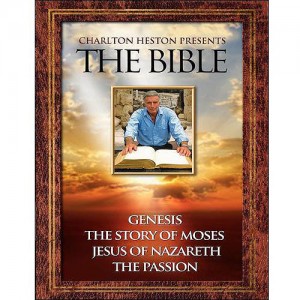
Fraser Heston was kind enough to take time to talk with me about the re-release of some of his father’s greatest films. Fraser, who played the baby Moses in The Ten Commandments, directed his father in Charlton Heston Presents the Bible. Both have been restored and are being re-released this week.

How did the Bible project come about?

That came out of a conversation between my dad and me many years ago, in the early 90’s. We were sitting around talking about what his next project should be. Dad said, “I’ve always wanted to record the Bible again.” He had done a wonderful recording for Vanguard records back in the 50’s. I said, “If we’re going to record the Bible, it has to be on film. We’re not going to do it behind a curtain. And we have to go to the holy land. We have to film in something like a Roman amphitheater. And we’re going to need some great Biblical art. Let’s illustrate these stories — we can’t just have my dad talking all the time. We found these marvelous paintings throughout the whole history of Biblical art. We decided to make a broader, much more open-ended and he ended up doing the commentaries between chapters. We didn’t do the whole Bible. We did his favorite stories, edited down. And then he comments and talks about it as a story-teller or an actor, not as a priest or a scholar, to share these stories and the beautiful art that goes with them, for people of all faiths.

The King James translation?

He loved the King James translation. It’s beautiful language and still very accessible. I think it’s the most powerful translation and he did as well. We talk about it, how it came to be written, how there are foibles and mistranslations and how it’s all part of the warp and weft of the fabric of the Bible.

How did you find the images?

You have to hire a whole department who researches these things and get the rights and get a filmable image – nowadays we do that all with a computer. The aggregate of all of these images together from Salvador Dali to the classics from the Sistine ceiling and the Michelangelo Moses, all of them together have such an impact.

What else is being restored and re-released?

“Ben Hur” and “The Ten Commandments.” And we’re also re-releasing some of our classic films through Warner Brothers like “Anthony and Cleopatra,” and “Mother Lode,” directed by my father and co-starring Kim Basinger,” and “Treasure Island,” with a young man you may have heard of: Christian Bale.

How long did it take?

It was as long as a feature. We were in the holy land for about three months. And of course in Jerusalem there’s a checkerboard of different faiths and they all have different Sabbaths and holidays. The Moslems have Friday, the Jews have Saturday, and the Christians have Sunday. And different sects have control the access to this monastery or that little place, and so on. One day I was filming in what they call the Hall of the Last Supper and went down to get a cup of coffee and found myself in the tomb of King David. I thought, “Oh, my gosh, this is amazing. I’ve just walked out of one chapter of the Bible and into another, transcended thousands of years of history.” It was pretty darn cool.

Do you have a favorite Bible story?

I love the New Testament but I am very, very partial to the story of Moses. The story of the exodus is the story of freedom. And how poignant today that people on the same ground, walking on the same sand, are fighting for their freedom in Egypt and North Africa. The irony couldn’t be stronger, could it? The words of Moses are inscribed on the Liberty Bell: “Go forward and proclaim liberty throughout the land.” That became a watchword for Dad. Everything he did had to do with freedom.

What stories did you hear about your portrayal of baby Moses in “The Ten Commandments?”

The very first telegram my mother got when I was born was from C.B. DeMille . He said, “Congratulations, he’s got the part!” And then they put me in the basket and the darn thing sank! My dad had to go out there and rescue me. I’ll never forgive them for that.

Did your father have a favorite Bible passage?

He loved the death of Moses, where he passes on his mantle to Joshua. He had it by heart and never forgot it, even when he had Alzheimer’s. It’s just a moving passage. “I shall not cross over.” It’s very moving and there are so many moving scenes in that story and in that film that just kind of ring true. So many small, human moments. Moses was not divine, though that was not always clear in the DeMille version. He questioned his worthiness, and that just makes you care about the guy. He has loves and hates and he has a temper. He becomes a very human character in a giant story. It’s a mistake to hold the Bible up as a remote, sheltered experience. It needs to be vibrant and contemporary. And “Man for All Seasons,” a whole Charlton Heston collection. He was an actor’s director. He was artistic; he looked at the scene from an artist’s point of view, a story-teller, not to call attention to himself as a director but just tell a story the best way he can. He learned that from William Wyler and C.B. DeMille. “Ben Hur” and “Ten Commandments” are not about the effects or the crowds or the action; it’s about the people. Many times the camera doesn’t move at all. Shots like that are what you remember from those films. We are so fortunate that a major part of our cultural heritage is being restore with such care by Warner’s made made available to a new generation.

I have one copy each of “Charlton Heston Presents the Bible” on DVD and “The Ten Comandments” on DVD and Blu-Ray to give away. To enter, send an email to moviemom@moviemom.com with the DVD or Blu-Ray you want in the subject line. Be sure to include your address. I will select a winner at random on April 2. Good luck! (My policy on accepting prizes to give away is posted on the site.)

Related Tags:


Behind the Scenes Contests and Giveaways Interview Spiritual films
National Velvet

National Velvet

Posted on March 28, 2011 at 8:00 am

A
Lowest Recommended Age: All Ages
MPAA Rating: Not Tated
Profanity: None
Alcohol/ Drugs: Mi gets tipsy
Violence/ Scariness: None
Diversity Issues: A theme of the movie
Date Released to Theaters: 1944
Date Released to DVD: 2000
Amazon.com ASIN: B00004RFHN

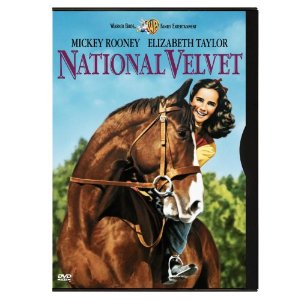
In memory of Elizabeth Taylor, this week’s DVD pick has the performance that made her a star, along with Anne Revere, who won an Oscar for her role as Elizabeth Taylor’s mother in “National Velvet.”

Mi Taylor (Mickey Rooney) arrives in a small English town and meets Velvet (Elizabeth Taylor) just as she and her sisters have been let out of school for the summer. They like each other immediately, and she is delighted to learn that the reason he has come to her town is that he found her mother’s name in the address book belonging to his late father. He does not know what their relationship was, or what he hopes to find from her, but he has no other place to go.

At the dinner, Mi is tentative, not sure himself whether he is looking for a friend or an easy mark. That night, as Mrs. Brown goes over that day’s books and puts away the cash from their butcher shop, she and Mr. Brown talk about giving Mi a job. Mr. Brown is reluctant, saying they don’t need him, and that he seems to have a “sharpness” about him, but she insists. After Velvet tells him he is going to stay, he sneaks back into the house to return their money, which he had stolen.

Even though she wins the race, Velvet is deprived of the title and the prize because girls are not eligible to race. No one questions that rule or seems surprised by it; she undertakes the race knowing that this will happen. Mr. and Mrs. Brown are equal partners at home and at work, though she is the stronger character.

The horse Velvet loves most is owned by a man who, angry and frustrated at his inability to control it, decides to sell it by lottery. Velvet wins and renames the horse Pi. He won’t pull the butcher shop cart, but he can jump a fence as high as the most treacherous hazard in England’s biggest horse race, the Grand National. So Velvet decides that he must be in that race, to have a chance to be the very best he can be, the very best there is.

They hire a jockey by mail, but Velvet knows the horse must be ridden by someone who loves him, and would rather not have him race at all than have a jockey who does not believe he can win. Just as Mi is about to volunteer, Velvet decides that she will ride the Pi, even if they could have had the best jockey in the world, even if they will get in trouble because girls are not allowed to race. She rides the Pi, and he wins. But they are both disqualified because she is a girl.

They come back home in triumph, knowing that they won what was important to them. Though they were not allowed to keep the title or the prize money, all charges have been dropped, and they won’t get into trouble for violating the rules. Mr. Brown is excited by all of the offers for appearances and endorsements, but Velvet knows that it would not be best for the Pi and that it is time to move on. So does Mi, who takes his knapsack and says good-bye to Mr. and Mrs. Brown. When Velvet hears that he has left, she asks if she can tell him about his father, who was Mrs. Brown’s coach, and how much he meant to her in achieving her dream. Mrs. Brown consents, and Velvet races after him, just catching up to him as the movie ends.

“National Velvet” taps into one of the oldest, deepest dreams, the dream of horses. Every child dreams of controlling these huge, powerful, loyal creatures, of flying over hurdles on their backs, of earning their devotion and of being devoted to them in return. And then there is the dream of racing, as Velvet says in this movie, until you burst your heart, and then until you burst it again, and then until you burst it twice as much as before, until the two of you explode past the finish line ahead of everyone else.

This is the story of dreams themselves, wise and foolish, big and small, realized and impossible, and about the way all of these dreams change those who are lucky enough to dream them. It is about the importance of faith — Velvet’s faith in herself and in the Pi and in her dream, and her family’s faith in her and in Mi — and the importance of that belief and support in making the dream come true. Mi says, “You bit off a big piece of dream for yourself, Velvet.” But in one of the sweetest scenes ever filmed, Mrs. Brown takes out the 100 gold pieces she won for swimming the Channel, and gives them to Velvet. There were a thousand times the family could have used that money, but she was saving it for a dream as big as her own once was. She tells Velvet, “I too believe that everyone should have a chance at a breathtaking piece of folly once in his life.”

“National Velvet” is also a rare movie that deals with what happens after the dream comes true. It sometimes seems that half the movies that are made, and well over half of the movies that are made for children, end with the hero or heroine triumphantly standing in the winner’s circle, holding the trophy overhead as the music swells and the credits roll. One of the things I like best about this movie is that it puts the dream in perspective. After they win the race, Mr. Brown is delighted with all of the offers for appearances and endorsements for Velvet and her horse. Instead of arguing with him, Mrs. Brown asks Velvet how she feels about it. Velvet thinks it might be fun for her, but says that she would never put the Pi through all of the foolishness that would be required. Velvet and her friend Mi and those around them take what they have learned from the dream and go on with their lives, something worth discussing in this era when any achievement, good or bad, becomes a miniseries.

But most of all, “National Velvet” is the story of a loving family. It is very different in many ways from the families that the American children of today know — for example, the mother and father are so reserved that they call each other “Mr. and Mrs. Brown” until the very last scene. But it is a wonderful starting point for a discussion of the ways that families of all kinds can teach and support each other.

One of the key themes of the movie is the faith that the characters have (and don’t have) in themselves and in each other. Mr. Brown is reluctant to accept Mi at first, with good reason. As Mrs. Brown says, it would be surprising for someone who had lived on the streets not to have a “sharpness about him.” But, she persuades Mr. Brown to give him a chance: “What’s the meaning of goodness if there isn’t a little badness to overcome?” Mi does steal their money, but when he learns of their faith in him, their offer of a job and a place to stay and Velvet’s acceptance of him as a friend, he puts it back. Later, when he has a chance to steal much more money from the family, he thinks about it, but decides that he can’t, because “she trusts me.”

Velvet’s faith in both Mi and the Pi is at the center of the movie. She accepts them both immediately and irrevocably, though both are mistrusted by others. She does not believe Mi when he says he doesn’t like horses, and when he says he is only interested in the race for the money. She knows that he feels as passionately for the Pi as she does, though he cannot say it.

Velvet also has faith in the future. She is certain that she will win the lottery for the horse she loves. When she tells everyone she will win, a suspicious neighbor suggests that she may have cheated by arranging for her father to pick her number in the drawing. She explains that she didn’t bother with that, she just worked it out with God. Mr. Brown responds to the neighbor’s accusation by having him do the drawing, and of course Velvet does win (after there is no holder of the first number picked). When the jockey they have hired by mail to ride the Pi in the race shows them that he not only does not believe that the Pi can win, he does not even care, Velvet knows that it would be wrong to let him ride her horse. Just like Mi and Velvet herself, the Pi deserves someone who believes in him.

Mr. and Mrs. Brown show their trust by risking letting Mi and their children make mistakes. “She has it in her to do the right thing,” Mrs. Brown says of Velvet, and lets her decide how to respond to the offers that come in after she wins the race. Mrs. Brown also lets Velvet run to school after being up all night caring for the horse. When Mr. Brown objects, she reassures him that Velvet will be back — it’s Saturday, and there is no school. But she let her go because “I like that part of her that wants to go to school after a night caring for the horse.” Mrs. Brown not only lets Mi stay with the family, but she entrusts him to take her 100 gold pieces to London. Mr. Brown is certain he will steal it instead. But as the train pulls away, you can see Velvet reflected in the window of the train car. This symbolizes the way that the image of Velvet, and her faith in him, stays with Mi, and prevents him from taking the advice of his friends who get him drunk and encourage him to steal the money. As they leave for the race, Velvet says to Mrs. Brown, “You’ll be proud of the Pi, mother.” Mrs. Brown says, “I want to be proud of you.” And she is.

Throughout the movie, Mr. and Mrs. Brown balance a spacious acceptance of their children’s passions with a firm set of values and a fairly strict set of rules. Velvet is permitted to pretend to ride in bed only one night a week, and only for 15 minutes. At his first dinner with the family, Mi is reprimanded sharply by Mr. Brown (Donald Crisp) for feeding the dog at the table (“It will turn him into a beggar,” a pointed comment to the young man who has arrived at their door and may have some hope of being helped). But as we see during the course of the scene, each member of the family, including Mr. Brown, sneaks food to the dog when the others aren’t looking. Similarly, Velvet is constantly reminded by everyone to wear her braces. When Mi does this, on the way to the race, it shows how much he has accepted the family’s set of priorities and the responsibility of caring for its members. In this case, though, he lets her take the braces out until the race is over. Like Mr. and Mrs. Brown, he knows when to suspend the rules. Mrs. Brown won’t tell Mi how much his father meant to her until he leaves them. As long as he had no faith in himself, that information would be no more than a way to get something from the Brown family. But once he no longer felt “soft and yellow inside” he could accept it as a heritage to build on.
(more…)

Related Tags:


DVD/Blu-Ray Pick of the Week For Your Netflix Queue Movie Mom’s Top Picks for Families Rediscovered Classic
Remembering Elizabeth Taylor

Remembering Elizabeth Taylor

Posted on March 27, 2011 at 12:00 pm

I have loved the tributes to the incomparable Elizabeth Taylor this week and wanted to share some of the best. My friend Margo Howard has a priceless recollection of having Elizabeth Taylor as her babysitter. Dan Zak in the Washington Post asked movie critics and people who knew Miss Taylor to contribute their favorite memories and performances, and I was honored to be included. Adam Bernstein’s obituary in the Washington Post captured her beautifully. He described her as ” a voluptuous violet-eyed actress who lived a life of luster and anguish and spent more than six decades as one of the world’s most visible women for her two Academy Awards, eight marriages, ravaging illnesses and work in AIDS philanthropy.”

By her mid-20s, she had been a screen goddess, teenage bride, mother, divorcee and widow. She endured near-death traumas, and many declared her a symbol of survival — with which she agreed. “I’ve been through it all, baby,” she once said. “I’m Mother Courage.” News about her love affairs, jewelry collection, weight fluctuations and socializing in rich and royal circles were followed by millions of people. More than for any film role, she became famous for being famous, setting a media template for later generations of entertainers, models and all variety of semi-somebodies. She was the “archetypal star goddess,” biographer Diana Maddox once wrote.

Slate’s brilliant movie critic, Dana Stevens, wrote a perceptive appreciation of Miss Taylor as personality, actress, star, and woman: “She was at her best playing characters who inhabited their own bodies with a confident, careless pleasure…Even in her lowest moments onscreen and off, Elizabeth Taylor was always bursting to excess with life.” She also includes a link to Roger Ebert’s marvelous 1969 interview with Miss Taylor and Richard Burton. Ebert’s poignant Elizabeth Taylor tribute in the Wall Street Journal

Turner Classic Movies will have an all-day tribute on April 10. They’re all worth watching but be sure to set your DVR for the ones I’ve put in bold.

6 a.m. – Lassie Come Home (1943), with Roddy McDowall and Edmund Gwenn; directed by Fred M. Wilcox.

7:30 a.m. – National Velvet (1944), with Mickey Rooney, Anne Revere and Angela Lansbury; directed by Clarence Brown.

10 a.m. – Conspirator (1952), with Robert Taylor and Robert Flemyng; directed by Victor Saville.

11:30 a.m. – Father of the Bride (1950), with Spencer Tracy, Billie Burke, Joan Bennett and Don Taylor; directed by Vincente Minnelli.

1:15 a.m. – Father’s Little Dividend (1951), with Spencer Tracy, Billie Burke, Joan Bennett and Don Taylor; directed by Vincente Minnelli.

2:45 p.m. – Raintree County (1957), with Montgomery Clift, Eva Marie Saint, Lee Marvin, Rod Taylor and Agnes Moorehead; directed by Edward Dmytryk.

6 p.m. – Cat on a Hot Tin Roof (1958), with Paul Newman and Burl Ives; directed by Richard Brooks.

8 p.m. – Butterfield 8 (1960), with Laurence Harvey and Eddie Fisher; directed by Daniel Mann.

10 p.m. – Who’s Afraid of Virginia Woolf? (1966), with Richard Burton, George Segal and Sandy Dennis; directed by Mike Nichols.

12:30 a.m. – Giant (1956), with James Dean and Rock Hudson; directed by George Stevens.

4 a.m. – Ivanhoe (1952), with Robert Taylor and Joan Fontaine; directed by Richard Thorpe.

Related Tags:


Actors
Triangle: Remembering the Fire

Triangle: Remembering the Fire

Posted on March 26, 2011 at 10:41 pm

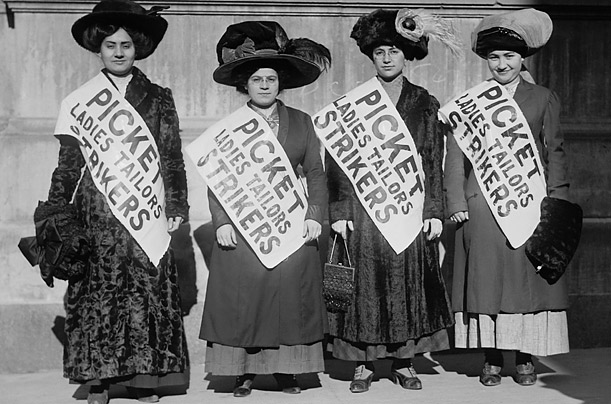
One hundred years ago this week, 146 people were killed in the Triangle Shirtwaist Factory fire, a tragedy compounded because it was the result of preventable neglect and safety violations. An excellent new documentary, Triangle: Remembering the Fire, is showing this month on HBO. The film includes interviews with family members of those who were injured or killed in what was the deadliest industrial tragedy in New York history as well as the descendants of the factory owners, who were there with their children the day of the fire but were able to escape. Some members of their extended family were also working there and were killed. Most of the people who died were immigrant women who were trapped when the fire started, in some cases because the doors were locked to keep them inside. Many were killed not by the fire but by leaping out of the windows in a desperate attempt to escape after the flimsy fire escape collapsed. Six of the victims were not identified until February of this year, 100 years later.

The film documents not just the terrible events of March 25, 1911 but also the reform efforts they inspired. The company’s managers failed to make even the most rudimentary efforts at safety for the workers. While those injured and the families of those killed were not entitled to any benefits, the managers were reimbursed by insurance and were not responsible for any fines or compensation for the losses. This led to the first recognition that the industrial era required the involvement of organized labor and government to ensure that basic protections were in place, a crucial turning point in the history of public policy and politics. The film was inspired when a previous film from the same producers about the garment industry began with a short mention of the Triangle factory fire and ended with a similar recent story about a fire at a factory in Bangladesh. Its lessons are as important today as they were a century ago.

For more information, see: The lesson guide for teachers and students on the HBO website, American Experience: Triangle Fire, Triangle: The Fire That Changed America, and The Triangle Fire: A Brief History with Documents

Related Tags:


Documentary Television
THE MOVIE MOM® is a registered trademark of Nell Minow. Use of the mark without express consent from Nell Minow constitutes trademark infringement and unfair competition in violation of federal and state laws. All material © Nell Minow 1995-2026, all rights reserved, and no use or republication is permitted without explicit permission. This site hosts Nell Minow’s Movie Mom® archive, with material that originally appeared on Yahoo! Movies, Beliefnet, and other sources. Much of her new material can be found at Rogerebert.com, Huffington Post, and WheretoWatch. Her books include The Movie Mom’s Guide to Family Movies and 101 Must-See Movie Moments, and she can be heard each week on radio stations across the country.

Website Designed by Max LaZebnik