Mickey 17

Mickey 17

Posted on March 5, 2025 at 5:16 pm

B +
Lowest Recommended Age: Mature High Schooler
MPAA Rating: Rated R for violent content, language throughout, sexual content and drug material
Profanity: Very strong language
Alcohol/ Drugs: None
Violence/ Scariness: Extended peril and violence with graphic and disturbing images
Diversity Issues: A theme of the movie
Date Released to Theaters: March 7, 2025

You know how finicky printers are. Sometimes the printed paper comes out part way and then goes back a bit to do some more printing and comes out again. Sometimes you forget to put on the tray the paper lands on, and so it drops to the floor. It turns out that in the future, when someone develops a 3D printer that uses organic waste to print out people, actual human beings, those finicky printers do the same thing.

Copyright Warner Brothers 2025

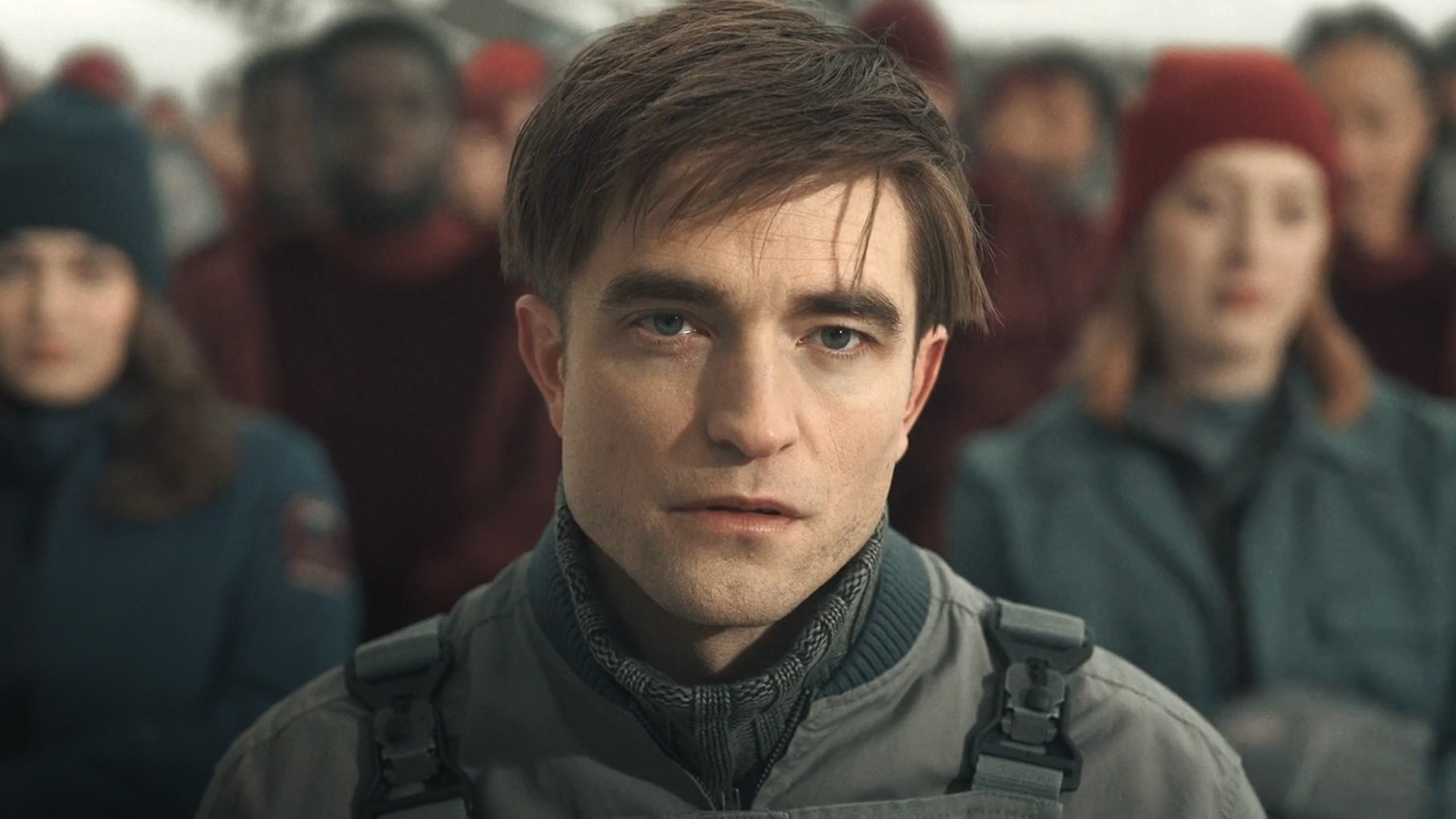
Mickey (an outstanding performance by Robert Pattinson) needed to leave the planet because a vicious loan shark who loves to watch the gruesome murders of those who haven’t paid on time was after him. The only way to jump to to head of a very long waiting list was to agree to be an “expendable.” He’s not very bright (see: in trouble with a vicious loan shark), so when he is repeatedly asked if he has read the contract he is signing, he says yes. That gets him a four-year-long trip to a new planet, where is job will be, basically, lab rat crossed with a crash test dummy. He is continually put in mortal danger until he dies, and then they print a new one of him out of that finicky printer. And sometimes they forget the paper tray, or I guess person tray, and he falls out onto the floor.

The new planet’s colony is run by an officious former politician named Kenneth Marshall (Mark Ruffalo with some large teeth) and his wife, Yifa (Toni Collette). Kenneth is obsessed with the “purity” of the civilization on his new planet, and Yifa is obsessed with superficial indicators of elegance and grace. She constantly drapes herself over her husband and coos into his ears, except when she is creating exotic sauces for their luxurious meals, while the rest of the people they brought with them to build their new community are fed with slop and live in bare, dorm-like cells.

Robert Pattinson in Mickey 17
Copyright 2025 Warner Brothers

Even in this miserable situation, there are levels of status, and Mickey is at the bottom. With one exception, he is considered less than human because he keeps dying and getting re-printed. The exception is not his Earth friend Timo (Steven Yeun), the one who got him into all the trouble he had to leave the planet to escape. The exception is the beautiful and intelligent Nasha (Naomie Ackie), who is, somewhat improbably, devoted to him.

As the movie begins, before a flashback telling us how he got there, Mickey has died and been reprinted 17 times, thus the title. He is stuck in an icy crevasse and certain he is about to die again, from exposure or from being eaten by the planet’s indigenous inhabitants, who look. like giant combination tardigrades and caterpillars. But somehow he survives. Only everyone else assumed he had died again and the most severely punished crime has been committed: another Mickey has been printed while the last one is still alive. There are multiples.

Some of the resulting complications work better than others, but the movie comes together in a tight climax as the Marshalls go over the top and the Mickeys and Nasha have to save the day.

Director Bong Joon Ho continues the sly, dark humor and provocative commentary on class hierarchies, hypocrisy, and pervasive societal inequities he featured in “Parasite,” “Snowpiercer,” and “Okja.” More heightened than the Oscar-winning “Parasite,” this imagines the future consequences of arrogance, exceptionalism, and careless exploitation. The Marshalls are so caricatured they undermine the more nuanced elements of the story. The other characters’ understated, matter-of-fact acceptance of the outrageous abuse is far more powerful.

Parents should know that this film includes peril and graphic violence, with some disturbing images including a severed hand and bloody barfing, injuries and deaths. A character is repeatedly killed. There are sexual situations and explicit sexual references and drawings. Characters use very strong language.

Family discussion: What would make someone agree to be expendable? What did the Marshalls want their new world to be like? Why were they so affectionate to each other and so cruel to everyone else?

If you like this, try: “Snowpiercer,” “Okja,” “The Maze Runner,” and “The Hunger Games”

Related Tags:


Based on a book movie review Movies -- format Movies -- Reviews Science-Fiction
Paddington in Peru

Paddington in Peru

Posted on February 13, 2025 at 12:17 pm

B +
Lowest Recommended Age: 4th - 6th Grade
MPAA Rating: Rated PG for action, mild rude humor and some thematic elements
Profanity: None
Alcohol/ Drugs: None
Violence/ Scariness: Peril and violence, gun, machete, tarantula, no one badly hurt
Diversity Issues: None
Date Released to Theaters: February 14, 2025

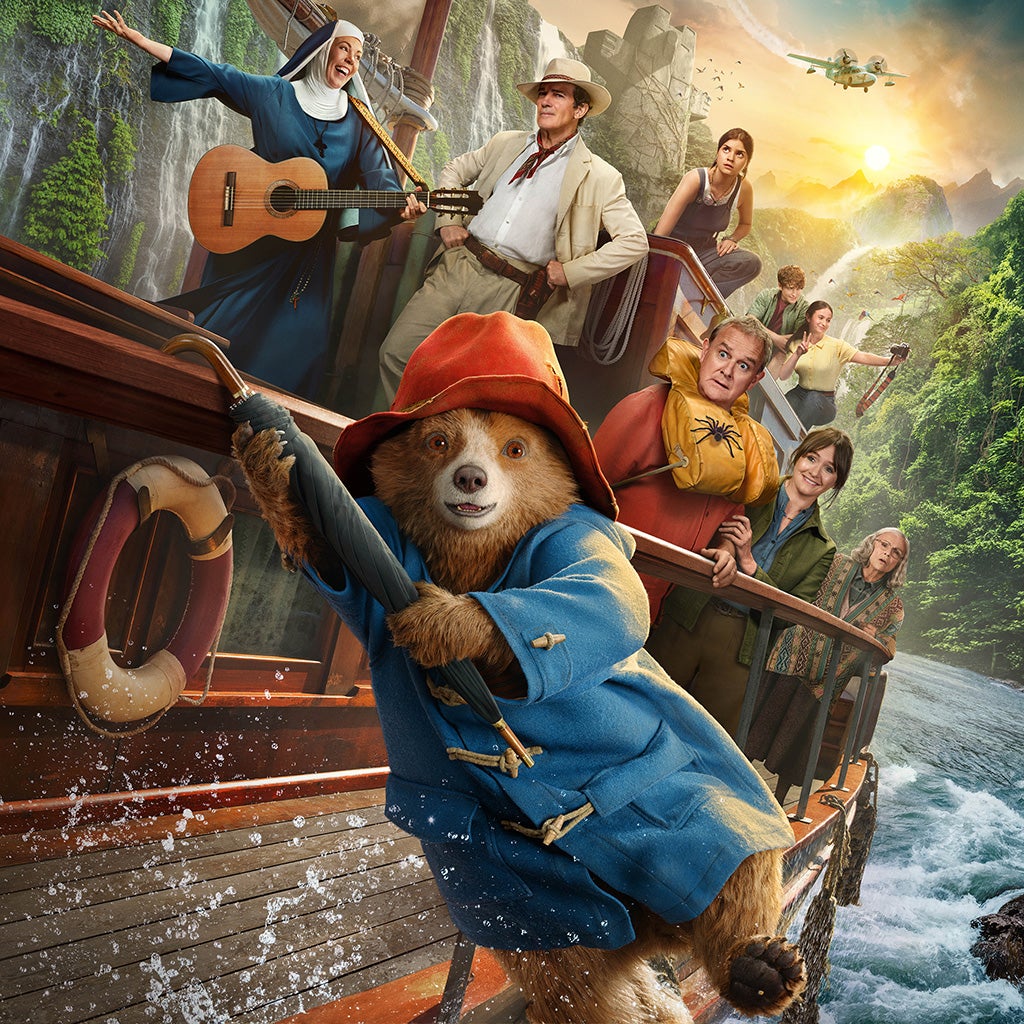
Paddington is entertaining because of his naivety, which sometimes results in amusing slapstick. But he is beloved because he is true-hearted and kind, and because he knows that a hard stare is called for when people forget their manners. Following the second Paddington film, famously the highest rated movie in the history of Rotten Tomatoes, above expectations for this next in the series were high. It just about meets them with a heartwarming and delightful film, filled with adventure, family, a lost city, singing and tap-dancing nuns, and, when called for, orange marmalade and a hard stare.

Copyright 2025 Sony/Columbia

One highlight of the series has been its A-list villains, and I strongly urge audiences to stay through the credits for an update on the best so far, Hugh Grant as Phoenix Buchanan.

We get a reminder of Paddington’s origin stories here, both his being separated from his family and being taken in by his beloved Aunt Lucy (warmly voiced by Imelda Staunton), to reassures the little cub that if he ever gets lost again, he should roar and she will roar back. We also see him arrive at the train station that give him a name humans can pronounce, and then we are up to date with Paddington (Ben Wishaw) not only a beloved part of the Brown family but a naturalized British citizen with a passport to prove it.

The timing is very good, because Paddington receives a concerning letter from the Reverend Mother (Olivia Colman) at the home for retired bears in Peru. She says Aunt Lucy is doing poorly. The Browns like the idea of a trip with some adventure included. Henry (Hugh Bonneville), whose job is assessing risk, with thick notebooks of triple-laminated documentation of every possible peril, is therefore inclined to be very risk-averse. His new American boss has encouraged him to take some risks, and Peru, even with its scary purple-kneed tarantulas, looks like a good opportunity. Mary Brown (Emily Mortimer charmingly taking over from Sally Hawkins) thinks a trip will bring the family together, something she’d been missing with her children getting older. Judy Brown (Madeleine Harris) is getting ready to leave for college and Jonathan Brown (Samuel Joslin) spends all day in his room working on inventions to help him “put a lot of effort into doing as little as possible.”

Paddington and the Browns go to Peru, but when they get to the home for retired bears, Aunt Lucy is gone and no one knows where she is. The clues she left behind seem to suggest she has gone in search of the legendary lost city of El Dorado. And so what they thought was going to be a quiet visit in a nun-run assisted living facility turns into an adventure on the Amazon, in a boat captained by Hunter Cabot, played by Antonio Banderas.

Banderas also plays Cabot’s ancestors, who were all obsessed with finding the legendary lost city of El Dorado, filled with gold. The ancestors are in pictures on the wall and also appear to Cabot to urge him on.

Like the others, this latest entry in the Paddington saga is visually enchanting, charmingly funny, surprisingly wise, and genuinely heartwarming. I admit I teared up near the end. While there is nothing as enthralling as the second film’s gently animated pop-up book or as hilarious as the prison scene, there is plenty to enjoy. This is a story about the power of being kind, empathetic, and gentle, about learning to challenge ourselves, about where we come from and where we are going. It is funny, smart, and endearing, a true gift.

NOTE: Stay for some very funny mid-credit scenes.

Parents should know that there is some fantasy/cartoon-style peril and violence including a tarantula, a gun, a machete, quicksand, and various mildly scary situations. We see the “comic” deaths of the ancestor characters. There are themes of family separation and adoption. Some in the audience may be bothered by the comic and disconnected from faith portrayal of nuns and the “sentencing” of a villain to a convent.

Family discussion: Were you surprised by Paddington’s choice at the end of the film? Why did he make that decision? How should you decide what risks are worth taking?

If you like this, try: the other Paddington movies and the books

Related Tags:


Based on a book Family Issues Fantasy For the Whole Family movie review Movies -- format Scene After the Credits Series/Sequel Talking animals
A Complete Unknown

A Complete Unknown

Posted on December 25, 2024 at 9:00 am

B +
Lowest Recommended Age: High School
MPAA Rating: Rated R for language
Profanity: Strong language
Alcohol/ Drugs: Drinking, smoking, and marijuana
Violence/ Scariness: References to war, some scuffles
Diversity Issues: None
Date Released to Theaters: December 13, 2024
Copyright 2024 Searchlight

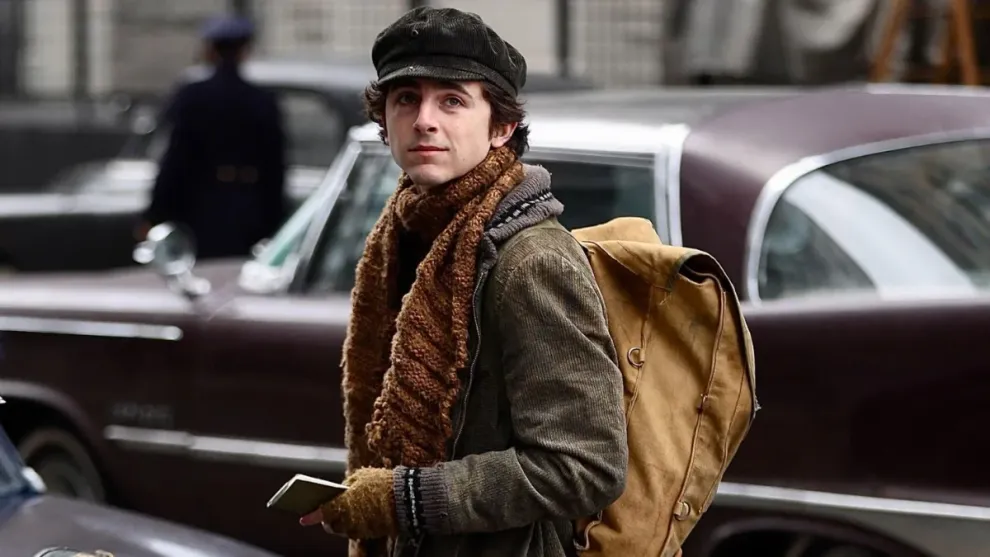
“A Complete Unknown” is the story of Bob Dylan’s early years in New York, based on Elijah Wald’s book Dylan Goes Electric!: Newport, Seeger, Dylan, and the Night That Split the Sixties. It begins with Dylan’s first stop after he arrives from Minnesota, a visit to see Woody Guthrie (Scoot McNairy), who was paralyzed and unable to speak, with Huntington’s disease. Guthrie has another visitor, Pete Seeger (Edward Norton, capturing Seeger’s nerdy, generous, gentle optimism). Dylan (Timothée Chalamet) takes out his guitar to play a song he wrote in tribute to Guthrie. The two folk singers are impressed. We then follow the 21-year-old singer/songwriter as he creates some of the century’s most groundbreaking and influential music while mistreating most of the people around him, until he creates a near-riot at the Newport Folk Festival by plugging in his guitar and “going electric.”

Biographical films, especially those about musicians, tend to have the same format, as so devastatingly destroyed in the parody “Walk Hard.” There’s the precocity and one or two formative childhood experiences, then the moment someone on the board in the recording studio says, “Hey, wait, this kid can play/sing!” Success, setback, moments of inspiration, fights with managers/bandmates/romantic partners, often a descent into drugs and/or alcohol, various breakups, possibly a health crisis, and then either an early death or some kind of rebound.

Wisely, this film, from director James Mangold, who co-wrote the screenplay with Jay Cocks, avoids most of the cliches, and makes no kind of effort to understand or reveal the inner workings of the famously inscrutable Dylan. The title of the film, of course taken from the lyrics of “Like a Rolling Stone,” applies to its subject. It is not that the movie tries and fails to help us understand Bob Dylan; on the contrary, it recognizes that Dylan defies that kind of simplification. And that he doesn’t need it and we should not attempt it. Anything we need to know is in the songs.

And so, this movie does give us the songs, full performances with Chalamet’s singing close enough to Dylan’s voice in the 60s, and perhaps with just a bit more lyrical clarity and tunefulness. The movie thus seems like one brilliant song after another, with interludes of Dylan being a terrible boyfriend. For the fans of Dylan the icon as well as Dylan the musician, there are several well-known highlights of his biography, like encounters with other future luminaries. Joan Baez is played with verve and a sweet, clear singing voice by Monica Barbaro, but with no sense of the complexity and conflicts portrayed in the recent documentary . The most amusing is Boyd Holbrook as a young Johnny Cash, who exchanges supportive letters with Dylan and, when they finally meet at Newport, encourages him to “muddy the carpet,” and stir up some trouble. Elle Fanning plays Sylvie, a character based on Suze Rotolo, the young woman pictured holding Dylan’s arm on the cover of his Freewheelin’ Bob Dylan record. She is credited with exposing Dylan to social activism. She tells him songs should be about more than Johnny Appleseed and the Dust Bowl, but Fanning’s scenes are mostly about being disappointed at what a bad boyfriend Dylan is.

At first, Dylan says all he wants is to be a musician and eat. But then he gets successful. He feels oppressed and under pressure. The fans want him to stay the same. He wants to try new ideas. More than that, he does not want to be told what not to do. He gets more reserved, more internal. but his hair keeps getting fuzzier.

The best scene in the movie is when Pete Seeger is hosting his low-key public access television show. He thought Dylan, by then very famous and very busy, was not going to show up. He invited a back-up guest, a Black folk musician. Dylan does show up. Another performer might have apologized and taken over or just rescheduled and allowed the substitute musician to play. But Dylan lights up at the prospect of jamming with him. He starts to play. Seeger joins in. It is the most illuminating, touching, and engaging moment in the movie.

Parents should know that this film includes some strong language, drinking, constant smoking, and marijuana. There are some unhappy confrontations and references to wartime violence.

Family discussion: Was Dylan right about what people wanted to hear when they asked where the songs come from? Which song means the most to you and why? Was he wrong to play electric music at a folk festival? Why did he do it?

If you like this, try: the classic documentary about Bob Dylan during these years, “Don’t Look Back” and a later documentary, Bob Dylan–The Never-Ending Narrative

Related Tags:


Based on a book Based on a true story Biography movie review Movies -- format Movies -- Reviews Musical
The Lord of the Rings: The War of the Rohirrim

The Lord of the Rings: The War of the Rohirrim

Posted on December 12, 2024 at 5:43 pm

B-
Lowest Recommended Age: Middle School
MPAA Rating: Rated PG-13 for strong violence
Profanity: None
Alcohol/ Drugs: None
Violence/ Scariness: Extended fantasy and action violence, scary animals, swords, fire, characters injured and killed
Diversity Issues: Strong, fierce female characters
Date Released to Theaters: December 13, 2024
Copyright 2024 New Line Cinema and Warner Brothers Animation

“The Lord of the Rings: The War of the Rohirrim” takes us back to Middle Earth, nearly 200 years before the adventures of the Bagginses and the Fellowship of the Ring. For those whose reaction to this IP brand extension is, “Great! I can’t wait to learn more about the stories behind the story and feel satisfaction when familiar places and characters are name-checked,” this animated story, produced by LOTR director Peter Jackson, will be welcome.

Fans of animation with a taste for anime style, are likely to find this a disappointment. While our heroine, Hèra (Gaia Wise) has big, sometimes expressive anime eyes, the overall style of the animation here is, in a year that included “The Wild Robot,” “Flow,” and “Inside Out 2,” disappointing. Many of the backgrounds are detailed and dimensional, some almost photographic, while the characters and animals are flat and minimalist. Their interactions with the environment seem weightless, any sense of heaviness or the impact of a punch or a fall coming more from the sound effects than the visuals.

Ancillary stories that spring like tree branches from beloved sources have to succeed as independent, stand-alone stories, and this one does not. The Lord of the Rings sagas, books and movies are memorable because of the compelling characters and storylines. The details of the world of hobbits, elves, orcs, ents, and a dragon, not to mention a complete language, are imaginative, but it is the themes of honor, purpose, and loyalty that make them beloved by generations. The characters and storylines here are close to generic.

King Helm Hammerhand of Rohan (Brian Cox of “Succession” and “Manhunter”) is a warrior by nature, physically and politically powerful ruler, generally fair-minded, though he underestimates his “wild, headstrong” daughter, Hèra in favor of his two sons. At a gathering of the noblemen, Freca (Shaun Dooley) barges in, demanding that Hèra marries his son Wulf (Luca Pasqualino) so they can take over the kingdom. Wulf and Hèra played together as children and she still feels warmly toward him. But she insists that she has no interest in marrying anyone. Helm and Freca get into a fistfight, and with one mighty punch Helm knocks Freca down, killing him. Helm banishes Wulf.

Wulf all but disappears and they hear nothing more from him for a few years until he returns, with an army, to capture Hèra and attack Rohan. This means a lot of battles, with just-passable animation and discussions of battle strategy with mostly passable dialogue. This movie never convinces us that there is a reason to make it, and that means there is only reason to watch it for those who will perk up at the mention of familiar places and characters.

Parents should know that this is a very violent film with many battle scenes and a few graphic and disturbing images including dead animals and a severed arm. A young man sees his father killed in a fight and a young woman sees her brother murdered. Characters are killed sacrificing themselves for others.

Family discussion: Why didn’t Helm listen to Hèra? Why were Wulf and Freca so angry and resentful? What was the scariest part?

If you like this, try: the “Lord of the Rings” books and movies

Related Tags:


Action/Adventure Animation Based on a book Fantasy movie review Movies -- format Movies -- Reviews Series/Sequel
Wicked Part 1

Wicked Part 1

Posted on November 21, 2024 at 12:35 pm

B +
Lowest Recommended Age: Middle School
MPAA Rating: Rated PG for some scary action, brief suggestive material, and thematic material
Profanity: None
Alcohol/ Drugs: None
Violence/ Scariness: Fantasy peril and violence
Diversity Issues: A theme of the movie
Date Released to Theaters: November 22, 2024

I feel confident that “Wicked,” this movie musical set in Oz is going to be POP-ular. It is, of course, adapted from the long-running, award-winning Broadway play, which was adapted from the book by Gregory Maguire, which was itself inspired by The Wizard of Oz by L. Frank Baum and the family classic MGM movie it inspired, starring Judy Garland, plus the funkified The Wiz, another musical play and movie. But this is not just some IP brand extension; it is as much an exploration of the nature of good and evil as it is a backstory about some of the world’s most iconic characters. It is also a lot–part one is nearly three hours long, with every minute a cornucopia of visuals, music, dancing, and ideas. Some will be overwhelmed, but many will find it dazzling and worth many repeat viewings.

Copyright 2024 Universal

The movie begins with the report that the Wicked Witch of the West has melted due to “a bucket of water thrown by a child.” Glinda the Good Witch arrives via bubble in Munchkin Country to confirm the news. This parallels Judy Garland’s arrival in the MGM film, her tornado-tossed house landing on the Wicked Witch of the East, and then Glinda arrives by bubble to ask Dorothy if she is a good witch or a bad witch. We will glimpse a few other references to the classic film, including a cute animal peeking out of a basket on the back of a bicycle, a shot of the four classic characters, plus Toto, walking through the poppy fields, and the first stop in the Emerald City a makeover musical number in a fantasy beauty salon. We also see the origins of some familiar elements, including the witch’s broom and Glinda’s name. As in the Baum book, the magical slippers are silver, not ruby.

One of the Munchkins asks a questions humans have been pondering since pondering began: Are people born wicked or do they become wicked, and if so, why? That is the theme of this version of the story.

Ariana Grande, appearing under the name on her birth certificate, Ariana Grande-Butera, plays Galinda (yes, that’s her name), a pampered princess who arrives at Oz’s most prestigious institute of higher learning, Shiz University. Think Hogwarts, because though the students are adults, it feels more like a boarding school. It is set in a fabulous compound that feels like a dream project (in both senses of the word) for brilliant production designer Nathan Crowley that is part Victorian, part Edmund Dulac fairy tale, with curves and curlicues everywhere inspired by Art Nouveau, and a sprinkle here and there of steampunk.

Also arriving are two sisters, Elphaba (Cynthia Erivo), with bright green skin, and her sister, Nessarose (played by Marissa Bode, who, like her character, does not have green skin and uses a wheelchair. Galinda is so confident she expects everyone to adore her and is so careless about mistakes that she often uses malapropisms that sort of sound like real words but are not. Elphaba is tentative and shy, but has internal strength of character and a sense of responsibility. She was the result of her late mother’s affair. The only father she has ever known, her mother’s husband, barely acknowledges her, except to order her to take care of Nessarose.

Madame Morrible (Michelle Yeoh) immediately recognizes that Elphaba is gifted with extraordinary magical powers and takes her on for special tutoring. She also decides that the two young women should share a room. At first they dislike and mostly ignore one another, and Galinda pranks Elphaba by giving her an ugly hat to wear to a party. But when the other students laugh at Elphaba, who responds defiantly by dancing by herself, Galinda experiences her first spark of genuine empathy. Instead of claiming to be kind, she shows real kindness by joining Elphaba on the dance floor, and her unquestioned role as the arbiter of status soon has the rest of the crowd joining them in the dance.

Also at the party are Nessarose with Boq (Ethan Slater), who has a crush on Galinda but invited Nessarose because Galinda told him to, and the extremely handsome and charming Prince Fiyero (“Bridgerton’s” Jonathan Bailey). He was a late arrival at Shiz, after being kick out of other schools. At first he seems to be a perfect match for Galinda (she certainly thinks so). They are both gorgeous but superficial and incurious. Then, in the movie’s most significant scene, Fiyero is the only one who helps Elphaba rescue a caged lion cub, and she is the only one who realizes that his constant pursuit of pleasure is not making him happy.

Jonathan Bailey as Flyero Copyright 2024 Universal

Director Jon M. Chu (“Crazy Rich Asians,”) brings a lot of energy to the movie. Though he does not have the luxury of his “Step Up” and “In the Heights” acting leads’ extensive dance training and skill, the musical numbers, especially the big dance numbers, are creatively and dynamically staged. I especially liked “One Short Day,” as Glinda (she’s changed her name by then) and Elphaba first arrive in the Emerald City. Keep an eye out for the original Broadway Glinda and Elphaba, Kristen Chenoweth and Idina Menzel, in a stage show about Oz history, or rather the Wizard’s preferred version of it.

Bailey has a sinuous charm that conveys Fiyero’s charisma but hints at his feeling lost and struggling with aimlessness beneath the surface. Goldblum’s quirky energy is just right as the Wizard who began as a carny from the midwest. Erivo is the heart of the film, always magnetic and compelling as Elphaba. The bright green makeup does not mask the extraordinary expressiveness of her face, always thoughtful, present, authentic, and grounded, despite the distracting details of the ultra-fantasy world around her. And like Grande, she has a once-to-a generation voice.

The splendor and imagination of the setting and costumes and even the huge musical numbers surround and mostly support real and meaningful questions about bad people doing good things, good people doing bad things, and everyone struggling to find a place somewhere on the continuum between being good and being wicked. Galinda (we learn how she became Glinda) is considered good because she is pretty and smiles a lot. But she is arrogant and selfish. Elphaba is considered if not bad at least weird because she does not smile or conform (note that neither wears the school uniform) but she is devoted to her sister. She is looking for the love she has never received but has no interest in changing anything about herself to try to get it. She knows that would not be real. Other characters surprise us by not being what we expect on the good/wicked scale.

This is a sumptuous and unsubtle treat grounded in Erivo’s graceful and subtle performance. When she defies gravity, she lifts us with her, and we lean forward to the next chapter.

Parents should know that like the MGM movie version, this story features fantasy action and peril with some scary and disturbing images, along with issues of bigotry and cruel treatment. A child is the result of an affair, causing grief and shame.

Family discussion: Why did Elphaba tell Flyero he was not happy? Why did the Wizard want to cage the animals? Are these characters good or wicked or both: Elphaba, Galinda, Madame Morrible? Are any of the characters like someone you know?

If you like this, try: the original Wizard of Oz book and its sequels (great for reading aloud) and the many other versions of the story

Related Tags:


Based on a book Based on a play Critics Choice Seal of Distinction DVD/Blu-Ray Pick of the Week Fantasy Movies -- format Movies -- Reviews Musical Talking animals
THE MOVIE MOM® is a registered trademark of Nell Minow. Use of the mark without express consent from Nell Minow constitutes trademark infringement and unfair competition in violation of federal and state laws. All material © Nell Minow 1995-2026, all rights reserved, and no use or republication is permitted without explicit permission. This site hosts Nell Minow’s Movie Mom® archive, with material that originally appeared on Yahoo! Movies, Beliefnet, and other sources. Much of her new material can be found at Rogerebert.com, Huffington Post, and WheretoWatch. Her books include The Movie Mom’s Guide to Family Movies and 101 Must-See Movie Moments, and she can be heard each week on radio stations across the country.

Website Designed by Max LaZebnik