Interview: “Race” Director Stephen Hopkins on Jesse Owens
Posted on February 17, 2016 at 3:50 pm
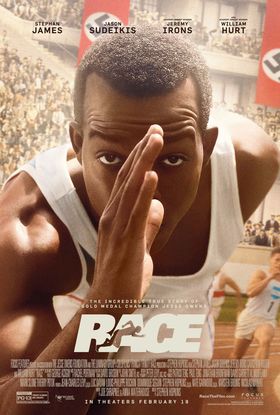
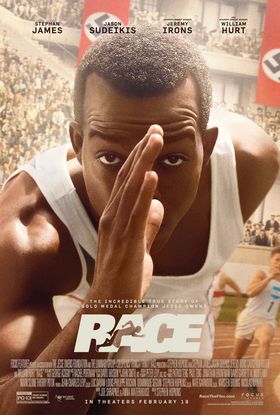
“Race” is the story of Jesse Owens, one of the greatest athletes of all time, and an African-American whose four gold medals in the 1936 Berlin Olympics showed the world that Hitler’s propaganda — and America’s Jim Crow laws — could not deny the reality of Owens’ ability, honor, and dignity. In an interview, director Stephen Hopkins talked about why making the film was so important to him and what he wanted audiences to understand about the events that occurred nearly 80 years ago.
One of the reasons I wanted to make the film is there are so few reluctant heroes nowadays. I think most people who are at the forefront of the media tend to be there not for the admirable act. When I was growing up there were great heroes like Mohammed Ali or Nelson Mandela or there were mavericks in the world of rock stars and actors and filmmakers that artist and I don’t know who my kids and my grandkids are going to look up to in the same sort of way. I was originally offered to make a story about his whole life which I don’t think you can ever do in a film really so I kind of honed down to these three years. I’d love to have done more about his childhood and his background which I think has a lot to do with why he was so full of steel and grit like he was. And obviously he had an anger inside of him as a young African-American man in America in those days where racism was a part of the institutional legality. Copyright 2016 Focus Features
So he is a conundrum because he really ran for himself and his family more than for his country. I think running for America was tough in those days because you would be a patriot but you were treated so poorly in your own country and he sort of followed his own compass really and did what he thought was right. And his wife Ruth was very important to him. And I kind of wanted to introduce maybe a younger generation to a hero from what seems to be a simpler time but obviously was a crazy political arena. One of my first questions to myself as I went through his story was how it was possible for a young African-American man to walk into such a hostile gladiatorial arena like the Olympics stadium in Berlin and function and hold himself together and held his head up high and explode for the necessary critical 10 seconds just at the right time and start winning these medals in front of Hitler and this hostile crowd.
He came from an incredibly tough background. His grandfather was a slave, his father was a share cropper which was basically a slave in those days and he grew up in a very, very tough environment with a great family. And often they would eat meat once a month if they were lucky. They grew up in the Great Depression, so whether you were African-American or not, you were suffering and that gave him so much. He almost died himself as a kid; he lost a couple of siblings through malnutrition and illness. And all this he used to forge someone who has so much dignity and so much steel that it just makes me think what the great hero he was.
At the same time, we don’t want him to be a saint. I hate it when you have a hero who doesn’t have flaws because there is nothing to overcome. The story in the background of what he had to go through to win makes the Berlin part of the film work. It would not be the same if you didn’t know what he went through and how high the stakes were before he got there and how clever the Nazis were in collaboration with Avery Brundage to hide what they were doing and to use this giant propaganda machine to put their pretend political party on the map. Because really they were just gangsters and thugs and they were trying to make out as if they were a real movement and a real political party and they were branding a corporate sporting event for the first time. In a sense they created the modern social media idea with live worldwide radio and filming everything and shipping the film quickly around the world, inventing closed-circuit TV and inventing all the technology to support their event they accidentally made the Olympics into the Jesse Owens Olympics and they accidentally made him the world first ever athlete superstar.
Hopkins provides fascinating behind-the-scenes drama as filmmaker/propagandist Leni Riefenstahl insists on telling the truth about Owens’ astonishing performance, though Joseph Goebbels wants her to suppress it.
I wanted to see it through her eyes because she was an artist born in Nazi Germany, or in pre-Nazi Germany, and became prominent during the Nazi reign and she was a woman which at the time was very much a second-class citizen. In the Nazi idea, they were supposed to stay home and cook and take care of the children. She was dazzled by Hitler and she was Hitler’s favorite but when she made this film she stuck to her ideals and she made Jesse the hero in the center of the movie. She actually had to leave the country soon after making the film because the Nazis were horrified about what she did. They actually made her cut all of Jesse Owens out of the film and then they looked at it and they realized how foolish they looked and they had to grudgingly put it all back in.
It’s all very well for all of us to look back and go “Oh I wouldn’t have gone along with that,” but I think the Nazis were very clever at covering up and their reign of terror was so complete. She should have known better, she should have been a better person and not helped to glamorize them but she was seeing Nazi Germany through an artist’s eyes, I think. And she openly admits that she was a Nazi at the time and then she lost faith in them and had to leave the country because she became so unpopular after making Olympia.
And he puts Jesse Owens’s story in the context of the negotiations that led to America’s participation in the Olympics, over the objections of those who did not want to appear to endorse Hitler.
Avery Brundage is more of a villain than Leni Riefenstahl. He knew what was going on and he helped the Nazis, then covered it up to serve himself. He was actually much more a villain than I think I was able to portray but it is hard to prove all of it. He was a really bad guy.
And there are unexpected good guys as well. Owens’ first-ever stay in unsegregated housing was in Berlin, which was a revelation for him. And he was befriended by one of the German athletes.
I wanted to see these events from as many different angles as I could. Jesse’s best friend became Carl ‘Luz’ Long, the German long jumper. They were very, very close. We have all the letters. They wrote to each other all the time and saw each other. Actually the last letter that Carl Long wrote to Jesse was from Sicily where the Americans were about to invade where he was fighting. His last letter says, “I think the Americans are coming, I’m probably not going to survive, would you go to Germany and find my son and tell him I was never a Nazi.” And then he did get killed and Jesse went searching for his son for years after the war and found him and gave him the letters. So the stories are are so rich and complicated. That’s a whole movie by itself I think, that one.
The movie also shows how competitive running has changed since the 1930’s.
It’s interesting, a lot of the Olympic coaches worked with us on this film and they said if Jesse had the nutrition, the shoes, the running tracks they have nowadays and the techniques they have he would be possibly beating Usain Bolt. He was such a freak of athletic nature. Because in those days they had to run with leather shoes on with no socks and the shoes would cling to their feet but basically with nails in the bottom.
No socks because socks would make them slip and they wanted the leather to sort of cling to their feet, but they were very painful to wear. And the track was made out of ashes and grit so if it was wet you would be running in mud basically. And nowadays the tracks are all so sprung and made of a type of material that these tiny spikes cling onto. And if they are wet it doesn’t affect them.
While he re-created some of the locations digitally, Hopkins was able to film parts of the movie in the imposing arena built by the Nazis for the Olympics.
All of the other arenas obviously don’t exist anymore so we re-created them exactly from the plans and stuff digitally. But we shot in the real Olympic arena. We shot half in Berlin, half in Montréal. So we shot in the real stadium and it visually affected the scenes because it’s an edifice that’s built to intimidate. You are meant to feel small and scared. We are very lucky to have been able to shoot in there and all around. We shot the scene where Jesse goes to meet Hitler and he refuses to meet him, we shot in the real place where it actually happened. In the room behind Hitler’s box which is still in the stadium, and we shot under his box we shot all over the stadium, underneath it, in the rooms, all around it. Every so often that they have referendum in Berlin whether to pull it down or not but it is an important piece of history I think and for better or worse it’s an edifice to something there.
The movie also shows the importance of Owens’ relationship to Larry Snyder (played by Jason Sudeikis), his Ohio State coach.
I think what they learned from each other was interesting. I think Jesse learned the psychology of winning and the psychology of not listening to other people and listening to his one heart and obviously to cut himself off from how the crowd was feeling about him, to really concentrate and focus, because he just loved to run. That’s what he did. It just made him feel free of all the burdens of what it would be like to have been a poor African-American in the Great Depression in American in 1933, which must have been hell on earth. And Larry learned that you can’t treat athletes like they are robots. They became such good friends over their whole lives. Larry was a very private person. He was very edgy and funny and charming. It’s very difficult to find out much about him. I loved having Jason in that role because he’s just got an edge to him, and his comedy has an edge. His comedy has a little darkness to it. And he’s a sports freak man, he just loves sports. So does Stephan so the two of them bonded on that and you could tell.
Celebrate Lincoln’s Birthday With Great Movies About the 16th President
Posted on February 12, 2016 at 3:20 pm
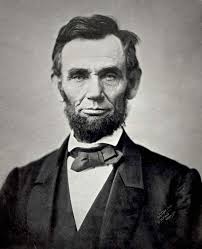
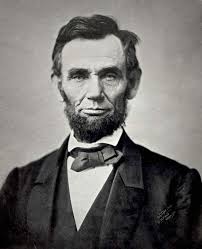
Happy birthday, Abraham Lincoln!
Celebrate the birthday of our 16th President with some of the classic movies about his life. Reportedly, he has been portrayed more on screen than any other real-life character. I was honored to be invited to participate in the 272-word project from the Abraham Lincoln Library in Springfield, Illinois. Each of us was asked to contribute an essay that was, like the Gettysburg Address, just 272 words. Here’s mine:
Two score and six years after the death of Abraham Lincoln, he was first portrayed in the brand-new medium of film. 102 years and over 300 films later, Lincoln has appeared on screen more than any other historical figure and more than any other character except for Sherlock Holmes. In 2013 alone there were three feature films about Abraham Lincoln, one with an Oscar-winning performance by Daniel Day-Lewis, directed by Steven Spielberg. In another one, he was a vampire slayer. He has been portrayed by Henry Fonda (John Ford’s “Young Mr. Lincoln,” Raymond Massey (“Abe Lincoln in Illinois”), Walter Huston (D.W. Griffith’s “Abraham Lincoln”), and Bing Crosby – in blackface (“Holiday Inn”). The movies have shown us Lincoln defending clients, mourning Ann Rutledge, courting Mary Todd, and serving as President. We have also seen him traveling through time with a couple of California teenagers in “Bill and Ted’s Excellent Adventure” and granting amnesty to Shirley Temple’s Confederate family in “The Littlest Rebel.”
Lincoln is appealingly iconic as a movie character, instantly recognizable as a symbol of America’s most cherished notion of ourselves: unpretentious but aspiring for a better world and able to find both the humor and integrity in troubled times. In every film appearance, even the silliest and most outlandish, he reminds us, as he did in The Gettysburg Address, of what is most essential in the American character: the search for justice.
PS My husband and I waited for two hours outdoors on a frozen January 1 to view the Emancipation Proclamation on its 150th anniversary. When I saw it, I wept. A security guard whispered, “I know how you feel.”
Young Mr. Lincoln Directed by John Ford and starring Henry Fonda, this is an appealing look at Lincoln’s early law practice and his tragic romance with Ann Rutledge. Particularly exciting and moving are the scenes in the courtroom as Lincoln defends two brothers charged with murder. Both have refused to talk about what happened, each thinking he is protecting the other, and Lincoln has to find a way to prove their innocence.
Abe Lincoln in Illinois Raymond Massey in his signature role plays Lincoln from his days as a rail-splitter to his law practice and his debates with Stephen Douglas. Ruth Gordon plays his wife, Mary.
Gore Vidal’s Lincoln Sam Waterston and Mary Tyler Moore star in this miniseries that focuses on Lincoln’s political strategies and personal struggles.
Sandburg’s Lincoln Hal Holbrook plays Lincoln in this miniseries based on the biography by poet Carl Sandberg.
Television Takes On Two of the Biggest Crime Stories of the Past 25 Years
Posted on February 3, 2016 at 11:02 am
Oscar-winner Richard Dreyfuss stars in the story of one of the biggest financial frauds of all time, Bernie Madoff’s $65 billion Ponzi scheme, with Blythe Danner as his wife.
People who want to know more should watch the documentary “Chasing Madoff.”
Robert De Niro and Michelle Pfeiffer will appear in another Madoff movie, “The Wizard of Lies,” directed by Barry Levinson.
And Oscar-winner Cuba Gooding, Jr. stars as O.J. Simpson in the story of his criminal trial for the murder of his ex-wife, Nicole Brown Simpson, and Ronald Goldman.
The cast includes John Travolta as defense attorney Robert Shapiro, Courtney B. Vance as Johnny Cochran, David Schwimmer as Simpson friend Robert Kardashian, Selma Blair as Kris Kardashian, Connie Britton as Nicole Simpson’s friend, Faye Resnick, and Evan Handler as Alan Dershowitz.
Intense scenes of peril, characters injured and killed
Diversity Issues:
None
Date Released to Theaters:
January 29, 2016
Date Released to DVD:
May 23, 2016
Amazon.com ASIN:
B019PQ0NZG
Copyright Disney 2016
“In the Coast Guard they say you gotta go out. They don’t say you gotta come back in.” It was a big nor’easter storm off the coast of Massachusetts. It was February 1952, so communications technology was limited. And not one but two tankers split in half. The most experienced Coast Guard crew went off to rescue the first one. When word came in that a second one was sinking, four young men, all under 25 and two who had never been on a rescue operation, took a small boat out into the storm.
That second ship was the Pendleton. Knowing that they had no more than two to three hours before their half of the tanker would sink into the icy storm-tossed waves, they had to decide who would be in charge. “No officers, no rules, every man for himself,” a crew member says. But they realize they must choose between the man who wanted to take the lifeboats or the engineer they did not know as well who said he had a plan (Casey Affleck, understated and compelling). “They may not like you, but they know to listen to you,” one member of the crew admits.
Based on the true story as told in the book by Michael J. Tougias and Casey Sherman, screenwriters Scott Silver, Paul Tamasy and Eric Johnson efficiently introduce us to the characters and the challenges they are facing. Chris Pine plays Bernie Webber, a departure from his usual cocky, confident roles. Bernie is a little shy, but very sincere, and he believes in the rules, not in a rigid way but in a careful way. When we first see him, he is about to see the girl he has been talking to on the phone for the first time and he does not want to get out of the car because he is afraid she will not like him.
And of course she does like him. Her name is Miriam (British actress Holliday Grainger, last seen as an evil stepsister in “Cinderella”). Director Craig Gillespie (of the wonderful “Lars and the Real Girl”) gives them just enough time to get invested in their relationship — and to get us invested in it — before the storm comes in.
Gillespie really gets going when the storm does, though, and those scenes are powerful and exciting. We are in the small boat with Webber as the window shatters and the compass is wiped out. The boat is tossed around like a cork, at one point completely on its side, with monster waves crashing down. And we are in the Pendleton’s engine room as seams burst and beams come down. And then we are back on land, as Miriam tries to find out what is going on, tries to get the commanding officer to bring the rescue team back, and then learns what it is to love a man who risks his life as a part of his job.
In a film like this, the most important job of the director is to make sure we understand how daunting, even impossible, the task is, and then to make sure we get to see what goes into surmounting the obstacles. Some of that is missing here, as when we are told that there are too many men on the Pendleton for the small boat to carry, and then somehow it carries them. The compass is out, there’s no communication, and yet somehow Webber’s crew finds the Pendleton. It may be that no one knows how it worked, but it undercuts the drama to skip over some of those details.
The quiet heroism of these characters is movingly portrayed, and these days, when heroes are hard to come by, this is a touching story of selflessness, courage, and dedication, and exactly the kind of story that Disney tells best.
Parents should know that this story concerns a real-life catastrophic storm with many lives lost. There are scenes of very intense peril, some mild language, and social drinking.
Family discussion: How did the men on the tanker decide who should be in charge? How did Bernie decide when to follow the rules and when not to? What did Miriam learn from her visit to the widow’s house?
If you like this, try: “The Perfect Storm” and “The Hunt for Red October”
What connects us to each other? What creates a sense of obligation? Why is it that we somehow find ourselves alone when we don’t want to be and with others when we don’t want to be? Are there secrets that completely change the way we think about people we thought we knew?
And is it possible to be fair to the other people in our lives when we tell stories about them?
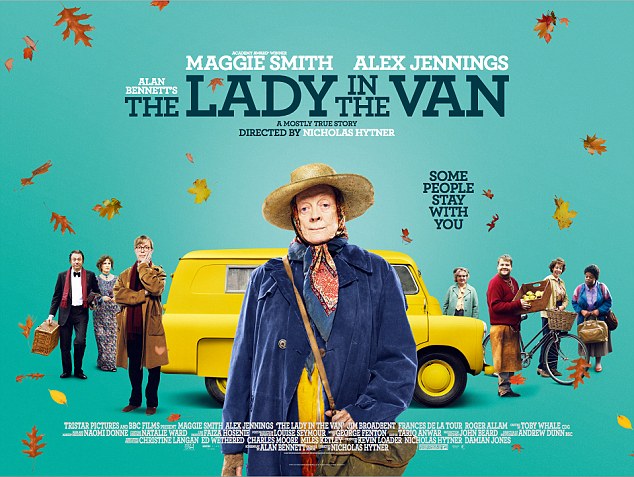
Writer Alan Bennett (“The History Boys,” “The Madness of King George”) got an urgent appeal from a disheveled woman in a kerchief. You know the kind of person I am talking about, the ones we ignore or pretend to ignore. She is not exactly homeless. She has a dilapidated, broken-down van parked on the street near his new home. His neighbors are not unkind. One even tries to bring her food. But for some reason, Miss Shepherd (Maggie Smith) likes Bennett. And for some equally inexplicable reason, he kind of doesn’t dislike her. And for another equally inexplicable reason, as frustrating and annoying and inconvenient and often infuriating as Miss Shepherd (as he always calls her) is, he finds it easier to deal with her than with his own mother, who is beset with her own cognitive challenges.
“A writer is doubled,” Bennett tells us, “the one who writes, the one who lives.” He is clearly most comfortable as the one who writes. And we get to see them both. Alex Jennings plays two slightly different variations on Bennett, the subtle variations of clothing and attitude showing us the tension as he wavers between being involved and observing. Part of him recoils from Miss Shepherd’s “multi-flavored aroma” with a thin layer of talcum powder. Part of him knows that she could lead to exactly what we are watching — a book, a radio play, a theatrical production, a movie with an Oscar-winning Dame in the title role. Yes, she asks if she can park temporarily in his driveway and stays for 15 years. But given the money he made from the story, who was sponging on who?
A writer will inevitably be drawn to the peculiar mix of sense and nonsense, sometimes called a word salad, coming from someone like Miss Shepherd. There’s something about the way she ends her mildly preposterous statements with equivocation. “I’m in an incognito position, possibly,” she tells Bennett. He will learn more about her past, but Bennett has enough respect for us and for Miss Shepherd that there is no attempt to try to explain her. It is just to help us do what he did instinctively, though perhaps reluctantly — to see the person inside the weirdness.
“A proper writer might welcome such an encounter.” Yes, he might. Yet, he thinks, “You won’t catch Harold Pinter pushing a van down the street.” Shouldn’t a writer get to pick his subject? “I don’t want to write about her,” he says. “I want to write about spies.” He knows that “you don’t put yourself into what you write; you find yourself.” And his two selves seem to come closer together as Miss Shepherd disintegrates further. If, as Arthur Miller wrote in “Death of a Salesman,” attention must be paid to people we would prefer to overlook, Bennett has done that for Miss Shepherd, with grace and humanity.
Parents should know that this film includes themes of mental and physical illness, fatal car accident, blackmail, and non-explicit sexual situations and bodily functions.
Family discussion: Why did Alan treat his mother and Miss Shepherd differently? Why does he let her stay? Why are there two Alans and what can we tell from the way they dress and speak?
If you like this, try: “The Madness of King George” by the same author and his early work in “Beyond the Fringe”

 , based on



 , a radio play, a theatrical production, a movie with an Oscar-winning Dame in the title role. Yes, she asks if she can park temporarily in his driveway and stays for 15 years. But given the money he made from the story, who was sponging on who?