Interview: Giulio Ricciarelli of Holocaust Drama “Labyrinth of Lies”

Interview: Giulio Ricciarelli of Holocaust Drama “Labyrinth of Lies”

Posted on October 1, 2015 at 3:43 pm

Giulio Ricciarelli co-wrote and directed the German film “Labyrinth of Lies,” based on the real-life story of the courageous post-WWII German prosecutors who insisted on investigating the atrocities of the concentration camps and prosecuting those responsible. Surrounded by former Axis and Allies officials who wanted to put the past behind them and move on to fighting the communists. He talked to me about the inspiration for the film, what really happens to the movie’s couple after the ambiguous ending, and why the owners of the vintage cars used in the film drove him crazy.

The movie’s opening takes us into a world almost impossible to imagine, where concentration camp survivors are living with the people who imprisoned and abused them and the world has almost no information about what would later come to be called the Holocaust. An artist is offered a light by a teacher watching some children in a school playground. When he bends over to reach the flame, he sees the teacher’s hand and recognizes him as a former Nazi. “That symbolized the theme of the movie, the tormented meeting the tormenter. And the second thing that was important that I wanted it to be a teacher because if you imagine him teaching children that is so horrible and that’s something that actually happened a lot. And so we had these two elements and I knew that as a filmmaker I needed a point of seeming harmony in perfect world, an innocent world. A school is like that. So it was important, the tree and the school and the children playing. And then the movie starts and you realize there is something very wrong there and so it was important to have this. There is a German word that means like a mix of sane and beautiful. It’s like an untouched world.”

The “big complex task” of the film was making what is very familiar to us unfamiliar, so we could feel the shock and horror of the young Germans who came of age after the war and did not know about the “Final Solution.” The movie’s main character is fictional, a young lawyer working as a prosecutor, though some of the other characters are based on historical figures. “That‘s why we choose this young naïve main character, hoping that we enter his world, we start looking through his eyes and the reaction I get is great. It seems to be working with go back in time and go with it. The other thing is esthetically of course; first of all you got to plot what you just mentioned.” The very pervasiveness of the portrayal of the Holocaust created a separate challenge as well. It is so well known that it is impossible to replicate in a persuasive way. The audience at some level always knows it is a re-creation. “The audience can almost hear the director say, ‘Okay lunch.’ And you see actors who are well fed. So I said, ‘Okay, we will not have any of that. We’ll not even have testimony like an actor acting as if he was in a camp and we will trust that these iconic images will come when we give them room to come and the audience.” And so, when the scene comes where a survivor provides testimony for the first time to the lawyers, we do not see or hear him. We just see the reaction of the woman taking dictation, and we feel we know what she heard and saw.
Copyright 2015 Universal Pictures

One reason for the film was to recognize the courage of the lawyers who insisted on the truth. But just as important was showing that the only way to move forward after unthinkable inhumanity is to completely honest about it. “In Germany, anything we do politically or culturally is seen through that lens, that’s the reality and if you are talking about refugees if you are talking about Greece, if we talking about anything it’s all we see in the frame of this. The country who did that now does this. The thing is, you cannot deny it, that’s not the way, and you can’t leave it behind.” One way to do that is what he did here, finding a new way to tell the story by looking at a part that has not been told.

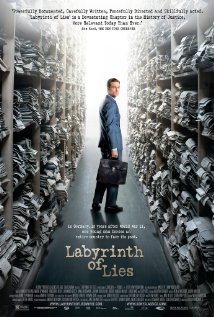
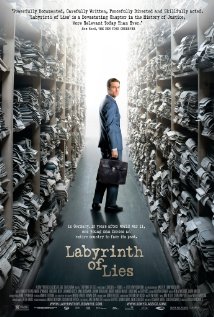
“I think what is important with our film is that it’s a not told story. I think what is most important is the movie doesn’t pull any punches when it comes to the involvement of Germany as a whole because there is sometimes a tendency to show two evil Nazis and the rest of the population is confused. That’s not historical fact but at the same time not to sit on a moral high horse. That’s why the main character says, ‘I do not know what I would done.’ And if you look at the atrocities not just in Germany but all over the world the human beings are usually not heroes but they go along and they do the easy thing and they don’t risk their own lives and there are heroes but they are few and far between.” He described the continual presence of this history in Germany as an iceberg. “Under the waterline it’s still huge and it’s still usually influential in Germany, it’s certainly the biggest influence in German politics and culture today.” Everyone in Germany was supportive of the film and cooperative in helping to get it made, including Frankfort, where they filmed on location at the places where the events actually happened. One of the most striking images is the rows and rows of documents. The real archive no longer exists in that form, but they found another storage facility with old documents and used camera angles to make it look biggers.

But one challenge they faced was the vintage cars they needed for the shoot. “First of all they are very expensive, but you know what the biggest problem is? They are owned by collectors, so in the morning you always get that spit shine car and they would say, ‘Don’t dirty it up,’ but we have to spray dust over it and sprinkle it with dust and tell them to bring it back dirty but the next day it’s clean again.”

He has been very moved by the response to the film from people who still struggle with the truth of what happened. “And how much rawness there still is. Like a woman came to me and said, ‘We have a box from our grandfather and our family and it’s closed as we are all afraid to open it, because we don’t want to know how grandpa died in the war.’ Or the man who shook my hand and said, ‘Thank you for this film,’ and then he went five steps and he came back and he looked me straight in the eyes and he said very quietly, ‘My father was a bad man.'”

The movie ends on a positive note about the prosecution of those responsible for wartime atrocities, including cooperation with the Mossad agents who tracked down Adolf Eichmann. But it is ambiguous when it comes to the future of the couple in the film. I pressed Ricciarelli to tell me what he thought would happen to them after the movie. He told me he shot two endings but went with the one he thought was more realistic. Still, he smiled and admitted “there is a ray of hope.”
Related Tags:


Based on a true story Directors Interview Writers
The Walk

The Walk

Posted on October 1, 2015 at 12:17 pm

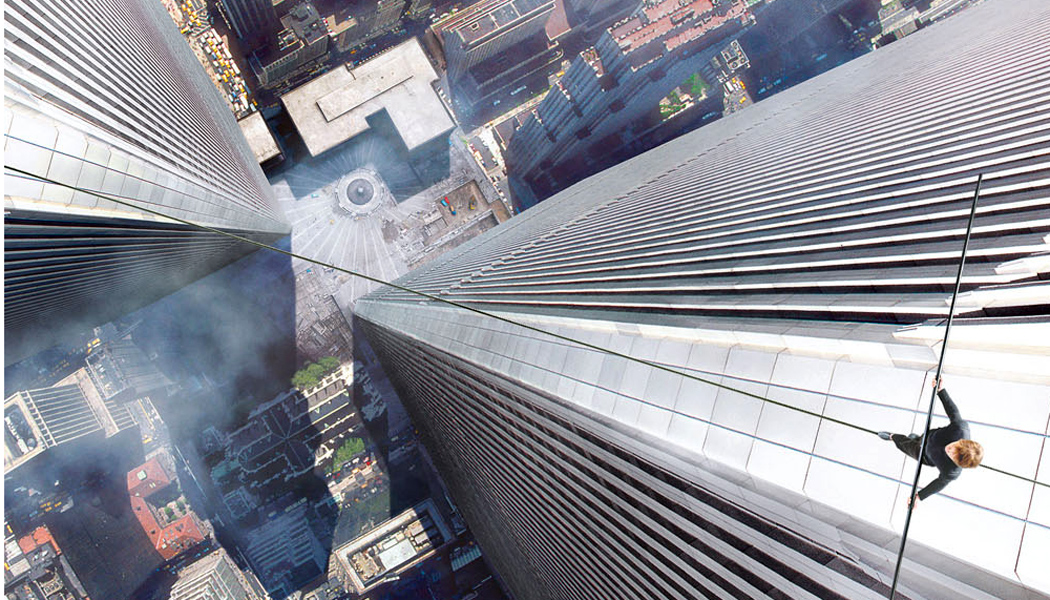
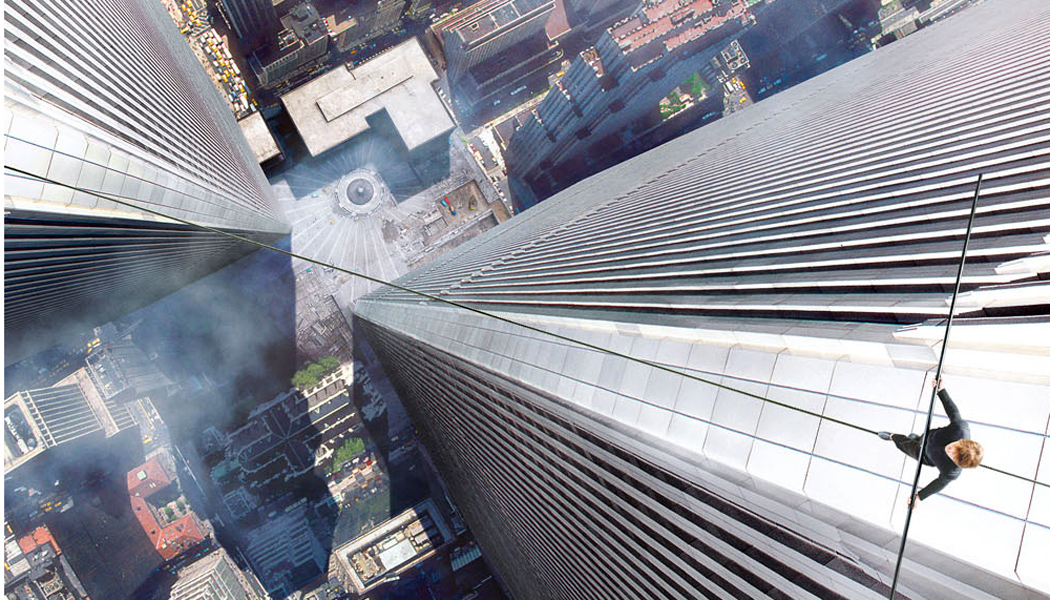
If you have vertigo or acrophobia, you will have trouble with “The Walk,” the story of Frenchman Philippe Petit’s tightrope walk between the towers of the World Trade Center. If you don’t have vertigo or acrophobia, you might have after you watch the movie, with the most stunningly realistic 3D effects ever put on screen. At least I think they’re still just on the screen. It sure feels like it goes on way, way behind it.

Copyright 2015 Sony
Copyright 2015 Sony

“Man on Wire,” a documentary about Petit’s 1974 stunt, or, as he might prefer to say, coup, won an Oscar in 2008. In this film, Joseph Gordon-Levitt, with an accent that just manages to avoid Pepe LePew dimensions, plays Petit, a street performer who saw a photograph of the World Trade Center in the waiting room of his dentist and was instantly consumed with the dream of a walk in the sky, more than 1300 feet above the sidewalk, between the towers. Like Petit himself, the movie does not bother with the question of why this might be a good thing to do. If pressed, he might just say, like Mallory, “Because it’s there.” The problem is that he doesn’t have an answer but still keeps talking and talking. For no reason we keep going back to Petit narrating the story from the torch of the Statue of Liberty. It is distracting and dull.

Petit could not or would not articulate it, but I think I know why. When huge institutions get together to create a world-record setting edifice — taller than the Eiffel Tower, the Frenchman notes — there is something irresistibly enticing about coming back as a lone soul and literally topping it. Director Robert Zemeckis, who can get more excited about the technology than the story in his films, may identify with that challenge. Petit wanted to walk across the sky, with an audience to appreciate it. And Zemeckis wants to recreate that experience for us, taking us to the roof of the Towers, and inviting us to look down.

Still, while we love movies about dreamers of impossible dreams who make them come true, we do like to have a reason, and Petit edges over the line from audacious dreamer to inconsiderate narcissist, despite Gordon-Levitt’s considerable appeal. This lends a hollow quality, overcome less from the story of the film to what is in our own hearts as we watch, knowing what the tragedy that lies ahead for the World Trade Center.

What works well in the first part of the film is Petit’s tutorials with a tightrope master played by Sir Ben Kingsley and the procedural elements once Petit and his team get to New York and start preparing as though they are getting ready to rob a bank. Indeed, it becomes a heist film of a sort because they have to find different ways to sneak into a building that is still under construction and gather the information they need to figure out how to install the cable and keep it from swaying or buckling. And then to install it. There are a lot of problems along the way, including Petit stepping on a nail and injuring his foot and dropping his black turtleneck from the roof when he is trying to assume his performer persona. They omit, however, my favorite detail from the documentary: Petit explains that in America, if there’s pencil in your pocket everyone assumes you are part of the construction team and are entitled to be there. Like the loss of the buildings themselves, Petit’s ability to exploit lax security is a poignant reminder of what we no longer have.

The last half hour or so of the film is breathtaking and well worth the price of admission in IMAX 3D. You will feel that you are on the tightrope with Petit. As the crowd gathers below and the police arrive (who thought a police helicopter would be a good idea?), Petit is suspended in the clouds, mentally, emotionally, and physically. For just a moment, Zemeckis and Gordon-Levitt bring us up there with him, and his dream, however frivolous and ephemeral, becomes ours.

Parents should know that this film has very risky and dangerous behavior, vertiginous 3D effects, brief nudity, some strong language, and smoking and drinking.

Family discussion: What big dream would you like to make come true? Who would you want to be your team?

If you like this, try: the documentary “Man on Wire”

Related Tags:


3D Based on a true story Drama IMAX

FREE Tickets to TONIGHT’s showing of “Just Let Go”

Posted on September 28, 2015 at 1:08 pm

I have FREE tickets for tonight’s 8:00 pm showing of “Just Let Go” at both the AMC Hoffman Theater in Alexandria, Virginia and the AMC Tyson’s Corner, also in Virginia. To get your free tickets, send me an email ASAP at moviemom@moviemom.com with your “Forgive” in the subject line and your full name. We’ll email you the tickets.

On a cold February night in 2007, a devoted father of four and a seventeen-year-old drunk driver both receive life sentences. In one violent, devastating instant, each faces a drastically different and uncertain future. But as Chris Williams sits in his demolished vehicle staring at the car that had just caused the death of his wife, his unborn baby, and his nine- year-old daughter and his eleven-year-old son, he commits to doing something extraordinary: to forgive. Chris’ story is the cinematic tale of how a person can forgive despite the retaliatory tendencies that surface within the darks corners of the human heart showing the world that hope, love and forgiveness can overcome all when you make the decision to just let it go.

Related Tags:


Based on a true story Contests and Giveaways Spiritual films
Stonewall

Stonewall

Posted on September 25, 2015 at 8:00 am

D
Lowest Recommended Age: Mature High Schooler
MPAA Rating: Rated R for sexual content, language throughout, some violence and drug use
Profanity: Very strong and crude language
Alcohol/ Drugs: Drinking, smoking, drugs
Violence/ Scariness: Police brutality, riots, reference to murders
Diversity Issues: A theme of the movie
Date Released to Theaters: September 25, 2015

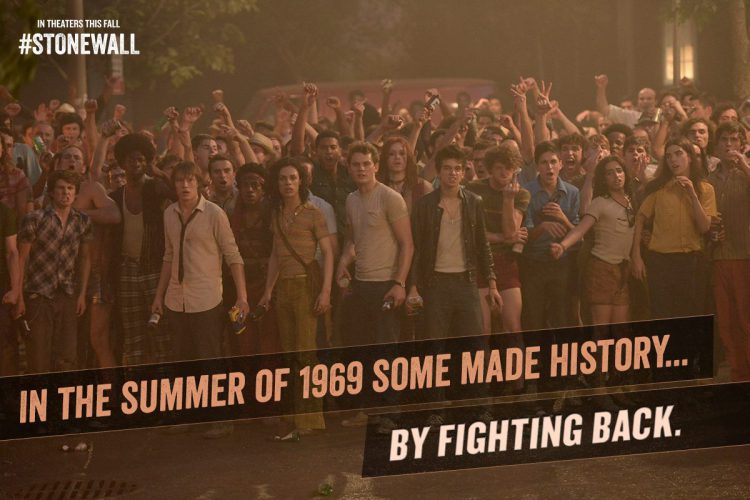
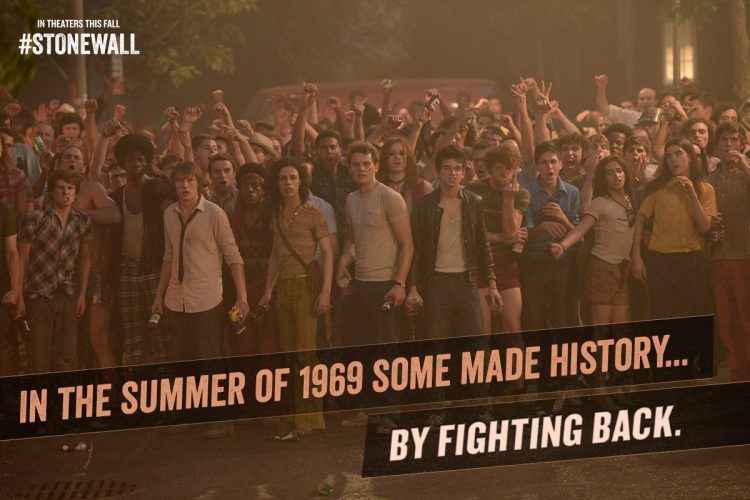
In 1969, when the federal government prohibited the firing of gays and lesbians, when it was illegal for them to congregate in a bar or even to have consensual sex, when police harassment and brutality was not only permitted but expected, a man threw a brick, shattered a window, and began four days of riots that galvanized the fight for GLBTQ equality. The window was in a bar called Stonewall, and its name lives on as the symbol of the moment that ignited a revolution.

The movie “Stonewall,” intended as history and tribute, instead throws a brick through the meaning and the moment, shattering both. This movie is more than bad and worse than disappointing. It is a tragic distortion of a vitally important story that insults the people it tries to honor and insults its audience as well. Director Roland Emmerich (known for movies with a lot of big explosions and stunts) and screenwriter Jon Robin Baitz so vastly underestimate their audience that they apparently believe cannot understand a movie about the GLBTQ community unless we have an all-American-style high school football hero from the heartland to identify with. How do you make a movie about the Stonewall uprising and so completely miss the point?

Copyright 2015 Roadside

Our point of entry is handsome but bland Danny (Jeremy Irvine), a Hoosier who has a crush on the quarterback. He is Goldilocks to the three bears of his family, spread out to represent all points on the gay-friendliness spectrum: a taciturn father (also his football coach), a passive mother, and a devoted and free-thinking younger sister (Joey King). When his assignations with the quarterback are discovered, “faggot” is scrawled on his locker and he is shunned by everyone. He refuses to tell his father that it was a one-time thing and leaves for New York.

And so we shift from tone-deaf cliches about the Midwest to tone-deaf cliches about Christopher Street, with a group of adorably scruffy and flamboyant runaway Lost Boys who spend their time tricking and clubbing. Their leader is an Artful Dodger type known as Ray (Jonny Beauchamp). They sit on the stoop and talk about Judy Garland, alternately enjoying shocking decadence and longing for home. Around the edges of the story are the real-life characters who are far more interesting, or at least who were in real life.

This is a bad movie, purely from the standpoint of drama. It is poorly constructed, with cardboard characters and worst-of-the-year category clangers in dialog, provoking snicker and then outright snorts from the audience. “I’m too angry to love.” “These kids have nothing to lose.” But the monumental failure here is the disrespect for the real-life courageous souls who fought back nearly half a century ago and for the audience, who would relish a film that does them justice.

Parents should know that this film has explicit sexual references and situations, including predatory behavior, abuse, and prostitution, homophobic and bigoted insults, police brutality, and riots. Characters use very strong language, drink and smoke, and use drugs.

Family discussion: How was the gay rights movie like and not like other civil rights movements of the 20th century?

If you like this, try: “Longtime Companion.” “Pride,” and “Milk”

Related Tags:


Based on a true story Drama GLBTQ and Diversity Movies -- format Politics
Captive

Captive

Posted on September 17, 2015 at 8:00 pm

B
Lowest Recommended Age: High School
MPAA Rating: Rated PG-13 for mature thematic elements involving violence and substance abuse
Profanity: Some strong language
Alcohol/ Drugs: Drugs and discussions of drug abuse
Violence/ Scariness: Prison escape, violent murders, tense confrontations, hostage situation
Diversity Issues: Diverse characters
Date Released to Theaters: September 18, 2015
Copyright 2014 BN Films

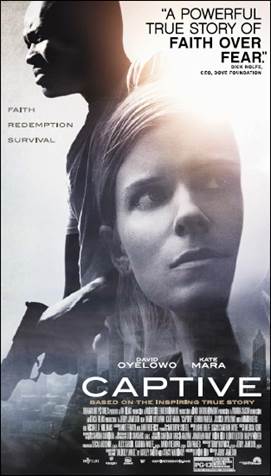
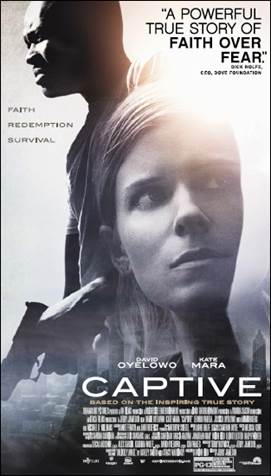
Two desperate people who think they have nothing discover that there is still a lot more to lose in this fact-based story about an escaped prisoner and the woman he held captive.

The story made headlines throughout the country. Ashley Smith, a young widow still in her 20’s, was in the early, fragile stages of recovery from drug abuse. Her daughter was living with Smith’s aunt, but Smith was working hard to be able to care for her. Brian Nichols was in prison, charged with rape. When he was being transferred for his trial, he beat the security guard, stole the civilian clothes he was to wear for the trial, and went on the run, killing a judge and three other people. He grabbed Smith, and forced her to let him into her apartment. He held her there for seven hours before she was able to leave and call 911. While they were together, they talked, she made him pancakes, and she read aloud to him from Rick Warren’s best-seller, The Purpose Driven Life: What on Earth Am I Here For?. The book was given to her by a woman in her 12-step group, and she tossed it in the garbage. But it was waiting for her again at her job. The woman who gave it to her got it out of the garbage can and left it for her.

Kate Mara plays Smith and David Oyelowo plays Nichols, and the heart of the movie is seeing each of them find some humanity in the other. Neither has any reason to trust, and neither does much to earn trust, either. “I’m a mother!” she says when he first captures her. She wants him to see her as a person, and as a person someone else depends on. But she tells him the truth, that her daughter is not there and will not be returning. And then she lies to him and says that her husband is coming home soon. He asks her for weed, and she says there isn’t any, but he can tell from the way she says it that she is holding something else. It is “ice” (meth) and it is in a small packet she almost could not resist shortly before Nichols captured her.

He takes some and tries to force her to take the rest. But she realizes that she would literally rather die than start using again, and it is the strength of that moment that is the turning point for her. Hopped up on drugs, Nichols says he wants Smith and her daughter to come with him to Mexico. He will kidnap his infant son and they can all be together. But he knows it is impossible. Listening to the book, or perhaps seeing Smith get the message that she can still have a purpose even after all her mistakes, helps him understand what he must do. Smith herself says that moment was when faith in God’s love filled her heart and she knew she would be all right.

The movie loses momentum when it shifts to the law enforcement efforts to track Nichols. What matters is two people who think they have lost everything and how one of them chooses life, hope, and purpose.

Parents should know that this movie includes a prison escape with four brutal murders, guns plus reference to drug dealing and another murder, hostage, drugs and discussion of drug abuse, some strong language, and issues of child custody and parental fitness.

Family discussion: What were the most meaningful parts of the time they spent together to Ashley? To Brian? What book would you want to read to someone afraid and in pain?

If you like this, try: the book by Ashley Smith Robinson and Rick Warren’s The Purpose Driven Life

Related Tags:


Based on a book Based on a true story Crime Drama Movies -- format Spiritual films
THE MOVIE MOM® is a registered trademark of Nell Minow. Use of the mark without express consent from Nell Minow constitutes trademark infringement and unfair competition in violation of federal and state laws. All material © Nell Minow 1995-2026, all rights reserved, and no use or republication is permitted without explicit permission. This site hosts Nell Minow’s Movie Mom® archive, with material that originally appeared on Yahoo! Movies, Beliefnet, and other sources. Much of her new material can be found at Rogerebert.com, Huffington Post, and WheretoWatch. Her books include The Movie Mom’s Guide to Family Movies and 101 Must-See Movie Moments, and she can be heard each week on radio stations across the country.

Website Designed by Max LaZebnik