Interview: Robert May of “Kids for Cash”
Posted on June 23, 2014 at 8:00 am
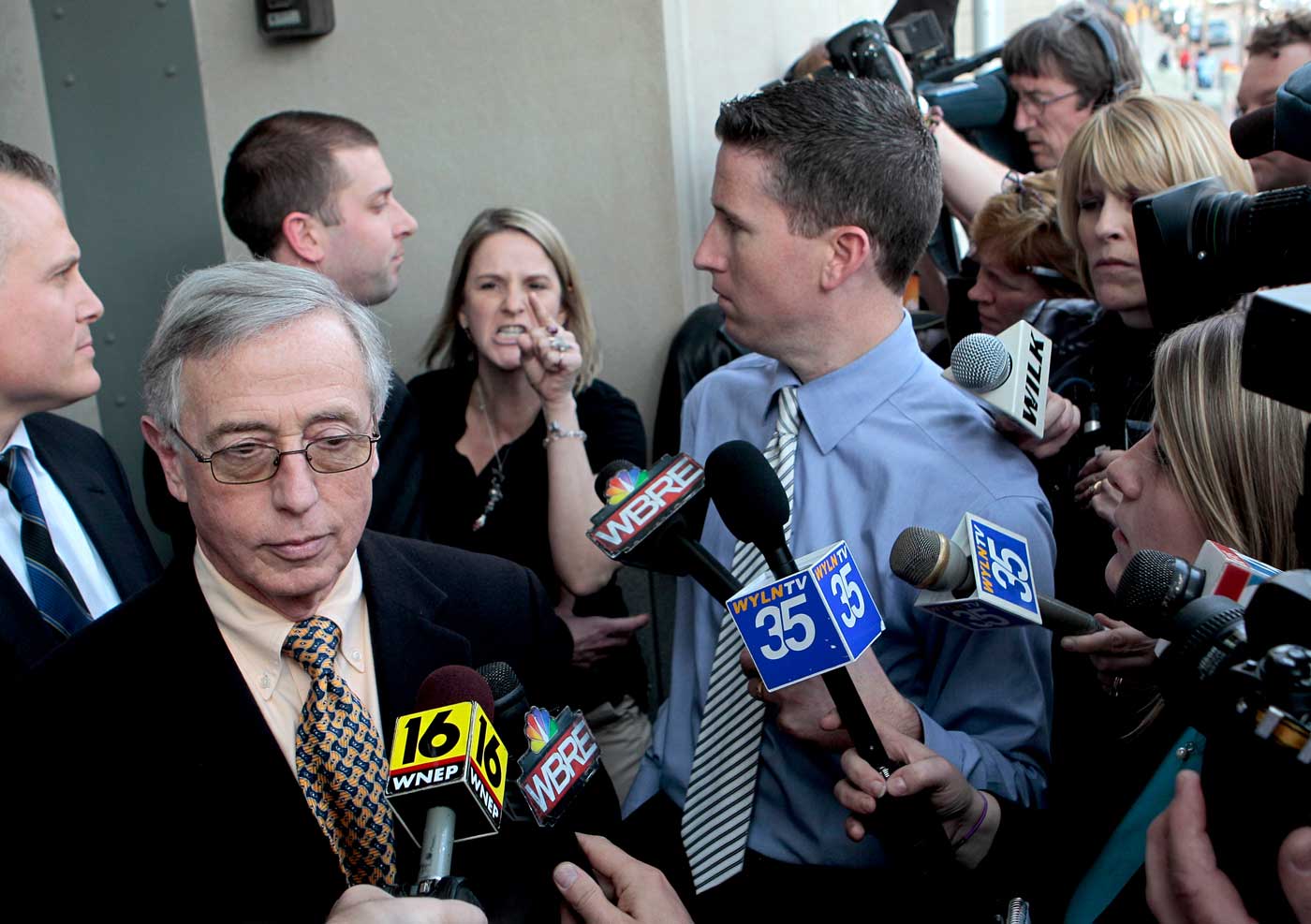 One of the most outrageous scandals in the history of the U.S. justice system involved two judges who took undisclosed multi-million dollar payments from the developer of a privately owned and operated facility for incarcerating teenagers. A “law and order” judge named Mark Ciavarella was elected after promising to take a hard line on kids who broke the rules. Even before he took the payments, he imposed the harshest possible sentences for even the most trivial of violations. Over 3,000 children were taken away from their parents and imprisoned for years for crimes as petty as creating a fake MySpace page making fun of a school vice-principal or shoplifting a few DVDs. The kids who emerged were often permanently damaged by years of imprisonment and exposure to brutal fellow inmates.
The heroic intervention of Juvenile Law Center, founded in 1975, the oldest non-profit, public interest law firm for children in the United States led to the exposure of the scandal and the incarceration of the two judges who took payments from the developer.
Robert May’s searing documentary about this scandal and the larger problems of our juvenile justice system is called Kids for Cash
How did the tragedy at Columbine affect the support Ciavarella got for his hardline approach in the first campaign?
The first campaign was in 1995 and the Columbine shootings occurred in 1999. Judge Ciavarella ran on a “lock-em-up” platform in 1995 and the community loved the idea. After Columbine, he felt that he had been ahead of his time in that he was always tough on kids. After Columbine, he simply had even more support for Zero Tolerance.
One of the people in the movie suggests that the schools were supportive of his approach because it was a way for them to get rid of troublemakers. Is that your assessment as well?
Yes, schools routinely invited Ciavarella to speak at assembly’s letting kids know that if they came before him, he would be glad to send them away. Schools, police and the community at large, liked the “idea” that he was a zero tolerant judge so; he was very popular on the “speaking circuit” and had a busy speaking schedule to prove it. And lastly, he always made good on his word, he would send the “troublemakers” away.
https://www.youtube.com/watch?v=Q21KnjiJ0xIDid any kids ever appear before Ciavarella and go home?
Yes, he did not send every kid into detention. His placement average was 22% during his tenure in that 22% of the kids who went before him, were locked up.
Since the Supreme Court’s Gault decision in 1967, courts are not supposed to give harsher sentences to teenagers than to adults but it seems that this was the case here. Was that because the parents were found incapable of handling them?
While the Gault decision was landmark in that finally kids had some rights, kids are still not afforded all the same rights in a practical way. For example, if they want to appeal their “conviction” that process takes so long that they will be in and out of incarceration before the appeal is likely heard. And because of indefinite probation and zero tolerance, kids can easily be re-incarcerated. Kids should never be able to waive their rights to counsel because they’re kids, yet many states allow for kids to appear without legal representation. Also, the so-called crimes like fighting, verbal altercations etc., it would be extremely rare for an adult to be charged and incarcerated for similarly detailed offenses.
The judge tells a very compelling story about his own teenage law-breaking and his parents’ reaction. How do you think that affected him? Did he apply the same hard line to himself? What do we learn from his daughter’s comments?
To Judge Ciavarella, it seemed clear that his parents had the right idea on discipline and tough love. He felt that his parents know how to raise their children and by contrast, stating in the movie, “parents don’t know how to be parents.” He felt that the juvenile system was there to take over and teach kids what their parents were not. He also was a zero tolerant parent to his own three kids who told me how if they “simply left the top off of the toothpaste tube, they would be grounded.” He was proud of how his parents raised him and was proud when telling us the story of how his father knocked him out thereby teaching him right from wrong. He completely missed the irony of his current situation.
Why did he agree to talk to you and what did you do to gain his trust?
I felt that the media had painted a very one-sided story and so I first approached Judge Ciavarella with that thought in mind. Specifically, I approached him with the idea that we intended to do a film on the scandal and wanted to tell the story from the perspective of both the victim and the villain. I pointed out that I felt he was the “villain” in our story, which he quickly acknowledged. Initially he was interested in talking to us but only after the federal prosecution was over. That was a deal breaker for us because we wanted to follow the active story and stay behind the scenes as he went through the prosecution. After a few weeks of consideration, he contacted me to let me know that he would participate under the condition that he not inform his attorney. That of course seemed crazy to me however, he was a lawyer and a judge and so if he was ok with that, I would be too. The same presentation was then made to Judge Conahan who agreed to take part in the film under the same terms.
How did you first hear about the case and what captured your interest?
My producing partner (Lauren Timmons) and I were working on another project, a fiction film about power, greed and kids…(seriously) when the scandal broke in January 2009. We were actually working in Pennsylvania at the time where this “fiction” film was to take place. And, while my offices were in NYC, I actually live in Luzerne County PA where the scandal took place. I became fixated with how such celebrated guys, “judges” could fall so far right under the noses of the community, and me. While I did not know either of the judges, it’s likely that I voted for them both. The way the story had been portrayed was basically this – One-day these greedy judges who had been scheming for years to lock kids up in exchange for millions of dollars, finally implemented their plan… and then got caught…with a relative “period” after the story. That seemed ludicrous to me as there are always many parts and layers to a story and that’s what I was looking to uncover. I got more than I bargained for because at first, I had no idea that there was a bigger story looming about how we treat kids and that basically, no one cared.
Would things have been different if the new facility was built by the government and not by a private firm?
Yes, the scandal would have never occurred, Judge Ciavarella and Conahan would still be judges, thousands of kids would still be locked up for years and the larger story about the way we treat kids everywhere would never be known to the general public.
Ciavarella is adamant that it was never “kids for cash” and the prosecutors chose not to charge him with that in part because the number of kids he sent away did not increase after the payment he received. So, why chose that for the title?
Good question and one that gets asked now and again. In fact, during Q & A’s for the film, some folks routinely mentioned that the story was larger than the accusation of sending kids away for money. And to me, that was the point. The idea of this title took me right back to when I first heard of the scandal (by the same name) it grabbed my interest. The phrase “Kids For Cash” stuck, in that it was a sexy story as far as the media was concerned and it’s all anyone talked about – a judge locking kids up for money. I like films that respect the audience for their ability to think and I wanted our audience to ponder and be curious about a likely larger story without having the film be preachy in the face of a tell-all title. At first, this was a simple story that was in essence minimalized by the razor focus on one guy, “the judge,” when in fact it took an entire community to support what he was actually doing to the kids (money or not). Then to learn that his practices are basically in play all around the country without any exchange of money really does lead to the bigger question of “just how are we treating kids who need special care and attention?” I also wanted the story structured in the same way that the public was first introduced to the story, then in the second act, begin to peel back the layers of complexity without a voice-over telling the audience how to think and finally in the third act, present the broad consequences of both the judges actions and the actions or lack of actions of others leading to an awareness of how little respect “we” have for adolescence.
What was your biggest challenge in making this very complicated story understandable?
Well first, getting the judges to agree to talk with us for what turned out to be years and keeping that all a secret. And, to that point, I felt a bit of a rush when I was told that their attorneys first found out that their clients had participated in the film (for years) when the trailer started playing in movie theaters. But really, the biggest challenge in telling the story was the balance of stories between the villains (judges) and the victims (kids and families). That took a couple years of editing and many NDA (non-disclosure) research screenings with moviegoers and advocates. In other words, we knew that if the balance between the villain and the victim was off, people would be confused. Perhaps one of the most notable comments we’ve received regarding this balance was from the critic Carrie Rickey who said “I see about 400 films per year and I’ve never seen a film that puts the villain and the victim in the same story in such a compelling way as in “Kids for Cash.”
Have there been any improvements in the juvenile facilities in Pennsylvania as a result of the litigation? Are teenagers given any counseling or educational services?
Yes and no. For example, juveniles must now be represented by an attorney when in juvenile court and kids can only be handcuffed and shackled in court under certain circumstances. There is also an effort in Luzerne County where the scandal occured, to improve the system overall and fewer kids are being sent away there. Also, “evidence based programs” which deal with the entire family, not just the kids, are becoming more popular but that popularity is very slow. People who see the movie all around the country leave the theater (now perhaps their living rooms) angry and disillusioned about the complete disregard and disrespect for kids and are demanding change. Evidence based programs is a good start but people need to know that they exist and that they are needed and… cost about one tenth of the cost to lock a kid up. That said, out of the top ten most populated states, Pennsylvania currently ranks number one on the incarceration of children – this, five years after the scandal.
What is your sense of how other communities are handling juvenile justice?
We’ve learned from screenings all around the US, that communities really are unaware of how kids are treated when they fall into the system. They are unaware of how schools greatly contribute kids into the system. And, they are unaware of how long a kid can remain in the system. After a screening in Denver CO to a large group of juvenile court judges, one judge stood up after the screening and said “what’s this thing you refer to in your film as ‘indefinite probation’ we don’t have that here in Colorado.” Before I could respond, another judge immediately said “yes we do, you can hold a kid until they are 21 years old – every state utilizes ‘indefinite probation’.” Another judge stood up and said “well, if a family sees this film in Colorado and their child comes before juvenile court here, they will see that we do things right.” My response was this… “I’ve screened the film to regular moviegoers all around the country and when they find out that that 54% of the kids in Luzerne County Pennsylvania were not represented by an attorney, they draw a straight line to the money. However, you do know that in this state 45% of ALL juveniles across the entire state are not represented by lawyers and in three jurisdictions , it’s as high as 60%.” That judge sat down with a red face. I have many many stories just like this one that exemplify how unaware not just the public is, but how unaware judges, lawyers, school officials and others are when it comes to the treatment of kids within the system.
There are some despicable people in this film but also some heroes who show remarkable courage and integrity. What kept them going?
There are some real heroes in the film for sure. First, the newspaper reporter Terrie Morgan had worried about the stories she’d been hearing on how kids were being treated and whiles she wrote about those stories, few paid much attention. This seemed to be true in other communities around the country as well. A reporter reports a few parents complaining about the treatment of their kids and the communities pay little attention instead the reaction is more like “oh please, just because you’ve got a bad kid, stop complaining and start parenting.” Second, Hillary Transue’s mother Laurene is one of those mothers who was going to stop at nothing until she got her daughter out. While other parents had similar passion, they were fraught with obstacles not unlike Laurene’s. The main difference is that Laurene found the Juvenile Law Center who took on her fight. This center has been around for 40 years now and is the largest non-profit children’s law center in the country and specializes in advancing the rights of children. Prior to the film, those who really needed their services were the only people who knew them and even then, few knew about their work. The Juvenile Law Center systematically reviewed the circumstances surrounding Hillary’s case and were moving to get her out. But that also proved to be very difficult because they were taking on a powerful judge will little if any support from the community. It was not until the federal government announced that they had been investigating the judges and the connection to the newly built for-profit juvenile detention center that a “perfect storm” began to brew.
How are the kids doing?
Because of how this film has affected me personally, I have stayed connected to all of the kids and families and I am continually taken by the scars they have. They all still suffer in some way. Charlie is still suffering with addiction and has been jailed twice since the film has been released. That said there are a few good things to report. Amanda had a baby girl and still resides in California with her father and while she still suffers from PTSD, the film has allowed her to face her past and hold her future in a more promising way. Hillary Transue is now in grad school at Wilkes University (Pennsylvania) and is a grad assistant in their Creative Writing Program. Justin is about to begin college and plans to attend Wilkes University in the fall. Sandy (Ed’s mother) is still dealing with the grief of losing her son but is very active in support of change within the system. Judge Ciavarella’s daughter Lauren has formed an unusual connection with both Hillary and Justin as she moves to advocate for change within the juvenile system. All of the kids and families remain connected to the film in that they are still anxious to participate in panel discussions. In fact, Hillary and Justin were part of a panel in Washington DC when the film screened on three separate occasions for the U.S. Dept. of Justice, Congress on Capitol Hill and for the U.S. Dept. of Education. They are moved by the kindness and concerns from those who see the film, feelings that they had never experienced in their early life within the system.
What’s your next project?
That is a question that I’m being asked all the time now and I’m grateful that people are interested enough to pose it. It will be hard for me to transition into another project after five years on Kids For Cash, a film, which changed my entire view of the world. But, I have a number of projects both fiction and non-fiction that I’m considering. It would be great to take a few months off in between but I’m not sure that’s in my DNA.