Florence Foster Jenkins

Florence Foster Jenkins

Posted on August 11, 2016 at 5:29 pm

Copyright 2016 BBC Films

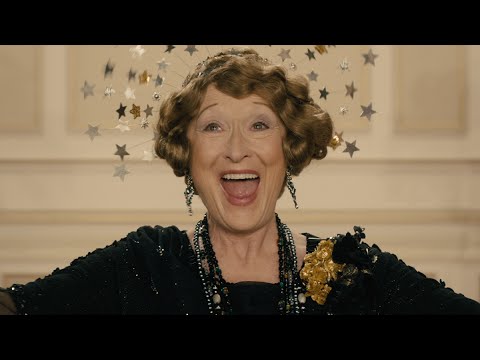
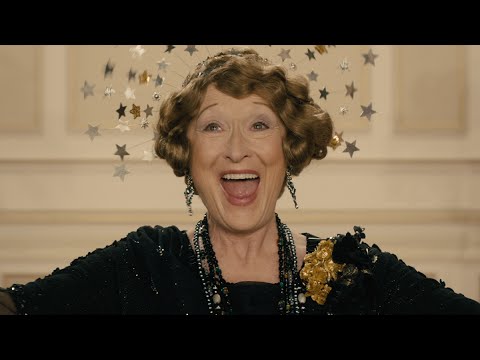
The charm of the popular “Lip Synch Battle” series is the way that the contestants, all very talented and successful performers, transcend the limits of race and gender — and other limits, too, like vocal range. In her way, real-life heiress Florence Foster Jenkins was doing the same thing a century ago. Her dedication to music was monumental. So was her lack of talent. But she lived a blissful life with a devoted husband, staging elaborate tableaux and concerts. Like the emperor with the non-existent and therefore invisible new clothes, she was surrounded by people who never told her that her singing was a disaster in every category, from hitting the right note to staying in any single key from measure to measure.

In the second film of 2016 based on the life of Ms. Jenkins, Meryl Streep gives (of course) a performance of exquisite humanity and precision. (Earlier this year, the French film, “Marguerite,” was also inspired by Jenkins.) You have to know how to sing well (see “Mamma Mia,” “Postcards from the Edge,” and “Ricki and the Flash”) to sing this badly and you have to be an actor of sublime perfection to make terrible singing funny and brave and poignant. Hugh Grant is also superb as the magnificently named St. Clair Bayfield, Jenkins’ consort, a failed Shakespearean actor who shares Jenkins’ passion for performance and almost envies her complete freedom from self-awareness.

There are lovely performances from Nina Arianda as a brassy showgirl who married a wealthy man, Rebecca Ferguson (“Mission Impossible: Rogue Nation”) as Bayfield’s girlfriend, and “Big Bang Theory’s” Simon Helberg as Jenkins’ long-suffering accompanist, the equally magnificently named Cosmé McMoon. Jenkins is the ultimate exemplar of the Dunning-Kruger syndrome: those who are least able are also worst at assessing their own ability. The fun of this film, far more than laughing smugly at Jenkins’ cluelessness, is the fantasy of having endless resources to create our own fantasies of stardom.

Parents should know that this film includes drinking, smoking, sexual references and non-explicit situation, and a sad death.

Family discussion: Was St. Clair right to hide the truth from Florence? What do we learn from her visit to Cosme?

If you like this, try: The documentary “Florence Foster Jenkins: A World Of Her Own”

Related Tags:


Based on a true story Biography Comedy Drama Musical
Don’t Think Twice

Don’t Think Twice

Posted on August 4, 2016 at 5:53 pm

B+
Lowest Recommended Age: Mature High Schooler
MPAA Rating: Rated R for language and drug use
Profanity: Very strong language
Alcohol/ Drugs: Drinking, drugs
Violence/ Scariness: Sad offscreen death
Diversity Issues: Diverse characters
Date Released to Theaters: August 5, 2016
Date Released to DVD: December 5, 2016
Amazon.com ASIN: B01IV40HUY

Life is pretty much improv, after all. We are constantly challenged to respond to what we cannot predict. But we do not have the two foundational rules that make performance improvisation so compelling. First is “yes, and.” Whatever anyone on stage says or does, everyone else has to build on it. If someone says, “Wow, it’s cold in here,” no one is allowed to say, “What do you mean? We’re outside and it’s warm.” You have to say something that takes what the first person said to the next level, maybe “Yes, who turned the air conditioning down to 60?” Or even, “Well, there’s really no practical way to heat an igloo.” It is the high-wire without a net act of improv group’s lightning quick, sharply observed, and deftly funny scenes that audiences enjoy.

Copyright 2016 Film Arcade

The other fundamental rule is what improvers say to each other before they go on stage: “I’ve got your back.” Improv is about the group, not the individuals. “Don’t Think Twice” is the story of an improv group called The Commune, suggestive of its familial, interdependent, collegial quality. They are something like a family, if a dysfunctional one. While they have very different backgrounds and goals, the way they come together on stage is, at least for now, enough to make them feel they have a home together.

The closest thing they have to a leader is Miles (writer/director Mike Birbiglia of “Sleepwalk With Me”), who is a little older and taught many of them. He is still teaching improv classes and often has brief affairs with the young women who are his students. Samantha (Gillian Jacobs) and Jack (Keegan-Michael Key) are a couple. Allison (Kate Micucci) is a quiet woman who is working on a graphic novel. Jill (“Inside Amy Schumer” writer Tami Sagher) lives with her parents and is the only one who does not have money problems. And Bill (Chris Gethard) is making ends meet by handing out hummus and chips in the grocery store. “Your 20’s are all about hope. And then your 30’s are all about realizing how dumb it was to hope,” one character says.

The group is presented with some bad news and some good news, two crises that expose the fragility of their connection. They are about to lose their performing space, and there are no alternatives they can afford. And Jack and Samantha achieve the most coveted of opportunities, the chance to audition for a television program that is the equivalent of “Saturday Night Live,” a sketch comedy show that is a major cultural institution. Both put enormous pressure on the group, and the sense of desperation, jealousy, and competition shatters their pretense of unity and endless support for one another. At the same time, Bill’s father becomes critically ill, which gives them a way to continue to connect.

Birbiglia’s “Sleepwalk with Me” showed great promise. The transfer from stand-up to screen was awkward, but the atmosphere and the specifics of life on the road as a comedian were exceptionally well handled and he is on screen, as on stage, an engaging character. Here he once again takes us unto a very specific world that we can all relate to, especially when it comes to the way the characters use humor to reach a place of honesty. Birbiglia takes a risk here, making Miles less likeable, but it works as he very effectively creates real and vivid characters who have to figure out who they are when they are offstage. While the first film gave us one perspective, this one expands with a clear-eyed but generous take on each of them. So, the individual stories work and they provide balance and counterpoint. Even family members have to grow up, accept responsibility, and decide when to change course.

Parents should know that this film has very strong language, sexual references and an explicit situation, rude humor, sad death of a parent, drinking and drugs.

Family discussion: Why is it important to say “yes, and?” Is it sometimes hard for you to be happy when your friends succeed?

If you like this, try: “Sleepwalk With Me” and Mike Birbiglia’s short film on YouTube, “Fresh Air 2: 2 Fresh 2 Furious”

Related Tags:


Comedy Drama DVD/Blu-Ray Pick of the Week Independent

Trailer: Loving

Posted on July 17, 2016 at 8:00 am

“Loving” stars Joel Edgerton and Ruth Negga as the real-life couple who challenged miscegenation laws all the way to the Supreme Court.

Every family should see the outstanding documentary about the case, The Loving Story.

Related Tags:


Based on a true story Courtroom Drama Trailers, Previews, and Clips
The Infiltrator

The Infiltrator

Posted on July 12, 2016 at 5:25 pm

B
Lowest Recommended Age: Mature High Schooler
MPAA Rating: Rated R for strong violence, language throughout, some sexual content and drug material
Profanity: Very strong language, homophobic slurs
Alcohol/ Drugs: Drugs and drug dealing, alcohol, smoking
Violence/ Scariness: Extensive and graphic violence, guns, car crash, mob executions, disturbing images
Diversity Issues: Diverse characters
Date Released to Theaters: July 12, 2016
Copyright 2016 Broad Green

“We’ve been following the drugs to get to the bad guys. What if we follow the money?” That simple suggestion from FBI undercover agent Bob Mazur (Bryan Cranston) led to an unprecedented massive series of arrests that brought down key members of Pablo Escobar’s cocaine operations — and the world’s 11th biggest bank. Based on Bob Mazur’s book, and with Mazur as a producer, it is set in 1980’s Florida, where Excobar was smuggling in literally tons of cocaine. Getting it into the country was easy. Selling it was easy. Paying off, threatening, and torturing anyone who tried to stop them was easy. The biggest challenge they faced was moving the money between countries.

Mazur, trained as an accountant, went undercover and offered money laundering services to Escobar’s lieutenants, funnelling their stacks of cash through “legitimate” companies and criminal-friendly jurisdictions like Panama, then led by Manuel Noriega. He was able to gain the trust of the drug dealers. It was even easier to get the cooperation of bankers, including the prestigious international financial institution BCCI.

This movie, directed by “The Lincoln Lawyer’s” Brad Furman is sincere, diligent, a little corny, and for better and worse exactly what you expect from a fact-based story of an FBI undercover operative. There is the anxious and at times impatient wife. “Promise me this is the last one.” “I’m just wondering where my little Bobby the accountant went?” She has the thankless task of sighing, getting upset when their anniversary celebration is ruined when he has to go into character because they run into one of his criminal buddies, being jealous of his relationship with a beautiful female agent posing as his fiancee (Diane Kruger) and telling him he should have taken the chance for early retirement.

For a tense crime drama, it is surprisingly inert. We learn very little about what is involved in laundering money to prove himself to the bad guys or how the investigation proceeded or what goes into a long-term undercover operation. Mazur shows up in a Rolls Royce and has access to a mansion. Both were confiscated from drug dealers, but we do not learn that from the movie. What we do see is Mazur going home at night to his modest suburban house and his wife and children and jogging through his neighborhood. Presumably Escobar, one of the most ruthless criminals in history, would not turn over hundreds of millions of dollars to someone without making sure he was who he said he was. Mazur comes across as near-saintly, so even Cranston cannot give the character much by way of depth. The conflicts he feels about betraying a man who trusts him are confusing. Even when he is played by the elegant Benjamin Bratt, he is still a barbaric thug. The “Red Wedding”-style climax is synthetic, which, come to think of it, is the problem throughout. This is a movie about a faker that never feels real.

Parents should know that this film has very intense peril and violence, very disturbing and graphic images, guns, car crash, mob executions, characters injured and killed, very strong and crude language throughout with some homophobic slurs, some nudity, sexual references, drinking, smoking, and drugs and drug dealing.

Family discussion: Do you agree with the sentences received by the people who went to jail in this film? What makes someone good at undercover work?

If you like this, try: “Donnie Brasco,” “American Hustle,” and “Kill the Messenger”

Related Tags:


Based on a book Based on a true story Crime Drama Movies -- format
Free State of Jones

Free State of Jones

Posted on June 23, 2016 at 5:40 pm

B+
Lowest Recommended Age: High School
MPAA Rating: Rated R for brutal battle scenes and disturbing graphic images
Profanity: Some strong and racist language
Alcohol/ Drugs: Alcohol
Violence/ Scariness: Intense and graphic violence including battle scenes, hanging of adults and children, brutal abuse, rape, and lynching
Diversity Issues: A theme of the movie
Date Released to Theaters: June 24, 2016

freestateofjonesThe timing is not great. “Free State of Jones” is a Civil War drama based on the true story of a community of Confederate deserters and runaway enslaved people who banded together to fight for their own vision of freedom. It was filmed once before as “Tap Roots,” with Van Heflin, Susan Hayward, and Boris Karloff (as an Indian!), but this version, from “The Hunger Games'” Gary Ross, deals forthrightly with the racial issues, or at least tries to. There is an inescapable and maybe unconquerable problem in telling a story set in Civil War era Mississippi with a glorified white man as the hero, in a time when one of the most anticipated films of the year is the Sundance Grand Jury and Audience award winner “Birth of a Nation,” a film that grabbed and repurposed its title from the blatantly racist D.W. Griffith film of the silent era.

Ross brings the same passion for tackling tyranny to this story that he did to “Hunger Games.” It’s just that we’re no longer dealing with speculation and metaphor, and that means a political overlay reflecting both historical and contemporary controversies.

Matthew McConaughey plays Newt Knight, a Mississippi farmer with a wife and young son who is serving as a nurse in the Confederate army. Early on, we see him removing the uniform from a wounded enlisted man so he can tell the doctors he is an officer and get him treated. Increasingly frustrated with the endless carnage on behalf of wealthy elites who exploit the poor, it is too much for him at last when his nephew is killed in battle and he leaves, taking the body home to be buried. There he finds the Confederate forces are taking all of the food from the local farmers, leaving them to starve. On the run from the military seeking defectors, he hides out in a swamp, where he meets up with runaway slaves. There he decides that his allegiance is not to the Confederacy, which is sending poor boys to fight to preserve what today we might call the 1 percent. “I ain’t fighting for cotton,” another solider tells him. “I’m fighting for honor.” “That’s good,” Knight responds. I’d hate to be fighting for cotton.”

Writer/director Ross, working with the locations where these events occurred and a touching score from Nicholas Britell, evocatively conveys the hardscrabble lives, the literal and spiritual grit, the desperation and conviction it inspires. Knight hands guns to three little girls and, when the Confederate officer does not take them serious, Knight tells him that guns will shoot anybody. “It don’t seem to matter where the bullet comes from.” The depth of research is evident throughout, but it is never pedantic. The storyline is grounded in historical events like the Confederacy’s requisitioning of food and supplies, and post-war exploitation and terrorism, led by former Confederate officials, that prevented former enslaved persons from basic rights and murdered those who tried to assert them. There are brief glimpses into a conflict 85 years later, as the descendent of Knight’s relationship with a former slave named Rachel (Gugu Mbatha-Raw) is criminally prosecuted for marrying a white woman in violation of the state’s laws prohibiting mixed marriages. It is there to remind us that we can never dismiss the events of the past as behind us.

Parents should know that this film has very intense and graphic violence including Civil War battles and skirmishes, hanging, rape, and lynching, adults and children injured and killed, very disturbing images, some strong language with racist epithets, some sexual references

Family discussion: What did Knight find most unjust about the Confederacy?  What did we learn from the 1948 courtroom scenes?

If you like this, try: “Glory” and “The Red Badge of Courage” and read about the story that inspired the film.

Related Tags:


Based on a book Based on a true story Drama Epic/Historical Movies -- format Race and Diversity War
THE MOVIE MOM® is a registered trademark of Nell Minow. Use of the mark without express consent from Nell Minow constitutes trademark infringement and unfair competition in violation of federal and state laws. All material © Nell Minow 1995-2026, all rights reserved, and no use or republication is permitted without explicit permission. This site hosts Nell Minow’s Movie Mom® archive, with material that originally appeared on Yahoo! Movies, Beliefnet, and other sources. Much of her new material can be found at Rogerebert.com, Huffington Post, and WheretoWatch. Her books include The Movie Mom’s Guide to Family Movies and 101 Must-See Movie Moments, and she can be heard each week on radio stations across the country.

Website Designed by Max LaZebnik