My Dead Friend Zoe

My Dead Friend Zoe

Posted on February 27, 2025 at 12:40 pm

A-
Lowest Recommended Age: Mature High Schooler
MPAA Rating: Rated R for language
Profanity: Very strong language
Alcohol/ Drugs: Drinking, smoking
Violence/ Scariness: War violence, suicide, mostly offscreen
Diversity Issues: Some sexist and harassing characters
Date Released to Theaters: February 28, 2025

Sonequa Martin-Green gives an exquisite, unforgettable performance in a story of love, grief, memory, and healing, “My Dead Friend Zoe.” First-time writer/director Kyle Hausemann-Stokes was a Bronze Star-awarded paratrooper in the US Army who served as a convoy commander in Iraq. He brings enormous specificity and understanding to an “inspired by a true story” film, with Martin-Green as Merit, a veteran struggling with PTSD. As she says, her struggle is not over “an incident but a person.”

My Dead Friend Zoe

That person is Zoe, played with warmth and bone-dry humor by Natalie Morales. Merit and Zoe have the kind of deep connection that comes from a similar response to intense and terrifying circumstances rather than some of the factors that sustain other friendships like interests in common. The way they talk to each other shows that their rhythms synch perfectly. They can finish each other’s thoughts; they are endlessly supportive through and in spite of perpetual teasing; they can switch seamlessly from joking to, if not seriousness, joking grounded by sincerity. When male soldiers demean Merit with sexist remarks, Zoe stands up for her friend, even though they outrank her. They utterly trust and rely on each other.

For that reason, Merit does not see that they have differences of increasing importance as their terms of service are ending.

Or rather, did not see. As the movie begins, Merit’s service has ended and she is back at home, profoundly traumatized. She will not let herself remember how her best friend Zoe died. Instead, she is awash in memories so vivid she feels like Zoe is still with her. And she likes that feeling. She is not ready to let Zoe go.

We can see why. Morales, always endlessly appealing on screen and here in a perfect role, the warm, wise-cracking, ride or die friend we would all love to have, imaginary if necessary.

Hausemann-Stokes depicts the imaginary character with assurance and exceptional delicacy, especially impressive for a first-time writer/director. It would be easy to make this concept intrusive or unintentionally funny. But we can see, thanks to sensitive writing and Martin-Green’s extraordinary performance. Oscar-winners Morgan Freeman and Ed Harris show up to provide able support. Freeman plays a support group counselor and Harris is Merit’s grandfather, Dale, a veteran whose service inspired Merit to enlist and whose early dementia is both another source of loss and a possibility of finding some purpose. Their scene together in a boat on the lake near his home is especially moving and one of many graceful moments that expand our understanding and move the characters forward.

Merit meets Alex (wonderfully appealing Utkarsh Ambudkar) and their immediate connection gives her the first sense of future possibilities, her first reason to think about leaving Zoe in the past. Hausemann-Stokes and his brilliant cast get the details right to bring us into this world and expand our understanding of our own struggles with loss.

Parents should know that this movie deals with wartime peril and violence, suicide, and post-traumatic stress disorder. Characters drink, smoke, and use very strong language. A character has dementia and there is family stress.

Family discussion: What is survivor guilt? How does Dale help Merit think about memory and loss? Why didn’t Merit know what Zoe was worried about?

If you like this, try: “The Outpost” and “Thank You for Your Service”
Related Tags:


Drama Inspired by a true story movie review Movies -- format Movies -- Reviews Romance War
Suze

Suze

Posted on February 6, 2025 at 12:53 pm

B +
Lowest Recommended Age: High School
MPAA Rating: Not rated
Profanity: Strong language
Alcohol/ Drugs: Teen drinking, drugs
Violence/ Scariness: Attempted suicide
Diversity Issues: None
Date Released to Theaters: February 7, 2025
Suze
Copyright Tribeca Films 2024

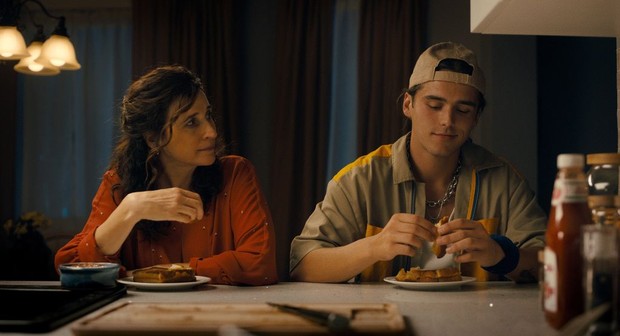
Michaela Watkins does not get a chance to show us all she can do nearly often enough, and so it is a special pleasure to see her in the title role of “Suze.” Her name is Susan, and that is what she is called by her colleagues at work and by her ex-husband Alan (Sandy Jobin-Bevans) and his new wife Jacinta (Sorika Wolf). Her daughter, Brooke (Sara Waisglass) calls her Mom, usually when she is trying to wheedle her into giving her something. And Susan has a very hard time saying no to Brooke, who, as the story begins, is about to graduate from high school. Though she promised her mother she would go to college locally and live at home, she is going to leave for McGill in Canada, several hours away.

The person who calls her “Suze” is Gage (Charlie Gillespie), Susan’s boyfriend, who has the personality of a St. Bernard who keeps knocking people over and jumping on the furniture, but who is always sincerely affectionate. Brooke, who is selfish, manipulative, and immature, likes Gage for the same reason she does not like her mother; both devote their whole lives to adoring her.

After Brooke dumps Gage by text, he has a bad fall, either a suicide attempt or a result of poor, high-risk decisions. Gage’s feckless father asks if he can stay with Susan for a few weeks. She says no at first. But she sees he has no other option, and reluctantly agrees.

So, we have one character with no filter and another who has so many filters her authentic self is barely recognizable. Susan gradually begins to understand that Gage is as lost as she is, and that his hearty ebullience is as much of a cover-up as her effort to create a perfect world for Brooke. She ultimately admits that was less for Brooke than for herself. “I thought if I made her really happy and gave her everything she needed she wouldn’t want to leave me.”

I have been a huge Watkins fan since she was on SNL, playing a highly caffeinated blogger and as a perpetually trying to maintain her professionalism Hoda Kotbe opposite Kristen Wiig’s irrepressible Kathy Lee Gifford. She brings enormous depth, complexity, and vulnerability to Susan.

Stories about opposites finding a way to care for each other are immediately compelling, especially those, like this one, where one represents the repressions of the ego and the other the impulses of the id. “Suze” keeps us enthralled with the specifics, authentically messy, of the developing relationship. There’s a touch of Susan’s missing someone to mother, especially someone, unlike Brooke, who appreciates being cared for and about. But most of what develops between them is a friendship. She begins to see that what irritates her the most about Gage is not the result of bad manners or a lack of boundaries but parental neglect. She begins to realize she has missed having someone to talk to. Her doctor tells her she is in perimenopause, meaning “things winding down inside.” That plus Brooke’s absence and news from her ex make her decide to open up to a possible relationship. But the stress of those factors also impair her ability to take that step.

Gillespie also makes a strong impression, especially in a quieter scene where he visits his mother. Both Susan and Gage keep making mistakes but they never lose our sympathy or our hope that they find purpose and connection. “Suze” is bittersweet, funny and sometimes sad but always heartfelt and honest, everything we hope for from an indie.

Parents should know that this movie includes sexual situations and some sexual references, teen drinking, drugs, and a possible attempted suicide.

Family discussion: Is Susan a good mother? Why did she tell Brooke to go back to school?

If you like this, try: “Take Care”

Related Tags:


Comedy Drama Family Issues Independent movie review Movies -- format Movies -- Reviews
Gladiator II

Gladiator II

Posted on November 20, 2024 at 6:25 pm

B-
Lowest Recommended Age: Mature High Schooler
MPAA Rating: Rated R for strong bloody violence
Profanity: Fierce language
Violence/ Scariness: Extended, intense, and graphic violence, swords, animal attacks, characters injured and killed, disturbing images
Date Released to Theaters: November 22, 2024
Date Released to DVD: January 22, 2025
Gladiator II
Gladiator II copyright 2024 Paramount

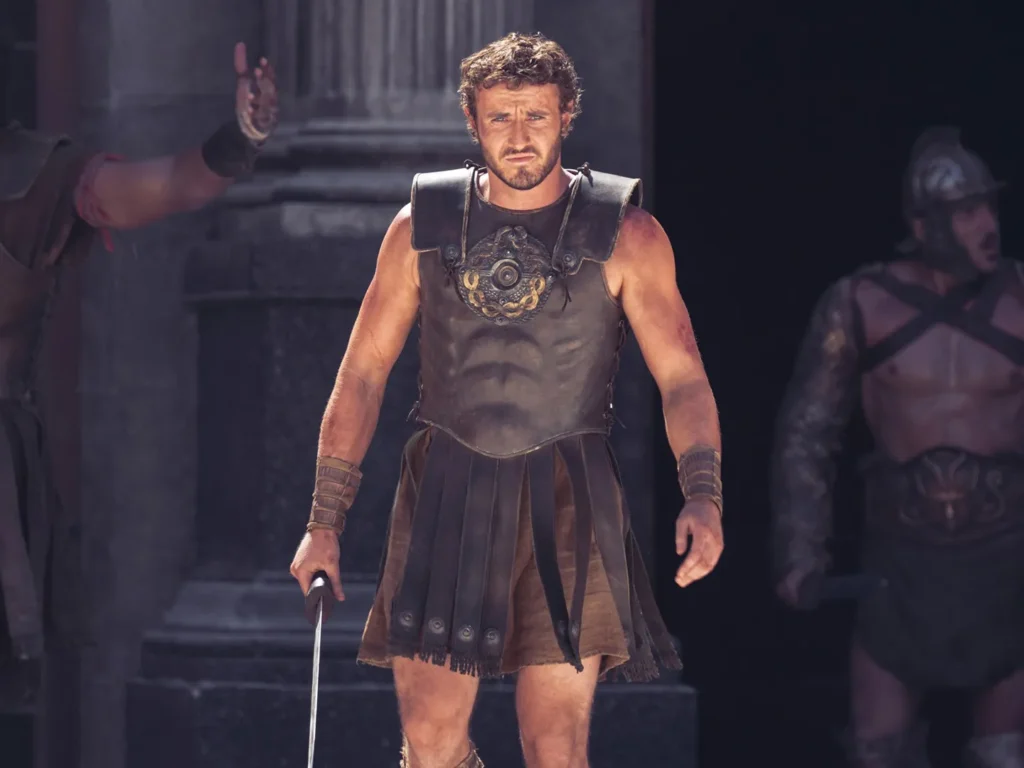
“Gladiator II” looks magnificent. Denzel Washington effortlessly steals every scene he is in and all but winks at us to show how much he is enjoying it. But the script is weak and too repetitive , the movie is too long, and the fight scenes, no matter how staged, just get numbing after a while. When I saw it, the audience was so disconnected from the storyline that they laughed at an admittedly corny reveal that was clearly a turning point that puts one of the main characters in danger.

For those who still remember the details of 2000’s Oscar-winning “Gladiator,” starring Russell Crowe, this film takes place a generation later, with only one returning main character aside from a couple of brief flashbacks and Derek Jacobi in a few scenes as a member of the political elite.

Connie Nelson is back as Lucilla, the royal daughter of the idealistic Emperor Marcus Aurelius, who was murdered by his son and her brother in the first film. She is now married to Rome’s top soldier, Marcus Acacius (Pedro Pascal).

We get a few minutes of blissful farm life in a remote village before the Roman navy arrives to take it over and the farmer and his beautiful and beloved wife have to suit up as soldiers. We know what happens to peaceful farmers and beautiful, beloved wives in these kinds of movies. Indeed, this is pretty much a replay of the first “Gladiator,” except this time the beautiful wife is also a fierce soldier. No big difference, though, because she gets killed off to fuel what we will later hear is the farmer’s biggest asset as an arena fighter, not strength or skill but rage.

That assessment of the farmer (Mescal) comes from Macrinus (Washington), who runs the gladiator program, wears only the finest glam. He is a trusted purveyor of news and rumors to everyone in Rome, especially Geta (Joseph Quinn of “Stranger Things”) and Caracalla (Fred Hechinger of “Thelma”), the decadent young emperor-brothers who whine and lounge around in white face make-up except when they are enjoying the bloody battles in the colosseum. When the farmer-turned fighter says what he wants is a chance to cut off Acacius’ head, Macrinus tells him he will have it, and his freedom, too, if he succeeds in the arena.

Paul Mescal and Pedro Pascal are two of the most charismatic, versatile, and talented actors in movies. Mescal can make a smile convey more than a page of dialogue or 15 minutes of backstory. Pascal has unmatchable comic timing. The one-dimensional characters they play do not give them a chance to show us their best. Instead, they have distractingly bulked up, like Popeye after the spinach. They look great in those Roman skirts, especially in the fight scenes, but even they cannot make the wooden dialogue and awkward plot twists work.

So much for the plot. Some people may want to make parallels between the fall of Rome and some of today’s headlines, but it won’t get you very far. I’m not going to give away the not-much-of-a-twist, which is in the trailer, so if you don’t want to know, don’t peek. In fact, you might do better to watch the without sound (you’d miss the score but you’d also miss the sounds of bones crunching and blood spurting). The dialogue is clunky and the storyline is hackneyed. The fans who come for the spectacle and pageantry will do fine, though, as director Ridley Scott and production designer Arthur Max make all of the long shots very impressive. Those who are there for the fight scenes will appreciate the variety — swords, of course, and attacks by crazed monkeys, sharks, and a rhino.

For me, though, it started to feel more like a game than a story and much too long.

Parents should know that this film has extended, very graphic violence with many characters injured and killed and many, many disturbing bloody images and sounds including decapitation. Characters drink alcohol and use drugs. A character essentially commits suicide. There is a reference to venereal disease.

Family discussion: Was rage the gladiator’s most valuable quality? How were the gladiator and the general alike?

If you like this, try: “Gladiator” with Russell Crowe

Related Tags:


Action/Adventure Drama DVD/Blu-Ray Epic/Historical Movies -- format Movies -- Reviews Series/Sequel VOD and Streaming
The Piano Lesson

The Piano Lesson

Posted on November 19, 2024 at 1:47 pm

B +
Lowest Recommended Age: High School
MPAA Rating: Rated PG-13 for strong language, violent content, some suggestive references and smoking
Profanity: Strong language including many uses of the n-word
Alcohol/ Drugs: Alcohol
Violence/ Scariness: Tense emotional confrontations, recollections of enslavement and abuse, supernatural horror
Diversity Issues: A theme of the movie, disabled character
Date Released to Theaters: November 22, 2024
Copyright 2024 Netflix The Piano Lesson

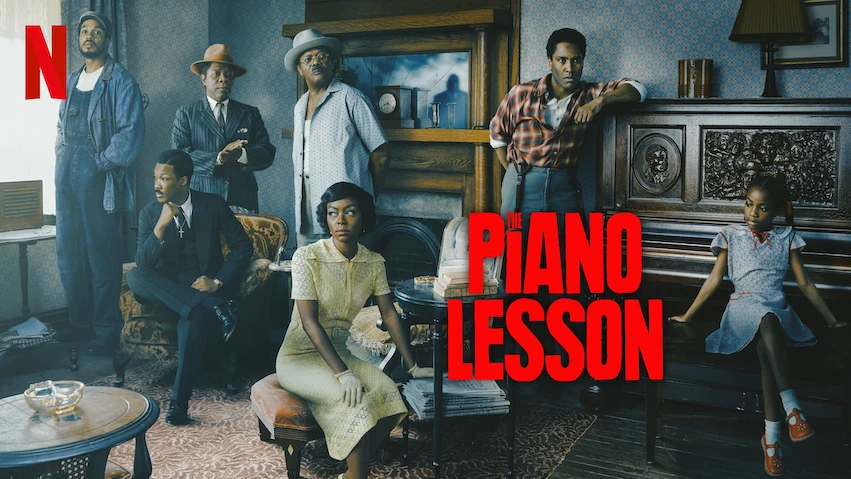
August Wilson wrote a play for each of the decades of the 20th century, all set in Pittsburgh and all exploring themes of race, family, and generational trauma. Denzel Washington, who starred in “Fences” on Broadway and directed and starred in the 2106 film that featured Viola Davis in her Oscar-winning role and produced “Ma Rainey’s Black Bottom,” also starring Davis, who nominated for an Oscar, along with her co-star, Chadwick Boseman. This third in the series is a family story on screen and behind the camera, produced by Washington, directed by his son Malcolm Washington (who adapted the screenplay with Virgil Williams), starring his other son, John David Washington (“BlackkKlansman”), and his wife Pauletta and daughter Olivia in small roles.

The lesson here is not about someone learning how to play the piano. It is the struggle between Charles family siblings who represent two polar opposite views on history, heritage, and obligation. John David Washington and Danielle Deadwyler give sizzling performances as Boy Willie and Berniece (her name possibly a reference to a character in The Member of the Wedding).

Boy Willie, described by Wilson as “brash and impulsive, talkative and somewhat crude in speech and manner,” arrives at the Pittsburgh home shared by Berniece, her young daughter, and their Uncle Doaker (Samuel L. Jackson). He is uninvited, unannounced, unexpected, and unwanted. He and his friend Lymon (Ray Fisher) have driven a truck filled with watermelons from their rural community in Mississippi. Boy Willie’s plan is to sell the watermelons to get the money to buy property. It is more than a chance to be his own boss. The property was once owned by the Sutter family that enslaved his ancestors. The Sutter patriarch has just died by falling into his well.

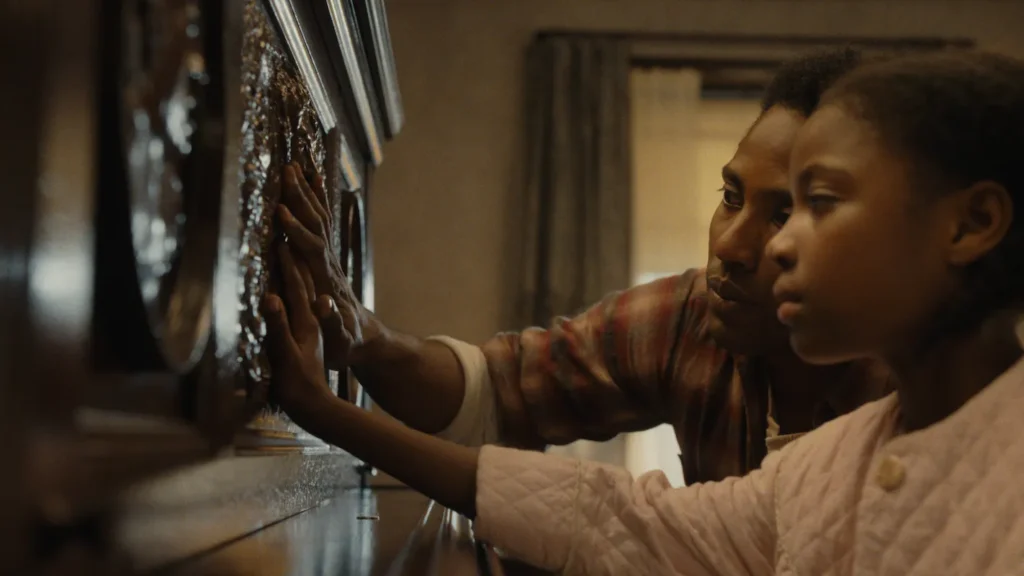
The Sutter family also once owned a piano they got in exchange for slaves, separating a mother and child of the Charles family from the husband and father, a gifted carpenter, who was considered too valuable to sell. He carved his family’s history into the piano, and a later generation stole it from the Sutters. Now it is in the living room of Berniece’s home. The conflict in the play is between Berniece, who does not play the piano but refuses to sell it because of what it represents about the pain, skill, courage of her family. Boy Willie is determined to sell it so he can build a future which in his mind also honors the family history. If stealing the piano was a triumph over enslavement and abuse, owning the Sutter property is even more so.

Washington is a mesmerizing performer and his Boy Willie is electric, charismatic, and dangerous. Deadwyler has a quieter role, especially in the first half of the film, but gets a chance to show Berniece’s fiery determination. Wilson, always a master of creating arresting, complex characters, has two of his best in the two siblings. A conventional story would have the widowed Berniece find a happy ending with the preacher who loves her (Cory Hawkins, excellent as always). But Wilson’s plays grab onto big, existential issues and he did not hesitate to go to extremes to demonstrate the intensity of his characters’ struggles. When does your family history support you? When does it weigh you down? What do you do when the answer is both?

Parents should know that this film has strong language, including many uses of the n-word. Characters drink and smoke. There are references to the sad death of a husband and father and to the abuses and deprivations of enslavement and bigotry. The story also includes some supernatural/horror events with disturbing images.

Family discussion: Who is right, Berniece or Boy Willie? What could they have said to better explain why they felt so strongly? Does your family have a cherished heirloom and who cares the most about it?

If you like this, try: “Fences” and “Ma Rainey’s Black Bottom”

Related Tags:


Based on a play Drama Family Issues movie review Movies -- format Movies -- Reviews Race and Diversity VOD and Streaming
A Real Pain

A Real Pain

Posted on November 12, 2024 at 5:46 pm

A-
Lowest Recommended Age: High School
MPAA Rating: Rated R for language throughout and some drug use
Profanity: Constant strong language
Alcohol/ Drugs: Alcohol and marijuana
Violence/ Scariness: References to the Holocaust, attempted suicide
Diversity Issues: A theme of the movie
Date Released to Theaters: November 15, 2024

Jesse Eisenberg wrote, directed, and stars in “A Real Pain” but gave the showiest role to Kieran Culkin, who gives one of the best performances of the year.

Eisenberg, a careful writer with an excellent ear for what people say, and the spaces left by what they don’t say, gives the film a title with an illuminating double meaning. There’s the colloquial use for someone or something that is annoying, frustrating, but generally in a minor way. It is sometimes said with affection, sometimes with impatience, sometimes both. Then there is the more literal recognition of two words of enormous portent. This is a movie about pain, about generational pain caused by historic trauma and by internal, very individual struggles. It is about the pain we bear and the more difficult challenge of the pain we witness but cannot fix.

A Real Pain trailer

David (Eisenberg) and Benji (Culkin) Kaplan are close but very different first cousins who are on a Heritage Tour of Poland, a small group led by a British historian, visiting locations related to the Holocaust. They are planning to leave the tour a day early to stop at what was once the home of their late grandmother, a Holocaust survivor.

David is intentional and careful. He worries constantly, which makes it difficult for him to feel comfortable around new people. Benji is impulsive, with volatile moods and no filters. He is often annoying, but he is genuinely curious about other people and warmly sympathetic, and authentically vulnerable, which makes people feel comfortable, even protective.

As the trip begins, David leaves a series of voicemails for Benji with advice and encouragement and concern. Meanwhile, Benji is at the airport early, chilling (or maybe he just has nowhere else to be). The tour guide is James (Will Sharpe), who begins by telling the group he is not Jewish but very interested in the culture and history. The other people on the tour are Marcia (Jennifer Grey), a recent divorcee, a retired married couple, Diane (Liza Sadovy) and Mark (Daniel Oreskes), and Eloge (Kurt Egyiawan), a survivor of the genocide in Rwanda and convert to Judaism.

The inherent impossible conflicts of a trip like this (based on one Eisenberg and his wife took) are handled exceptionally well in the film, often explicitly. Benji objects to first class train travel en route to a tour of a concentration camp, compared to the horrific cattle car transport of the people the trip is attempting to honor. He’s right and he’s wrong, of course. Would walking to the site be more respectful? Is there any accommodation today’s visitors could make that would not be somehow disrespectful? In another moment, Benji tells James he is throwing too many facts and statistics at them. Again, he’s both right and wrong. While history is essential for understanding the past, it is impossible to find an appropriate context for paying the right (if there is such a thing) kind of respect to those who suffered and perished. There will always be survivor guilt, but anyone who thinks skipping dinner or traveling economy — or immersing themselves in numbers and names — will assuage that burden is in denial. And Benji, by the way, stalks out of the first class car with a superior edge, and then ends up traveling first class anyway, laughing at his pretension.

Benji wants a picture of himself doing a silly pose on a huge statue memorializing the Warsaw uprising, the largest armed Jewish rebellion against the Nazis, insensitive. David finds that insensitive and disrepectful. At first, the others in the group do, too, but then they join in, finding some release in pretending to be part of the heroic response to oppression. As James reminds them, this is just one example that refutes the claims that Jews were docile in response to the horrors of the Holocaust. So perhaps the silly pretense of fighting alongside the Jews confined to the Warsaw ghetto eased the tension and helped the group bond.

The challenge of comfortable 21st century American tourists visiting sites from the Holocaust in a manner that is meaningful is juxtaposed with the very personal conflicts between David and Benji. Both struggle with anxiety. David takes medication, does meditation, and has established a satisfying life with a wife and son (played by Eisenberg’s real-life son, Banner). He has a job, though it is one Benji thinks is useless. And he worries about Benji. Their grandmother, who died a few months earlier, left money for the two of them to visit her home in Poland. Benji has been rudderless, without a job or family, self-medicating with weed. David hopes that bringing Benji on the trip will help him get some distance from his grief and give him something to do.

When David’s patience runs out, Eisenberg delivers a beautiful speech to the rest of the group about his love, frustration, worry, and his envy for Benji’s easy ability to connect and endear himself to everyone he meets. Like Norman Maclean in the book and movie “A River Runs Through It,” Eisenberg recognizes that:

We can seldom help those closest to us. Either we don’t know what part of ourselves to give or, more often than not, the part we have to give is not wanted. And so it is those we live with and should know who elude us. But we can still love them – we can love completely without complete understanding.

Parents should know that this movie has mature material including historical references to the Holocaust, very strong language, smoking, drinking, and drugs. The characters discuss a sad death and a suicide attempt.

Family discussion: Who from this group would you rather travel with? How can we best show respect for the past?

If you like this, try: the “Trip” trilogy starring Rob Brydon and Steve Coogan

Related Tags:


Comedy Drama Family Issues movie review Movies -- format Movies -- Reviews
THE MOVIE MOM® is a registered trademark of Nell Minow. Use of the mark without express consent from Nell Minow constitutes trademark infringement and unfair competition in violation of federal and state laws. All material © Nell Minow 1995-2026, all rights reserved, and no use or republication is permitted without explicit permission. This site hosts Nell Minow’s Movie Mom® archive, with material that originally appeared on Yahoo! Movies, Beliefnet, and other sources. Much of her new material can be found at Rogerebert.com, Huffington Post, and WheretoWatch. Her books include The Movie Mom’s Guide to Family Movies and 101 Must-See Movie Moments, and she can be heard each week on radio stations across the country.

Website Designed by Max LaZebnik