Concussion is About Football — and About Faith

Concussion is About Football — and About Faith

Posted on January 4, 2016 at 8:00 am
Copyright Sony 2015
Copyright Sony 2015

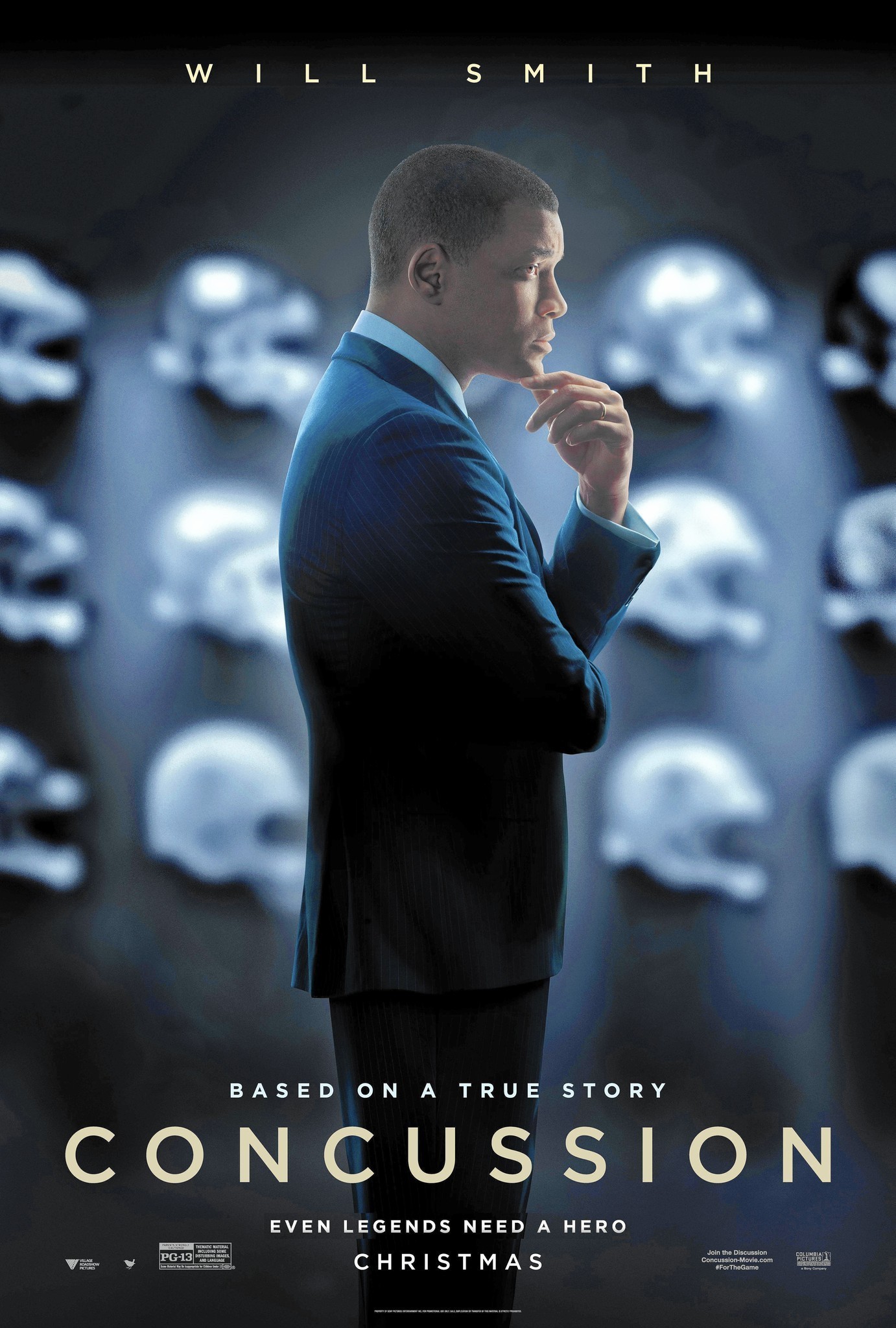
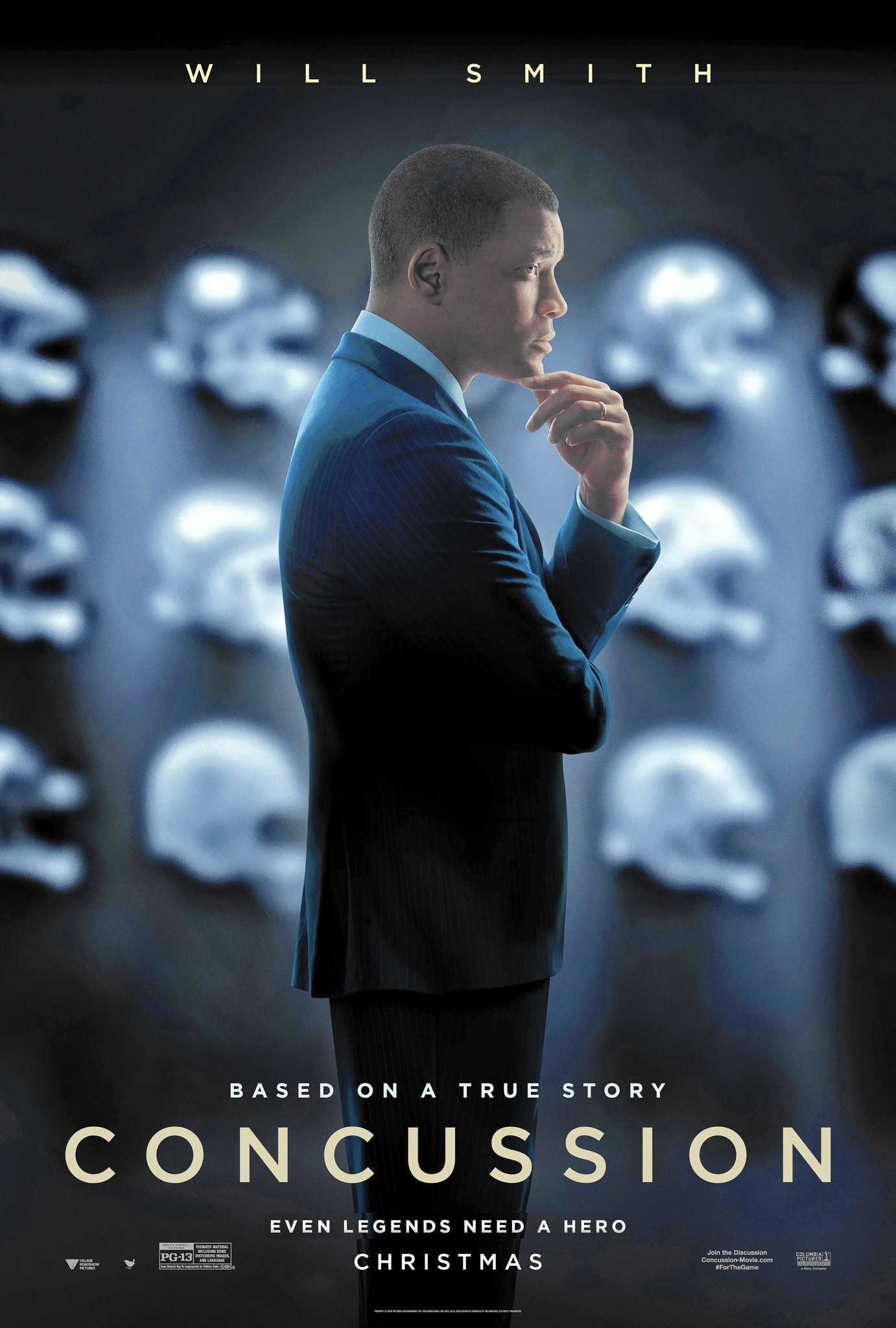
The New Yorker has a thoughtful essay by Ian Crouch about the spiritual and religious themes in Will Smith’s fact-based movie, “Concussion.” Smith plays real-life doctor Bennet Omalu, who insisted on pursuing the issue of head trauma in professional football and its long-term impact on players.

he movie’s moral arguments are framed less as matters of medicine than of religious faith. It’s not a sports movie, or a medical thriller, so much as a Christian homily….Omalu is a kind of prophet, an outsider who can see a truth that those around him, blinded by their own cultural prejudices, cannot, and who is punished and shunned for spreading a gospel that those in power do not want to hear. This makes for a heavy-handed, often treacly movie: Will Smith’s version of Omalu is as the lone principled man in a world marred by compromise—and saints, even when they are martyrs, are boring protagonists. But as a polemic, this evangelical argument is interesting and novel, suggesting that football’s dangers are not merely physical, but spiritual as well. This might be the movie’s most subversive message: not that the N.F.L. stood in the way of scientific research about the health of its players but that it occupies a false place within the religious and patriotic beliefs of so many of its fans, whose Sabbath routines are timed perfectly so that Sunday service ends just in time for kickoff.


Related Tags:


Spiritual films Understanding Media and Pop Culture
Star Trek Stamps from USPS

Star Trek Stamps from USPS

Posted on January 3, 2016 at 8:00 am

The US Postal Service is commemorating the 50th anniversary of Star Trek with a new set of stamps that have four digital illustrations inspired by classic elements of the television program:

the Starship Enterprise inside the outline of a Starfleet insignia against a gold background;
the silhouette of a crewman in a transporter against a red background;
the silhouette of the Enterprise from above against a green background; and,
the Enterprise inside the outline of the Vulcan salute (Spock’s iconic hand gesture) against a blue background

The words “SPACE… THE FINAL FRONTIER,” from Captain Kirk’s famous voice-over appear beneath the stamps against a background of stars. The stamps were designed by Heads of State under the art direction of Antonio Alcalá.

Copyright USPS 2015
Copyright USPS 2015
Related Tags:


Science-Fiction Television

Chaz Ebert on the Need for Diverse Voices in Film Criticism

Posted on December 29, 2015 at 8:00 am

Chaz Ebert of rogerebert.com writes in The Daily Beast about the importance of more diverse voices in movie criticism — and in those who make movies, too.

Meryl Streep’s use of the word “infuriating” to describe the disproportionate ratio of male to female reviewers on the Rotten Tomatoes is apt.

But the need for diverse voices in film criticism does not suffice with gender. A wide spectrum of voices is critical in challenging the mainstream white male-dominated narrative that drives much of Hollywood and the popular media. Being introduced to diverse critical voices and opinions in the arts not only affects how we see the world but also has a profound influence on how we begin to heal it.

Chaz has been a leader in this effort, and has made particular progress in bringing great women writers to rogerebert.com, including my friends Sheila O’Malley, ReBecca Theodore-Vachon, Jana Monji, Susan Wloszczyna, Olivia Collette, Christy Lemire, and Anath White.

The Atlantic Monthly has an article on the falling percentage of women film critics. The discussion of how women were originally advantaged and then materially disadvantaged in this field is fascinating. Thelma Adams also writes about the problem of too few female movie critics for Variety.

According to the Gender at the Movies study of top critics on Rotten Tomatoes, men account for 91% of those writing for movie/entertainment magazines and websites such as Entertainment Weekly; 90% of those writing for trade publications and websites; 80% of critics writing for general interest magazines and sites such as Time and Salon; 72% of those writing for newspaper sites; and 70% of critics writing for radio outlets and sites such as NPR.

Related Tags:


Critics Gender and Diversity Race and Diversity
Joy

Joy

Posted on December 24, 2015 at 5:38 pm

Copyright 20th Century Fox 2015

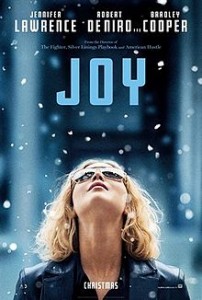
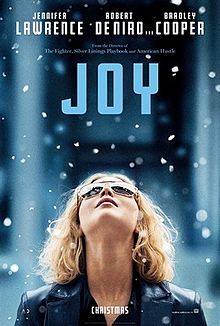
Jennifer Lawrence is “Joy,” reuniting with her “American Hustle” and “Silver Linings Playbook” #squad, director David O. Russell and co-stars Robert De Niro and Bradley Cooper. She plays real-life consumer products inventor and television sales mogul Joy Mangano, who lived something of a Cinderella story — if the fairy godmother was the QVC shopping channel.

The film is something of a mess. It never quite comes together, but some of the individual pieces are marvelous, especially the performances by Lawrence, radiant in her first adult lead (though she still seems too young to have those children), Virginia Madsen as Joy’s dotty mother, De Niro as her father, and Isabella Rossellini as his wealthy new girlfriend. Cooper has so much magnetism as a QVC executive that his tour of the network’s revolving studio provides one of the best moments. He is so good it misdirects us about where the movie is going and leaves us feeling vaguely cheated.

Russell, who so savagely took out after both consumer culture and at those who attack it for the most superficial reasons in the underrated “I Heart Huckabees,” cannot seem to settle into a point of view beyond the idea that the woman with the almost-too-on-the-nose name has the ingenuity and what used to be called moxie to overcome obstacles that include massive family dysfunction and business partners who bully and defraud her. It emphasizes her ability as an inventor and her determination but loses track of the storyline with confusing sequencing and superfluous narration. When a prospective funder asks her if she would be willing to pick up a (possibly metaphorical) gun to protect her invention, she says she would. And when she is turned down, she keeps coming back. But the primary factors in the success of her product are a chance connection and a much-too-convenient discovery of incriminating evidence. The most interesting elements of the story are abruptly glossed over (What? Who sued her?). And lovingly staged episodes from Joy’s mother’s favorite soap opera (starring real-life soap stars including Susan Lucci) are not nearly as entertaining or illuminating as they are intended to be.

Joy has monumental obstacles to overcome and Russell clearly considers her heroic, but there is a heightened gloss on the story that keeps us at a remove. A moment of particular triumph is truncated and artificial and the narration is clumsy and intrusive. “In America,” Cooper’s character tells us, “the ordinary meets the extraordinary every day.” But in this movie, that meeting is awkward, and the result is buyer’s remorse.

Parents should know that this movie includes themes of family conflict and dysfunction, corrupt, thuggish, and fraudulent behavior, some sexual references, and some strong language.

Family discussion: Why did Joy keep taking care of everyone in her family? What did Neil mean about staying friends? What invention would you like to create?

If you like this, try: “Erin Brockovich”

Related Tags:


Based on a true story Biography Family Issues
Daddy’s Home

Daddy’s Home

Posted on December 24, 2015 at 5:25 pm

Copyright Paramount 2015
It is sometimes said that competition between men is a substitute for comparing their male body parts. In “Daddy’s Home,” the men actually lower their trousers — in front of a doctor and a woman who has been married to them both — so they can measure their differences. Belief me, metaphoric competition is better.

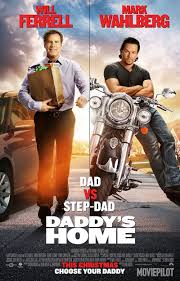
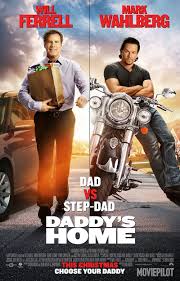
Will Ferrell and Mark Wahlberg, who were terrific together in the buddy cop film The Other Guys, reunite with far less success in “Daddy’s Home,” about the battle between a stepdad and a biological dad for the affections of the wife and children.

Ferrell plays Brad, a decent, devoted, responsible, guy who wants more than anything in the world for his stepchildren to love him. It is supposed to be very funny that (1) he lost his ability to have his own biological children in a dental x-ray machine accident depicted in the film’s first moments, (2) he works for a Smooth Jazz station, and (3) his little step-daughter draws a family portrait that shows him with a knife in his head and poop in his hair. Wahlberg is Dusty, Brad’s worst nightmare. He is dashing, exotic, mysterious, and he looks like Mark Wahlberg.

Each tries to outdo the other to impress the children, their mother (Linda Cardellini), Brad’s boss (Thomas Hayden Church), the fertility doctor (Bobby Cannavale), the handyman (Hannibal Buress in one of the film’s few bright spots), and anyone else they can find.

This is a great issue to explore with comedy and heart. Unfortunately, in this film the comedy is not funny and the heart is missing. The competition is all about the men vying against each other; there is not even the most perfunctory suggestion of any benefit for the children or even any consideration of their feelings. They exist as props, and Cardellini is relegated to a thankless role somewhere between sympathy and scold. Ferrell and Wahlberg still have great chemistry, but their characters are just pale imitations of roles we’ve seen them in too many times. A series of lackluster skits based on insults, virility panic, and slapstick don’t make a movie.

Parents should know that this film includes extremely crude and raunchy content with many sexual, reproductive, and bodily function references, drunkenness, very strong language, and themes of rivalry between step and biological fathers.

Family discussion: What did Brad and Dusty most dislike about each other? What did each do best?

If you like this, try: “Big Daddy” and “The Other Guys”

Related Tags:


Comedy Family Issues
THE MOVIE MOM® is a registered trademark of Nell Minow. Use of the mark without express consent from Nell Minow constitutes trademark infringement and unfair competition in violation of federal and state laws. All material © Nell Minow 1995-2026, all rights reserved, and no use or republication is permitted without explicit permission. This site hosts Nell Minow’s Movie Mom® archive, with material that originally appeared on Yahoo! Movies, Beliefnet, and other sources. Much of her new material can be found at Rogerebert.com, Huffington Post, and WheretoWatch. Her books include The Movie Mom’s Guide to Family Movies and 101 Must-See Movie Moments, and she can be heard each week on radio stations across the country.

Website Designed by Max LaZebnik