Chef

Posted on May 15, 2014 at 6:00 pm

B+
Lowest Recommended Age: Mature High Schooler
MPAA Rating: Rated R for language, including some suggestive references
Profanity: Very strong and graphic language
Alcohol/ Drugs: Drinking
Violence/ Scariness: Comic peril
Diversity Issues: Diverse characters
Date Released to Theaters: May 16, 2014
Date Released to DVD: September 29. 2014
Amazon.com ASIN: B00KQTGWPC

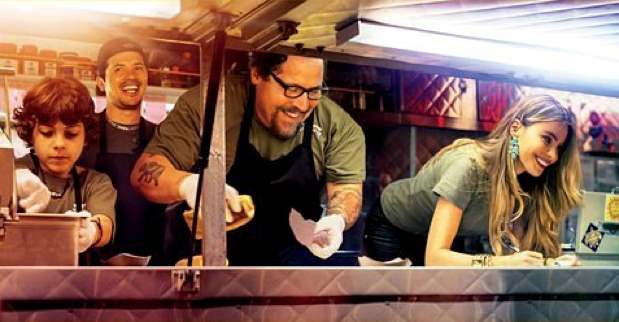
You’re writer/director/actor Jon Favreau.  You’ve been making big-budget films, mostly huge blockbuster successes (“Elf,” “Iron Man”), but also a big-budget bust (Cowboys & Aliens, which I liked).  This might put you in mind of a simpler, more chef poster headersatisfyingly creative time (Favreau wrote the indie smash “Swingers” and wrote and directed “Made”).  And that might inspire a movie like “Chef,” with Favreau as writer. director, and star and a small-scale story with, thanks to his connections, a big-scale cast, about an artist who, like a movie director, creates the kind of art that must be appreciated by others to be satisfying.  And director Jon Favreau brings the same loving care to the creations made by his character that the chef does himself.  This movie will be on lists of “Great Food Films” forever, along with classics like “Big Night” and “Babette’s Feast.”  The food is so lusciously photographed you can almost smell it.  And the music perfectly matches the food, sensual and spicy.  This is an utterly delectable treat.

No surprise — it is about a guy who has a big-time, high pressure job, loses his mojo, his inspiration and his sense of creativity, and then finds it again in a smaller venue.  The job is in the title.  Favreau plays Carl, a passionate chef at a high-end restaurant, frustrated because the owner (Dustin Hoffman) wants him to stick to his “greatest hits,” the solid, reliable favorites that Carl now finds boring.  “You remember what happened when you put guts on the menu?”  When an influential restaurant critic gives him a bad review, Carl quits in a fury.  Then, in an even bigger fury, he tweets what he thinks is a private response to the critic (he is not sure of the difference between Twitter and email). It goes viral.  (“You’re trending, bro.”) Carl goes into a shame spiral fueled by self-pity and blame, both self and everyone else.

https://www.youtube.com/watch?v=tP6SE65F-h4

Carl’s passion for his job led to the end of his marriage to Inez (Sofia Vergara).  He is a devoted but harried father to Percy (Emjay Anthony), a young social media expert who enjoys the fun activities his dad plans for them when he has time but wishes they could just plain hang out more.  Inez, wanting to get Carl out of his funk, invites him to come with her on a business trip to Miami, so he can watch Percy.  It will get him away from the Twitterverse gaffe of the day crowd and give him some time with his son.  She also has another plan.  Her previous ex-husband (a movie-stealing performance by the scene-stealing master thief and “Iron Man” star Robert Downey, Jr.), who gives Carl a food truck.  Well, apparently there is a food truck there underneath the layers of grime and fry oil.  Joined by a friend (John Leguizamo) and Percy, they drive the truck back home to Los Angeles, stopping along the way to feed the people who have been following Percy’s social media updates.

There are no surprises in the story, and there is not one female character with any reason to exist other than supporting/adoring Carl, but the characters feel genuine and the food is mesmerizingly luscious.  Favreau has his mojo back, and I hope he will keep ours going by serving us food truck movies along with his five star restaurants.

Parents should know that this movie includes very strong and crude language and some vulgar references.

Family discussion: What is your favorite meal to cook?  Why was it hard for Carl to just hang out with Percy before the food truck?

If you like this, try: “Big Night” and “No Reservations”

Related Tags:


Comedy Date movie Drama DVD/Blu-Ray Pick of the Week Family Issues Independent

Interview: “Fed Up’s” Laurie David and Stephanie Soechtig

Posted on May 12, 2014 at 3:59 pm

Oscar-winning producer Laurie David is back with an even more inconvenient truth: our food is killing us and the government is powerless to stop food companies from making it worse. I spoke to David and director Stephanie Soechtig about the film.

I want to start with the end — to me the most interesting part of the movie was what I call the Citizens United problem,orporate involvement in making policy decisions about health and nutrition and disclosure. One of the most devastating revelations of the film was the story about the way the industry softened findings of a World Health Organization report on the impact of sugar on health.

SS: What’s interesting about the WHO report was just how hard it was to actually find that story. Peter Jennings, who appears in a clip, was the only American newscaster who covered that. I found it initially, in a paper from the UK, and I contacted the head of the World Health Organization at the time and asked him more of the story but I couldn’t find anything in the press on this other than that one Peter Jennings clip. We really had to dig hard to unearth that and it really didn’t get any mainstream press attention in the US. And the headline in the UK paper was “George Bush is beholden to sugar barons and he is jeopardizing the future of American children.” It was an incredibly damning letter the WHO had sent to Tommy Thompson at the time. I’m a journalist by trade and had I seen that, it would have been my lead story. It was a really damning letter and it got no coverage. So it was just interesting to see just how the media was a bit complacent in what happened as well.
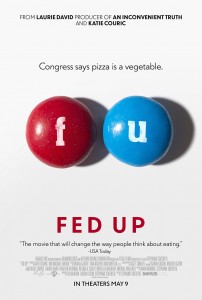
fed up poster

And what do you think is the reason for that? Do you think it’s because of their advertisers? Do you think that they sensed that there isn’t an interest in this as an issue?

SS: Yeah, a hundred percent. Look at the recent effort of the voluntary guideline to stop marketing to kids. Some of the people that were up there lobbying against it were some of the major networks and you saw Viacom and Nickelodeon and all of them up there because they are reliant on the advertising dollars. So everyone has a dog in this fight it seems.

LD: No one cares about the health of the American public.

Another area where that came up was the lack of transparency around sugar on labeling of food. What went into the decision not to have a percentage displayed?

LD: I think that the industry has been fighting that from day one. I don’t think that anybody even tries to do it anymore. It’s all part of the conventional labeling, completely accepted. That’s got to be some serious under the table stuff that’s gone on to keep that off the label. But you know what’s funny about it? What the truthful daily recommended amount of sugar that you need per day is? It is zero, zero! You can imagine how damning that number would be for all these products!

That chart that you show about the amount of sugar in our food is really shocking. Every morning I take calcium vitamins and because of the movie I looked at the sugar content and I was shocked! As soon as I’m done with this jar I am going to try to find some calcium that doesn’t have sugar in it.

SS: Exactly! And that is the whole point of the movie. We want to level the playing field for people. It’s heartbreaking that families think they are doing the right thing, think they are making the healthier choice and what they are eating is making them sick. It’s not right! And just look at yogurt as a great example right now. Yogurt is marketed to death as a healthy choice for breakfast and if you look at the sugar content of most of these fruit filled yogurts, honestly it’s a dessert.

The other thing that surprised me was about the takeover of full lunchrooms by fast food companies. Is that based on lobbying at the local level or is that a purely economic decision — where did that come from?

SS: We met with a principal and she was just as distraught as anyone that her student body was able to buy diet soda and candy bars for breakfast. And she felt that her hands were tied as well too. She said, “There’s nothing I can do about it.” And I think everyone just feels a little hogtied about the policies. What is missing is a common sense approach. We all know that tomato paste isn’t a vegetable and that french fries aren’t vegetables. And I think that we were all really shocked when we saw the footage that these kids were sending us back that they had slushy machines and McDonalds in their cafeteria.

How did you find the kids that struggling with obesity and their and the families?

SS: We spent a little over a half a year just calling schools, churches, synagogues, different hospitals, doctors that specialized in diabetes and obesity and we’d say, “We’re looking for some families that could give us sort of a look into their world. What was making it so hard to make good food choices?” And it was incredibly difficult to find people. It was incredibly labor-intensive. But it’s incredibly courageous of the families. You saw how candid they were with. It all just kind of fell into place I think the way it was supposed to because we found these incredible families who really opened our eyes to things that we had no idea were happening.

And yet they didn’t really make much progress.

SS: We weren’t making a reality show. This wasn’t “The Biggest Loser.” We didn’t send trainers to them. This was asking them to show us what was happening in their lives. They were our field reporters on the ground showing us life on the front lines. So how could they make progress? What they showed us is how much misinformation is out there. And the answers to what is happening is this film. So I think the real story now is to see what happens once they’ve seen the film, what progress they make then.

LD: You saw the end of the movie that Tina and Brady started cooking real food and they changed their lifestyle. Tina has lost 100 pounds. Of course, Brady has had a tougher time. It’s the entire food carnival environment we are living in. So Brady went on to get a job at Bojangles and his school asked him to sell candy bars to raise money. Te second he left his house, this is what he is dealing with so it is not a big surprise he gained the weight back.

SS: I don’t know why are so shocked that his school asked him to sell candy bars. I mean, there are Girl Scouts selling cookies right on every corner. It’s crazy.

And the ads for these foods are always saying, “You deserve this,” or “This is going to help you get your energy back.” 

LD: “Open happiness.”

SS: And happiness is used as a marketing tool for everything! I mean it’s really outrageous, it’s outrageous!

What kind of research material are you developing for people to have to follow up and learn more?

SS: We have a great website. We have some school curriculum on there already and a discussion guide. And one of the goals of the movie to get our 60 minute version of it into every school in the country.  We made the movie with kids in mind, we want kids to see movie and be empowered by it. Another thing we are doing and it’s never been done before, we have dubbed a Spanish language version of the movie which is going to be released on May 16th in certain markets. So I think we’re doing as much as we can and we are hoping that the single most important thing is for people to come out to the theaters and see this film.

And I have to say, the things I think we put out are so powerful. I mean, look at our poster. I think the poster really breaks through the haze of media stuff out there. I think it is iconic. It was one of the most popular Instagrams the week it came out. We have an incredibly powerful trailer which kids are posting on their Facebook page and helping us get the word out so I think that we’ve got lots of ambassadors and social media support so I hope we are getting the word out.

LD: I think the film really unfolds like a murder mystery thriller. It is not a dry educational documentary. It really plays like a film more than a typical documentary.
 

Related Tags:


Directors Documentary Interview

Belle

Posted on May 8, 2014 at 6:00 pm

B+
Lowest Recommended Age: Middle School
MPAA Rating: Rated PG for thematic elements, some language and brief smoking images
Profanity: Some brief language
Alcohol/ Drugs: Drinking, smoking
Violence/ Scariness: Sad death of parent (offscreen), tense family confrontations
Diversity Issues: Race and gender issues the theme of the film
Date Released to Theaters: May 9, 2014

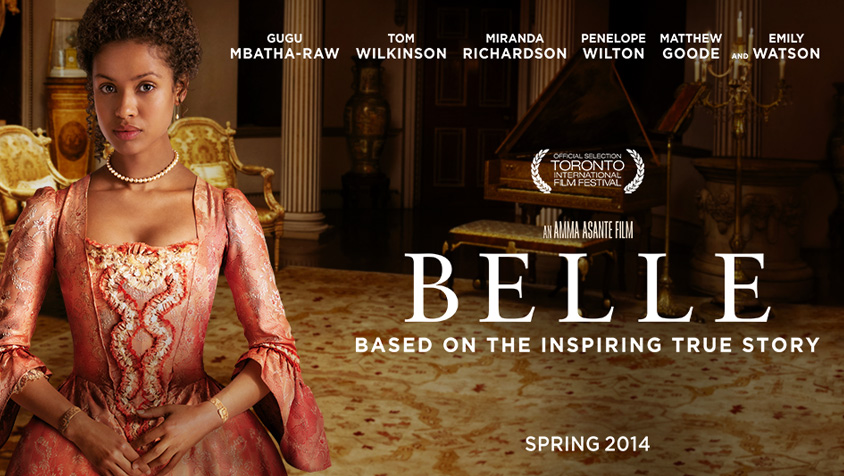
belle-posterWriter Misan Sagay, director Amma Asante, and actress Gugu Mbatha-Raw have created a film of exceptional understanding, honoring the life of the real-life woman who inspired the story with intelligence, sensitivity, and insight that illuminate her time and our own.  Mbatha-Raw plays the title character, who must navigate her way across lines of gender, class, race, and legitimacy — in its legal and broader senses.  Mbatha-Raw (“Larry Crowne”) is mesmerizing, a beautiful, thoughtful performance in a film that has all of the trappings of the best sumptuous costume dramas but has a story with unexpected contemporary meaning.

Dido Elizabeth Belle was the illegitimate daughter of a titled officer in the British navy and a West Indian slave woman.  When her mother died, he brought his daughter to live with his uncle, Lord Mansfield, the chief judge of England (Tom Wilkinson), his wife (Emily Watson), and their other niece, Elizabeth (Sarah Gadon).  The girls are raised like sisters but there are always distinctions.  They eat together as a family if they are alone, but if there are guests, Dido is not permitted to eat with them but can join them in the parlor afterward.  After her father’s death, Dido is an heiress with a respectable fortune while Elizabeth, a legitimate heiress, is cut off from her inheritance by her father’s second wife.  As Dido and Elizabeth are introduced to society (Elizabeth formally, Dido does not “come out”), the eligible young men rate the women as shrewdly as Jane Austen characters.  Does an impoverished young man of good breeding in need of money find Dido’s fortune sufficient to overcome her race and unmarried parents?  If he does, will Dido have a choice in evaluating his proposal?

Meanwhile, a case is wending its way toward the judge that is of vital interest to Dido.  Slaves being transported were jettisoned from a cargo ship.  Are they to be seen as property or as people?  Dido gets more information about the case from a fiery but poor young law student, risking his opportunity to study with the judge by communicating with her.  As she learns more about her mother’s people and understands more about the kinds of restrictions she and Elizabeth face — some alike, some different, she begins to understand that some of those restrictions are freeing as well.  If she cannot travel the usual path for young women in her society, she can learn to forge her own.

Parents should know that this movie includes discussions of legitimacy, mixed-race relationships, and slavery.  There are references to the slaughter and mistreatment of slaves.

Family discussion:  How many different distinctions did the family and the culture make between Elizabeth and Dido?  Between the two women and the men around them?

If you like this, read more about the real story in Belle: The Slave Daughter and the Lord Chief Justice and watch “Amazing Grace” and “Amistad.”
Related Tags:


Based on a true story Drama Family Issues Movies -- format Romance

Legends of Oz: Dorothy’s Return

Posted on May 8, 2014 at 6:00 pm

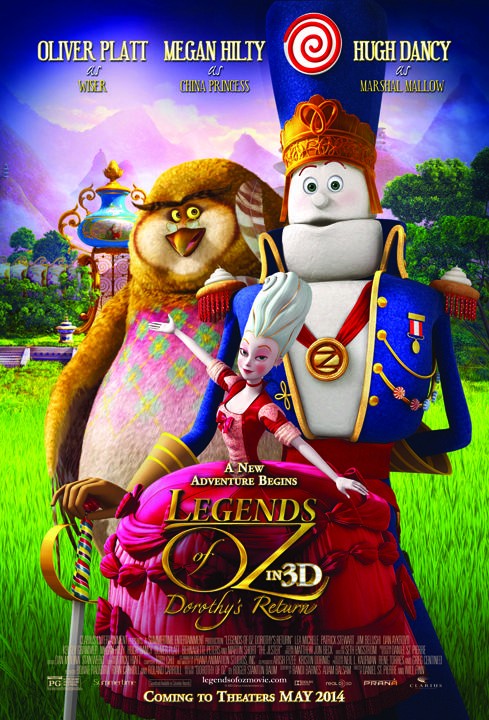
Legends-Of-Oz-4

“Oh, Toto,” says Dorothy (“Glee’s” Lea Michelle), “This doesn’t look like the Oz I remember.”

Tell it, sister.

Why why why why why take the most beloved family film of all time, based on a cherished book, and make a charmless sequel based, not on the other books by the original author, but on a story by the original author’s stockbroker grandson?

The original The Wizard of Oz has survived other attempts to build on its imperishable appeal, and it will survive this one, too.  A bigger challenge will be for the audiences who try to struggle through this version, much too long at under 90 minutes.

Here is what is not too bad.  The voice talent is excellent, with Broadway divas Bernadette Peters (as Glinda) and Megan Hilty (China Princess), a kindly Patrick Stewart (a tree), a dashing Hugh Dancy (Marshal Mallow — he’s a marshmallow, get it?), Martin Short as the wicked Jester, and shambling Oliver Platt as an enormous owl called Wiser (names are not this film’s strong point, either).  The opening credits spin out of a 3D tornado that is pretty nifty.

That’s about it.  The animation is garish and uninspired.  The songs range from forgettable to not awful.  The story is dreary.  And the dialog is painful.  “Emerald City needs all the heart and courage it can get right now!” says the Scarecrow (Dan Aykroyd) to the Tin Man (Kelsey Grammar) and the Lion (Jim Belushi) — Cowardly has been dropped from his name.  This is apparently a cue for some excruciating bro-talk like “Can it, rust-bucket!” Can you imagine a line like “I have a large piece of bark lodged in my hindquarters” in the original? TMI, Wiser, way TMI. The attempts at humor are especially tough going. When Dorothy is hauled into court, she has to face the “peanut gallery” of candy peanuts and a jury of her peeps made up of Peeps. When Wiser says he is scared of the dark, the response is, “You’re nocturnal. Get a grip.” Oh, and the flying monkeys are here, and their leader has a pink mohawk.

Emerald City is indeed in trouble and they need Dorothy’s help.  In Oz, years have passed, but back in Kansas it is the morning after the tornado and yet taking place in modern times — Auntie Em wears jeans.  Dorothy’s house has been destroyed and this movie’s version of Agnes Gulch is an appraiser (Short again) who says he is “government-adjacent” and condemns all the property in the area.  Before Dorothy can do something about this, she and Toto are whisked through a rainbow vacuum tube and find themselves back in Oz.

It turns out the Wicked Witches of the East and West had a brother, the Jester.  He is capturing people and turning them into marionettes, so he can take over Oz. He has even captured Glinda, using the broom of the Wicked Witch of the West plus a magical orb that intensifies its power.

Dorothy and Toto meet up with Wiser, Marshal Mallow, and China Princess on their journey. They have dreary adventures and finally arrive for the confrontation with the Jester, which is surprisingly violent for a film for children. Weapons include a sort of gatling gun. The China princess appears to shatter. But all is resolved, finally, so that Dorothy can go home and set that appraiser guy to rights.

The best one can hope for from this movie is that it will be a potent deterrent to those who want to try to make more Oz movies, and a powerful reminder to families that they can best go over the rainbow by watching the classic.

Parents should know that this movie has fantasy violence and peril and scenes of post-storm destruction.

Family discussion: What could Dorothy do that the others could not? How did what she learned in Oz help her back home?

If you like this, try: the Judy Garland “Wizard of Oz” and the books by L. Frank Baum (great for family reading aloud)

Related Tags:


3D Action/Adventure Animation Based on a book Fantasy Musical Series/Sequel Talking animals
THE MOVIE MOM® is a registered trademark of Nell Minow. Use of the mark without express consent from Nell Minow constitutes trademark infringement and unfair competition in violation of federal and state laws. All material © Nell Minow 1995-2026, all rights reserved, and no use or republication is permitted without explicit permission. This site hosts Nell Minow’s Movie Mom® archive, with material that originally appeared on Yahoo! Movies, Beliefnet, and other sources. Much of her new material can be found at Rogerebert.com, Huffington Post, and WheretoWatch. Her books include The Movie Mom’s Guide to Family Movies and 101 Must-See Movie Moments, and she can be heard each week on radio stations across the country.

Website Designed by Max LaZebnik