Robin Hood

Robin Hood

Posted on November 20, 2018 at 5:45 pm

C
Lowest Recommended Age: Middle School
MPAA Rating: Rated PG-13 for extended sequences of violence and action, and some suggestive references
Profanity: Brief strong language
Alcohol/ Drugs: None
Violence/ Scariness: Extended wartime and action-style peril and violence, arrows, fire, knives, beheading, references to torture, horrific child abuse
Diversity Issues: None
Date Released to Theaters: November 21, 2018
Date Released to DVD: February 18, 2019

Copyright 2018 Lionsgate
There have been so so so so so many Robin Hoods over the years and a couple of them are as good as movies get, starting with Errol Flynn, Olivia de Havilland, Basil Rathbone, Claude Rains, and Eugene Pallette as Robin, Marian, Gisbourne, Prince John, and Friar Tuck. Then there’s the Disney animated version with music by Roger Miller, and the parody version from Mel Brooks with Robin played by “The Princess Bride’s” Cary Elwes. We’ve also had genuinely terrible Robin Hoods, perhaps most regrettably Kevin Costner with a California accent. And now we have the international co-production version, clearly geared to the non-US market, with clunky, exposition-weighted dialogue, a drumbeat-heavy score and action sequences juiced with bullet-time and slo-mo. Can’t we talk about the Errol Flynn version instead? Directed by the guy who did “Casablanaca?” With one of the all-time best movie scores, composed by Erich Wolfgang Korngold? No? Sigh. Well, all right.

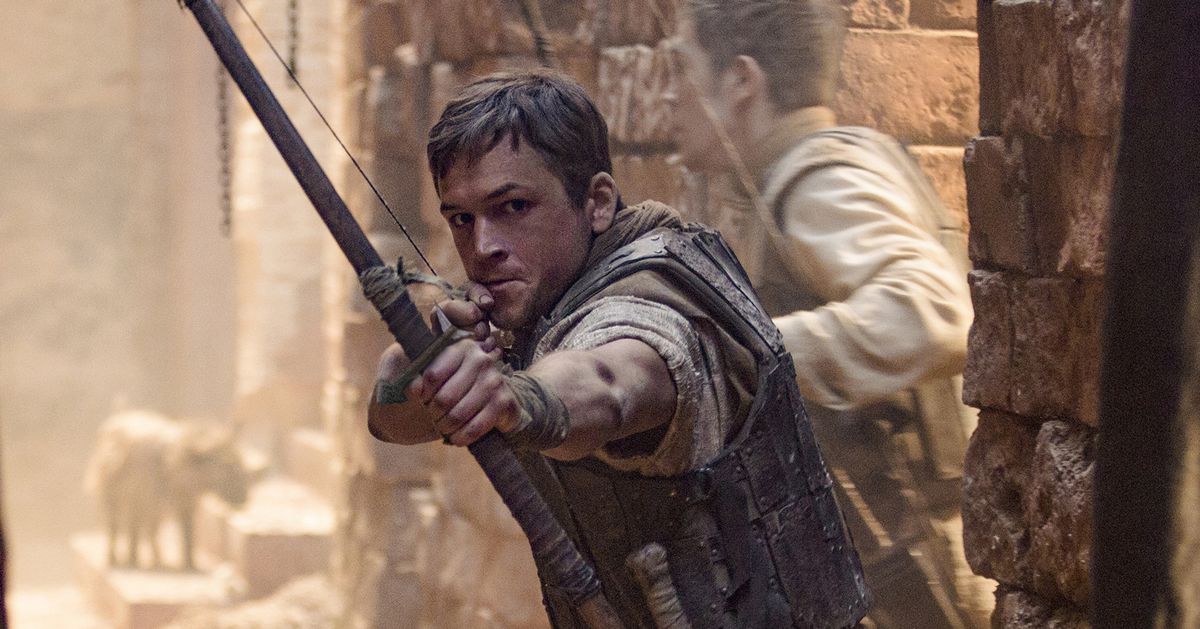
This time, Robin is played by Welsh actor Taron Egerton, best known for the “Kingsmen” movies and “Eddie the Eagle.” This is not his fault. He is a fine actor and can handle action scenes and love scenes capably. It is also not the fault of Oscar winners Jamie Foxx and F. Murray Abraham, who do their best. Possibly, it is not the fault of Leonardo diCaprio, who shows up in the credits as producer. It is most likely this big, dumb movie is the fault of the big, dumb ways that movies get made these days. The more they cost, the more dumbed-down they have to be to make money overseas, and this one apparently cost a lot.

We’re there because the story of the dashing nobleman who stole from the rich to give to the poor and was the world’s greatest archer and hundreds of years later is still a symbol of gallantry and heroism. But this movie begins by telling us to forget everything we think we know about the story and many of its most familiar and beloved elements are missing. No archery contest, no ransom for the king, no plotting Prince John. Which would be fine if what it has instead was of equal interest, but it really isn’t. It’s just a first-person shooter game with live action.

In this version, as in most others, Robin of Loxley is a nobleman. As he tells us in the opening narration, his story begins with a thief but it is not him. He discovers a veiled young woman (Eve Hewson as Marian) stealing one of his horses. Moved by her pluck, her generosity (it is for a poor member of the community) and her lovely blue eyes, he allows her to take the horse and soon, well, let Robin tell you himself: “They were young and in love until the cold hand of fate reached out.” See what I mean? Robin is drafted to fight in the Crusades, where the British have arrows and the “infidels” have a sort of gatling gun for arrows. Robin is wounded trying to save the son of the captured “infidel” who tried to kill him. Robin objects to murdering prisoners. He is sent back to England, where he finds that both his home and Marian are gone. His home has been taken by the Sheriff of Nottingham (Ben Mendelsohn) and Marian, who was told that he had been killed, is now with Will (Jamie Dornan). Furthermore, the man whose son he tried to save stowed away on the boat to devote his life to vengeance. The English version of his name is John, and he wants to help Robin fight the people responsible for his son’s death. Cue the training montage. And the beating drums.

It’s not that it’s dumb. It’s that it is so much dumber than it needed to be. I do not expect the characters to speak the way people did in the 12th century, but Robin should not be asking someone “You okay?” of “I want to go big.” It isn’t just the drumbeats that are headache-inducing. It is the clunkiness of the expository dialogue, hammering contemporary parallels like the Sheriff’s “They hate us, our freedom, our culture, our religion.” I expected him to talk about sending troops to stop the caravans. “This thief is making you look like a damned fool!” That’s the kind of writing Mel Brooks wrote a whole movie to make fun of. I don’t know what’s worse, the dumb slang or the dumb pretentious/portentous pronouncements:”Fear is the greatest weapon in the church’s arsenal. It is why the church created Hell.”

It’s too loud, too long, and too dumb. What they’re stealing here is our money, our time, and our goodwill.

Parents should know that this film has pervasive near-R peril and violence with battle scenes, arrows, fire, explosions, chases, knives, beheading (offscreen) and many characters injured and killed, and brief strong language, and references to horrific child abuse and torture.

Family discussion: Why was Robin different from the other lords? What issues in this movie are still important today?

If you like this, try: “The Adventures of Robin Hood” with Errol Flynn and “Robin Hood: Men in Tights”

Related Tags:


Action/Adventure DVD/Blu-Ray Epic/Historical Inspired by a true story movie review Movies -- format Remake
A Star is Born

A Star is Born

Posted on October 3, 2018 at 5:52 pm

B +
Lowest Recommended Age: Middle School
MPAA Rating: Rated R for language throughout, some sexuality/nudity and substance abuse
Profanity: Very strong language
Alcohol/ Drugs: Alcohol and drug abuse
Violence/ Scariness: Some fights, medical issues, suicide
Diversity Issues: None
Date Released to Theaters: October 5, 2018
Date Released to DVD: February 18, 2019
Copyright 2018 Warner Brothers

There are movies like “Invasion of the Body Snatchers” that are periodically remade to reflect changing times. And then there is “A Star is Born,” with its fifth version in just under 90 years, where the difference is in the details of the characters and performances but the theme remains the same. Going back to 1932, with “What Price Hollywood,” and then the Janet Gaynor/Judy Garland/Barbra Streisand versions of this same name, it remains the story of a fading male performer with substance abuse problems who falls in love with a young, talented female, helps her become a star, and then realizes he is in her way.

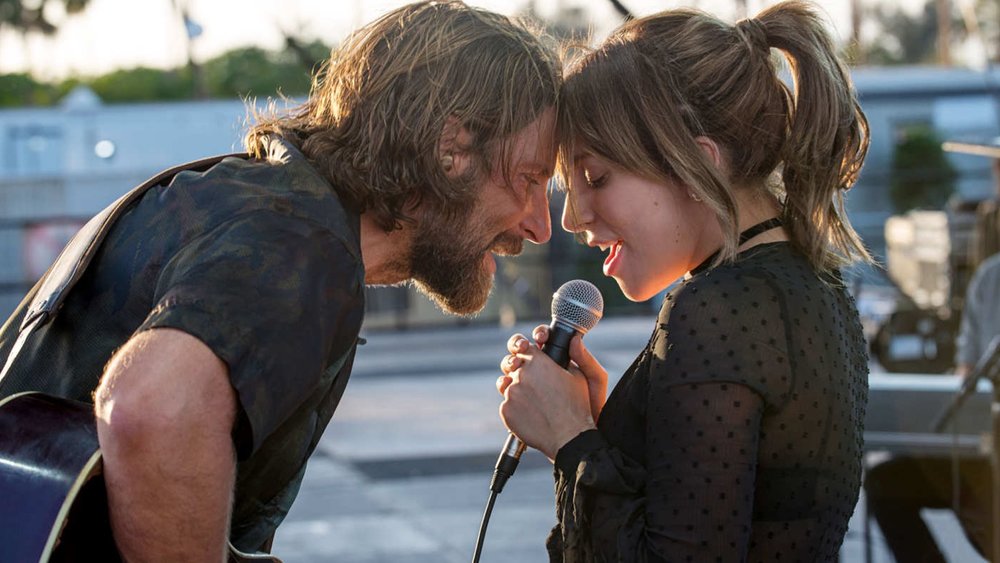
It is perhaps surprising that this story still carries so much power to move us. It could be corny and dated. After all, stars these days go to rehab and then come out to tell their stories of redemption and healthy habits on the cover of People Magazine. The credit for this latest version’s compelling power goes to its director/co-writer/star, Bradley Cooper, who has told the story with verve, specificity, and conviction, and who wisely selected pop superstar Lady Gaga to play the part of the young singer. Life imitates art for the performer originally as famous for her transgressive videos and wild attire (who can forget the meat dress, now at the Rock and Roll Hall of Fame museum?) as for her music. Reportedly, when Cooper met the artist originally known as Stefani Joanne Angelina Germanotta, he wiped the makeup off her face and told her that was how he wanted her to be seen in the film. Her character, Ally, would not be the highly burnished, defiantly confident, even brazen pop performer in grotesque haute couture, but the real girl underneath. That girl is a revelation. The emotions we see on her face as he tries to pull her onstage for the first time, and then her resolve as she steps out from the wings are achingly honest.

Writer/director/co-star Bradley Cooper shows as much evident pride and pleasure in showing her to us as his character, Jackson Maine, does in pulling Ally onstage to introduce her to the audience by making her sing, for the first time, her own songs. His careful attention to every detail is evident in every moment and he has a true musician’s sense of pace and timing. The songs are not just lovely; each of them is meaningful in revealing character and helps to tell the story. The two most recent “Star is Born” movies had their songs nominated for Oscars. One was a winner; the other should have been. This follows in that tradition and I hereby predict that “Shallow” will win this year’s Best Song and that Lady Gaga will be nominated as well.

Cooper’s script reflects the intensive textual analysis he learned in his studies at the Actors Studio and his direction reflects his deep understanding of the importance of creating a safe space for actors to take risks and be completely vulnerable on screen. His own performance is meticulously considered. We see his struggle, his pain, and his passion for music. But like his character, it is very much in service to Lady Gaga as Ally. Cooper says that the idea for the film came to him when he was backstage at a Metallica concert, where he could see the intimacy of the experience of the musicians working together on stage at the same time he saw the immensity of the crowd caught up in the experience. He creates that for us here, and one of the movie’s best images is the small, private smile we see when Jackson begins his signature song. For a moment, the agony of his world disappears and all that is left is the music and the connection it makes to the audience.

Ally gives him that feeling, too. Helping her pulls him out of himself, at least for a while. But his past and dark thoughts about his future are too much to bear.

Cooper also has some small but lovely tributes to the earlier versions of the story, to James Mason wiping off Judy Garland’s garish make-up and to the bathtub scene with Streisand and Kristofferson. But this is very much a stand-alone, a timeless story of love and loss, and a stunning debut from a director who arrives fully present, utterly committed, and astonishingly in control of a vision that is a work of art and completely heartfelt.

SPOILER ALERT: All of the other versions of this story end with a suicide that is portrayed as tragic but also noble, a sacrifice to make it possible for another person to succeed. I was very concerned going into this film that it would perpetuate this toxic romanticized notion. Cooper finds a way to mitigate that to some extent, but viewers should know that it remains a very troubling issue and is the reason I did not give the film a higher grade.

Parents should know that this film has very strong language, alcohol and drug abuse, some fighting, sexual references and situations, some nudity, and suicide.

Family discussion: Why didn’t Jackson tell Ally the truth about what was happening to him? What will Ally do next? How is this version of the story different from the previous films?

If you like this, try: the earlier versions of the story, with Frederic March and Janet Gaynor, Judy Garland and James Mason, and Barbra Streisand and Kris Kristofferson

Related Tags:


Drama DVD/Blu-Ray movie review Movies -- format Musical Remake Romance
Puzzle

Puzzle

Posted on July 26, 2018 at 5:08 pm

B +
Lowest Recommended Age: Middle School
MPAA Rating: Rated R for language
Profanity: Some strong language
Alcohol/ Drugs: Alcohol, drug references
Violence/ Scariness: Tense family confrontations
Diversity Issues: Diverse characters
Date Released to Theaters: July 27, 2018
Date Released to DVD: November 12, 2018

Copyright 2018 Sony PIctures Classics
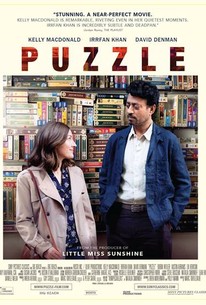
Sometimes in life and often in movies, one object, one moment, one connection can make all the difference and take a character on a journey of purpose and self-discovery. In “Puzzle,” a woman who lives in a very small world discovers that she likes doing jigsaw puzzles because she is very, very good at it. As lovely a metaphor as puzzles are, it is not fitting the pieces together that changes her life. It is learning that she is good at something that has nothing to do with her family. Doing the puzzles and seeing the patterns makes her curious to learn more about the world and it makes her brave enough to find out.

Kelly McDonald is exquisite as Agnes, a Catholic woman who lives with her husband and their two sons in the house she grew up in. We first see her preparing for a party, and then we learn it is her own birthday party. She may be the guest of honor, but she is still doing all of the cooking, decorating, and serving. Her husband and sons love her without paying much attention to her.

One of her birthday gifts is a crossword puzzle. She completes it, and somehow, it completes her. And then it shows her how incomplete her life has been. She has spent decades in the same small, Catholic community. The puzzle inspires her to do something daring — take the train into Manhattan to buy another. And when she sees a notice that someone is looking for a “puzzle partner,” she does something even more daring. She lies to her family so she can find out more.

Screenwriter Oren Moverman (“Love and Mercy,” “The Dinner”) adapted the screenplay from Argentine director Natalia Smirnoff’s “Rompecabezas.” Director Marc Turtletaub gives the film a timeless quality. From the look of her home and her clothes, Agnes seems to be living a generation ago. It is a shock when one of her other birthday presents is an iPhone. She looks at it as though it was delivered by a messenger from the future. “I have a radio and a window,” she tells her son. “I know when it is going to rain.” She calls the iPhone an “alien robot.”

We see that this is a choice Agnes has made, to live in a cocoon of the past, to avoid questioning her choices because she does not want to think about the answers. Why is it puzzles, as her husband says, something for children, that inspire her to think for the first time that maybe she should look outside her home? Or make her speak up for herself and for her son? It could have been cooking difficult recipes like “Julie & Julia” or learning to drive as in “Driving Lessons” or gardening as in “Greenfingers.” It does not matter what it is that pulls characters out of themselves to take risks and learn more; what matters is whether it does and whether the story about how it does inspires that in us.

And what matters here is McDonald. Much of the movie is just her face, luminous, open, a little bit fearful, a little bit joyful. The film is wise in its exploration of the things we do to quiet our minds, even when the result is to hide from ourselves, not peace but numbness. It understands that people and even movies themselves are puzzles that, if we put the pieces together thoughtfully, give us connection, meaning, and purpose.

Parents should know that this film has some strong language, family tension, references to drug use, smoking, drinking, and a non-explicit sexual situation.

Family discussion: Why did Agnes suddenly want to learn about the news? What will she do next?

If you like this, try: “Driving Lessons”

Related Tags:


Drama DVD/Blu-Ray movie review Movies -- format Remake
King Arthur: Legend of the Sword

King Arthur: Legend of the Sword

Posted on May 9, 2017 at 3:13 pm

Copyright 2017 Warner Brothers

Director Guy Ritchie pretty much makes the same movie every time. Even when it is set in Victorian England (“Sherlock Holmes” with Robert Downey, Jr.) or Cold War-era Europe (“The Man from U.N.C.L.E.“), or based on a classic book (“Sherlock” again) or a remake of an Italian comedy (“Swept Away”), it’s really pretty much about corkscrew story-telling with tricked-up juxtapositions of quick cuts and slow motion, and flashbacks and side-cuts for emphasis and illumination. The characters are a motley crew of cheeky lower-class rapscallions taking on the rich and powerful. They range from wildly proficient to borderline incompetent, often damaged but usually pretty good with a quip, assuming you can understand the argot, and with their own kind of honor.

So, why not take that formula and set it in the Middle Ages, featuring some of the most enduring characters in the Western canon? What’s that, you say? Because it’s already been done by Monty Python? But they were using coconuts for horse clop clop, and we have all this lovely lolly for computers and explosions and fight scenes, that’s why! This begins with a riderless horse running from an exploding building and goes on to include a sort of three-headed mermaid octopus, a gigantic snake, and a therapeutic iowaska-style trip. Plus, of course, that sword gets pulled from the stone.

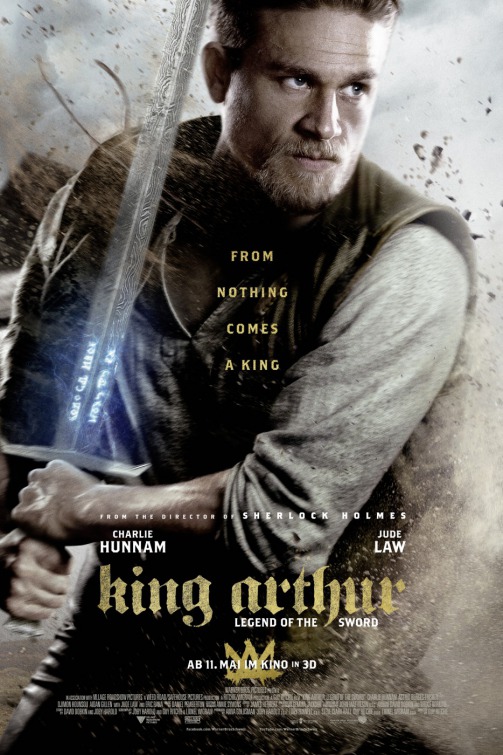
And that is how we come to have the ponderously, if generically, titled “King Arthur: The Legend of the Sword,” pretty far from the essential elements of the Arthurian legend, literally two pie slices short of a round table and no Guinevere or Galahad in sight, but per the title we do get a lot of Excalibur the sword and a bit of Arthur’s dad Uther Pendragon (Eric Bana), plus, as noted, a lot of magic and fights and explosions, plus a very cool monster, all of which are a good bit of fun.

As the story begins, the longtime pact between men and mage (magicians) is coming to an end. Uther is King, but his brother Vortigern (Jude Law, lounging menacingly in what looks like disappated British rock star garb) is so jealous that he will destroy what he loves most to get the throne, unleashing the power of the mage, which in this case includes rampaging giant elephants.

Soon Uther and the queen are dead and young Arthur is sent off in a boat, ending up in a brothel, where we see him grow up in a kaleidoscopic flurry of images that show us that he is (1) very buff (ultimately ending up as Charlie Hunnam), (2) very canny at collecting coins, (3) learning how to fight, and (4) very loyal to his friends, including the prostitutes who raised him.

Arthur’s uncle has become king. He rules with fear, which he considers not a necessary evil but the primary benefit of his position. He says it is intoxicating, that it “takes you completely.” In video game fashion, he can only assume total power if he is able to prevent Uther’s true heir from touching Excalibur to some sort of altar and completes the building of a tower. To find and kill Uther’s son, he requires every man of the right age to try to pull the sword. Thus, Arthur is revealed, though he says and possibly means that he never wanted power.

With the help of his rag tag friends from his days on the street and a mysterious mage (Astrid Bergès-Frisbey), Arthur takes on the king and his army of Blackleg soldiers. But this is exactly the problem; the one thing the audience must have in a fight is a good sense of the stakes and challenges. With magic on Arthur’s side, we never know what is really possible. And psychobabble about his not being able to access the full power of the sword until he is willing to confront his painful memories just sounds silly, in part because Hunnam, a true Ritchie not-so-anti-hero, never seems vulnerable enough to need any additional soul-searching.

It is kinetic, fast, and fun to watch, though the rumored prospect of five more in a projected series has me wishing for a mage to make it stop.

Parents should know that this film includes extended fantasy/action peril and violence, with explosions, swords, fights, arrows, torture, and monsters. Characters are injured and killed, including beloved parents, children, and spouses. There are scenes in a brothel, sexual references, and characters use some strong language, alcohol, and drugs.

Family discussion: Why does Arthur say he never had any desire for power? How do we know when is it time to face painful memories?

If you like this, try: “Excalibur” and “Lock, Stock, and Two Smoking Barrels”

Related Tags:


Action/Adventure Based on a book Epic/Historical Fantasy Remake
Going in Style

Going in Style

Posted on April 6, 2017 at 5:31 pm

B-
Lowest Recommended Age: High School
MPAA Rating: Rated PG-13 for drug content, language and some suggestive material
Profanity: Some strong language
Alcohol/ Drugs: Alcohol
Violence/ Scariness: Mostly comic peril and violence, issues of aging and illness
Diversity Issues: Diverse characters
Date Released to Theaters: April 7, 2017
Date Released to DVD: July 31, 2017

Copyright Warner Brothers 2017
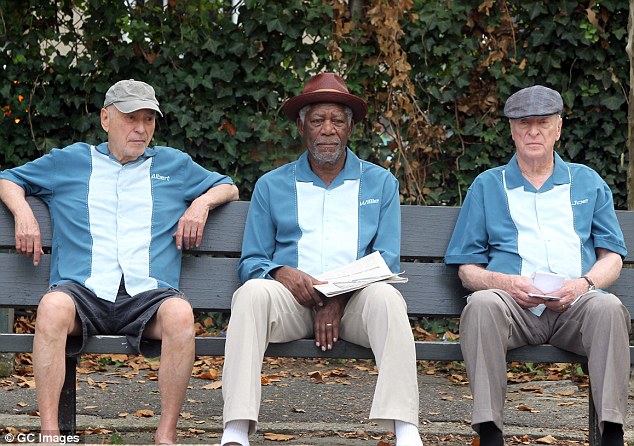
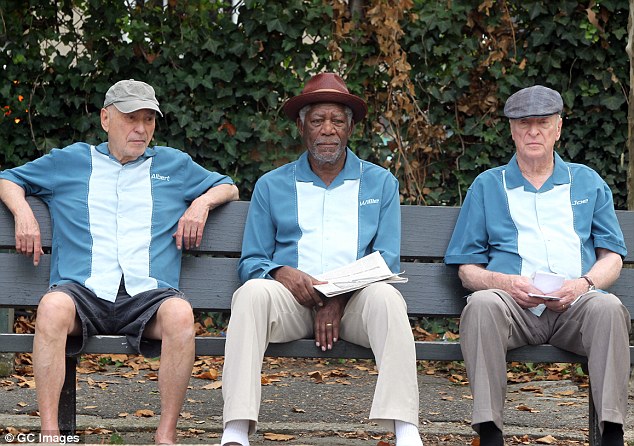
Oscar winners Morgan Freeman, Michael Caine, and Alan Arkin are such a dream team that we almost forget how weak this remake of the 1979 George Burns “Going in Style” is. It is always a pleasure to see these old pros, and in this heist story the real theft is every scene they are in from anyone else in the cast.

As in the original, which co-starred Art Carney and Lee Strasberg, it is the story of three old guys who rob a bank. This time, the script by Theodore Melfi (“St. Vincent,” “Hidden Figures”) leverages the post-financial meltdown Trump era animosity toward banks and big multi-national corporations that consider the pensions they promised their long-term employees as just another stream of revenue to redirect to investment bankers and CEOs. Joe (Caine), Willie (Freeman), and Albert (Alan Arkin) are not just proving that experience and wiliness will triumph over youth and overconfidence; they are a new version of Robin Hood, seeking justice for the little guys.

The men are all retirees from the same manufacturing company, which is moving all of its operations out of the United States and cancelling all pension plans. Joe, whose daughter and granddaughter (Joey King) live with him, has had to stop making the mortgage payments that tripled after his rate went up, and his home is in foreclosure. Willie’s dialysis is not enough any more and he will die if he does not get a new kidney. When Joe’s meeting at the bank about his mortgage is interrupted by a bank robbery, it looks like a way for him to solve his money problems.

The three leads give it their best, and there is simply nothing better than that. Their enjoyment in each other and in the chance to have some fun as the movie’s heroes is palpable. And it is a joy to see the still-lovely and very game Ann-Margret as a grocery store clerk with a crush on Al. “SNL’s” Kenan Thompson and Siobhan Fallon Hogan are bright spots, but the gifted Matt Dillon, Christopher Lloyd, Josh Pais, and Peter Serafinowicz (“Spy”) are vastly under-used in one-dimensional roles. This especially disappointing from director Zach Braff (“Garden State”) and screenwriter Theodore Melfi, who seem to think that their only choice here is to make a thinly imagined, tiresomely formulaic, numbingly predictable story. Topical references notwithstanding, the movie is more outdated than the 1979 original.

Parents should know that this film includes armed robberies, guns, serious illness, marijuana, drinking and drunkenness, some strong language, sexual references and non-explicit situations.

Family discussion: What did each man find the most persuasive reason to rob the bank? What was the most important advice they got?

If you like this, try: the original version with George Burns, Art Carney, and Lee Strasberg, and “Tower Heist”

Related Tags:


Comedy Crime DVD/Blu-Ray Family Issues Remake
THE MOVIE MOM® is a registered trademark of Nell Minow. Use of the mark without express consent from Nell Minow constitutes trademark infringement and unfair competition in violation of federal and state laws. All material © Nell Minow 1995-2026, all rights reserved, and no use or republication is permitted without explicit permission. This site hosts Nell Minow’s Movie Mom® archive, with material that originally appeared on Yahoo! Movies, Beliefnet, and other sources. Much of her new material can be found at Rogerebert.com, Huffington Post, and WheretoWatch. Her books include The Movie Mom’s Guide to Family Movies and 101 Must-See Movie Moments, and she can be heard each week on radio stations across the country.

Website Designed by Max LaZebnik