Hostiles

Hostiles

Posted on January 18, 2018 at 2:41 pm

B-
Lowest Recommended Age: Mature High Schooler
MPAA Rating: Rated R for strong violence, and language
Profanity: Some very strong and racist language
Alcohol/ Drugs: Alcohol, smoking
Violence/ Scariness: Extensive and very graphic violence, many characters injured and killed, rapes
Diversity Issues: A theme of the movie
Date Released to Theaters: January 19, 2018

Copyright 2017 Entertainment Studios Motion Pictures
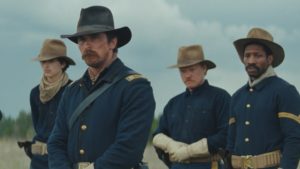
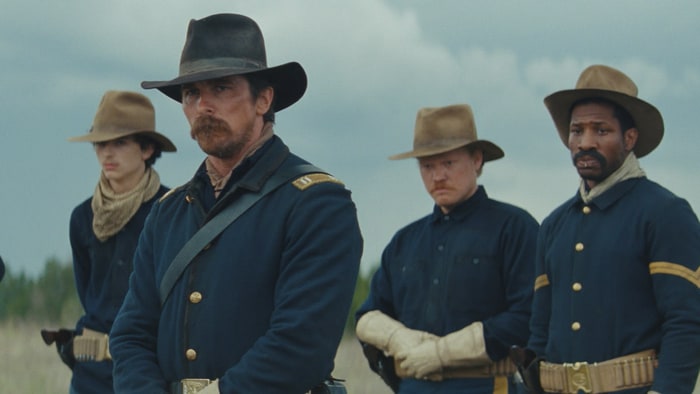
“Hostiles” is more in conversation with movies about the settlement of the West than it is about or in conversation with the brutal history of the West itself. For decades there were simple stories of brave cowboys and soldiers fighting racist caricatures of Native Americans. White men were heroes and Indians were savages.

Then there were some stories with a little more nuance and some better intentions but pretty much on the side of “civilization” and the more nuanced Native American characters were usually played by actors who were not Native Americans. Westerns went out of vogue in part because of the growing recognition that the stories were too complicated and painful for the “good guys vs. bad guys” cliches of the past. “Hostiles” is a sincere effort from writer/director Scott Cooper at a Western that frankly grapples with the challenge of building a society on the unthinkable carnage and injustice of the past. But there is more formula than drama, with each character specifically designed to represent a place on the spectrum of culpability. With dialogue like “I don’t know what we are going to do with these wretched savages” and “There ain’t enough punishment for his kind” and soldiers with too-symmetrical responses to their own culpability, and unceasing brutality to drive the points home, even the fine acting cannot bring it to life.

Christian Bale plays Captain Joseph Blocker, a man who has witnessed and inflicted horrible brutality in the fight with Indians. When he is ordered to escort an Indian leader and his family to their home, he refuses, until his superior officer threatens to court-martial him and withhold his pension. Blocker despises Chief Yellow Hawk (Wes Studi), who has been in prison for years and is dying of cancer. But the President has ordered that he be allowed to return home to die, and he will need an escort to protect him and his family.

Blocker assembles a group of soldiers and they begin the journey. They come across Rosalie Quaid (Rosamund Pike), whose husband and children have just been killed by Indians, who stole their horses and burned down her home. She is severely traumatized, but Blocker’s respectful treatment helps her begin to accept what has happened, and when Yellow Hawk’s daughter offers her some clothes, she changes out of her blood-stained dress.

Each encounter along the way, most horrifically brutal, is designed to add some variation on the theme, and all boil down to: both white settlers and Native Americans committed atrocities and both have to find some way to reconcile with the past. The film begins with a quote from DH Lawrence: ““The essential American soul is hard, isolate, stoic, and a killer. It has never yet melted.” Perhaps more apt is a quote attributed to Golda Meir, “We can forgive the Arabs for killing our children. We cannot forgive them for forcing us to kill their children.”

Parents should know that this film has extended peril, violence, and rape, with many characters injured and killed, including children and a baby, and many grisly and disturbing images, suicide, racist epithets and comments, and some strong language.

Family discussion: What helped Mrs. Quaid begin to accept her loss? How were Blocker and Wills different? Why did Blocker get on the train?

If you like this, try: “Unforgiven” and “The Searchers”

Related Tags:


Drama DVD/Blu-Ray Epic/Historical movie review Movies -- format Movies -- Reviews Race and Diversity Western
Forever My Girl

Forever My Girl

Posted on January 18, 2018 at 12:39 pm

C
Lowest Recommended Age: Middle School
MPAA Rating: Rated PG for thematic elements including drinking, and for language
Profanity: Some mild language
Alcohol/ Drugs: Drinking and alcohol abuse, reference to drugs
Violence/ Scariness: Sad death, scene in hospital, child in peril
Diversity Issues: None
Date Released to Theaters: January 19, 2018

Copyright 2017 Forever My Girl
Well, there is a brief song by Travis Tritt. And actor Alex Roe is personable and engaging even in the preposterously imagined role of Liam Page, a country singer whose every moment is obsessed over by zillions of fans and all of the magazines sold at grocery store checkout counters. But that can’t make up for the syrupy Nicholas Sparks wannabe storyline, clunky dialogue (we are told three times in the first seven minutes that hometown boy Liam is on the brink of stardom) and the excruciatingly chirpy child at its heart.

Liam Page runs out on his wedding, leaving Josie (Jessica Rothe) in their Louisiana hometown and going off to pursue a career in music. Eight years later, he is is a country superstar, performing in arenas and chased by fans as though he is a Beatle. A would-be groupie accidentally breaks his vintage cell phone, and he runs to the store barefoot offering $10,000 to get it repaired. Under the duct tape and the bent antenna there is a voicemail he just cannot lose (or, apparently, download to another phone). This is, of course, documented by fans on their (up to date) cell phones and a major news story.

Liam is a mess, drinking too much, behind on the songs he owes his record label. When he finds out that his hometown best friend has been killed in an accident, he returns, to stand outside the church during the funeral, unable to bring himself to go inside. He gets a grim greeting from the preacher, who is his father, and a punch in the stomach from Josie. But it turns out that Josie has a seven year old daughter, and it does not take a math whiz to figure out that Billy (Abby Ryder Fortson) unfortunately conceived as 90 percent precocious sass with gratingly quippy commentary about the “stats on surviving an accident in a convertible — they are low, staggeringly low.” “What happened to Mom’s rose garden?” Liam asks his father in case we are missing the metaphor. Don’t worry, no one possibly could.

The town (Georgia playing the part of Louisiana) is like the setting for a Hallmark channel Christmas movie starring Hannah Montana, with twinkly lights and bustling businesses on Main Street, and just filled with good neighbors who are endlessly supportive and kind and unanimous in their rejection of the hometown boy who jilted Josie. We know where this is all going, but it is still jarring when Josie goes from a Taylor Swiftian “we are never ever getting back together” to “I want to go on a magical superstar date!”

Listen, Nicholas Sparks is already Nicholas Sparks lite. You can’t really take it any further or, I should say, make it more shallow than that. Pretty people with pretty problems will always be playing on a screen somewhere, but this one is better suited for watching while folding laundry.

Parents should know that this film includes drinking and alcohol abuse, reference to drug use, sad parental death, offscreen fatal accident, mild references to groupies and pregancy, and some language.

Family discussion: Why did Liam leave Josie? Should she forgive him? Why?

If you like this, try: “The Resurrection of Gavin Stone,” “The Lucky One” and “Dear John”

Related Tags:


Drama DVD/Blu-Ray movie review Movies -- format Movies -- Reviews Romance
I, Tonya

I, Tonya

Posted on December 7, 2017 at 8:12 pm

B +
Lowest Recommended Age: Mature High Schooler
MPAA Rating: Rated R for pervasive language, violence, and some sexual content/nudity
Profanity: Extensive very strong and crude language
Alcohol/ Drugs: Drinking, smoking, drugs
Violence/ Scariness: Some violence including attack
Diversity Issues: None
Date Released to Theaters: December 8, 2017

Copyright 2017 Neon
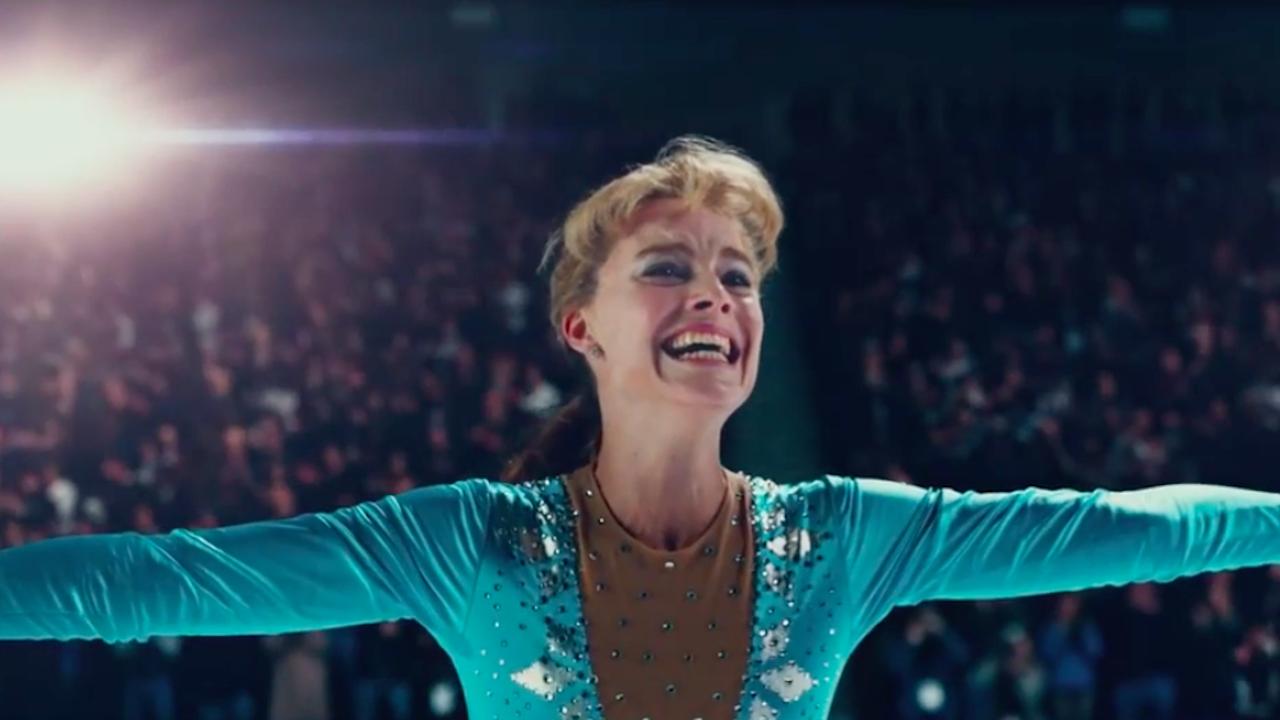
In one of “I, Tonya’s” most striking scenes, Margo Robbie as figure skating star Tonya Harding looks at herself in the mirror after applying her make-up for a competition. It is stark, garish, clown-like, and scary, less like beauty than like warpaint. Harding is trying to hide the heartbreak of her life when she is on the one place where everything is pretty and perfect, but in trying to make herself look pretty and perfect she has created a monster. That scene exemplifies the movie’s themes about public and private personas and the way they can crash into each other with terrible destructive force.

In 1994, Nancy Kerrigan, one of Harding’s rivals, was attacked by a Shane Stant (Ricky Russert), who had been hired by two of history’s most incompetent criminals, Harding’s estranged husband, Jeff Gilhooly (Sebastian Stan) and his dimwitted friend Shawn Eckhardt (Paul Walter Hauser). Though Harding was not involved or even aware of this plan, news reports of the era emphasized the contrast between ice princess Kerrigan, and blue-collar Harding. In reality, Kerrigan was also from a modest background, but her appearance and routines were more elegant and graceful, while Harding adopted a bad girl persona, calling herself the “Charles Barkley of figure skating.” The problem is that figure skating is not just about skill and technique. It is about the show, and it is about the persona. Judges and fans expect more than athletic achievement.
They expect elegance and grace on and off the rink. They want the ice princess.

Allison Janney is incendiary as Harding’s abusive mother, constantly pushing her and demeaning her, often hitting her, too. With no affection or approval at home, she was drawn to Gilhooly, the first male to pay any attention to her, and when he became abusive, that seemed normal, too.
Director Craig Gillespie (“Lars and the Real Girl”) and screenwriter Steven Rogers (“Stepmom,” “Love the Coopers”), promise us at the beginning a story “based on irony-free, wildly contradictory and totally true interviews,” and they deliver. Like “The Disaster Artist,” this film takes us behind the scenes of a real-life catastrophe based on dreams of stardom, hopeless miscalculation about their own abilities, and a distorted, media-fueled idea of reality. We may watch expecting to laugh and feel superior, but the prismatic approach, with characters speaking to us to explain their perspectives (or try to put the blame on each other) is surprisingly sympathetic, grounded, and insightful.

Parents should know that this film includes constant very strong and crude language, sexual references and situations, nudity, drinking, drugs, smoking, and violence, including domestic abuse.

Family discussion: Who was responsible for attacking Nancy Kerrigan? Why does the movie call itself “irony-free?” Do you agree that Americans “want someone to hate?”

If you like this, try: “The Positively True Adventures of the Alleged Texas Cheerleader-Murdering Mom” and “Tonya Harding: Anything to Win”

Related Tags:


Based on a true story Drama DVD/Blu-Ray Family Issues movie review Movies -- format Movies -- Reviews Sports
Darkest Hour

Darkest Hour

Posted on December 7, 2017 at 5:48 pm

A-
Lowest Recommended Age: High School
MPAA Rating: Rated PG-13 for some thematic material
Profanity: Some strong language
Alcohol/ Drugs: Drinking, smoking
Violence/ Scariness: Wartime violence
Diversity Issues: None
Date Released to Theaters: December 8, 2017
Date Released to DVD: February 26, 2018
Copyright 2017 Focus

A bitter debate is going on in Parliament. The Prime Minister, Neville Chamberlain (Ronald Pickup) has responded to Hitler’s invasion of other countries with appeasement and many of the politicians are with him. A combination of denial and sun-never-sets-on-the-British-Empire smugness of those who have colonized a quarter of the planet and are situated on the other side of the Channel makes them confident that they can work with Hitler. But it is increasingly clear to at least some of the politicians believe it is time to take a stronger stand. Is there someone they can call on to lead them in that direction?

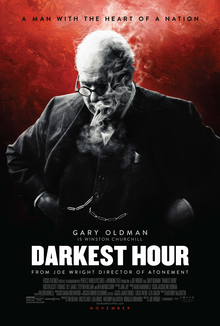
There is, and he is still in bed, “insuring his fingerprints are not on the murder weapon.” He is Winston Churchill (Gary Oldman, disappearing into the character and giving a dazzling performance worthy of the real-life man he portrays). The very inevitability of Churchill’s selection, no one’s first choice, a man who “has a knack for drawing out the very worst in those who are trying to help him,” according to his devoted but perceptive wife Clementine (Kristin Scott Thomas), increases the frustration of the elected officials around him, who continue to plot to undermine his determination to to go to war, if necessary, to fight Hitler’s takeover of Europe. “I’m getting the job only because the ship is sinking,” he says glumly but grimly. “It’s not a compliment. It’s revenge.”

Earlier this year, Christopher Nolan’s “Dunkirk” gave us a bracing look at the turning point that ends this film, when certain catastrophic defeat was turned into a victory just by escaping, rescued with the help of a citizens’ armada of boats. That film paid tribute to the ordinary men who retreated to come back stronger. This film gives us another side of the story in a more traditional “great man” portrayal of history and it could not have a better subject. Churchill was a master of language, grandiloquent at a time when people needed to be inspired by a leader of vision, a deep knowledge of history, and shining integrity. The benefit of having a central character in Churchill is that he pretty much spoke in movie dialogue, hyper-articulate, wryly witty, and with an underlying patriotism rooted in compassion, not jingoism.

Churchill knows that it is not enough for him to be right about Hitler. He has to get the support of the other politicians and he has to get the support of the population. He knows what he will be asking them to do will involve unimaginable sacrifice. And there is no time. “We are looking at the collapse of Western Europe in the next few days,” says a general. “Should the public be told?” There is no time. And, as yet, there is no plan for a counter-attack and Franklin Roosevelt, Churchill’s good friend in the United States, tells him that Congress has prevented him from being of help.

Churchill also knows what it is to fail, publicly and miserably. Will he make mistakes again? Clementine assures him that he is wise because he has doubts. Even if Hitler wins, Churchill knows it is better to give him as much of a fight as possible. “Countries that go down fighting come back.”

The compressed time period and the urgent conversations with Clementine, member of Parliament, and the king (superbly played by Ben Mendelsohn) are riveting, bolstered by an urgent score by
Dario Marianelli and masterfully sinuous camerawork by Bruno Delbonnel and editing by Valerio Bonelli. The camera maneuvers through Churchill’s legendary wartime cabinet rooms (a must-visit for London tourists), showing us the cramped quarters and the fierce energy of what is going on.

Oldman disappears into the role, a performance like the famous Karsh portrait come to life. His Churchill is crafty, sometimes impatient, sometimes uncertain, but compassionate, and always sure of what his values are. The Churchills had a famously devoted love match, and Kristin Scott Thomas is impeccable in showing us Clementine’s elegance, and resolve.

“He mobilized the English language and sent it into battle,” a character says. And with this film, director Joe Wright mobilized the language of film and presents us with an uplifting reminder of what the right person at the right time can do even under the direst circumstances.

Parents should know that this is a wartime story with tense peril and reference to violence and loss, some strong language, and smoking and drinking.

Family discussion: What should be factors in deciding when to intervene and when to negotiate? Why did the king change his mind? Read My Early Life, Churchill’s autobiography of his youth. Which self will you be today?

If you like this, try: “The King’s Speech,” “Dunkirk,” and some of the other movies about this towering figure of the 20th century, including the “First Churchills” miniseries about his ancestors.

Related Tags:


Based on a book Based on a true story Biography Drama DVD/Blu-Ray movie review Movies -- Reviews Politics War
Wonder Wheel

Wonder Wheel

Posted on November 30, 2017 at 5:36 pm

C
Lowest Recommended Age: Mature High Schooler
MPAA Rating: Rated PG-13 for thematic content including some sexuality, language and smoking
Profanity: Strong language
Alcohol/ Drugs: Smoking, drinking, references to alcoholism
Violence/ Scariness: Peril and off-screen violence, references to mob killings
Diversity Issues: None
Date Released to Theaters: December 1, 2017
Date Released to DVD: March 3, 2018

Copyright Amazon 2017
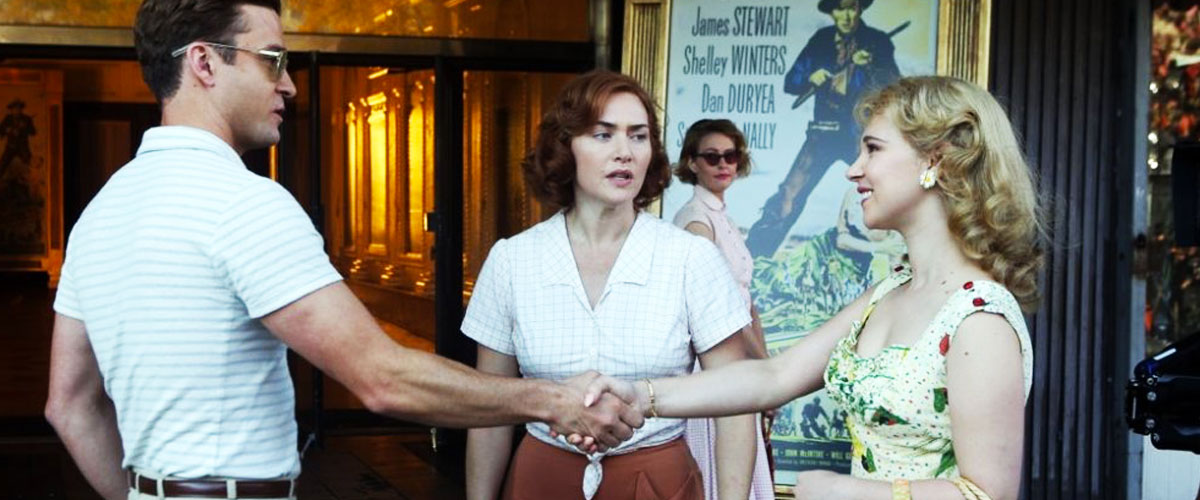
Writer/director Woody Allen continues to explore questions of fate, chance, and choice he has addressed with much more art and understanding before in “Wonder Wheel,” a dreary, dull story set in 1950’s Coney Island. Unlike the character who talks about responsibility, Allen tries to duck his own failures by having his stand-in narrator tell us that the story is filled with metaphor and symbolism. That stand-in is Justin Timberlake as a lifeguard named Mickey who wants to write big, dramatic plays like Eugene O’Neill, and he addresses us directly in an unsuccessful attempt to make the story appear more meaningful.

Mickey, who is going to school on the GI bill after his service in the navy during WWII, is having an affair with a married older woman, Ginny (Kate Winslet). She is a waitress at a clam joint on the boardwalk, but she tells him she is a former actress who is just playing the part of a waitress. Her husband, Humpty (a blustery Jim Belushi) runs the carousel. She has a young son from her first marriage who lies, steals, and sets fires everywhere. And Humpty has a daughter named Carolina (Juno Temple), estranged since she married a mobster five years earlier, who shows up because she is on the run. She has left her husband and shared some information with law enforcement, and now goons want to kill her.

All of this could be set up in a few brief scenes, but this is a movie where everything has to be said at least twice, just to drag it all out. Slate’s Sam Adams writes that Allen is trying to justify some of the highly-controversial choices of his personal life and attack his former partner (and mother of his current wife) in this film. It is equally possible to read it as a mea culpa, with Ginny’s confession that she destroyed her one chance at personal and professional happiness when she betrayed her first husband, belatedly realizing he was the love of her life, but just could not help herself. Is this fate? A recurring character flaw? Allen does not seem interested enough to follow through.

The production design gorgeously brings to life the look of 1950’s Coney Island, the beach, the boardwalk, and the rides. Ginny and Humpty literally live under the ferris wheel that gives the film its title, reminiscent of Alvy Singer’s family living under the roller coaster in “Annie Hall.” Cinematographer Vittorio Storaro gives a romantic glow to many of the scenes, perhaps making a link between Ginny’s red hair and the fires set by her son. The actors do their best to bring the characters to life, but with a repetitive, underwritten script and sour, dreary tone, it is as though instead of putting his characters in a story he tossed them like pennies in search of an I Ching fortune. In life, we can debate the role of destiny, fatal flaws, and choice. But a writer is in control of all three for his characters, and no amount of visual flair or acting talent can obscure the failure to make those choices meaningful.

Parents should know that this film includes sexual references and situations, adultery, strong language, drinking and alcoholism, references to domestic abuse and child abuse, smoking, and references to mob violence.

Family discussion: What symbols can you identify in this story? What does the ferris wheel mean? What about the fires?

If you like this, try: “Crimes and Misdemeanors”

Related Tags:


Drama DVD/Blu-Ray movie review Movies -- format Movies -- Reviews
THE MOVIE MOM® is a registered trademark of Nell Minow. Use of the mark without express consent from Nell Minow constitutes trademark infringement and unfair competition in violation of federal and state laws. All material © Nell Minow 1995-2026, all rights reserved, and no use or republication is permitted without explicit permission. This site hosts Nell Minow’s Movie Mom® archive, with material that originally appeared on Yahoo! Movies, Beliefnet, and other sources. Much of her new material can be found at Rogerebert.com, Huffington Post, and WheretoWatch. Her books include The Movie Mom’s Guide to Family Movies and 101 Must-See Movie Moments, and she can be heard each week on radio stations across the country.

Website Designed by Max LaZebnik