How to Make a Killing

How to Make a Killing

Posted on February 20, 2026 at 3:37 pm

C
Lowest Recommended Age: Mature High Schooler
MPAA Rating: R for violence, sexual references, pervasive language, and some drug use

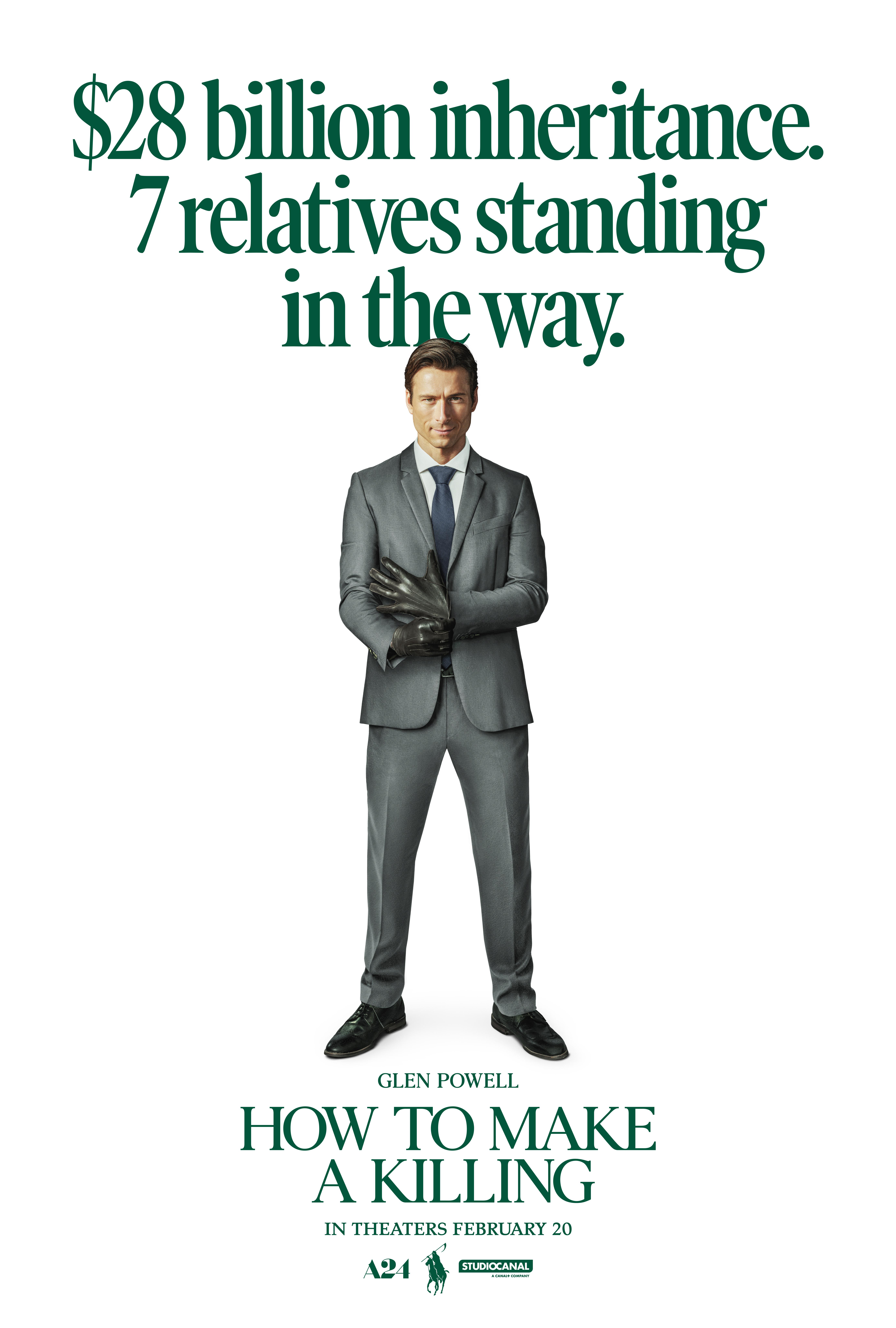
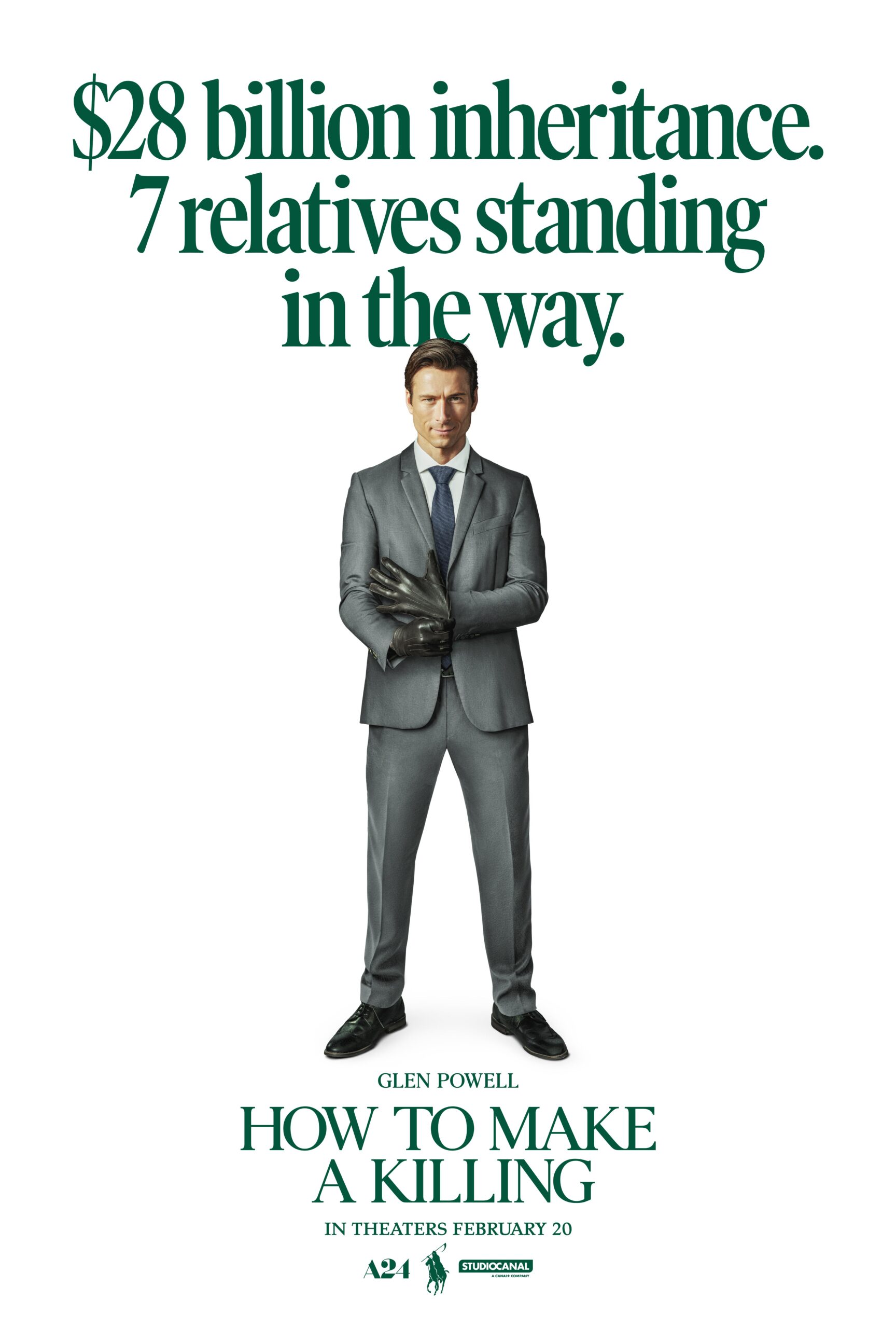
I never had the love for Glen Powell’s “Hit Man” that most people did. The set-up and the wit were all wonderfully entertaining and the chemistry between Powell and Adria Arjona was off the charts, but the “happy” ending was too dark to fit the world of the rest of the film. The same issue creates even bigger problems with Powell’s new film, “How to Make a Killing,” inspired by the classic “Kind Hearts and Coronets,” with Alec Guinness playing eight roles, all relatives who were killed off, one by one, by a wily schemer. The multiple roles gimmick is fun, but that film, a Criterion Collection gem, works because it is an outstanding example of a black comedy. This one should have studied it more closely.

Like the original, this one begins with the hero/anti-hero in prison, waiting for his execution. Powell plays Becket Redfellow, whose mother was disowned by her very wealthy family when she became pregnant at age 18 and refused to have an abortion. His father died when he was an infant, so his mother raised him alone for a few years until she died, making him promise he would do whatever it took to have the “right life,” he deserved. By “right” she meant the wealth and prestige of her family. But when Becket, still a child, asked if his mother could be buried in the family mausoleum, the butler handed him a note with a “polite” refusal that wished him well.

As a child, Becket had a crush on Julia (Margaret Qualley as an adult). In Great Expectations fashion, they are separated for years and then meet again. He is still enthralled by her, but she is engaged to a man who shares her social cachet. She turns down his offer to get together to catch up and makes a joke about how Beckett should kill off those ahead of him in line to inherit his grandfather’s multi-billion dollar estate.

And then Beckett starts to kill off those ahead of him in line to inherit the estate. (Conveniently for the plot, the entire estate automatically goes to whoever is next in line.)

This gives us a chance to meet the relatives, who are all arrogant and selfish and not that interesting. There’s a partying finance bro, a pretentious artist, and a woman who brags about adopting 11 children from different countries. Topher Grace brings some vitality to his role as something between a prosperity gospel huckster and a personal empowerment huckster. One of the relatives turns out to be a decent guy, but he conveniently dies of natural causes. Cut to yet another scene in front of the family mausoleum.

A movie that asks us to root for a ruthless (note the name of a key character) serial killer needs a consistent, heightened, satiric tone and very sharp and specific characters. Think of a film like the original British version of “Bedazzled” (the Brendan Fraser remake is pretty good, too). The actors here seem to be coming from different movies. It should also have clever crimes. Like the characters, the crimes here are bland, and like “Hit Man” the end is unsatisfying and sour. Even a very black-humor-based movie has to have some kind of moral core. This one is just empty.

Parents should know that this film involves a series of murders of family members. Characters drink alcohol, smoke tobacco and weed, and use very strong language.

Family discussion: What is the “right life?” Why were the members of this family so selfish?

If you like this, try: “Kind Hearts and Coronets,” “Gross Pointe Blank,” and “Mr. Right”

Related Tags:


Comedy Crime movie review Movies -- format Movies -- Reviews
My Dead Friend Zoe

My Dead Friend Zoe

Posted on February 27, 2025 at 12:40 pm

A-
Lowest Recommended Age: Mature High Schooler
MPAA Rating: Rated R for language
Profanity: Very strong language
Alcohol/ Drugs: Drinking, smoking
Violence/ Scariness: War violence, suicide, mostly offscreen
Diversity Issues: Some sexist and harassing characters
Date Released to Theaters: February 28, 2025

Sonequa Martin-Green gives an exquisite, unforgettable performance in a story of love, grief, memory, and healing, “My Dead Friend Zoe.” First-time writer/director Kyle Hausemann-Stokes was a Bronze Star-awarded paratrooper in the US Army who served as a convoy commander in Iraq. He brings enormous specificity and understanding to an “inspired by a true story” film, with Martin-Green as Merit, a veteran struggling with PTSD. As she says, her struggle is not over “an incident but a person.”

That person is Zoe, played with warmth and bone-dry humor by Natalie Morales. Merit and Zoe have the kind of deep connection that comes from a similar response to intense and terrifying circumstances rather than some of the factors that sustain other friendships like interests in common. The way they talk to each other shows that their rhythms synch perfectly. They can finish each other’s thoughts; they are endlessly supportive through and in spite of perpetual teasing; they can switch seamlessly from joking to, if not seriousness, joking grounded by sincerity. When male soldiers demean Merit with sexist remarks, Zoe stands up for her friend, even though they outrank her. They utterly trust and rely on each other.

For that reason, Merit does not see that they have differences of increasing importance as their terms of service are ending.

Or rather, did not see. As the movie begins, Merit’s service has ended and she is back at home, profoundly traumatized. She will not let herself remember how her best friend Zoe died. Instead, she is awash in memories so vivid she feels like Zoe is still with her. And she likes that feeling. She is not ready to let Zoe go.

We can see why. Morales, always endlessly appealing on screen and here in a perfect role, the warm, wise-cracking, ride or die friend we would all love to have, imaginary if necessary.

Hausemann-Stokes depicts the imaginary character with assurance and exceptional delicacy, especially impressive for a first-time writer/director. It would be easy to make this concept intrusive or unintentionally funny. But we can see, thanks to sensitive writing and Martin-Green’s extraordinary performance. Oscar-winners Morgan Freeman and Ed Harris show up to provide able support. Freeman plays a support group counselor and Harris is Merit’s grandfather, Dale, a veteran whose service inspired Merit to enlist and whose early dementia is both another source of loss and a possibility of finding some purpose. Their scene together in a boat on the lake near his home is especially moving and one of many graceful moments that expand our understanding and move the characters forward.

Merit meets Alex (wonderfully appealing Utkarsh Ambudkar) and their immediate connection gives her the first sense of future possibilities, her first reason to think about leaving Zoe in the past. Hausemann-Stokes and his brilliant cast get the details right to bring us into this world and expand our understanding of our own struggles with loss.

Parents should know that this movie deals with wartime peril and violence, suicide, and post-traumatic stress disorder. Characters drink, smoke, and use very strong language. A character has dementia and there is family stress.

Family discussion: What is survivor guilt? How does Dale help Merit think about memory and loss? Why didn’t Merit know what Zoe was worried about?

If you like this, try: “The Outpost” and “Thank You for Your Service”

Related Tags:


Drama Inspired by a true story movie review Movies -- format Movies -- Reviews Romance War
The Last Full Measure

The Last Full Measure

Posted on January 23, 2020 at 5:41 pm

B-
Lowest Recommended Age: Mature High Schooler
MPAA Rating: Rated R for war violence and language
Profanity: Strong language
Alcohol/ Drugs: Smoking, medication
Violence/ Scariness: Graphic and disturbing images of wartime violence, characters injured and killed, veterans with PTSD, medical issues
Diversity Issues: None
Date Released to Theaters: January 24, 2020

Copyright 2019 Roadside Attractions
The story of the exceptional valor of Airman 1st Class William H. Pitsenbarger in one of the bloodiest battles of the Vietnam War, and the story of the thirty-year effort by the men he saved to see that he received recognition with a posthumus Medal of Honor are plenty dramatic, so it really wasn’t necessary to ramp it up with fictional details about a cover-up. And even an AARP A-list in the cast, including Ed Harris, Christopher Plummer, Diane Ladd, John Savage, Amy Madigan, Samuel L. Jackson and Peter Fonda, each with a chance at a bravura star turn, cannot match the clips over the final credits of the real-life veterans who would not quit until his valor was acknowledged. He ie one of only three Air Force enlisted men to be awarded the Medal of Honor in military history.

So a documentary about what really happened would have been better. Instead we have a diligent, well-intentioned, if overheated story that is as much about the (fictional) Defense Department staffer who was assigned to investigate the application for the Medal of Honor, Scott Huffman (Sebastian Stan), and the lessons he learned from contact with the honor and courage of Pitsenbarger, his parents (Plummer and Ladd), and the humble but insistent men who would not quit.

The movie goes back and forth between 1966 Vietnam and 1995 Washington DC. In Vietnam, Pitsenbarger was an Air Force pararescueman, not in a combat company himself but part of a team that evacuated wounded soldiers via helicopter. In one of of the bloodiest days of the war (meaning highest US casualty count), when the Americans were being slaughtered, he rescued wounded men at great risk to his own life and then picked up a gun and fought alongside them, until he was shot and killed. These scenes are extremely violent and graphic and often hard to follow, especially since there is no effort to make the younger versions of the characters played by Fonda, Harris, Jackson, and Savage look or sound like their counterparts.

In 1995 Washington, DC, Huffman (a fictional character) is an ambitious Defense Department civilian bureaucrat with a young son and a pregnant wife (neither of whom serve any function in the story except to be adorable and supportive, with one brief pep talk. His career is in jeopardy when the political appointee who serves as Secretary of the Air Force (Linus Roache) announces that he is resigning (and yet somehow still in the job what looks like a year later at the award ceremony but okay). And when he is assigned to develop a record for the medal application, including interviewing eye witnesses and tracking down mysteriously missing paperwork.

None of this is true (and by the way, the wives of the veterans whose lives were saved also played a significant part in getting the medal), but it makes for good drama, giving each of the venerable co-stars a moment suitable for a lifetime achievement clip real. They fall at different points on the range of PTSD, but all of them end up confessing and achieving some kind of catharsis. It is poignant to see the clearly ailing Peter Fonda in his last role as the most fragile of the group. And it is a little bit surreal to see John Savage of “The Deer Hunter” back in Vietnam 42 years later. Not the “Kurtz-ian burnout smoking ganja under a bohdi tree” that Huffman imagined but someone who found peace by bringing peace to others. Ladd’s monologue about sending her teenage son to war is also a highlight, and a welcome reminder that when we say no to sending our children into battle it just means we are sending someone else’s children in their place.

It is artificial and awkward. but thankfully it does not try to make the purpose of Pitsenbarger’s story into a life lesson for a fictional civilian. A moving award ceremony at the end reminds that the purpose of any hero’s story is to give a life lesson to us.

Parensts should know that this movie includes scenes of the Vietnam war with very graphic wartime violence and disturbing images, characters injured and killed, veterans with PTSD, strong language, and smoking.

Family discussion: How did Scott change as he spoke to the veterans? What did he learn about listening from Kepper? What kind of medal would you like to earn?

If you like this, try: “Hacksaw Ridge” and “We Were Soldiers”

Related Tags:


Drama Inspired by a true story movie review Movies -- Reviews War

Trailer: Kodachrome

Posted on April 9, 2018 at 8:04 am

Coming April 20, 2018 in theaters and on Netflix: “Kodachrome”

An estranged father and son make a pilgrimage to the last place that can develop rolls of Kodachrome film on this movie starring Ed Harris, Elizabeth Olson, and Jason Sudeikis, inspired by a true story.

Related Tags:


Based on a true story Trailers, Previews, and Clips
mother!

mother!

Posted on September 14, 2017 at 8:27 pm

D
Lowest Recommended Age: Adult
MPAA Rating: Rated R for strong disturbing violent content, some sexuality, nudity and language
Profanity: Some very strong language
Alcohol/ Drugs: Drinking, drunkenness, cigarettes
Violence/ Scariness: Extremely intense, brutal, and graphic violence including murders of adults and a newborn, cannibalism, fire, many grisly and disturbing images
Diversity Issues: None
Date Released to Theaters: September 15, 2017
Date Released to DVD: December 18, 2017

Copyright 2017 Paramount

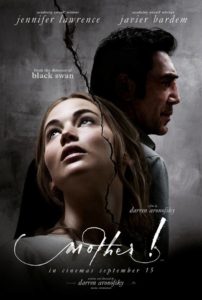
Over the next few weeks, maybe over the next few years, you will see some thoughtful analyses and interpretations of “mother!” (lowercase m at the beginning, exclamation point at the end), examining the Biblical references and exploring the metaphors.  I look forward to these discussions and hope I will be persuaded.  But I was unable to find anything more in the film than pretentious, self-indulgent images with, for a movie about in some sense creativity, very little to say.

It’s a warning sign of precarious pretension when a film’s characters are not named and listed in the credits only as archetypes: mother, man, woman, him, younger brother, oldest son, good Samaritan, fool, wanderer, idler.  It’s not that it can’t be done; it’s just that it’s a high bar to clear.  What might work as a horror story about a young, pure-hearted bride in a gigantic, isolated house who is confronted with various dread-inspiring elements both natural and supernatural in this case fails because it keeps telling us it wants to be more.  There’s some flashy cinematic flourish but very low octane.

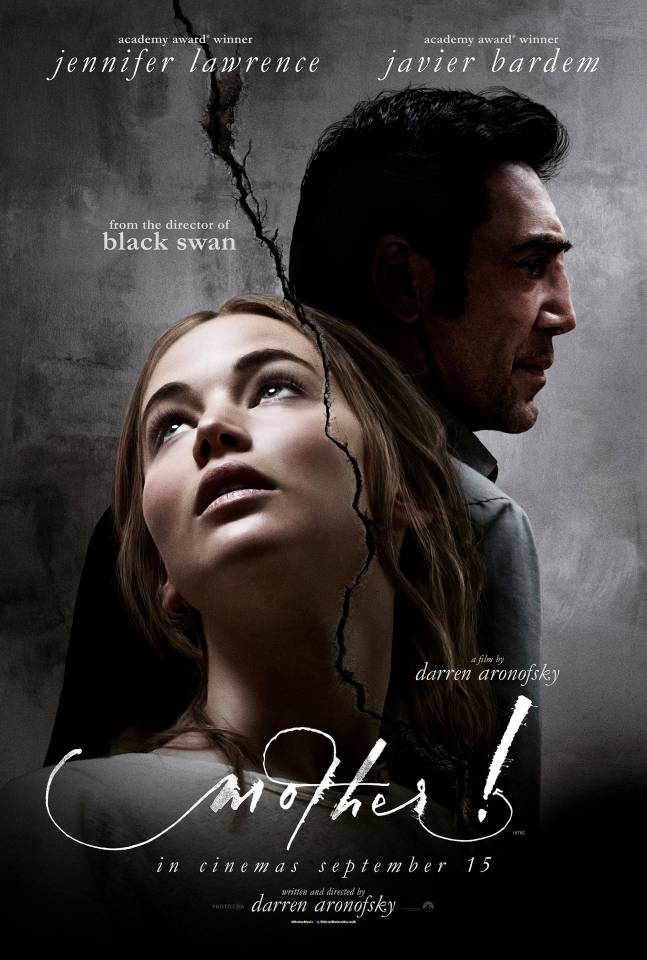
Jennifer Lawrence is game and endlessly watchable as always, which is a good thing because most of the time the camera is close on her increasingly panicked face. She plays the title character, who is created out of dust as the house comes together from a wreck of ashes.  “Baby?” she asks tentatively and searchingly as she gets out of bed to look for her husband/partner, played by Javier Bardem.  He is a poet, acclaimed but currently blocked.  She is his endlessly devoted helpmeet, always working to restore the house or present him with wholesome meals or just encourage him.  

Their peaceful life is disrupted when a doctor with a bad cough (Ed Harris) arrives, later joined by his wife (Michelle Pfeiffer, mesmerizing and terrifying), a couple who have some very serious boundary issues, to the point of being predatory.  Basically, they are the world’s worst and most annoying houseguests.  mother wants them to leave and cannot understand why poet would not check with her first. He seems unable to recognize how destructive they are.  He seems flattered by having them there.

Then the bad stuff begins to happen.  And then the really bad stuff begins to happen and keeps happening.  Writer/director Darren Aronofksy, who has explored themes of creativity and the line between passion and obsession in films like “Requiem for a Dream,” “The Fighter,” and “Black Swan” may be trying to reach for overarching Biblical concepts here (he also made “Noah”).  But with the arrestingly staged but horribly violent last act and it’s not-to-be-revealed ending, it communicates something more like a defensive argument in favor of the right of creators to abuse those around them.  Not true, whether it’s family members or people in the audience.

Parents should know that this film includes peril and violence, with murders of adults and a newborn infant, guns, fire, explosions, abuse, cannibalism, grisly and disturbing images, nudity, childbirth, brief very crude language, sexual references and explicit situations.

Family discussion: What does the ending signify?  Who do the couple represent?  What does the house represent?

If you like this, try: “Noah” from the same writer/director, “North Fork”

Related Tags:


DVD/Blu-Ray Fantasy Horror movie review
THE MOVIE MOM® is a registered trademark of Nell Minow. Use of the mark without express consent from Nell Minow constitutes trademark infringement and unfair competition in violation of federal and state laws. All material © Nell Minow 1995-2026, all rights reserved, and no use or republication is permitted without explicit permission. This site hosts Nell Minow’s Movie Mom® archive, with material that originally appeared on Yahoo! Movies, Beliefnet, and other sources. Much of her new material can be found at Rogerebert.com, Huffington Post, and WheretoWatch. Her books include The Movie Mom’s Guide to Family Movies and 101 Must-See Movie Moments, and she can be heard each week on radio stations across the country.

Website Designed by Max LaZebnik