The Nut Job

Posted on January 16, 2014 at 6:00 pm

squirrel-dog-the-nut-job-01-1296x730I miss the days when the economics of animation were so daunting that we were assured a certain level of quality. Yes, there were some low points that don’t even qualify for a Disney re-issue (I could find some affection for “Chicken Little” and “Treasure Planet,” but even I can’t find much to like in “The Black Cauldron” or “The Hunchback of Notre Dame”). Unfortunately, now that computer modeling makes animation more affordable, movies are getting made that don’t meet the minimum standards for a feature film.

“The Nut Job” is not an awful movie, nowhere near as bad as last year’s “Free Birds” or “Escape from Planet Earth.” It is just not very good, with sluggish pacing and a weak script that is both over- and under-written. One telling detail is the movie’s reliance on the 2012 Psy hit song “Gangnam Style.”   When a two-year-old song is a movie’s high point, it’s in trouble.  The thanks to the tourism bureau of South Korea in the credits is also an indication that entertainment and story-telling were not the sole purpose of the film.

The voice talent is fine, especially Maya Rudolph as a bulldog, but the visuals are not especially imaginative.  As we see so often in sub-par animation, the focus (literally) seems to be on making every hair distinct rather than in finding a visual way to move the story.  Very simple, basic fundamentals like a sense of place and the relationships of the various locations to each other are poorly handled and the 3D is entirely unnecessary.

If you want to see an entertaining and funny movie about backyard creatures trying to steal nuts, take a look at an old Disney “Chip ‘n’ Dale” cartoon.  This has essentially the same idea, but weighed down with complications that, like the hyper-realism of each hair in the animals’ fur, overtakes the big picture.

A squirrel named Surly (Will Arnett) is a cynical loner with just one friend, a rat.  They live in a city park.  Surly has no interest in cooperating with the rest of the animals, who work together to gather food.  Their leader is Raccoon (Liam Neeson), and when he warns that they do not have enough food, the responsible, loyal, and dedicated Andie (Katherine Heigl) and dim, overconfident Grayson (Brendan Fraser), regarded by all the animals as their hero, go off in search of food and find the same target already identified by Surly, a nut cart. When their competition over the cart results in disaster that destroys the animals’ entire store of food, Surly is banished.  He is lost at first as he explores the city for the first time, but then he finds the nut shop behind the cart, which turns out to be a front for a group of bank robbers.

So there’s conflict between Surly and Andie, the animals and the humans, the squirrels and some scary-looking rats, the squirrels and the bulldog, the squirrels and various perilous spots, the robbers and each other, the robbers and the bank, and the only thing the kids enjoyed at the screening I attended was the bodily function humor and some slapstick.  Then there’s the issue of looking out for oneself only versus being part of a group, which feels like it was thrown in at the last minute.  Most of the movie is about two elaborate robberies but the one I minded was the loss of the time I spent watching it.

Parents should know that there is a good deal of cartoon-style peril and violence, including guns and scary rats, but no one gets badly hurt (stay through the credits to be reassured).  There is some mild language and some crude potty humor.  Human and animal characters spend most of the movie plotting thefts with little recognition that this could be wrong or hurting anyone.

Family discussion:  Why did Surly and Andie have different ideas about being part of the community?  Which characters trusted the wrong people or animals?

If you like this, try: “Over the Hedge”
Related Tags:


3D Animation Scene After the Credits

G.B.F.

Posted on January 14, 2014 at 1:50 pm

Writer George Northy and director Darren Stein manage to subvert and salute the traditions of the high school comedy in this smart, fresh, and funny story that shakes up the classic elements of teen movies but recognizes their eternal verities.  It is fitting that a story about undermining stereotypes slyly undermines expectations of high schoolers and high school movies.  Everything from “Mean Girls” to “Clueless” to “Pretty in Pink” gets shaken and stirred.

High school makes a great setting because it is a universal experience of heightened emotions that lend themselves well to comedy, drama, and identity.  It is the last place where everyone is pretty much stuck together.  The core elements of high school movies usually feature an outcast and often end up at prom.  “G.B.F.,” which stands for “gay best friend” follows that formula.  It is the story of two closeted gay seniors in a school that (improbably) does not have a single out gay student.  While a few years ago, this might have been a touching story about the courage to come out and confront homophobia, and a few years before that a comedy about a student pretending to be gay but really being straight, this film is set in a school with straight students who are desperately hoping for openly gay classmates to come out so that they can befriend them.   It’s hard to have a gay-straight alliance without any gay members.  And not one, not two, but three high school divas are desperately seeking a GBF as an accessory, to tell them how fierce they are.

The three divas are drama queen (really, she rules the theater clique) Caprice (Xosha Roquemore), Mormon goodie girl ‘Shley (Andrea Bowen) and capo de tutti capi Fawcett (Sasha Pieterse).  When Tanner (Michael J. Willett) is accidentally outed via an app on his phone, he all goes from zero to hero as the three girls compete with each other for his attention and favor.  The girls have a few surprises in store as well, as does Shley’s boyfriend.

The tone falters in spots and the acting falters frequently.  The appearance of Natasha Lyonne as a teacher just reminds us of how much better she was as a teen actress (especially in another gay-themed film, “But I’m a Cheerleader”) than many of the cast here.  But the quick, witty dialogue and the good heart of the film make it fun to watch and the heartening message helps smooth over the rough spots.

Related Tags:


Comedy High School Satire Stories about Teens

Lone Survivor

Posted on January 9, 2014 at 6:00 pm

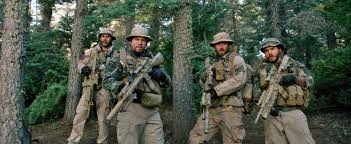
lone survivorDirector Peter Berg is as good as it gets when it comes to putting a particular kind of male chemistry on screen. If he was writing instead of filming, he would dunk his pen in testosterone, beard stubble, and sweat.  Whether it is the small town Texas football community of “Friday Night Lights,” the disastrous bachelor party of “Very Bad Things,” or the aliens and explosions of the under-rated “Battleship,” Berg understands the rhythms of guy-talk that circles around the still core of pure masculinity. There are nearly as many f-words per minute in this film as in the record-breaking “Wolf of Wall Street.” But there the language was used to show off, to convey bravado, for shock and awe. Here the heirs to a long tradition of colorful military argot almost have air quotes around the language. It’s almost a mirror image; on Wall Street, they use bad words to seem tougher. These Navy Seals use bad language with irony — they know that no words can be as tough as they really are or express what they have really seen and done. For them, the inadequacy of even the most provocative language is the joke.

This is the true story of a disastrous Navy SEAL mission in Afghanistan, based on the book Lone Survivor: The Eyewitness Account of Operation Redwing and the Lost Heroes of SEAL Team 10 by Marcus Luttrell. We know from the title and from the earliest moments of the movie that Luttrell, played by Mark Wahlberg, will be the only one still around at the end of the movie.  And so, we steel ourselves, knowing we will spend just enough time with the characters to become attached to them before they are sent off on a doomed mission to take out a ‘bad guy” in Afghanistan and start getting killed.

As in most military dramas, real and fictional, there are archetypal characters.  There’s a new addition and a hardened vet.  And there is Luttrell, a medic, a witness, like Ishmael in Moby Dick the survivor who carries the stories of the others with him.

This is not “action violence,” with super-effective weapons on our side and endless just-misses from the enemy, along with exciting explosions and instant death.  This is messy, dirty, blood-gushing and agonizing wartime violence.  Berg pays tribute to these men by showing us that their courage, dedication, and skill were unparalleled and the tragic stupidity of war presented them with a series of awful choices and unthinkable danger.  At one point, when they have been spotted by (apparent) civilians, including a young boy, they stand there and discuss their options — let them go and risk having them tell the enemy where they are, tie them up and risk having them die of predators or starvation, or kill them, preserving the mission but putting into question the larger issues, from what happens when it gets reported on CNN and what we are fighting for if that is who we’ve become.  That may be the most heartbreaking moment of the film — until the end, when we see the real faces of the brave young men who died.  They knew what they owed us.  Perhaps this movie will help remind us what we owe them.

Parents should know that this movie includes constant wartime peril and violence with many characters injured and killed, children in peril, guns, explosions.  There are very disturbing and graphic images of characters being hit with bullets, many sad deaths, as well as constant very strong and sometimes crude language.

Family discussion: What elements of the training and briefings were important to helping the SEALS do their job?  What more did they need? Who was right in the discussion of what to do when they were “compromised” in being spotted by civilians?

If you like this, try: “Act of Valor,” with real-life Navy SEALS playing fictional versions of themselves and “We Were Soldiers,” about the early days of the American involvement in the Vietnam War.


Related Tags:


Based on a book Based on a true story War

The Wolf of Wall Street

Posted on December 24, 2013 at 6:30 pm

A-
Lowest Recommended Age: Adult
MPAA Rating: Rated R for sequences of strong sexual content, graphic nudity, drug use and language throughout, and for some violence
Profanity: Constant very strong and crude language
Alcohol/ Drugs: Every possible kind of substance abuse
Violence/ Scariness: Peril including a crashed helicopter and a sinking ship
Diversity Issues: Diverse characters, insensitive treatment of little people
Date Released to Theaters: December 25, 2013
Date Released to DVD: March 28, 2014
Amazon.com ASIN: 0345549333

Wolf-of-Wallstreet-585x370

Jordan Belfort is a selling machine the way a shark is a killing machine.  Every single element of his being is optimally designed for just one purpose, with no extraneous or pesky attributes like a conscience to slow him down.  And so, when he interrupts the story right off the bat to make sure that we see the color of his Lamborghini was white (like in “Miami Vice”) not red, he knows it will encourage us to believe that he cares about making sure we get the truth, the whole truth, and nothing but the truth.  It’s his version of it, anyway, as told in his book, The Wolf of Wall Street.

Belfort actually doesn’t spend much time on Wall Street, but those magic words make for a better sales pitch.  The man knows how to tell a story.  He gets a job on Wall Street at age 22, a “smile and dial” position where he is supposed to get 500 people a day on the phone and ready to talk to a broker who will pitch them some stocks.  A senior broker (a still painfully skinny post “Dallas Buyers Club” Matthew McConaughey, perfectly capturing the insanity of people who make a ton of money pretending they understand something that makes no sense) takes him out to lunch.  He tells the waiter to keep the liquor coming, and explains to Belfort the key lesson: brokers are not there to make money for the clients — they are there to make money from the clients.  He also advised Belfort to keep his lower half, uh, relaxed, and his upper half, uh, stimulated.  This is advice that Belfort will take, uh, to heart.

But first he has to lose his job when Wall Street firm collapses following what we then called a crash back in October of 1987, but now, having recalibrated following far greater financial disasters, we call a momentary dip.  Belfort then discovers a whole new world of not-quite-legal penny stock brokerages on Long Island (director Spike Jonze has a very funny cameo as his new boss) and soon he is running his own boiler room operation out of what once was a car repair shop.  This was, in fact, the inspiration for the terrific movie “Boiler Room,” starring Giovanni Ribisi, Ben Affleck, and Vin Diesel.  He gives his firm a made-up name, brilliantly constructed to sound established, solid, and vaguely familiar: Stratton Oakmont.

Here Belfort learns two more important lessons.  First, there’s no such thing as bad publicity.  A story in Forbes that calls him a reverse Robin Hood, stealing from the poor to make money for himself, gets him an avalanche of job applicants eager to join his Merry Men.  Second, too much is never enough. Belfort does not fall into every possible kind of addiction and substance abuse; he embraces it.  There are mountains of drugs and hookers in this movie, plus a helicopter crash (while Belfort was high), sinking a yacht “suitable for a Bond villain” that once belonged to Coco Chanel (while Belfort was high), midget tossing and a crazy-hilarious conversation about the parameters  of  midget-tossing (and, in passing, the ethics), a near-naked marching band in the brokerage, and then more drugs and hookers.  This is all in the book, and screenwriter Terrence Winter told Joe Nocera of the  New York Times that “when he interviewed the F.B.I. agent who finally nailed Mr. Belfort, the man said, ‘I tracked this guy for 10 years, and everything he wrote is true.'”  That includes the macabre but over-the-top hilarious scene of a drug overdose that leaves Belfort incapable of standing or speaking coherently that comes at the worst possible place and time.  The cocaine and ludes are not nearly as powerful as the most intoxicating substances of all: greed mixed with testosterone and pure id.

“Is this legal?” Belfort cheekily asks us as he explains what he is up to?  “Absolutely not!”  He knows we are not interested in the details.  We are too busy being dazzled by the excess and how much fun everyone is having with it.  By now, Belfort has left his pretty first wife (big-eyed Cristin Milioti, the mother from “How I Met Your Mother”) for a second, spectacularly beautiful wife he calls “The Duchess of Bay Ridge” (Margot Robbie, nailing the accent and the attitude).  He has houses, horses, Coco Chanel’s yacht, and two security guards, both named Rocco.  He is taking a hospital’s worth of pills and a “Scarface”-load of cocaine.  And an FBI agent (“Friday Night Lights'” Kyle Chandler) is looking into his activities.  We know he’s serious because he has one of those cork boards with pieces of paper thumb-tacked onto it to keep track of the case.

Like his “Goodfellas,” Scorsese’s storytelling here is utterly mesmerizing, with brilliant performances in every role.  DiCaprio is electrifying.  If Stratton Oakmont was still around, there would be a line of eager applicants around the block tomorrow.  In smaller roles, Rob Reiner, as Belfort’s father and compliance officer, “AbFab’s” Joanna Lumley as a willing accomplice and “The Artist’s” Jean Dujardin are stand-outs, and Jake Hoffman (son of Dustin Hoffman and Anne Byrne) is just right as shoe designer Steve Madden, whose company was taken public by Belfort’s firm.  In one brief but key scene, Stephanie Kurtzuba beautifully creates a complete and compelling character who tells us a lot about her life and about Belfort as well.

And like “Goodfellas,” this is the story of a ruthless entrepreneur that illuminates the best and worst of the American spirit, big dreams,  ambition, energy, focus.  We know Belfort is a crook who exploits the trust of people who don’t know better but we can’t help being sold ourselves because he makes it look like so much fun.  And we know that while he spent less than two years in jail, where he played tennis and came out to a lucrative new career as a motivational speaker and got to be played by Leonardo DiCaprio in a Martin Scorsese film, the real Wolves of Wall Street will love this movie.  And then they’ll go back to their hundreds of millions of dollars, houses, horses, and two security guards named Rocco who, along with the loopholes they made sure stayed in the laws, will protect them from even the slap on the wrist faced by Belfort.

Parents should know that this film has NC-17-level content with extremely explicit and mature material, with explicit sexual references and situations including orgies and nudity, extensive drinking and drug abuse, crooked dealings and fraud, constant very strong language, peril, and some violence.

Family discussion: Why were Belfort’s colleagues so loyal to him? Why were the customers so willing to be cheated? Was justice done?

If you like this, try: “Boiler Room” (also inspired by Belfort), “Goodfellas,” and “Wall Street” and Michael Lewis’ books Liars Poker and The Big Short.

Related Tags:


Based on a book Based on a true story Biography Crime Drama DVD/Blu-Ray Pick of the Week

The Secret Life of Walter Mitty

Posted on December 24, 2013 at 6:00 pm

B+
Lowest Recommended Age: Middle School
MPAA Rating: Rated PG for some crude comments, language and action violence
Profanity: Some mild language
Alcohol/ Drugs: Drinking and drunkenness
Violence/ Scariness: Action-style peril, no one seriously hurt, references to sad parental death
Diversity Issues: None
Date Released to Theaters: December 25, 2013
Date Released to DVD: April 15, 2014
Amazon.com ASIN: B00H7KJTCG

Ben Stiller in a still from The Secret Life of Walter Mitty

We all know what it feels like to be Walter Mitty, imagining ourselves as achievers and darers far beyond our normal lives. The original short story by James Thurber is about a middle-aged, hen-pecked man who daydreams about dashing adventures as he is out running errands with his wife.  In this version, directed and starring Ben Stiller, Walter runs the photo library for LIFE Magazine.  (For you young people out there–this is not a metaphor.  There actually was a photojournalism magazine called LIFE.  From 1936-1972 it was kind of like a proto-version of Buzzfeed that came in the mail every week.  Before television and the internet, it was our first chance to see what the rest of the world looked like, with gorgeous, indelible, iconic images of movie stars and ordinary people, world leaders, athletes, and military battles.)

Every day, Walter walks to work past enormous, blown-up images of LIFE covers and the magazine’s motto: “To see the world, things dangerous to come to, to see behind walls, draw closer,to find each other and to feel. That is the purpose of life.”

Like George Bailey in “It’s a Wonderful Life,” Walter once planned to see the world but family obligations kept him at home.  Now, he spends his days as a “negative asset manager” cataloguing images taken by the dashing photojournalist Sean O’Connell (a rugged gem of a small performance from Sean Penn).  While one is risking his life, the other takes no risks at all.  He can barely bring himself to touch the computer key to “wink” at a woman on a dating website.  When asked to fill in the “been there, done that” space on his profile, he realizes he has not been anywhere or done anything.

She isn’t a stranger.  Cheryl (Kristin Wiig) has just come to work for LIFE.  If he cannot work up the nerve to cyber-wink at her, you can bet he does not know how to begin to talk to her in real life.  Walter might have stayed in his quiet, safe, lonely little world forever, living through his daydreams and half-living in reality.  But there comes a time when real life intrudes on dreams.

Things are coming apart at LIFE and in life.  The magazine has a new boss (nicely smarmy Tony Scott) who uses a lot of smug corporate-speak like “Some of you are non-vital.”  Walter’s mother (Shirley MacLaine!) is moving into assisted living.  And Sean sends in a roll of film with what he says is his best image ever, with a special note for Walter.  But that image is missing.  And to find it, Walter will have to discover how close he can get to being the daring, adventurous hero of his dreams.

As a director, Stiller is developing a more assured visual style and there are some bracingly robust images, befitting a story about LIFE photographs, the man who takes them and the man who sorts them, the man who goes places and the man who looks at the pictures of places.  The only way to find Sean’s photo is to find Sean. He takes pictures in places so remote and exotic they are not reachable by text messages or Skype.  That means a journey, physical and spiritual, through rocky, icy terrain and using every kind of transportation, including helicopter and boat.

The film is filled with lovely and surprising touches.  The story unfolds organically.  Like a video game hero, the items Walter gathers along the way turn out to be vital in keeping him on his journey.  Along the way, Walter keeps checking in by phone with the tech support guy who was supposed to fix his online dating “wink” function, as though he does not realize how his life is transforming around him.  I won’t give away the surprise by naming the actor on the other end of the phone; I’ll just say that he is ideal for the part. I liked  seeing Walter drew Cheryl into his search very naturally, and how Walter was able to be shy but still very capable around her and around her young son.  There are moments of true exhilaration and the end has an unexpected sweetness. If you’ve been daydreaming about a great film for the family to enjoy together over the holidays, take them on a journey to see this one at your local theater.

Parents should know that this film has some sexual humor, mild language, and action-style peril, reference to sad death of parent

Family discussion: Why was it hard for Walter to take risks? Which of his real-life adventures was the scariest?

If you like this, try: “Stranger than Fiction”

Related Tags:


Based on a book Comedy Date movie Drama DVD/Blu-Ray Pick of the Week Remake Romance
THE MOVIE MOM® is a registered trademark of Nell Minow. Use of the mark without express consent from Nell Minow constitutes trademark infringement and unfair competition in violation of federal and state laws. All material © Nell Minow 1995-2026, all rights reserved, and no use or republication is permitted without explicit permission. This site hosts Nell Minow’s Movie Mom® archive, with material that originally appeared on Yahoo! Movies, Beliefnet, and other sources. Much of her new material can be found at Rogerebert.com, Huffington Post, and WheretoWatch. Her books include The Movie Mom’s Guide to Family Movies and 101 Must-See Movie Moments, and she can be heard each week on radio stations across the country.

Website Designed by Max LaZebnik