Interview: Lauren Miler Rogen on “Like Father”

Interview: Lauren Miler Rogen on “Like Father”

Posted on August 17, 2018 at 8:54 am

Copyright 2018 Netflix
Writer/director Lauren Miller Rogen crafts stories about women who have everything, or think they do, just so she can take it all away from them in the first ten minutes of the movie and see what happens.

Rogen co-wrote “For a Good Time Call…,” in which she also starred as a determined, organized, young woman who thinks she has everything figured out until she gets dumped by her fiancé. “Like Father” has a similar premise, only more publicly humiliating, with Rachel (Kristen Bell) getting dumped in the middle of the wedding ceremony and then ending up taking her estranged father (Kelsey Grammar) on her honeymoon cruise.

In an interview, Rogen talked about the challenges of filming on a real cruise ship and the pleasures of directing her husband, Seth Rogen, who plays a fellow passenger.

I understand that you did not have quite as smooth sailing as the characters in the movie.

No we did not have smooth sailing. When we were shooting the movie we ran up against Hurricane Irma and had to change some of our plans. We had intended on shooting on the ship for a full two weeks. We were supposed to go on a Saturday and Irma hit on Sunday so the ship couldn’t come back into the port. So we ended up at a hotel at Disney World for six nights and then eventually we got on the ship and things went better from there.

Once you did get on, what was it like to film on a cruise ship with all the crew and passengers?

Making a movie is a challenge no matter where you are, whether you’re on a cruise ship or on a soundstage, but we had our own set of things we needed to overcome. Yes, it was a working cruise ship, so there were five thousand people taking a vacation all around us. That was both great for the atmosphere of the film but also sometimes people are like, “You’re ruining my trip.” It was nice that people wanted to be extras and they thought it was cool and they wanted to watch.

Royal Caribbean were incredible partners to us. They did not pay us; it’s not a commercial for Royal Caribbean, we paid them. And because of Hurricane Irma, we actually didn’t have any days off on the cruise ship, so we worked the whole time which was crazy. You’re in the middle of the ocean so you can’t run off to the store if you don’t have something. We were shooting the scene that takes place at night on the deck and there was so much wind we couldn’t shoot and thank God Captain Johnny, who is so amazing, stopped the ship for us for two hours so we could shoot our scene.

There were those adventures but at the same time in the middle of the ocean it was beautiful. Some of those shots we had with the sunshine were amazing and it is such a special crazy thing to be able to be in the actual setting of where your story takes place and not on a soundstage. That’s a real cabin, people were in the hallway, we were on the ocean; what a cool thing to be able to be so authentic.

From the perspective of first of your characters and then of the crew, what are the advantages are of isolating you from everything else in the world?

That was in the setup as the story was originally pitched to me by Anders Bard, who was one of the producers on the movie and also is just an amazing human being. If they had just gone to an all-inclusive resort they could just leave, so they had to be trapped somewhere in order to face the depth of their issues and then make the decision to stay. Being trapped in the middle of the ocean they can’t go anywhere. They have to face each other.

And honestly any movie is like summer camp because your crew is all together for twelve to thirteen hours per day. You are tired, you’re happy, you’re angry, you’re sad, you’re hungry, you are smelly. And it is an adventure you share in a very intense way. We shot in New York for two weeks, then we came down to Florida and we were stuck in Orlando together for six days, almost quarantined in Orlando and then on a cruise ship for twelve days, and then we moved to Jamaica together, so it was really quite an adventure. We bonded so much. We did a sort of cast and crew screening last week just to see everyone and watch the movie in a theater and it was so nice. There were many relationships that bloomed; I think three relationships came from the movie which is amazing. Three relationships! It’s funny, our wedding caused three breakups and my movie caused three relationships.

Copyright 2018 Netflix
This was one of the most appealing, low-key roles Seth Rogen has had. What was it like directing your husband, who is himself a writer and director as well as an actor?

I did not actually write the role for him. He wasn’t ever going to be in the movie. And then somewhere along the way we thought about him playing Owen because we liked the idea of putting someone recognizable in that role so it would sort of be a misdirect, like you would think he would come back or she would cave and go back to him. Then around maybe two months or so before shooting, I was in Canada with Seth in Vancouver and like any loving American wife would do towards her Canadian husband, I was making funny Canadian jokes, and said I might make the character Canadian instead of from the Midwest as I had originally planned. And he said, “I am not going on that cruise ship.”

Then I talked to him about it as we do when we are writing anything and came up with just so many funny jokes. He had never played a Canadian who likes to make jokes about that and he was like, “Oh man, that would be so funny,” and it just got to a point where he was like, “Okay, I’ll do it.”

What’s great about it is that to me he’s not that much of a square and Jeff is a real square, an adorable square, but it’s much closer to who Seth is in real life. He is sweet and quiet and he’s not his character from “Knocked Up” or “Pineapple Express.” I have friends who say, “Oh, Seth is so much quieter than I thought he would be.” And so I love seeing him in roles where his much sweeter side comes out because to me that’s who he is in real life and it was nice to see him that way.

Parts of the movie hark back to the kind of classic black and white movies you see on TCM. Are you a fan of old movies?

Yes, of course. My dad was a big, big movie fan. We had a closet with 500 plus VHS tapes that he had made illegally by copying rental videos to actual VHS tapes. So I watched movies from when I was very young. My favorite movie to this day starting from when I was three years old is “Funny Girl.” Honestly, I walked down the aisle to “Don’t Rain on My Parade.” It’s a theme for my life because I’ve always been that sort of funny girl who wanted to be serious. I was extremely influenced by Nora Ephron, Penny Marshall, of course Barbra Streisand and Garry Marshall; all those movies that are sort of funny but emotional and make you feel things and make your heart just want to connect and feel a human emotion. I was definitely a student of those movies growing up and want to tell those stories as my career goes on.

What’s the best advice you ever got about directing?

The best advice I ever got was from my husband and it’s just not about directing. He gave it to me the night before we started shooting For a Good Time Call which was that as the first person on the call sheet — same if you are the director — my first job above all was to be in a good mood. If I didn’t want to be there no one else was going to want to be there. I needed to know what I was doing and be happy about it. I think of that every day before I start something, even when I’ve been a guest star on a TV show. The truth is, we work in an industry where if we are working on a set, we worked really hard to get there and I think that sometimes the hours and the circumstances can be exhausting. But the truth is it’s important to remember to be grateful. I worked really hard to get to direct my first movie and if I’m not acting like I’m appreciative of that, what a jerk I am. So that’s the best advice.
Related Tags:


Directors Interview Writers

Trailer: Set it Up

Posted on May 23, 2018 at 3:59 pm

Coming to Netflix June 14, 2018 — “Set it Up,” the story of two assistants to highly demanding bosses who decide to “Parent Trap” them into falling in love so they won’t be so demanding. Cute idea and two stars from one of my favorite films from 2016, “Everybody Wants Some!!” — Zoey Deutsch and Glen Powell.

Related Tags:


Romance Trailers, Previews, and Clips VOD and Streaming
Bobby Kennedy for President: Interview with Dawn Porter About Her Netflix Series

Bobby Kennedy for President: Interview with Dawn Porter About Her Netflix Series

Posted on May 18, 2018 at 8:32 am

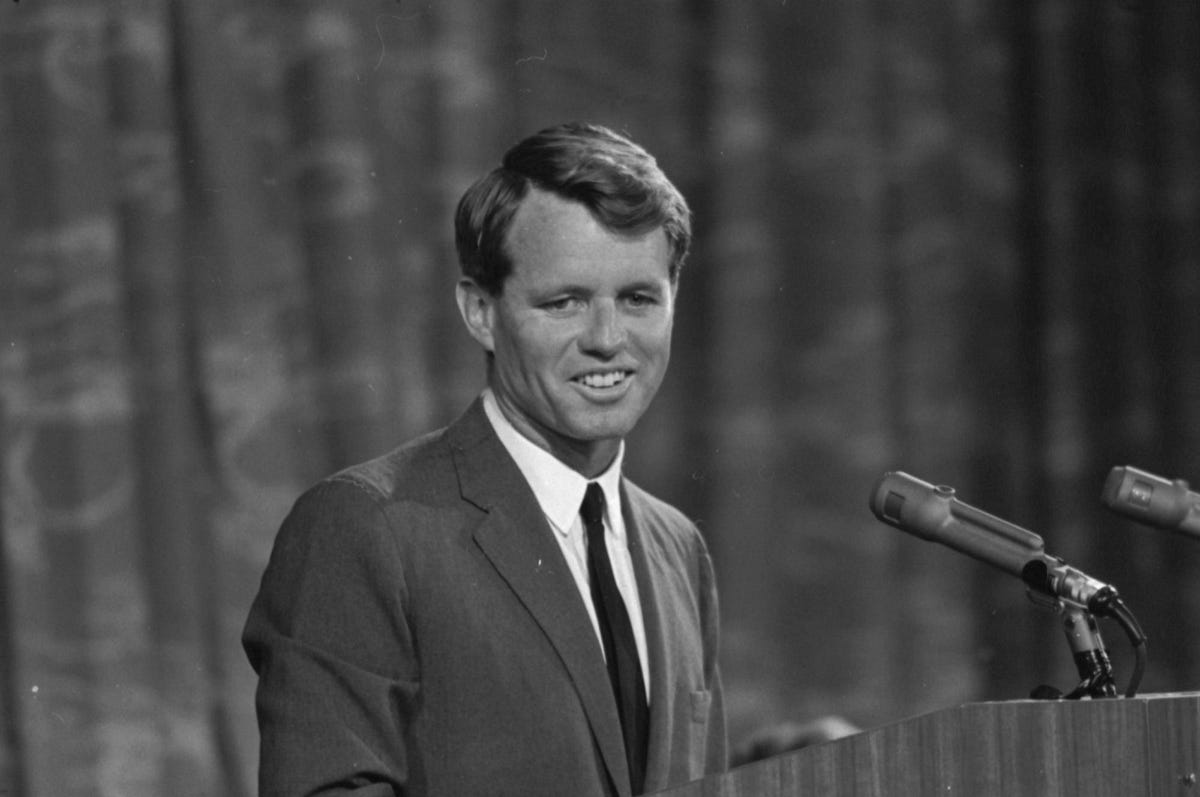
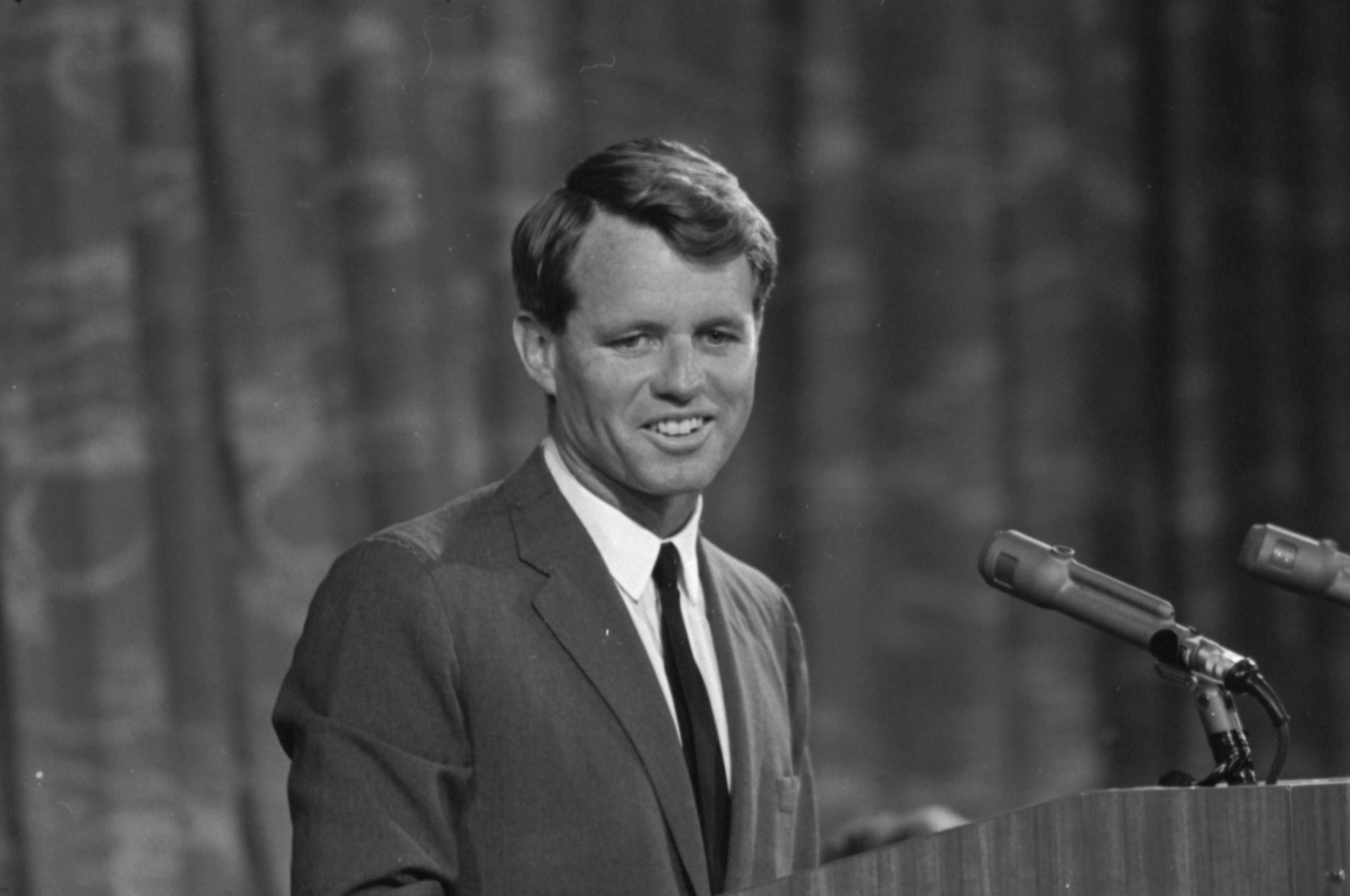
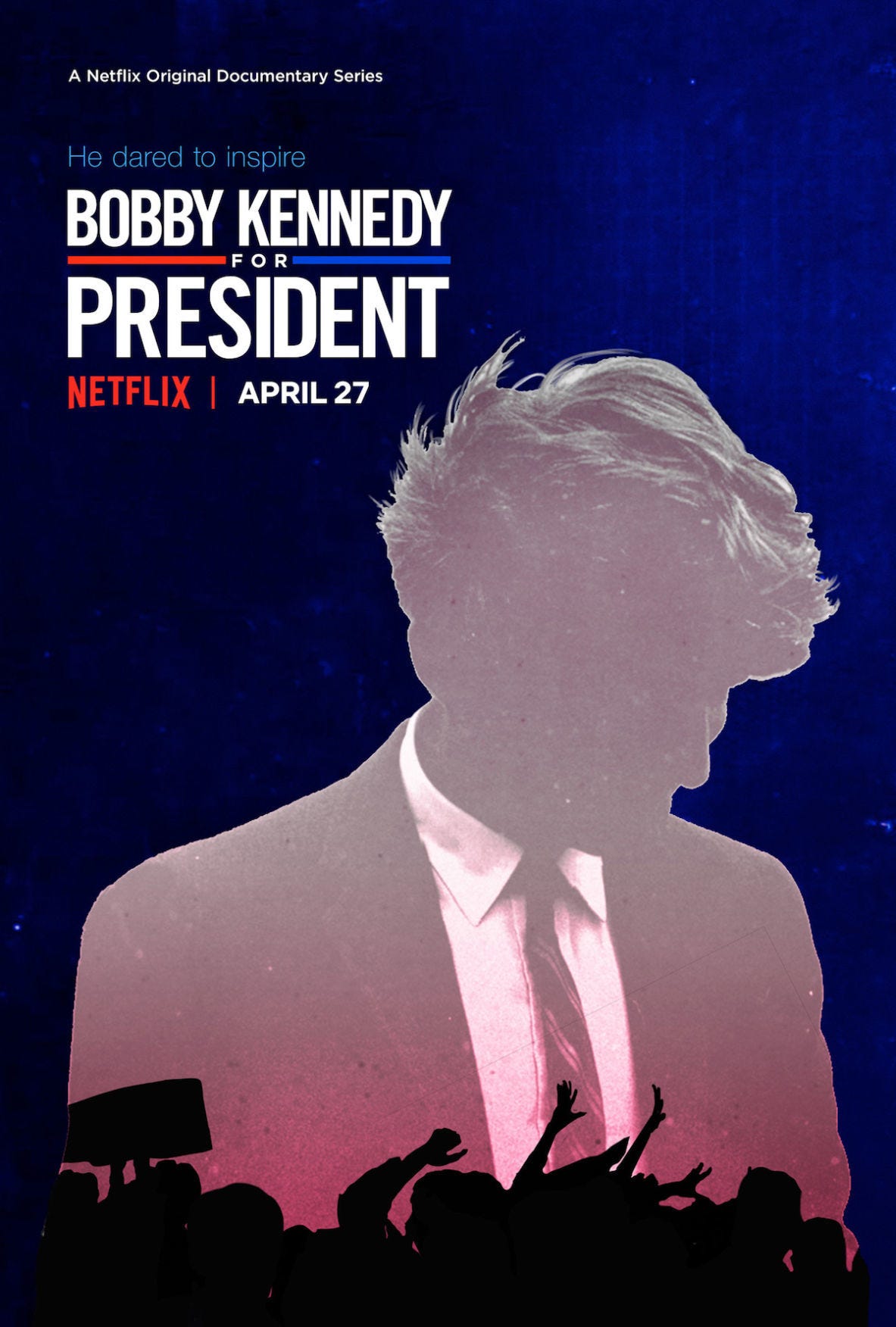
Dawn Porter’s four-part Netflix series, “Bobby Kennedy for President,” examines the life of one of the central political figures of the 1960’s. In an interview, she described the process of collecting the extraordinary and surprisingly intimate archival footage and her interviews with people who worked closely with Bobby Kennedy and are still deeply moved by the experience.

They say that history doesn’t repeat itself but it rhymes. I felt like there was a lot of rhyming in this series, which takes place during the politically tumultuous 1960’s. What parallels do you see going on today?

We’re in a really confusing and chaotic era right now where people are choosing sides. The country is never a hundred percent united but it certainly feels as if we are more divided than we have been in recent years. It’s unsettling and I think that it is very similar to the middle through late sixties the series covers. I think the big difference is there was more confidence in the leadership and people felt acutely behind one candidate or the other and so there was confusion and chaos but I don’t know that there was the same amount of fear but more anger I think than in the 1960’s. There was more activism then and I think we’re seeing a more resurgence of that activism, now so I think that’s actually a good thing.

People say today, “oh goodness, it’s never been worse,” but we had the Vietnam War, a huge racial divide, poverty like in the Deep South, assassinations happening routinely, you don’t want to do a misery comparison but you could certainly say that things were as bad or as serious. That’s when we really do value leadership and Kennedy stepped into that role.

If you were making a film about a historical figure from even a decade before you would not have anywhere near the wealth of archival footage that you had here. It was really breathtaking because there were so many scenes where he seemed unaware he was being filmed, not just giving speeches but talking to his staff, being with his family.

I used to work for ABC News and I remember a colleague there telling me that there was all this film footage that had been shot during the time period that I was interested in. So one of the things that I thought would be really effective is to allow the viewers as much as possible to experience the footage themselves, to experience the time. And so there were two things to do. You can see at the beginning there was more black and white, there was more sometimes grainy/sometimes smooth footage. This was a period that coincided with the shift in news coverage. Upstart news entities such as ABC News began shooting in film and shooting in color and sending really gifted cinematographers out to do political coverage. So you get this feeling not only of the candidates but of the era: the clothes, the cars, the light. I think that helps point you in time in a way that still pictures can’t even quite accomplish.

That is why working with Netflix was so great because we convinced them to give us investigation room. We ended up digitizing over 140 hours of news footage and one of the things I’m really, really happy about is that footage is now available to others who want to explore the period for whatever storytelling they’re doing. It was quite a project of discovery in that way but we went through about 2,000 reels of film and our archivist ended up using 100 different sources so it was quite a massive undertaking but once we got our rhythm it was really fun. All the news organizations might cover the same event but they would shoot it differently and so we could have different angles from different news organizations. But 100 percent of that material had to be licensed, so we were constantly trying to figure out what we could afford to actually use.

There was another exciting thing that was happening. It was also the era of growth and excitement about that type of verite filmmaking. So there were filmmakers like D.A. Pennebaker, Robert Drew, like Charles Guggenheim who had sent a bunch of independent cinematographers out to cover Bobby Kennedy. We used all of those sources and got outtakes from them and I even visited Pennebaker and Chris Hegedus in their office and got material from them personally. So there is also quite a bit of film history contained in the series.

I think the most powerful moment in the series is the John Lewis interview.

I wanted to only have interviews with people who worked very closely with Bobby Kennedy, who were either staffers or people like Marian Wright Edelman. We had known that John Lewis was involved with Kennedy and he agreed right away. One of the things that I think was very helpful for these interviews was we would show people footage that was material they hadn’t necessarily seen of themselves as young people and I think that that helped them go back in time and remember. John Lewis is a spectacular interview. He’s very giving, he’s a very open, very, very, very generous and Kennedy was really important to him and he wanted to communicate that. He’s also not a person who is afraid of being emotional and didn’t try and stop it and that was really quite a gift to a project like this.

What do you think is Bobby Kennedy’s most enduring legacy?

I am really moved by his curiosity, his ability to change and grow, his inclusiveness (particularly to minority groups) and this kind of resilience and relentlessness which can be a blessing and a curse but in the end I think he made it a blessing and really refused to give up on things that are too important to give up on.

Related Tags:


Directors Documentary Interview Politics
Our Souls at Night

Our Souls at Night

Posted on September 21, 2017 at 1:29 am

B +
Lowest Recommended Age: High School
MPAA Rating: Not rated
Profanity: Mild language
Alcohol/ Drugs: Alcohol, drunknenness
Violence/ Scariness: Sad death, family troubles
Diversity Issues: None
Date Released to Theaters: September 29, 2017
Copyright 2017 Netflix

Our Souls at Night was the last novel written by best-selling author Kent Haruf, published after his death, and it has an elegiac quality. The film, the fourth pairing of Robert Redford and Jane Fonda and the first in 38 years, has a rare quality in film, quiet grace. Movies love to tell us the story of young love, impetuous, volatile, and thrilling. But there is something even more moving about last love, the love that happens when you are old enough to understand how precious it is and old enough to know how foolish it would be to waste any more time.

Addie (Fonda) and Louis (Redford) are longtime neighbors. They know each other a little in the way people in small communities do. He was her daughter’s teacher. Both widowed, they have been living alone. And then, one night, she knocks on his door to ask him a question: would he like to come over to her house and sleep with her? Not sex, she assures him quickly. It’s just lonely in bed, and it would be nice to have someone to talk to at the end of the day.

He asks for time to think about it, and then says yes, coming over to her house with his pajamas in a paper bag and going to the back door to keep the neighbors from gossiping. They get to know one another, in simple, spare, but profoundly honest conversations about their most painful experiences, told without rancor and told with a simple generosity of spirit.

When Addie’s young grandson comes for an unexpected visit, she and Louis become even closer as they give the boy a chance to open up. They have an idyllic moment, almost as though it is a second chance for them to correct the mistakes they made in their first families, and learning more about each other through him. Then other ties and complications return.

It is a joy to see these two marvelous actors with their chemistry undimmed, performers with a deep understanding of craft and a deep trust in each other, take on these roles. Like the characters they are playing, they are beyond pretense, with the sureness of experience and the joy of cherishing each moment that only comes with age.

Parents should know that the film has references to sad and difficult family situations including the death of a child. Characters drink and one drinks too much. There are sexual references and a non-explicit sexual situation and characters use some mild language.

Family discussion: Why does Addie pick Louis? Why does Louis say yes?

If you like this, try: “On Golden Pond” and “Barefoot in the Park”

Related Tags:


DVD/Blu-Ray movie review Movies -- format Movies -- Reviews Romance VOD and Streaming
THE MOVIE MOM® is a registered trademark of Nell Minow. Use of the mark without express consent from Nell Minow constitutes trademark infringement and unfair competition in violation of federal and state laws. All material © Nell Minow 1995-2026, all rights reserved, and no use or republication is permitted without explicit permission. This site hosts Nell Minow’s Movie Mom® archive, with material that originally appeared on Yahoo! Movies, Beliefnet, and other sources. Much of her new material can be found at Rogerebert.com, Huffington Post, and WheretoWatch. Her books include The Movie Mom’s Guide to Family Movies and 101 Must-See Movie Moments, and she can be heard each week on radio stations across the country.

Website Designed by Max LaZebnik