
Rio 2

Posted on April 10, 2014 at 6:00 pm

B+
Lowest Recommended Age: Kindergarten - 3rd Grade
MPAA Rating: G
Profanity: None
Alcohol/ Drugs: None
Violence/ Scariness: Peril and cartoon-style violence, bad guy swallowed by snake, discussion of risks to the environment and species
Diversity Issues: Diverse characters
Date Released to Theaters: April 11, 2014
Date Released to DVD: July 14, 2014
Amazon.com ASIN: B00I6JEPF8

rio2Just because a South American frog has toxic venom that can cause instant death does not mean she cannot be adorably lovesick.  Broadway belter Kristin Chenoweth (“Wicked,” “Glee”) steals the show right under the Brazil nut-cracking beaks of our old friends the macaws Blu (Jesse Eisenberg) and Jewel (Anne Hathaway) as Gabi, a tiny little tree frog whose sweet nature is challenged by (1) the fact that she is poisonous and (2) the subject of her utter but perhaps misplaced devotion is the cockatoo villain of the original “Rio,” Nigel (Jermaine Clement).  Although at times over-plotted and slow to get going, this sequel is bright and entertaining, with musical numbers that rock the rainforest.

rio2 gabi

Blu, Jewel, and their three macaw chicks are living happily in the bird sanctuary set up for them by their human friends Linda (Leslie Mann) and Tulio (Rodrigo Santoro). Blu, raised in Linda’s home, enjoys making pancakes for breakfast but Jewel, raised in the wild, wants to show their children the beauty of the world she came from. Think “Green Acres,” with Blu as Eva Gabor.  When Tulio and Linda find evidence that there are macaws living in the rainforest, Jewel persuades Blu that they should go for a visit. Blu loads up his fanny pack with bug spray, water purifier, bandaids and GPS and they go off to the Amazon, taking along some of their feathered friends.

This time, the problem is not smugglers but three separate threats that are far more dire. Illegal loggers are destroying the rainforest. Nigel, with Gabi’s help, wants revenge following his injuries in the climax of the last film, which left him unable to fly and working as a Shakespearean actor. But he is determined to get revenge and Gabi will do anything to help him.. And when Jewel finds that the newly discovered macaws are her father (Andy Garcia) and the community she thought had been destroyed, she wants to turn the brief visit into a permanent stay. Blu misses the comforts of home and feels a lot of competition from Jewel’s old friend Roberto (Bruno Mars), who has all of the confidence and ease at fitting in that Blu envies.  There’s also a turf war between the red and blue macaws as the food sources shrink.

It takes a while to get going and once it does too much seems to happen at once.  But it is bright and colorful and sweet and funny.  And that little frog is a hoot and a half.

Parents should know that this film has some potty humor, comic, cartoon-style violence and mild peril, a bad guy swallowed by a snake, a spider, a poisonous frog, a skeleton, and environmental issues.

Family discussion: What can we do to protect the plants and animals of the rainforest? What does Gabi like about Nigel?  Why do Blu and Jewel each think the other is “weird” about humans?  Why is Eduardo tough on Blu?

If you like this, try: “Rio” and “Despicable Me”
Related Tags:


3D Animation Comedy DVD/Blu-Ray Pick of the Week For the Whole Family Musical Talking animals

Draft Day

Posted on April 10, 2014 at 6:00 pm

Copyright Lionsgate Films

How do you choose?

That is a critical and daunting question for anyone. And a defining one, too. How can we take what we know now and figure out what we will need in the future?

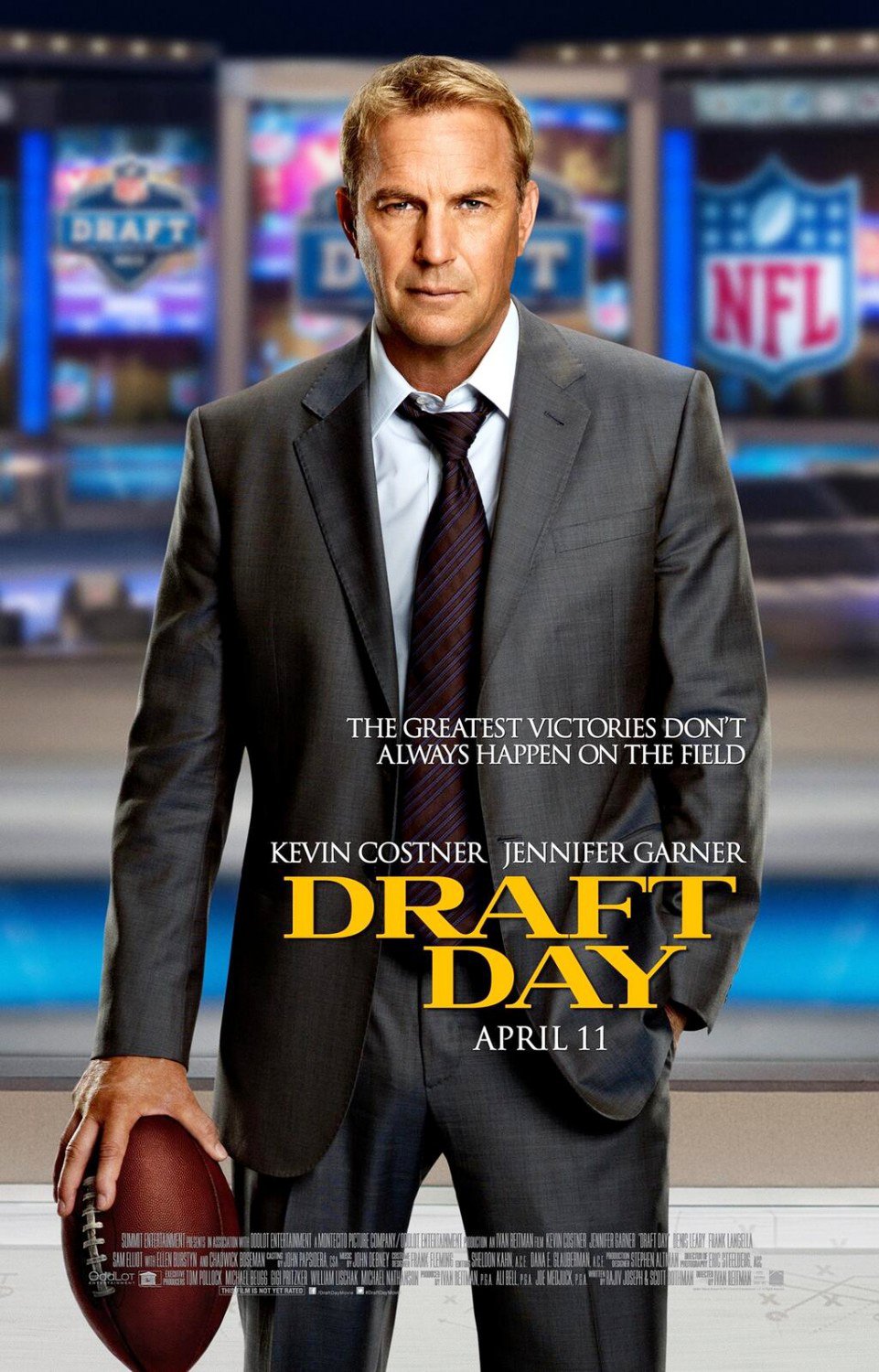
In this film, set in the course of one taut, tick-tock of a day, Sonny Weaver, Jr. (Kevin Costner), manager of the Cleveland Browns football team, has to decide. Should he trade all his future draft picks to get this year’s number one? If he picks the one everyone else thinks is this year’s most valuable choice, will he have to forego the one only he believes to be the most valuable?

Weaver is under a lot of pressure. The team’s owner (Frank Langella) and coach (Denis Leary) have their own ideas about what Sonny should do.  His much younger girlfriend Ali (Jennifer Garner), who also works for the team, is pregnant. His mother (Ellen Burstyn) thinks that this day is the best time to spread the ashes of his late father on the training field.

If that sounds like it gets pretty soapy, you get the picture.  Really, this is the day to spread his father’s ashes?  Really, the 59-and-looks-it Costner is paired with the 41-and-looks-31 Garner?  And even though she works for the organization and lives and breathes football, this is the day she decides to tell him she’s pregnant?  Really?

Nevertheless, the mechanics of the arcane (to non-fans) system are fascinatingly put in place by screenwriters Scott Rothman and Rajiv Joseph and then played like a musical instrument by director Ivan Reitman.  As Sonny trades future picks back and forth with other managers who are doing the same kinds of now vs. future and salary cap vs. budget calculations, the plot pings back and forth like a pinball machine.  Like the “Moneyball” scene where Brad Pitt and Jonah Hill trade phone calls and players in a masterfully orchestrated round robin of bluff and strategy, this gives us a look at off-the-field maneuvers as suspenseful, as skillful, and as intense as anything we will see on the field.  Unlike “Moneyball,” this is not about the metrics.  Sonny is acting on old-fashioned judgment.  He knows that skill matters.  Everyone knows that.  But Sonny also knows that character matters, maybe more than anything else.

That’s true of movies, too, and Costner’s shaggy integrity is what makes him this movie’s MVP.

Parents should know that this film includes some strong language and crude references.

Family discussion: What does it mean to say the battle is won before it is fought? Should the draft rules be changed? Who should decide, the manager, owner, or coach, and why?

If you like this, try; “The Replacements,” “The Damned United,” “On any Sunday” and “North Dallas Forty”

Related Tags:


Drama Sports

Island of Lemurs: Madagascar 3D

Posted on April 3, 2014 at 6:02 pm

B+
Lowest Recommended Age: Kindergarten - 3rd Grade
MPAA Rating: G
Profanity: None
Alcohol/ Drugs: None
Violence/ Scariness: Discussion of possible extinction
Diversity Issues: None
Date Released to Theaters: April 4, 2014

The people behind the marvelous 3D IMAx Born to be Wild have made another awwww-inspiring story of some of the world’s least-known and most adorable and intriguing creatures, the more than a hundred species of lemurs, found only on the island of Madagascar, off the coast of Africa. Around the time of the dinosaurs, lemurs arrived on Madagascar as castaways. For millions of years it was a paradise for them with no predators. Fascinatingly, due to the isolation, evolution and natural selection resulted in unique species found nowhere else on earth.

http://www.si.edu/Imax/Movie/130/2014-04-04/#showtimes

This fascinating 40-minute film takes us inside the world of these glorious creatures, their brilliant eyes and leaping dances, and the efforts led by American professor Patricia Wright to create spaces that will keep them safe. Lemurs die in captivity. They can only be kept alive in their own environment. We see scientists search to find mates for the last two known of one species of lemur living in a preserve, playing matchmaker by hunting down two more from the wild and introducing them to each other. The Lemurs and Wright are exceptionally engaging protagonists, and by the time we get to the schoolchildren dressing up as indigenous animals at the end, you will understand how they feel.

Parents should know that there are references to the risk of extinction and environmental despoliation.

Family discussion: Which lemur was your favorite? How are lemurs like other primates: chimps, apes, and humans? How are they different? What can you do to help lemurs?

If you like this, try: “Born to Be Wild”

Related Tags:


3D Documentary Environment/Green IMAX Movies -- format

Captain America: The Winter Soldier

Posted on April 3, 2014 at 6:00 pm

Chris Evans, left, as Steve Rogers (Captain America) and Anthony Mackie as Sam Wilson (Falcon) in "Captain America: The Winter Soldier." (Zade Rosenthal / Marvel)
Chris Evans, left, as Steve Rogers (Captain America) and Anthony Mackie as Sam Wilson (Falcon) in “Captain America: The Winter Soldier.” (Zade Rosenthal / Marvel)

This is how you make a superhero movie. Director brothers Joe and Anthony Russo are best known for sitcoms with few but passionate fans (“Community,” “Happy Endings,” “Arrested Development”) and the underrated crime comedy “Welcome to Collinwood.” That is not the kind of credential that usually leads to a big budget comic book movie. But they prove to be just what the doctor ordered, funny where it should be, exciting where it should be, smarter than it needs to be, and just plain fun.  Plus, I may be late to the party, but now I totally get the shield thing now as offensive and defensive weapons and it is very cool.

This is the sequel to the WWII-era origin story, where Steve Rogers (Chris Evans) a 98-pound weakling, volunteered for a government experiment that turned him into a super-strong super-soldier.  But he got frozen in a block of ice and was thawed out more than sixty years later in time to join “The Avengers.” the storyline continues Captain America’s adjustment to the 21st century.  We first see him running around Washington D.C.’s monuments neighborhood, repeatedly lapping vet Sam Wilson (Anthony Mackie).  Pretty soon, they’re talking some mild smack and Wilson is telling Rogers what he has to add to his catch-up list of cultural touchstones: Marvin Gaye’s Trouble Man. Also on the list “Star Trek/Wars” and Steve Jobs. Evans and Mackie have a natural chemistry that makes that scene very funny but also shows us how much both of them need a friend who understands what it’s like to be a soldier home from the war.
But then Captain is called into action again.  Alongside the Black Widow, played by Scarlett Johansson, tough, smart, funny, and just a touch flirtatious, as she chats with Rogers about girls he might want to ask out while they trade blows with the bad guys.  There’s a mission, a hijacked cargo ship (I kept looking for a captain-esque crossover from Captain Phillips).  Straight-ahead Captain America, used to fighting Nazis and other incontrovertibly bad guys who dress the part, expects that the people on his side will treat him with the same trust and respect and integrity he gives them in return.  But this is the 21st century, and it’s complicated.

Rogers knows how to follow orders and he knows how to fight.  Now he must learn to understand who he is fighting and what he is fighting for.  It’s one thing when the bad guy has a Red Skull and wants total world domination because he is a fascist.  It is another when both the good guys and the bad guys wear suits and speak in tempered, diplomatic tones, and want total world domination because it is best for everyone.  “Don’t trust anyone,” Nick Fury tells Rogers.  And Rogers, used to trusting everyone (how many people today would allow the government to inject them with an experimental serum?), has to learn what that means.

And it is one thing to take on a dozen bad guys at a time, knowing none of them have superpowers.  But here Rogers must face an assassin called The Winter Soldier, someone as strong as he is, someone without any of the second-guessing that comes from understanding the complexities of the situation, someone who cannot be reasoned with or argued with or appealed to.  And someone Rogers knew and trusted in the past.

The easy chemistry between Cap, Sam, and Natasha/Black Widow adds depth and heart to the story. Natasha needs to learn to trust as Cap needs to learn when not to trust. “How do we know who the bad guys are?” Sam asks as they race into battle. “The ones who are shooting at us,” Cap tells him.

There is just enough depth and gloss and humor and heart to set off the action, gorgeously staged in and around Washington, D.C.  The elevated Whitehurst Freeway along the Potomac River gets the super-fight it was built for and it is a beaut.  Wait until you see what’s been going on under the Potomac.  It was a whole other level of pleasure to see a movie that gets Washington’s geography right. Most important, this is a film that respects the genre and the audience. Captain America and his fans get the movie they deserve.

Parents should know that this film includes constant comic book, action-style, superhero violence with many characters injured and killed, guns, bombs, chases, crashes, explosions, weapons of mass destruction, discussion of genocide, torture, fights, and brief strong language.

Family discussion: If you were advising Captain America on cultural developments while he was gone, what would you suggest? What is the biggest problem he faces in trying to adjust to modern times? How do the plans under consideration here relate to current discussions on world affairs?

If you like this, try: “The Avengers” and the other Marvel superhero movies

Related Tags:


Action/Adventure Comic book/Comic Strip/Graphic Novel Fantasy Science-Fiction Series/Sequel Superhero

The Unknown Known

Posted on April 3, 2014 at 5:59 pm

B+
Lowest Recommended Age: Middle School
MPAA Rating: Rated PG-13 for some disturbing images and brief nudity
Profanity: Mild language
Alcohol/ Drugs: None
Violence/ Scariness: Wartime violence, terrorism,
Diversity Issues: A theme of the movie
Date Released to Theaters: April 3, 2014
© 2014 Radius/TWC
© 2014 Radius/TWC

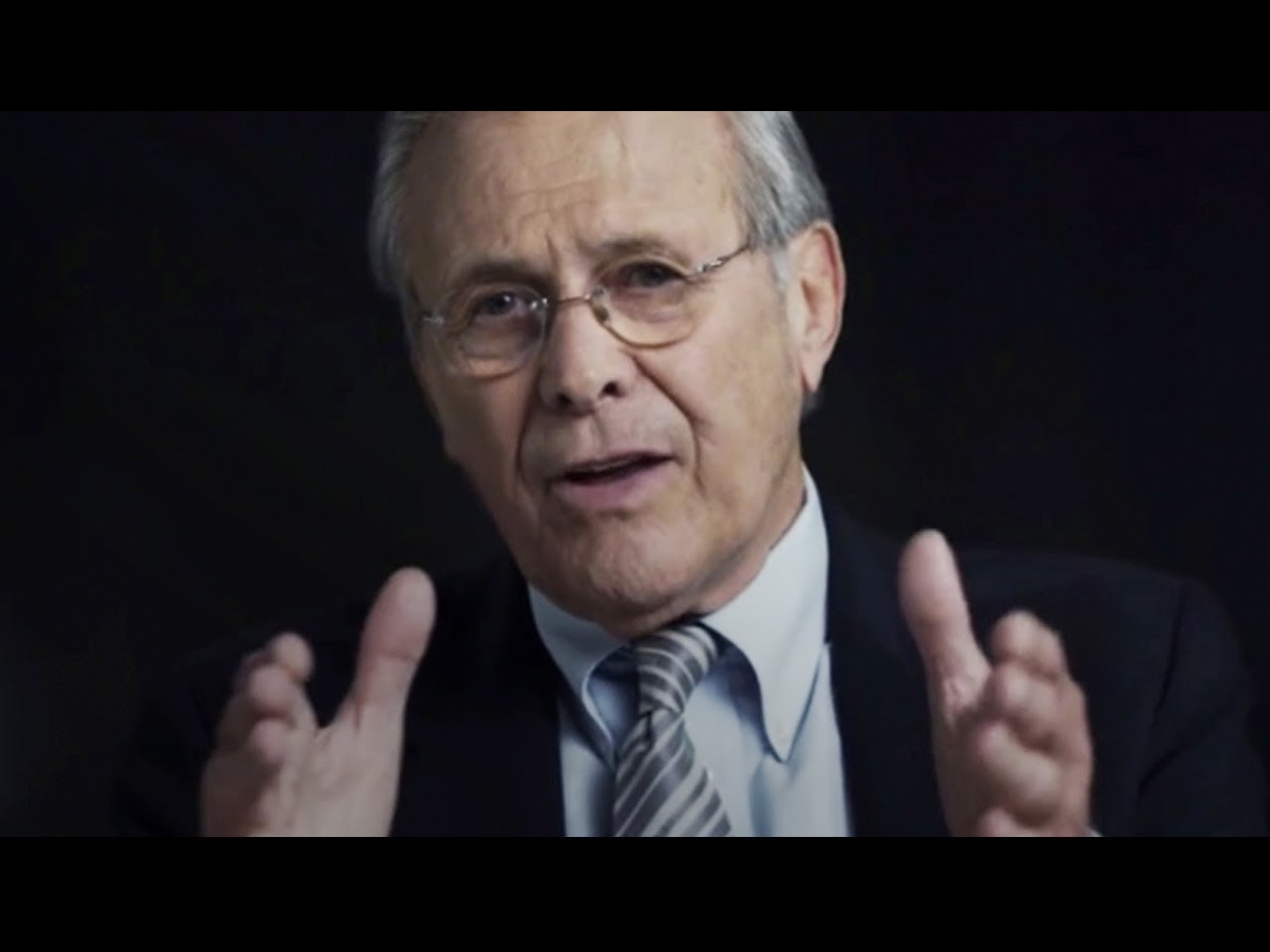
Errol Morris turns his famous “interrotron” camera on two-time Secretary of Defense Donald Rumsfeld for something between a bookend and a counterpoint to his Oscar-winning The Fog of War: Eleven Lessons from the Life of Robert S. McNamara. But this SecDef (as they say in the Pentagon) is not here to confess or apologize even in part, as McNamara did.

He says, in the movie’s final exchange, that he is not sure why he agreed to submit to more than 30 hours of what must have felt more like the cross-examination in “A Few Good Men” or even a detainee interrogation than the back-and-forth press briefings Rumsfeld conducted during the early days of the wars in Iraq and Afghanistan. We see many clips from those celebrated exchanges, at the time referred to as the best show in Washington, and still undeniably entertaining. Rumsfeld’s good humor and confidence were bracing and reassuring at a time when everything seemed to be what he would call an unknown unknown. Like Jack Nicholson in “A Few Good Men” he does not think we can handle the truth. He may be right.

He’s not here to explain.  What he is here to do is to repeat the same version of the story, despite the fact that the audience has had the benefit of making some of those unknowns more known.

Rumsfeld’s constant memos, perhaps 20,000 by his count over his final term at Defense, were called “snowflakes” by the staff, based on their color and frequency. It must have seemed like an avalanche. Morris shows us long shelves of folders filled with snowflakes. He has Rumsfeld read some portions aloud, beginning with his famous taxonomy of information. There were known knowns, things we know and know to be true. There were known unknowns, things we do not know and wish we did. There were unknown knowns, things we do not realize that we know. And unknown unknowns, things we don’t know and don’t know that we need to know. Yes.

But what we do with those categories is the tough part, especially when assigning facts. The boxes and labels are nice and neat. The things we do and do not know are not. Rumsfeld often seems Wittgensteinian when he calls for dictionary definitions or makes a distinction between a Pentagon term and standard English. But definitions are not answers.

“Pearl Harbor was a failure of imagination,” Rumsfeld says. So, we gather, was 9/11. Vietnam was “the inevitable ugly ending of an unsuccessful effort.” How do we not make that mistake again? How do we destroy terrorists without a Hydra effect, creating two more for every one we cut down? We might think those answers are known unknowns. But Rumsfeld does not have the luxury of waiting to be sure.

He tells us he found out the US was going to invade Iraq when he was called into a meeting with then-Vice President Dick Cheney (Rumsfeld’s former assistant in the Nixon White House), along with Saudi Ambassador Prince Bandar. And that he never read the Justice Department legal memos about “enhanced interrogation.” He insists that he never said and the American people never thought there was a connection between Saddam Hussein and the 9/11 attacks. Cut to tape of the press conference where he called Saddam a liar for denying there was a connection.

Rumsfeld is aware of the inherent conflicts. He cheerfully acknowledges the inconsistency between two principles: Belief in the inevitability of conflict can be one of its causes. And if you wish for peace, prepare for war. Plus: all generalizations are false, including this one. He sounds like a zen master, but a jolly one. His good humor can be disconcerting, but not chilling. At the time, it was reassuring to us and undeniably disconcerting to our enemies. Rumsfeld often seems exceptionally forthright, as when he calmly discusses his two offers to resign following the revelations of abuse at Abu Ghraib.  Would you rather have someone in that job who is grim?

His demeanor comes across today as oddly disengaged.  He tears up once, telling about a visit to a gravely injured soldier who was not expected to live, but who did.  There are no stories about those who did not.

Morris sometimes overdoes it, with a celestial choir and a snow globe of the Washington Monument as repeated commentary/symbols. Repeated sped-up shots of traffic in Washington, obviously far after the events being discussed, add little.

One can’t help thinking that part of what draws Morris to this story is his own belief in the capacity for absolute truth, in its way as limited as Rumsfeld’s belief that he can tie down the unknown unknowns tightly enough to support a military strategy.  Or disinfect a morally compromised decision.  But then, how many decisions in wartime or in time of terrorism are not morally compromised?  There are unknown knowns, and unknown unknowns, and there are also political and historical quagmires.

Parents should know that this film has disturbing subject matter and some graphic images of the victims of “enhanced interrogation” and abuse.

Family discussion: Once you have created the categories of “known knowns” and “known unknowns,” how do you know when you have enough information to decide? What qualities should one have to serve as Secretary of Defense? What surprised you about this version of the story and why?

If you like this, try: The Fog of War, No End in Sight, also by Morris, and Taxi To the Dark Side

Related Tags:


Documentary Movies -- format Politics War
THE MOVIE MOM® is a registered trademark of Nell Minow. Use of the mark without express consent from Nell Minow constitutes trademark infringement and unfair competition in violation of federal and state laws. All material © Nell Minow 1995-2026, all rights reserved, and no use or republication is permitted without explicit permission. This site hosts Nell Minow’s Movie Mom® archive, with material that originally appeared on Yahoo! Movies, Beliefnet, and other sources. Much of her new material can be found at Rogerebert.com, Huffington Post, and WheretoWatch. Her books include The Movie Mom’s Guide to Family Movies and 101 Must-See Movie Moments, and she can be heard each week on radio stations across the country.

Website Designed by Max LaZebnik