
Trailer: LEGO Movie 2
Posted on June 5, 2018 at 8:49 am


Posted on June 5, 2018 at 8:49 am
Posted on June 4, 2018 at 8:55 pm
I love this Twitter thread from @profmusgrave
Retell a familiar story from the point of view of the supporting character.
Like: it’s the tragedy of a good husband and father who is killed by his pilot friend’s recklessness in fighter school.
It’s fun to do as an exercise in literary analysis, point of view, and empathy.
My entry:
A loyal domestic servant cares for the orphaned son of a wealthy family even after he grows up and dabbles in cosplay and vigilantism.
Posted on June 1, 2018 at 10:06 am
Don’t listen to people who say that “Solo: A Star Wars Story” is a disappointment on the screen or at the box office. It may not have set a record in ticket sales, and some critics may have complained that it wasn’t “A New Hope,” but I thought it was terrific. Whether you’ve seen it already or are planning to go, these will help you appreciate it even more.
Gifted cinematographer Bradford Young (“Arrival,” “Selma”) talks to his hometown newspaper, the Chicago Tribune:
I am always seeing that Chicago of my grandmother’s house, where I spent a lot of my high school years. It’s in all of my movies, in the way I light faces, in the way I photograph. It’s alive to me, always a reference. Her place was heavy on the senses, so sparsely lit, so textural. I guess I saw a vision there, a deep black aesthetic, in the way things were placed, a response to how space was used that felt specific to our DNA. It’s Great Migration-influenced, really. You don’t have a lot, so what you have you display. Plastic on the couch — black people were not the only people who did this, but for us it transcended the practical. We liked it. My grandmother had one of those Venice scenes on her wall, the kind with a light inside that twinkled. It was fine art to her — aspirational.
NOTE: Some audience members have complained that the movie looks too dark. That is because some theaters are not setting their projection correctly. If it does not look right to you, check with the theater manager. Believe me, this is one movie where you want to see everything.

A breakout star of “Solo” is never seen. You just hear the voice of Phoebe Waller-Bridge as a very outspoken droid, L3-37. Waller-Bridge had her breakthrough as the creator and star of the hilarious and horrifying “Fleabag,” a series about a wildly dysfunctional young woman. She is also the writer/producer of the acclaimed crime drama, “Killing Eve.” L3-37 is a wise-cracking Sojourner Truth of droids, urging (and implementing) freedom in a manner that would be more inspiring if we all had not seen “Terminator.” Waller-Bridge is a treasure, though, and I can’t wait to see what she does next.
Slate has A Casual Viewer’s Guide to the Most Obscure References in Solo, including the explanation for the appearance of Darth Maul.

And of course there are Easter eggs (hidden jokes, references, and clues). Slashfilm has a good list. I love the way a tiny detail from the first film (Episode IV) has become significant over time. And admit I am not enough of an expert to get the Aurra Sing reference without a little help. Thanks, as always, to the fanboys and nerds who deepen our appreciation for these stories.
Posted on May 31, 2018 at 4:02 pm
B +| Lowest Recommended Age: | Mature High Schooler |
| MPAA Rating: | Rated R for language throughout, sexual content, some drug use and nudity |
| Profanity: | Very strong language |
| Alcohol/ Drugs: | Alcohol, drugs |
| Violence/ Scariness: | Sci-fi peril and some violence |
| Diversity Issues: | None |
| Date Released to Theaters: | June 1, 2018 |
| Date Released to DVD: | August 13, 2018 |
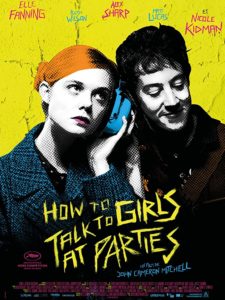
Three suburban British schoolboys in the 1990’s are big fans of punk because it seems thrilling to challenge authority and pretty much everything. But they are not very knowledgeable about anything outside of their own experience, and so when they accidentally wander into a strange party that happens to be a bunch of aliens, they just assume that they must be American girls. In How to Talk to Girls at Parties, Americans, girls, and aliens — they’re all equally unknown, and so, for these boys anyway, easy to confuse.
Neil Gaiman’s sly short story has been lovingly adapted by John Cameron Mitchell (“Hedwig and the Angry Inch,” “Rabbit Hole”), with a breakout performance by Tony-winner Alex Sharp as Enn (short for Henry), a sweet-natured kid who, like his two best friends, loves punk and really, really, really wants to learn how to talk to girls. Somehow, though, at parties he’s the one who ends up in the kitchen talking to someone’s mum. One night, after a punk concert, they go in search of a party they heard about but end up knocking on the wrong door. Inside, each room has a different gathering or ritual or happening going on, all exceptionally attractive people (though one has made a mistake in manifesting and has a weird forked finger).
We know what it will take Enn the whole movie to figure out. These are not American girls. They are aliens, on some sort of galactic tour. And one of them, named Zan (Elle Fanning, looking far too perfect to be a human) is an alien version of punk, open-minded, curious, and inclined to break the rules. She and Enn go out exploring the world together, and they explore each other a bit, too.
The fun of all fish out of water films is seeing our world, in this case our former world, through fresh eyes. We may laugh as Zan discovers what happens when a human body processes food or speaks whatever comes into her head without understanding social norms like privacy or embarrassment. But we also appreciate her wonder at the gritty, harsh British suburb and the very things that punk is rebelling against. Her encounter with a punk queen (Nicole Kidman with gusto and evident enjoyment) is surprisingly endearing. And when Zan’s alien leaders want to interfere, well, let’s just say that it can be a real advantage to have punks on your side. A magical musical number brings everything together in quite literal terms.
Sharp is the real deal. I was struck by his performance on Broadway and really happy to see him in this film. He is able to convey innocence that comes from being true-hearted, not from a slapstick kind of awkwardness. Fanning continues to be one of the most appealing young performers in films today, always thoughtful and heartfelt. Their Romeo and Juliet romance is sweet and touching, with the adventures of Enn’s friends providing some counterpoint. Punk in this film is not angry so much as revolutionary, fueled by ideas and optimism. That may seem like an alien idea today, but Mitchell makes it seem right on time.
Parents should know that this film includes very strong language, sexual references and situations, teen partying, drinking, drugs, nudity, and some peril and violence.
Family discussion: What does punk mean to you? What is punk today? Why didn’t Zan want to follow the rules?
If you like this, try: “Stardust” and “Coraline,” also based on books by Neil Gaiman
Posted on May 31, 2018 at 3:36 pm
C| Lowest Recommended Age: | Mature High Schooler |
| MPAA Rating: | Rated PG-13 for injury images, peril, language, brief drug use, partial nudity and thematic elements |
| Profanity: | Some strong language |
| Alcohol/ Drugs: | Alcohol, brief drug use |
| Diversity Issues: | None |
| Date Released to Theaters: | June 1, 2018 |
| Date Released to DVD: | September 3, 2018 |

If I ever decide to pursue a PhD, I think I will go for a combined film/economics degree and study the correlation between the quality of a film and the star also being the producer. There will be plenty of data.
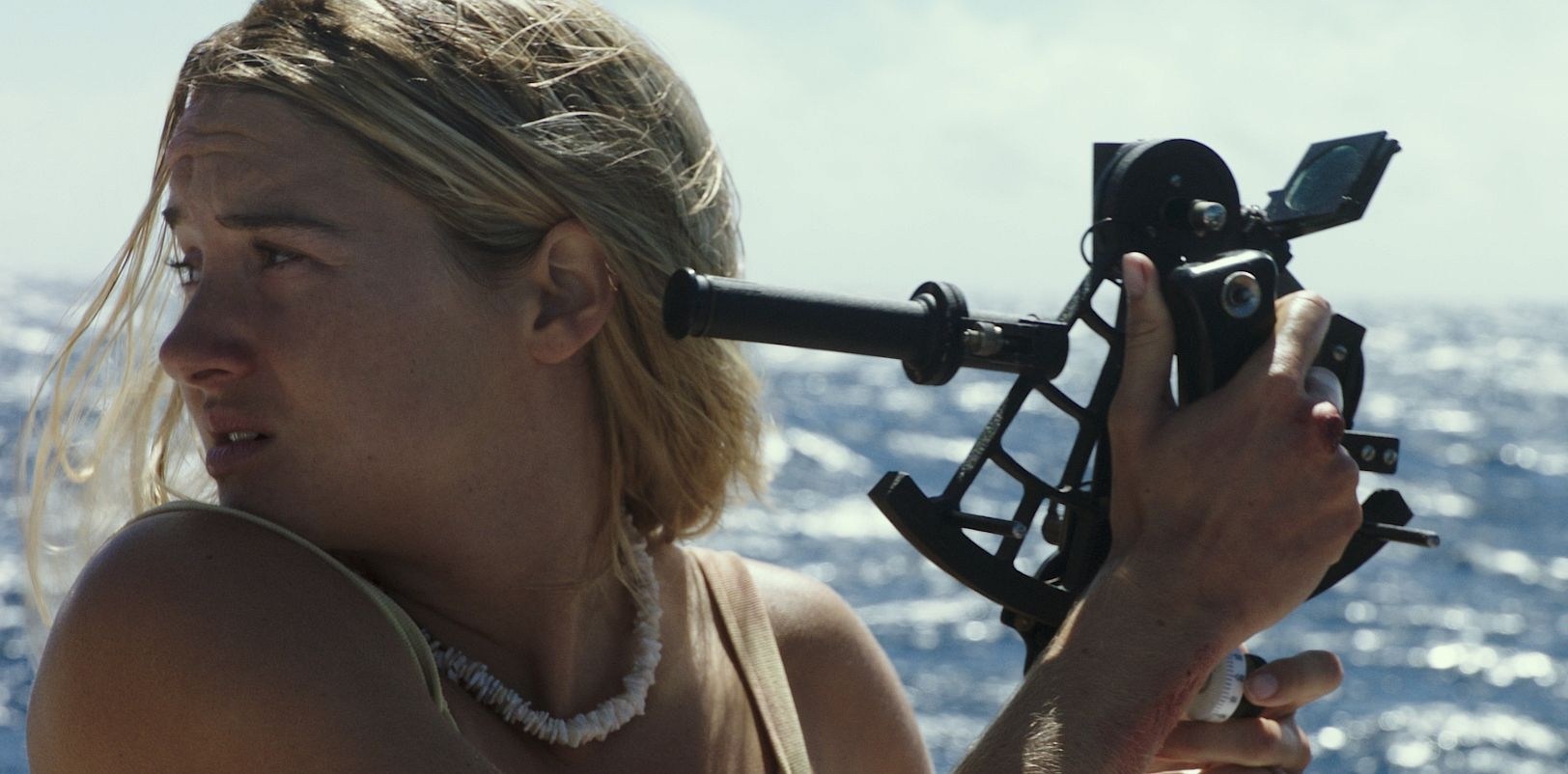
Shailene Woodley produces and stars in “Adrift,” based on the true story of a young couple sailing across the Pacific Ocean in the early 1980’s, who were caught in a deadly hurricane. There is obviously a lot of appeal for an actress in a story of the struggle to survive with the opportunity to show courage, resilience, and determination. But the back-and-forth flashbacks weaken the intensity of that struggle and a weak script with a Gothika Rule-worthy twist ending make even a story of survival more disappointing than inspiring.
Tami (Woodley) is a free spirit as we see when the immigration official in Tahiti asks her what her profession is and she replies, “Whatever job pays me enough to get me to the next place.” She has been traveling full-time since she graduated from high school five years earlier, most recently as chef on a schooner. She meets Richard (Sam Claflin), a British Naval Academy drop-out who worked in a boatyard so that he could build his own sailboat and has been on the water pretty much full-time ever since. Though he tells her that being at sea alone is mostly being “sunburnt, sleep-deprived, seasick, or all three at once. And after a few days, there’s the hallucinations.” But there is something both of them find irresistible in sailing into the horizon, and both have an unquenchable desire to see what the world has to offer. In one of the movie’s best scenes, she says a sunset at sea is red (as in “Red sky at night, sailor’s delight”), and he makes her see all the different shades and colors within the red. While she teases him about it later, she loves seeing the world through his eyes. And he loves her spirit of adventure.
When a wealthy friend offers Richard $10,000 and two first-class plane tickets to sail his yacht to San Diego, it seems like a perfect way for them to begin their life of adventure. But we know from the movie’s first shot that they are sailing into terrible trouble. We first see Tami submerged, and then we see her come to, disoriented, in the wrecked and waterlogged hull of the yacht, with Richard gone. Later we will see their tiny ship buffeted about by waves (the special effects are fine but nothing we didn’t see in “The Perfect Storm”) interspersed with scenes of their early romance and scenes of the 41 days adrift, with no way to get help or let anyone know where they were.
I don’t want to spoil the movie’s twist here, but per the Gothika Rule will be happy to share it to anyone who writes to me at moviemom@moviemom.com. I’ll just saw that while I am sure it was a deeply spiritual and sustaining experience for Tami, it comes across poorly on screen, leaving the audience, yes, adrift.
Parents should know that this film includes intense mortal peril with severe and graphic injuries, some strong language, sexual references, nudity, brief drug use, alcohol, reference to suicide and teen pregnancy, and a sad death.
Family discussion: How many ways can you think of to describe red? Why was the frangipani so meaningful? Why did Tami say she wouldn’t trade the experience for anything? What problem-solving skills helped her the most?
If you like this, try: “Touching the Void” and “The Life of Pi”