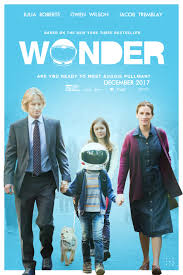
Copyright 2017 LionsgateOne of the best movies for families of 2017 was “Wonder” and I am delighted to have a DVD/Blu-Ray to give away!
Send me an email at moviemom@moviemom.com and tell me your favorite book for middle schoolers. Don’t forget your address! (US addresses only) I’ll pick a winner at random on March 20, 2018. Good luck!
The Looming Tower Explores the FBI and CIA Before 9/11
Posted on March 8, 2018 at 10:32 pm
Hulu’s new series, “The Looming Tower,” is based on Lawrence Wright’s Pulitzer Prize winning non-fiction book about the US intelligence agencies in the years before 9/11. His focus is on the rivalry between the heads of the FBI and CIA operations investigating Osama Bin Laden and the rise of Al-Qaeda and how their unwillingness to share information made it impossible to prevent the attack. In the series, adapted by “Capote” screenwriter Dan Futterman, Peter Sarsgaard plays CIA Analyst Martin Schmidt, a fictionalized character, and Jeff Daniels plays John O’Neill, Special Agent in Charge of the FBI’s counterterrorism operation, who was killed on 9/11 in the World Trade Center.
I interviewed Wright and the actors. On Rogerebert.com, my interview with Jeff Daniels, Peter Sarsgaard, and Wright talked about the personal and professional animosity that kept the investigators from cooperating and why now could be the time for a deeper look at what happened.
There are some well-loved classics, of course, like “Alien” and “Norma Rae.” There are some surprising choices like Douglas Sirk’s “Imitation of Life,” too often dismissed as a soapy “women’s picture” in the most dismissive sense of the term. I was delighted to see last year’s “Step” and “Their Finest” on the list, along with underappreciated gems like “Made in Dagenham” and documentaries like “Without Lying Down,” the story of pioneering screenwriter Frances Marion from the silent era to the Golden Age of Hollywood. Enjoy!
Extended peril and some violence, some scary images
Diversity Issues:
Diverse characters
Date Released to Theaters:
March 9, 2018
Date Released to DVD:
June 5, 2018
Copyright Disney 2018
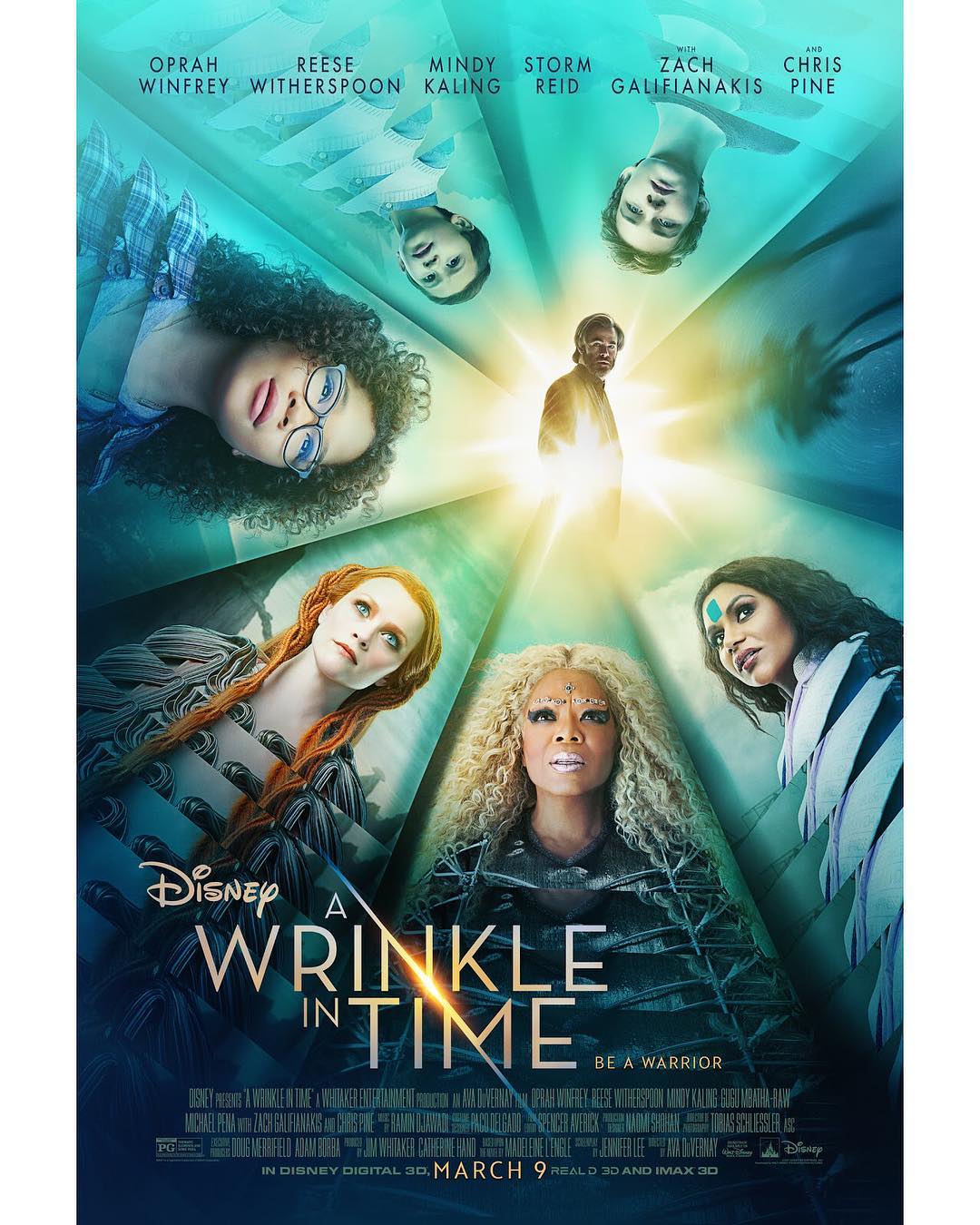
Madeleine L’Engle’s A Wrinkle in Time is one of my all-time favorite books. I loved it when I was 11, read it aloud to our children, and went on to read all of the sequels and most of her other books as well. So it was with a lot of anticipation, excitement, and not a little trepidation that I looked forward to the film.
On the one had, the book had been dismissed over the decades as unfilmable due to its planet-hopping storyline, fantastical characters, and genre-straddling themes. On the other hand, I have the utmost respect for director Ava DuVernay (“Selma,” “13th”) and co-screenwriter Jennifer Lee (“Frozen,” “Zootopia”) and the all-star cast looked promising. I held my breath, crossed my fingers, and leaned forward and caught my breath as the iconic Disneyland castle in the opening logo suddenly…wrinkled.
Most of what I love about the book was beautifully realized, and the movie is sure to be a middle school sleepover perennial and a family favorite for generations. It’s made straight from the heart of people who remember what it feels like to be 12 — and the way we all become 12 again in moments of uncertainty. If there’s a bit more Oprah-esque “you go girl” and “living your best life” than in the book, well, the movie features not just Oprah (who was also in “Selma”) but a house-sized Oprah with lips and eyebrows that look like someone went overboard on the Bedazzler.
Meg Murry (Storm Reid) is the daughter of two scientists (Gugu Mbatha-Raw and Chris Pine). She was once a gifted and attentive student, but since the disappearance of her father, four years before the movie begins, she has been sullen and uncooperative. Mean girls pick on her, and when she responds by throwing a ball at the ringleader, she gets in trouble. Nothing makes sense to her, and she wonders if her father left because she was not good enough.
Meg has an exceptionally precocious six-year-old brother named Charles Wallace (Deric McCabe). In the book, he is her bio-brother and they have two older brothers as well but in the movie it is just the two of them and Charles Wallace was adopted just before their father disappeared. Charles Wallace is one of the major challenges of adapting the book, because on the page he is endearingly hyper-aware and ultra hyper-articulate, but on screen it is difficult to make him believable and keep him from being annoying. It is one of the film’s most salient weaknesses that this critical character does not work.
Meg gradually learns that Charles Wallace has been befriended by three extraordinary and very strange women known as Mrs Whatsit (Reese Witherspoon), Mrs Who (Mindy Kaling), and Mrs Which (Oprah Winfrey). (NOTE: L’Engle insisted that there be no period after “Mrs” in the British style.) As disturbing as it is reassuring, they seem to know what the Murrys were working on, a form of “wrinkling” time and space to permit instantaneous travel to other planets that they call a tesseract. (For some reason, the explanation appears in the trailer, but not the film.)
Calvin O’Keefe (Levi Miller), is a well-liked, confident boy who seems to have nothing in common with the Murray children. But one day he impulsively visits them, and stays for dinner, appreciating the warmth and acceptance in their home. And then the three ladies explain why they are there. They have heard a call for help. It is the children’s father. And they are there to help Meg, Calvin, and Charles Wallace rescue him from “the darkness.”
And so, the rest of the film is candy-colored CGI, as the group visits first a paradisiacal planet for no particular reason other than a romp through a delightful garden of gossipy flying flowers who communicate via color and a soaring tour on a creature like a flying green manta ray with a rainbow Reese Witherspoon face. They visit a psychic called the Happy Medium (Zach Galifianakis) for more information about where Dr. Murry has gone, and finally they get to the planet where he is being held captive by an all-controlling force. The film brings to life one of the book’s most vivid scenes, with a pristine suburban street where every house has a child standing in the driveway bouncing a ball in perfect rhythm and all of the Stepford-style moms come out at the same moment to call them in to dinner. The book was written a a time of post-WWII concerns about conformity and “houses made of ticky-tacky that all look just the same.” But the image is just as compelling today. The 1950’s may have led to an explosion of “do your own thing” individuality in the mid-to late 1960’s and self-actualization in the me-decade 70’s, but the importance of intellectual courage, thinking for yourself, and challenging assumptions is even more important in the era of fake news and “both sides.”
The book’s most memorable message comes when Meg is told that what will help her to rescue her father is her faults. Though how those faults help is not as explicitly explained in the film, that idea retains its power here. That makes up for some faltering in the climax, some under-imagined images, and some distractions that seem to stem from a lack of trust in the audience. We don’t really need that extra back story on the mean girl or Calvin (an odd change from his home life in the books, which will be a problem if they decide to film the sequels) to understand what their insecurities are or the time spent cheering Meg on (and apologizing to her and deferring to her) without making it clear what her strengths are and how they are connected to her faults. It would be better to focus on the book’s rare combination of both faith and science and how important both are. In the book, the children visit the planets to learn about the darkness and to see that it can be overcome (Mrs Whatsit is the result of one such triumph). The movie leans more toward an Oprah-eque message of empowerment, so the focus is more on individual self-realization (and being appreciated by others, including Calvin, which seems to be his primary purpose in the story).
The three Mrses are not quite as fun as the movie thinks, though Mrs Who’s Bumblebee-like “post-language” use of quotations (always noting the nationality of the author, from Rumi and Shakespeare to Lin-Manuel Miranda and OutKast) is charming. But Reid is a heroine to root for, and the Murry family is one we are, like Calvin, glad to have a chance to visit.
Parents should know that this film includes extended sci-fi/fantasy peril with some violence and scary images, issues of an absent father, a school bully, and an abusive parent.
Family discussion: What are your most valuable faults? Why was Meg so important to IT?
If you like this, try: “The Neverending Story,” “The Wizard of Oz,” and the Narnia series
Oscars 2018: Inclusion Riders, the Jetski Challenge, and Rita Moreno’s Dress
Posted on March 5, 2018 at 8:15 am
Oscars 90th Academy Awards
The 90th anniversary Oscar broadcast was one of the best in many years and not a minute too long. Look, with the Oscars you know what you’re signing up for. You may not be interested in the awards for Best Sound Editing or Best Sound Mixing, but I respect the Oscars for recognizing the dozens of people you never see the rest of the year for every one you see on screen, all vital to the impact of the film. And if they didn’t televise those awards, how would we see people like that guy whose tuxedo sleeves stopped just below his elbows? And I expect and appreciate the political issues addressed in the show. Without them, it would be eerily sterile. What are the nominated films about, after all? They are about justice. They are made to touch our hearts and inspire us to be more inclusive and fair. So, it is not just right, it is deeply moving when Lupita Nyong’o and Kumail Nanjiani remind us that they are immigrants. And also funny when Nanjiani says, “And I am from Pakistan and Iowa, two places that nobody in Hollywood can find on a map.”
I normally do not watch the red carpet, but this year I turned it on a bit early and was really delighted with the ABC pre-show interviews, especially when Michael Strahan showed Timothee Chalamet a video of the high school drama teacher who changed his life wishing him well, along with current students at the “Fame” school he attended just a couple of years ago, and the glimpse of Gary Oldman in full Winston Churchill makeup and costume, dancing to James Brown.
Then, on a prism-circled stage set that kept reminding me of the Shimmer in “Annihilation,” Jimmy Kimmel led off with a graceful, witty opening, candid about the turmoil of the past year, that set the tone perfectly. The promise of a Jetski for the person giving the shortest speech was silly, and having Dame Helen Mirren as the prize girl really made it work. It also inspired a couple of funny callbacks through the night.
Highlights:
Frances McDormand, asking the women nominees to stand, and introducing the world to the term “inclusion rider” — a contract provision stars can insist on that requires film productions to employ a specific number of women and minorities, including the crew, and may require pay equity/parity as well,
Alexandre Desplat, thanking the musicians who worked on “The Shape of Water” and the musicians playing live at the broadcast,
Tiffany Haddish and Maya Rudolph, who should be Golden Globe hosts next year,
Jordan Peele, the first African-American to win a screenplay Oscar, speaking from the heart about what the experience has meant to him,
Jodie Foster blaming Meryl Streep for Tonya-ing her,
Two golden age of Hollywood presenters reminding us what “star” really means — Rita Moreno and Eva Marie Saint, Moreno in the same dress she wore when she won the Oscar for her performance in “West Side Story,”
The outstanding 90th anniversary montage, reminding us of the best that movies — and humans — can be,
The excellent montages introducing the acting awards,
Pearl Jam’s Eddie Vedder singing Tom Petty during the In Memoriam segment,
The third “amigo” wins — Guillermo del Toro joins his two director friends from Mexico in winning a Best Director Oscar (Alejandro G. Iñárritu won in 2014 for “Birdman” and in 2015 for “The Revenant.” And in 2013, Alfonso Cuarón won for “Gravity”).
Misses:
“Remember Me” is a lovely song, which well deserved its Oscar, but for some reason the live performance sounded off-key,
The trip to the movie theater next door, a stunt that went on too long and didn’t really work,
The people inexplicably left out of the In Memoriam segment, including Tobe Hooper, Oscar-winner Dorothy Malone, Powers Boothe, and John Mahoney.
For a show in which there were no surprises or upsets, it remained lively and engaging all the way to the end. And Faye and Warren and Price Waterhouse got it right this time.