Telstar — 60th Anniversary of the Telecommunications Satellite Launched July 10, 1962

Telstar — 60th Anniversary of the Telecommunications Satellite Launched July 10, 1962

Posted on July 10, 2022 at 5:48 pm

From my father, Newton N. Minow, published today on Medium.

“Do you know anything about telecommunications satellites?” It was my first day at the Federal Communications Commission, where I had just been appointed Chairman by President John F. Kennedy. It was 1961 and I was 35 years old. The question came from one of the other Commissioners, T.A.M. Craven, originally a Franklin Roosevelt appointee, then re-named by Eisenhower. Craven had formerly been the Commission’s Chief Engineer.
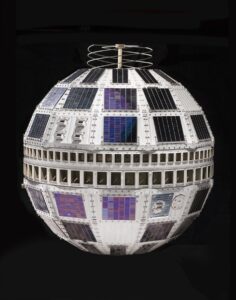
I admitted I did not know anything about them. He groaned. “This is the one area where we are ahead of the space technology of the Russians,” he said. And he began to tell me that Bell Laboratories had developed a satellite that could be launched into space to bounce signals and open up endless new possibilities for broadcasts and telephones.
In 1961 we were just a few years from having to call the operator to place expensive long-distance calls. There were just two and a half national television commercial broadcast networks and many communities had no local station. Only a few cities had what would become nationwide public television. Today we take it for granted that we can watch world events from royal weddings to the Olympic games to the Oscars in real time, but that was a long way off in 1961. As Commissioner Craven explained to me what the satellite could do, it seemed like something out of Flash Gordon. And yet, we did not imagine a fraction of the changes that launch would bring.

The technology was there. But first, we needed a plan to take it to Congress. The Communications Satellite Act was complicated and controversial. It required coordination with American businesses and the government (we wanted to make sure that no one corporation would have control). Today it might be harder to imagine that we were able to get bi-partisan legislation passed within a year than it is to count up the monumental changes the satellite has brought, but it was one of three major pieces of legislation we got passed to make telecommunications more broadly accessible and expand the choices for viewers between 1961–63.
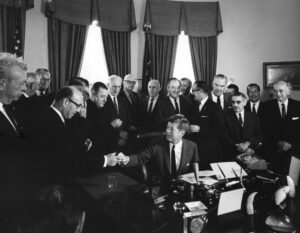
Courtesy JFK Library

I am the second from the right at the signing ceremony of the Communications Satellite Act in the Oval Office. See below for a full list of those in the photo.

When he signed the new law, President Kennedy said,

By enacting this legislation, Congress has taken a step of historic importance. It promises significant benefits to our own people and to the entire world. Its purpose is to establish a commercial communications system utilizing space satellites which will serve our needs and those of other countries and contribute to world peace and understanding.

The benefits which a satellite system should make possible within a few years will stem largely from a vastly increased capacity to exchange information cheaply and reliably with all parts of the world by telephone, telegraph, radio, and television. The ultimate result will be to encourage and facilitate world trade, education, entertainment, and many kinds of professional, political, and personal discourse which are essential to healthy human relationships and international understanding.

Better and less expensive communications, like better and less expensive transportation, are vital elements in the march of civilization. This legislation will, by advancing the peaceful and productive use of space, help to accelerate that march, and I extend appreciation to the Members of Congress who worked so hard to secure passage of a very effective piece of legislation.

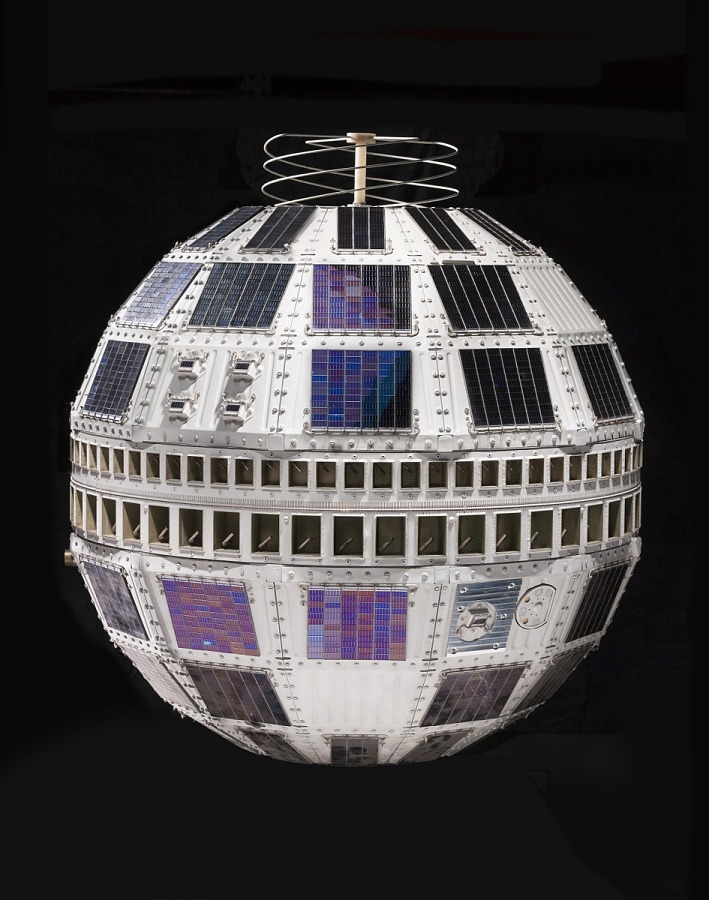
The satellite was launched on July 10, 1962, 60 years ago today, the world’s first commercial payload of any kind in space. According to NASA, “Two days later, it relayed the world’s first transatlantic television signal, from Andover Earth Station, Maine, to the Pleumeur-Bodou Telecom Center, Brittany, France…. The first images, those of President John F. Kennedy and of singer Yves Montand from France, along with clips of sporting events, images of the American flag waving in the breeze and a still image of Mount Rushmore, were precursors of the global communications that today are mostly taken for granted.”

Last month, my family was in Europe, where they were able to use GPS to get around, send me photos by email and text, watch the January 6 hearing live on CNN, and call me for nominal cost, all made possible by telecommunications satellites that began with Telstar.

President Kennedy promised that America would put a man on the moon. I told him the telecommunication satellite was even more important because the satellite will launch ideas, and ideas last longer than people.
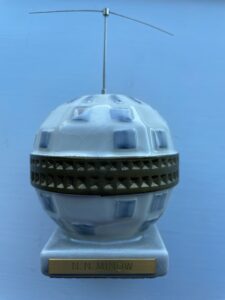
Copyright Nell Minow

Souvenir of the launch

In the Oval Office photo: President John F. Kennedy hands a pen to Representative Samuel N. Friedel of Maryland during a signing ceremony for HR 11040, the Communications Satellite Act of 1962. (L-R) Senator Everett Dirksen of Illinois; Representative J. Arthur Younger of California (turned away from camera); Representative John B. Bennett of Michigan; Representative Friedel (front, glasses); Representative Oren Harris of Arkansas (mostly hidden behind hand); Senator Warren G. Magnuson of Washington; Speaker of the House of Representatives John W. McCormack; Senator Robert S. Kerr of Oklahoma; Senator Richard B. Russell of Georgia; Senator Hubert Humphrey of Minnesota; Senator John Sparkman of Alabama; Joseph A. Beirne, Vice President of the American Federation of Labor and Congress of Industrial Organizations (AFL-CIO); Representative William L. Springer of Illinois; unidentified (partially hidden behind Representative Springer); Senator John O. Pastore of Rhode Island; Newton Minow, Chairman of the Federal Communications Commission (FCC); Executive Secretary of National Aeronautics and Space Council Edward C. Welsh. Oval Office, White House, Washington, D.C

Related Tags:


Technology Understanding Media and Pop Culture
Fire Island

Fire Island

Posted on June 2, 2022 at 1:37 pm

B +
Lowest Recommended Age: Mature High Schooler
MPAA Rating: Rated R for strong sexual content, drug use, strong nudity, language throughout
Profanity: Constant very strong language
Alcohol/ Drugs: Alcohol and drugs
Violence/ Scariness: Comic peril and confrontations
Diversity Issues: A theme of the movie
Date Released to Theaters: June 3, 2022

Like a bride, “Fire Island” has something old, something new, something borrowed, and something blue. What’s old is the most durable of movie storylines, the romantic comedy. Borrowed: the inspiration for the storyline, the ur-narrative of the romantic comedy, Jane Austen’s Pride and Prejudice. Something new: populating the story of attraction, misunderstandings, vulnerability, and romance with all gay characters, in the title resort, famously a favorite of gay men since the 1920s. And something blue: it is definitely rated R. Also funny and yes, romantic.

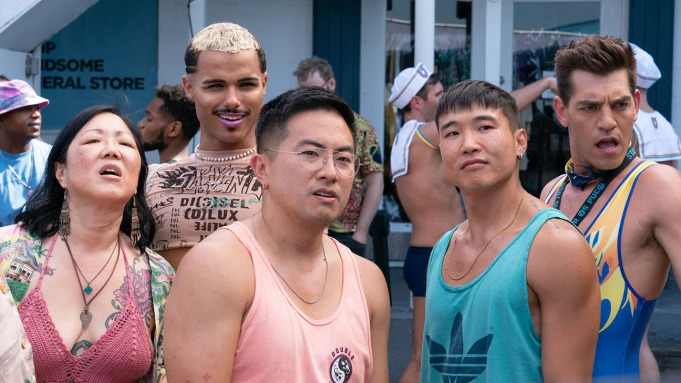
Copyright Searchlight 2022

Stand-up comic Joel Kim Booster wrote and stars in the film as Noah, along-side his real-life best friend SNL’s Bowen Yang as Howie. For Austen fans, Noah is the more cynical Elizabeth Bennett, and Howie is the more romantic Jane. Noah and Howie come to Fire Island for a week each summer with their friends to stay with Erin (Margaret Cho) and enjoy the beach, the parties, and the men. On this visit, Noah, usually there to have sex with as many random men as possible, promises he will be a celibate wingman for Howie until Howie finds someone.

It is a lot of fun to spot the Austen influence, where it guides the storyline and where Booster pays tribute by going in another direction. Instead of the snobbish Miss Bingley, we have Nick Adams as Cooper, the designer-wearing meanie who looks down on Noah and his friends, especially when he sees handsome doctor who is the film’s version of Austen’s amiable Mr. Bingley. And as the Mr. Darcy character, who turns out to be less proud and disdainful than he seems, we have Conrad Ricamora as Will. What will stand in for the book’s scandalous elopement? I’ll just say it is shrewdly chosen.

Also fun: a peek into a world straight people might not otherwise see or for those who have waited much too long to see their world reflected on screen.  As we always say, the more particular something is, the more universal it is, and this is a good example, unabashedly open about this culture but completely relatable in its depiction of friendship and chosen families.

Parents should know that this film is rated R for very explicit sexual situations and nudity, constant very strong language, drinking, and drugs.

Family discussion: Why was Howie so pessimistic about finding love? Was Noah a good friend to him?

If you like this, try: The “Queer Eye” series and the many versions of “Pride and Prejudice”

Related Tags:


Based on a book Comedy GLBTQ and Diversity movie review Movies -- format Movies -- Reviews Romance
Interview: Julian David Stone on “It’s Alive,” the Novel About the Making of “Frankenstein”

Interview: Julian David Stone on “It’s Alive,” the Novel About the Making of “Frankenstein”

Posted on May 17, 2022 at 8:00 am

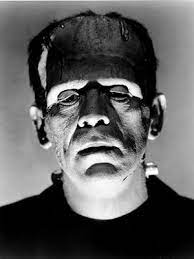
Copyright Universal 1931
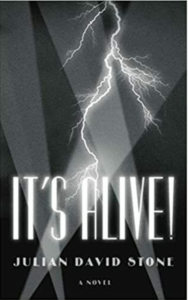
The 1931 James Whale film about Dr. Frankenstein’s re-animated monster still thrills us today. In It’s Alive, a new novel with a title taken from one of the film’s most memorable lines, author Julian David Stone takes us behind the scenes as producer Carl Laemmle, Jr. struggles, negotiates, manipulates, and promises to get the film made. The stores behind the iconic details that have inspired dozens of remakes and spin-offs are told with as much suspense as you might hope to find in a movie. In an interview, Stone talked about doing enojugh research to immerse himself in the era, about Laemmle’s conflicts with his father, the founder of Universal Studios, and about how “Dracula” and “Frankenstein became the foundation for the genre of horror movies.

Frankenstein has been one of the most re-told stories in movie history. Why do we keep coming back to it?

I think the theme of bringing the dead back to life is one of the most universal, if not the most universal, that you find in every culture. And the theme is just as prescient today as it was 200 years ago when the original book of Frankenstein was first written. Separately, the 1931 film adaptation explores other themes that are also still very relevant today — man’s relationship to technology, the concept of ‘just because we have the ability to do something, should we do it?’, The unexpected consequences of our actions in the blind pursuit of technological advance, etc.

Copyright 2022 Greenleaf

Tell me about your research. First, where did you go to find out about all of the day-by-day details and the thoughts of the key figures.

Research is one of my absolute favorite parts of writing. I particularly love doing research from sources from the actual time period that the story takes place — contemporaneous magazines, newspapers, books, etc. This is where a lot of the great details about the lives of the three main characters in my novel were found — scouring any and all media sources from the early 1930s. Additionally, interviews with the main characters were also very helpful. In the case of Boris Karloff and Bela Lugosi, they were both famous for a very good portion of their lives, so there are many great interviews with them and they were very helpful.

Junior Laemmle was another story. There are a lot of interviews with him up to 1936, when the Laemmle family lost the studio. After that, almost nothing. So a lot of Junior’s story was pieced together from whatever tidbits I could find. Researching him was a great detective story on its own!

I’m particularly interested in some of the 1930s slang. Where did you find it and how did you balance the authenticity with the need to make it accessible?

Once again, it was all the contemporaneous media sources that were very helpful. Also, since my story takes place in 1931, I was fortunate that the sound era of motion pictures was in full swing, so watching them — and particularly newsreels with interviews — were a great source of slang and the vernacular of the time.

You have a lot of very clever metaphors that feel true to the period. How did you think about them?

Research, research, research. As I said, I love to research and I like to say, “I want to be able to ‘wear’ an era” before I start writing about it. In the case of It’s Alive! I was well into my research, but I was still struggling with the story when I realized I was making a big mistake. I was focusing my research to specifically on the Universal Monster movies and Universal itself. That’s when I forced myself to take a step back and dive into all of Hollywood in 1931. I started watching as many films as possible from the era — not just Universal’s films — and I read as many of the trade publications as I could get my hands on sequentially, staring in January, 1931. This was so valuable as you could watch the progression of trends in the movie business, as well as the rise and fall of certain stars. After about a year of deep research into the period was when the story really started to fall into place.

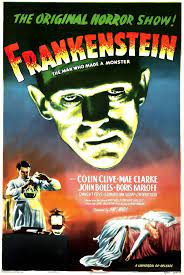
Copyright Universal 1931

A lot of the suspense in the story comes from who would play the monster. What would the movie have been like with Bela Lugosi in the role?

That’s one of the great questions that fans of the Universal Monsters, and classic film fans in general, endlessly bandy about. I think Karloff’s performance in Frankenstein is one of the greatest and most iconic in cinema history, so I truly can’t imagine anyone else in the role. But interestingly, Lugosi did eventually play the Monster years later in one of the later films of the Universal Monster cycle and his performance is quite different — to say the least — than Karloff’s. But I don’t think it’s really fair to compare the two as it was many, many years after Karloff, and the way the Monster acted had already been established, and had gone through a lot of changes as different writers and directors tackled the material.

As an interesting side note, before the original 1931 Frankensteinfilm was made and well before Karloff was cast as the Monster, a screen test was shot of Lugosi in the role. Sadly, it has been lost, as it would be an absolutely fascinating piece of film to see — How Lugosi approached the role before there were any preconceived notions of how the Monster should look or act. One can only hope and dream that someday this footage may be discovered!

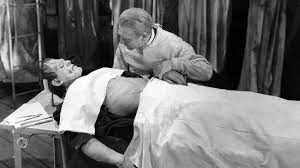
Copyright 1931 Universal

What were the biggest differences of perspective and between Laemmle senior and junior? How did that reflect the changes in culture and technology and the difference between creating the business and keeping an established business vital? Do you see any parallel conflicts today?

The relationship between Laemmle Senior and Junior was one of the main things that drew me to the story in the first place. It had some very typical elements with the father being more conservative in his approach to business and the type of material he wanted to put on the screen, and the son being more liberal and daring in what films he wanted the studio to make. But then there were some very unusual elements in that their conflict centered around the operations of a movie studio, and that Junior had a dark side that went well beyond the desire to present new and forward leaning material on screen.

How did you find out about the turn of events in filming The Guilty Generation that made it possible for Karloff to play the monster?

That particular detail came up in a couple of different sources and interviews. If you watch The Guilty Generation, Karloff has a big part in the beginning of the film and then sort of disappears until the end. And the way his final scene is shot — a very simple single close-up of Karloff talking into a phone — very much leans into the idea that the director, Rowland Lee, was trying to help Karloff finish his work early. And an interesting bit of trivia is, the very same Rowland Lee would go on to direct Karloff in Son of Frankenstein almost ten years later — Karloff’s third and last appearance as Frankenstein’s Monster.

How were the father/son conflicts between the Laemmles reflected in the Frankenstein story?

Ultimately the movie Frankenstein is a father and son story. Dr. Frankenstein, in the end, is disappointed by his creation — The Monster. To a similar extant, Carl Laemmle, Sr. was disappointed in his son, his creation, Junior Laemmle. And the two fought quite a bit over the direction of Universal Studious after Junior was made Head of Production and wanted to make very different films than his father made. Frankenstein — and the entire Universal Monster Cycle for that matter — being chief among them.

Was Karloff’s name really misspelled on the studio’s entry list?

It may have happened, but there was no specific incident that I was referencing. It was more a nod to where Karloff was in his career before the role of the Monster made him a huge star. He was a working actor, getting by, but it was still a day to day struggle. To give you an example, the first film to be released after he shot Frankenstein — but filmed before Frankenstein was made — in the credits his role is “Waiter”. His character didn’t even have a name.

What do the struggles over Whale’s Frankenstein tell us?

That it is important to stay true to your original vision.

The 1931 film Frankenstein is a great film and an absolute classic because it is the combined effort of several great artists. But it would never have existed in the first place if not for the drive and desire of one man: Junior Laemmle, who, despite no one else wanting to make the film, or for him to make it, stayed true to his vision and pushed the project forward. And all of Hollywood was never the same.

One of the ways I like to put it is: I would never claim that Junior invented the horror film, but I think you can make a pretty strong argument that he is the single person most responsible for it becoming a genre. When no one else in the entire movie business wanted to make Frankenstein, and Dracula before it, he did. And he made sure they got made. From there the entire Universal cycle of horror films was launched and all of what we call horror today grew out of these classics from the 1930s.

What are you going to write about next?

I have my next novel about half written. It’s about the 1960s space race and the competition between the United States and the Soviet Union to land the first man on the moon. The era and the Apollo program specially are big passions of mine, so I am very excited about this story — as well as immensely enjoying doing the research!

Related Tags:


Books Film History Interview Movie History
61 Years After the Legendary Vast Wasteland Speech

61 Years After the Legendary Vast Wasteland Speech

Posted on May 9, 2022 at 8:09 am

Copyright 2016 TWH
Sixty-one years ago today, on May 9, 1961, my dad, the 35-year-old Chairman of the FCC, Newton Minow, made three significant appearances. In Washington, he gave his famous “vast wasteland” speech to the National Association of Broadcasters, telling them that while “when television is good, nothing is better,” he expected them to do more to uphold their statutory obligation to serve “the public interest, convenience, and necessity.” Then he went back to the FCC office, where he met with Elizabeth Campbell to sign the original license for WETA, the first educational television station in the nation’s capital, now the producer of the Ken Burns documentaries and the nightly Newshour. And then he flew to Chicago to attend the father-daughter dinner for my Brownie troop.

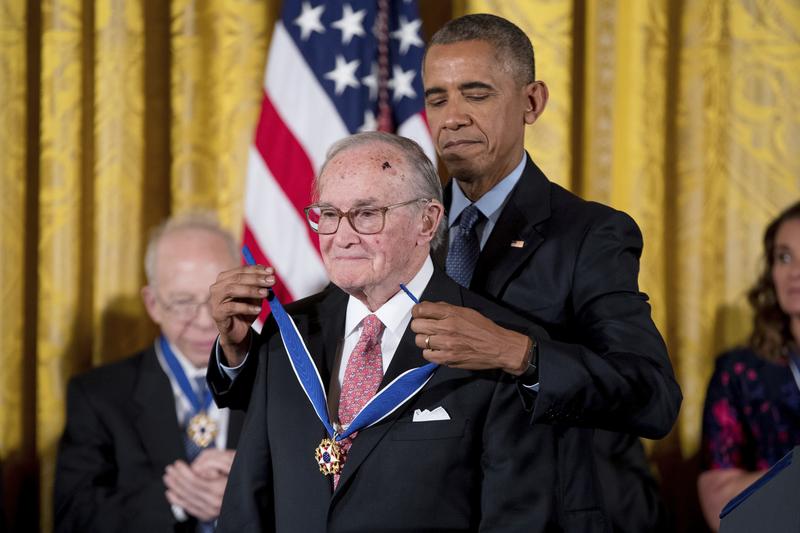
I often thought about how those three events defined his character: inspiring those around him to do better, supporting the visions of people making enriching cultural content and reliable news sources widely available, and always putting his family first. Over the next decades this was reflected in his efforts as a founder and board chair of PBS, a director of CBS, helping to create the Commission on Presidential Debates (CPD), where he served as vice chair until this year, working to require the V-chip and closed captioning, helping to get the start-up funding for “Sesame Street,” and arguing for the rescission of the radio license of a station that broadcast virulently racist and anti-Semitic programming. His countless awards include more than a dozen honorary doctorates, a Peabody, and the highest honor for American civilians, the Presidential Medal of Freedom, awarded by President Barack Obama (who met Michelle when they were both working in my father’s law office). Our family’s favorite “honor” might be the sinking ship on “Gilligan’s Island,” named as an insult to my father for his criticism of television by producer Sherwood Schwartz. They later had a very cordial correspondence.

He appeared on Chicago’s PBS station last month to talk about the RNC’s announcement that they would not participate in the Presidential Debates.

Today Cornell law professor Robert Hockett recognizes the anniversary of the speech with a proposal my sister endorsed in her book, Saving the News (with an introduction by my father titled “From Guttenberg to Zuckerberg”), a “public option” for social media.

Mike Leonard’s documentary about my dad has some wonderful stories.

I talked to my dad about some of his formative experiences, including the words from Bobby Kennedy that inspired him to focus on telecommunications, what he will advise the new FCC Chair, and why he told President Kennedy the first telecommunications satellite was more important than putting a man on the moon.

He is the world’s best dad and grandpa. We are so lucky.

Related Tags:


Television Understanding Media and Pop Culture
Happy Passover 2022/5782

Happy Passover 2022/5782

Posted on April 15, 2022 at 8:42 am

Have a blessed Passover!  Whether you’re on Zoom or socially distant in person, enjoy the holiday devoted to family, freedom, and courage. Dayanu!

The story of the exodus to freedom is for all ages.

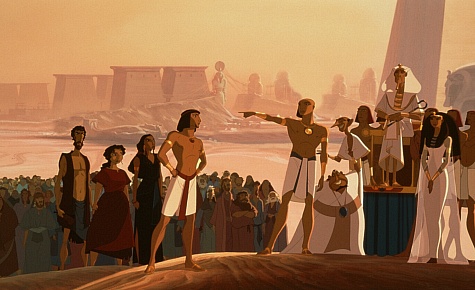
For family viewing: try It’s Passover Grover!, The Prince of Egypt, Rugrats Passover,  and The Ten Commandments


Related Tags:


Holidays Jewish Spiritual films
THE MOVIE MOM® is a registered trademark of Nell Minow. Use of the mark without express consent from Nell Minow constitutes trademark infringement and unfair competition in violation of federal and state laws. All material © Nell Minow 1995-2026, all rights reserved, and no use or republication is permitted without explicit permission. This site hosts Nell Minow’s Movie Mom® archive, with material that originally appeared on Yahoo! Movies, Beliefnet, and other sources. Much of her new material can be found at Rogerebert.com, Huffington Post, and WheretoWatch. Her books include The Movie Mom’s Guide to Family Movies and 101 Must-See Movie Moments, and she can be heard each week on radio stations across the country.

Website Designed by Max LaZebnik