Queenpins: The Real Story

Queenpins: The Real Story

Posted on September 8, 2021 at 8:00 am

The crime comedy “Queenpins” is based on the true “pink collar crime” story of three Arizona women who masterminded a $40 million fraud based on grocery store coupons. Yes, coupons. It may sound silly and trivial, but coupons are like money. If you can buy a coupon for a free box of detergent or diapers for a tenth of the purchase price, you have stolen that item from the company that makes it and you have paid a criminal to help you do it. The movie is light-hearted, if not quite aspirational. But the reality is grubbier.

Robin Ramirez, Amiko Fountain, and Marilyn Johnson sold counterfeit coupons for products from more than 40 companies. The ring used a series of twelve different bank accounts to house their money. One account had more than $2 million. When they were arrested, they had $40 million in coupons and authorities later estimated that the coupon ring cost corporations hundreds of millions of dollars in profit.

Unlike the story in the movie, which has a postal inspector played by Vince Vaughn and a private security “loss prevention officer” played by Paul Walter Hauser tracking down the perpetrators, it was Proctor and Gamble who initially uncovered the fraud and the Phoenix police department who ran the investigation, led by Officer Sara Garza and Sergeant Dave Lake, assisted by The Maricopa County Attorney’s Office the private company Coupon Information Corporation, and the FBI Internet Crimes Unit. The County of Maricopa was also able to seize over $2,000,000 in assets, which included cash, guns, luxury cars, a speed boat, properties, and high end recreational vehicles. Ramirez was sentenced to two years in jail. Johnson and Fountain, who cooperated with law enforcement, were sentenced to probation. The three were also ordered to pay (partial) restitution: $1,288,682 to cover P&G’s losses.

The story was included in the CBS series “Pink Collar Crime.”
Related Tags:


The Real Story
Movies for Labor Day 2021

Movies for Labor Day 2021

Posted on September 4, 2021 at 8:00 am

On Labor Day pay tribute to workers, especially those who have worked for better conditions for everyone and the essential workers who have kept us going through the pandemic. These movies can help us understand their challenges and their contributions.

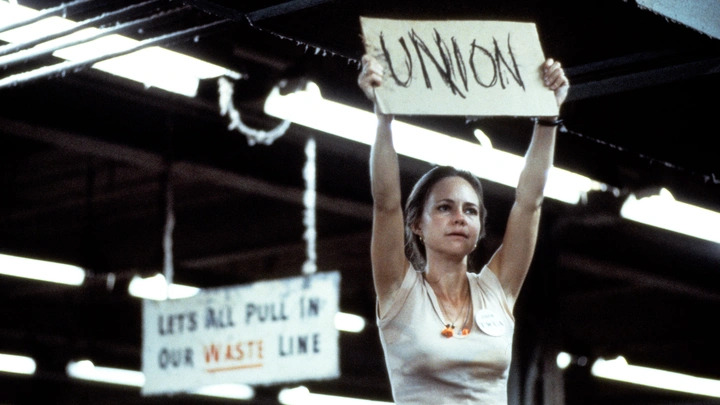
Copyright 1979 20th Century Fox

Sally Field won an Oscar for “Norma Rae,” a real-life story about a courageous woman who helped mill workers form a union. It was inspired by Crystal Lee Sutton, a courageous advocate for workers’ rights.

Doris Day plays a union worker who falls for a new guy in management but doesn’t lose sight of the seven and a half cent raise the workers are bargaining for in the rollicking musical, “The Pajama Game.”

“10PM-Midnight: Working the Night Shift” is the story of the people who keep things going while the rest of us are asleep.

“Lifelines in the Lockdown” is a CBS News documentary from the early days of the pandemic about essential workers.

John Sayles’ “Matewan” tells the story of mine workers fighting for safer conditions.

https://www.youtube.com/watch?v=qwEMIvDEFy4

“Harlan County USA” is a documentary about a strike by mine workers.

“Bread and Roses” is based on the real-life story of a strike by undocumented janitorial workers, with Adrian Brody as their lawyer.

https://www.youtube.com/watch?v=IrDpd4sCswY

“Salt of the Earth” was inspired by an actual miners’ strike against the Empire Zinc Co. and the cast includes real-life miners who were involved in the strike

Related Tags:


For Your Netflix Queue Holidays
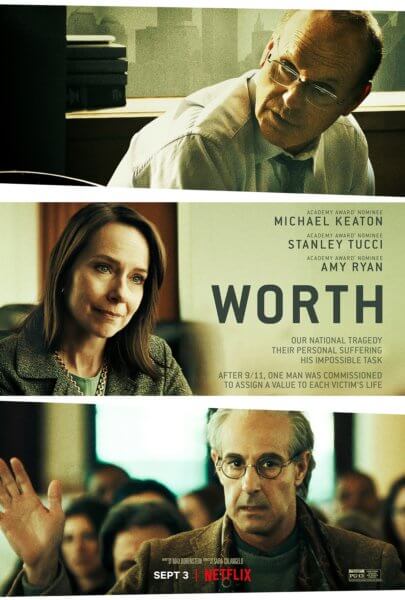
Panel on “Worth” with Ken Feinberg, Michael Keaton, Laura Benanti, Max Max Borenstein, Camille Biros, and Caroline Kennedy

Panel on “Worth” with Ken Feinberg, Michael Keaton, Laura Benanti, Max Max Borenstein, Camille Biros, and Caroline Kennedy

Posted on September 2, 2021 at 9:30 pm

It was an honor to serve as moderator for a panel discussion of the Netflix film “Worth,” with Michael Keaton as Ken Feinberg, whose pioneering work on allocating compensation following major national tragedies led to his appointment as Special Master for the fund set up for the victims of 9/11 and their families. The film is a powerful story of the importance and the limitations of justice as Feinberg learns that it is as important for the people he is trying to help to be able to tell their stories as it is to pay their bills. He also learns about the limitations of the law as he has to find a way to compensate undocumented workers and then-not-legally-recognized same sex partners. Our discussion was sponsored by the John F. Kennedy Library, where Feinberg served as board chairman, and we were introduced by Ambassador Caroline Kennedy. The discussion included ethics, empathy, acting, and opera.

Related Tags:


Behind the Scenes Movies for Grown-Ups
Marx Brothers Podcast

Marx Brothers Podcast

Posted on September 2, 2021 at 8:51 pm

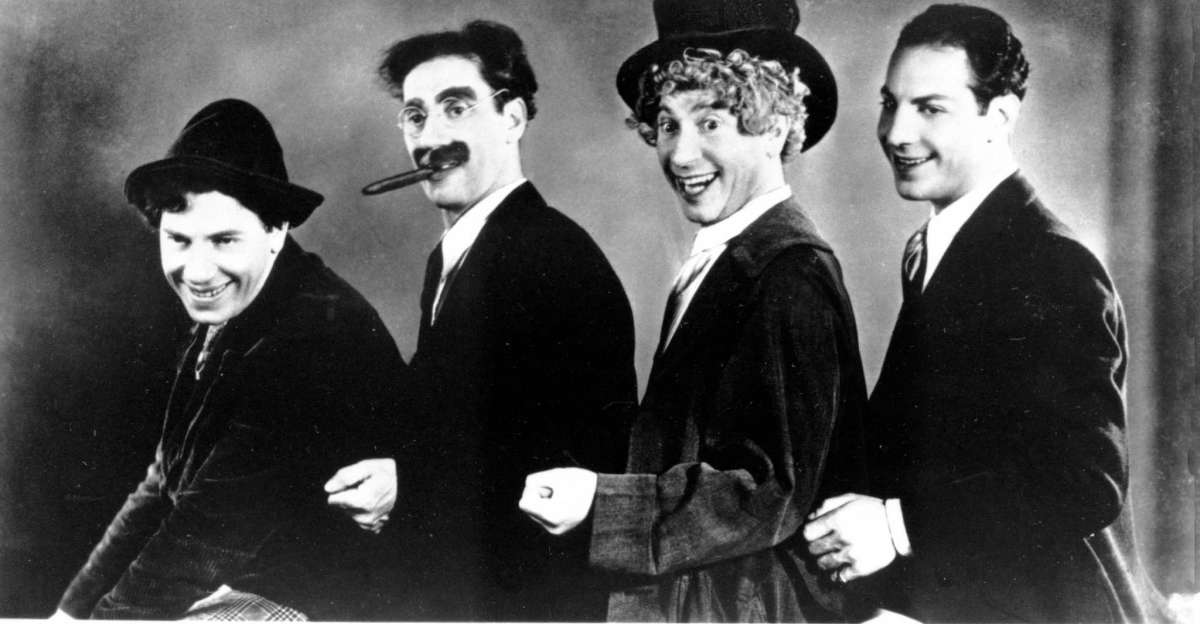
All fans of classic films and film comedy will appreciate The Marx Brothers Council, an outstanding podcast devoted to Groucho, Chico, Harpo, and sometimes Zeppo Marx. A great episode to begin with is this one, including a fascinating interview with Hanna Mira, who shows Marx Brothers and other classic films to her students at a juvenile detention facility. The old black and white films from the era of these boys’ great-grandfathers could hardly be more distant from their experience, and yet they love them. She tells their stories with such empathy, humanity, and enthusiasm we almost wish we could be in her classroom.

Related Tags:


Film History Movie History Podcasts
Stillwater

Stillwater

Posted on July 29, 2021 at 5:10 pm

D
Lowest Recommended Age: High School
Profanity: Very strong language
Alcohol/ Drugs: References to alcohol and drug abuse
Violence/ Scariness: The movie includes a murder investigation and imprisonment, abuse
Diversity Issues: Some themes of class and nationality differences and cultures
Date Released to Theaters: July 23, 2021
Date Released to DVD: October 25, 2021

Copyright 2021 Focus Features
Even the best of intentions from the most talented people can sometimes go haywire, and “Stillwater” is a good example of a bad movie despite its sincerity and the powerful gifts of the people behind it. When the best performance in a Matt Damon movie comes from a little girl who barely speaks English, you know so many things have gone wrong that even the two Oscar-winners cannot find a way to make it work.

I’m not even sure what this movie is about. The story is clear, though. Oklahoma construction worker Bill Baker (Damon) regularly travels to France to see his daughter Allison (Abigail Breslin), who is serving a nine-year sentence for murder in Marseille. She insists she is innocent. Five years into her sentence, she learns of a possible clue to locating the real killer. When her lawyer says that there is no point in trying to re-open the case based on hearsay, Bill lies to Allison, telling her the lawyer is working on it, while he tries to find the killer himself. If this sounds vaguely familiar, it may be because of its relation to the case of Amanda Knox, who spent four years in an Italian prison for the murder of her roommate until she was exonerated by the higher court.

The storyline, though, is not enough to sustain the film, careening awkwardly from Bill’s redemption following years of neglecting Allison as he struggled with substance abuse to the lukewarm, not-thrilling thriller and the zero-chemistry romance. The nearly 2 1/2 hour running time gave me plenty of room to consider whether the movie was trying to make some deeper statement about America, with Bill clearly coming from an economically depressed red state, representing America’s failures and sense of lost promise and Allison as the younger generation, rejecting her roots.

Leads Damon, Breslin, and Camille Cottin as Verginie, a single mother who becomes Bill’s translator, friend, and romantic partner have so little sense of connection to each other they seem to be performing via Zoom. It is like they are acting in three different movies. Indeed, the movie itself feels like three different movies and none of them work. In the last half hour, as the movie goes from not very good to are-you-kidding bad, they may have been trying to make a point about guilt and the consequences of bad choices. If so, it is un-earned and the worst kind of manipulative, the kind that has so little respect for the audience that it is more than a disappointment; it feels like an insult. At one point, we see a brief scene from Virginie’s performance in an avant-garde play, followed by a pointless scene where she tries to get Bill to talk to her about what he has just watched. I’d rather watch that entire play — in French — than see this movie again.

Parents should know that this movie has very strong language, violence, references to murder, sexual references and situations, and references to substance abuse and parental neglect.

Family discussion: What do you think of what we see of the French prison system and its differences from the US? How does Bill feel after his final discussion with Allison? Should they have told each other the truth?

If you like this, try: “Missing”

Related Tags:


“Gothika Rule” Drama DVD/Blu-Ray movie review Movies -- format
THE MOVIE MOM® is a registered trademark of Nell Minow. Use of the mark without express consent from Nell Minow constitutes trademark infringement and unfair competition in violation of federal and state laws. All material © Nell Minow 1995-2026, all rights reserved, and no use or republication is permitted without explicit permission. This site hosts Nell Minow’s Movie Mom® archive, with material that originally appeared on Yahoo! Movies, Beliefnet, and other sources. Much of her new material can be found at Rogerebert.com, Huffington Post, and WheretoWatch. Her books include The Movie Mom’s Guide to Family Movies and 101 Must-See Movie Moments, and she can be heard each week on radio stations across the country.

Website Designed by Max LaZebnik