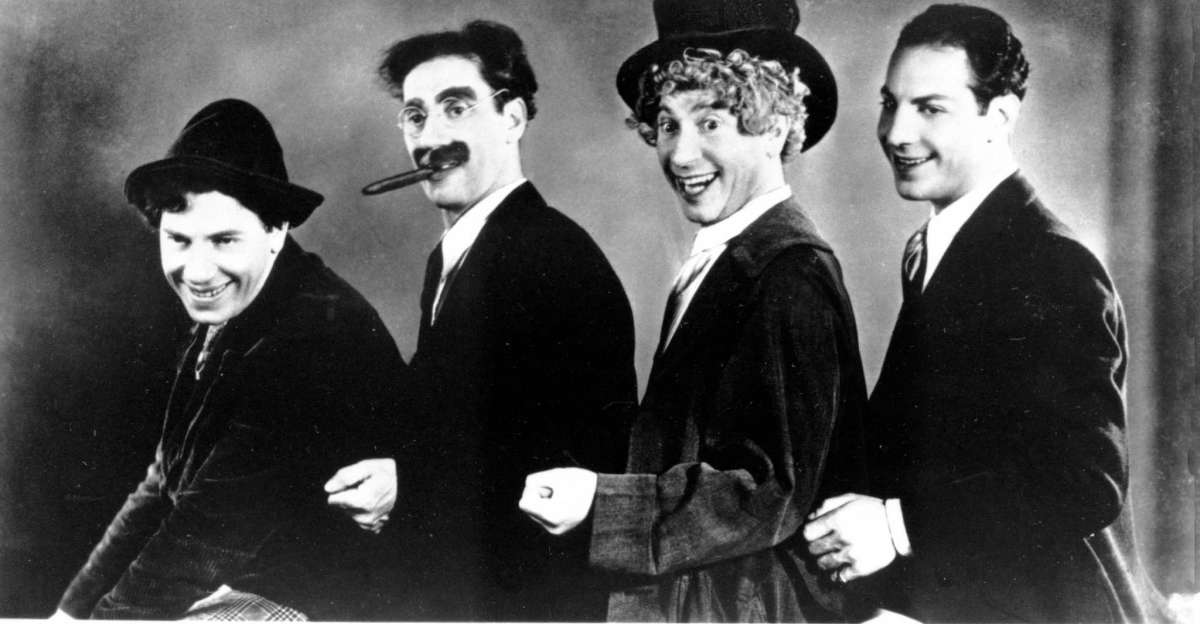
All fans of classic films and film comedy will appreciate The Marx Brothers Council, an outstanding podcast devoted to Groucho, Chico, Harpo, and sometimes Zeppo Marx. A great episode to begin with is this one, including a fascinating interview with Hanna Mira, who shows Marx Brothers and other classic films to her students at a juvenile detention facility. The old black and white films from the era of these boys’ great-grandfathers could hardly be more distant from their experience, and yet they love them. She tells their stories with such empathy, humanity, and enthusiasm we almost wish we could be in her classroom.
The movie includes a murder investigation and imprisonment, abuse
Diversity Issues:
Some themes of class and nationality differences and cultures
Date Released to Theaters:
July 23, 2021
Date Released to DVD:
October 25, 2021
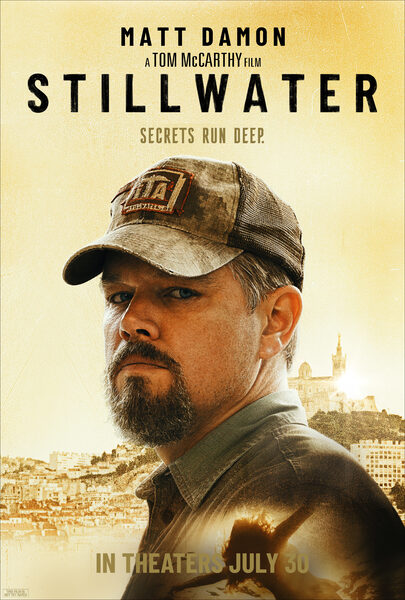
Copyright 2021 Focus FeaturesEven the best of intentions from the most talented people can sometimes go haywire, and “Stillwater” is a good example of a bad movie despite its sincerity and the powerful gifts of the people behind it. When the best performance in a Matt Damon movie comes from a little girl who barely speaks English, you know so many things have gone wrong that even the two Oscar-winners cannot find a way to make it work.
I’m not even sure what this movie is about. The story is clear, though. Oklahoma construction worker Bill Baker (Damon) regularly travels to France to see his daughter Allison (Abigail Breslin), who is serving a nine-year sentence for murder in Marseille. She insists she is innocent. Five years into her sentence, she learns of a possible clue to locating the real killer. When her lawyer says that there is no point in trying to re-open the case based on hearsay, Bill lies to Allison, telling her the lawyer is working on it, while he tries to find the killer himself. If this sounds vaguely familiar, it may be because of its relation to the case of Amanda Knox, who spent four years in an Italian prison for the murder of her roommate until she was exonerated by the higher court.
The storyline, though, is not enough to sustain the film, careening awkwardly from Bill’s redemption following years of neglecting Allison as he struggled with substance abuse to the lukewarm, not-thrilling thriller and the zero-chemistry romance. The nearly 2 1/2 hour running time gave me plenty of room to consider whether the movie was trying to make some deeper statement about America, with Bill clearly coming from an economically depressed red state, representing America’s failures and sense of lost promise and Allison as the younger generation, rejecting her roots.
Leads Damon, Breslin, and Camille Cottin as Verginie, a single mother who becomes Bill’s translator, friend, and romantic partner have so little sense of connection to each other they seem to be performing via Zoom. It is like they are acting in three different movies. Indeed, the movie itself feels like three different movies and none of them work. In the last half hour, as the movie goes from not very good to are-you-kidding bad, they may have been trying to make a point about guilt and the consequences of bad choices. If so, it is un-earned and the worst kind of manipulative, the kind that has so little respect for the audience that it is more than a disappointment; it feels like an insult. At one point, we see a brief scene from Virginie’s performance in an avant-garde play, followed by a pointless scene where she tries to get Bill to talk to her about what he has just watched. I’d rather watch that entire play — in French — than see this movie again.
Parents should know that this movie has very strong language, violence, references to murder, sexual references and situations, and references to substance abuse and parental neglect.
Family discussion: What do you think of what we see of the French prison system and its differences from the US? How does Bill feel after his final discussion with Allison? Should they have told each other the truth?
Extended peril and aventure-style violence with grisly and graphic images, characters cursed and injured
Diversity Issues:
Diverse characters, themes of LGBQT and female empowerment
Date Released to Theaters:
July 30, 2021
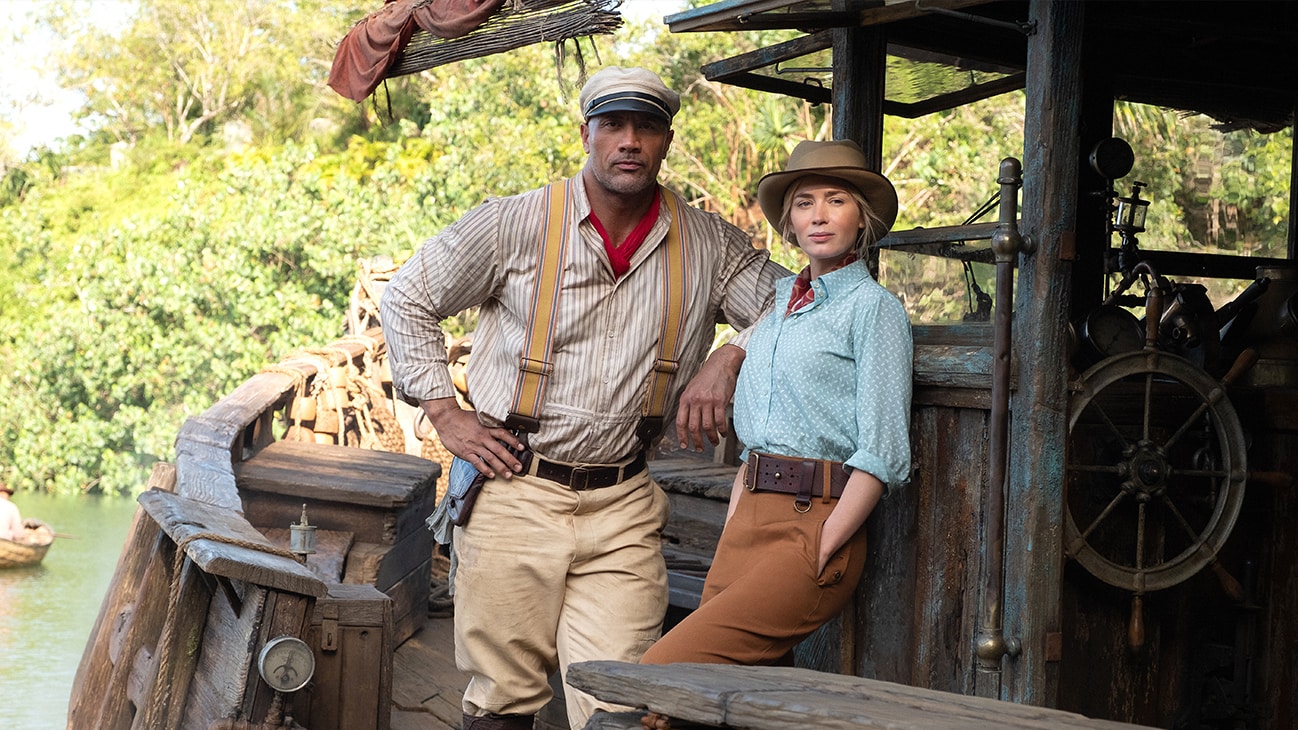
Copyright Disney 2021Disney’s efforts to adapt theme park rides as narrative films have ranged from the genuinely entertaining (the original “Pirates of the Caribbean: The Curse of the Black Pearl”) to the wildly uneven (“Tomorrowland”), to the almost unimaginably misconceived (“The Haunted Mansion,” “The Country Bears”). “Jungle Cruise,” based on one of Disney’s oldest and most beloved rides (despite some controversy over its updates due to racist and misogynistic displays), ranks among the second-tier “Pirates” movies. The best and the most problematic parts in the film are its efforts to replicate what made the first “Pirates” a huge hit. While it often captures the high-spirited energy of that film, it also comes across as an inferior copy.
If you have Disney+, you can see a terrific behind the scenes history of the original Jungle Cruise ride, overseen by Walt Disney himself. It takes park guests on a tour that covers some of the world’s great rivers, with guides who make a lot of corny jokes and scenes along the way of lost treasure, native artifacts, and animals. As noted, the ride has been updated over the years to eliminate the guns and caricatures of indigenous people and to emphasize naturalist explorers. The movie is set during the First World War but reflects contemporary sensibility as well, with references to colonialists, feminism, and homophobia.
Emily Blunt plays Lily, a PhD who is determined to find a legendary blossom in the Amazon that is said to be able to cure any disease. She believes it is more than a legend and has a map she thinks will take her to it. She is fearless about almost everything (we will find out one thing that scares her). Her brother MacGregor (British stand-up comedian Jack Whitehall) is not brave and feels very strongly about the luxuries civilization has to offer, but he agrees to go along with her. Before they can go, however, she will need to steal an ancient arrowhead that has the clues to the blossoms’ location.
While her brother speaks to the skeptical members of a London explorers’ club, she sneaks upstairs to the club’s archive to grab it. Someone else is trying to get it as well, Prince Joachim (Jesse Plemons), the youngest son of the German Kaiser whose army is currently at war with France, Russia, Great Britain, and the United States. He follows Lily to South America. When she hires Captain Frank (Dwayne Johnson) to take her to the tree with the blossoms, Prince Joachim chases after them in a submarine, launching gunfire and torpedoes. Also after the blossoms are some 16th century conquistadors who have been cursed and are now decrepit, zombie-like souls who come alive, or rather alive-ish only when they are near the river. They need the blossoms to end the curse so they can die.
Production designer Jean-Vincent Puzos and Disney’s unparalleled team of artists have done their usual spectacular job of creating the world of this film, filled with details worth hitting a pause button to absorb. The stunts and action sequences are all skillfully done and very entertaining. The script is uneven, borrowing one of its key twists from the original “Pirates” and under-writing the characters. It is criminal to waste Paul Giamatti in a small role as a rival boat operator trying to put Frank out of business, and Plemons as an underwritten villain. No one has more screen charisma than Johnson and Blunt, and they bring all of it to their roles despite some inconsistency in the way they are conceived that makes some developments abrupt, especially a decision at the end that merits more complexity than we get. Even Blunt and Johnson are not able to muster a lot of chemistry between their characters. It doesn’t help that Frank keeps calling Lily “Pants” (because she is a woman wearing trousers, get it?) or “Lady” and she keeps calling him “Skippy.” Believe me, even the intentional groaner puns are better than that.
Parents should know that this movie has extended action-style peril and violence with swords, fights, guns, and torpedoes. Characters are cursed and there are disturbing and graphic images. Dangerous animals include a panther and snakes. Issues of prejudice against women and GLBT people and the crimes of colonialists are raised. Characters drink alcohol and an animal gets drunk. There is some mild language and some implied or almost-bad language.
Family discussion: Did Lily make the right choice at the end? How do we balance what helps the world with what helps one person? What would you go searching for?
If you like this, try: “The Mummy” with Brendan Fraser, “Pirates of the Caribbean,” and “The Missing Link” from LAIKA
Rated R for language including offensive slurs, some disturbing material, and teen partying
Profanity:
Some strong language
Alcohol/ Drugs:
Alcohol
Violence/ Scariness:
Teen suicide, family member killed in an accident
Diversity Issues:
A theme of the movie
Date Released to Theaters:
July 23, 2021
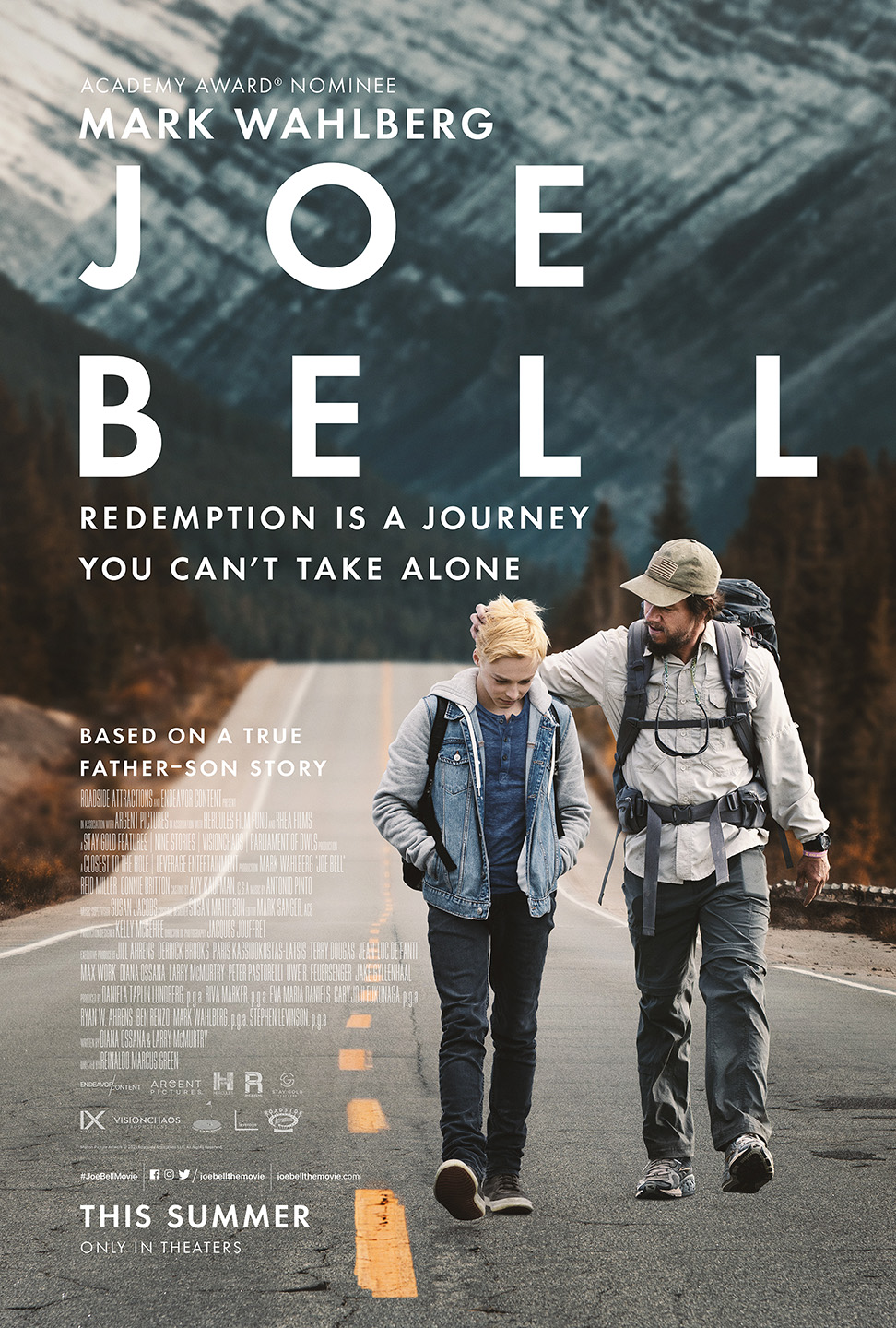
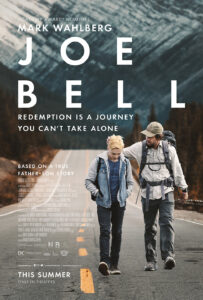
Copyright 2021 Roadside ProductionsJoe Bell and his son Jadin are on the road. Literally. They are walking along the highway, Jadin reminding his father to walk against the traffic and his dad responding with mixed amusement and irritation that he’s been doing this for a while and does not need advice from a teenager. They seem to have a mostly amiable way of handling the inevitable re-aligning of the father-son relationship that happens during adolescence.
It is more complicated than that, and music sadder. Jadin Bell was an Oregon teenager who was ruthlessly bullied for being gay. Feeling heartbroken and friendless, he took his life. And his father, Joe Bell, decided he would spend two years walking all the way across America, stopping wherever he could to talk to teenagers about bullying, and about what a difference they could make by being more accepting and kind.
The story of Joe and Jadin Bell is now a feature film with Mark Wahlberg as the grieving father, Connie Britten as his wife, Lola, and Reid Miller, in a winning performance of exceptional sensitivity, as Jadin.
Wahlberg struggles to bring to life a man who is taciturn and often gruff. His character has trouble expressing his feelings. When Jadin tells him he is gay, Joe is accepting but irritated at being dragged away from the television to hear about it. He is dismissive when Jadin tries to talk to him about being bullied. Joe loves Jadin, but cannot acknowledge to himself or anyone else that he is uncomfortable with anything that does not fit into his notion of what it means to be a man.
He is not much better at talking to the people he meets in his travels than he was in talking to Jadin. He wants very much to deliver the message but his inability to tell his own story and acknowledge his failure to support his son make it impossible for him to deliver the message he wants to deliver.
The movie has the same problem. It is well-intentioned but the abrupt shift due to the facts of the real story derails the message it is trying to deliver. There are some tender moments, especially when Joe share a Lady Gaga song and when Joe meets a sympathetic cop. But we do not get enough of a sense of what Joe learns as he becomes more honest with himself, or the impact he had, and that makes it more difficult for us to feel the impact on us.
Parents should know that the themes of this movie include teen bullying and suicide. A parent is tragically killed. Characters drink, including teen partying, and they use strong language.
Family discussion: Why do people bully? What is the best way to respond to a bully? What is the best way to support those who have been bullied?
Strong language and explicit references to anatomy
Alcohol/ Drugs:
Alcohol
Violence/ Scariness:
Mild comic peril, gun
Diversity Issues:
None
Date Released to Theaters:
July 16, 2021
Copyright AppleTV+ 2021“Schmigadoon!” is a loving parody and an even more loving tribute to classic Broadway and Hollywood musicals, from “Oklahoma” to “The Music Man,” “The Sound of Music,” and the musical that inspired this title, “Brigadoon.” Each of the six episodes of around 30 minutes has Broadway-level singing and dancing, with tuneful, clever songs performed by some of the biggest stars from the Great White Way. The more you love musicals, the more you will love “Schmigadoon!”
Cecily Strong (“Saturday Night Live”) and Keegan-Michael Key (“Key and Peele,” “Keanu,” “Prom”) play surgeons who meet by a hospital candy machine and fall for each other. A few years later, their relationship is under some strain when they go on a couples hiking retreat. Lost in the rain, they happen on a cheerful 19th-century town where the citizens burst into song and elaborately choreographed dance numbers. They’re told by a magical leprechaun (Martin Short) that they cannot leave until they find true love.
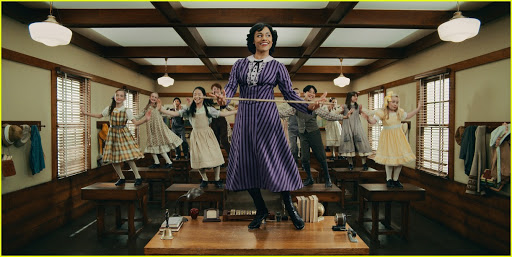
The people they meet include Mayor Menlove (Alan Cummings), whose name could be a clue to his clear discomfort in a heteronormative community. Further discomfort could be the result of his dominating, judgmental wife Mildred (Kristin Chenoweth). (Compare them to Mayor Shinn and his wife Eulalie Mackecknie Shinn in “The Music Man.”) There’s the rapscallion carny Danny Bailey (Aaron Tveit). (Think Billy in “Carousel.”) and the teacher in the one-room schoolhouse, who lives with her lisping little brother (similar to Marion and Winthrop Paroo in “The Music Man”). Later on, they meet a beautiful blonde countess (Jane Krakowski) (compare to the Baroness in “The Sound of Music”) and a handsome, widowed doctor (Jaime Camil, a bit of Captain von Trapp). And there’s a pappy with a shotgun that he uses to protect his nubile young (how young?) daughters, including Dove Cameron as Betsy (maybe Daisy Mae in “Li’l Abner”).
Writers Ken Daurio and Cinco Paul are clearly the nerdiest of theater kids at heart and every bit of the series is imaginative, tuneful, thoughtful and detailed. Look behind the schoolteacher at the schedule of parent-teacher conferences on the blackboard. All the names are famous musical-creators. Some of the musical numbers are in direct conversation with classics, like Mildred’s solo, a witty riff on “Music Man’s” “Trouble.” Others are romantic or just pure fun.
Whether you are a theater nerd who can trace the history of the first act “I Want” song from “Show Boat” to “The Little Mermaid” or are just looking for a clever, warm-hearted, romantic adventure filled with supremely talented people giving their all, “Schmigadoon!” is one of 2021’s most delicious delights.
Parents should know that this movie has sexual references including out-of-wedlock pregancy and explicit language about reproduction and body parts, as well as relationship stress, strong language, and some alcohol.
Family discussion: What’s your favorite musical and why? What did Josh and Melissa learn about love?
If you like this, try: the musicals that inspired it as well as others like “My Fair Lady,” “Once Upon a Mattress,” “Bells are Ringing,” “West Side Story,” and “The Pajama Game”