Free for Memorial Day Weekend: Oral History of Black Soldiers in the Korean War

Free for Memorial Day Weekend: Oral History of Black Soldiers in the Korean War

Posted on May 28, 2021 at 12:00 pm

Copyright 2015 Miniver Press

To honor our veterans this weekend, John Holway’s oral history ebook, Bloody Ground: Black Rifles in Korea, is available at no cost all weekend.

Korea is “the forgotten war.” But to those who fought in it, it was the “unforgettable war.” If the names of all those killed were put on a wall, it would be larger than the Vietnam Wall. And Korea lasted only three years, Vietnam about ten. The agony of the winter of 1950-51 is an epic to compare with Valley Forge and the Bulge. Holway writes:

Korea was also our last segregated war. This is the story of the black 24th Infantry Regiment, told in the words of the men themselves. Like all black troops since the Civil War, they were reviled by whites and their own commander for “bugging out” – running before the enemy. The charge can still be read in the Army’s own official histories. Yet the 24th left more blood on the field than their white comrades – if they did bug out, they must have been running the wrong way.

It’s a good thing we weren’t with Custer,” one black GI muttered – “they’d have blamed the whole thing on us.”

The 24th won the first battle of the war, won its division’s first Medal of Honor, and guarded the shortest and most vulnerable road to Pusan. If the port had fallen, the war would have been lost, leaving a red dagger pointed at Japan. It did not fall.

That winter, after the Chinese attacked, the entire American army bugged out in perhaps the worst military disaster in American history. “That,” said another black veteran, “was when I learned that whites could run as fast as blacks.”

This is the story of those unsung heroes, who helped turn the Communist tide for the first time. The men bring that forgotten war and their own unsung bravery to life in their own sometimes funny, often heart-breaking, and always exciting words.
Related Tags:


Books
Newton Minow’s “Vast Wasteland” Speech: 60 Years Ago Today

Newton Minow’s “Vast Wasteland” Speech: 60 Years Ago Today

Posted on May 9, 2021 at 10:17 am

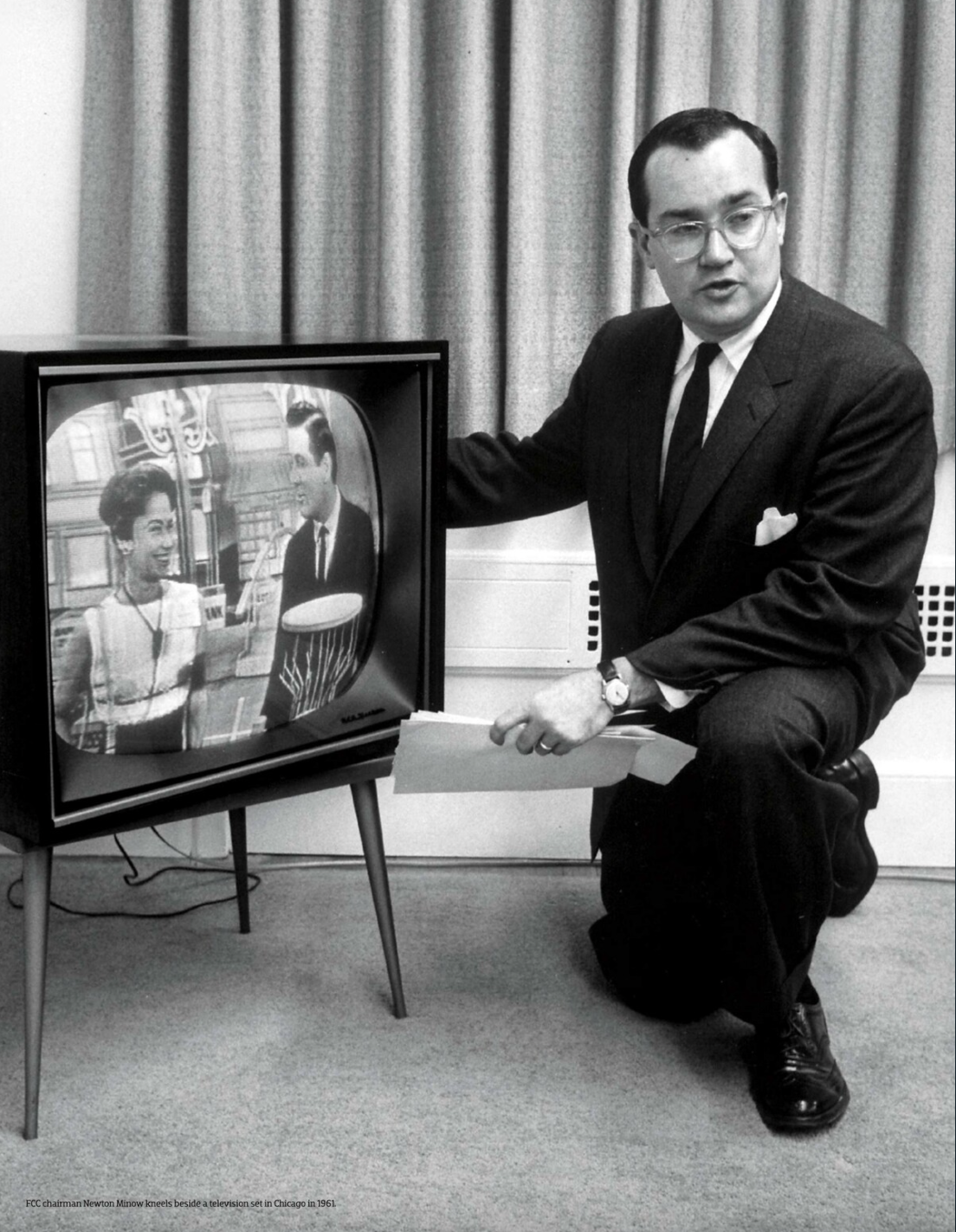
On May 9, 1961, my father, Newton Minow, delivered a speech that continues to inspire the conversation about media and has even been an answer on Jeopardy!
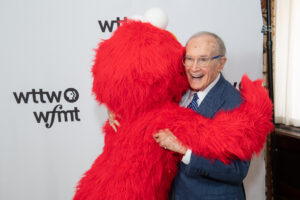
I interviewed him about the speech for Emmy Magazine. LA Times columnist Michael Hiltzik interviewed him about media and the news.

He appeared on his favorite news program, the PBS Newshour, to talk to Judy Woodruff about television then and now.

NPR celebrates its 50th anniversary this week, and its official history gives my dad some of the credit. He also helped launch the first telecommunications satellite, helped get the original funding for “Sesame Street” and helped create the Presidential Debates, involved in every one going back to the original, Kennedy-Nixon, and designed the current bi-partisan commission, where he still serves as Vice Chair.

Today Dad was the Power Player of the Week on FOX with Chris Wallace.

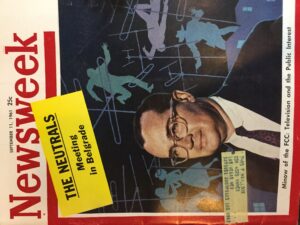
In 1961, Dad was President Kennedy’s new Chairman of the FCC, just 35 years old, and in his first major address he told the National Association of Broadcasters that while there was much to admire on television, too much of it was a “vast wasteland.”

He told the audience about the day before the speech, when President Kennedy brought Commander Alan Shepherd, who had just become the first American in space, and his wife, to the National Association of Broadcasters event Dad would be speaking to the following day. President Kennedy invited Dad to come upstairs while he changed his shirt, to give him some ideas about what to tell the broadcasters. Dad suggested that he talk about the difference between the way Americans and the Soviet Union conducted their space program. In the US, we had all the television cameras there to show the American people, good or bad, what was happening.

At the time Dad called on the broadcasters to do better, there were just three national television networks. There was no PBS, just a National Educational Television which was not even available in most of the country, including Washington DC itself. My father told the broadcasters that as long as the airwaves were a scarce resource, they would have to do better to live up to their statutory obligation to serve the public interest, convenience, and necessity, especially with regard to coverage of news and programming for children.

Copyright Newsweek 1961

Dad worked over the next half-century to make more choices available, including cable and satellite as well as the creation of a robust public television station. He served as chairman of PBS and of the Chicago affiliate WTTW, served on the board of CBS, pushed for closed captioning to make television programming available to hearing-impaired viewers and those learning to read or speak English, and argued one of the only cases in history to have a broadcast license rescinded - a station that spewed hatred across the airwaves. In protest of his critique of television, the sinking ship on “Gilligan’s Island” was named after him, the S.S. Minnow! He is so proud he has a lifesaver from the SS Minnow on his office wall, a gift from his law partners for his 90th birthday. He was presented with the nation’s highest civilian honor, the Medal of Freedom, by President Barack Obama, in 2016.

PBS has a great documentary about him which is free to watch online. He is also the world’s best dad and we are all so proud of him.

Related Tags:


Understanding Media and Pop Culture
Happy Mother’s Day!  And Some Great Movie Mothers

Happy Mother’s Day! And Some Great Movie Mothers

Posted on May 9, 2021 at 7:00 am

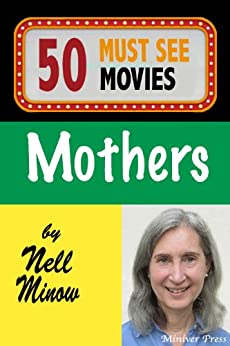
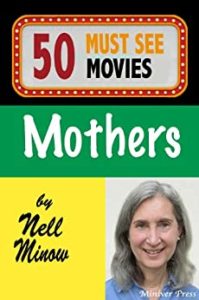
The movies have given us warm, loving, mothers, evil, abusive mothers, even alien mothers. Some of my favorites are featured in my book, 50 Must-See Movies: Mothers, including these.

Claudia Before they went on to co-star in the luminous romance, “The Enchanted Cottage,” Dorothy McGuire and Robert Young played a young married couple in this sweet neglected gem based on the books by Rose Franken.  Claudia and David love each other very much and he finds her innocence very appealing.  But her immaturity leads to many problems.  A neighbor thinks Claudia is flirting with him and without consulting David she impulsively decides to sell their farm.  And she is very dependent on the loving mother she adores but takes for granted.  Claudia’s is about to face two of life’s most demanding challenges – her mother is dying and Claudia and David are going to become parents themselves.  So Claudia’s mother has to find a way to help Claudia grow up.  Watch for: a rare film appearance by the exquisite Broadway star Ina Claire as Claudia’s mother

Guess Who’s Coming for Dinner There are two great mothers in this talky, dated, but still endearing “issue movie” about inter-racial marriage from 1967.  Katharine Hepburn’s real-life niece Katharine Houghton plays her daughter and what Houghton lacks in screen presence and acting experience is less important than the genuine connection and palpable affection between the two of them.  The question may seem quaint now, but as filming was underway, inter-racial marriage was still illegal in 17 states.  The Supreme Court ruled those laws unconstitutional that same year.  Hepburn is electrifying in what she knew would be her final film with her most frequent co-star and real-life great love, Spencer Tracy.  And the distinguished actress Beah Richards is brilliant as the mother of a son who says his father thinks of himself as a “colored man,” while he just thinks of himself as a man.  Watch for: Hepburn’s expression as her daughter describes falling in love

Claudine Diahann Carroll was nominated for an Oscar for her performance as a single mother in this ground-breaking 1974 film, one of the first to portray a domestic employee as a real person with her own home and family, and one of the first to provide an honest look at the perverse incentives of the “Great Society” welfare programs.  Claudine is the mother of six who has to keep her work as a housekeeper and her relationship with a genial garbage worker (James Earl Jones) a secret from the social worker because they put at risk the payments she needs for her children.  Watch for: the very romantic bathtub scene

Dear Frankie Emily Mortimer plays Lizzie, the divorced mother of a young deaf son in this heartwarming story set in Scotland.  She is devoted and very protective.  She does not want him to know the truth about his abusive father (the source of his deafness), so she tells him that his father is a merchant seaman.  The letters he receives from all the ports of call full of details about all the places he has been are really written by Lizzie. When the ship comes to their town, she has to find someone to pretend to be his father.  Watch for: Lizzie’s explanation of the reason she writes to Frankie —  “because it’s the only way I can hear his voice”

Imitation of Life This melodrama about two single mothers, one white and one black, who join forces has been filmed twice and both are worth seeing.  The best remembered is the glossy, glamorous 1959 version with Lana Turner and Juanita Moore.  Lora (Turner) and Annie (Moore) are brought together by their daughters, who meet at Coney Island.  Lora, a struggling actress, needs someone to help look after her daughter and Annie needs a job and a place to live.  Annie moves in to be the housekeeper/nanny.  She and Lora have a strong, supportive friendship, though Lora and both girls take Annie for granted.  As the girls grow up, Lora’s daughter is resentful of the time her mother spends on her career and Annie’s daughter resents the racism she confronts even though her skin is so light she can pass for white.  Watch for: the most elaborate funeral scene ever put on film, with a sobbing apology from Annie’s daughter (Susan Kohner)

Please Don’t Eat the Daisies Doris Day stars in this film loosely based on Jean Kerr’s hilarious essays about life as Kate, the wife of a theater critic (David Niven) and mother of four rambunctious boys.  While most of the film’s focus is on the marital strains caused by her husband’s new job and the family’s new home, the scenes of Kate’s interactions with her children are among the highlights.  It is clear that while she tries to be understated about her affection and sometimes frustration, she adores them.  Watch for: Kate’s affectionate interactions with her own mother, played by Spring Byington

Related Tags:


Books Film History For Your Netflix Queue Great Characters Movie History Movie Mom’s Top Picks for Families Understanding Media and Pop Culture
Get Ready for More Fast and Furious Action With Free Screenings!

Get Ready for More Fast and Furious Action With Free Screenings!

Posted on April 30, 2021 at 2:31 pm

Copyright Universal 2021
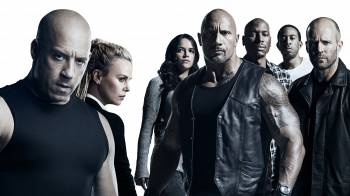
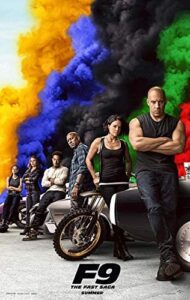
Universal Pictures announced that to celebrate the arrival of F9, the newest chapter in the Fast and Furious Saga, in theaters June 25, the studio and its theater partners across the U.S. will launch a free nationwide screening series of all eight previous Fast films, beginning April 30, 2021.

The eight-week program will invite fans to watch all eight previous Fast films in participating theaters, free of charge, with one film screening each Friday. The films will be screened in chronological order, beginning with 2001’s The Fast and the Furious on April 30 and culminating with 2017’s The Fate of the Furious on June 18.

The screening series will launch in more than 500 theaters across the U.S. and will ultimately expand to more than 900 theaters. Theaters that join the screening series after April 30 will begin their screenings with whichever film is already scheduled to screen in that week.

Participating theaters include AMC Theatres, Regal, Cinemark Theatres, Marcus Theatres, Harkins Theatres, Showcase Cinemas, Santikos Entertainment, B&B Theatres, Cinépolis USA, Georgia Theatre Company, Marquee Cinemas, Epic Theatres, EVO Cinemas, Megaplex Theatres, Maya Cinemas, Xscape Theatres, Silverspot Cinema, Golden Star Theaters, MovieScoop Cinemas and Premiere Cinemas.

Over the course of eight films that have stoked passion in an ever-expanding audience and have earned more than $5 billion at the worldwide box office, Universal Pictures’ record-smashing, homegrown Fast Saga has become the studio’s most-profitable and longest-running franchise. Across social media platforms, the fan following for the movies and cast has grown into the biggest of any active franchise. On the heels of 2017’s The Fate of the Furious, which debuted in theaters as the biggest global opening of all time, the blockbuster franchise has expanded to a multitude of offerings – from toys and video games to an all-new animated series and a successfully launched spin-off franchise.

“The Fast films are all about family, and Universal wanted to find a way to thank our huge family of Fast fans around the country for their passion and loyalty over the past 20 years,” said Jim Orr, Universal’s President of Domestic Theatrical Distribution. “We’re grateful to our theater partners for their help in making this screening series possible and we are delighted to welcome audiences back to theaters to experience the wild Fast ride all over again. And we cannot wait to blow everyone’s minds with the release of F9 on June 25.”

Screening tickets will be distributed by each individual theater and will be available the Friday before each weekly screening, starting on Friday, April 30.

Visit Fast Friday Screenings for further information on how to receive tickets.

Related Tags:


Contests and Giveaways
The Filmmakers on “The Mitchells vs. The Machines”

The Filmmakers on “The Mitchells vs. The Machines”

Posted on April 27, 2021 at 11:17 am

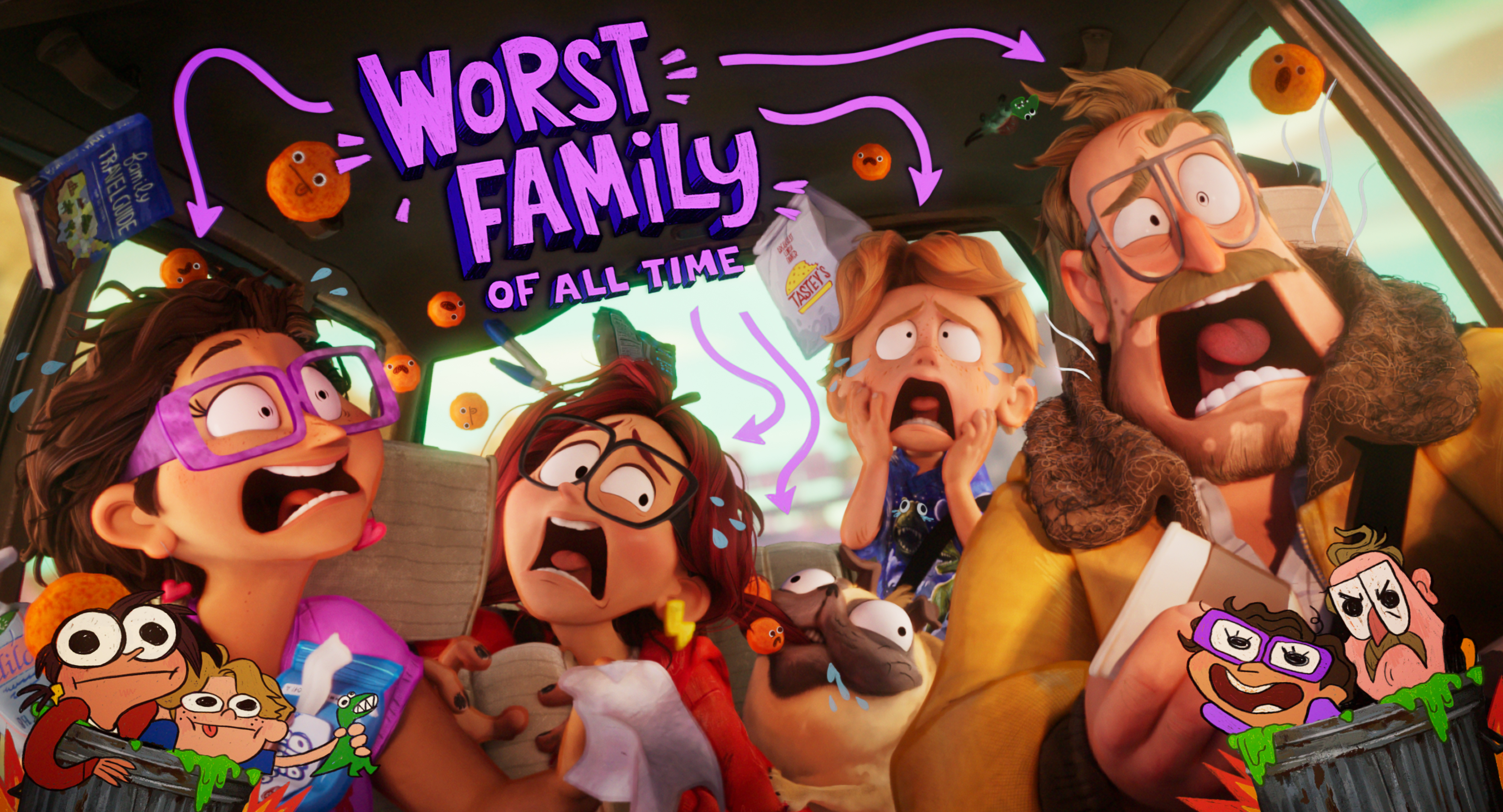
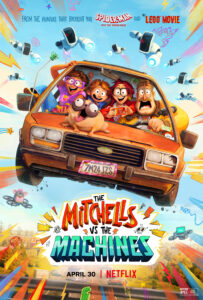
I was lucky enough to attend a press event featuring the producers Chris Miller and Phil Lord (the “LEGO Movie”) and producer Kurt Albrecht, along with co-writer and co-director, Michael Rianda. The moderator was my good friend and fellow Washington DC film critic Kevin McCarthy. Some highlights:

“Despite not having gone through a robot apocalypse, it’s a very personal story for me,” said Rianda, who also provides some of the voices in the film. “The dad is based on why day who would always say, ‘Put down your Gameboy! There’s a sparrow!’ My dad loved nature to a degree that is haunting.” He said everyone on the team brought their own family histories and experiences to the film, and that is why it was important to him to have not just the names but the photos of the filmmakers and the families in the closing credits. Miller said his dad was also a nature nut who loved to stop in the middle of family car trips to have a snowball fight or enjoy the outdoors.

Copyright Netflix 2021

The main character in the film is Katie, voiced by Abbi Jacobson, an aspiring filmmaker. In her room she has a Mount Rushmore of filmmakers. So McCarthy asked the panel who they would pick for their own Mount Rushmore. All of them agreed on Hal Ashby (“Shampoo,” “Harold and Maude,” “Being There”), which is probably how he ended up on Katie’s wall. Rianda also picked Studio Ghibli animation giants Hayao Miyazaki and Isao Takahata along with Martin Scorsese. Lord said that at Katie’s age he would have added Tim Burton, Spike Lee, Chuck Jones (bold and inventive) and Mel Brooks. Miller picked the Coen brothers, Billy Wilder, and Akira Kurosawa. Albrecht would select Steven Spielberg and Pixar’s Brad Bird.

A theme in the film is social media and the feelings of inadequacy and competitiveness it can entail. “Everyone thinks their family is nuts,” Rianda said. And when you finally admit it, the response is always, “Mine, too!” He said they wanted the Mitchells to be dysfunctional but loving. Casting real-life husband and wife and social media stars Chrissy Teigen and John Legend as the impossibly aspirational Instagramers the Mitchells envy turned out even better than he expected because they were so warm and accessible and eager to improvise. “Even though they seem perfect, they are very relatable.”

Another theme audiences will recognize is the Mitchells’ tendency to be on their phones instead of looking at what is in front of them. Rianda said that in his own life he has experimented with putting his and his wife’s phone in a safe at night and “in eight minutes you’re having the deepest conversation you’ve had in years. ‘What was your childhood like?’ You have to fill the silence somehow!” Miller’s family has a no-screens-at-the-table rule.

Lord talked about technological innovation in the film, and the fun of “taking it for a spin to see what it could do.” He wanted a “handmade, hand-painted, textured” look to the film, a “watercolor, ramshackle vibe.” The 1:85 ratio of the image also made it feel more intimate, as though you were in the Mitchells’ home.

Related Tags:


Behind the Scenes Directors Interview Writers
THE MOVIE MOM® is a registered trademark of Nell Minow. Use of the mark without express consent from Nell Minow constitutes trademark infringement and unfair competition in violation of federal and state laws. All material © Nell Minow 1995-2026, all rights reserved, and no use or republication is permitted without explicit permission. This site hosts Nell Minow’s Movie Mom® archive, with material that originally appeared on Yahoo! Movies, Beliefnet, and other sources. Much of her new material can be found at Rogerebert.com, Huffington Post, and WheretoWatch. Her books include The Movie Mom’s Guide to Family Movies and 101 Must-See Movie Moments, and she can be heard each week on radio stations across the country.

Website Designed by Max LaZebnik