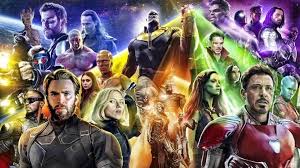
Avengers: Infinity War

Avengers: Infinity War

Posted on April 25, 2018 at 1:10 pm

B +
Lowest Recommended Age: Middle School
MPAA Rating: Rated PG-13 for intense sequences of sci-fi violence and action throughout, language and some crude references
Profanity: About a dozen bad words
Alcohol/ Drugs: None
Violence/ Scariness: Extended and intense action-style peril and violence, chases, explosions, supervillains, characters injured and killed
Diversity Issues: None
Date Released to Theaters: April 27, 2018
Date Released to DVD: August 13, 2018
Copyright Marvel 2018

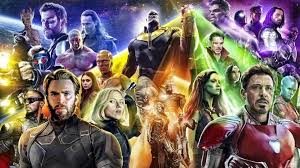
A two hour and forty minute movie can still feel too short when there are so many of our favorite characters, and that is the good news and the bad news about the much-anticipated “Avengers: Infinity War.”

The good news is that we get the ultimate mash-up of the Avengers and the Guardians of the Galaxy. That means a whole lot of quippy action scenes. My greatest fear was that with so many characters most of them would not have enough time to do much on screen either by way of action or by way of drama, and the pretty good news is that screenwriters Christopher Markus and Stephen McFeely and directors Joe and Anthony Russo do a good job of giving everyone his or her own space — literally, by sending them off in different directions to keep the interactions manageable, and figuratively, by giving most of them individual character arcs, or, perhaps we should say arc-lettes as they are sketched in just enough to add a little substance sauce to the main course of the action.

The less great news is that the storyline is something of a let-down following the exceptional depth and complexity of “The Black Panther.” As I have said many, many times before, superhero movies depend entirely on the quality of the supervillain, and Erik Killmonger was the top of the line as bad guys go, nuanced, sympathetic, human, and utterly magnetic. Any movie, but especially a fantasy movie, has to be completely clear about the stakes, meaning that in a superhero movie we have to know exactly what the relative strengths and weaknesses of the opposing forces are and what they are fighting over. We don’t need a lot of detail; there’s a reason Alfred Hitchcock used to speak so dismissively about the “McGuffin,” whatever it was everyone in the story wants so badly. All we need to know is why it matters, how to get it, and how keep it from the wrong person.

The bad guy here is Thanos (Josh Brolin) a CGI-d Titan of enormous power who is seeing the ultimate power, which he can achieve via the six Infinity Stones. He has a handy glove with spaces for each stone, and once he has them all he can achieve his goal of wiping out half of the life forms in the universe with the snap of his gigantic fingers. Much of the movie consists of him beating up all of the superheroes, a couple of whom are quickly dispatched in the first scene. We hear a lot about how important it is that he be stopped but we do not get many specifics about how his powers work or what, if any, vulnerabilities can be used against him. And that makes the battles more set-pieces, exceptionally well-staged set-pieces than drama. And then, in the middle, almost quiet next to the supernova intensity of the star power, the dazzle to the saturation point of the action scenes, and the Hulk-level heavy lifting of the realignment of the movie MCU to accommodate some thoughtful and even subtle variations on whether it is right to sacrifice one life to save many others.

But mostly, there’s a lot of action. Remember that refugee spaceship at the end of “Thor: Ragnarok?” And the feud between Iron Man/Tony Stark (Robert Downey, Jr.) and Captain America/Steve Rogers (Chris Evans, no longer the clean-cut WWII poster boy)? We pick up both as Thanos, the most powerful creature on the planet and the adoptive father of Gamora (Zoe Saldana) and Nebula (Karen Gillan) arrives in search of the five remaining Infinity Stones he needs to complete the set and wipe out half the universe. It’s time to get the band back together, with some of the team who have been missing in action, like Thor (Chris Hemsworth) and Bruce Banner (Mark Ruffalo), having a bit of trouble getting his Hulk on. And the team now includes a high school intern, Peter Parker/Spider-Man (Tom Holland), who is so new and so in awe that he still calls Iron Man “Mr. Stark.”

Thanos has some nasty henchmen and henchwomen and hench-creatures who show up to help him find the stones. And the Guardians of the Galaxy, including Gamora, join on, with a sulky, now-adolescent Groot who can’t be pried away from his hand-held game device.

There are some very funny moments as the group gets to know each other, a few cheeky pop culture references, and an extended section in Wakanda gives us a chance to spend some more time with some characters who are already fan favorites (How about giving Shuri her own movie, Kevin Feige? And the Dora Milaje?) A few non-Avengers make a strong impression in their brief screen time, especially Peter Dinklage as a giant weapons-maker. But after nearly three hours (and only one after-credits scene?), with some savagely painful losses, it is unsatisfying to leave on the biggest cliffhanger since they freeze-dried Han Solo. There’s a point past which you stop topping yourself and just run out of breath — and that point is when you inform us several times that Thanos has ultimate power and then take us to a planet where there is a weapon that can stop him. There’s an infinite regression/irresistible force-immovable object paradox issue.

This movie is so big it has three superheroes played by superstars named Chris, and I haven’t even gotten to Benedict Cumberbatch as Dr. Strange, Winston Duke as M’Baku, Paul Bettany as Vision, Don Cheadle as War Machine, Sebastian Stan as Bucky, and Anthony Mackie as Falcon, all of whom get a chance to make an impression that leaves us wanting more. At times it feels like the Fellowship of the Infinity Stones, even approaching the grandeur of the Tolkien trilogy in its scope and the depth of its world-building. Or, I should say, worlds-building. There’s even time for some very sweet romance, and we see how those romantic complications present complicated challenges in the midst of battle. Also, dog monsters.

I trust the Russos to bring it all together with the next chapter. I hope it’s soon.

Parents should know that this film features extended comic-book action-style violence with many characters injured and killed, brief crude humor, and about a dozen strong words.

Family discussion: How many times did someone in the film have to decide whether it was worth sacrificing one life to save many others? Which superheroes were better at cooperating and why? Why does Thanos think he is right?

If you like this, try: the other Marvel movies, especially “Iron Man,” “The Avengers,” “Thor: Ragnarok,” and “The Black Panther”
Related Tags:


3D Action/Adventure Comic book/Comic Strip/Graphic Novel DVD/Blu-Ray movie review Movies -- format Movies -- Reviews Scene After the Credits Series/Sequel Superhero
Black Panther

Black Panther

Posted on February 15, 2018 at 6:38 pm

A-
Lowest Recommended Age: Middle School
MPAA Rating: Rated PG-13 for prolonged sequences of action violence, and a brief rude gesture
Profanity: Some strong language
Alcohol/ Drugs: None
Violence/ Scariness: Extended comic book-style peril and violence, guns, fistfights, chases, explosions, characters injured and killed
Diversity Issues: A theme of the movie
Date Released to Theaters: February 16, 2018
Date Released to DVD: May 14, 2018
Copyright Marvel Studios 2018

Wakanda forever! And all hail writer/director Ryan Coogler, the Black Panther, the Dora Milaje, and everyone who helped to bring this next-level, majestic, and wildly entertaining superhero movie to life.

Quick primer for those unfamiliar with the Marvel Universe: Black Panther, the first major black comic book superhero, lives in a self-sufficient, almost completely hidden African country called Wakanda. An American CIA field agent describes it as a poor, undeveloped country: “textiles, shepherds, cool outfits.” That is how they want to be seen by the world. In reality, thanks to a meteor that landed there in prehistoric times, they are the world’s only source of a metal called vibranium, which is extremely powerful, and which has been the basis for the world’s most advanced technology. Because Wakanda is cut off from the rest of the continent by mountains and rainforests, they have never been colonized and had very little interaction with the rest of the world. When they did, it did not go well. King T’Chaka spoke to the UN in “Captain America: Civil War,” and was assassinated. After a brief scene set in the past, we begin the story when his son T’Challa (Chadwick Boseman) is about to take over as king.

Much of the film takes place in Wakanda, gloriously imagined by production designer Hannah Beachler and costume designer Ruth Carter, reflecting extensive research into African design. It is worth seeing the film a second time just to revel in the wonderfully vibrant shapes and colors, and in the African landscape.

Copyright Marvel Studios 2018

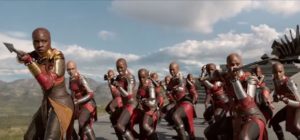
Wakanda’s all-female military is called the Dora Milaje, led by General Okoye (Danai Gurira). She advises T’Challa about a mission outside of Wakanda, where he is going to rescue his one-time girlfriend, Nakia (Lupita Nyong’o), a spy who has gone undercover and has been captured by warlords. “Don’t freeze,” Okoye tells T’Challa. “I never freeze,” he replies. But he does. That’s the effect Nakia has on him. At first, she is angry that he interrupted her mission. But then he tells her that he wants her there when he becomes king, and she is glad to agree.

When they return, we see him honor his mother (Angela Bassett, regal and steadfast) and get teased by his sister, the tech whiz Shuri (Letitia Wright). She is this movie’s version of James Bond’s Q, except that she does not just provide the cool gadgets; she invents them. Her motto seems to be what she tells her brother: “Just because something works does not mean it can’t be improved.” That comment, made as a gentle taunt to a brother who is not as comfortable with change as she is, is just one example of the way that this film is able to raise profound issues in a way that resonates but is never heavy-handed or distracting. And the way T’Challa responds to being teased like the admonition not to freeze, helps to humanize the brilliant, brave, handsome, wealthy, powerful superhero.

T’Challa wants to continue to keep Wakanda away from the troubles of the rest of the world. Nakia tells him that they are obligated to share what they have to help protect others. She says, “I can’t be happy here knowing there are people out there who have nothing.” Of course, they are both right, and this conflict is reflected throughout the film in a way that is remarkably nuanced and thoughtful, not just for a superhero movie but in any context.

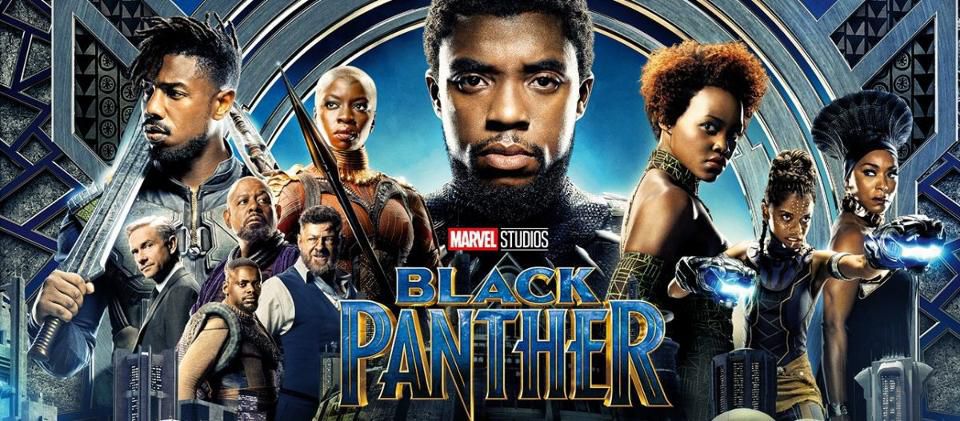
As I have often said, superhero movies depend more on the villain than the hero, and this one has one of the all-time greats. Michael B. Jordan, who starred in Coogler’s two previous films, “Fruitvale Station” and “Creed,” is nothing less than mesmerizing here, playing a man who represents the “other” to T’Challa, but who is connected to him as well. The film touches lightly but with insight on the difference between being an African, raised in a country where everyone is black and unqualifiedly patriotic, if insular, and being an African-American, deeply conflicted about the relationship with “home,” but better able to understand the plight of others. It touches on other vital contemporary issues like refugees and radicalization and it is all completely organic to the story.

And it is a full-on superhero movie, with a wild chase through an Asian city some very cool stunts, and a huge climactic fight scene involving a massive battle and at least two different modes of transportation, not including the battle rhinos. Yes, I said battle rhinos. I know, right?

The supporting cast includes an outstanding Daniel Kaluuya (“Get Out”), a rare on-screen appearance by motion-capture master Andy Serkis with his Tolkien co-star Martin Freeman as a CIA agent, Forest Whitaker as a priest, Winston Duke as the leader of on of Wakanda’s five tribes, and “This is Us” star Sterling K. Brown as a guy you’re better off not knowing too much about until you see the movie, which I hope you do, more than once. You’ll want to be a part of Wakanda, too.

Parents should know that this film includes extensive comic book-style action violence with many characters injured and killed, guns, spears, hand-to-hand combat, chases, explosions, and some strong language.

Family discussion: If T’Challa and Erik had grown up in each other’s environments, how would they be different? How should Wakanda resolve the conflict between tradition and innovation? Is it true that it is hard for a good man to be a good king? Why?

If you like this, try: the Black Panther comics and the Avengers movies

Related Tags:


3D Action/Adventure DVD/Blu-Ray Fantasy Race and Diversity Scene After the Credits Scene After the Credits Science-Fiction Series/Sequel Superhero

Trailer: America’s Musical Journey with Morgan Freeman

Posted on January 25, 2018 at 6:18 pm

Morgan Freeman narrates “America’s Musical Journey,” a 3D documentary exploring the story of American jazz, blues, country, rock, and more.

Grammy Award®-nominated singer and songwriter Aloe Blacc traces the roots of America’s music, following the footsteps of Louis Armstrong through the colorful locales and cultures where America’s music was born. Moving through such iconic cityscapes as New Orleans, Chicago, New York City, Nashville, Memphis, Miami and more, America’s Musical Journey explores the collision of cultures that gave birth to such American art forms as jazz, the blues, country, rock and roll, hip-hop and more.

Related Tags:


3D Documentary Music Trailers, Previews, and Clips
Jumanji: Welcome to the Jungle

Jumanji: Welcome to the Jungle

Posted on December 21, 2017 at 5:38 pm

B +
Lowest Recommended Age: Middle School
MPAA Rating: Rated PG-13 for adventure action, suggestive content and some language
Profanity: Some schoolyard language, b-word
Alcohol/ Drugs: Alcohol, drunkenness
Violence/ Scariness: Extended action/fantasy-style peril and violence, characters injured, snakes, guns, fights, some disturbing images
Diversity Issues: Diverse characters
Date Released to Theaters: December 22, 2017

Copyright Columbia 2017
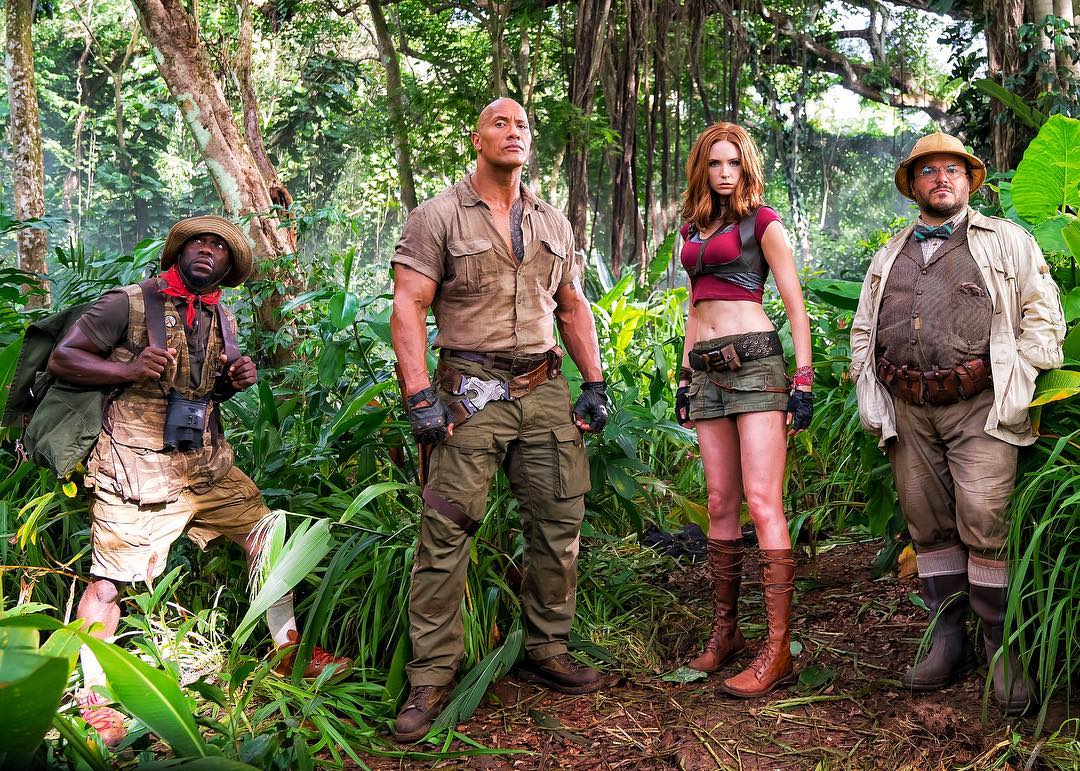
There has never been a more charming movie action hero than Dwayne “The Rock” Johnson, whose easy confidence is highlighted in a scene from the trailer for “Furious 7,” when his character gets out of a hospital bed, flexes his muscle to shatter the cast that covers his entire arm, and says meaningfully, “Daddy’s got to go to work.” The only thing more fun is seeing him subvert his own movie star magic, as he did with Kevin Hart in “Central Intelligence,” and as he does with Hart again in “Jumanji: Welcome to the Jungle,” where he plays the video game avatar of a shy, highly allergic high school nerd named Spencer (Alex Wolff). On the outside, he is Dr. Smolder Bravestone, a cross between Indiana Jones, Lara Croft, and, well, The Rock. On the inside, he is still Spencer. But this game goes way past virtual or augmented reality. Spencer and three other kids from his school are stuck in the game, and have to finish it before using up the three life bars each has been given.

Jumanji, the story of a jungle board game that becomes all too real, began as a 1981 book by author/illustrator Chris Van Allsburg, and then a 1995 movie with Robin Williams as a grown-up who has been trapped in the game since he was a boy. This movie pays tribute to the original in the opening scene, set in 1996, when the board game is found at the beach, buried in the sand. A boy in a Metallica t-shirt named Alex (Nick Jonas) has no interest. He likes video games. But somehow the beautifully carved board turns into a cartridge, he pops it in, and disappears.

And then we meet Spencer and three other students sent with him to detention: Fridge, a football star who has Spencer doing his homework, which gets them both in trouble; Bethany, a popular girl who only cares about her social media likes and takes a phone call in the middle of a quiz; and Martha, an anxious girl who puts herself under a lot of pressure to get good grades and mouths off to the gym teacher. Ordered to clean up the school basement as punishment, they find the game console and then disappear into the avatars they have selected: Dr. Bravestone, “weapons valet” Moose Finbar (Hart), scholar Dr. Shelly Oberon, and martial arts specialist Ruby Roundhouse (“Guardians of the Galaxy” series Nebula, Karen Gillan). They can’t get back home until they complete the game.

Director Jake Kasden balances the action, comedy, and heart and the four leads, especially Johnson and Black, have a lot of fun with the disconnect between what they look like and who they are inside. Bravestone quavers to an adversary, “I should warn you, I think I am a very strong puncher” before landing a roundhouse. And Bethany/Oberon can barely decide which is more upsetting, being in the body of an overweight middle-aged man (she needs some guidance on going to the bathroom) or not having her phone. There’s a nice twist when Bethany-as-Oberon tries to reach Martha-as-Ruby how to flirt so she can distract the bad guys, and Martha/Ruby learns that she has what she needs. Despite the best efforts of the jewel-thief villain (Bobby Cannavale) the strengths of the avatars and some unexplored strengths of the teenagers themselves help them get through the levels to finish the game. The original film was a success because of its concept, innovative special effects, and the always dazzling Williams, but this one has a smarter plot, better characters, more heart, and by the time we get to Game Over, we just might be ready to reboot and start it over again.

NOTE: The DVD/Blu-Ray release has some really terrific extras including behind-the-scenes features about the special effects and characters and a funny gag reel. Well worth a look!

Parents should know that this movie includes extended fantasy/comic peril and violence with characters injured and (temporarily) killed and some disturbing images and jump-out-at-you surprises, some crude humor about body parts and functions, some teen (adult avatar) drinking and drunkenness, kisses, and some schoolyard language (b-word). One girl (in a male body) teaches another girl how to flirt to distract the bad guys, but it is shown to be useless and she ends up using martial arts skills instead.

Family discussion: Which avatar would you pick? What strengths and weaknesses would you list for yourself? How did each of the characters use their game-assigned and real-life talents?

If you like this, try: the book and earlier movie and “Help! I Shrunk the Kids!”

Related Tags:


3D Action/Adventure Based on a book DVD/Blu-Ray Fantasy movie review Stories about Teens
Coco

Coco

Posted on November 21, 2017 at 8:42 pm

A-
Lowest Recommended Age: Kindergarten - 3rd Grade
MPAA Rating: Rated PG for thematic elements
Profanity: Mild language
Alcohol/ Drugs: None
Violence/ Scariness: Themes of death and loss, some peril
Diversity Issues: None
Date Released to Theaters: November 22, 2017
Date Released to DVD: February 27, 2018
Copyright Disney-Pixar 2017

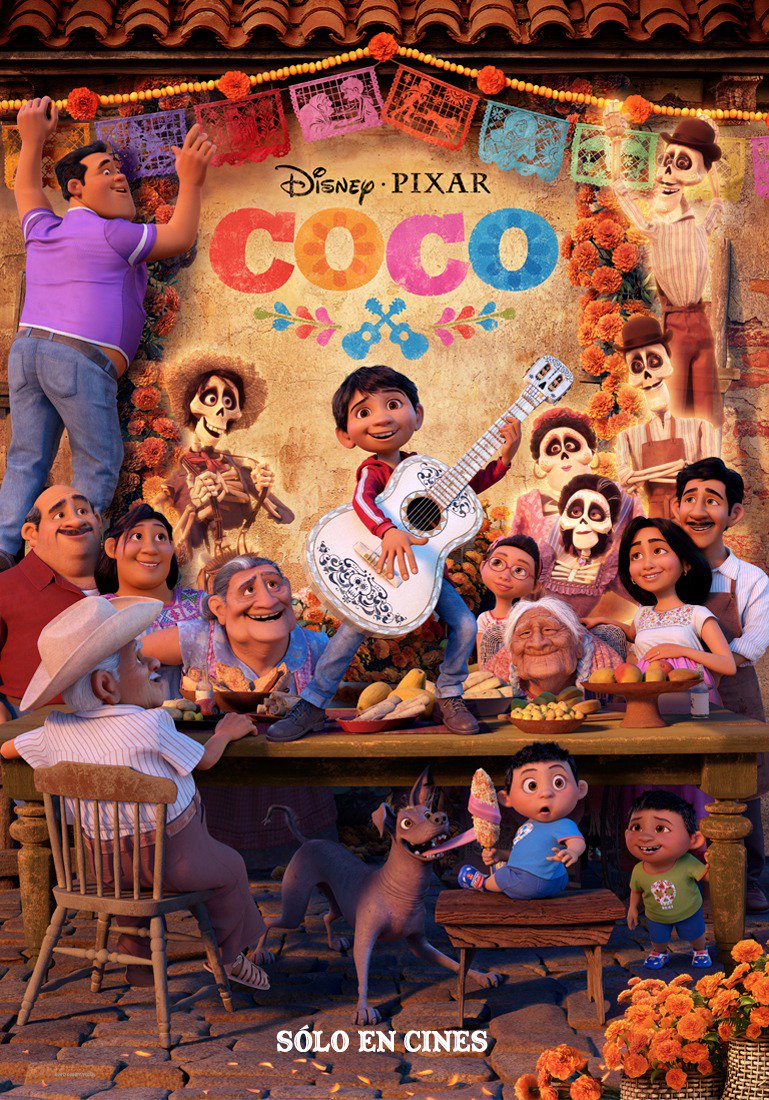
Those of us who remember the 1995 release of Pixar’s first feature film, “Toy Story,” feel that we’ve all grown up together. It isn’t just the astonishing progress in the technology (the reason the first film’s characters were toys was that all they could animate were shiny smooth surfaces). It is the progression of the themes of the films, the first one literally about a child’s playthings, through stories that deal with increasingly adult concerns about aging, loss, and meaning. “Coco” is the story of a Mexican 12-year-old named Miguel, but the title reminds us that the central character is his great-grandmother Coco, struggling with dementia but beloved by her family. It has the dazzling visuals, expert tone and pacing, and the smiling-through-tears moments we have come to rely on from Pixar.

Miguel (Anthony Gonzalez) is the youngest in a big, close family that lives together and works together in the family shoemaking business. He tells us the story of the family through beautifully animated papel picado, the lacy paper cutouts that are a Mexican tradition. His great-great grandfather abandoned his wife and daughter, the then toddler Coco, to pursue a musical career and since then the family has banned any member from playing or even listening to music. But Miguel loves music and has a secret room where he watches old clips of the community’s biggest music and movie star, Ernesto de la Cruz (Benjamin Bratt) and plays his homemade guitar, painted to look like de la Cruz’s.

Miguel hopes to play in a talent show but his grandmother, Coco’s daughter, finds out and smashes his guitar. When Miguel tries to borrow de la Cruz’s guitar from his crypt, he is somehow transported to the Land of the Dead, just as the residents are making their annual pilgrimage over the marigold-strewn bridge to visit the families who have invited them with photographs and memories. There he recognizes his ancestors from the family ofrenda (shrine with photos, candles, food, and mementos). Like Dorothy in Oz and Alice in Wonderland, he has many adventures on a journey in an enchantingly imaginative world but wants to go home. If he does not return by sunrise, he will have to stay there forever.

The Land of the Dead is gorgeously imagined, filled with thousands of lights and the kind of fascinating details that are made for the pause button. The — I’m going to call them people, but they look like skeletons with eyeballs — live in a stratified world, where those who have extended families and are best and most lovingly remembered have beautiful clothes and homes while those who are alone and nearly forgotten live in a (still-picturesque) slum and call each other “cousin” and “uncle” to pretend that they are still connected to someone. Once they are no longer remembered, they just dissolve into dust. Miguel meets Hector (Gael Garcia Bernal), a loose-limbed, poorly dressed skeleton who is close to dissolving as he is being forgotten in the land of the living. Hector agrees to take Miguel to Ernesto de la Cruz, for help in going home, if Miguel will bring back Hector’s photo, so he can be remembered.

It is good to see Mexican culture portrayed in such a straightforward manner, not exotica-sized or othered. There are some exciting adventures and some very funny moments along the way, involving Miguel’s sidekick, a Xolo street dog named Dante, a wild talent show/concert, a still-pushing-the-edge-of-the-artistic-envelope Frida Kahlo, and a psychedelic-colored flying lion-headed creature, one of the alebrije who guide the dead to where they are supposed to be. The skeletons are brilliantly animated, each with a very individual personality and a lot of fun with bones that, without tissue, do not always hold together. Moments of warm humor keep the story from getting maudlin, and moments of true-heartedness make us feel as connected to the Land of the Dead as Miguel is.

Parents should know that much of the film takes place in the Land of the Dead (heaven) filled with skeletons, and it has themes of loss including memory loss, and murder and alcohol.

Family discussion: When is the right time to seize the moment? Ask your family for some stories of your ancestors. What stories do you want people to remember about you?

If you like this, try: “Finding Nemo,” “Inside Out,” and “The Book of Life” — and learn about Frida Kahlo and about the real-life Day of the Dead celebrations

Related Tags:


3D Animation DVD/Blu-Ray Pick of the Week movie review Movies -- format Stories About Kids
THE MOVIE MOM® is a registered trademark of Nell Minow. Use of the mark without express consent from Nell Minow constitutes trademark infringement and unfair competition in violation of federal and state laws. All material © Nell Minow 1995-2026, all rights reserved, and no use or republication is permitted without explicit permission. This site hosts Nell Minow’s Movie Mom® archive, with material that originally appeared on Yahoo! Movies, Beliefnet, and other sources. Much of her new material can be found at Rogerebert.com, Huffington Post, and WheretoWatch. Her books include The Movie Mom’s Guide to Family Movies and 101 Must-See Movie Moments, and she can be heard each week on radio stations across the country.

Website Designed by Max LaZebnik