Little Women

Little Women

Posted on December 24, 2019 at 5:00 pm

A-
Lowest Recommended Age: 4th - 6th Grade
MPAA Rating: Rated PG for thematic elements and brief smoking
Profanity: None
Alcohol/ Drugs: Social drinking, brief smoking
Violence/ Scariness: Very sad death, references to other deaths including death of a baby
Diversity Issues: A theme of the movie
Date Released to Theaters: December 25, 2019
Date Released to DVD: April 6, 2020
Copyright 2019 Sony Pictures

You need to know where I’m coming from on this one. There is no book more central to my life than Louisa May Alcott’s Little Women. My mother, Josephine Baskin Minow, has been Jo since she first read Little Women when she was a child, And now our children call her Marmee. I loved it so much that I read all the other Alcott books on the library shelf (I especially recommend Eight Cousins and An Old Fashioned Girl). Little Women has been central to the lives of young women for more than 150 years, inspired by its heroine, who was inspired by Alcott herself. Jo March is fiercely loyal, impetuous, impatient, and a writer, both eager and reluctant to find her own voice. Authors who name the book as a major influence range from Cynthia Ozick, Simone de Beauvoir, Doris Lessing, Margaret Atwood, Jane Smiley, Anne Tyler, Jhumpa Lahiri, Ursula Le Guin and Nora Ephron to “Twilight”‘s Stephenie Meyer.

Alcott’s semi-autobiographical story of four sisters has been adapted many times, including a Broadway musical, a 48-chapter Japanese anime series, an opera, and films starring Katharine Hepburn, Elizabeth Taylor, and Winona Ryder. The most recent BBC version (of four) was shown in the United States on PBS. One of two major adaptations last year was a modern-day retelling with a quartet of appealing young actresses, adapted with skill and understanding by writer/director Clare Niederpruem.

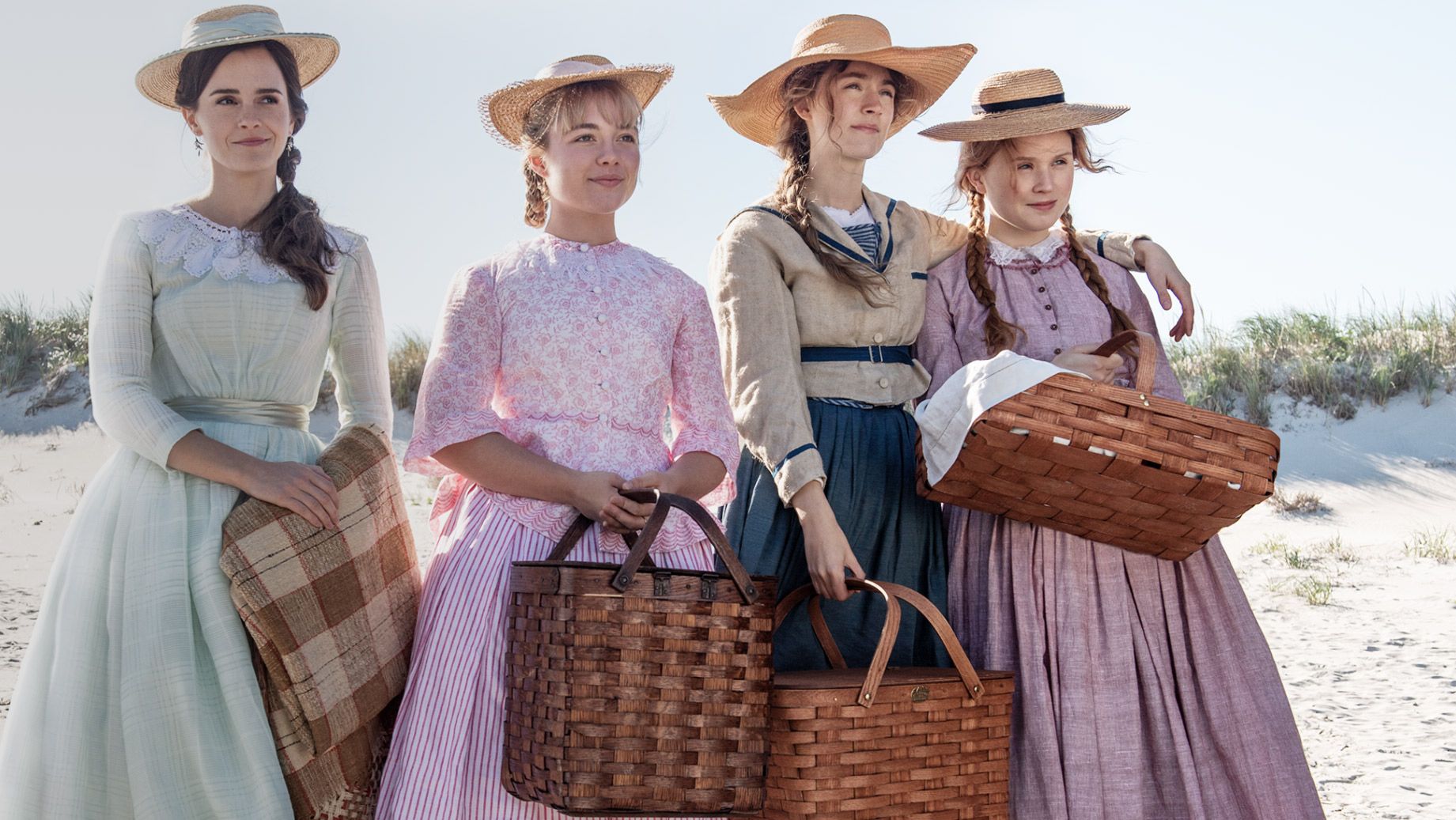
So, my standards and expectations could not have been higher and it is my very great pleasure to tell you that this new film from writer/director Greta Gerwig exceeded them all. Writer/director Greta Gerwig not only loves and understands the book, she also appreciates that in 2019 we are only beginning to catch up to Alcott’s vision of what is possible for young women and for all of us. Those who do not know Alcott’s work or have only seen the early versions may think that Gerwig has “modernized” the story. But every part of it comes from Alcott (some from other writings) and every part of it is entirely consistent with her fierce, independent, and devoted spirit and rebellious energy. And Saoirse Ronan is the best Jo March yet, her long-limbed coltishness not so much “boyish” as vitally engaged in a world that cannot always keep up with her.

The book was originally written in two parts, but the second volume (called Good Wives) has been a part of what we know as Little Women for more than a century. Gerwig begins the story in the middle of the second book as the now-adult Jo (a teenager in the first volume) meets with a newspaper publisher (a charmingly crusty and wry performance from playwright Tracy Letts, last seen as Henry Ford II in “Ford v. Ferrari”). In case we are not as quick as he is to see through her claim to be bringing stories written by a “friend,” Gerwig lets us see the ink that still stains her fingers. When her story is accepted (with the moralizing parts cut out), she exuberantly races home.

Then, as we will throughout the film, we go back and forth between the two parts of the story, indicated by different color pallattes, the warmer hues for the earlier years, when the girls were all at home and their father (Bob Odenkirk) was a Union volunteer in the Civil War. There were struggles and growing pains, but there was also a sense of purpose and possibility that is not as clear in the cooler-hued older years, when Jo is in New York living in a boarding house, and Amy (Florence Pugh) is touring Europe and studying art. Pugh may be too old for Amy in the early scenes, but she and Gerwig give Amy far more depth than any previous portrayal (perhaps including Alcott’s). Emma Watson is lovely as oldest sister Meg (obligatory complaint about what was left out of this version — the scenes of Meg coming to John’s defense when Aunt March attacks him and the scene of her showing off her “new dress” to him). Gerwig’s script softens the professor’s critique of Jo’s more lurid stories-for-hire and his involvement in getting the book-within-a-book published, but the scene of his telling her that the melodramatic stories she is writing for money are not good is still an important turning point.

Laura Dern plays Marmee, a woman of character, courage, and intention. The private moment she takes in the foyer of the house to make sure she can greet her daughters with good cheer on Christmas morning after caring for the impoverished Hummels is a small master class of acting. When Marmee tells Jo that she still struggles with anger every day, we see where Jo got her inner fire and how inner fire can become the foundation for determination and principle.

And then there is Timothée Chalamet as Laurie, the sensitive boy whose temperament is protected from becoming headstrong and careless by the example of the March family, their attitude toward work and also their attitude toward fun. Like Laurie to Jo, Chalamet is a perfect match for his “Lady Bird” co-star Ronan, and we could happily watch a whole movie of them putting on plays, attending riotous meetings of the Pickwick Society, and skating on the pond.

It is still one of the all-time great coming-of-age stories of a family and an artist finding her voice. By putting making the early year portion of the film flashbacks that comment on, provide context for, and deepen the “present-day” storylines, Gerwig makes us ready for a perfect ending that brings Alcott, her fictional avatar, and the story of all of us who have tried to tell our stories together.

Parents should know that this film includes a sad death and reference to other deaths including the death of a baby, family stress and conflict, and brief smoking and drinking.

Family discussion: Which sister is most like you? Was the publisher right about the ending to the story? Why do so many women, especially writers, say that this story was their most important inspiration?

If you like this, try: the book by Louisa May Alcott and the other movie and miniseries versions of this story

Related Tags:


Based on a book Classic Coming of age Drama DVD/Blu-Ray Epic/Historical Family Issues For the Whole Family movie review Movies -- format Remake
Cats

Cats

Posted on December 19, 2019 at 5:09 pm

C
Lowest Recommended Age: Middle School
MPAA Rating: Rated PG for some rude and suggestive humor
Profanity: Some mild language
Alcohol/ Drugs: None
Violence/ Scariness: Threats, dusting-style disappearances, portrayal of afterlife/reincarnation
Diversity Issues: None
Date Released to Theaters: December 20, 2019
Date Released to DVD: April 6, 2020
Copyright 2019 Universal

I was not hoping for much from “Cats.” I knew that the record-breaking, popular-for-decades Broadway musical did not have much of a plot, just songs with lyrics from the poetry of T.S. Eliot and music by Andrew Lloyd Webber and spectacular dancing. So that’s all I hoped for — an all-star cast singing and dancing. Some of the singing is fine, and the dancing is great, when you can see it, but the whole thing is so badly misbegotten that it does its best to keep its most entertaining elements out of sight.

I mean that literally. There’s one simple rule, going back to the days of Fred Astaire, for dance in movies: get the camera out of the way and let the audience see the dance as fully as possible. We want to see the shapes the bodies make, we want to feel the way they interact with the rhythm and with each other, and we want to see their feet. There are dance numbers in “Cats” where the camera moves away from the feet or out of beat with the rhythm. Why? They also give “Memory,” one of the most iconic songs of the last 30 years to Jennifer Hudson, one of the greatest singers of the last 30 years and have her put most of her energy into emotion instead of singing.

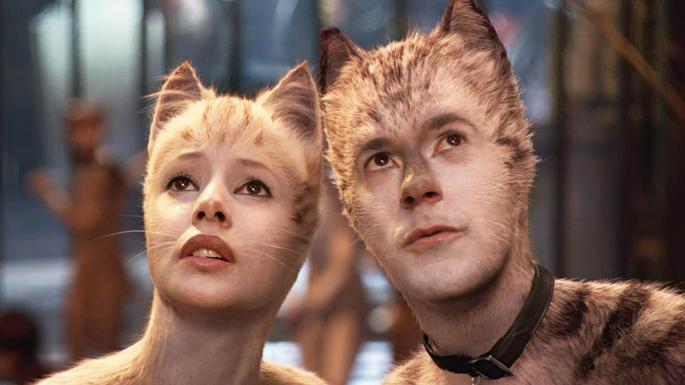
The movie’s credits highlight ballerina Francesca Hayward in her first film appearance, playing the young ingenue cat, Victoria. She is thrown into the garbage inside a sack at the beginning of the film, and we learn about the world of the cats as it is explained to her. The various felines introduce themselves, including Jennyanydots (Rebel Wilson) the house cat, who teaches mice and even cockroaches to sing and dance, the magician Mr. Mistoffelees (Laurie Davidson), the down-at-the-paws Grizabella (Jennifer Hudson), filled with regret and self-doubt, “the tap-dancing railroad yard cat Skimbleshanks (Steven McRae), and the wicked Macavity (Idris Elba) “the Napoleon of crime.”

Presiding over everyone is the magisterial Old Deuteronomy (Dame Judi Dench), who has the power to select one “jellicle” cat (a term Eliot made up) for a second chance at life. As cats comes forward to introduce themselves, it’s like a feline “Chorus Line,” everyone auditioning for that one big chance.

All of that would be fine if there was some joyful energy behind it, but it is mostly just dreary. Some of the musical numbers, especially McRae’s tap dance, could could have provided that lift if the camera would have stopped long enough to let us see what he was doing. Taylor Swift brings all of her considerable Swiftian panache (though an uncertain hold on an English accent) as Bombalurina, but the movie then sinks back into its trudgey tempo, leaving us to wonder at the furry costumes with ears and tails constantly twitching, so skin-tight it only emphasizes the human and decidedly un-feline forms and movements. It’s a close call what we get more of, silly “cat got your tongue”-style references, the word “jellicle” or Hayward’s lovely face, even in fur and whiskers, which director Tom Hooper keeps cutting back to. Not to sound catty, but it just reminds us how much less enthralled we are than she is.

Here’s a tip. “Cats” is a purely theatrical experience. You want to make a movie about it? Try making it about a theater troop putting it on, and try not have it turn unto “Noises Off.” Even if it did, it would be more entertaining than this version.

Parents should know that this film includes some mild sexual references, nuzzling, some disturbing dusting-style disappearances and death references, and sad songs.

Family discussion: What do you think “jellicle” means? Do you agree with Deuteronomy’s choice? Which was your favorite cat and why?

If you like this, try: “The Fantastcks” and “Nine”

Related Tags:


Based on a book Based on a play DVD/Blu-Ray Fantasy movie review Movies -- format Musical Talking animals
Jumanji: The Next Level

Jumanji: The Next Level

Posted on December 14, 2019 at 9:24 pm

B +
Lowest Recommended Age: Middle School
MPAA Rating: Rated PG-13 for adventure action, suggestive content and some language
Profanity: Some schoolyard language, brief strong language
Alcohol/ Drugs: None
Violence/ Scariness: Extended video game action style peril and violence, issue of terminal illness
Diversity Issues: Diverse characters and issues of diversity
Date Released to Theaters: December 13, 2019
Date Released to DVD: March 16, 2020

Copyright 2019 Columbia
My review of Jumanji; The Next Level is on rogerebert.com — an excerpt:

Like its predecessor, this latest “Jumanji” movie combines fantasy action and adventure with some comedy, a touch of romance, and real-life lessons about courage, friendship, and empathy—all with the help of some low-key race and gender fluidity….Johnson was terrific as Spencer in the first film, a humorously exaggerated version of an adolescent discovering the power of adulthood. But as the outer version of Spencer’s cranky grandfather, he’s clearly having more fun. He barely notices the surreal concept of being trapped inside a video game (he does not appear to be entirely sure what a video game is), and is much too busy swiveling hips that for the first time in years have a full range of motion. Johnson/Bravestone as Spencer was something to aspire to, in a future that still seemed filled with infinite potential, but Johnson/Bravestone as Eddie is filled with the bucket list delight of someone who sees nothing but loss ahead. Hart is especially good at toning down his usual peppery energy as the avatar for the slow-talking Milo, whose avatar’s strength is languages but who retains his discursive style. Black and Awkwafina both have a chance to represent more than one of the human characters, making each one distinct and clever.

The fantasy of the avatars, with their assigned strengths and weaknesses, make it possible for the characters to become more honest with themselves and each other. As with the first film, the humor and excitement are nimbly balanced so it never gets too scary or silly, and the focus is more on friendship than romance. This time, there is a light touch of poignance as well that makes the message about friendship more meaningful. And like all good video games, there’s a hint of yet another level at the end for those, like me, who are not yet ready to say Game Over.

Parents should know that this film icludes video game-style peril, action, and adventure, some strong language, brief crude humor (references to eunuch character), and issues of aging and terminal illness.

Family discussion: If you were a game avatar, what would your strengths and weaknesses be? What did the characters learn from being different races and genders?

If you like this, try: “Jumanji: Welcome to the Jungle” and “Journey to the Center of the Earth”

Related Tags:


Based on a book DVD/Blu-Ray Fantasy movie review Movies -- format Series/Sequel

Trailer: Jane Austen’s Emma With Anna Taylor-Joy

Posted on November 21, 2019 at 10:26 am

I’m a big fan of Jane Austen’s Emma (the novel she famously described as having a heroine no one would like) and the movie version with Gwyneth Paltrow, Jeremy Northam, and Toni Collette. This new version, starring Anna Taylor-Joy, Johnny Flynn, Bill Nighy, Mia Goth, Miranda Hart, Josh O’Connor, Callum Turner, Rupert Graves, Gemma Whelan, Amber Anderson, Tanya Reynolds, and Connor Swindells, looks just as delightful.

Related Tags:


Based on a book Epic/Historical Remake Trailers, Previews, and Clips
Motherless Brooklyn

Motherless Brooklyn

Posted on October 31, 2019 at 5:37 pm

B +
Lowest Recommended Age: Mature High Schooler
MPAA Rating: Rated R for language throughout including some sexual references, brief drug use, and violence
Profanity: Very strong language
Alcohol/ Drugs: Drinking, smoking, drug use
Violence/ Scariness: Peril and violence including guns, characters injured and killed
Diversity Issues: A theme of the movie
Date Released to Theaters: November 1, 2019
Date Released to DVD: January 27, 2020
Copyright 2019 Warner Brothers

Motherless Brooklyn” is the affectionate (really) nickname given to Lionel Essrog (Edward Norton) by the only person to treat him kindly, Frank Minna (Bruce Willis). Lionel grew up in an orphanage where his odd tics and compulsions made him the target of bullies who called him a freak. Minna, a private detective, saw something in Lionel, saw that the same compulsions that others found jarring would make him valuable as a close observer who would not be able to rest until he solved the mystery. “A piece of my head broke off and keeps joyriding me for kicks,” he says. But”if there’s one thing my pain in the ass brain knows how to do it is how to listen and remember things.”

Writer/director/star Edward Norton adapted Jonathan Lethem’s prize-winning book, shifting its setting from the 1990’s to the 1950’s, with an intricate “Chinatown”-like storyline of betrayal, corruption, and money. Alec Baldwin plays Moses Randolph, a character clearly inspired by “master builder” Robert Moses, who remade the face, footprint, and culture of New York City. He was never elected to office but held as many as twelve titles in city government, overseeing the construction of highways, parks, and bridges. We first see Baldwin as Randolph striding into a meeting and contemptuously ordering the mayor to give him authority over pretty much everything. How this will all tie into the murder of Frank Minna is what Lionel will have to find out. And there’s a beautiful woman with a secret, as there always is in a noir story. Here is is Rose (Gugu Mbatha-Raw), working to protect the people who are being displaced, with an unexpected additional connection to the story.

Norton’s narration and twitchy performance immerse us in what he sees and what he is looking for and the outstanding production design by Beth Mickle and superbly moody core by Daniel Pemberton immerse us in post WWII New York. We can almost smell the luxurious leather on the books and chairs in an office with a fabulous view of the city to the old Penn Station to a smoky jazz joint in a black neighborhood. And the murkiness of the settings and the sinuous, boundary-crossing music emphasize the ambiguities faced by the characters.

Unlike most stories distorted by power and corruption, Randolph is not lining his own pockets. He argues that he is doing what’s best for the city — building bridges that make it possible for employers to have access to people who live outside of Manhattan, parks and beaches to give residents something more than jobs to attract them. So, if he has to cut some corners, displace poor people, and bury some secrets and maybe a couple of bodies, isn’t that just what it takes to get things done? “As long as you’re the guy who built the parks, you’re with the angels.” At least to some people. Norton, whose grandfather was a developer with an excellent reputation for integrity and public spiritedness, is very aware of the conflicts involved in “gentrification” and choosing between protection and honoring the old and improving with the new, between an orderly process that gives everyone a chance to participate and a bureaucratic tangle that prevents any progress.

This has been a labor of love for Norton, who has worked on and off for 20 years to bring Lethem’s characters to the screen. In only his second film (after “Keeping the Faith”) as a director, he brings an assured understanding of structure and tone. In one especially compelling scene, Lionel finds that a jazz performance connects with the rhythms of his brain and we see what it is like for him to experience a sense of home. The story itself is like a jazz performance, improvisation based in deep understanding and skill.

Parents should know that this is a noir-esque murder mystery with extended peril and characters who are injured and killed, some graphic and disturbing images, bullying, strong language, drinking, smoking, drugs, and sexual references and a a non-explicit sexual situation.

Family discussion: How does Lionel turn his challenges into a strength? What matters most to Moses Randolph? Who is referred to with the quote from Shakespeare about using a giant’s strength like a tyrant?”

If you like this, try: “Chinatown” and classic noir films like “The Woman in the Window” and “Touch of Evil”

Related Tags:


Based on a book Drama DVD/Blu-Ray movie review Movies -- format Race and Diversity
THE MOVIE MOM® is a registered trademark of Nell Minow. Use of the mark without express consent from Nell Minow constitutes trademark infringement and unfair competition in violation of federal and state laws. All material © Nell Minow 1995-2025, all rights reserved, and no use or republication is permitted without explicit permission. This site hosts Nell Minow’s Movie Mom® archive, with material that originally appeared on Yahoo! Movies, Beliefnet, and other sources. Much of her new material can be found at Rogerebert.com, Huffington Post, and WheretoWatch. Her books include The Movie Mom’s Guide to Family Movies and 101 Must-See Movie Moments, and she can be heard each week on radio stations across the country.

Website Designed by Max LaZebnik