The Rhythm Section

The Rhythm Section

Posted on January 30, 2020 at 5:39 pm

C
Lowest Recommended Age: Mature High Schooler
MPAA Rating: Rated R for violence, sexual content, language throughout, and some drug use
Profanity: Very strong language
Alcohol/ Drugs: Drug use
Violence/ Scariness: Extended very graphic and intense peril and violence, characters injured and killed, terrorism, suicide bomber, guns, knives, chases, explosions, disturbing images
Diversity Issues: None
Date Released to Theaters: January 31, 2020
Date Released to DVD: April 27, 2020
Copyright 2020 Paramount

What is this weird fascination with stories of men taking lost, pathetic, but lissome young women and turning them into spies and assassins? A century ago, we had Henry Higgins teaching a flower girl to speak like a duchess. Now, we have “La Femme Nikita” and its American remake “Point of No Return,” its Hong Kong version, “Black Cat,” its Italian version, “Sexy Killer,” its two television series, the Jennifer Lawrence film “Red Sparrow,” the Jennifer Garner series “Alias,” Luc Besson’s 2019 flop “Anna,” and the father/daughter version — movie and television series — “Hanna.” When that training includes masquerading as a prostitute so we can see her in her skivvies, it becomes clear how outdated this set-up has become.

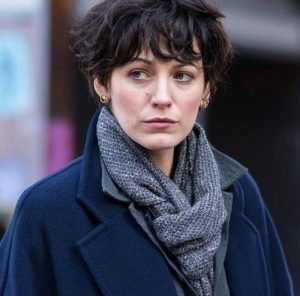
And now we have The Rhythm Section, with Stephanie Patrick, played by Blake Lively in a series of bad wigs, as the brilliant Oxford student turned narcotic drug abuser and prostitute after the death of her family in a plane crash three years before this movie begins. I should say played by a series of bad wigs with Blake Lively in a supporting role, because this very talented actress is given little to do but look sullen, sullen and a little afraid, and sullen and a little determined. Please add “A Simple Favor” to your Netflix queue if you have not seen it yet to get a look at how good she can be.

The people behind this film are the producers of the Bond films, and they are clearly trying to create a distaff franchise, based on the books by Mark Burnell, who also wrote the screenplay. Unfortunately, it is weak on character and plot and fails to have any of the ingredients that make the Bond movies work. While there are stops in many cities, identified on screen but otherwise mostly interchangeable, it does not have the glamor, the urgency, or the fun of seeing all the gizmos and how they get deployed. Revenge is so reliable and relatable a motive that it is almost impossible to get wrong in a movie, but even that cannot bring this story to life. It’s supposed to be all you go girl! with a badass female lead. But, sigh, it’s more male gaze again, with one of her disguises being high-end call girl in skimpy skivvies and somehow a shocking tragedy inexplicably inspires her to jump into bed with someone she barely knows.

A journalist named Proctor (Raza Jaffrey) finds Stephanie, a drugged-out prostitute constantly replaying images of the last time she saw her parents and brother and sister, and the voicemail message her mother left her before getting on the doomed plane. He says he has information showing that it was not an accident; it was a terrorist bomb, and he knows how to find the man who built the bomb. She initially refuses to have anything to do with him, but then goes to his apartment, where he has one of those movie-friendly rooms with walls covered with clippings and photos. He unwisely leaves her there, giving her money and keys, and she unwisely tips off the bomber, and soon Proctor is dead, on the floor in a pool of blood.

Stephanie follows a clue she got from the photos on the wall to track down the Proctor’s source, a former spy turned rogue played by Jude Law. No cold turkey montage (“I’m a user, not an addict,” she explains), so straight into the training montage, turning Stephanie into a lean, mean, fighting machine in a matter of months, while we flashback to Jude Law doing the same thing for Captain Marvel, only better.

The action and characters would have to be so much better to persuade us to miss the howling plot holes and tinge of misogyny — really, she has to be a prostitute? Luckily for the movie, we never invest enough in it to care.

Parents should know that this movie includes extended and very graphic peril and violence, murders, chases, explosions, terrorism, knives, guns, bombs, poison, characters injured and killed, disturbing images, very strong language, prostitution, and drugs.

Family discussion: What were Stephanie’s most significant assets in accomplishing her goals? Why did the reporter want to contact her? What will she do next?

If you like this, try: “La Femme Nikita” and “Hanna” (movie and television series)
Related Tags:


Action/Adventure Based on a book DVD/Blu-Ray movie review Movies -- format Spies
Dolittle

Dolittle

Posted on January 16, 2020 at 5:30 pm

B-
Lowest Recommended Age: 4th - 6th Grade
MPAA Rating: Rated PG for some action, rude humor and brief language
Profanity: Some schoolyard langage
Alcohol/ Drugs: None
Violence/ Scariness: Attempted murder by poison, action/animal related peril, sad offscreen death
Diversity Issues: None
Date Released to Theaters: January 18, 2020
Copyright Universal 2019

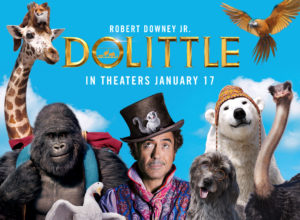
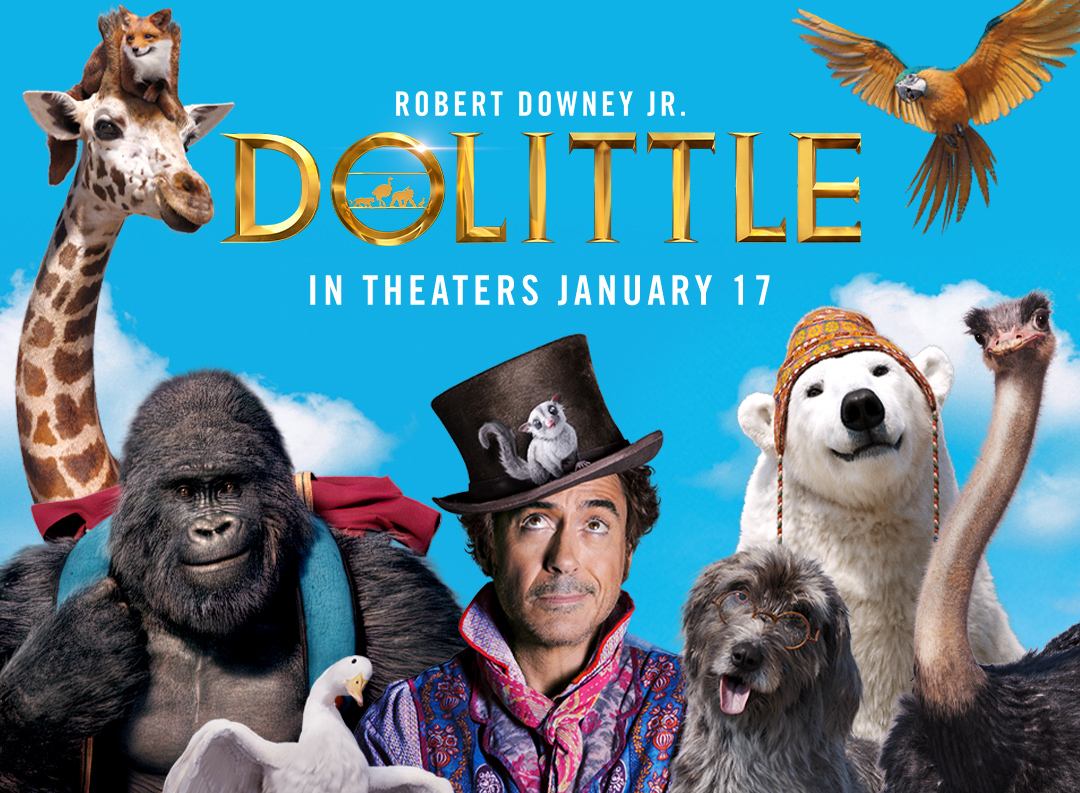
Dolittle” is mildly entertaining, silly and more than a little strange. It is loosely based on the original books, which also inspired the musical with Rex Harrison, featuring a two-headed llama-like creature called a pushmi-pullyu and an Oscar-winning song, and the modern-day-set remakes with Eddie Murphy. But mostly it’s a “we can do anything with CGI now, so let’s make a movie about a man who can understand animal language.” And that’s where the entertaining part comes in. It’s also where the odd and silly parts come in. For example, Robert Downey, Jr., who produced and plays the title character, speaks in a husky, oddly accented (Welsh?) voice for no particular reason. A significant extended scene involves giving an enema to a gigantic animal.

This version, set once again in the Victorian era, begins with Dolittle a recluse in the animal sanctuary given to him by the young queen in appreciation for his special gifts. Devastated by the death of his wife, a fearless explorer lost at sea, Dolittle is a mess, almost more of an animal than the creatures living with him, until the arrival of two young people. A boy named Tommy (Harry Collett) who refuses to hunt with his father accidentally wounds a squirrel and brings it to Dr. Dolittle for treatment. And Lady Rose (Carmel Laniado) arrives with an urgent request. The queen is critically ill and wants to see him.

Dolittle operates on the squirrel but refuses Lady Rose’s request until he learns that if the queen dies he will lose his home, an unnecessarily sour and distracting detail. And so the animals shave his beard, trim his hair, make him bathe, and accompany him to the palace. There, after consulting a small squid in the queen’s aquarium, he learns that she has been poisoned by one of her courtiers (Jim Broadbent), with the help of the court physician, Dr. Blair Müdfly (Michael Sheen). The only antidote is on a legendary — and uncharted — island, the very same one Lily Dolittle was seeking.

Dolittle, Tommy, and the animals take off to find it. So does Müdfly, who is determined to stop them and to get the antidote for himself. They have various adventures along the way, including a stop at an island ruled by the semi-barbaric King Rassouli (Antonio Banderas), who immediately throws Dolittle in prison because they have a history.

The movie never finds the right balance between comedy, adventure, and heart, probably reflecting the reported extensive reshoots following disappointing early screenings. But it is still watchable due to the sumptuous and imaginative production design by Dominic Watkins and the stellar voice talent for the CGI animal characters, especially Emma Thompson as Poly the wise and sympathetic parrot. Also fine are the bickering polar bear (John Cena) and ostrich (Kumail Nanjiani), who find a way to become friends. Frances de la Tour provides the suitably imperious voice for a dragon and Ralph Feinnes is a surprisingly vulnerable lion. But my favorite was Jason Mantzoukas as the dragonfly.

Too much of the animals’ dialog is just silly (“You answer the door because you’re the only one with arms.” “That’s coming from the guy (dog) who loves the smell of butts”). Hugh Lofting, who created the character knew that it would always be fun to have a story about a person who could talk to the animals. But the various versions of the story sometimes forget that it is important to give them something worth saying.

Parents should know that this film includes action/animal-related peril, attempted murder by poison, chases, crotch hits, a sad offscreen death, schoolyard language, and potty humor.

Family discussion: What did we learn about the characters when they talked about their parents? How did listening to the dragon make a difference? What should people do when they cannot stop feeling sad or being afraid of being hurt?

If you like this, try; “Journey to the Center of the Earth” and the musical “Doctor Dolittle”

Related Tags:


Action/Adventure Based on a book Comedy DVD/Blu-Ray Fantasy movie review Movies -- format Remake Scene After the Credits
Just Mercy

Just Mercy

Posted on January 9, 2020 at 5:26 pm

B +
Lowest Recommended Age: Middle School
MPAA Rating: Rated PG-13 for thematic content including some racial epithets
Profanity: Strong language including n-word and other racist terms
Alcohol/ Drugs: Social drinking, smoking
Violence/ Scariness: References to violent crimes, non-explicit depiction of an execution
Diversity Issues: A theme of the movie
Date Released to Theaters: January 10, 2020
Date Released to DVD: April 13, 2020
Copyright Warner Brothers 2019

The third 2019 awards season story based on a real-life lawyer stars producer Michael B. Jordan as Bryan Stevenson, the founder of the Legacy Museum (sometimes referred to as the Lynching Museum) and National Memorial for Peace and Justice. The movie shows him as a young graduate of Harvard Law School who moved to the small town where Harper Lee wrote To Kill a Mockingbird. Like Lee’s Atticus Finch, Stevenson defends those who were unfairly accused. He established the Equal Justice Initiative. The only other staff was a local woman named Eva Ansley (Brie Larson). Stevenson began helping men on death row at no cost.

The local community, especially law enforcement, did not like having old cases re-opened and weaknesses of evidence and exposed. The hostility and obstruction seemed insurmountable. But Stevenson was undaunted. Unlike most heroic lawyers in movies (and real life), this story does not have family members complaining that he is working too hard or a love interest who feels neglected. Stevenson does not lose his temper or feel like giving up. The great gift of this movie is what sometimes, if you are not watching carefully, may make it seem like its pilot light is turned down too low. This movie does have some rousing moments (and some sad ones) but it does not follow the usual courtroom underdog stories that make the intricacies of the judicial system follow the beats of a feel-good sports story.

Jordan is that rare performer who is a superb actor and a full-on movie star. After his electrifying appearance in “Black Panther,” he shows his range as a lawyer whose only superpowers are his integrity and his constant courtesy toward everyone he deals with. client, friend, and foe. The quiet power of the respect he shows to his clients is critical to gaining their trust and to restoring their sense of dignity in a system that has done its best to take it from them. And it is wisely given as much weight here as any revelation of evidence or legal right left out of the original proceedings.

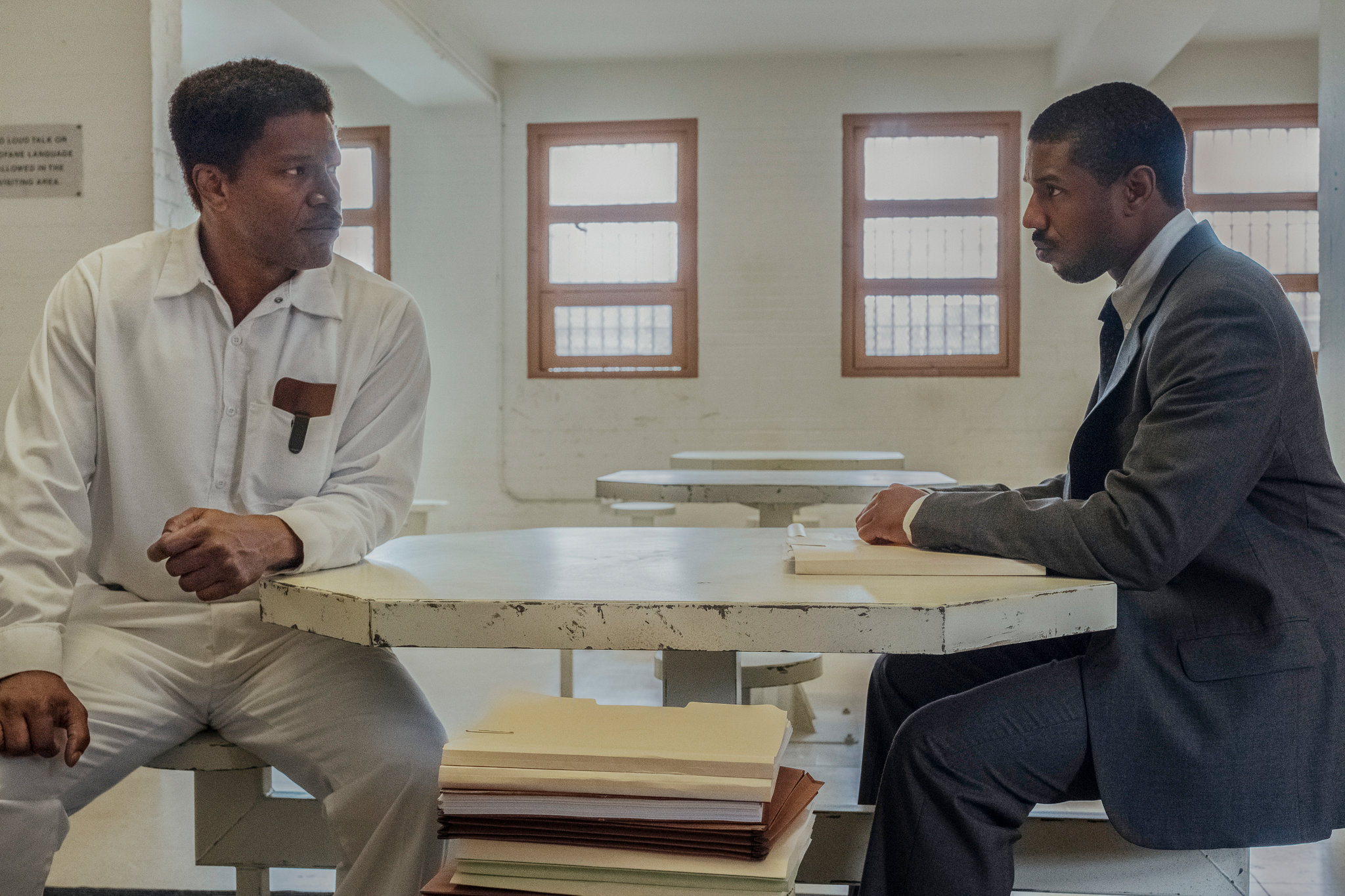
Director and co-writer Destin Daniel Cretton also treats Stevenson’s clients with respect, with an outstanding performance by Jamie Foxx as Stevenson’s first significant client. It’s a quieter role than we have seen him in for a while, and his subtle work here is extraordinary, telling us the whole history of a man who has never been able to expect fairness for himself or his family. Rob Morgan plays another prisoner, performed with heartwrenching simplicity and delicacy to bring home to us what brought Stevenson to devote his life to this cause.

Parents should know that this movie concerns men on death row and abuses of the justice system. It includes some strong language, including racist epithets, and references to sexual assault and violent crime an a non-explicit depiction of an execution.

Family discussion: Why was it important for Stevenson to address his clients and their families as Mr. and Mrs.? What kept him from giving up?

If you like this, try: Bryan Stevenson’s book and TED Talk, and documentary

Related Tags:


Based on a book Based on a true story Courtroom Crime Drama DVD/Blu-Ray movie review Movies -- format Race and Diversity
Little Women

Little Women

Posted on December 24, 2019 at 5:00 pm

A-
Lowest Recommended Age: 4th - 6th Grade
MPAA Rating: Rated PG for thematic elements and brief smoking
Profanity: None
Alcohol/ Drugs: Social drinking, brief smoking
Violence/ Scariness: Very sad death, references to other deaths including death of a baby
Diversity Issues: A theme of the movie
Date Released to Theaters: December 25, 2019
Date Released to DVD: April 6, 2020
Copyright 2019 Sony Pictures

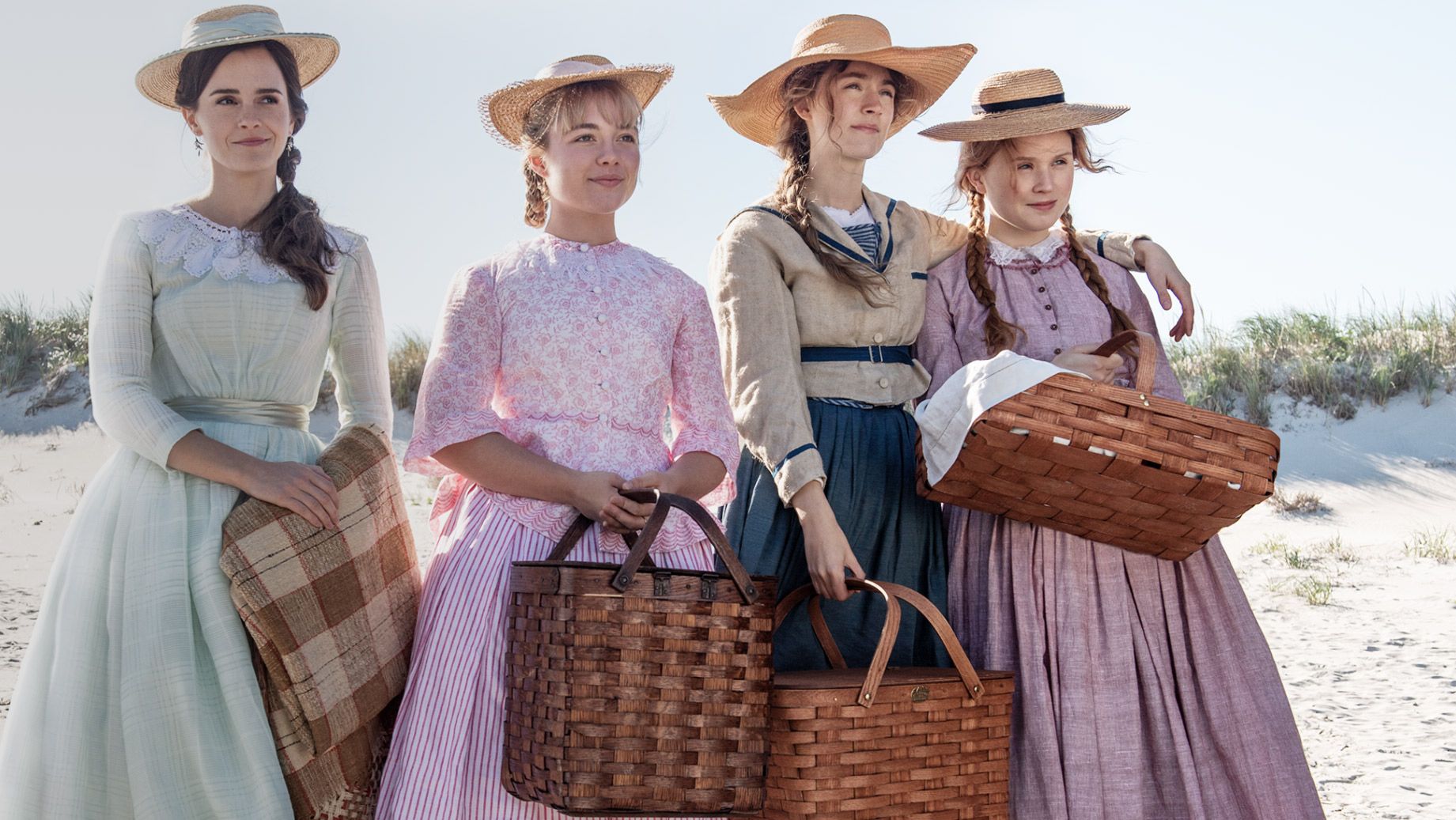
You need to know where I’m coming from on this one. There is no book more central to my life than Louisa May Alcott’s Little Women. My mother, Josephine Baskin Minow, has been Jo since she first read Little Women when she was a child, And now our children call her Marmee. I loved it so much that I read all the other Alcott books on the library shelf (I especially recommend Eight Cousins and An Old Fashioned Girl). Little Women has been central to the lives of young women for more than 150 years, inspired by its heroine, who was inspired by Alcott herself. Jo March is fiercely loyal, impetuous, impatient, and a writer, both eager and reluctant to find her own voice. Authors who name the book as a major influence range from Cynthia Ozick, Simone de Beauvoir, Doris Lessing, Margaret Atwood, Jane Smiley, Anne Tyler, Jhumpa Lahiri, Ursula Le Guin and Nora Ephron to “Twilight”‘s Stephenie Meyer.

Alcott’s semi-autobiographical story of four sisters has been adapted many times, including a Broadway musical, a 48-chapter Japanese anime series, an opera, and films starring Katharine Hepburn, Elizabeth Taylor, and Winona Ryder. The most recent BBC version (of four) was shown in the United States on PBS. One of two major adaptations last year was a modern-day retelling with a quartet of appealing young actresses, adapted with skill and understanding by writer/director Clare Niederpruem.

So, my standards and expectations could not have been higher and it is my very great pleasure to tell you that this new film from writer/director Greta Gerwig exceeded them all. Writer/director Greta Gerwig not only loves and understands the book, she also appreciates that in 2019 we are only beginning to catch up to Alcott’s vision of what is possible for young women and for all of us. Those who do not know Alcott’s work or have only seen the early versions may think that Gerwig has “modernized” the story. But every part of it comes from Alcott (some from other writings) and every part of it is entirely consistent with her fierce, independent, and devoted spirit and rebellious energy. And Saoirse Ronan is the best Jo March yet, her long-limbed coltishness not so much “boyish” as vitally engaged in a world that cannot always keep up with her.

The book was originally written in two parts, but the second volume (called Good Wives) has been a part of what we know as Little Women for more than a century. Gerwig begins the story in the middle of the second book as the now-adult Jo (a teenager in the first volume) meets with a newspaper publisher (a charmingly crusty and wry performance from playwright Tracy Letts, last seen as Henry Ford II in “Ford v. Ferrari”). In case we are not as quick as he is to see through her claim to be bringing stories written by a “friend,” Gerwig lets us see the ink that still stains her fingers. When her story is accepted (with the moralizing parts cut out), she exuberantly races home.

Then, as we will throughout the film, we go back and forth between the two parts of the story, indicated by different color pallattes, the warmer hues for the earlier years, when the girls were all at home and their father (Bob Odenkirk) was a Union volunteer in the Civil War. There were struggles and growing pains, but there was also a sense of purpose and possibility that is not as clear in the cooler-hued older years, when Jo is in New York living in a boarding house, and Amy (Florence Pugh) is touring Europe and studying art. Pugh may be too old for Amy in the early scenes, but she and Gerwig give Amy far more depth than any previous portrayal (perhaps including Alcott’s). Emma Watson is lovely as oldest sister Meg (obligatory complaint about what was left out of this version — the scenes of Meg coming to John’s defense when Aunt March attacks him and the scene of her showing off her “new dress” to him). Gerwig’s script softens the professor’s critique of Jo’s more lurid stories-for-hire and his involvement in getting the book-within-a-book published, but the scene of his telling her that the melodramatic stories she is writing for money are not good is still an important turning point.

Laura Dern plays Marmee, a woman of character, courage, and intention. The private moment she takes in the foyer of the house to make sure she can greet her daughters with good cheer on Christmas morning after caring for the impoverished Hummels is a small master class of acting. When Marmee tells Jo that she still struggles with anger every day, we see where Jo got her inner fire and how inner fire can become the foundation for determination and principle.

And then there is Timothée Chalamet as Laurie, the sensitive boy whose temperament is protected from becoming headstrong and careless by the example of the March family, their attitude toward work and also their attitude toward fun. Like Laurie to Jo, Chalamet is a perfect match for his “Lady Bird” co-star Ronan, and we could happily watch a whole movie of them putting on plays, attending riotous meetings of the Pickwick Society, and skating on the pond.

It is still one of the all-time great coming-of-age stories of a family and an artist finding her voice. By putting making the early year portion of the film flashbacks that comment on, provide context for, and deepen the “present-day” storylines, Gerwig makes us ready for a perfect ending that brings Alcott, her fictional avatar, and the story of all of us who have tried to tell our stories together.

Parents should know that this film includes a sad death and reference to other deaths including the death of a baby, family stress and conflict, and brief smoking and drinking.

Family discussion: Which sister is most like you? Was the publisher right about the ending to the story? Why do so many women, especially writers, say that this story was their most important inspiration?

If you like this, try: the book by Louisa May Alcott and the other movie and miniseries versions of this story

Related Tags:


Based on a book Classic Coming of age Drama DVD/Blu-Ray Epic/Historical Family Issues For the Whole Family movie review Movies -- format Remake
THE MOVIE MOM® is a registered trademark of Nell Minow. Use of the mark without express consent from Nell Minow constitutes trademark infringement and unfair competition in violation of federal and state laws. All material © Nell Minow 1995-2026, all rights reserved, and no use or republication is permitted without explicit permission. This site hosts Nell Minow’s Movie Mom® archive, with material that originally appeared on Yahoo! Movies, Beliefnet, and other sources. Much of her new material can be found at Rogerebert.com, Huffington Post, and WheretoWatch. Her books include The Movie Mom’s Guide to Family Movies and 101 Must-See Movie Moments, and she can be heard each week on radio stations across the country.

Website Designed by Max LaZebnik