It Ends With Us

It Ends With Us

Posted on August 8, 2024 at 5:30 pm

B
Lowest Recommended Age: Mature High Schooler
MPAA Rating: Rated PG-13 for domestic violence, sexual content and some strong language
Profanity: Some strong language
Alcohol/ Drugs: Alcohol
Violence/ Scariness: Domestic violence is frankly but discreetly portrayed, some serious injuries
Diversity Issues: None
Date Released to Theaters: August 9, 2024
Date Released to DVD: December 3, 2024

For the handful of people who do not know this, It Ends With Us is a wildly popular book by Colleen Hoover, a social worker who began her career as an author by self-publishing. She was one of the early BookTok success stories, and has now published more than 20 books (plus a jewelry collection, press-on nails, and a non-profit that has donated over $1 million to promote love of reading). In 2022 her books held six of the top ten spots on the New York Times paperback fiction best seller list. She has called It Ends With Us, published in 2016, the most difficult because of its themes of domestic abuse, and it is her most popular, with a sequel called It Starts With Us.
It Ends With Us
Copyright Columbia 2024

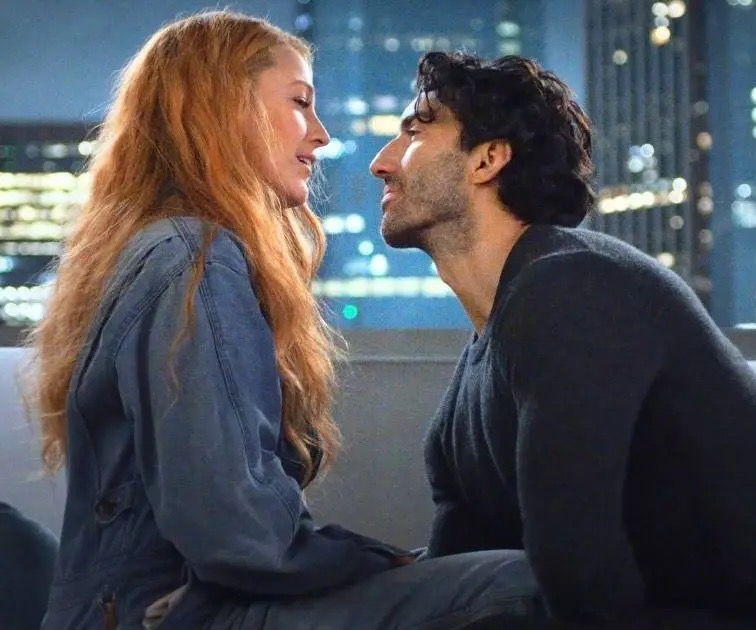
Hoover and star Blake Lively produced the film version of the book, and it was directed by Lively’s co-star, Justin Baldoni. And so, with one exception, this is as close as a filmed version of a novel can be to a book, scene by scene, line by line. The fans of the novel who were in the audience at the screening I saw thought this was just fine, and they sighed happily along. Those unfamiliar with the story or less committed to admittedly soapy melodrama may enjoy the Hollywood gloss but come away less satisfied.

We first see Lily Blossom Bloom (Lively) on her way to her father’s funeral, greeting her mother, who is dressed in black, at the door of an imposing suburban house in Maine. Even though it is very clear where she is and why, this movie does not leave anything unsaid that can be said, and so Lily’s mother (Amy Morton) has to tell her daughter that she is glad she has arrived for her father’s funeral but sorry she was not there in time to say goodbye. Lily is supposed to give a eulogy, and her mother tells her just to say the five things she loved most about her dad. At the pulpit, she looks down at a napkin with 1 though 5 listed but without any words next to them. She leaves the church without speaking and returns to Boston.

Lily is about to make her lifelong dream come true, and open up a flower shop called, yes, Lily’s Blooms. As she clears out the store to get ready, she meets Allysa (Jenny Slate, by far the most appealing character in the story), a wealthy young married woman who impulsively agrees to go to work in the shop and instantly becomes Lily’s best friend.

Allysa’s husband (Hasan Mainhaj in his second perfect husband role in a row, following “Babes”) and brother (director/star Baldoni) come to the shop and Lily realizes that her new friend’s brother, Ryle ( Hoover gets character names straight from Bodice Ripper Central) is the handsome neurosurgeon she had a very meaningful encounter with on a rooftop, where she went to think about her father. The anonymity and their mutual hotness allowed them to share some intimate secrets (“naked truths”) and it was about to get steamy when he was called to the hospital for an emergency.

This re-meeting gets things back in gear, even though there are more red flags than in a year of NASCAR races. For example: the first seconds of Ryle’s appearance on screen he is furiously kicking a chair. Then he tells Lily he is only interested in sex, not relationships. Then Alyssa warns her. But a gal loves a challenge, so Lily slows his roll and he is almost instantly besotted.

We go back and forth to Lily’s past (played by Isabela Ferrer), where we see her devastated by her father’s abuse of her mother and her kindness in reaching out to a homeless classmate named, wait for it, Atlas (Brandon Sklenar in the present, Alex Neustaedter in the past). They fall in love but are separated by a violent attack.

Lily loves Ryle, but his insecurity and volatile temper keep her on eggshells. The film’s best insight is how easy it is for Lily to slide into feeling she is responsible for managing Ryle’s moods and accommodating his demands. Will the pattern of domestic violence stop with them? How?

The production values, like the storyline, hark back to the lush “for the ladies” films of the 50s, with expensive settings and some….choices by costume designer Eric Daman (Lily’s boots! Alyssa’s sequins!). There are many shots of the sun rising or setting over water. There are many lines of dialogue explaining what we have already gleaned from seeing.. A reader can fill in the blanks in a book as though it’s a Roarshach ink blot. If it is not carefully done (“The Bridges of Madison County” is a good example), an on screen depiction can reveal the thinness of the characterizations and revelations.

Lively brings radiance to the role, but she is stronger when she really lets loose in devilish mode (looking forward to “A Simple Favor 2.” Lily is relegated to nervous laughs, low-level quips, nervously reassuring Ryle, and growing understanding of her situation. Her co-stars are handsome in the way 40’s and 50’s divas played opposite actors who had just enough chemistry to be believable without detracting from their luster. This makes it watchable but not especially memorable.

Parents should know that this film includes strong language, sexual references and situations, and domestic violence with sexual assault and serious injury. Characters drink and smoke.

Family discussion: How was Lily different from her mother? Why did she visit her father’s grave? What will happen next?

If you like this, try: Colleen Hoover’s books and classic older films like “My Reputation” and “Now Voyager”
Related Tags:


Based on a book DVD/Blu-Ray Family Issues Movies -- format New on DVD/Blu-Ray Romance VOD and Streaming
Widow Clicquot

Widow Clicquot

Posted on July 18, 2024 at 5:48 pm

B
Lowest Recommended Age: High School
MPAA Rating: Rated R for strong bloody violence, language, sexual content, nudity, and some drug use
Profanity: Strong language
Alcohol/ Drugs: Drinking, drugs
Violence/ Scariness: Very sad death, reference to war
Diversity Issues: A theme of the movie
Date Released to Theaters: July 19, 2024

I never knew that the legendary Veuve Cliquot champagne was named for the woman who created it in the late 18th century. Veuve means widow.

Widow Clicquot
Copyright WME 2024

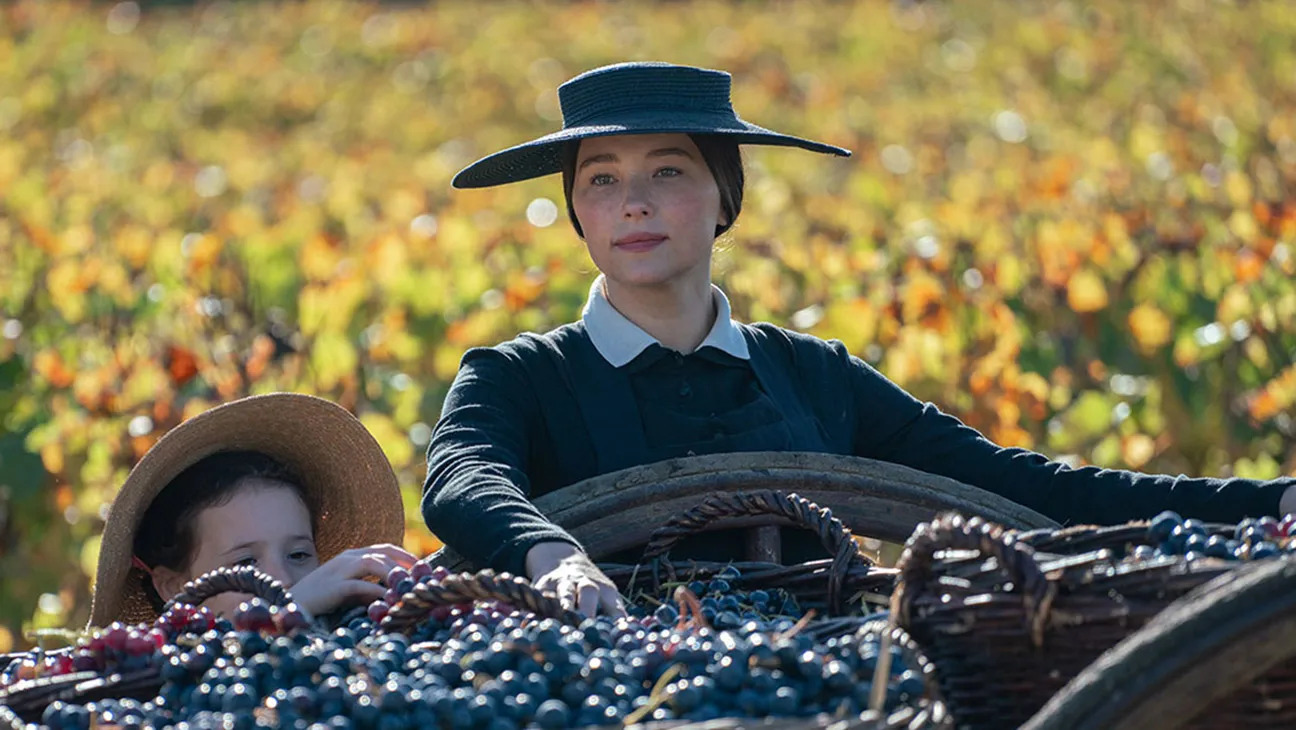
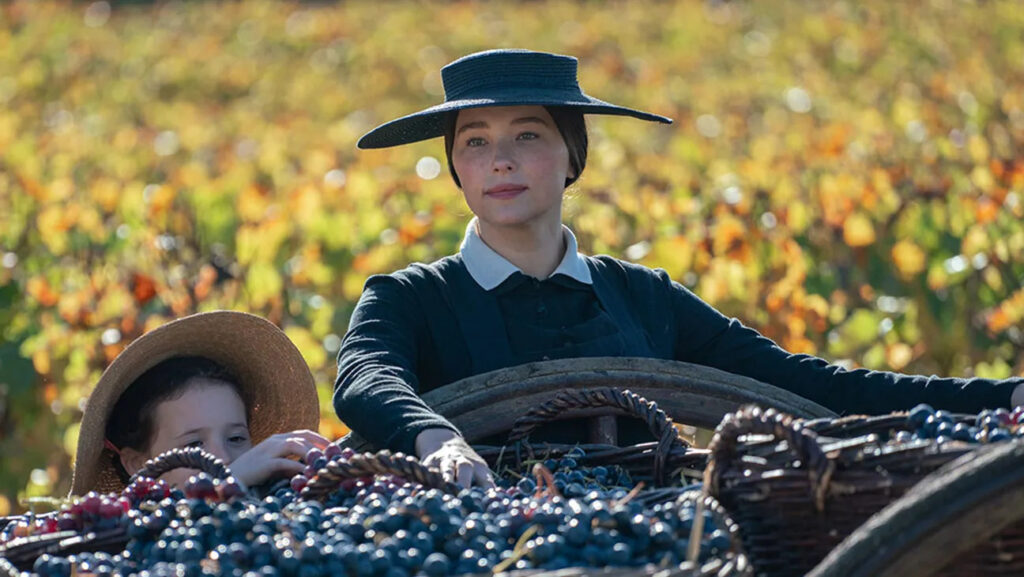
Haley Bennett, who also produced, plays Barbe-Nicole Ponsardin Clicquot, devastated by the death of the husband she adored when she was still in her 20s. In flashbacks (too many) throughout the film, we see that her relationship with Francois (Tom Sturridge) was deep, intimate, and meaningful. They were both committed to full partnership in the family wine business and he had complete faith in her judgment and taste. That is why, almost unheard of in that era, he made it clear in his will that he was leaving her the vineyards and the business. Throughout the film, she faces one crisis after another as her father-in-law, Philippe (Ben Miles), tries to seize control of the company, her less hierarchical and more inclusive relationship with her workers is challenged, and production and logistics problems make it impossible for her to sell her wine. She gets support (and more) from a man who was her husband’s close friend (perhaps more) and the sales and distribution partner of the business, (Sam Riley).

Trailer for Widow Clicquot

Cinematographer Caroline Champetier, production designer Stéphane Sartorius and the sound team have created an immersive world that makes us feel like we’re inside a Napoleonic era oil painting. The creaking floorboards, high ceilings, and flickering candlelight are in sharp contrast to the natural world of the vineyard, where Barbe-Nicole is happiest and most at home. Bennett has a quiet, almost serene, quality but seems to glow from within. Her scenes with Sturridge in the blissful early days and then as he became more unstable (there is an implication that he may have committed suicide) and when she makes the decision to send their daughter away to protect her from her father’s deterioration, are subtle but effective, as is Barbe-Nicole’s passion for the vineyard and for making the most delicious champagne ever created. As she talks about the flavors and the size of the bubbles, as she talks about evading Napoleon’s restrictions on international sales, she is quiet, but sure. A defining moment is when she explains that she wants to rotate the crops because the vines need to struggle. That moment and her literal final word tell us that one of the world’s most delicate and cherished drinks is the result of struggle, one that all who embraced considered worth it.

Parents should know that this film includes a mental breakdown and a possible (offscreen) suicide, grief, some sexual situations with nudity, and the misogyny of the era.

Family discussion: Why was Madame Clicquot so confident and determined? What was unusual about the way she treated her employees? Was she right to try to evade the trade restrictions?

If you like this, try: The book by Tilar J. Mazzeo, and Bennett’s film, “Cyrano.” And, if you’re old enough, try some champagne.

Related Tags:


Based on a book Based on a true story Biography Drama Epic/Historical movie review Movies -- format Movies -- Reviews
The Ministry of Ungentlemanly Warfare

The Ministry of Ungentlemanly Warfare

Posted on April 17, 2024 at 8:08 pm

B
Lowest Recommended Age: Mature High Schooler
MPAA Rating: Rated R for some language and strong violence throughout
Profanity: Some strong language
Alcohol/ Drugs: Drinking and drunkenness
Violence/ Scariness: Extensive wartime violence with guns, knives, arrows, explosions, many characters killed, many graphic and disturbing sounds and images
Diversity Issues: Diverse characters
Date Released to Theaters: April 19, 2024

It is a perfect match of story and director. Guy Ritchie is at his best in high-energy stories of very attractive men with mad fighting skills and no hesitation in using them. In between shoot-outs, explosions, and high crimes, casually toss off understated quips and references to the playing fields of Eton. This is a true story with exactly those components, plus a ton of nameless Nazis and one guy who is described as even worse than a Nazi, so killing them is as close to guilt-free as possible. He has a lot of fun with it.

The Ministry of Ungentlemanly Warfare
Copyright Lionsgate 2024

The group of highly skilled renegades are described in the book that inspired this film as the first special forces military operatives. And we hear the British commanders explain that if Hitler isn’t following the rules, they won’t either. “They’re all bad,” warns one. “They’ll need to be,” responds another.

Of course that means they do not obey orders, either, but that’s what you get when you get a man out of prison to put together a group of cut-throats and renegades, one who is also in prison, but in his case being tortured in a German POW camp. Their mission is to go to the Ivory Coast and sink the supply ship that services the U-boats in the Atlantic Ocean.

On to the strategy, the revising of the strategy when things go wrong, the stunts, the shoot-outs, the action-banter, remix and repeat, plus a thumpy score with some cowboy twang by Christopher Benstead.

Cavill, formerly clean-cut and dashing as Superman and in the under-appreciated “The Man From UNCLE,” is even better in scruffy mode here as Gus March-Phillips. “Reacher’s” Alan Ritchson and “Crazy Rich Asian’s” Henry Golding also seem to be enjoying a chance to have some fun with their roles. The team needs some back-up help from undercover operatives, which is where we get to enjoy Babs Olusanmokun as Heron, who runs the local nightclub and “Third Body Problem’s” Eiza González as Majorie Stewart, sultry singer, sharpshooter, and, as a cover, gold smuggler.

And then there is the bad guy, described by Heron as “the only guy worse than a Nazi,” the cruel local commanding officer, (Til Schweiger), providing additional menace and urgency as the final operation becomes complicated and chaotic. Ritchie gets lost in the bombast and is too cheery about the carnage. He has no time for character or emotional heft beyond our feelings based on what we know about the history. There’s no substance, but it is entertaining.

Worth mentioning: a senior office in charge, played by “The Princess Bride’s” Cary Elwes, is known as M and one of the junior officers is a young Ian Fleming, played by Freddie Fox. Yes, that Ian Fleming, and the closing credits tell us that he got some of his ideas for James Bond from this experience.

Parents should know that this is an extremely violent film set in wartime, with a lot of guns, knives, arrows, and explosions, some torture, prostitutes and implied sexual abuse, with many disturbing and graphic sounds and images. Characters use strong language and there is drinking and drunkenness.

Family discussion: What rules work during a war? Why aren’t all military operations conducted this way? How is war today different from this story?

If you like this, try: the book by Damien Lewis (the writer, not the actor) and films like “The Dirty Dozen” and “The Guns of Navarone”

Related Tags:


Action/Adventure Based on a book Based on a true story movie review Movies -- format Movies -- Reviews War
The Color Purple

The Color Purple

Posted on December 24, 2023 at 5:04 pm

A-
Lowest Recommended Age: High School
MPAA Rating: Rated PG-13 for mature thematic content, sexual content, violence and language
Profanity: Strong and racist language
Alcohol/ Drugs: Drinking and drunkenness
Violence/ Scariness: Domestic violence, attack, character beaten by police
Diversity Issues: A theme of the movie
Date Released to Theaters: December 25, 2023

Copyright Warner Brothers 2023
Alice Walker’s novel, The Color Purple is the acclaimed, Pulitzer Prize-winning story of Celie, a young Black woman in the rural Georgia of the early 1900s. Through her letters, written to her sister Nettie, we learned the story of her horrific abuse, told in the simple language of someone who had no education and little sense that she deserved better.

The book was made into a dramatic film directed by Stephen Spielberg, with Whoopi Goldberg as Celie and Oprah Winfrey as Sofia, who becomes Celie’s step-daughter-in-law. It then became a successful Broadway musical with music and lyrics by Brenda Russell, Allee Willis, and Stephen Bray, and a book by Marsha Norman. “American Idol” favorite Fantasia Barrino was a replacement Celie and Danielle Brooks played Sofia.

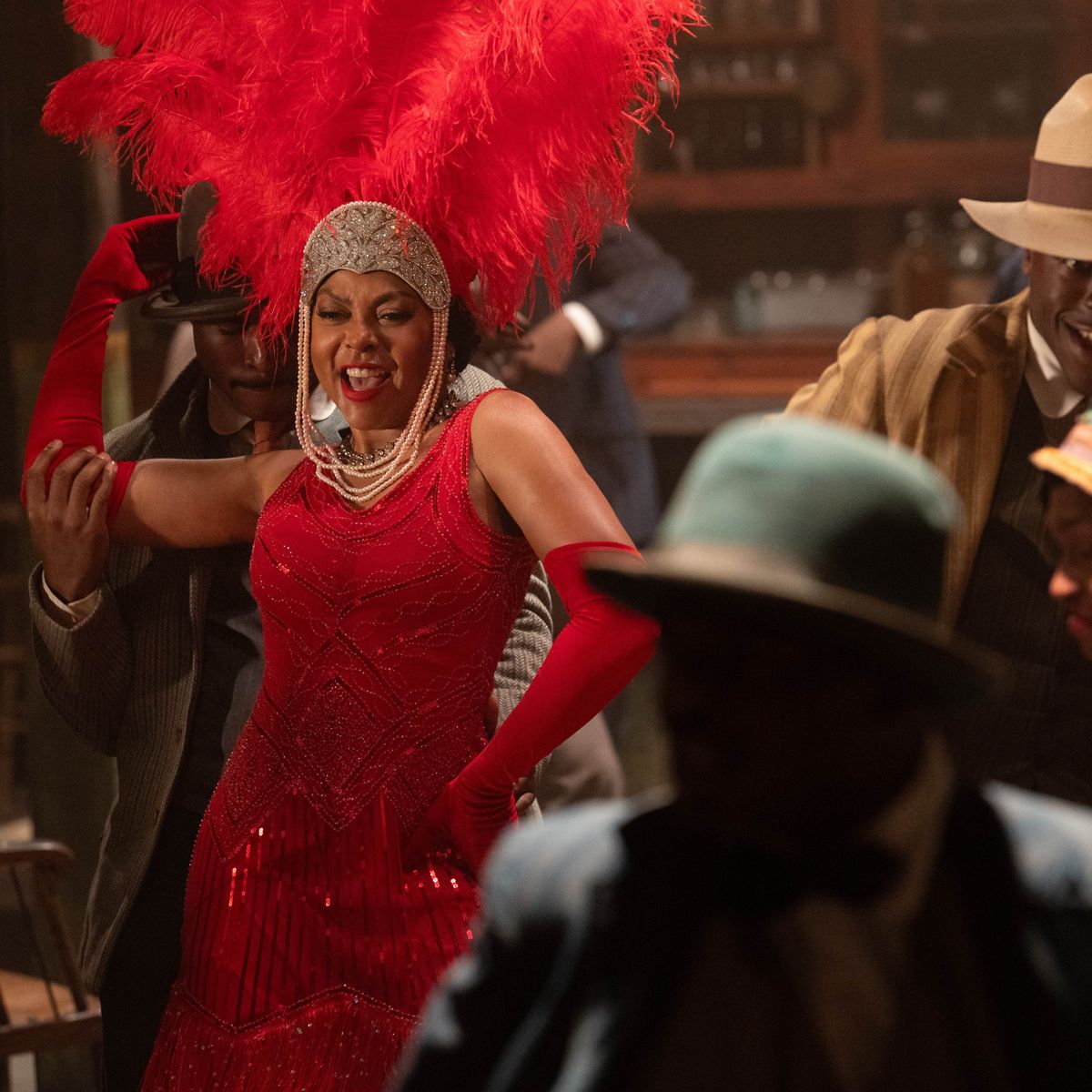
And now it is a movie again, with Barrino and Books repeating their Broadway roles. This version is unexpectedly joyous and heartwarming. That is in large part thanks to director Blitz Bazawule, who shows us the characters’ strengths with the musical numbers before the storyline does. It is also thanks to the raise-the-roof, powerhouse performances from Barrino, Brooks, and Henspn, any one of which would blow the doors of of a theater, and all three together lift our spirits like a gospel choir. Every note is pure and thrilling. Every one is a revelation. Henson has the showiest part and she brings her endless movie star charisma to Shug the performer. But she also brings infinite compassion and gentleness to the intimate moments. Any lesser performer might make us question why someone as flamboyant and apparently hedonistic as Shug would find what no one else in Georgia seems to see in Celie. But Henson makes us understand why she gives Celie two things she has never had before, respect and a sense that she is worthy of love. She makes Shug another character who has made choices for her own survival but maintains a core of warmth.

Brooks is bursting with life force as Sofia, until her insistence on respect from others brings her devastating repercussions from the only white characters we see in the film. We learn from her story about abuse from outside that creates ripple effects in their community. We also see with Mister’s relationship with his father, how abuse is passed on through generations. And, with his son (Corey Hawkins), how healing through generations is also possible.

Phylicia Pearl Mpasi as young Celie and Halle Bailey (“The Little Mermaid”) as the her sister Nettie show us that having one person care is enough to make a difference. Mister throws Nettie out and she leaves with a missionary family for Africa and their separation is more devastating to Celie than her abuse by Mister, again underscoring the critical importance of a sustaining relationship.

The movie is frank about Celie’s abuse, including repeated rape by the man she believes is her father and then by the man her father sells her to, known to her only as Mister. But this version is more about Celie’s growing understanding of her own power, including the power of forgiveness. We also see other characters show resilience, generosity, and remorse. If the conclusion, as in the book and the previous movie, seems to tie things up a little too quickly, by that time we are so happy for Celie and so moved by the music we are fine with it.

Parents should know that this movie includes extreme abuse of a very young woman including rape and battery and having her children taken away. The film also includes misogynistic and racist attacks, a character beat up by police, betrayal, drinking and drunkenness, and strong language.

Family discussion: What are the events that make Celie understand that she could say no and that she deserved better? Why did Shug see more in Celie than anyone else? What made Mister change his mind?

If you like this, try: the book and the Spielberg movie

Related Tags:


Based on a book Based on a play Drama Epic/Historical Family Issues movie review Movies -- format Movies -- Reviews Musical Race and Diversity
American Fiction

American Fiction

Posted on December 17, 2023 at 4:25 pm

A-
Lowest Recommended Age: High School
MPAA Rating: Rated R for language throughout, some drug use, sexual references and brief violence
Profanity: Very strong language
Alcohol/ Drugs: Drinking and drugs, references to drug dealers
Violence/ Scariness: Brief graphic violence, reference to suicide
Diversity Issues: A theme of the movie
Date Released to Theaters: December 22, 2023

American Fiction
Copyright Amazon 2023
“American Fiction,” from first-time writer/director Cord Jefferson and based on the 2001 novel Erasure, by Percival Everett, is a biting satire of just about every aspect of American life, especially academia, publishing, and racism. It is also a heartfelt story about family connections and the conflicts that strain them. It is provocative, funny, and searingly smart. In my opinion, it is the best film of the year.

What’s remarkable is that Everett’s story is even more timely now than it was 22 years ago. Indeed, life imitates art, as Jefferson has spoken about how this story about a frustrated Black academic writes a satiric take-down of the kinds of Black representation that pander to white audiences had the same kind of difficulty getting this film made that the fictional professor had in finding a publisher for his book about classical Greek literature.

That professor, like the man who created him, has a literary name. He is Thelonious Ellison, nicknamed “Monk” after the musician Thelonius Monk. He likes to think of himself as living in a non-racial or post-racial world. He feigns ignorance when his class objects to his writing the title of a Flannery O’Connor story that includes the n-word on the blackboard, and frustrated when he gets in trouble for it. It infuriates Monk that his books about classical literature are shelved with Black books. It infuriates him even more when his agent, Arthur (a terrific John Ortiz of “Silver Linings Playbook” and “Ad Astra”) tells him publishers want him to write a “Black book.” “It is a Black book! I’m Black and it’s a book!” Monk says.

Monk’s relationship with his family is strained. His sister Lisa (Tracee Ellis Ross) is a doctor, exhausted from the stress of her job and caring for their mother, Agnes (Leslie Uggams), who is experiencing cognitive decline. His brother Clifford (Sterling K. Brown), also a doctor, is dealing with his own domestic upheaval as he wife left him after she found him having sex with a man. After a shocking loss, Monk has to take responsibility for Agnes, and he needs money.

Impetuously, Monk quickly bangs out a book he titles My Pathology. No, he corrects it, or un-corrects it, My Pafology, presumably a first-person narrative by a gang member and drug dealer known as Stagg R. Leigh (the name inspired y the 19th century pimp described in the classic song). The book is immediately snapped up by thrilled white editors at a top publishing house who chirp at him that they hope to get it out by Juneteenth. And then a white Hollywood director is interested.

Monk, his mother, and the family’s long-time housekeeper Lorraine (Myra Lucretia Taylor) visit the family’s vacation home on the water, and Monk meets the woman who owns the house across the street, a lawyer named Coraline (Erika Alexander). The film, like Monk’s book, has a heightened tone, but Alexander’s Coraline brings a grounding reality to the story as both the heart and the moral center. A scene with Coraline, Monk, and Clifford is one of the highlights of a consistently outstanding film.

Indeed, every performance is superb and Jefferson’s exceptional control of tone somehow makes the heightened portions and the more realistic elements work seamlessly together. Another outstanding scene has Monk talking to Sintara Golden (Issa Rae) as a sophisticated author whose “poverty porn” book, We’s Lives In Da Ghetto is a critical and commercial success. Taylor makes the loyal family retainer role fully complex, and we are grateful to see that the screenplay gives her a chance to have her own life and dreams.

This is a movie that cares about all of its characters and about the pernicious effects of racism, including the unacknowledged racism of people who consider themselves free from bigotry. Jefferson knows the hardest truths reach us through humor, and this movie is filled with wonderfully funny moments. It is only later that we realize just how compelling its messages are.

Parents should know that this film has constant strong language, sexual references, drinking and drugs and a fictional drug dealer, and a brief scene of graphic violence.

Family discussion: Which book of Monk’s would you want to read? Do you agree with Coraline about not judging people on their worst day?

If you like this, try: “Dear White People” and Percival Everett’s books. And for a real-life conversation about these issues, see the Jay-Z documentary, “Fade to Black.” As I wrote about it in my book 101 Must-See Movie Moments:

Backstage, aspiring young performers talk about the conflict they feel knowing that in order to be successful they must pander to stereotypes about “gangstas” instead of addressing a wider range of issues or exploring their own experiences and feelings.
Jay-Z begins by saying that he thinks the violence and drug problems of the inner city are not as bad as they were when he was younger and that it takes people speaking out against it to make a difference. But, he says, it is not his style to do so. “You’re not that type of rapper,” one of his friends agrees. “For two lines out of a 60-minute tape,” he says, “for 30 seconds, I felt like saying something, to speak on what’s going on in the hood, should I not do that? Should I ignore those feelings?”

Young hip-hop artists who want to be as successful as Jay-Z then talk about their conflicts. “You rapping on shooting and killing people,” Jay-Z says to one of them. “They the one who buy it. That’s what people want to hear,” the other responds. “Truthfully, it’s whack. I’ve been feeling that way, too. I don’t be wanting to do that. It seems that sometimes that’s all the n*** want to hear.” Another one advises him to “be you,” asking “Why would you write a rhyme that you don’t want to write?” But he does not think his music will sell if he tries something different, even if it is more honest.

Jay-Z tells the documentary cameraman to focus on him so he can speak directly to us in the audience. “See what you, the public, did to rappers? They scared to be theyselves. N*** don’t think that people gonna accept them as theyself.”

It is as powerful and telling a moment about art, mortality, culture, and identity as has ever been filmed.

Related Tags:


Based on a book movie review Movies -- format Movies -- Reviews Race and Diversity Satire
THE MOVIE MOM® is a registered trademark of Nell Minow. Use of the mark without express consent from Nell Minow constitutes trademark infringement and unfair competition in violation of federal and state laws. All material © Nell Minow 1995-2026, all rights reserved, and no use or republication is permitted without explicit permission. This site hosts Nell Minow’s Movie Mom® archive, with material that originally appeared on Yahoo! Movies, Beliefnet, and other sources. Much of her new material can be found at Rogerebert.com, Huffington Post, and WheretoWatch. Her books include The Movie Mom’s Guide to Family Movies and 101 Must-See Movie Moments, and she can be heard each week on radio stations across the country.

Website Designed by Max LaZebnik