Ant-Man and the Wasp

Ant-Man and the Wasp

Posted on July 3, 2018 at 4:15 pm

B +
Lowest Recommended Age: Middle School
MPAA Rating: Rated PG-13 for some sci-fi action violence
Profanity: Mild language
Alcohol/ Drugs: Some alcohol
Violence/ Scariness: Extended comic-book/action peril and violence, characters injured and killed
Diversity Issues: None
Date Released to Theaters: July 6, 2018
Date Released to DVD: October 15, 2018
Copyright 2018 Marvel

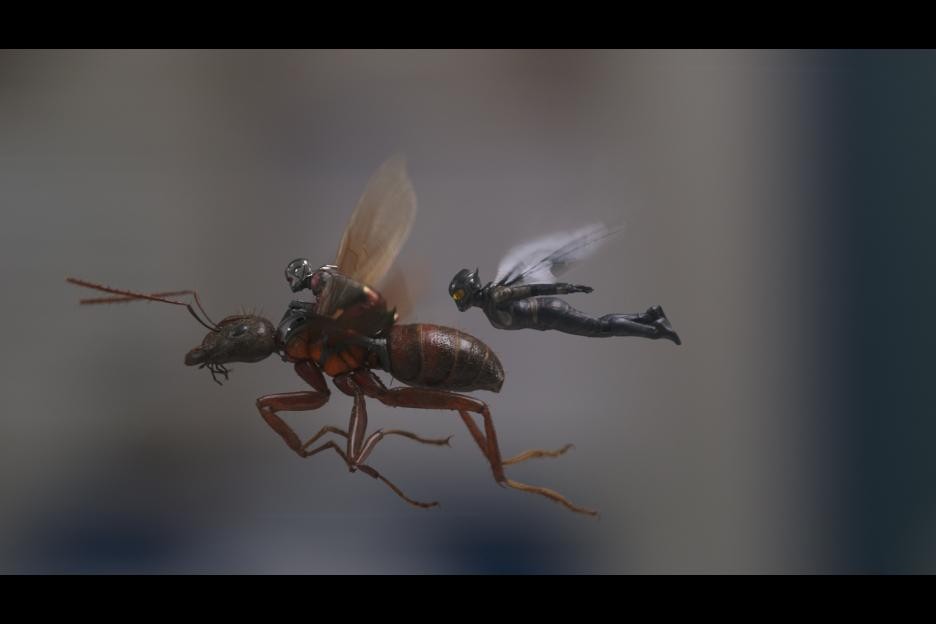
I like Ant-Man. He’s literally down to earth — after the intergalactic super-villain Thanos plotting the wiping out of half the universe, it’s nice to see our hero up against an ordinary, non-super thug of a bad guy. And it’s also nice to see, 20 movies in, a female superhero in the title of the film. I like the slightly retro, slightly bookish look of the Ant-Man films (outstanding work from production designer Shepherd Frankel). And I like the fun they have with scale. Scott Lang (Paul Rudd) can do more than shrink himself to the size of an ant and call on his ant friends to help him out. He can make himself and objects around him get bigger or smaller almost instantly. And the Wasp (Evangeline Lilly) can do all of that AND fly and use her wrist blasters.

Scott has three more days to go under house arrest, wearing an ankle bracelet, with frequent check-ins by the local authorities, led by Jimmy Woo (Randall Park), who can’t seem to decide whether he wants to lock Scott up or become his BFF. He’s going a little stir-crazy, though he enjoys the elaborate games he creates for his daughter, Cassie (Abby Ryder Fortson). The terms of his parole forbid him from having contact with Hank Pym (Michael Douglas) or his daughter Hope (Lilly), but that has not been a problem. They are not speaking to him after they think he betrayed them by making their technology public in “Captain America: Civil War.”

But something else that happened in “Civil War” is the reason they have to find him again. Pym’s wife and Hope’s mother, the brilliant scientist Janet Pym (Michelle Pfeiffer), became too small and they thought she was lost forever in the “quantum entanglement.” Scott was able to return from the quantum entanglement, though, and they want to find out how and send him back there to see if Janet can be rescued. This is a job for two superheroes, and so it’s time for Hope to suit up.

An all-around crime boss named Sonny Burch (Walt Goggins) wants to stop them from getting the material they need to make that work. A character whose backstory I won’t spoil but who can vibrate through matter also wants it. And the cops are trying to capture the Pyms as well. So, lots of chases, lots of hand-offs and near misses. Director Peyton Reed and his writers (including Rudd) have a lot of fun with scale, sizing the vehicles up and down in an instant and Scott himself getting as big as the Statue of Liberty (which is exhausting for him) and as tiny as an atom. His suit does not always work correctly, though, and his judgment does not always work correctly, either.

The distinctive humor of the first film continues in this one, with Michael Pena returning as Scott’s loquacious fellow ex-con and business partner. His circuitous story-telling was funny in the first film, and it gets funnier here when he is questioned under the effects of what could be a truth serum (whether it is or not is a point of contention). Random topics that also come up for discussion include close-up magic, the Slavic folklore character Baba Yaga, loading the dishwasher, and playing the drums. There are some great action sequences, especially one in a kitchen and the chase scenes, and crisp pacing to balance the more laid-back comedy. Its biggest failing is the dumb nicknames for the daughters of the characters. Really, Peanut? Jellybean? Those girls deserve something as witty and distinctive as the rest of the film.

NOTE: Stay through the credits for a brief update on the “Infinity War” cliffhanger, and then all the way to the end for an even briefer and very silly little second extra that has an important clue.

Parents should know that this film includes extended comic book/action peril and violence, characters injured and killed, some scary images, mild language, and some parent-child issues.

Family discussion: What changes do you think the quantum experience has on people who travel there? How is Ant-Man different from the other Avengers?

If you like this, try: the first “Ant-Man” and the Avengers movies
Related Tags:


Comic book/Comic Strip/Graphic Novel DVD/Blu-Ray Fantasy movie review Movies -- format Scene After the Credits Science-Fiction Series/Sequel Superhero
Incredibles 2

Incredibles 2

Posted on June 14, 2018 at 5:49 pm

A-
Lowest Recommended Age: Kindergarten - 3rd Grade
MPAA Rating: Rated PG for action sequences and some brief mild language
Profanity: Schoolyard language
Alcohol/ Drugs: None
Violence/ Scariness: Extended action/superhero peril and violence, gun, sad (offscreen) murder of parent
Diversity Issues: None
Date Released to Theaters: June 15, 2018
Date Released to DVD: November 5, 2018
Copyright Disney Pixar 2018

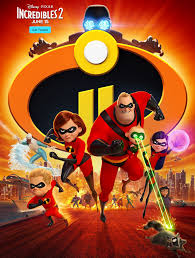
Brad Bird knows that all families are pretty incredible, and his movies about the family of superheroes reminds us that we know it, too. The writer/director of “The Incredibles” and this sequel, “Incredibles 2” (there’s a lot going on, so this title is streamlined and has no room for an extraneous “the”) took 14 years and it was worth the wait. We are glad to be back in the world of the super-family, though for many of us, our favorite character is still super-suit designer Edna Mode (voiced by Bird himself). Edna’s comment is really the theme of the film: “Parenting done right is really a heroic act.”

One of the best ideas in the original was giving each family member a heightened version of the real-life superpowers we see in all families. The dad is Bob, otherwise known as super-strong Mr. Incredible (Craig T. Nelson). Mom is Helen, who is always stretched in a million different directions, Elastigirl (Holly Hunter). The middle school daughter, Violet (Sarah Vowell) is invisible, because middle school is such a fraught time that many kids either think they are invisible or wish they were. And her younger brother is super-fast Dash (Huck Milner). There’s also a baby named Jack-Jack, who in the last film had not developed any superpowers yet, but in this sequel makes up for lost time with at least 17 of them.

We begin right where the first film left off. Even though they just saved the day, superheroes are still outlawed by a government that considers them too much of a risk. Violet has finally been noticed by the boy she likes. And a new super-villain, The Underminer, has attacked the town.

The Incredibles save the day, but it does not change the law. “Politicians don’t understand people who do good only because they think it right.” Even the secret government program to keep the superheroes saving the day is shut down.  The Incredible family has no place to go…until a pair of siblings who head up a huge corporation make them an offer.  They think they can persuade the government to change the law, but first Elastigirl — and only Elastigirl — will have to come with them.

The movie’s funniest moments come when Bob is left behind with the kids.  He may be able to lift a locomotive, but new math is an entirely different problem.  And Jack Jack’s new powers start popping out like jumping beans.  The concept of baby-proofing a house takes on a whole new meaning when it isn’t the baby you’re trying to protect. It’s the house that needs protection when a baby has laser beam eyes, invisibility, and a mode that can only be described as fire-breathing gorgon.  He may not be able to walk or talk yet, but a raccoon who won’t leave the yard will be very sorry about making that mistake.

Meanwhile, Elastigirl is happy to be using her powers again, but she misses her family, even when she gets a call about Dash’s missing shoes in the middle of a mission.  Of course a new villain is going to challenge the whole family, their old friend Frozone (Samuel L. Jackson) and a delightful new group of oddball superheroes. The action scenes are as thrillingly staged as all of the “Fast/Furious” films put together, the mid-century-inspired production design is sensationally sleek and space age, especially the house the Incredibles borrow. Some serious and timely issues are touched on lightly but meaningfully, including immigration, how to respond to laws you consider unfair, opting for “ease over quality” in consumer goods, and spending too much time on screens with not enough connection to people. The villain, once revealed, seems a bit patched together, however, as though there was some re-writing done over the 14-year gestation period that never got fully resolved. But there is plenty of comedy and lots of heart in a story that truly is incredible.  Please don’t make us wait until 14 years for the next one.

DVD Extras include concept art and a new feature about Edna Mode.

NOTE: Pixar continues its track record for making parents in the audience cry, this time even before the feature begins. The short cartoon before “Incredibles 2” is the story of a mom who just is not ready for her son to grow up and, I’m sorry, I must have something in my eye.

Parents should know that this movie includes an offscreen murder of a parent with a gun, extended action/superhero peril and violence, characters mesmerized and forced to obey, and brief mild language.

Family discussion:  Which is more important, selling or designing? When should you be a cynic and when should you be a believer?  What are your core beliefs?

If you like this, try: “The Incredibles,” “Monsters vs. Aliens,” “Inside Out,” and “Sky High”

Related Tags:


3D Animation DVD/Blu-Ray Family Issues Fantasy For all ages For the Whole Family movie review Movies -- format Scene After the Credits Series/Sequel Superhero
How to Talk to Girls at Parties

How to Talk to Girls at Parties

Posted on May 31, 2018 at 4:02 pm

B +
Lowest Recommended Age: Mature High Schooler
MPAA Rating: Rated R for language throughout, sexual content, some drug use and nudity
Profanity: Very strong language
Alcohol/ Drugs: Alcohol, drugs
Violence/ Scariness: Sci-fi peril and some violence
Diversity Issues: None
Date Released to Theaters: June 1, 2018
Date Released to DVD: August 13, 2018
Copyright 2018 A24

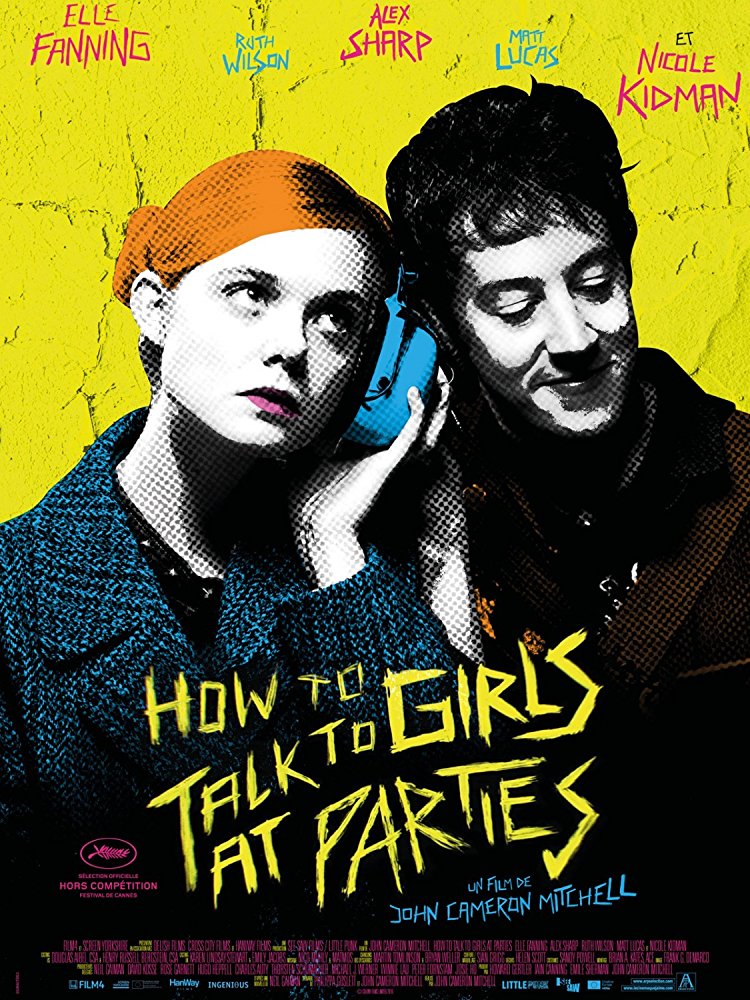
Three suburban British schoolboys in the 1990’s are big fans of punk because it seems thrilling to challenge authority and pretty much everything.  But they are not very knowledgeable about anything outside of their own experience, and so when they accidentally wander into a strange party that happens to be a bunch of aliens, they just assume that they must be American girls. In How to Talk to Girls at Parties, Americans, girls, and aliens — they’re all equally unknown, and so, for these boys anyway, easy to confuse.

Neil Gaiman’s sly short story has been lovingly adapted by John Cameron Mitchell (“Hedwig and the Angry Inch,” “Rabbit Hole”), with a breakout performance by Tony-winner Alex Sharp as Enn (short for Henry), a sweet-natured kid who, like his two best friends, loves punk and really, really, really wants to learn how to talk to girls.  Somehow, though, at parties he’s the one who ends up in the kitchen talking to someone’s mum. One night, after a punk concert, they go in search of a party they heard about but end up knocking on the wrong door.  Inside, each room has a different gathering or ritual or happening going on, all exceptionally attractive people (though one has made a mistake in manifesting and has a weird forked finger).

We know what it will take Enn the whole movie to figure out.  These are not American girls. They are aliens, on some sort of galactic tour.  And one of them, named Zan (Elle Fanning, looking far too perfect to be a human) is an alien version of punk, open-minded, curious, and inclined to break the rules. She and Enn go out exploring the world together, and they explore each other a bit, too.

The fun of all fish out of water films is seeing our world, in this case our former world, through fresh eyes. We may laugh as Zan discovers what happens when a human body processes food or speaks whatever comes into her head without understanding social norms like privacy or embarrassment. But we also appreciate her wonder at the gritty, harsh British suburb and the very things that punk is rebelling against. Her encounter with a punk queen (Nicole Kidman with gusto and evident enjoyment) is surprisingly endearing. And when Zan’s alien leaders want to interfere, well, let’s just say that it can be a real advantage to have punks on your side. A magical musical number brings everything together in quite literal terms.

Sharp is the real deal. I was struck by his performance on Broadway and really happy to see him in this film. He is able to convey innocence that comes from being true-hearted, not from a slapstick kind of awkwardness. Fanning continues to be one of the most appealing young performers in films today, always thoughtful and heartfelt. Their Romeo and Juliet romance is sweet and touching, with the adventures of Enn’s friends providing some counterpoint. Punk in this film is not angry so much as revolutionary, fueled by ideas and optimism. That may seem like an alien idea today, but Mitchell makes it seem right on time.

Parents should know that this film includes very strong language, sexual references and situations, teen partying, drinking, drugs, nudity, and some peril and violence.

Family discussion: What does punk mean to you? What is punk today? Why didn’t Zan want to follow the rules?

If you like this, try: “Stardust” and “Coraline,” also based on books by Neil Gaiman

Related Tags:


Based on a book Date movie DVD/Blu-Ray Fantasy Features & Top 10s movie review Romance Science-Fiction
I Feel Pretty

I Feel Pretty

Posted on April 19, 2018 at 5:17 pm

B +
Lowest Recommended Age: High School
Profanity: Some strong and crude language
Alcohol/ Drugs: Alcohol
Violence/ Scariness: Comic peril and accidents, some graphic images
Diversity Issues: None
Date Released to Theaters: April 20, 2018
Date Released to DVD: July 16, 2018
copyright 2018 STX Entertainment

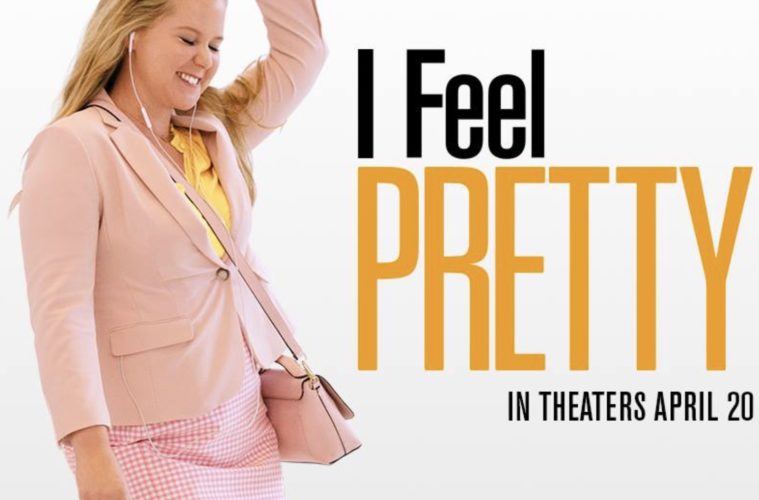
Amy Schumer shines in I Feel Pretty, an adorable fantasy that both draws from and slyly subverts the classic Cinderella story.

I’ve written before about the “makeover movie.” From the original Cinderella fairy tale to movies that range from “The Breakfast Club” to “Gigi” to “Clueless,” “Princess Diaries,” and “Now, Voyager.” There is something thrilling and akin to superheroic about the idea that a klutzy doof in glasses can be transformed into a capital B Beauty. And beauty has often been depicted as the primary power that a female character has, with an almost magical ability to control others, particularly men.  This is the story of someone who thinks she has had that makeover but everyone around her — including us — knows that she has not.

Renee (Schumer) desperately wishes she could be “undeniably pretty.” She works for a cosmetic company, where most of the employees look like — or are — supermodels. 1960’s real-life supermodel-turned-actress Lauren Hutton plays the company’s founder, and it is now run by her granddaughter, Avery (Michelle Williams). Renee is convinced that if she could just be conventionally beautiful she would have all of the love, attention, and fun she dreams of. When she meets a model (Emily Ratajkowski) she asks whether just walking off a plane in another country leads to an invitation to a fabulous trip on a yacht with beautiful and wealthy people, and the answer is, well, pretty much yes.

And then one day, Renee has a SoulCycle accident and hits her head badly. When she regains consciousness, somehow she sees herself as the beauty she always dreamed of being. She is immediately and irrepressibly confident, which leads her to apply for a more visible job as the company’s receptionist and to flirt with the guy in line behind her at the dry cleaner shop. Both are very successful. But she is less successful with those who knew and loved her as the “old” Renee, her best friends (Busy Phillips, married to the film’s co-writer/director, and Aidy Bryant).

I’m a bit mystified that this film has had some blowback from viewers who see it as exactly what it is opposing — a body-shaming underscoring of rigid standards of beauty.  On the contrary, this is the opposite of the makeover movie (including those listed above and many many others like “The Mirror Has Two Sides,” “Ash Wednesday,” “She’s All That,” and “Strictly Ballroom”), those films where a female character has to pretty up to be worthy of male attention.  Makeovers are to girl movies what origin stories are to boy movies — they reveal a transformational source of power.

This movie makes it clear that everyone — from the beauty industry itself to the standards of guys who use online dating sites to screen romantic prospects on the basis of looks to the snooty attendants at the gym who seem to think you have to have a perfect body to work out — is trying to meet standards that are (1) superficial and (2) impossible.  Some online commenters criticized the trailer for making fun of Schumer’s character for participating in the bikini contest.  But like her date and the guy who runs the bar, the movie expects us to be charmed by Renee’s pure pleasure in participating and feeling good about herself, and we are.

Characters in the film include a cosmetics executive who could be a supermodel who is insecure about her ability and her childlike voice and an actual model played by an actual supermodel (Emily Ratajkowski) who has her own reasons for low self-esteem.  It also makes it clear that confidence is itself an extremely attractive quality, as is consideration for and interest in others and competence on the job.  And when Renee herself briefly is almost swept away over a man’s good looks (and his confidence), she realizes that it is character that matters.  She learns that confidence in her looks can get her noticed, but being good at her job gets her respect.  She also has to learn that too much confidence can be a problem when her joy in her new persona makes her inconsiderate to her friends. 

There are elements in this story of Tom Hanks’ “Big” (which Renee watches) and “Never Been Kissed” (by the same screenwriter), and of the traditional cautionary fairy tale that wishes never turn out the way you hope.

It is fresh, funny, and heartwarming, with a genuinely beautiful performance by Schumer, ably supported by Williams, Bryant, Phillips, and Scovel, with some real insights about confidence, class, and empathy and a sparkle of romantic comedy magic.

Parents should know that this film includes some comic peril and violence including accidents with some graphic images, some strong language, and sexual references and a non-explicit situation.

Family discussion: Where is the line between being confident and being obnoxious? Why did strangers appreciate Renee’s new attitude while her friends did not? What did Renee see when she looked in the mirror?

If you like this, try: “Shallow Hal” and “Pitch Perfect”

Related Tags:


Comedy DVD/Blu-Ray Fantasy movie review Romance
Ready Player One

Ready Player One

Posted on March 28, 2018 at 4:00 pm

A-
Lowest Recommended Age: Middle School
MPAA Rating: Rated PG-13 for sequences of sci-fi action violence, bloody images, some suggestive material, partial nudity and language
Profanity: Brief strong language, one f-word
Alcohol/ Drugs: None
Violence/ Scariness: Extended sci-fi/fantasy peril and violence, real and virtual weapons, chases, and explosions, arson, characters injured and killed
Diversity Issues: None
Date Released to Theaters: March 30, 2018
Date Released to DVD: July 23, 2018
Copyright Warner Brothers 2018

You know that one perfect high note in the A-Ha song, “Take on Me?” The goosebumpy bliss of it? “Ready Player One,” with endless callbacks to the era of A-Ha, is that note as a movie, set in the future, in love with the past, and uncannily right of this exact moment. There could be no better director than Steven Spielberg to take on this movie about a virtual game filled with the cultural touchstones of the 1980’s, a decade he helped define for the generation who will now be taking their children to this film and re-entering their own childhoods. We are all Marty McFly, now, going back to the future in a Delorean.

Spielberg is as good as anyone has ever been at the craft of cinematic storytelling, and there has never been a story more suited to that craft than this one, based on the book by first-time author Ernest Cline, who co-scripted and co-produced, and who admits that his world view was in large part formed by the Spielberg movies he watched as a kid in the 1980’s. There is a lot of nostalgia in the film, but also themes that could have come from today’s news: the role of technology as a distraction and as an invasion of privacy and underminer of democracy and the idea of teenagers saving the world.

It is Columbus, Ohio, 2045, when “people have stopped trying to fix problems and are just trying to outlive them.” The world is a bleak and broken place and most people spend most of their time escaping reality via a massive, enthralling online world called The Oasis, invented by James Halliday (Mark Rylance) a shy, obsessive genius who is a combination of Steve Jobs, Bill Gates, Mark Zuckerberg, Walt Disney, and Willy Wonka. “They come for all the things they can do,” we hear, “but stay for all the things they can be.” Players can design their own avatar personas any way they want — with antlers or wings, beautiful or ugly, super-powerful, purple, any age, gender, or species.

Five years before this story begins, Halliday died, leaving his half-trillion dollar empire and sole control of The Oasis to whomever was the first to discover the “Easter egg”* hidden in the game, which required agility, puzzle-solving, and a comprehensive knowledge of Halliday’s life and the popular culture he immersed himself in as a child in the 1980’s.

In five years, no one has even found the first of the three keys that lead to the egg. Many people have given up. Those still seeking it are called “gunters” (egg hunters). Wade Watts (“Mud’s” Tye Sheridan) is a teenage orphan living with his aunt and her latest in a series of abusive boyfriends in what is essentially a vertical trailer park called The Stacks. The film’s opening scene is brilliantly designed, as the camera pans down a dingy, jerrybuilt column of shabby capsules, showing each occupant caught up in a different virtual reality scenario, from boxing to pole dancing, with just one woman growing real-life flowers, the only person who even notices that Wade is there.

Wade signs into The Oasis, using haptic** gloves and a virtual reality eyepiece, for yet another try at crossing a virtual version of a Manhattan bridge guarded by King Kong. His avatar is Parzival***, who drives a Delorean, and he has an online friend, an enormous, mechanically-gifted man named Aech (I won’t reveal the voice performer to avoid spoilers). And he is intrigued by a female avatar named Art3mis (again, no spoilers) who rides the red motorcycle from the Akira video game. While Parzival and Art3mis both insist they will not “clan up” (team up with other players, they end up forming an alliance that includes two other avatars, Sho and Daito.

The Nolan Sorrento (Ben Mendelsohn) is head of the rival online company, Innovative Online Industries, and he wants to be the one to find the egg so he can make a lot of money selling ads (he has determined the exact number of ads that can bombard users “before inducing seizures,” he crisply informs his staff) and charging for access. IOI has hundreds of researchers and gamers trying to find the egg. And it operates “Loyalty Centers,” essentially debtors prisons, where those who owe the company money have to work it off under brutal and impossibly Sissiphusian conditions.

Wade has to locate three keys and solve clues involving not just logic and intense research but empathy, clues that turn out to be wisely selected by Halliday, Willie Wonka-style, to find the right person to take over the Oasis. Spielberg himself has to locate three keys as a filmmaker and does so with as much grace, heart, and integrity as Wade, his own avatar through the story. The copper key is the game level, the action scenes and the next-level special effects, including the chase across the Manhattan bridge and a stunning set piece inside the Stanley Kubrick movie, The Shining, repurposed here with bravura wit and skill. The jade key is the nostalgia, with dozens, perhaps hundreds of 80’s references, from the iconic and enduring to the obscure and forgotten. It is not, as is too often the case, shortcuts to play into the audience’s emotions, but deployed, again, with consummate wit and skill as commentary, as surprise, and as a reminder of our connections to the pop culture that first excited and engaged us. And the crystal key, well, it has been said often that the theme of all Spielberg movies is finding your way home. Wade is a 21st century Dorothy in Oz or Alice in Wonderland — or David in “WarGames,” exploring a land of infinite magic and wonder — and danger — but learning that there’s no place like home.

*The use of the term “Easter egg” to describe secret features originates from the 1979 video game Adventure for the Atari 2600 game console, programmed by employee Warren Robinett.

**They make it possible for the wearer to “feel” or “touch” virtual characters and objects.

***Named for one of King Arthur’s knights, who devoted his life to the search for the Holy Grail.

Parents should know that this film includes extended real world and virtual peril and violence including chases, explosions, weapons, murder, brief crude humor, some sexual references, brief strong language

Family discussion: What would your avatar be in the Oasis and why? Why would people stop trying to fix problems? What would Sorrento do with the Oasis and how would users respond?

If you like this, try: The book by Ernest Cline and movies that this one refers to, including “The Shining,” “The Iron Giant,” and “Back to the Future”

Related Tags:


Action/Adventure Based on a book DVD/Blu-Ray Fantasy Fantasy movie review Science-Fiction Stories about Teens
THE MOVIE MOM® is a registered trademark of Nell Minow. Use of the mark without express consent from Nell Minow constitutes trademark infringement and unfair competition in violation of federal and state laws. All material © Nell Minow 1995-2026, all rights reserved, and no use or republication is permitted without explicit permission. This site hosts Nell Minow’s Movie Mom® archive, with material that originally appeared on Yahoo! Movies, Beliefnet, and other sources. Much of her new material can be found at Rogerebert.com, Huffington Post, and WheretoWatch. Her books include The Movie Mom’s Guide to Family Movies and 101 Must-See Movie Moments, and she can be heard each week on radio stations across the country.

Website Designed by Max LaZebnik